
AI人工智能

Search documents
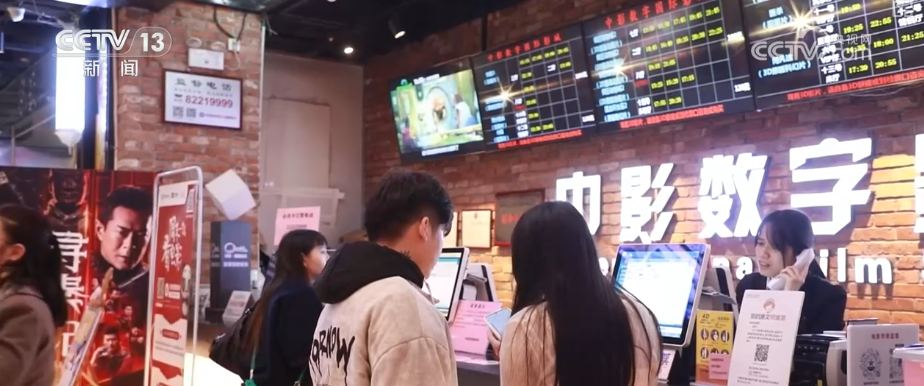
技术飞跃、产业升级 从光影里看中国电影新变化
Yang Shi Xin Wen Ke Hu Duan· 2026-01-07 12:44
Core Insights - The Chinese film industry has become a significant pillar of the cultural sector, contributing to economic growth with a box office exceeding 9 billion yuan by 2026 [1] - Animation films have emerged as a major highlight in the market, with 57 films generating over 25 billion yuan in box office revenue in 2025 [8][10] - The industry is experiencing a technological leap, with advancements in virtual production processes and digital asset management enhancing film quality and reducing production time [16][22] Group 1: Market Performance - By 2026, the national box office has surpassed 9 billion yuan, indicating a robust recovery and growth in the film sector [1] - In 2025, the total number of films produced reached 764, showcasing a diverse range of genres and increasing audience choices [10] - The animation genre has significantly contributed to the box office, accounting for nearly half of the total revenue, reflecting a growing audience base [10][12] Group 2: Audience Engagement - Approximately 90% of surveyed viewers preferred animated films, with a notable interest in genres like sci-fi, comedy, and action [5] - The demographic of 18 to 30-year-olds remains highly active in content platforms, aiding in film promotion and word-of-mouth [8] - The audience's willingness to revisit films multiple times indicates a strong engagement with content, particularly in animation [5] Group 3: Technological Advancements - The penetration of virtual production processes in the film industry has increased from 15% in 2023 to 45% in 2025, enhancing efficiency and quality [26] - The use of AI and advanced digital tools allows for real-time rendering and dynamic pre-visualization, significantly shortening production cycles [22][24] - The integration of high-end projection technologies, such as the CINITY system, has improved the viewing experience, achieving 100% digital screen coverage across the country [28][30] Group 4: Industry Trends - The film consumption trend is shifting towards lower-tier markets, with new and infrequent users increasing their participation, thus expanding the market reach [8] - Animation films are not only performing well domestically but also have potential for international sales and merchandise, indicating a longer industry value chain [14] - The film industry is adapting to audience preferences, moving away from standardized products to more tailored content that meets diverse cultural and aesthetic demands [24]



爆款IP→炫酷特效;工业化→精品化 多视角观察光影世界 感知电影产业蓬勃活力
Yang Shi Wang· 2026-01-07 04:37
Core Insights - The Chinese film industry has shown significant growth, with the national box office exceeding 9 billion yuan by January 7, 2026, indicating its role as a vital support for the cultural industry and a driver for economic growth [1][34]. Group 1: Market Trends - The animation film sector has emerged as a major highlight in 2025, contributing over 25 billion yuan in box office revenue from 57 films, reflecting a broadening audience base [8]. - The total number of films produced in 2025 reached 764, showcasing a diverse range of genres and a richer selection for audiences [10]. - The penetration rate of virtual production processes in the film industry increased from 15% in 2023 to 45% in 2025, enhancing production efficiency by at least 20% and reducing costs by approximately 30% [30]. Group 2: Audience Engagement - Nearly 90% of surveyed viewers preferred animated films, with significant interest in genres like science fiction, comedy, and action, indicating a strong demand for diverse content [7]. - The demographic of young users aged 18 to 30 remains highly active on content platforms, aiding in film promotion and word-of-mouth [8]. - The film consumption trend is shifting towards lower-tier markets, with new and infrequent users increasing their participation, thus expanding the market reach [8]. Group 3: Technological Advancements - The integration of advanced technologies such as high-resolution imaging, virtual production, and AI has significantly improved the quality and efficiency of film production in China [19][30]. - Motion capture technology has revolutionized animation production, allowing for real-time generation of character animations and drastically increasing efficiency compared to traditional methods [43]. - The development of virtual pre-visualization platforms has enabled filmmakers to visualize scenes before actual shooting, reducing trial and error costs and enhancing creative possibilities [27][44]. Group 4: Industry Infrastructure - The total number of cinema screens in China reached 93,187 by 2025, with a net increase of 2,219 screens, including more IMAX and Dolby theaters [32]. - The domestic film industry has achieved 100% digital screen conversion, with the CINITY projection system supporting the highest standards in film presentation [33]. - The film industry is increasingly interconnected with other sectors, reflecting its importance as a measure of a country's socio-economic development and cultural soft power [28].
北京第六实验学校建设项目正式开工
Xin Jing Bao· 2026-01-05 01:36
Core Viewpoint - The construction of Beijing Sixth Experimental School has officially commenced, adding valuable educational resources to the Fangshan District [1] Group 1: School Overview - Beijing Sixth Experimental School is a "city-managed quality school" located in the Liangxiang University Town expansion area, operated by Renmin University Affiliated High School [1] - The school will cover a total area of 145,200 square meters with a building area of 105,000 square meters, accommodating 96 classes (24 elementary, 18 middle, and 54 high school) [1] - Upon completion, the school will provide 4,110 quality student placements and is expected to be operational by 2028 [1] Group 2: Design and Facilities - The school’s design considers modern educational development and personalized talent cultivation needs, featuring not only conventional classrooms but also specialized facilities such as auditoriums, gymnasiums, libraries, and laboratories [1] - The school aims to meet the individual needs of students for both daily learning and extracurricular interests [1] Group 3: Educational Philosophy and Goals - The school will operate under the management and support of municipal and district education committees, leveraging Renmin University Affiliated High School's advanced educational philosophy, rich experience, quality resources, and established management model [1] - The goal is to create a brand school that inherits excellent traditional Chinese culture, drives innovation, possesses a global perspective, and serves the community, while also being a model for modern education that integrates green technology and AI support [1]
对话零跑朱江明:未来汽车行业格局会与手机类似,三年内能拿回报再考虑涉足机器人
Xin Lang Cai Jing· 2025-12-31 11:11
Core Viewpoint - Leapmotor aims to achieve an annual sales target of 4 million vehicles in the next decade, following its previous goal of 1 million by 2026, positioning itself among the top players in the automotive industry [2][15]. Group 1: Sales and Market Position - Leapmotor's CEO, Zhu Jiangming, stated that the current top ten automotive companies are achieving around 4 million units in sales, and Leapmotor aspires to join this group [2][18]. - The company currently ranks sixth or seventh among all automotive manufacturers in terms of sales volume, including traditional and new energy vehicle makers [3][16]. - Leapmotor aims to improve its ranking by 1-2 positions annually to enhance its market position [3][16]. Group 2: Product Development and Pricing Strategy - The launch of the D series, including the D19 and D99 models, marks Leapmotor's entry into the high-end market, with a pricing strategy based on cost rather than luxury [3][16]. - The D series is priced between 250,000 to 300,000 yuan, which is higher than previous models but is positioned to compete with vehicles priced between 500,000 to 1 million yuan in terms of quality and value [3][16]. Group 3: Strategic Partnerships - The recent investment from FAW (First Automobile Works) represents the first time a state-owned enterprise has invested in a new energy vehicle startup, enhancing Leapmotor's brand recognition and trust in the market [4][17]. - The partnership with FAW is expected to provide advantages in manufacturing, capacity, and alignment with national policies, creating opportunities for mutual benefit [4][21]. - Leapmotor emphasizes maintaining control by its founding team despite the new investment, ensuring stability and governance [4][22]. Group 4: Technology and Innovation - Leapmotor is cautious about investing in emerging technologies like robotics and AI, focusing on practical applications that deliver value to users within a three-year return on investment framework [3][19]. - The company aims to balance efficiency and investment in automation, ensuring that any new technology implemented can yield tangible benefits [3][19]. Group 5: Future Outlook and Market Perception - Leapmotor's leadership believes that the company's true value is not reflected in its current market performance, indicating potential for growth and increased investor confidence [10][24]. - The company plans to enhance market understanding of its long-term vision and product quality to align its market valuation with its operational achievements [10][24].


2025年度盘点,重新定义资管模式的华夏基金
Sou Hu Cai Jing· 2025-12-31 01:21
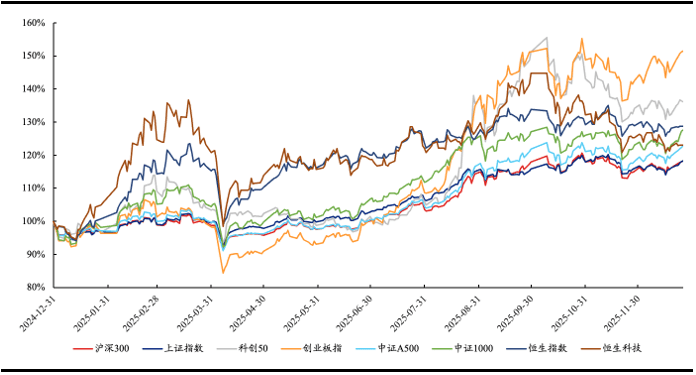
Core Viewpoint - The year 2025 marks a structural bull market, with significant gains in major indices, including an 18.36% increase in the CSI 300 and a 51.47% rise in the ChiNext Index, both representing the largest annual gains since 2020. The total trading volume of A-shares exceeded 400 trillion yuan, setting a historical record [1]. Monthly Key Events - January-February: AI models driven by DeepSeek and humanoid robot performances during the Spring Festival gained attention [4]. - March: Recovery in consumer scenarios boosted retail and catering sectors [4]. - April: U.S. tariffs led to increased interest in gold, agriculture, and undervalued blue-chip stocks [4]. - May: The May Day consumption peak activated the consumption and logistics sectors [4]. - June: Military parades and geopolitical tensions strengthened the military industry, while green building policies positively impacted related sectors [4]. - July: The commercial launch of humanoid robots and surging demand for AI computing power boosted related stocks [4]. - August: Support policies for synthetic biology spurred interest in beauty and pharmaceutical sectors [4]. - September: Accelerated industrialization of solid-state batteries led to valuation recovery in the new energy sector [4]. - October-November: Recovery in storage chip prices initiated an industry cycle reversal, benefiting the semiconductor sector [4]. - December: The official launch of the Hainan Free Trade Port and the issuance of L3 autonomous driving permits led to increased activity in local stocks and related technologies [4]. Industry Performance - The mining, hardware, industrial trade, and comprehensive sectors saw annual gains exceeding 60% [5]. - The top three investment themes in 2025 were innovative drugs, AI, and robotics, with gold also performing exceptionally well due to a weaker dollar [6][9]. Investment Highlights - Innovative drugs experienced a valuation reshaping driven by policy support and industry upgrades, with the Hang Seng Biotechnology Index rising 70.02% [7]. - The AI sector exploded following the introduction of DeepSeek, with significant growth in demand for chips and computing power [8]. - The robotics sector gained momentum with increased policy support and the emergence of domestic giants [9]. Fund Performance - 华夏基金 (China Asset Management) achieved notable success in various fund categories, continuing its strong performance from 2023 [10]. - The 华夏北交所创新中小企业精选两年定开 fund recorded a return of 270.61% over three years, with a 75.28% return in 2025 [11]. - The 华夏数字产业混合 fund saw a 126.46% increase in 2025, benefiting from the structural bull market in the AI sector [9]. ETF Market Growth - The ETF market in China reached 6.03 trillion yuan by the end of 2025, a 60% increase from the beginning of the year, with 1,381 ETFs available [15]. - 华夏基金 played a significant role in the growth of the ETF market through innovative tools and reports aimed at enhancing investor experience [16][17]. Strategic Evolution - 华夏基金 has transitioned from "managing assets" to "defining assets," focusing on a multi-asset approach to meet diverse investor needs in the era of inclusive finance [18][19].
2025年度盘点,重新定义资管模式的华夏基金
点拾投资· 2025-12-31 01:05
Core Viewpoint - The year 2025 marks a structural bull market, with significant gains in major indices, including an 18.36% increase in the CSI 300 and a 51.47% rise in the ChiNext Index, both the largest annual gains since 2020. The total trading volume in A-shares exceeded 400 trillion yuan, setting a historical record [1]. Monthly Key Events - January-February: AI models driven by DeepSeek and humanoid robots at the Spring Festival attracted attention [2]. - March: Recovery in consumer scenarios boosted retail and catering sectors [2]. - April: U.S. imposed "reciprocal tariffs," leading to increased interest in gold, agriculture, and undervalued blue-chip stocks [2]. - May: The May Day consumption peak activated the consumption and logistics sectors [2]. - June: Anticipation of military parades and geopolitical conflicts strengthened the military industry, while green building sectors performed well due to policy implementation [2]. - July: The commercialization of humanoid robots began, with AI computing demand driving gains in optical modules and servers, alongside infrastructure and building materials sectors benefiting from project launches [2]. - December: The Hainan Free Trade Port officially commenced operations, boosting local stocks, while the Ministry of Industry and Information Technology issued the first batch of L3 autonomous driving permits, strengthening related sectors [4]. Investment Themes - The best-performing investment directions in 2025 were innovative drugs, AI, and robotics, with gold also showing strong performance due to a weaker dollar. The year was characterized as the largest harvest year for many investors in the past five years [5][6]. Sector Performance - The pharmaceutical sector, particularly innovative drugs, saw significant investment value due to policy support and industry upgrades, leading to a new round of valuation reshaping [7]. - The AI sector exploded following the introduction of DeepSeek, with a shift in investment focus from downstream applications to upstream infrastructure, particularly benefiting chip manufacturers [10]. - The robotics sector gained momentum with the introduction of humanoid robots and increased policy support, leading to the emergence of global robotics giants [11]. Fund Performance - 华夏基金 (China Asset Management) achieved notable success in various fund categories, continuing to rank highly after winning three categories in 2023. The 华夏数字产业混合A fund saw a 126.46% increase in 2025 [12][13]. - The 华夏北交所创新中小企业精选两年定开 fund achieved a 270.61% return over two years, with a 75.28% return year-to-date [15][16]. - The 华夏半导体龙头A and 华夏先进制造龙头A funds also outperformed benchmarks significantly, with returns of 100.28% and 64.03% respectively [17]. ETF Market Growth - By the end of 2025, the total ETF market in China reached 6.03 trillion yuan, a more than 60% increase from the beginning of the year, with 1,381 ETFs available [21][22]. - 华夏基金 led the market with two of the seven billion-level ETFs, including 华夏沪深300ETF and 华夏上证50ETF [22]. - The firm has been proactive in promoting ETF development through innovative tools and comprehensive reports, enhancing investor experience and efficiency [23][24].

鲁信创投搭商业航天热点股价4连板 2025年布局3只基金加码“硬科技”
Chang Jiang Shang Bao· 2025-12-29 23:45
Core Viewpoint - The commercial aerospace concept is gaining momentum in the A-share market, with Lushin Investment (600783.SH) experiencing a significant stock price increase, recording a four-day consecutive limit-up [1][2]. Group 1: Stock Performance - Lushin Investment's stock price has surged by 54.53% over five trading days from December 23 to December 29, with a notable limit-up on December 29 [2]. - The company announced that its current business activities are normal, and the stock price fluctuation is primarily driven by market sentiment and hot concepts [2]. Group 2: Shareholding and Financial Impact - Lushin Investment holds a 0.89% stake in Blue Arrow Aerospace through three equity investment funds, which has a minimal impact on its financial status and operational results [1][2]. - The company's valuation is significantly higher than the industry average, with a rolling P/E ratio of 91 times and a P/B ratio of 3.32 times, compared to the industry averages of 17.98 times and 1.39 times, respectively [2]. Group 3: Shareholder Actions - The controlling shareholder, Lushin Group, plans to reduce its stake by up to 744.36 million shares, representing no more than 1% of the total share capital, between January 20 and April 19, 2026 [3]. - Lushin Group holds 5.09 billion shares, accounting for 68.37% of Lushin Investment's total share capital, and the reduction is for its operational needs [3]. Group 4: Investment Strategy and Performance - Lushin Investment focuses on early-stage, small, long-term investments in hard technology, having invested in over 300 companies, with more than 90% of funds allocated to hard technology [4][5]. - The company has successfully assisted 44 enterprises in going public in major capital markets [5]. - In the first three quarters of 2025, Lushin Investment reported a net profit attributable to shareholders of 321 million yuan, a year-on-year increase of 3.43%, surpassing the total net profit for 2024 [5].

1600亿 , 宜春首富要IPO了
3 6 Ke· 2025-12-28 08:33
Core Viewpoint - Tianfu Communication is planning to issue H-shares and list on the Hong Kong Stock Exchange, with founder Zou Zhinong at the forefront of this initiative, following significant growth driven by AI demand and a surge in stock price [1][10]. Company Background - Zou Zhinong, born in a rural family in Jiangxi, founded Tianfu Communication in 2005 after identifying a gap in the market for ceramic sleeves used in optical fiber connections, which were previously dominated by Japanese companies [2][3]. - The company initially focused on developing a ceramic sleeve product, overcoming technical challenges to achieve cost-effective production and replace imports [2][3]. Business Development - Tianfu Communication has expanded its business into two core segments: passive optical devices and advanced optical packaging, serving various sectors including AI data centers and telecommunications [3]. - The company has established a global presence with headquarters in Suzhou and Singapore, and production bases in Jiangxi and Thailand, exporting products to over 20 countries [3]. Financial Performance - Since its listing on the Growth Enterprise Market in 2015, Tianfu Communication has seen its market capitalization soar, reaching over 1600 billion yuan with a stock price increase of over 220% this year [6][11]. - The company reported a revenue of 3.9 billion yuan for the current year, a 63.63% increase year-on-year, attributed to the rising demand for optical devices driven by AI advancements [9]. Market Position and Strategy - Tianfu Communication positions itself as a core supplier of optical components rather than competing in the optical module market, allowing it to benefit from the overall growth in the industry without direct competition [9]. - The company has secured high-end optical chip production capacity from Lumentum, a supplier for Google, indicating strong future growth potential as demand for optical modules increases [10]. Industry Context - The surge in AI applications has significantly boosted the demand for optical modules, with Tianfu Communication benefiting from this trend alongside other companies in the sector [8][11]. - The competitive landscape includes notable players like Nvidia, with Tianfu Communication providing essential components that support the functionality of AI systems [9].
摩根士丹利中国首席经济学家邢自强:可优先选择一些大城市进行贴息,为购房人减负
Sou Hu Cai Jing· 2025-12-21 19:12
Group 1: Economic Outlook and Technological Advancements - The theme of the conference is "China's Determination in Changing Circumstances," focusing on predictions and strategies for the future [1] - Morgan Stanley's Chief Economist for China, Xing Zhiqiang, expresses confidence in China's technological self-reliance, particularly in sectors like electric vehicles and green transformation, highlighting China's first-mover advantage [1][3] - The Chinese automotive industry has become a global leader, showcasing the effectiveness of China's industrial cluster capabilities [3] Group 2: AI Development and Competitive Landscape - Xing Zhiqiang emphasizes confidence in China's AI sector, noting that despite some shortcomings in GPU computing power, China can leverage its data advantages and talent pool to improve algorithms [2][6] - China produces approximately half of the world's AI talent, with 5 million engineering graduates annually, surpassing the combined total of the US, Europe, and Japan [5] - The efficiency of China's AI models is comparable to those of the US, despite China investing only about 1/10 of the amount the US does in AI infrastructure [7][8] Group 3: Real Estate Market Strategies - To stabilize the real estate market, Xing Zhiqiang suggests implementing inventory reduction policies in first- and second-tier cities, particularly those with population inflows and stable rental yields [2][11] - Proposed measures include interest subsidies for homebuyers, potentially reducing the burden on consumers and aligning rental yields with mortgage rates [11] - The importance of real estate in breaking the low-price cycle is highlighted, drawing parallels to Japan's experience in the 1990s [10] Group 4: Consumer Spending and Social Security - Long-term consumer spending growth requires reforms in the social security system to alleviate concerns for residents, particularly for low- and middle-income groups [12] - Strengthening social security and ensuring equitable distribution are essential for releasing consumer potential [12] - The need for policies that support housing, education, and healthcare access is emphasized to enhance consumer confidence and spending [12]
2026年铜期货年度行情展望:破局与重构格局下,配置逻辑再演绎
Guo Tai Jun An Qi Huo· 2025-12-19 10:34
1. Report Industry Investment Rating - Not provided in the document 2. Core Viewpoints of the Report - The copper price is expected to remain strong in 2026 with potential for further increase, mainly due to the Federal Reserve's interest rate cuts supporting the economy and the supply - demand gap. [2][200] - From a macro perspective, the Federal Reserve's monetary policy will continue to be loose, leading to a marginal improvement in liquidity. [2] - From a micro perspective, there are structural changes in both the supply and demand of refined copper, and the supply - demand situation will shift from surplus in 2025 to a deficit in 2026. [2] 3. Summary According to the Table of Contents 3.1 2025 Copper Price Trend Review 3.1.1 Copper Price Review: Increased Volatility and Higher Central Value - In 2025, the copper price first declined and then rose, reaching a new historical high. The LME 3 - month copper price increased by 15.37% from the beginning of the year to March 26, then fell by 11.05%, and finally rose by 31.13% as of December 12. The Shanghai Copper Index also increased, but its annual increase was lower than that of the LME copper. [6][7] 3.1.2 Driving Logic: Supply - Demand Imbalance and Structural Changes - The core driving logic of the price is the continuous fermentation of rigid supply constraints, demand structure changes, and macro - policy support, which attracted a large amount of capital to participate in copper futures trading. [10] - Supply - side tensions were continuously fermented and gradually spread to the smelting end. Multiple large - scale copper mines had unexpected production cuts and shutdowns, and the supply of scrap copper was weaker than expected. [12][17] - Demand shifted from the real - world logic to the expected logic. In the first half of the year, domestic copper consumption continued to rise, but in the second half, high copper prices began to suppress downstream demand, and the market started trading on consumption expectations. [18][20] - The global monetary policy turned to be loose, which was an important macro - support for copper prices. However, Trump's tariff policy and the U.S. government shutdown increased price volatility. [21] 3.2 U.S. Economic Soft Landing and Federal Reserve Interest Rate Cuts, Supporting the Price of Risk Assets - In 2026, the U.S. economic resilience, Federal Reserve interest rate cuts, and structural consumption will continue to affect the copper price, providing support at the bottom and a ceiling at the top. [24] - The U.S. economy may achieve a soft landing, with consumption showing a trend of moderate positive growth, investment presenting a structural change, and net exports maintaining a large deficit but with a reduced drag on GDP. [24][25][27] - The Federal Reserve's monetary policy will continue to be loose, with interest rates likely to decline overall. This will reduce the risk - free rate, increase the valuation of risk assets, and support economic growth, which will also drive up the copper price. [29][32] 3.3 Fundamentals: The Expectation of Marginal Consumption Recovery is Strengthening, and the Logic of Supply Tightness is Spreading to the Smelting End 3.3.1 New - Quality Productivity and the New - Energy Industry Significantly Contribute to the Increment of Copper Consumption - AI drives the potential of U.S. copper consumption, and the U.S. has a high tolerance for copper price increases. It is estimated that the AI computing power centers in the U.S. will drive an additional copper consumption of 4.73 million tons in 2026. [37][42] - Policy - driven new - energy industries are developing strongly, with an increasing copper consumption. It is expected that the global new - energy industry will have a copper consumption increment of 32.06 million tons in 2026. [54] - China's "14th Five - Year Plan" supports the development of new - quality productivity, and power grid investment is an important engine for copper consumption growth. It is estimated that the power grid investment will drive a copper consumption increment of 31.84 million tons in 2026. [81][84] 3.3.2 Traditional Industries' Copper Consumption Continues to Increase, but with Significant Differences Among Countries - China's policies support the traditional industries, but the growth rate of copper consumption is slowing down. The real - estate market will continue to adjust, and the consumption of traditional fuel - powered vehicles will decline. It is estimated that the traditional industries in China will have a copper consumption decrease of 7.62 million tons in 2026. [89][90][101] - The U.S. and Europe have cut interest rates multiple times, supporting the moderate development of traditional industries. The U.S. real - estate market is expected to recover in 2026, and the European copper demand will increase due to grid transformation and other factors. [109][120] - Japan's traditional industries face uncertainties in recovery, while South Korea's traditional industries face pressure but receive strong policy support. [126][129] - Developing and emerging countries have a significant increment in copper consumption. Southeast Asia has become a world economic growth pole, India's economy is growing at a relatively high speed, the Middle East is transforming from resource - dependence to diversification, South America's economy is growing moderately, and Africa is promoting growth and reducing poverty. [131][134][142] 3.3.3 Tight Raw - Material Supply and Excessive Expansion of Smelting Capacity - The production of copper mines is highly disturbed, and the output is lower than expected. It is estimated that the global copper mine output will increase by 68 million tons in 2026, but the available copper concentrate increment in the market will be about 51 million tons. [151][157] - The domestic supply of scrap copper increases, but the growth rate of scrap - copper imports slows down. It is estimated that the domestic scrap - copper supply will increase by 15 million tons in 2026, and the scrap - copper import volume will be the same as in 2025. [168][177] - China's copper smelting capacity is expanding, and the copper output is increasing significantly. It is estimated that the domestic refined - copper output will increase by 68.75 million tons in 2026, while the overseas electrolytic - copper output will only decrease by less than 3 million tons. [185][190] 3.3.4 Balance Sheet: It is Expected that the Global Copper Supply will be in Surplus in 2025 but in a Large Deficit in 2026 - It is expected that the global copper mine supply will be in shortage from 2025 to 2026, affecting the refined - copper output and changing the supply situation from surplus to deficit. In 2025, the global refined - copper supply will have a surplus of 9.1 million tons, while in 2026, it will have a deficit of 19.7 million tons. [198] 3.4 Conclusion and Investment Outlook 3.4.1 Logic of the Copper Price in 2026: Macro - Level Support from Federal Reserve Interest Rate Cuts and Micro - Level Supply - Demand Gap - The copper price is expected to remain strong in 2026, with potential for further increase. The Federal Reserve's interest rate cuts will support the economy, and the supply - demand gap will also drive up the price. [200] 3.4.2 Investment Outlook - Unilateral trading: Multiple logics drive the price to remain strong. The Federal Reserve's interest rate cuts and the supply - demand gap support the price. In terms of rhythm, the price is more likely to be strong in the first half of the year, and the increment of refined copper from Indonesian mines in the second half may limit the upside space. However, market capital, U.S. copper tariff policy expectations, and the pricing of emerging industries are still conducive to increasing the upward volatility of the price. [204][205] - Arbitrage trading: There is a certainty in the term positive arbitrage of Shanghai Copper and LME Copper. The de - stocking of global copper inventories in 2026 and the price difference between COMEX and LME copper will drive the trade. The internal - external reverse and positive arbitrage are stage - based trades. Each has its own logic and risk points. [208][209]