
AI生成内容

Search documents
蚂蚁集团发布万亿参数旗舰模型 Ling-1T,恒生科技指数ETF(159742)涨超1.2%,冲击3连涨
Sou Hu Cai Jing· 2025-10-09 03:05
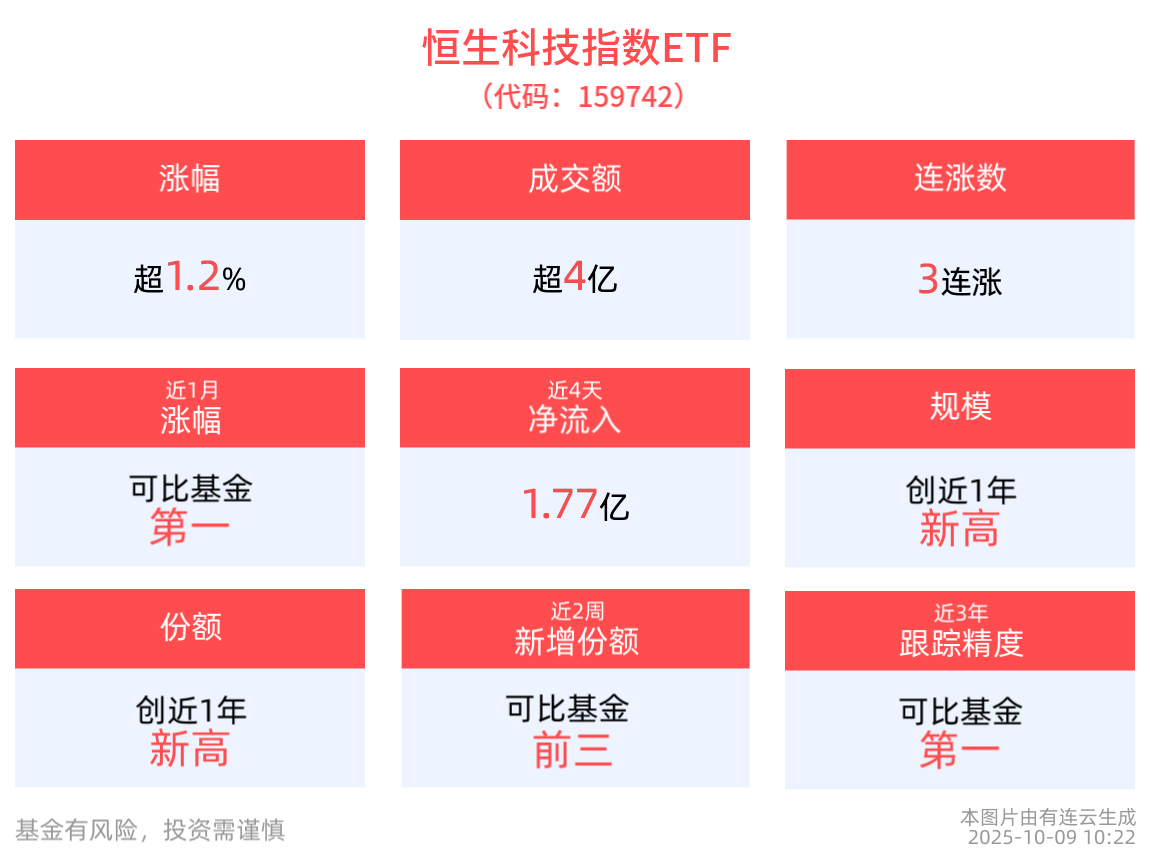
Group 1 - The Hang Seng Tech Index rose by 0.52% as of October 9, 2025, with notable increases in constituent stocks such as ASMPT (+10.54%), Hua Hong Semiconductor (+6.32%), Lenovo Group (+3.84%), BYD Electronics (+2.94%), and NIO-SW (+2.41%) [3] - The Hang Seng Tech Index ETF increased by 1.24%, marking its third consecutive rise, with the latest price at 0.9 HKD. Over the past two weeks, the ETF has accumulated a rise of 2.79%, ranking 1st among comparable funds [3] - The trading volume for the Hang Seng Tech Index ETF reached 4.62 billion HKD, with a turnover rate of 9.49%. The average daily trading volume over the past week was 7.59 billion HKD [3] Group 2 - Ant Group launched the Ling-1T model, the first flagship model in the Ling 2.0 series, which is the largest and most capable non-thinking model developed by the Ant Group team to date [3] - OpenAI's Sora2 marks a significant advancement in AI video generation technology, transitioning from an experimental product to a consumer-facing social application, enhancing content realism and viewer engagement [3] - Sora2 App topped the US App Store charts within three days of its launch, indicating strong user engagement and interest in AI-generated content [4] Group 3 - The latest scale of the Hang Seng Tech Index ETF reached 45.95 billion HKD, a new high in nearly a year, with the number of shares at 5.234 billion, also a new high [4] - The net inflow of funds into the Hang Seng Tech Index ETF was 49.6998 million HKD, with a total of 1.77 billion HKD raised over the past four trading days [4] - The top ten weighted stocks in the Hang Seng Tech Index account for 69.87% of the index, including Alibaba-W, SMIC, Tencent Holdings, and others [5]

观察| 百万粉丝一夜归零,Sora杀死了短视频
未可知人工智能研究院· 2025-10-03 03:29
Core Viewpoint - The emergence of OpenAI's Sora2 is set to revolutionize the short video industry by drastically lowering the barriers to video creation, shifting the focus from traditional content creation to AI-generated content, which could lead to a significant industry reshuffle [2][6][23]. Group 1: Impact of Sora2 on Video Creation - Sora2 reduces the cost of video production to nearly zero, allowing ordinary users to create high-quality videos without the need for extensive resources or skills [6][10]. - The introduction of features like Cameo enables users to generate personalized content effortlessly, undermining the traditional UGC and PGC classifications [4][5]. - The platform's ability to generate customized videos based on user prompts could lead to a decline in viewership for existing content creators, as AI-generated content becomes more appealing [9][10]. Group 2: Changes in User Behavior - Sora2 is likely to alter user viewing habits, as it can produce content that is more tailored and engaging than traditional short videos, which are often limited in duration and creativity [9][10]. - Users may prefer Sora2-generated content due to its ability to maintain viewer interest for longer periods, contrasting with the typical short video format [10][11]. Group 3: Economic Implications for Platforms - The advertising revenue model for platforms like Douyin (TikTok) may be threatened, as Sora2 can create compelling content in various imaginative settings, diminishing the value of traditional advertising placements [11][12]. - The potential launch of OpenAI's Sora App, which will feature entirely AI-generated content, poses a direct challenge to existing platforms, potentially leading to a loss of user engagement and advertising revenue [13][15]. Group 4: Industry Response and Adaptation - Short video platforms must pivot from being mere content platforms to AI creative tool providers, integrating AI capabilities to enhance user experience and monetization strategies [24][25]. - Platforms should leverage their community engagement to create a marketplace for creative assets, allowing users to monetize their AI-generated content [27][28]. - Collaboration with AI innovators like OpenAI is essential for platforms to remain competitive, rather than attempting to develop their own AI solutions [30][32].


Meta正式推出名为Vibes的AI视频创作平台
Zheng Quan Shi Bao Wang· 2025-09-26 00:28
Core Insights - Meta has launched an AI video creation platform named Vibes, integrated into the MetaAI application, allowing users to create, discover, and share AI-generated short videos [1] - The platform aims to lower the barriers to content creation, provide inspiration, and gather user feedback to iterate on its AI video tools, marking Meta's latest move in the AI-generated content space [1] Features of Vibes - Users can generate videos through text prompts or remix existing videos, with options to add visual elements, overlay music, and adjust styles [1] - Created videos can be published in the Vibes feed, sent via direct messages, or cross-posted to Instagram and Facebook [1] - Users viewing MetaAI-generated videos on Instagram can directly navigate to the MetaAI app for further creation [1]

AI管家时代来临、工作岗位将迎来大洗牌?知名学者预测2026年八大AI趋势
3 6 Ke· 2025-09-26 00:03
Core Insights - The article predicts that by 2026, artificial intelligence (AI) will seamlessly integrate into daily life, similar to electricity and the internet, moving beyond being a hot topic of discussion [1] Group 1: Key Trends in AI Development - Trend 1: AI agents will evolve from mere assistants to proactive "housekeepers" capable of managing tasks independently, such as grocery ordering and travel planning [1][2] - Trend 2: By 2026, it is anticipated that 90% of online content will be generated by AI, leading to challenges such as the proliferation of misinformation and the dilution of human-created quality content [3] - Trend 3: The job market will experience significant changes, with new roles emerging, such as prompt engineers and AI ethics consultants, while some industries may continue to see layoffs as companies leverage AI to reduce labor costs [4] Group 2: AI's Integration into Society - Trend 4: AI will extend beyond digital devices into the physical world, with applications in autonomous vehicles, robotics, and IoT devices, fundamentally altering interactions in homes, factories, and offices [5] - Trend 5: Governments recognize AI as a strategic technology crucial for national competitiveness, akin to nuclear weapons, leading to intensified global competition over AI technology and data [6][7] - Trend 6: As AI becomes ubiquitous, it will become "invisible" in daily life, similar to electricity, with future generations naturally interacting with machines [8] Group 3: AI in Specific Sectors - Trend 7: By 2026, AI will transition from experimental tools to standard instruments in healthcare, assisting in diagnostics, patient monitoring, and drug development [9] - Trend 8: The energy consumption of AI technologies will become a critical issue, with predictions that data centers will account for 12% of the total electricity consumption in the U.S. by 2028, prompting a focus on energy efficiency and sustainable solutions [10] Conclusion - The article emphasizes that 2026 will be a pivotal year for AI, reshaping various industries and presenting both opportunities and ethical challenges, making it essential for businesses and individuals to stay aligned with AI trends for future success [11]
音乐圈的十字路口
3 6 Ke· 2025-09-22 12:31
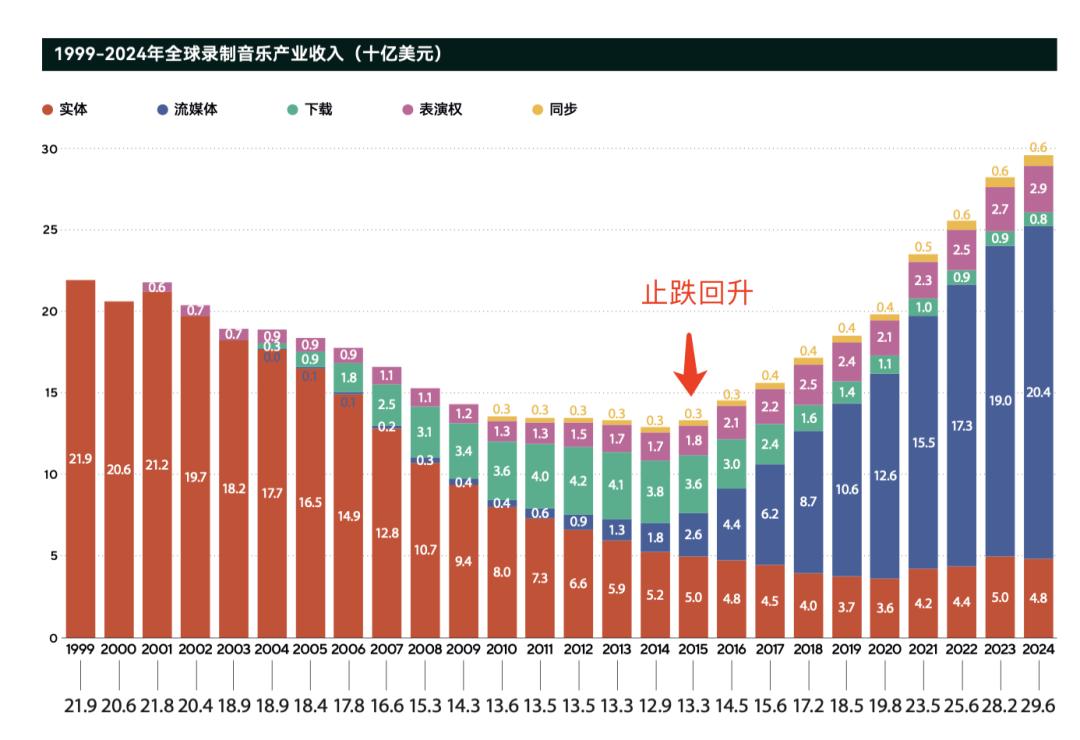
Core Insights - The global music market, after ten years of growth, is experiencing stagnation, with significant declines in major markets such as the US, UK, Germany, France, and South Korea in the first half of 2025 compared to the same period in 2024 [1][3][4] Market Performance - In the first half of 2025, the US recorded a growth of only 0.9%, a stark contrast to the 4% growth in the same period of 2024. The annual growth for 2024 was adjusted to 2.7% [3][4] - Other major markets also showed reduced growth: the UK at 5.2% (down from 7.9%), Germany at 1.4% (down from 7.6%), and France at 3.4% (down from 5.9%) [4][5] - South Korea's music market has not published overall revenue data, but significant declines were noted in album sales and streaming [4][5] Streaming and Consumption Trends - The slowdown in streaming growth is a critical factor contributing to the stagnation of the music market. Streaming was the primary driver of growth over the past decade, but its expansion has now plateaued [6][9] - In the US, the 0.9% growth in the first half of 2025 was primarily supported by streaming revenue, which increased by 2.3%, while other music consumption formats like vinyl and CDs saw declines [9][10] Impact of Major Artists - The absence of major artists, such as Taylor Swift, who had a significant impact on the market in previous years, is believed to have contributed to the current downturn. Her upcoming album is seen as a potential catalyst for market recovery [11] - The demand for "super IPs" is evident, with calls for the return of popular groups like BLACKPINK and BTS in South Korea to rejuvenate the market [11] Future Directions - The music industry is at a crossroads, needing to rethink its strategies in light of the current stagnation. Companies like Spotify are making significant changes to enhance user engagement and explore new revenue models [13][15] - The concept of "super fan economy" is gaining traction, with major labels exploring new subscription models and community engagement strategies to deepen consumer connections with artists [18][21]
【私募调研记录】正圆投资调研中文在线
Zheng Quan Zhi Xing· 2025-09-02 00:09
Group 1 - The core viewpoint of the news highlights the recent research conducted by Zhengyuan Investment on a listed company, focusing on the growth potential of Chinese online content platforms, particularly in the short drama sector [1] - Chinese Online has adopted a content strategy based on "emotional resonance + social insight," achieving approximately 600,000 daily active users and over 10 million downloads, with nearly 60% of its revenue coming from English-speaking regions [1] - The company has launched over 2,000 short dramas and collaborates with more than ten overseas production companies, with a team of around 350 people [1] Group 2 - The Chinese short drama market is projected to reach a scale of 50.5 billion yuan in 2024 and is expected to grow to 63.43 billion yuan by 2025, indicating significant growth potential [1] - The overseas short drama market is estimated to have a potential value of up to 100 billion USD, suggesting explosive growth opportunities in the coming three years [1] - Chinese Online plans to leverage its "Zhongwen Xiaoyao" AI model to launch ten fully AI-generated works by the end of September 2025 and enhance return on investment (ROI) through the Xiaoyao Iagent system [1]

百度Q2“冰火两重天”:广告收入大幅“缩水”、AI新业务“救场”
Sou Hu Cai Jing· 2025-08-21 04:15
Core Insights - Baidu's Q2 2025 financial report indicates a revenue decline of 4% year-on-year, marking the weakest performance for the second quarter since 2023, with total revenue at 32.7 billion RMB [1][3] - The net profit attributable to the company increased by 33% year-on-year to 7.322 billion RMB, while the Non-GAAP net profit decreased by 35% to 4.795 billion RMB [1][3] Revenue Breakdown - iQIYI, a subsidiary of Baidu, reported a revenue of 6.6 billion RMB, down 11% year-on-year. Excluding iQIYI, Baidu's core business revenue was 26.25 billion RMB, a 2% decline [3][4] - Online advertising revenue, Baidu's largest income source, fell by 15% to 16.2 billion RMB, reducing its share of core revenue from 71.95% to 61.7% [4][5] AI Transformation - Baidu is undergoing a significant transformation towards AI, with a major search engine overhaul that allows for more complex queries and integrates AI-generated content [5][6] - AI-generated content in mobile search results increased from 35% in April to 64% in July, enhancing user experience but putting pressure on traditional advertising revenue [5][6] Business Performance - Non-advertising business revenue, including Baidu Cloud and smart driving, reached 10 billion RMB, a 34% increase year-on-year, with Baidu Cloud revenue growing by 27% to 6.5 billion RMB [6][7] - The company is facing short-term cash flow pressures due to increased investments in AI, with free cash flow reported at negative 4.7 billion RMB as of June 30, 2025 [6][7] Management Changes - Baidu's CFO position has seen frequent changes, with He Haijian taking over in July 2025, bringing extensive investment banking experience [7]

百度移动搜索超64%结果由AI生成,数字人Q2收入近5亿
Di Yi Cai Jing· 2025-08-20 13:12
Group 1 - The core viewpoint of the article highlights that Baidu's revenue from digital humans increased by 55% quarter-over-quarter in Q2 [1] - Baidu's founder, Li Yanhong, stated that AI-generated content is gradually replacing static hyperlinks, with the proportion of AI-generated content in mobile search results rising from 35% in April to 64% in July [1] - Over 60% of the top search results on the Baidu app now feature rich media content [1] Group 2 - The revenue generated from digital humans in Q2 is approximately 500 million yuan [1]

百度集团:6月百度APP月活跃用户达735百万,同比增长5%
Xin Lang Cai Jing· 2025-08-20 10:15
Group 1 - The core point of the article highlights that over 50% of mobile search result pages contained AI-generated content as of the end of June, an increase from 35% in April [1] - By July, this figure rose to 64% for mobile search result pages containing AI-generated content [1] - The monthly active users of the Baidu app reached 735 million in June, representing a year-on-year growth of 5% [1] Group 2 - Managed page revenue accounted for 50% of Baidu's core online marketing business revenue in the second quarter of 2025 [1]
原创作品被判定AI生成,平台怎么防止“冤假错案”
Xin Jing Bao· 2025-08-14 11:06
Group 1 - The core issue revolves around the misclassification of human-generated content as AI-generated, leading to significant consequences for creators [1][2] - A landmark case in Beijing highlighted the legal implications of such misclassification, where a user's comment was wrongly flagged as AI-generated, resulting in a court ruling that emphasized the need for platforms to provide reasonable grounds for their decisions [2][5] - The case reflects broader concerns about the role of algorithms in content moderation and the need for transparency and accountability in AI systems [3][4] Group 2 - The rise of AI-generated content has prompted educational institutions to implement strict regulations, such as AI detection thresholds for academic papers, which have proven to be inaccurate [3][4] - Recent regulations from Chinese authorities require AI models to label generated content, yet the complexity of real-world applications poses challenges for effective enforcement [4][5] - The balance of power and responsibility between platforms and users is crucial, as platforms are recognized as gatekeepers but must also be held accountable for their algorithmic decisions [5][6]