GEO(生成式引擎优化)

Search documents
只需299元,就能“买通”AI推荐你的产品?
Zhong Guo Xin Wen Wang· 2026-01-18 03:38
Core Viewpoint - The emergence of services that enhance product recommendations by AI raises questions about the objectivity of AI in product suggestions and potential legal implications [1][3]. Group 1: AI and Consumer Behavior - A report by Zhihu Research Institute indicates that 55% of consumers believe that expert answers from AI significantly influence their purchasing decisions, leading to 81% of consumers partially adopting AI suggestions [3]. - The concept of GEO (Generative Engine Optimization) has emerged, which aims to influence AI data sources by publishing product-related content, thereby increasing the likelihood of AI recommending those products [3][6]. Group 2: GEO Service Offerings - Various businesses offer GEO optimization services with different pricing models, such as a monthly plan for 299 yuan and an annual plan for 298 yuan, targeting users with varying levels of online optimization experience [4][5]. - Some businesses claim that using GEO services can lead to AI recommendations, although effectiveness may vary based on competition and the need for continuous content publication [6]. Group 3: Legal Concerns - The rise of GEO services has led to concerns about potential legal violations, including issues related to advertising recognition, false advertising, and unfair competition [8][9]. - Legal experts suggest that GEO optimization may violate advertising laws by disguising promotional content as neutral information, thus infringing on consumer rights [9][10]. - Service providers may face legal risks if they knowingly assist clients in engaging in false advertising or unfair competition practices [11].


GEO概念迎来重磅催化!ChatGPT拥抱广告模式,掀起“AI答案经济”狂潮
Zhi Tong Cai Jing· 2026-01-17 03:37
Core Insights - OpenAI is introducing advertisements on the ChatGPT platform to enhance revenue and compete against Google's Gemini 3.0 AI products, which poses significant competitive pressure [1][4] - The advertisement model will initially target free-tier users and those subscribed to the new lower-priced "ChatGPT Go" plan, which costs $8 per month in the U.S. [1][2] - This shift marks a significant transition for OpenAI, moving away from a purely subscription-based revenue model to include advertising, which CEO Sam Altman previously viewed unfavorably [4][5] Revenue Generation - OpenAI's advertising strategy aims to leverage its substantial user base, with up to 800 million weekly active users, to create a significant revenue stream [4][8] - The introduction of ads is seen as a necessary step to support the company's ambitious plans for AI infrastructure, which is projected to exceed $1.4 trillion by 2030 [4][8] - Users on higher-tier plans (Plus, Pro, Business, and Enterprise) will not see advertisements, indicating a tiered approach to monetization [2] Advertising Model and GEO Concept - The advertisement content will be contextually matched to user conversations, enhancing relevance and aligning with the Generative Engine Optimization (GEO) strategy [9] - GEO focuses on increasing brand visibility within AI-generated responses, shifting the advertising paradigm from traditional search engine optimization to a model where brands are actively mentioned in AI outputs [8][9] - OpenAI's move to incorporate ads is expected to catalyze interest in the GEO investment theme, as it aligns with the trend of AI-driven commercial exposure [3][7] Market Implications - The introduction of ads may provoke mixed reactions from users, potentially affecting their trust in the AI's responses if perceived as overly commercialized [5][6] - Competitors may need to clarify their monetization strategies, especially those positioned as "ad-free by design," in response to OpenAI's new approach [6] - The shift to an ad-supported model could redefine the commercial landscape for AI applications, emphasizing the importance of being referenced in AI-generated content [7][9]
GEO市场规模三年预计增长35倍
Zhong Guo Jing Ying Bao· 2026-01-16 13:51
Core Insights - The article discusses the emergence of GEO (Generative Engine Optimization) in China's marketing landscape, marking 2025 as the year of its inception with a projected market size of approximately 250 million yuan, expected to grow to about 3 billion yuan in 2026 and 9 billion yuan in 2027, indicating a potential growth of 35 times over three years [1][4]. Group 1: Market Trends - The shift in consumer behavior is highlighted, with more users viewing AI as a core tool for shopping decisions, necessitating brands to focus on their visibility in AI-generated responses [1][2]. - By June 2025, the user base for generative AI in China reached 515 million, a growth of 266 million from December 2024, with a penetration rate of 36.5% [2]. - The transition from traditional search engine optimization (SEO) to GEO is emphasized, as brands must adapt to being referenced by AI models rather than relying on direct user clicks [3][4]. Group 2: Industry Developments - Major internet companies like Tencent, Alibaba, Baidu, and ByteDance are actively investing in the GEO space, reflecting a strong interest from capital and enterprises [1][3]. - As of July 2024, 197 generative AI services have been registered in China, with nearly 70% being industry-specific models, and 52% of e-commerce businesses utilizing at least one generative AI technology [5]. - GEO has established four primary application scenarios: brand content generation, business decision-making, brand positioning in AI semantic spaces, and industry education [5]. Group 3: Challenges and Considerations - The article notes that while the GEO market shows significant promise, it faces uncertainties related to technology quality, algorithm adaptability, and data security [6]. - The largest uncertainty is linked to external factors, particularly platform policies that could impact the viability of GEO if regulations tighten [6]. - Companies are advised to view GEO as a long-term strategy rather than a short-term tactic, ensuring collaboration between SEO and GEO efforts [7].
财富观 | 上市公司密集降温、蹭热点被罚,A股部分概念炒作熄火
Sou Hu Cai Jing· 2026-01-16 12:54
Core Viewpoint - The core logic is to "drive out the bad currency and protect the good currency," emphasizing the need for regulatory measures to ensure long-term development in the market, particularly in the context of speculative risks associated with concept stocks like GEO and AI applications [1][10]. Group 1: Market Reaction and Stock Performance - On January 15, 2026, major thematic sectors such as internet and cultural media saw significant declines, with the internet index dropping by 5.31% and the cultural media index by 3.33% after reaching new highs on January 14 [3]. - Specific stocks within these sectors experienced drastic declines, with notable examples including "20cm" limit down for stocks like ZhiDeMai and ZhuoYi Information in the internet sector, and TianLong Group in the cultural media sector [3][4]. Group 2: Company Announcements and Risk Warnings - Several companies, including ZhiDeMai and TianLong Group, issued announcements clarifying their lack of involvement in GEO-related businesses, despite significant stock price increases of 91.44% and 115.99% respectively from December 30, 2025, to January 14, 2026 [4][5]. - Companies like YingLi Media and ZheWen Culture also warned about the risks associated with their GEO business, stating that it has not yet formed a mature business model and lacks market recognition and profitability [4][5]. Group 3: Regulatory Actions and Market Oversight - Regulatory bodies have begun to crack down on companies engaging in misleading practices, with examples including Hangxiao Steel Structure and Electric Science Digital, which faced penalties for their vague disclosures related to AI and commercial space projects [6][7]. - The Shanghai Stock Exchange has taken measures against abnormal trading behaviors, suspending accounts of investors involved in irregular trading activities, particularly in stocks like GuoSheng Technology [8]. Group 4: Financial Performance and Market Discrepancies - Many companies experiencing stock price surges are facing declining fundamentals, with YingLi Media reporting a net profit of 20.36 million yuan for the first three quarters of 2025, a decrease in gross margin by 1.73 percentage points [9][10]. - ZheWen Culture and TianXiaXiu also reported significant declines in net profits, with ZheWen's net profit down by 19.68% and TianXiaXiu's by 45.49% year-over-year [10]. Group 5: Future Market Outlook and Investment Principles - Analysts suggest that the current market environment reflects a clash between short-term speculative sentiment and long-term industrial trends, indicating a shift towards more regulated and value-driven investment practices [10][11]. - Companies are advised to treat information disclosure as critical, ensuring that communications regarding hot topics are accurate and comprehensive to avoid damaging their credibility [11].



全线回调,开年最热赛道突然刹车
3 6 Ke· 2026-01-16 12:12
Core Insights - The AI application sector experienced a significant downturn on January 16, with major stocks like Visual China hitting their daily limit down, despite being one of the hottest sectors at the beginning of the year [1][2]. Group 1: Recent Trends in AI Applications - The recent surge in AI applications was driven by the successful listings of large model companies MiniMax and Zhipu on the Hong Kong stock market, which boosted overall market enthusiasm [4]. - The listing of large model companies indicates a maturing commercial ecosystem for AI applications, leading to growth expectations [5]. - The acquisition of the AI application company "Butterfly Effect" by Meta for billions of dollars has increased the recognition of AI applications in China [6]. - The large-scale deployment of domestically developed inference chips has drastically reduced AI invocation costs, prompting many large model companies to lower their prices [7]. Group 2: Marketing and GEO - The initial excitement in AI applications has been concentrated in the marketing and media sector, particularly following Elon Musk's announcement to open-source the latest content recommendation algorithm for the X platform [9]. - Generative Engine Optimization (GEO) has emerged as a key focus, defined in a Princeton University paper as a method to enhance the visibility of optimized content in AI-generated responses [11]. - The shift towards AI search is expected to replace traditional search engines, with Gartner predicting that AI search will capture 50% of search engine traffic by 2028 [13]. Group 3: Market Potential and Growth - The global GEO market is projected to reach $11.2 billion and $1 billion in China by 2025, with compound annual growth rates (CAGR) of 55% and 53%, respectively [16]. - BlueFocus, a marketing company, reported a revenue of 51.098 billion yuan in the first three quarters of 2025, with a significant 310% increase in AI-driven business revenue [19]. - The AI-driven revenue for BlueFocus reached 1.57 billion yuan in the first half of the year, surpassing the total for the previous year, although it still accounted for less than 5% of total revenue [20]. Group 4: Future Outlook - The year 2026 is anticipated to be pivotal for AI applications, with advancements in model capabilities and the maturation of agent technology providing a fertile ground for AI applications [25]. - The Chinese government is promoting AI application implementation through various initiatives, aiming to cultivate influential enterprises and enhance industrial networks by 2028 [25]. - Companies like AppLovin have demonstrated the potential of AI in marketing, with a 71% year-on-year increase in advertising revenue in Q1 2025, validating AI's impact on the industry [26]. - The AI content production chain is being reshaped, leading to new content forms like AI-generated animated series, which are expected to create significant market opportunities [28][30]. Group 5: Conclusion - The AI sector is poised for continued growth, especially with the recent advancements in large models and the expected rise in AI application revenues [35]. - The investment logic in AI applications will focus on companies that can demonstrate a significant increase in AI revenue as a proportion of overall earnings [36].

传媒板块开年大涨 分析师不够用了!东吴、国盛等多家券商打响“抢人大战”
Mei Ri Jing Ji Xin Wen· 2026-01-15 15:26
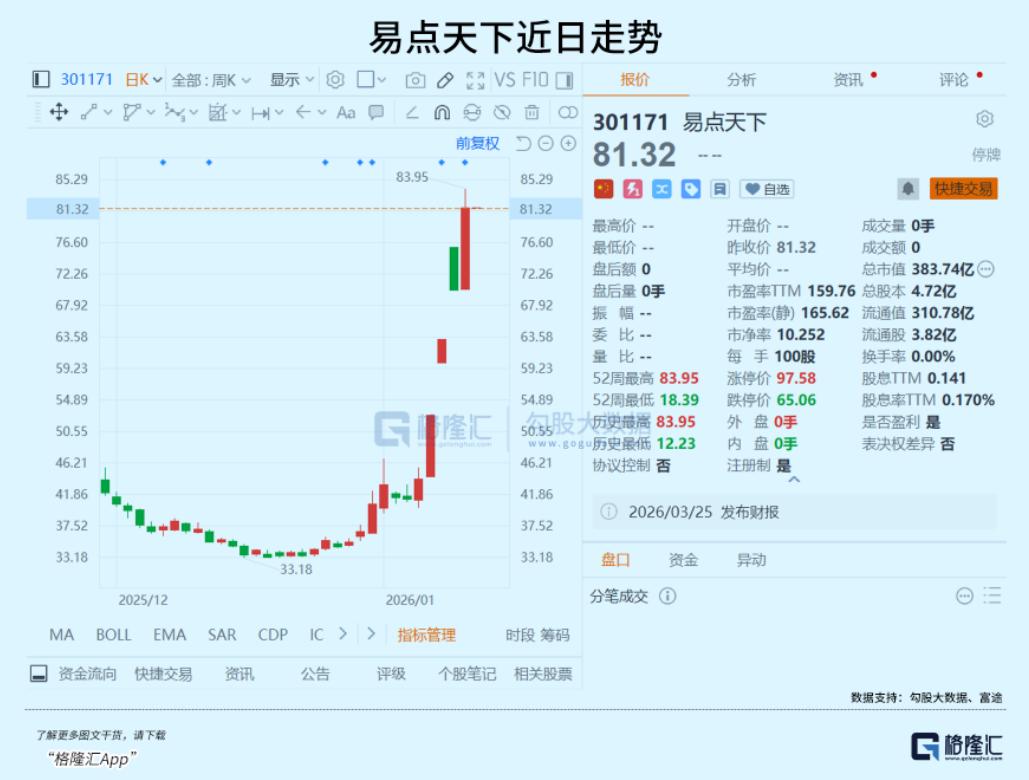
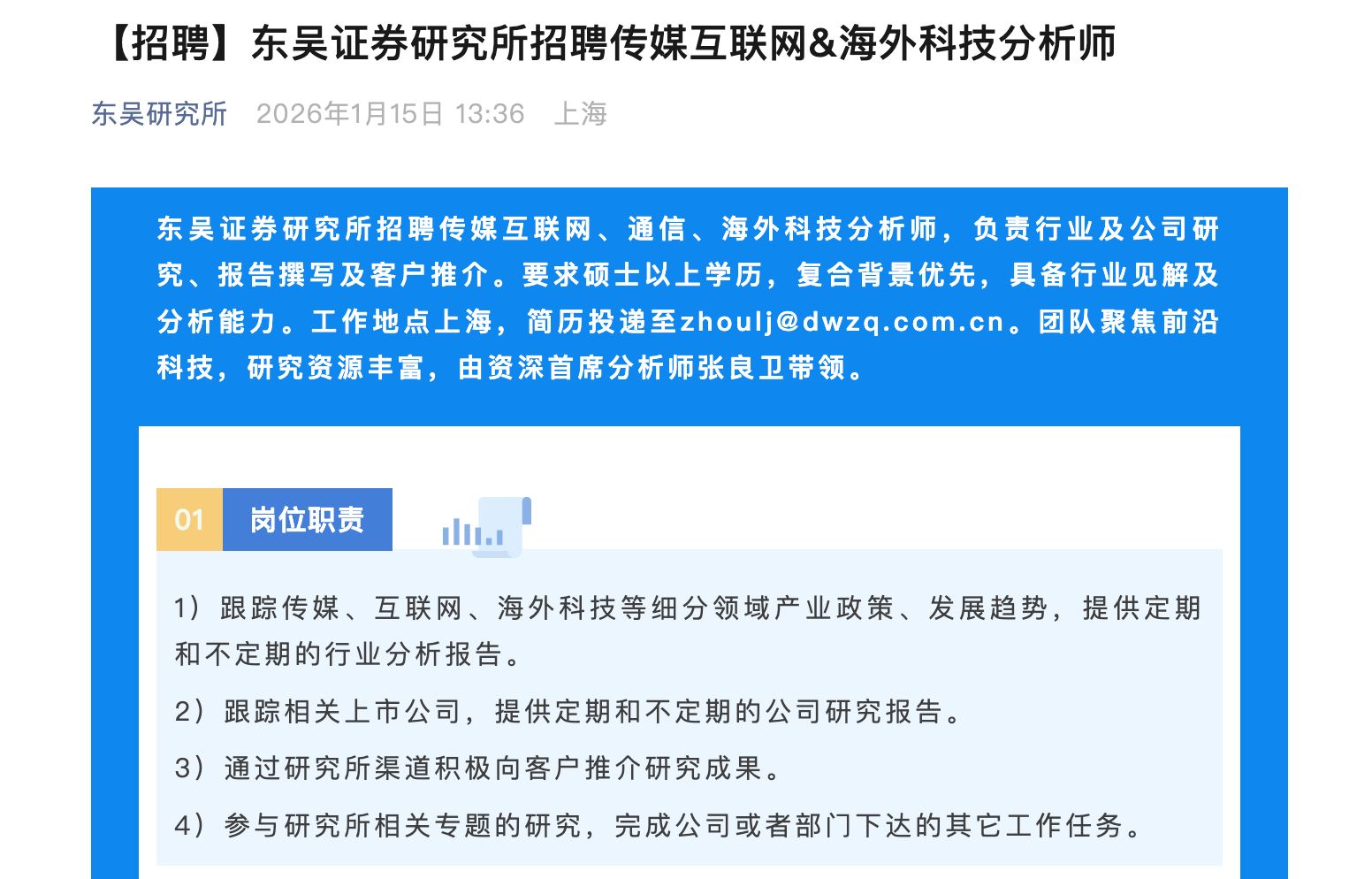
Group 1 - The media sector has experienced a significant resurgence at the beginning of 2026, driven by the strong catalyst of the GEO (Generative Engine Optimization) concept, with the media industry index rising by 21.29% in just half a month, making it the top-performing sector in the market [1][3] - The surge in the media sector has led to a "talent war" among sell-side research firms, with several brokerages, including Dongwu Securities, Guosheng Securities, and Everbright Securities, actively recruiting analysts to fill the research gap and capitalize on the new market opportunities [2][3] - The "New Yi Zhong Tian" combination, consisting of Yidian Tianxia, Zhongwen Online, and Tianlong Group, has seen each of its stocks rise by over 40% within the first half of January, with Yidian Tianxia's stock price even doubling [3] Group 2 - The recruitment trend in the media research field began as early as December 2025, with CICC announcing the hiring of media analysts focused on sub-sectors like online gaming and marketing advertising [6][7] - High-profile analysts such as Liu Xin and Yao Lei have recently switched firms, indicating a notable increase in talent mobility within the media sector, which is closely tied to the improving market conditions [7][9] - The media industry has historically faced challenges, ranking at the bottom in performance for several years, but has seen a turnaround starting in 2023, with a significant increase in investor interest and market performance [8][9]



A股翻倍牛股利欧股份停牌核查
2 1 Shi Ji Jing Ji Bao Dao· 2026-01-15 14:43
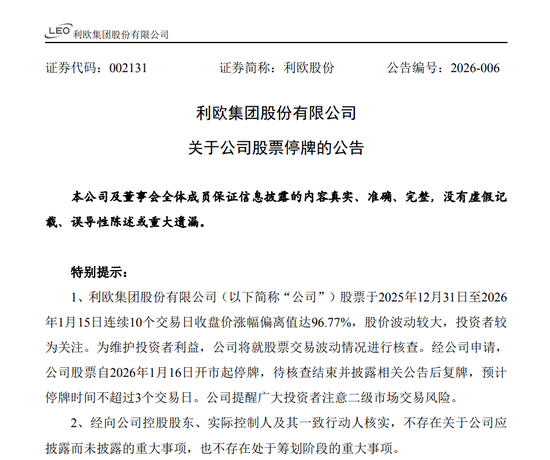
Group 1 - The core point of the article is that Liou Co., Ltd. announced a stock suspension due to significant price fluctuations, with a deviation of 96.77% over 10 trading days, to protect investor interests [1][3] - The stock price of Liou Co., Ltd. surged to 10.40 yuan, with a trading volume of 253.36 billion yuan, and a total market capitalization of 704.26 billion yuan, reflecting a cumulative increase of over 102% since December 31, 2025 [3] - The company reported a net profit loss of 259 million yuan for 2024, but a turnaround in the first half of 2025 with a net profit of 478 million yuan, primarily driven by investment income and fair value changes [5][6] Group 2 - As of January 15, 2026, Liou Co., Ltd. had a price-to-book ratio of 5.32 and a rolling price-to-earnings ratio of 143.98, both exceeding industry averages [5] - The company's revenue for the reporting period was approximately 4.82 billion yuan, reflecting a year-on-year decrease of 7.09%, while the net profit attributable to shareholders was approximately 110.71 million yuan, down 81.05% year-on-year [6] - The company’s total assets were approximately 21.89 billion yuan, showing a slight decrease of 0.45% compared to the previous year [6]

A股翻倍牛股,停牌核查
2 1 Shi Ji Jing Ji Bao Dao· 2026-01-15 14:42
Core Viewpoint - Liou Co., Ltd. announced a significant stock price fluctuation, with a deviation of 96.77% over 10 consecutive trading days, prompting a trading suspension for investigation [1][4]. Group 1: Stock Performance - On January 15, Liou Co., Ltd. saw a strong increase in stock price, closing at 10.40 yuan with a trading volume of 253.36 billion yuan, leading to a total market capitalization of 704.26 billion yuan [4]. - Since December 31, 2025, the stock price of Liou Co., Ltd. has increased by over 102% in just 10 trading days [4]. Group 2: Financial Performance - As of January 15, 2026, the company's latest price-to-book ratio is 5.32 times, and the rolling price-to-earnings ratio is 143.98 times, both exceeding the industry average [6]. - In 2024, Liou Co., Ltd. reported a net loss of 259 million yuan, but in the first half of 2025, the net profit rebounded to 478 million yuan, primarily driven by investment income and fair value changes [6]. - The net profit for the third quarter of 2025 was 110 million yuan, a decrease of 81.05% compared to the same period last year [6]. - The company's operating revenue for the current reporting period was approximately 4.82 billion yuan, down 7.09% year-on-year, while the net profit attributable to shareholders was approximately 111 million yuan, down 81.05% year-on-year [7].

A股翻倍牛股,停牌核查
21世纪经济报道· 2026-01-15 14:36
Core Viewpoint - The stock of Liou Co., Ltd. has experienced significant volatility, leading to a temporary suspension of trading to protect investor interests, with a notable price increase of over 102% in just 10 trading days [1][4]. Group 1: Stock Performance and Trading Suspension - On January 15, 2026, Liou Co., Ltd. announced a trading suspension starting January 16, 2026, due to a stock price deviation of 96.77% over 10 consecutive trading days [1]. - The stock closed at 10.40 yuan on January 15, 2026, with a trading volume of 253.36 billion yuan, resulting in a total market capitalization of 704.26 billion yuan [4]. - The company has stated that its AI-related business revenue is relatively small and does not significantly impact overall performance [1]. Group 2: Financial Performance - For the year 2024, Liou Co., Ltd. reported a net loss of 259 million yuan, while in the first half of 2025, the company achieved a net profit of 478 million yuan, primarily driven by investment income and fair value changes [6]. - The net profit for the third quarter of 2025 was reported at 110 million yuan, a decrease of 81.05% compared to the same period last year [6]. - The company's latest price-to-book ratio is 5.32 times, and the rolling price-to-earnings ratio is 143.98 times, both exceeding the industry average [6].

A股部分概念炒作熄火
第一财经· 2026-01-15 14:20
Core Viewpoint - The article discusses the recent decline in the stock prices of popular concept stocks, particularly in the GEO (Generative Engine Optimization) and AI application sectors, highlighting the disconnect between stock prices and fundamental performance [3][4]. Group 1: Market Reactions and Stock Performance - On January 15, 2026, major sectors such as internet and cultural media saw significant declines, with the internet index dropping by 5.31% and the cultural media index by 3.33% after reaching new highs on January 14 [6]. - Notable stocks like ZhiDeMai and ZhuoYi Information in the internet sector hit the 20% daily limit down, while TianLong Group in the cultural media sector also faced a 20% drop [6]. - ZhiDeMai's stock price increased by 91.44% from the beginning of 2026 to January 14, but the company clarified that it does not engage in GEO business, and its AI-related revenue is minimal [6][8]. Group 2: Company Announcements and Risk Warnings - Several companies, including TianLong Group and YiDianTianXia, issued risk warnings stating they do not engage in GEO business, and their related AI business has not yet generated significant revenue [7][8]. - 引力传媒 reported a stock price increase of 104.03% during the same period but acknowledged performance volatility, with a net profit of 20.36 million yuan for the first three quarters of 2025, reflecting a decline in gross margin [13][14]. Group 3: Regulatory Actions and Market Oversight - Regulatory bodies have taken action against companies for misleading disclosures and abnormal trading behaviors, with companies like Hangxiao Steel Structure and Electric Science Digital facing warnings [10][12]. - Hangxiao Steel Structure's stock experienced a significant rise before being penalized for inadequate information disclosure regarding its contracts, which were minor relative to its overall revenue [11][12]. - The article emphasizes the importance of accurate information disclosure and the need for companies to avoid speculative behaviors that could mislead investors [16]. Group 4: Long-term Market Trends and Investor Guidance - The article suggests that the current market environment reflects a clash between short-term speculative behavior and long-term industry trends, particularly in fields like commercial aerospace and AI [15]. - It advocates for a return to fundamental analysis, urging investors to scrutinize the actual business contributions of companies to their stock performance [16]. - The article concludes that regulatory measures are intended to foster a healthier market environment, promoting compliance and value investing as the future norm [16].