
大模型

Search documents
我在元宝抽万元小马卡,看懂腾讯为什么一定要做AI社交
Xin Lang Cai Jing· 2026-02-11 10:32
"希望重现11年前微信红包时刻" 1月26日, 在年会现场,腾讯董事会主席兼CEO马化腾亲自为AI助手元宝站台,宣布将在即将到来的春节通过元宝发放10亿元红包,并推出全新社交功 能"元宝派",希望在AI时代重新打造一场类似2015年微信红包的全民互动盛典。 2015年微信支付在体量、商户覆盖和认知度上落后于支付宝,借助春节这个高频、强情绪、强社交的节点,微信红包被自然嵌入到熟人关系链中,支付行 为第一次从"工具操作"变成了"社交互动"。在短短几天内,数亿用户完成了绑卡、转账和支付的全流程,微信支付由此撬开了移动支付的大门。 2月1日,元宝红包活动正式启动,当天登顶App Store总榜,元宝红包在微信群内刷屏。 2025年春节DeepSeek横空出世,腾讯一夜之间从"躺平生"化身为"卷王",2025年春节后,腾讯云、腾讯智能工作台ima、腾讯AI助手 "腾讯元宝" 都迅速接 入了DeepSeek大模型。 通过搭上 DeepSeek 这辆快车,腾讯一跃成为国内头部AI头部之一,元宝也是3月份增长最快的明星AI产品。 但问题在于,2025年的AI进展,快得远超任何一家大厂的内部节奏。 Manus的出圈,让市场第一 ...


河南这家省属国资上市公司入局算力,股价开盘即涨停
Xin Lang Cai Jing· 2026-02-11 10:32
Core Viewpoint - The company, YN Holdings, is planning to invest in the computing power industry, which is seen as a strategic move to align with its development needs and capitalize on the growing demand for digital infrastructure [2][4][16]. Group 1: Investment in Computing Power - YN Holdings announced its intention to acquire a controlling stake in Zhengzhou Heying Data Co., Ltd. through its subsidiary, Xiantian Computing (Henan) Technology Co., Ltd. [2][5][17]. - Xiantian Computing was established on March 27, 2024, with a registered capital of 100 million yuan, and is currently wholly owned by Henan Investment Group [5][17]. - Zhengzhou Heying primarily operates large-scale data centers, with facilities located in Hebei Province, serving the real-time computing needs of the Beijing-Tianjin-Hebei region [5][17]. Group 2: Data Center Capacity and Strategic Positioning - As of the announcement date, Zhengzhou Heying holds and plans data center IT capacity exceeding 1 GW, ranking among the top in the country [6][17]. - The Heying Data (Huailai) Technology Industrial Park is noted as the largest green computing cluster in the Beijing area, utilizing advanced cooling technologies and integrated site selection strategies [6][17]. - The transaction is expected to leverage both companies' strengths in green power supply and regional layout, promoting low-carbon transformation and seizing industry opportunities [18]. Group 3: Financial Performance and Market Impact - Following the announcement, YN Holdings' stock price surged to 7.54 yuan per share, marking a new high in nearly three and a half years, with a market capitalization of 11.5 billion yuan [18]. - The company has been focusing on enhancing its renewable energy generation capacity and adjusting its asset structure to support its transformation [20]. - YN Holdings anticipates a significant turnaround in profitability, projecting a net profit of 305 million to 391 million yuan for 2025, compared to a loss of 121 million yuan in the previous year [22].


行业跟踪点评:大厂抢占流量入口,C端路径验证开启
Yin He Zheng Quan· 2026-02-11 08:42
Investment Rating - The report maintains a "Recommended" rating for the media industry [3] Core Insights - The current AI industry is catalyzing significant developments, with the recent "AI Red Packet War" marking a milestone in the commercialization of AI applications, particularly in C-end user engagement [5] - Major companies are competing for C-end traffic entry points, utilizing cash red packets to cultivate user habits and drive user acquisition for their AI assistant applications [5] - The integration of AI assistants with existing platforms is creating a new ecosystem, enhancing user experience and potentially validating commercial pathways for AI applications in various sectors [5] Summary by Sections Industry Overview - The report highlights the ongoing competition among major firms to capture C-end user traffic, emphasizing the importance of user habit cultivation through promotional activities [5] AI Application Development - The report suggests focusing on AI-enabled applications and related sectors, recommending companies such as Kuaishou-W, Worth Buying (AI + E-commerce), BlueFocus (AI + Marketing), Kunlun Wanwei (AI Applications), and Kaiying Network (AI + Gaming) [2] Market Performance - The report includes a performance comparison of the media sector against the CSI 300 index, indicating fluctuations in relative performance over time [4]
决定了:过年攻略全都不过脑子,让AI去想
机器之心· 2026-02-11 08:34
或许 AI 的事还是用 AI 来解决,今年春节的安排,必须得上「深度研究」了。 说来也巧,我们发现美团大模型 LongCat 刚刚上线了这个功能。 编辑 | 泽南、杨文 春节还没到,「过年的气氛」已经渗入科技圈每个人的毛孔。单说 AI 大模型这一块,刚刚发布的有 kimi 2.5 和 Step 3.5 Flash,即将发布的据说还有 DeepSeek V4,GPT-5.3、 Claude Sonnet 5、 Qwen 3.5,GLM-5,说不定一觉醒来,现有的技术就要被颠覆。 再看看千问和元宝发的红包,组团上春晚的机器人,所有厂商在春节期间都摆出一副志在必得的架势。 正因为如此,我们在这个临近长假的时间段,又遭遇了很多的变数。很多人的行程调了又调,不到最后一刻不知道哪几天有空,难不成这场 AI 的革命,反 而会让我们忙到忘了过节? 这一次的 「深度研究」(DeepResearch)上,LongCat 又把实用化推向新的高度。 LongCat(龙猫)系列大模型,最近才火起来的,在 AI 圈里它的口碑主要是 速度快,工具调用出色,走「实用主义」路线 。 正好,我们就用它来安排一下春节的事儿。 值得注意的是,该功能 ...

我在元宝抽万元小马卡,看懂腾讯为什么一定要做AI社交
新财富· 2026-02-11 08:03
Core Viewpoint - Tencent has transformed from a passive player to a competitive leader in the AI space with the launch of its AI assistant "Yuanbao" and the integration of the DeepSeek model, aiming to replicate the success of the WeChat red envelope phenomenon from 2015 [2][3][6]. Group 1: Product Development and Strategy - Tencent's AI assistant Yuanbao was launched with a significant promotional campaign, including a 1 billion yuan red envelope initiative during the Spring Festival, aiming to create a nationwide interactive event [6][7]. - The rapid growth of Yuanbao's user engagement was evident, with a 30-fold increase in daily usage of its AI image generation feature and an 80% increase in user interaction time since the launch of the red envelope activity [6][12]. - Yuanbao's new social feature "Yuanbao Pai" was introduced to enhance user interaction and allow users to create their own social groups, marking a shift from relying solely on WeChat to building an independent social ecosystem [11][27]. Group 2: Competitive Landscape - In 2025, Alibaba's aggressive expansion with its AI product "Qianwen" has intensified competition in the AI sector, positioning it as a strong contender against Tencent's Yuanbao and ByteDance's Doubao [19][20]. - By January 2025, Doubao led the AI application rankings with over 200 million monthly active users, while Yuanbao and Qianwen followed with 91.13 million and 86.17 million monthly active users, respectively, indicating a three-way competitive landscape [19][20]. Group 3: AI Integration and User Experience - Tencent's approach to AI emphasizes embedding AI functionalities within existing products to maintain user habits, as seen in WeChat's integration of AI features without altering user experience [15][16]. - The AI capabilities in Tencent Meeting and ima are designed to enhance collaboration during meetings, reflecting a practical application of AI rather than a standalone feature [18]. Group 4: Social Dynamics and AI - The introduction of Yuanbao Pai aims to explore the potential of AI in social interactions, questioning whether AI can possess a social identity within human relationship networks [30]. - The strategy behind Yuanbao Pai includes leveraging familiar social dynamics, such as red envelopes, to encourage user engagement and community building, reminiscent of early QQ community strategies [28][30].

豆包、蚂蚁阿福加入春节红包大战
2 1 Shi Ji Jing Ji Bao Dao· 2026-02-11 07:15
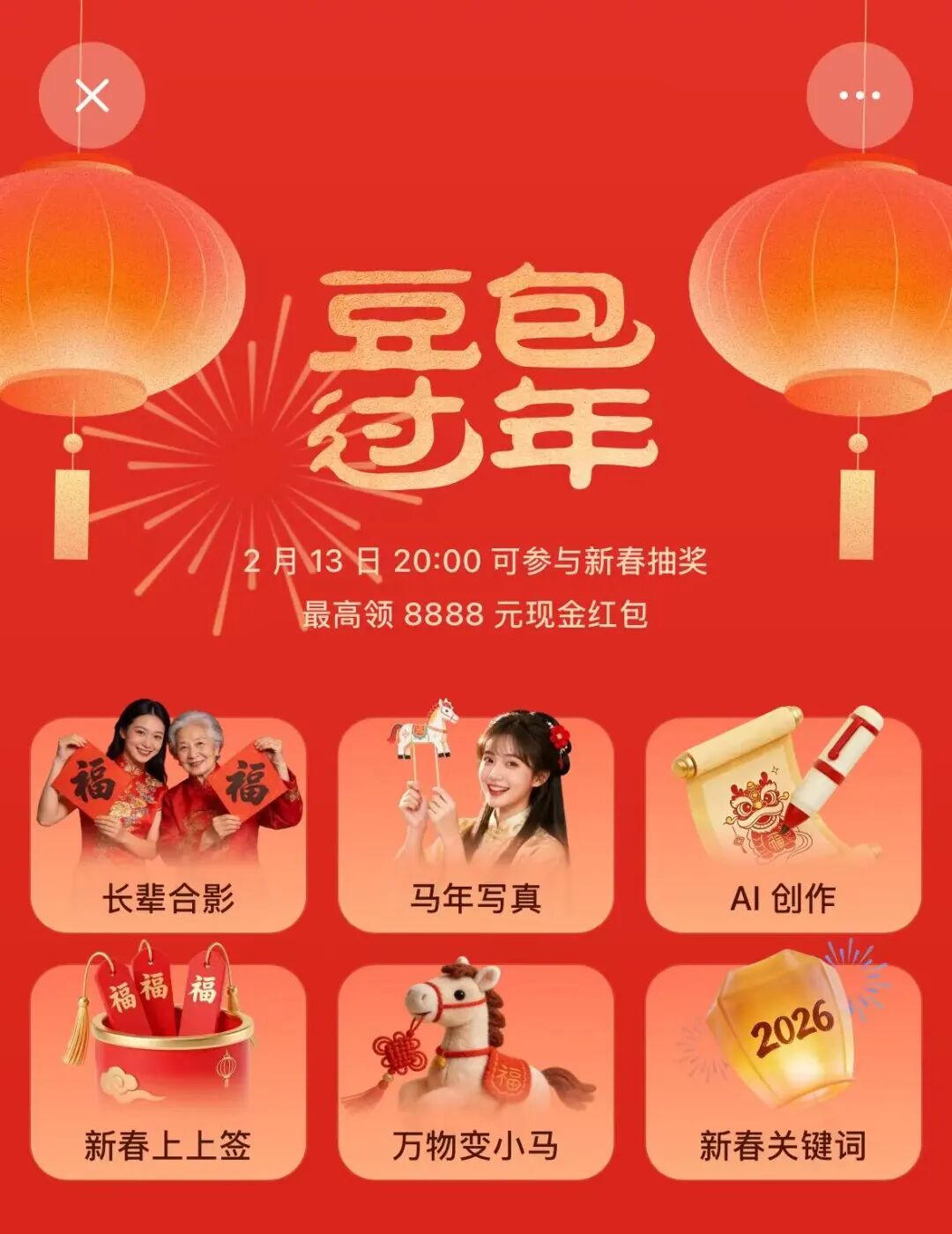
Group 1 - Doubao will join the Spring Festival red envelope competition, offering a chance to win up to 8,888 yuan in cash on February 13 at 20:00 [1] - On New Year's Eve, Doubao will distribute over 100,000 technology gifts and cash red envelopes during the Spring Festival Gala, with prizes including advanced tech products and smart consumer goods [4] - The technology gifts will feature 17 popular products, including robots and 3D printers, as well as electric vehicles from Audi and Mercedes-Benz [4] Group 2 - Ant Group's Alipay will also launch a red envelope activity, providing new registered users with a 16.8 yuan red envelope from February 11 to February 12 [5]
马斯克遭遇人才离职潮:特斯拉13年高管离职,杭州AI天才也走了
Sou Hu Cai Jing· 2026-02-11 06:55
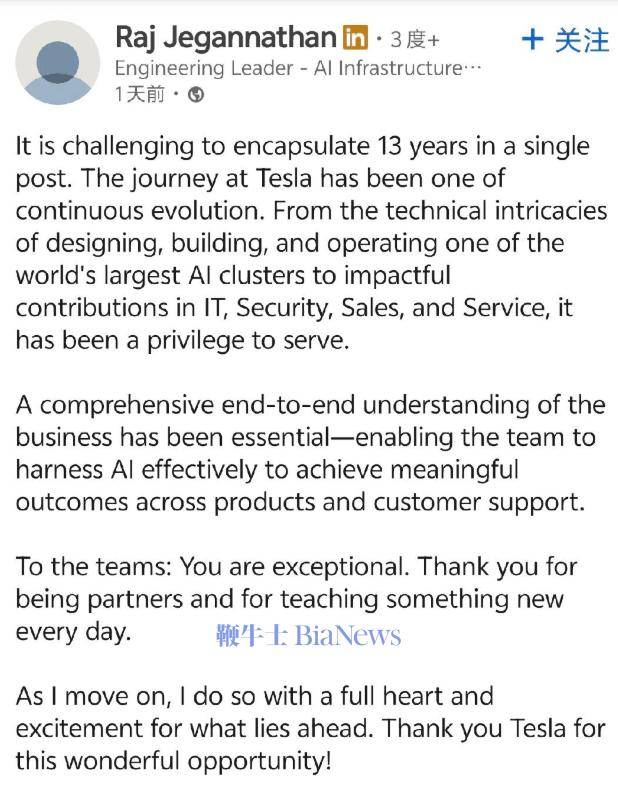
"感谢特斯拉过去给我的机会"。 "我今天从xAI离职了"。 "今天是我在xAI的最后一天"。 短短几句话,同时刷屏了AI圈和车圈。这背后意味着马斯克正在遭遇人才离职潮。 一边是特斯拉13年老将、负责AI Infra的副总裁拉杰·杰根纳坦(Raj Jegannathan)官宣离职。 另一边,其名下的大模型公司xAI两天走了3个联创,多名员工发文表示离职,其中有多个华人。 本来特斯拉高管离职,在这2年不算稀罕,但如果和xAI的一系列事件联系起来看,这就很不寻常了。 马斯克手下核心人物在同一天纷纷离职,到底咋回事儿??? 特斯拉又有副总裁离职了 杰根纳坦最近在领英发文,表示自己将从特斯拉离职。 他在文中透露,自己在特斯拉工作了13年,在这期间设计、建设和运营了全球最大的AI集群。这段工作经历对他很重要,他感谢工作中一路同行的伙 伴,也感谢特斯拉给他宝贵的机会。 杰根纳坦所言并不夸张。对他来说,特斯拉可以说是人生的分水岭。公开信息显示,杰根纳坦是一位"骨灰级"程序员,有23年的工作经验,甚至会写 Visual Basic(一种诞生于上个世纪的编程语言)。 他早年在一些名不见经传的公司工作,2012年才从印度一家软件公 ...

华为哈勃入股大模型推理服务商趋境科技公司
Qi Cha Cha· 2026-02-11 06:36
企查查APP显示,近日,北京趋境科技有限责任公司发生工商变更,新增华为旗下深圳哈勃科技投资合 伙企业(有限合伙)等为股东,同时注册资本增至560.21万元。企查查信息显示,该公司成立于2023 年,经营范围包含:人工智能基础软件开发;软件开发;软件外包服务;人工智能应用软件开发等。据 其官网,趋境科技专注于大模型推理优化,助力企业低成本落地使用大模型。 (原标题:华为哈勃入股大模型推理服务商趋境科技公司) ...
讯飞星火X2发布:基于全国产算力,直面行业刚需升级打造
Xin Lang Cai Jing· 2026-02-11 06:04
新浪科技讯 2月11日下午消息,科大讯飞发布基于全国产算力训练的星火X2大模型。据悉,此次升级有 两大亮点:一是通用能力全面升级,星火X2整体能力对标国际顶尖模型水平,在数学、推理、语言理 解、智能体等能力上媲美国际最优;130+多语言综合能力继续提升,拉美、东盟等地区重点语种效果 保持业界领先水平。二是依托星火X2的算法突破、行业高质量数据集以及专业思维链的强化学习,星 火行业大模型持续升级,产品应用方案取得显著进步。 科大讯飞表示,这次面向关键行业落地的实用化升级,标志着我国基于全国产算力训练的大模型底座在 算法和工程创新方面迈入新阶段。星火X2在实现通用能力全面升级的同时,更加专注于教育、医疗、 汽车、智能体等高专业性、高体验性场景,致力于为这些领域提供领先、可靠的技术方案与支撑。 当前,讯飞星火X2的最新能力可直接在讯飞星火网页版和App体验,全新API也已上线讯飞开放平台。 (文猛) 责任编辑:杨赐 新浪科技讯 2月11日下午消息,科大讯飞发布基于全国产算力训练的星火X2大模型。据悉,此次升级有 两大亮点:一是通用能力全面升级,星火X2整体能力对标国际顶尖模型水平,在数学、推理、语言理 解、智能体等 ...

这场金融科技发展经验交流会,银行都谈了这些→
Jin Rong Shi Bao· 2026-02-11 06:00
Core Viewpoint - The integration of financial technology is essential for the high-quality development of the financial industry, serving as a critical driver to address the challenges posed by the "five major articles" in finance [3][5][6]. Group 1: Financial Technology Development - The meeting organized by the Financial Times focuses on the innovative breakthroughs and practical applications of financial technology, showcasing how digital technology enhances the quality and efficiency of financial services [1]. - Financial technology is no longer an optional enhancement but a necessary component for the sustainable development of the financial sector, as emphasized by the recent Central Financial Work Conference [3][5]. - The Financial Times has been a key player in promoting financial discourse and collaboration within the industry since its inception in 1987, aiming to build an efficient communication platform [3][4]. Group 2: Industry Collaboration and Experience Sharing - The event aims to foster collaboration and experience sharing among industry leaders, including representatives from major banks like ICBC, ABC, and CCB, who presented successful applications of financial technology [5]. - The Financial Times plans to leverage its media capabilities to report comprehensively on the event, ensuring that innovative practices are recognized and can be replicated across the industry [5][6]. Group 3: Specific Bank Initiatives - ICBC is developing a comprehensive AI-driven financial model called "工银智涌," which aims to integrate AI with financial services, enhancing productivity and supporting the "five major articles" in finance [10][12]. - ABC has initiated a digital transformation strategy focusing on a data-driven enterprise architecture to improve service quality and operational efficiency, addressing key challenges in the financial sector [16][19]. - CCB is building an integrated service system for technology finance, emphasizing collaboration across its branches and subsidiaries to support technology-driven enterprises [21][23]. - PSBC is innovating its credit granting process through a data-driven approach, enhancing its service capabilities in rural finance and supporting the national strategy for rural revitalization [26][28]. - CITIC Bank is focusing on creating a digital ecosystem for inclusive finance, addressing the unique needs of small and micro enterprises through innovative product offerings and risk management solutions [30][32].




