
AI泡沫

Search documents
强化虚拟货币监管,维护经济金融秩序稳定
2 1 Shi Ji Jing Ji Bao Dao· 2025-12-01 22:56
Core Viewpoint - The central theme of the articles is the Chinese central bank's ongoing commitment to prohibiting virtual currencies, including stablecoins, due to their potential for illegal financial activities and risks to financial stability [1][2][3] Group 1: Regulatory Actions - The central bank has convened a meeting with 13 departments to coordinate efforts against virtual currency trading and speculation, emphasizing the need to protect public financial security [1] - Stablecoins are classified as a form of virtual currency and are currently unable to meet customer identification and anti-money laundering requirements, posing risks of money laundering and fraud [1] Group 2: Market Dynamics - The market for stablecoins is expanding, with significant interest following their recognition in the U.S. as a legitimate financial instrument, despite concerns about their actual use primarily for purchasing cryptocurrencies [1][2] - The U.S. aims to leverage stablecoins to maintain the dollar's status as the world's primary reserve currency, with projections indicating that the issuance of dollar stablecoins could reach $2 trillion by the end of 2028, creating additional demand for U.S. short-term government bonds [2] Group 3: Financial Risks - The rapid growth of stablecoins could lead to significant outflows from retail bank deposits, increasing volatility in the banking sector, with estimates suggesting a potential $6.6 trillion in deposit outflows for U.S. traditional banks [2] - The largest dollar stablecoins hold substantial amounts of U.S. short-term government bonds, and a potential run on these stablecoins could trigger a sell-off of these assets, posing systemic risks to financial markets [2][3] Group 4: Speculative Environment - The instability of stablecoins is rising, highlighted by the recent decoupling of USDe, which is not backed by fiat or hard assets, leading to a dangerous leverage cycle in the market [3] - The speculative atmosphere surrounding cryptocurrencies is influenced by optimism in the U.S. stock market driven by AI, which could lead to significant sell-offs in cryptocurrency assets if concerns about an AI bubble arise [3]
【时代风口】AI的未来:来自互联网泡沫的启示
Zheng Quan Shi Bao· 2025-12-01 18:14
此外,泡沫破灭的积极意义,还在于为技术"民主化"和应用大爆发扫清障碍。互联网泡沫后,宽带普 及、开源软件兴起、开发工具成本骤降,创业门槛大幅降低,直接催生了Web 2.0黄金时代,诞生了 Facebook、YouTube等深度融入并重塑生活的应用。AI的发展也势必循此路径前行。当前大模型训练与 推理成本高昂,技术门槛将中小玩家挡在门外。泡沫破裂将倒逼技术提供商优化成本、推出更易用廉价 的API服务,让AI技术从实验室和巨头军备竞赛中"解放",真正赋能千行百业。 韩和元 1995年至2001年间,全球资本市场曾上演过这样一幕:过度投机,估值远超实际价值。最终泡沫破裂导 致市场暴跌、大量企业倒闭。金融史将其称为"互联网泡沫"。如今,AI(人工智能)领域似乎正上演相 似剧情:估值高企、资本扎堆、概念炒作泛滥,种种迹象似乎印证着AI泡沫的存在。 但我想说的是,纵或AI泡沫客观存在,亦大可不必恐慌。诚如互联网泡沫所揭示的:泡沫破灭后,接 踵而至的必然是一场惨烈的出清,但这场出清并未摧毁互联网本身,而是淘汰了缺乏坚实商业模式的投 机者——亚马逊股价暴跌90%后凭借客户中心与物流护城河浴火重生,而单纯讲故事、烧钱换流量的公 ...
套现415亿元 日本首富孙正义:需要现金 我是哭着卖出英伟达股票的
Mei Ri Jing Ji Xin Wen· 2025-12-01 17:04
据智通财经,日前,软银集团创始人孙正义表示,若公司拥有无限的资金来支持其在人工智能领域的下 一轮投资,包括对OpenAI的大额押注,那么他本不会卖出英伟达的股份。 值得一提的是,这是孙正义在11月清仓英伟达后的首次置评。孙正义表示,"我一股也不想卖的,只是 更需要资金来投资OpenAI和其他项目,我是哭着卖出英伟达股票的。" 此前,软银集团于11月11日发布业绩报告。报告显示,其持有的3210万股英伟达股票(含资产管理子公 司持股)已于2025年10月以58.3亿美元(约合人民币415亿元)价格售出。 英国央行和国际货币基金组织(IMF)相继警告,AI概念股的市值飙升至"与互联网泡沫高峰时期相似 的水平"。目前,美国市值最高的五大公司合计占据标普500指数总市值的30%,为半个世纪最高集中 度。以调整后盈利指标计算,这些股票的估值已是自2000年以来最极端的水平。 此外美国银行此前发布的10月全球基金经理调查显示,随着人工智能概念股今年持续的强劲上涨,全球 基金经理对AI泡沫的担忧正上升至空前水平,54%的受访者认为人工智能概念股已进入泡沫区域。 尽管有多家机构减持,并对AI泡沫表示担忧,但仍有不少机构秉持着 ...


“快哭了!”孙正义,首次回应
证券时报· 2025-12-01 14:16
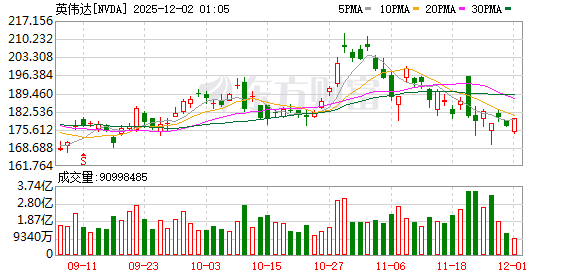
在今日 ( 12 月 1 日 ) 举行的 东京 FII Priority Asia 论坛 上,软银集团创始人孙正义首次回应清仓英 伟达,以及如何看待 " AI 泡沫"。 在被软银清仓之时,今年10月底,英伟达最近成为首家市值突破5万亿美元的公司,而就在3个月前,它的市值 刚刚突破4万亿美元,这种飙升程度,加剧了近几个月来人们对人工智能行业泡沫的担忧。批评人士指出,在 人工智能狂热的推动下,科技巨头的股价过快飙升,与最终破裂的2000年互联网泡沫有相似之处。11月以来, 英伟达股价整体呈回调趋势,目前股价报177美元/股,较高点回撤幅度超过16%。 阿里巴巴集团董事长蔡崇信近期在香港大学演讲时表示,针对AI是否为泡沫的疑问,他区分两种类型:金融 市场泡沫涉及估值合理性,如市盈率50倍是否过高,"这是一门艺术,我不知道";技术泡沫则关乎技术本身真 实性。他认为AI可能存在金融泡沫,但技术基础真实可靠,类比2000年互联网泡沫破裂后,互联网并未消失 反而更强大。所有投入AI基础设施与模型开发的资源不会白费。 英伟达CEO黄仁勋则在财报电话会上再次驳斥了"AI泡沫论",觉得从他和公司的角度看不到泡沫存在,并认 为"已 ...

经济学家谈AI泡沫:过度投资、过高估值、过度持有、过度杠杆
Sou Hu Cai Jing· 2025-12-01 14:07
Group 1 - The core discussion revolves around the impact of artificial intelligence (AI) on the U.S. economy, with AI-related capital expenditures contributing approximately 40% to economic growth this year, and potentially up to 60% when including wealth effects from the stock market [2][8] - Ruchir Sharma warns of potential bubble risks in the AI sector, drawing parallels to the 2000 internet bubble, citing signs of over-investment, over-valuation, over-ownership, and over-leverage in the current market [2][9][14] - The conversation highlights a surprising global market dynamic, where Europe and China are expected to outperform the U.S. by 2025, despite the current focus on the U.S. market [2][18] Group 2 - Sharma discusses the shift in China's private economy and technology policies, emphasizing the need for support of the private sector to compete in AI, as evidenced by Alibaba's stock performance following Jack Ma's return [3][19] - The dialogue touches on the Federal Reserve's independence and the global debt issue, with Sharma questioning the Fed's motivations for interest rate cuts amidst persistent inflation [3][21][22] - A bold prediction is made for 2026, suggesting that as the AI bubble faces risks from rising interest rates, high-quality stocks may see a resurgence, while international markets continue to outperform the U.S. [3][25][26]

美国数据中心用电需求被上调36%,AI能耗飙升反而加剧泡沫担忧
智通财经网· 2025-12-01 14:06
Core Insights - BNEF predicts that by 2035, the power demand of data centers in the U.S. will surge to 106 GW, a 36% increase from previous estimates, driven by new early-stage data center projects [1] - The share of AI training and usage in data center capacity is expected to rise from approximately 12% to nearly 40% by 2035, significantly increasing data center utilization rates [1] - The aging and under-maintained U.S. power grid is projected to face a substantial power crisis due to the surge in electricity demand from data centers, new factories, and electric vehicles [1][2] Power Grid Challenges - Schneider Electric warns that maintaining current reserve capacity levels could lead to a significant power shortfall by 2028, with a potential gap of 175 GW by 2033, risking large-scale blackouts [1][2] - The North American Electric Reliability Corporation (NERC) indicates that data centers are already causing a notable increase in winter electricity demand, raising the risk of outages [2] Market Reactions - U.S. utility stocks have recently declined after reaching historical peaks, as investors grow concerned about the sustainability of returns amid rising electricity demand [4][5] - Companies like Constellation Energy and Vistra Energy have seen stock price drops due to slower-than-expected project announcements and adjustments to earnings forecasts [4][5] Investment Sentiment - There is a growing skepticism regarding the ability of utility companies to meet expansion promises, with concerns about potential capital waste on unfeasible projects [5] - The uncertainty surrounding AI as a profitable business model is causing traders to reassess investments in data center construction and operations, leading to discussions about an AI bubble [5][6] Technological Solutions - Some technologies and strategies are being implemented to alleviate grid congestion, such as the rapid increase in battery capacity in Texas [3] - Schneider Electric advocates for prioritizing grid enhancement technologies over large-scale new generation and transmission projects, which may not meet immediate power demands [3]
法兴发布看空报告:这轮AI科技牛市,不少基金经理属于被迫营业
Zhi Tong Cai Jing· 2025-12-01 13:47
但热闹背后,法国兴业银行全球策略团队却泼了盆冷水:这波被称作AI泡沫的牛市,真的能一直涨下 去吗?哪些因素可能让它突然熄火?今天,一起来拆解这份最新报告的核心观点。 最近的全球股市,用韧性十足来形容一点不为过——美国非农数据超预期时,大家还担心美联储12月不 降息,结果FOMC几位大佬一放鸽派信号,投资者立马杀回市场,AI和科技板块继续领着牛市往前冲。 被迫营业的AI牛市 法兴分析师Albert Edwards发现,现在的市场氛围,和1990年代末的纳斯达克泡沫太像了。 当时没人愿意听唱空的声音,而现在也一样:哪怕有人觉得AI估值虚高,也不得不买。为啥?因为这 轮牛市是AI和科技股一家独大,不跟着买,你的业绩就会跑输指数,对基金经理来说,甚至可能丢掉 自己的工作。 他翻出1999年自己写的报告,发现那时候自己也逐渐不聊纳斯达克泡沫了——因为根本没人听。如今历 史仿佛重演,"越涨越买"的循环正在上演。 三大隐忧始终存在 虽然现在牛市看着稳,但法兴报告指出了3个不能忽视的风险,尤其是最后一个,可能让经济跟着"翻 车"。 短期没"明牌"触发因素,但暗雷已响 1999-2000年的泡沫,是美联储加息直接戳破的——当时 ...

孙正义回应清仓英伟达:我是哭着卖掉的
Guan Cha Zhe Wang· 2025-12-01 13:41
Core Viewpoint - SoftBank Group's founder Masayoshi Son expressed that the sale of Nvidia shares was a necessary move to raise funds for future investments in artificial intelligence, despite emotional attachment to the stock [1][2]. Group 1: SoftBank's Investment Strategy - SoftBank has heavily invested in AI this year, including projects with OpenAI and Oracle, and plans to invest an additional $6.5 billion in OpenAI [2]. - The company has also announced plans to acquire U.S. chip company Ampere for $6.5 billion [2]. - SoftBank's second-quarter net profit reached 2.5 trillion yen (approximately 114.2 billion yuan), significantly exceeding analyst expectations of 418.2 billion yen (approximately 19.1 billion yuan) [2]. Group 2: Nvidia's Financial Performance - Nvidia reported third-quarter revenue of $57.006 billion, a 62% increase year-over-year, with net profit of $31.91 billion, up 65% [2]. - The data center business achieved record revenue of $51.2 billion in the third quarter, a 66% year-over-year increase [2]. - Nvidia's fourth-quarter revenue is projected to be around $65 billion, with a gross margin expected at 74.8% [2]. Group 3: Market Concerns and AI Bubble - Despite Nvidia's strong financial results, investor concerns about an "AI bubble" have intensified, leading to a 14.45% decline in Nvidia's stock price over the past month [3]. - The market is questioning whether Nvidia is artificially creating demand through complex financing structures rather than responding to genuine market needs [3]. - Research from MIT found that 95% of companies investing in AI reported zero return on investment, while Bain & Co. predicts a $800 billion shortfall in revenue needed to meet expected demand by 2030 [4].

ChatGPT三周年,那个“对话模型”如何重构我们的世界
3 6 Ke· 2025-12-01 10:22
Core Insights - The launch of ChatGPT by OpenAI on November 30, 2022, marked the beginning of a transformative journey in AI, impacting various sectors including technology, business, education, and geopolitics [1] - The rapid user adoption of ChatGPT, reaching 1 million users within five days and 100 million in two months, highlights its unprecedented growth compared to other platforms like TikTok and Instagram [2] - The evolution of ChatGPT from a simple conversational model to a sophisticated platform with multimodal capabilities and real-time voice interaction signifies a major leap in AI technology [2][3] User Growth and Engagement - By the end of 2024, ChatGPT had 300 million weekly active users, growing to 800 million by November 2025, indicating a significant penetration into global markets [5][6] - The mobile revenue surpassed $2 billion in August 2025, with an average revenue per installation of $2.91, showcasing its commercial viability [6] Business Model and Strategy - ChatGPT's pricing strategy evolved from a free model to a tiered subscription model, including a $20/month Plus plan and a $200/month Pro plan, aiming to capture various market segments [6] - The platform's enterprise customer base exceeded 1 million by 2025, making it the fastest-growing business platform in history [6] Technological Advancements - The introduction of GPT-4 and GPT-5 brought significant enhancements, including the ability to perform complex tasks, manage calendars, and generate comprehensive applications [5][10] - The shift from interactive AI to agent-based AI indicates a transformation in how users interact with technology, moving towards more autonomous functionalities [5][10] Market Dynamics and Competition - The competitive landscape has shifted dramatically, with emerging players like DeepSeek challenging OpenAI, prompting a return to open-source models [10] - The stock prices of major tech companies, including Nvidia, have surged significantly, reflecting the capital market's enthusiasm for AI technologies [10] Ethical and Legal Challenges - The rapid growth of ChatGPT has raised concerns regarding safety, with incidents of inappropriate content generation and lawsuits related to mental health issues [8][9] - Ongoing legal battles over copyright infringement and the ethical implications of AI training data highlight the complexities of integrating AI into society [9] Future Outlook - As ChatGPT approaches its third anniversary, questions about its limits and the sustainability of its growth emerge, particularly regarding energy consumption and societal impacts [11][12] - The potential for AI to redefine personal health markets and other sectors indicates a continuous evolution of its applications, while also raising concerns about the implications for future generations [12][13]
可转债市场周观察:转债补跌幅度有限,交易情绪较弱
Orient Securities· 2025-12-01 07:43
可转债市场周观察 研究结论 风险提示 固定收益 | 动态跟踪 转债补跌幅度有限,交易情绪较弱 政策变化超预期;货币政策变化超预期;经济基本面变化超预期;信用风险暴露超预 期; 报告发布日期 2025 年 12 月 01 日 | 市场对明年一致预期或将提前反应:固定 | 2025-11-27 | | --- | --- | | 收益市场周观察 | | | 正股大幅下跌,转债明显惜售:可转债市 | 2025-11-25 | | 场周观察 | | | 关注永续品种定价偏离带来的机会:信用 | 2025-11-24 | | 债市场周观察 | | 有关分析师的申明,见本报告最后部分。其他重要信息披露见分析师申明之后部分,或请与您的投资代表联系。并请阅读本证券研究报告最后一页的免责申明。 ⚫ 转债在估值不断积累过后上周开始补跌,百元溢价率显著回调,但并未回到 11 月中 旬均值水平。转债资产由于绝对价格和估值水平均过高因此配置意愿较弱,高位的 支撑来两方面,一是供给小于需求下的稀缺性溢价,二是权益市场强势环境带来的 支撑,两大因素未被彻底打破前转债估值依然坚挺。 ⚫ 我们认为,当前转债性价比已处于低位,估值过高叠加优质个 ...