城市更新

Search documents
从“有其居”到“优其居” 托起百姓“安居梦”
Xin Lang Cai Jing· 2026-01-21 22:37
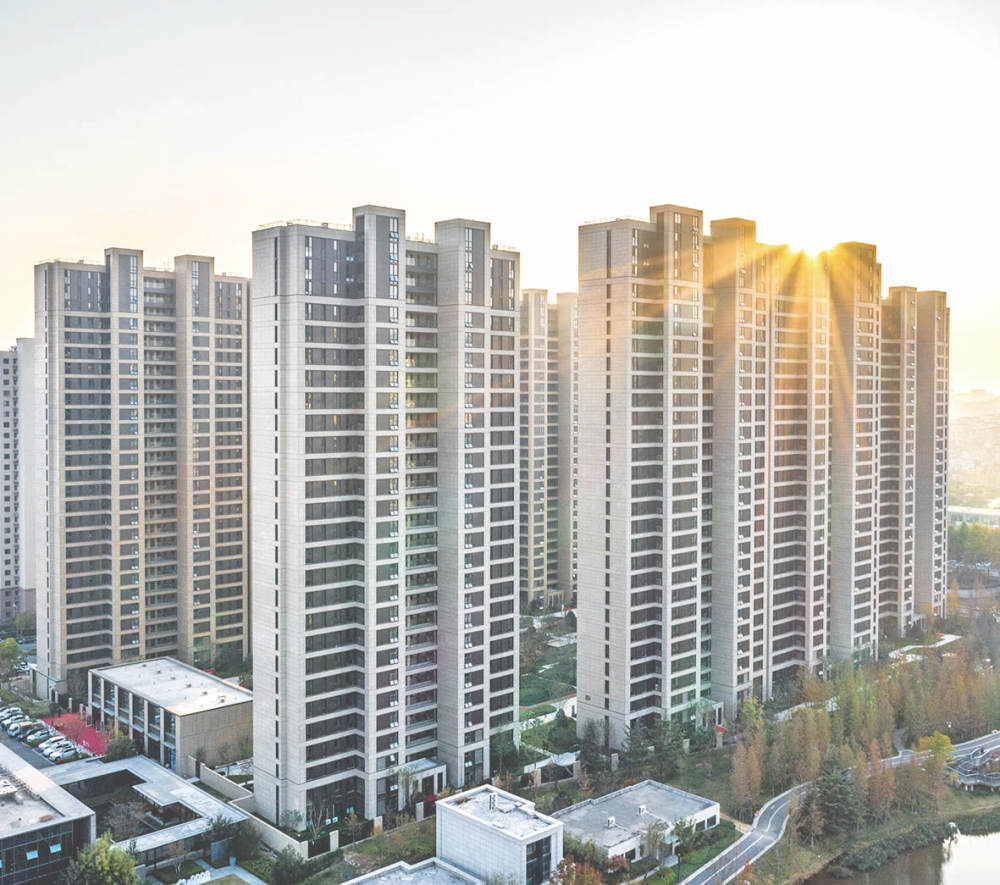
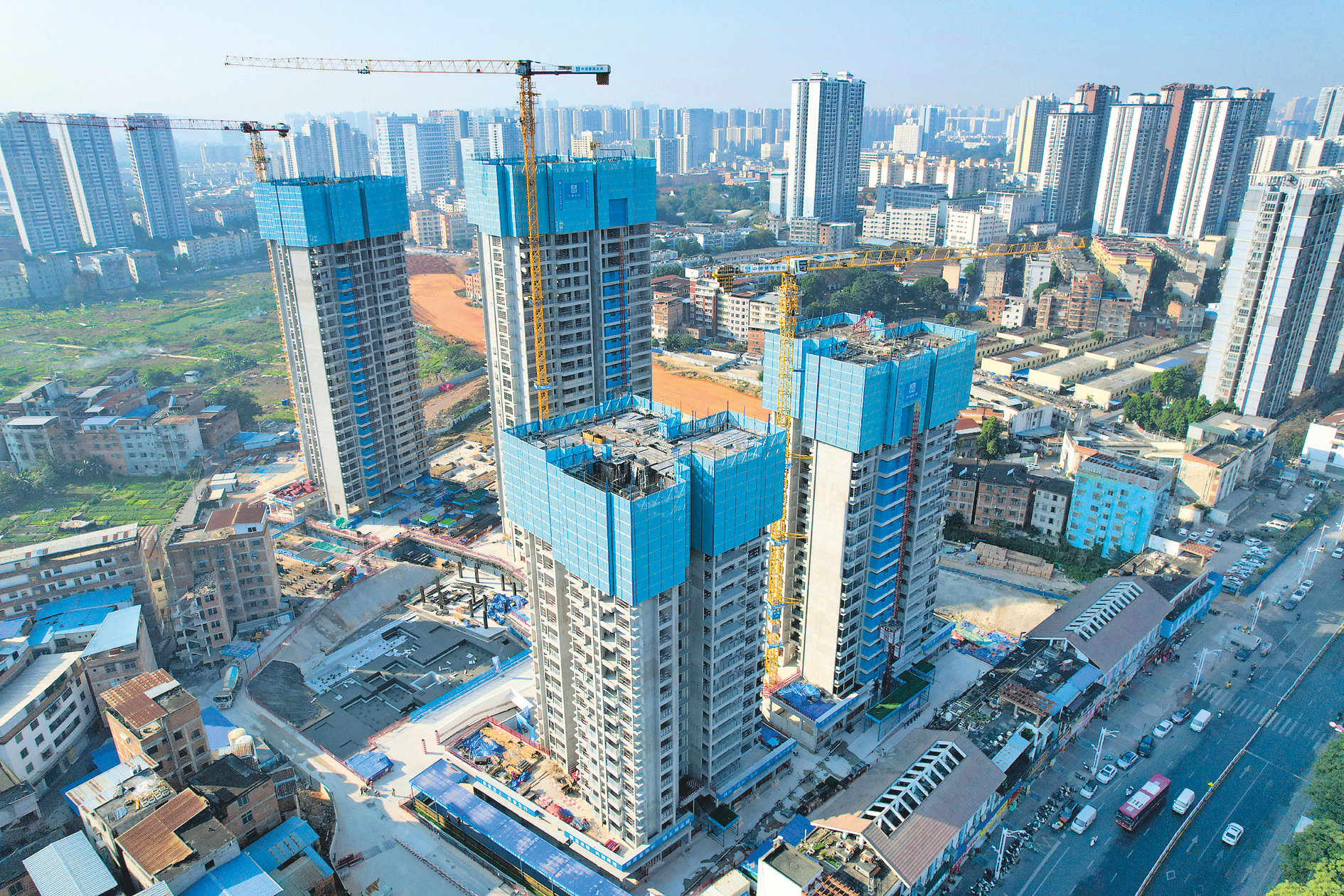
本报讯(记者周小燕 通讯员何昀珊)日前,随着最后一方混凝土浇筑完成,南宁市城市更新重点项目江南区白沙半岛片区城中村改造项目安置住房小区 (地块7)实现首栋主体结构封顶,标志着这一重点民生工程进入施工新阶段,江南区回迁居民距离"安居梦"又近了一步。"从村里拆迁那天起,我们就天天 盼着安置房能早日建成。如今看到安置房顺利封顶,大家心里乐开了花!"亭子村村民莫阿姨激动地说。 该项目规划建设1511套安置住宅,用于安置白沙半岛片区城中村改造范围内的被征拆群众。项目位于江南区亭洪路以南、亭园街以西,周边配套完善,不仅 有亭子码头、江南万达、平西夜市、百益·上河城等网红打卡点,还集聚了教育、医疗资源,如白沙小学、白沙路学校、市二十一中和文骅小学等学校,市 二医院、医科大一附院、自治区人民医院等医疗机构,为群众生活提供便利条件。项目户型设计兼顾节能与舒适,并结合群众安置意愿优化适配。 当前,江南区城中村改造各工程建设正加速推进。白沙半岛片区安置住房小区地块1正推进地下室和部分楼栋主体建设,地块2、地块3加快征地拆迁和开工 前期手续办理,白沙南一里、白沙南二里二巷等配套道路同步施工。平阳村片区聚焦路网升级,金棠街、定强路等配 ...

2025 以实干镌刻新荣光
Xin Lang Cai Jing· 2026-01-21 22:36
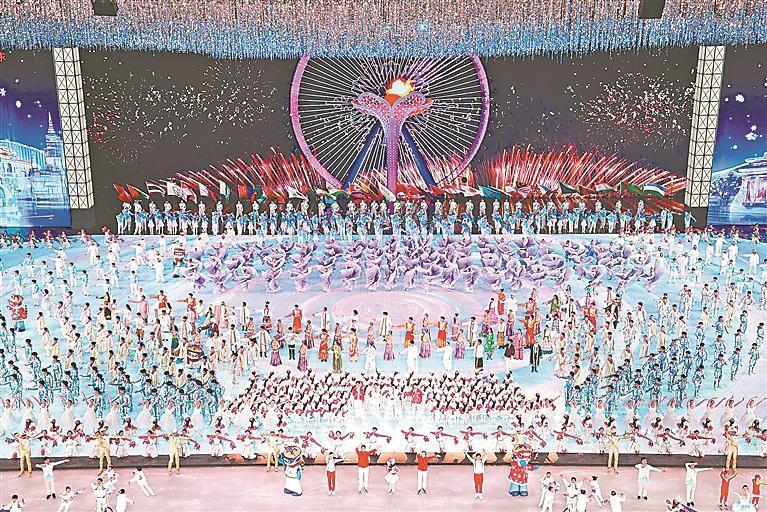
Core Viewpoint - The government work report of Harbin City emphasizes the commitment to high-quality revitalization and development by 2025, focusing on industrial upgrades, improved public welfare, and enhanced urban vitality [7]. Group 1: Economic Development - The construction of "three bases, one barrier, and one highland" has made significant progress, with grain production reaching 25.775 billion jin, an increase of 753 million jin [9]. - The added value of large-scale equipment manufacturing increased by 19.6%, and the installed capacity of renewable energy reached 5.338 million kilowatts, accounting for 52.9% of the total installed capacity [9]. - Actual foreign investment grew by 18.1%, and total import and export volume increased by 4.1% [9]. Group 2: Policy Implementation - Major policies such as "two heavies" and "two new" have shown effectiveness, with 581 major construction projects and 56 equipment upgrade projects supported [9]. - Consumer incentives included 3.76 billion yuan in subsidies for replacing old consumer goods and 190 million yuan in consumer vouchers, stimulating consumption by 38.89 billion yuan [9]. - Industrial technology investment increased by 36.3%, and high-tech manufacturing investment grew by 10.8% [9]. Group 3: Tourism and Culture - Harbin successfully hosted events like the Harbin Summer Music Festival and the International Ice and Snow Festival, attracting 200 million tourists and generating a total tourism expenditure of 281.84 billion yuan, representing growth of 12.7% and 21.8% respectively [10]. - The city was awarded the title of "World Ice and Snow Tourism Excellence City" by the United Nations World Tourism Organization [10]. Group 4: Innovation and Industry Upgrade - The acceleration of industrial upgrades is evident with 733 projects underway and an investment of 50.1 billion yuan, with significant growth in aerospace, computer, and automotive engine manufacturing [11]. - The number of technology-based enterprises reached 182, with a loan balance growth of 18.7% [11]. - The employment rate of graduates from local universities is 18.3%, with 38.1% for doctoral graduates [11]. Group 5: Urban Development - High-quality urban construction is progressing, with the completion of major infrastructure projects like the expansion of Taiping International Airport [13]. - The city has implemented 32 road and bridge projects and constructed 26,600 new parking spaces [13]. - Historical and cultural preservation efforts include the restoration of 33 heritage sites and the enhancement of urban green spaces [13]. Group 6: Social Welfare - Urban employment increased by 98,900, with 2,000 affordable housing units under construction [15]. - Public services improved with the addition of 38 vocational education programs and 38,300 new quality school places [15]. - Safety and stability in the social environment were maintained, with a decrease in debt rates and criminal cases [15].
高质量推进城市更新 加快房地产转型升级 ——访住房和城乡建设部党组书记、部长倪虹
Jing Ji Ri Bao· 2026-01-21 22:25
"十五五"时期是基本实现社会主义现代化夯实基础、全面发力的关键时期。住房城乡建设领域如何实现 高质量发展?城市更新如何推进?房地产市场如何稳定?带着这些问题,经济日报记者采访了住房和城 乡建设部党组书记、部长倪虹。 记者:您对于"十五五"时期实现住房城乡建设高质量发展有哪些考虑? 倪虹:"十五五"时期,住房城乡建设总体上处在转型发展的关键期,既伴随不少挑战,更面临难得机 遇。习近平总书记高度重视住房城乡建设工作,作出一系列重要指示批示。党的二十届四中全会擘画 了"十五五"我国发展的宏伟蓝图,在去年召开的中央城市工作会议上,党中央作出了城镇化和城市发 展"两个转向"的重大判断,提出了建设现代化人民城市的奋斗目标,这为住房城乡建设工作指明了方 向。 2026年是"十五五"开局之年。我们将高质量推进城市更新。坚持城市内涵式发展,把城市更新作为重要 抓手,统筹落实"一个优化、六大建设"重要任务,统筹构建城市更新体制机制,系统推进好房子、好小 区、好社区、好城区"四好"建设,为人民群众打造高品质生活空间。 将推动房地产高质量发展。牢牢抓住让人民群众安居这个基点,统筹防风险和促转型,统筹惠民生和稳 增长,着力稳定房地产市 ...
城市更新、建“好房子”……住房城乡建设部今年有这些工作重点
Yang Shi Xin Wen· 2026-01-21 21:36
"十五五"规划建议提出,坚持城市内涵式发展,大力实施城市更新,建设创新、宜居、美丽、韧性、文 明、智慧的现代化人民城市。今年是"十五五"开局之年,国家在推进城市更新工作方面将有哪些重点部 署?来看总台央视记者对住房城乡建设部部长倪虹的专访。 先体检后更新 高质量推进城市更新 住房城乡建设部部长倪虹介绍,2025年我国城市更新工作取得明显成效。全国开工改造城镇老旧小区 2.6万个,加装电梯1.4万部,改善了居住条件,惠及470多万居民;打造"口袋公园"4700多个、城市绿道 5800多公里,提升了城市人居环境;建设改造地下管网15.6万公里,增强了城市韧性。 下一步,高质量推进城市更新,关键是要找准问题、有效解决问题。国家将坚持先体检、后更新,以体 检找出的问题作为城市更新的重点,统筹实施好一系列民生工程、发展工程、安全工程。 倪虹表示,民生工程重点是三件事: 因城施策 推动房地产高质量发展 "十五五"规划建议提出,推动房地产高质量发展。今年,在房地产领域,住房城乡建设部将有哪些工作 重点? 对此,住房城乡建设部部长倪虹介绍,对于房地产,要看到我国新型城镇化仍在持续推进,城市存量优 化调整也有广阔空间,人民群众 ...
盐南高新区新河街道:“房产超市”让安居梦照进现实
Xin Lang Cai Jing· 2026-01-21 21:34
Core Viewpoint - The article highlights the innovative "housing supermarket" model implemented in Yancheng's Yannan High-tech Zone to address the housing needs of residents affected by urban development and relocation, ensuring a better living experience for the community [1][2]. Group 1: Housing Supermarket Model - The "housing supermarket" offers a diverse range of 1,296 housing options from six reputable developers, with prices ranging from 3,000 to 13,000 yuan per square meter, catering to various family needs [1][2]. - A "housing voucher" system allows residents to convert their entitlements into vouchers for purchasing homes, enhancing the purchasing process and providing a sense of security [2][3]. - The model has led to a rapid resolution of housing allocation issues, with over 96% of displaced residents completing voucher applications and home purchases within five days, resulting in nearly 500 successful transactions [2][3]. Group 2: Benefits for Stakeholders - The model empowers residents with autonomy in choosing their homes, significantly reducing the relocation period and enhancing satisfaction [3]. - For developers, the collaboration with the government facilitates quick absorption of existing housing stock, alleviating financial pressures and boosting market confidence [3]. - The government benefits from reduced transitional fiscal expenditures while accelerating urban renewal and improving public satisfaction and trust [3].
城市更新行动将进入“快车道”
Zheng Quan Ri Bao· 2026-01-21 16:11
Core Viewpoint - The joint notification from the Ministry of Natural Resources and the Ministry of Housing and Urban-Rural Development aims to address policy bottlenecks in urban renewal and enhance the integration of planning and land policies, promoting high-quality urban renewal as a key driver for modern urban development [1] Group 1: Policy Measures - The notification introduces a series of measures including enhancing the adaptability of detailed planning, optimizing transitional support policies, promoting temporary use of existing land and space, encouraging integrated operation of resource asset combinations, innovating real estate registration services, and properly addressing historical issues [1][2] - Transitional support policies allow for the development of state-supported industries on existing land and property resources without changing land use主体 and planning conditions for a period not exceeding five years [2] - The notification emphasizes the flexibility of policies, encouraging urban renewal entities to actively develop new industries and explore sustainable profit models through temporary use of existing land and space [2] Group 2: Local Implementation - Various provinces such as Sichuan, Liaoning, Hainan, and Shandong have introduced related policies to promote high-quality urban development and urban renewal as a key focus for 2026 [2][3] - The Shandong provincial government encourages cities to explore mixed land development and spatial composite utilization to support urban renewal actions [3] - The Hainan provincial government aims to establish a preliminary urban renewal system by the end of 2027, targeting the creation of 20 key urban renewal demonstration areas and over five vibrant street blocks [3] Group 3: Future Outlook - The urban renewal actions are closely linked to China's modernization process, economic transformation, technological upgrades, and evolving resident demands [3] - Key policy innovations in land supply, planning management, and financial support are expected to increase, better matching the complexity and long-term nature of urban renewal projects [3] - The urban renewal actions are anticipated to achieve significant progress during the 14th Five-Year Plan period, with sustainable renewal models becoming more mature and entering a phase of high-quality development characterized by multi-mode innovation and participation from various stakeholders [3]
最新!住建部部长倪虹这篇专访细节满满→
Xin Hua She· 2026-01-21 15:18
Core Viewpoint - The "14th Five-Year Plan" emphasizes the importance of human-centered urbanization and high-quality real estate development, with specific measures such as urban renewal and new real estate development models [1] Group 1: Urban Renewal and High-Quality Development - The Ministry of Housing and Urban-Rural Development aims to implement urban renewal actions and promote high-quality real estate development during the "14th Five-Year Plan" period, focusing on creating modern, livable, and resilient cities [2][4] - Urban renewal efforts have already shown significant results, with 26,000 old urban communities undergoing renovation and 14,000 elevators installed, benefiting over 4.7 million residents [4] - The focus will be on identifying and addressing issues through urban inspections, prioritizing projects that enhance community living conditions, urban infrastructure, and safety [5] Group 2: Real Estate Development - The real estate sector is seen as having substantial potential for high-quality development, with ongoing urbanization and a strong demand for quality housing [6] - The Ministry plans to implement policies tailored to individual cities, focusing on controlling supply, reducing inventory, and optimizing housing supply to stabilize the real estate market [6][7] - Key initiatives include promoting the construction of quality housing and establishing a new model for real estate development that ensures a smooth transition from old to new systems [7][8] Group 3: Upgrading the Construction Industry - The Ministry aims to enhance the construction industry by focusing on high-quality building products and fostering new productive forces in the sector [9] - Emphasis will be placed on technological innovation, smart construction, and improving market mechanisms to stimulate vitality and ensure quality in the construction market [9][10] - Safety will be a priority throughout the construction process, with a focus on establishing a comprehensive safety management system for buildings [10]
打造济南副城高质量发展增长极
Qi Lu Wan Bao· 2026-01-21 13:44
Core Viewpoint - The Steel District aims to enhance its economic development by focusing on industrial upgrades, agricultural advancements, investment promotion, urban-rural integration, and improving public welfare, all under the theme of "Project Empowerment Year" [1][2][3][4][5][6] Group 1: Industrial Development - The Steel District is implementing an industrial stronghold strategy to upgrade its leading industries, focusing on high-end, intelligent, and green development [1] - The district plans to strengthen its three main industries: steel, advanced materials, and new energy equipment, while also promoting precision casting and green construction [1] - New industries such as new energy, new materials, and laser equipment will be cultivated to enhance production capabilities [1] Group 2: Agricultural Development - The Steel District is committed to modern efficient agriculture, aiming to establish a core cluster for the "Northern Seed Industry Capital" through the development of a comprehensive poultry breeding industry [2] - The district will accelerate the construction of six poultry breeding sub-projects and an innovation center for animal breeding [2] Group 3: Investment and Consumption - The district is focusing on project development, with plans to accelerate the construction of 10 provincial, 30 municipal, and 238 district-level key projects [3] - The Steel District aims to attract over 80 quality projects in key industries through targeted investment strategies [3] - Consumer promotion activities will be organized, including over 25 events in key sectors like automotive and home appliances [3] Group 4: Urban-Rural Integration - The Steel District is advancing urban construction and renewal, with 14 projects underway to improve infrastructure such as roads and utilities [4][5] - Efforts will be made to enhance the living environment and integrate urban and rural development [5] Group 5: Public Welfare Improvement - The district prioritizes public welfare, planning to provide vocational training for over 3,000 individuals and improve employment opportunities for key groups [6] - The district aims for a 5.2% increase in per capita income and will enhance educational and healthcare services [6] - Plans include the construction of new childcare centers and the optimization of elderly care services [6]
崔曙平委员:深化系统性改革,推动南京城市更新 能级跃升
Yang Zi Wan Bao Wang· 2026-01-21 13:44
Core Insights - Nanjing's municipal government emphasizes urban renewal as a key driver for high-quality development, leading to significant achievements and innovative paths unique to the city [1] - Challenges remain in urban renewal efforts, including insufficient systematization and coordination, leading to fragmented projects and a lack of effective integration [1] - Recommendations include enhancing planning and design, innovating policies and regulations, diversifying funding sources, applying new technologies, and fostering public participation [2][3] Group 1: Urban Renewal Strategies - Urban renewal is seen as essential for adapting to changes and promoting high-quality urban development, with a call for learning from advanced domestic and international experiences [1] - A "city update health assessment" system is proposed to create a comprehensive "asset map" for informed decision-making [2] - The establishment of "update units" for better spatial organization and integration of related areas is recommended to maximize land value and public benefits [1] Group 2: Policy and Regulatory Innovations - The exploration of "mixed-use land" and "floor area ratio incentives" aims to stimulate market vitality while balancing public interests [2] - Suggestions include streamlining approval processes and enhancing the business environment to improve service efficiency [2] - Addressing property rights issues is crucial for ensuring fair and transparent urban renewal pathways [2] Group 3: Financial and Commercial Models - A diversified financing system is proposed, including the establishment of a "Nanjing Urban Renewal Development Fund" to attract social capital with tax incentives [2] - The promotion of an "operational pre-positioning" business model is suggested to ensure long-term project viability and brand value [2] - A "cross-project balance" mechanism is recommended to maximize overall benefits by bundling public and commercial projects [2] Group 4: Technological and Community Engagement - The application of "digital twin" technology is encouraged to enhance the entire urban renewal cycle and support smart community development [2] - A comprehensive public participation mechanism is proposed to empower residents in decision-making regarding community updates [3] - Strengthening grassroots organizations and governance capabilities is essential for effective community-led renewal efforts [3]
一天三场发布会 楼市迎来重要利好
2 1 Shi Ji Jing Ji Bao Dao· 2026-01-21 13:39
Core Insights - The recent press conferences indicate a significant shift towards supportive policies for the real estate market, emphasizing the importance of stabilizing the housing sector as part of broader economic strategies [2][8][10] Group 1: Economic Policy and Real Estate - The National Development and Reform Commission (NDRC) is formulating plans to enhance job stability and increase urban and rural residents' income, which are seen as beneficial for the real estate market [1][5] - The Ministry of Finance announced a continuation of a more proactive fiscal policy in 2026, which is expected to inject more funds into the real estate sector, thereby stabilizing market expectations and enhancing transaction activity [7][12] - The NDRC highlighted the need to address the imbalance between supply and demand in the economy, indicating a shift in focus from merely having housing to improving housing quality [4][10] Group 2: Urban Renewal and Housing Policies - The Ministry of Natural Resources released measures to support urban renewal, which includes specific actions aimed at optimizing land use and addressing historical issues, further benefiting the real estate sector [6][8] - Recent adjustments in tax policies, such as the reduction of the value-added tax on personal housing sales, are aimed at stimulating the housing market and improving consumer confidence [11][12] - The emphasis on urban renewal and housing quality reflects a broader strategy to integrate real estate into the framework of economic growth and consumption promotion [2][13][14] Group 3: Market Dynamics and Future Outlook - Analysts note that the recent policy changes signify a transition from short-term stimulus to a focus on establishing a sustainable real estate model that supports long-term economic stability [13][14] - The combination of fiscal support and urban renewal initiatives is expected to enhance the overall investment environment in the real estate sector, making it a critical component of economic recovery efforts [8][9]