
数字经济

Search documents
京东首席经济学家:与“十四五”相比,“十五五”规划有六大关键调整
Guan Cha Zhe Wang· 2026-02-02 12:32
Group 1 - The core viewpoint emphasizes the importance of the "15th Five-Year Plan" as a starting point for China's economic policies, highlighting six key adjustments compared to the previous plan, including a renewed focus on economic construction and balanced development [1][7] - The Chinese economy is projected to maintain a growth rate of around 5%, despite a decline from previous high levels, with a focus on consumption, internal circulation, and technological collaboration [1][8] - The policy direction for 2026 includes significant shifts in monetary and fiscal policies, with a new emphasis on stabilizing economic growth and reasonable price recovery [2][11] Group 2 - The analysis of the global economic landscape indicates vulnerabilities in the U.S. economy, including a cooling job market and a declining dollar reserve status, while China's economy shows resilience despite a 35% drop in real estate prices over five years [4][16] - Three main supports for China's economy in 2026 are identified: a rebound in infrastructure investment, resilient exports, and ongoing upgrades in manufacturing [4][18] - The focus on boosting consumption is highlighted as a core policy direction, with a significant gap in service consumption compared to the U.S., attributed to the urban-rural dual structure [4][18][19] Group 3 - The "15th Five-Year Plan" aims to optimize employment, social security, and rural-urban integration, addressing key reforms in these areas [9][10] - The fiscal policy is expected to maintain a deficit rate around 4%, with an emphasis on sustainable growth and necessary spending levels [2][11] - The policy signals a shift towards long-term solutions for real estate risks, with a focus on stabilizing the market and encouraging supply-side reforms [14][19]

订单已排到2027年!中国变压器缘何成为全球“新石油”?
Xin Lang Cai Jing· 2026-02-02 12:27
Core Insights - The transformer manufacturing industry in China is experiencing high demand, with production lines operating at full capacity and orders extending to 2027, driven by accelerated domestic power grid construction, energy structure transformation, and global digital economy expansion [1][4][8] Domestic Market Dynamics - During the transition from the 14th to the 15th Five-Year Plan, the investment scale in the power grid is set to reach 4 trillion yuan, a 40% increase compared to the previous plan, indicating a new round of expansion and upgrade in power grid construction [5] - By 2025, China's total electricity consumption is projected to exceed 10 trillion kilowatt-hours, reaching 10.4 trillion kilowatt-hours, providing a solid foundation for the transformer industry [5] Technological Advancements - The national transformer technology conference emphasizes the need for the large-scale application of environmentally friendly products, such as amorphous alloy transformers and natural ester insulated oil transformers, to promote green transformation in the industry [6] - The integration of advanced sensors and artificial intelligence algorithms aims to shift from passive maintenance to proactive warning systems in transformers, aligning with both domestic and international market demands for efficient and reliable power equipment [6] Export Growth - Since 2021, China's transformer exports have maintained high growth, with a projected total export value of 64.6 billion yuan in 2025, marking a significant increase of approximately 36% compared to 2024 [7] - Export growth is particularly strong in the Asian market, with a year-on-year increase of 65.39%, while exports to Europe have surged by over 138%, becoming a key driver of overall growth [7] Industry Outlook - The transformer industry is expected to face diverse and higher-quality market demands in the context of dual carbon goals and the reshaping of the international energy landscape [8] - Continuous focus on technological innovation, green intelligence, and international operations is essential for the industry to transition from a manufacturing powerhouse to a stronghold of intelligent manufacturing [8]
共进股份筑牢战略根基 国资赋能激活高质量发展新动能
Zheng Quan Ri Bao Wang· 2026-02-02 11:49
Core Viewpoint - The change in control at Shenzhen Gongjin Electronics Co., Ltd. (Gongjin) marks a significant strategic upgrade for the company, with the new controlling shareholder, Tangshan Industrial Holding Group Co., Ltd. (Tangshan Gongkong), enhancing its market position and technical capabilities [1][2] Group 1: Company Control and Management Changes - On February 2, 2026, Gongjin held its first extraordinary shareholders' meeting, approving the re-election of nine new directors nominated by Tangshan Gongkong, which has become the controlling shareholder after completing the share transfer [1] - The new board includes Wang Jianxiang as chairman and Cheng Shuxin as vice chairman, with former chairman Hu Zumin taking on the role of general manager [1] - This transition ends a six-year period without a controlling shareholder or actual controller for Gongjin [1] Group 2: Strategic Implications and Market Position - The entry of Tangshan Gongkong is seen as a strategic move that injects new development momentum into Gongjin, aligning with its existing business layout and enhancing both strategic implementation efficiency and market competitiveness [2] - Tangshan Gongkong has stated that there are no plans to change Gongjin's main business within the next 12 months, but it may optimize business, assets, and management structures as necessary to enhance sustainability and profitability [2] - As a comprehensive state-owned platform, Tangshan Gongkong can provide capital support and governance empowerment to Gongjin, facilitating resource optimization and business collaboration in key areas such as network communication, data centers, and automotive electronics [2] Group 3: Future Outlook - Gongjin aims to leverage the advantages of Tangshan Gongkong's state-owned platform and resource integration capabilities to optimize its business layout and enhance its full-chain service capabilities while maintaining strategic continuity in its core business areas [2]

天融信:公司以“安全+智算”双轮驱动战略布局AI+安全等新方向
Zheng Quan Ri Bao· 2026-02-02 09:13
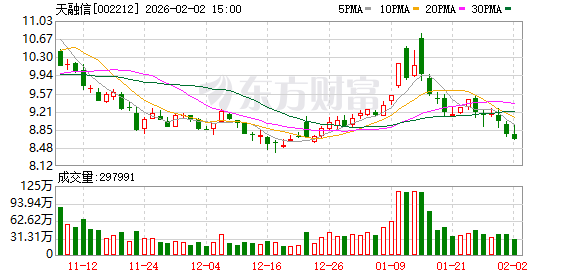
Core Viewpoint - Tianrongxin emphasizes the importance of cybersecurity as a foundational guarantee for the digital economy, highlighting its broad technological scope and application across various industry scenarios [2] Group 1: Company Strategy - The company is implementing a "security + intelligent computing" dual-driven strategy to enhance its market position [2] - Investments and layouts are being made in new technology fields such as AI + security, intelligent computing cloud, trusted innovation security, data security, cloud security, industrial internet security, vehicle networking security, and internet of things security [2]

消电ETF国泰(561310)收跌超3%,行业处于高速扩容期,回调或可布局
Mei Ri Jing Ji Xin Wen· 2026-02-02 08:17
Core Viewpoint - The semiconductor advanced packaging and testing industry is experiencing rapid expansion, presenting potential investment opportunities despite recent market corrections [1]. Industry Overview - The global semiconductor packaging and testing market is projected to grow from $101.47 billion in 2024 to $134.90 billion by 2029, with advanced packaging's market share increasing from 40% to 50% [1]. - The fastest-growing technology segment is multi-chip integrated packaging, with an expected compound annual growth rate (CAGR) of 25.8% [1]. - The explosive growth of the digital economy and artificial intelligence is identified as a key growth driver for the advanced packaging sector, with global computing power anticipated to rise from 2,207 EFLOps in 2024 to 14,130 EFLOps by 2029 [1]. Market Dynamics - In the consumer electronics sector, the accelerated penetration of high-end and AI smartphones is driving demand for advanced packaging technologies such as WLCSP and FO [1]. - China's semiconductor industry still has a low self-sufficiency rate, indicating significant potential for domestic substitution [1]. ETF Insights - The Cathay Consumer Electronics ETF (561310) tracks the consumer electronics index (931494), which includes companies involved in the design, manufacturing, and sales of consumer electronics products [1]. - The index reflects the overall performance of publicly listed companies in the consumer electronics sector, characterized by high growth potential and volatility [1].
集成电路ETF(159546)回调超4%,行业处于高速扩容期,市场空间广阔,回调或可布局
Mei Ri Jing Ji Xin Wen· 2026-02-02 06:50
Core Viewpoint - The advanced packaging and testing industry for integrated circuits is experiencing rapid expansion, with significant growth potential driven by the digital economy and artificial intelligence [1] Industry Overview - The global packaging and testing industry is projected to grow from $101.47 billion in 2024 to $134.9 billion by 2029, with advanced packaging's share increasing from 40% to 50% [1] - The fastest-growing segment is multi-chip integrated packaging, expected to have a compound annual growth rate (CAGR) of 25.8% [1] Key Drivers - The explosive growth of the digital economy and AI is a critical driver, with global computing power anticipated to rise from 2207 EFLOPS in 2024 to 14130 EFLOPS by 2029 [1] - In the consumer electronics sector, the accelerated penetration of high-end and AI smartphones will boost demand for advanced packaging technologies such as WLCSP and FO [1] Market Potential - China's integrated circuit industry still has a low self-sufficiency rate, indicating significant potential for domestic substitution [1] Investment Vehicle - The integrated circuit ETF (159546) tracks the integrated circuit index (932087), which includes publicly listed companies in semiconductor design, manufacturing, packaging, testing, and related materials and equipment, reflecting the overall performance and development trends of China's integrated circuit industry [1]
仁怀酱酒集团“数消世界”上线,销售热潮引爆市场
Sou Hu Cai Jing· 2026-02-02 06:49
Core Insights - The launch of the "Digital Consumption World" platform by Renhuai Sauce Wine Group has generated significant market interest, with all products sold out within five minutes, showcasing the appeal of this new model [1] - Renhuai Sauce Wine Group, a state-owned enterprise, aims to upgrade the sauce wine industry and promote high-quality regional economic development through a comprehensive business model covering the entire industry chain [2] - The platform integrates digital technology with a green points system, creating a sustainable and cyclical consumption ecosystem that revitalizes traditional consumption models and leads the industry towards sustainability [4] Group 1 - The "Digital Consumption World" platform allows consumers to earn "consumption beans" for every green purchase, transforming consumption into a value-storing behavior [7] - Consumption beans can be exchanged for products like Moutai or traded as digital assets, enhancing consumer engagement and market vitality [7] - The platform employs a "blockchain + AI" technology framework to ensure the authenticity and reliability of consumption beans, with smart contracts managing transactions and AI adjusting bean values based on market dynamics [9] Group 2 - The initiative aligns with national policies to expand domestic demand and promote green consumption, serving as an innovative model for state-owned enterprises' digital transformation [6] - The integration of consumption with points, environmental benefits, and individual and collective interests suggests the emergence of a fairer and more prosperous digital economy [10] - As the platform evolves, it is expected to drive more products to achieve high sales and embed the concept of green consumption into the public consciousness, contributing to sustainable economic development [10]
华安基金栾超:“成长+新红利”的平衡术
Xin Lang Cai Jing· 2026-02-02 06:22
Core Viewpoint - The article emphasizes the importance of a balanced investment strategy that combines growth and new dividends, particularly in the context of technological innovation and market dynamics expected in 2025 [1][8]. Group 1: Investment Strategy - The investment strategy focuses on "growth + new dividends," aiming to enhance investor experience and returns by understanding corporate profitability and valuation anchors [1][8]. - The investment framework developed by the expert includes three components: timing, trend, and stock selection, which are based on macroeconomic, industry, and company-specific analyses [2][9]. Group 2: Market Trends - Key areas of growth identified include global technological innovation, with significant capital expenditure growth expected from overseas cloud service providers and a narrowing technology gap in domestic wafer manufacturing [3][10]. - The article highlights the impact of a weakening dollar on commodity prices, particularly precious and minor metals, which are anticipated to rise due to structural changes in the U.S. economy [3][10]. - The analysis of competitive companies in the context of international expansion is crucial, focusing on industries with upward trends and companies with production and channel advantages [3][10]. Group 3: New Dividends - "New dividends" are defined as industries with enhanced future dividend capabilities, particularly in sectors like precious metals, where profitability is expected to improve while capital expenditures remain controlled [11]. - The article notes that certain companies in the electrolytic aluminum sector are already exhibiting high dividend characteristics, with expectations for more industries to follow suit [11].
2026数据资产入表全流程指南 合规确权+计量列报+落地实施 企业必备干货
Sou Hu Cai Jing· 2026-02-02 04:08
Core Viewpoint - The article emphasizes that data has become a core production factor in the digital economy, often referred to as "new oil." The process of incorporating data assets into financial statements is essential for unlocking data value and facilitating data circulation, which is crucial for companies' digital transformation [1]. Group 1: Definition and Importance of Data Asset Incorporation - Data asset incorporation refers to the formal recording of legally held data resources that can generate economic benefits into a company's balance sheet or specialized data asset management system, allowing for standardized management, evaluation, and disclosure [3]. - The core value of data asset incorporation is reflected in four dimensions: enhancing data value recognition, promoting data circulation and sharing, strengthening compliance and risk control, and optimizing corporate asset structure [3]. Group 2: Key Principles and Stages of Data Asset Incorporation - The incorporation process must adhere to principles of compliance, accurate classification, scientific measurement, and standardized disclosure, divided into five interconnected stages [5]. - The first stage focuses on understanding the company's data assets, ensuring legal sources and clear ownership, which is critical for the legitimacy and feasibility of the incorporation process [5]. Group 3: Cost Collection and Measurement Challenges - Cost collection and measurement are identified as core technical challenges, requiring the monetization of all inputs from data collection to processing [6]. - Key points include distinguishing between purchased and self-developed data, with specific cost components outlined for each, and the necessity of producing a "Data Asset Cost Collection Calculation Table" for initial measurement [6]. Group 4: Post-Incorporation Management and Disclosure - Post-incorporation, companies must ensure ongoing measurement and disclosure to maintain the accuracy and transparency of data asset value [7]. - This includes annual impairment testing for recognized intangible assets and mandatory disclosure of accounting policies, cost composition, and amortization methods in financial reports [7]. Group 5: Challenges and Strategic Recommendations - Companies face challenges such as low data standardization, valuation difficulties, unclear compliance boundaries, and insufficient cross-departmental collaboration [9]. - Recommendations include strengthening data governance, innovating valuation methods, enhancing cross-departmental collaboration, and cultivating specialized talent in data asset management [9]. Group 6: Implementation Strategies - Companies are advised to adopt a phased approach, starting with clear ownership and high business value data resources as pilot projects [10]. - Compliance should be prioritized to avoid risks, and data asset incorporation should be integrated into regular management practices for continuous optimization [10]. Conclusion - Data asset incorporation is a necessary step for companies in their digital transformation journey and is key to driving high-quality development in the digital economy. Proper implementation can enhance core competitiveness and expand growth opportunities [28].

陕西省政府工作报告全文出炉:确保西康、西十高铁等建成投运
Sou Hu Cai Jing· 2026-02-02 04:02
Core Viewpoint - The 2026 Shaanxi Provincial Government Work Report outlines economic and social development goals, emphasizing a GDP growth target of around 5%, fixed asset investment growth above the national average, and a focus on employment and public budget revenue growth [1][29]. Economic Goals - The expected economic growth for 2026 is a GDP increase of approximately 5% [1][29]. - Fixed asset investment growth is targeted to remain above the national average [1][29]. - General public budget revenue is projected to grow by 3% [1][29]. - Urban employment is expected to increase by over 400,000 jobs, with an urban unemployment rate around 5.5% [1][29]. Key Projects and Investments - Implementation of 640 provincial key projects with an investment exceeding 350 billion yuan [2][30]. - Industrial investment is aimed to grow by 10%, focusing on projects like the Yan'an integrated refining and chemical project and the Yulin coal-to-aromatics project [3][30]. - Infrastructure projects include the acceleration of high-speed rail construction and the completion of several airports [4][5][30]. Urban Development and Housing - A three-year action plan for urban renewal will be initiated, focusing on affordable housing and urban village renovations [7][30]. - The government plans to compile a comprehensive investment plan and seek central budget investments to support infrastructure and public welfare projects [7][30]. Industrial Growth and Innovation - The goal is to add 1,000 large-scale enterprises and achieve 12 trillion-level industrial chains, with industrial added value growth of 6.5% [8][30]. - Strategic emerging industries are expected to account for over 30% of industrial output [8][30]. - The energy sector aims to stabilize oil and gas production, with a target of increasing natural gas output by over 1 billion cubic meters [8][30]. Agricultural and Environmental Initiatives - Development of a modern agricultural industrial system and high-quality agricultural product processing actions are planned [10][30]. - The report emphasizes ecological construction and environmental protection, including measures to improve air quality and manage water resources [17][30]. Social Welfare and Employment - The report highlights the importance of improving public services and social welfare, aiming for a steady increase in residents' income above economic growth rates [1][29][26]. - Employment policies will focus on creating job opportunities and supporting vulnerable populations [16][30]. Open Economy and Trade - The report outlines plans to enhance the open economy, including the establishment of a unified market and the promotion of foreign investment [18][30]. - The goal is to increase the province's import and export value significantly, with a focus on high-quality projects [18][30].