
即时零售

Search documents
社交电商,一场集体幻灭的资本游戏
3 6 Ke· 2025-12-10 12:16
Core Viewpoint - Jingling Group, once a unicorn in the e-commerce sector, is currently facing public scrutiny due to allegations, reflecting broader challenges in the social e-commerce industry [1][3] Company Overview - Jingling Group, headquartered in Hangzhou, operates as a technology-driven private domain social e-commerce platform, aiming to simplify entrepreneurship through an S2B2C model [1] - As of 2024, Jingling has served over 6 million private domain entrepreneurs, achieving an annual transaction volume (GMV) exceeding 50 billion yuan, with over 85% of entrepreneurs being women from lower-tier cities [3] Industry Challenges - The social e-commerce sector is experiencing a decline, with few giants remaining, as exemplified by the struggles of competitors like Yunji and Xingsheng Youxuan [3][12] - The rise of social e-commerce was initially fueled by platforms like Pinduoduo, which leveraged WeChat for user acquisition and innovative marketing strategies [4][7] - However, the sector is now plagued by issues such as regulatory scrutiny, allegations of pyramid schemes, and rampant counterfeit goods, leading to a loss of consumer trust [8][11] Market Dynamics - The social e-commerce model relies heavily on interpersonal relationships to reduce customer acquisition costs and enhance retail efficiency, but this has led to compliance issues and operational challenges [8][9] - Major players in the sector have faced significant penalties for operating in a legally gray area, impacting their growth and market presence [9][11] Transition and Future Outlook - Despite the decline of traditional social e-commerce models, the integration of social elements into e-commerce remains relevant, with platforms exploring new growth avenues [16] - Companies like Yunji and Xingsheng Youxuan are attempting to pivot their strategies, focusing on organic products and live-streaming sales, although they face regulatory challenges [16][17]


中国物流与采购联合会:11月份电商物流指数为113.1点 与上月持平
Zhi Tong Cai Jing· 2025-12-10 09:20
Core Insights - The e-commerce logistics index for November 2025 in China is reported at 113.1 points, remaining stable compared to the previous month [1] - The total business volume index for e-commerce logistics decreased to 132.4 points, down by 0.5 points from the previous month, with all four major regions experiencing a decline [1][2] - The rural e-commerce logistics business volume index saw a significant drop of 2.6 points, reaching 130.4 points, with most regions reporting a decrease [1][2] Supply and Demand Dynamics - The inventory turnover rate index increased by 0.3 points, while the cost index decreased by 0.1 points, marking six consecutive months of decline in costs [2] - The demand side shows that the promotional effects of the "Double Eleven" sales event were less pronounced this year, leading to a cooling of traditional sales [2] - Instant retail services, represented by platforms like Meituan and JD, have emerged as new growth points in e-commerce consumption [2] Service Quality and Efficiency - E-commerce logistics companies have maintained robust service capabilities and efficiency despite a slowdown in demand, with improvements in logistics timeliness, fulfillment rates, satisfaction, and load rates reaching new highs for the year [2] - The overall service quality is steadily improving, supported by increased capacity reserves and a smooth delivery network [1]
提供定制化智慧零售服务方案 元气森林与富士康科技集团达成深度合作
Zhong Guo Zhi Liang Xin Wen Wang· 2025-12-10 07:44
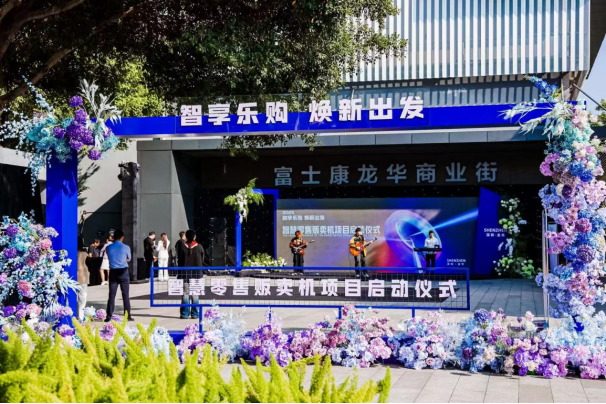
Core Insights - The collaboration between Yuanqi Forest and Foxconn Technology Group aims to enhance employee quality of life through customized smart retail solutions [1][3][4] Group 1: Project Launch and Objectives - The "Smart Retail Vending Machine Project" was successfully launched at Foxconn's Shenzhen Longhua Park, with Yuanqi Forest providing tailored smart retail services [1] - The partnership focuses on optimizing the service ecosystem within the park, enhancing employee satisfaction and convenience [3][4] Group 2: Market Context and Deployment - China's instant retail market is rapidly developing, with Yuanqi Forest's smart cabinet business achieving deployment in over 20,000 terminals across 15 cities [3] - The smart cabinets are strategically placed in high-traffic areas such as enterprises, campuses, hospitals, and subways [3] Group 3: Service Features and Technology - The smart cabinets utilize advanced AI recognition technology to facilitate a seamless shopping experience with "grab-and-go, contactless payment" [3] - Yuanqi Forest has optimized product offerings to include a variety of popular beverages and new products, addressing diverse consumer needs [3][4] Group 4: Quality Standards and Employee Engagement - Foxconn has set high standards for product selection and service personalization, reflecting its commitment to employee care [4] - A two-day "Happy Shopping Carnival" was held to celebrate the launch, featuring interactive experiences and promotional offers to engage employees [4] Group 5: Vision and Philosophy - Foxconn integrates its vision of "Love, Confidence, Determination" into daily employee experiences, while Yuanqi Forest emphasizes its philosophy of "Using good products to love the world" [6] - The collaboration aims to bring innovative solutions to everyday life through smart retail integration [6]
趋势之上 信仰之下——2025中国消费趋势论坛
Zhong Guo Jing Ying Bao· 2025-12-10 07:33
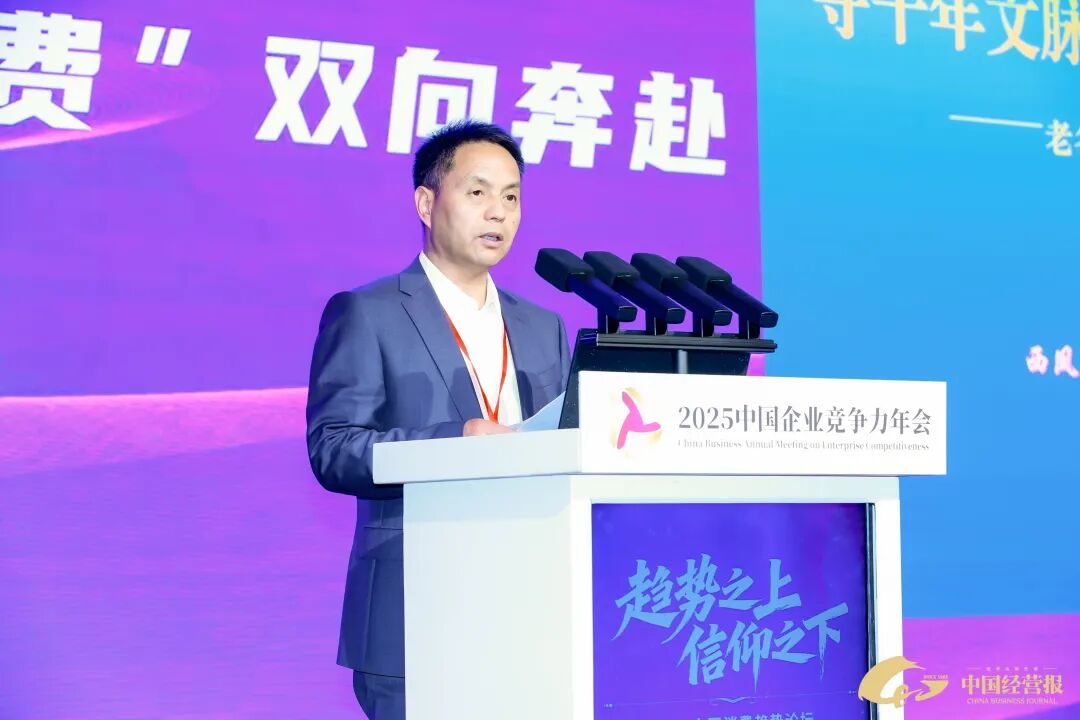
Group 1 - The year 2025 marks the conclusion of the "14th Five-Year Plan" and the beginning of the "15th Five-Year Plan," with a focus on "technological self-reliance" and "improving social welfare" as key objectives [1] - The consumer market in 2025 is characterized by a shift towards pragmatic and rational consumption, with an increasing trust in brands and a new height in brand image construction [1] - The "2025 China Consumption Trend Forum" aims to decode the commercial logic of the consumption market and uncover hidden business opportunities [1] Group 2 - The relationship between "old famous liquor" and "new consumption" is seen as a symbiotic one, where traditional practices are modernized rather than replaced [3] - The integration of public welfare, cultural heritage, and national brands with modern demands is essential for industry development [3] Group 3 - Emotional consumption is identified as a significant trend in tourism, with four emerging business models: events combined with travel, pet-friendly travel, national trends in travel, and nature-focused travel [5] - Emotional travel appeals to various demographics, including older adults seeking social connections [5] Group 4 - The concept of "instant retail" is gaining unprecedented importance, potentially marking the last wave of internet consumption before a reconciliation between local living and e-commerce [8] - The industry is encouraged to embrace the era of instant retail as a core consumption method [8] Group 5 - Consumers are increasingly focused on value, emotional consumption, and comfort marketing, emphasizing the importance of effectively communicating product benefits to the new generation [10] - The beverage industry is urged to innovate continuously, with a focus on new processes to enhance consumer experience [12] Group 6 - AI technology is seen as a critical factor in creating value through collaboration, ecosystem building, and addressing pain points in the market [17] - The integration of AI into consumer industries is viewed as a significant opportunity, with a focus on finding suitable investors and optimizing products for specific consumer scenarios [19] Group 7 - The application of AI in various industries requires a deep understanding of commercial logic and organizational structure optimization to facilitate intelligent services for users [23] - The introduction of AI functionalities in management processes is becoming a reality for companies with extensive branch networks [25]
QuestMobile报告:淘宝“00后”用户规模达1.55亿 个性化供给圈粉年轻一代
Zheng Quan Ri Bao Wang· 2025-12-10 06:11
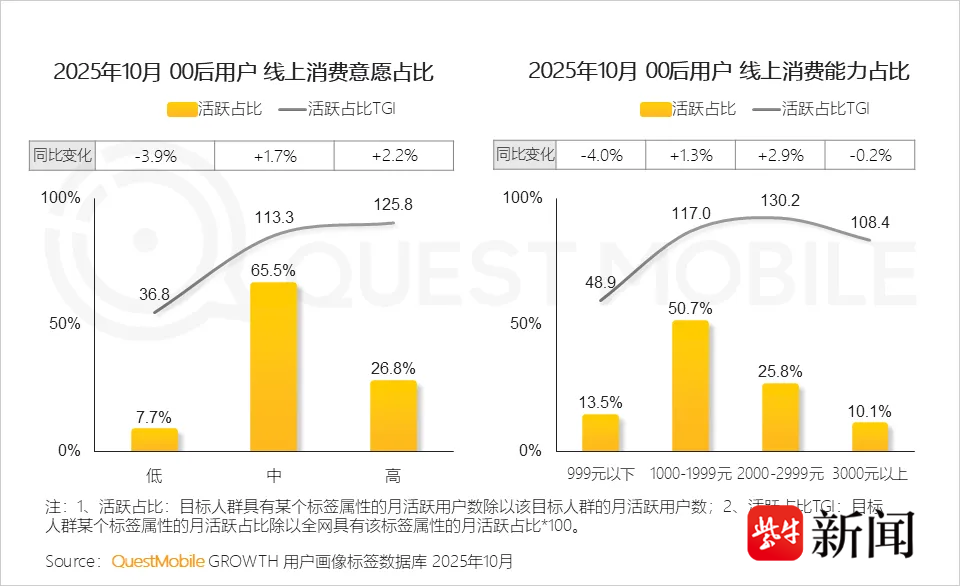
Group 1 - The core viewpoint of the reports indicates that by October 2025, the monthly active user base of Taobao's post-00s demographic is expected to reach 155 million, representing a year-on-year growth of 11.6%, significantly surpassing other e-commerce apps [1] - The post-00s demographic shows a stable online consumption willingness, with nearly 95% of this group exhibiting medium to high consumption intent, and their spending capacity primarily concentrated in the range of 1,000 to 2,999 yuan, indicating strong consumption potential and a mature consumption structure [1] - The interest preferences of the post-00s users are notably in areas such as sharing, food, and anime/second dimension, which are reflected in the consumption trends and ecological structure of the Taobao and Tmall platforms [1] Group 2 - In the trendy toy industry, which is primarily driven by the post-00s demographic, products such as blind boxes, anime peripherals, and dolls saw growth exceeding double digits during the Double 11 shopping festival, with over 300,000 new toy products launched [2] - Taobao's young-oriented operations have become a key factor in attracting post-00s users, with interactive activities like guessing games and New Year wishes appealing to young people's interests, making the post-95s and post-00s the main participants [2] - The rapid growth of Taobao's flash sales, which primarily target a young audience, has contributed to a significant influx of new young users, with 72% of instant retail users being under 35 years old according to Nielsen IQ's 2024 annual online shopping trend report [2]

刮骨疗伤:传统KA涅槃与重生
3 6 Ke· 2025-12-10 04:54
Core Insights - The Chinese supermarket industry is undergoing a profound structural transformation driven by changes in the macroeconomic environment and consumer behavior, leading to a crisis for traditional supermarkets [1][3] - Major supermarket brands are closing stores to optimize their layouts, with 62 brands shutting down 3,037 stores in 2024, indicating a challenging environment for traditional hypermarkets [1][3] - Some companies, like Walmart China, are experiencing growth through channel optimization and a multi-channel retail model, achieving net sales of 147.3 billion yuan in FY2025, a 3.6% increase year-on-year [2] Group 1: Current Challenges and Transformations - Traditional supermarkets are facing a "shuffling phase" characterized by store closures and operational adjustments to enhance efficiency and reduce costs [3][5] - A specific supermarket reported cumulative losses of nearly 10 billion yuan from 2021 to 2024 and plans to close an additional 200 stores while opening 200 "transformed" stores [4][5] - The dual strategy of closing unprofitable stores and optimizing potential ones has led to a cycle of revenue decline and increased losses, highlighting the need for effective transformation [5][6] Group 2: Internal Reforms and Operational Efficiency - Supermarkets are focusing on refined operations and cost reduction through store adjustments and organizational changes, with an emphasis on improving operational efficiency and profitability [6][7] - Companies like Yonghui and CR Vanguard are actively reforming their operations by concentrating on core suppliers and key products, aiming to enhance competitiveness from the supply chain [7][8] - The key to transformation lies in "cost reduction and efficiency enhancement," which involves optimizing store layouts, streamlining SKUs, and improving supply chain management [7][8] Group 3: New Growth Opportunities - Supermarkets are exploring new growth avenues through front warehouses and instant retail models, responding to the increasing demand for convenience and rapid delivery [8][9] - The front warehouse model allows supermarkets to meet immediate consumer needs efficiently, with companies like RT-Mart and Yonghui planning to expand their front warehouse operations [10][11] - Instant retail is becoming a significant trend, with traditional supermarkets leveraging digital platforms to convert offline traffic into online orders, as seen with Walmart's "Cloud Warehouse" initiative [11][12] Group 4: Benchmarking Against Global Leaders - Sam's Club serves as a critical benchmark for traditional supermarkets, with its membership model and focus on high-quality products driving significant growth [15][16] - The membership system at Sam's Club has a renewal rate of 90%, indicating the importance of establishing a robust membership framework for domestic supermarkets [16][22] - Traditional supermarkets need to adopt a "less is more" approach in product selection, focusing on core categories to enhance product quality and consumer loyalty [17][18] Group 5: Supply Chain Relationship Reconstruction - The relationship between suppliers and retailers is strained, with traditional supermarkets relying on outdated models that impose high costs on suppliers, leading to a loss of competitiveness [23][24] - Supermarkets must shift from a confrontational to a collaborative approach with suppliers, recognizing that mutual profitability is essential for long-term success [27][28] - Implementing reforms to eliminate unreasonable fees and improve payment terms can enhance supplier relationships and stabilize the supply chain [28][29] Group 6: Future Directions and Industry Outlook - The transformation of the supermarket industry is essential for survival, requiring a comprehensive overhaul of operations and a focus on customer-centric strategies [32][33] - Embracing digital transformation and innovative retail models will be crucial for traditional supermarkets to regain market share and consumer trust [33][34] - The journey of transformation may be challenging, but it is necessary for traditional supermarkets to emerge stronger and more competitive in the evolving retail landscape [34]


果华米OV荣线下门店大横评:特色服务花样百出,卖不动货却不可或缺
3 6 Ke· 2025-12-10 04:49
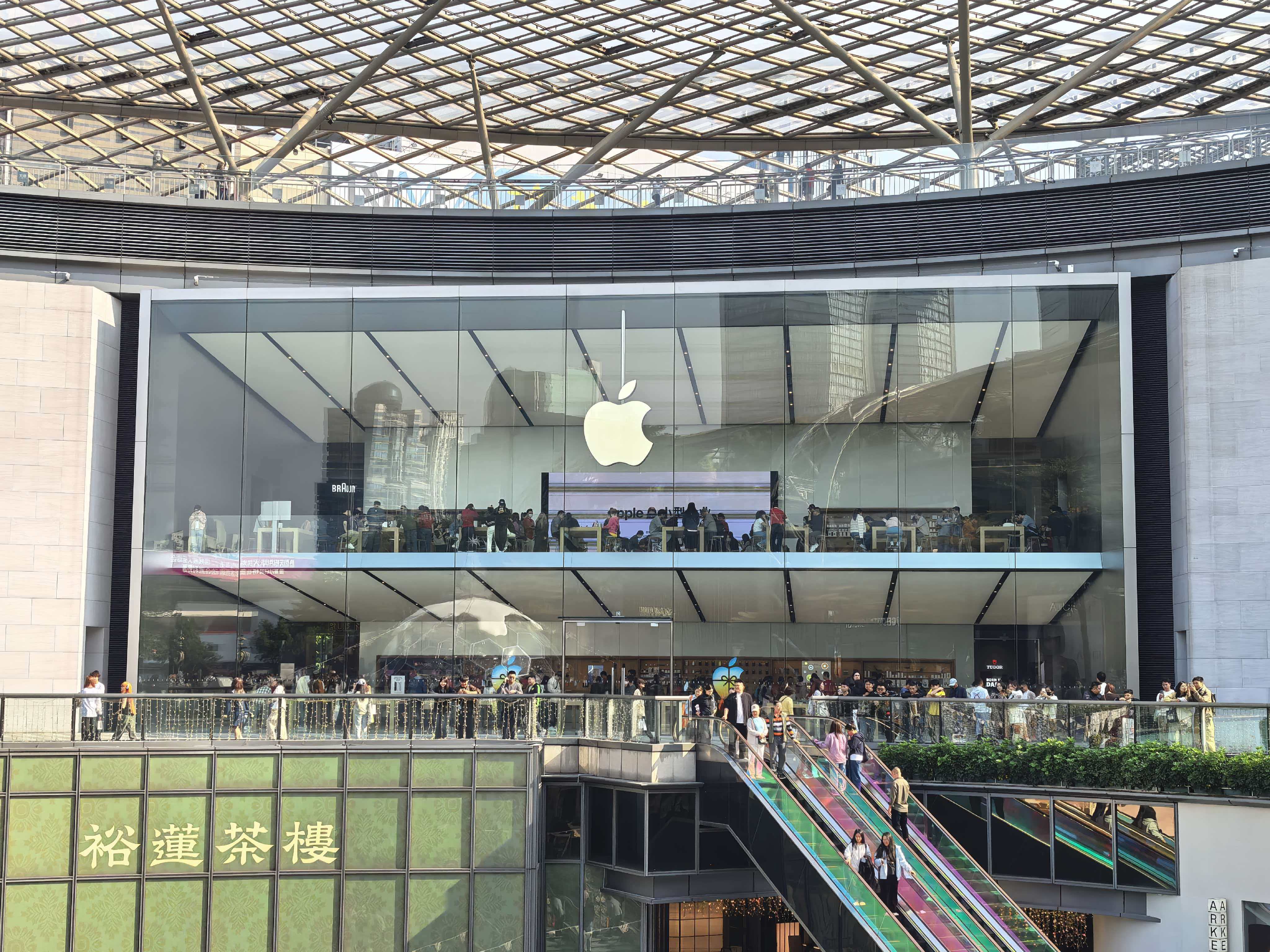
Core Insights - The transformation of offline mobile phone stores from sales points to service-oriented centers is evident, as consumers increasingly prefer to experience products in-store before purchasing online [1][67] - The focus on customer service and experience has become a competitive battleground for brands, with Apple, OPPO, vivo, and others enhancing their service offerings to attract consumers [67][70] Group 1: Apple Store Experience - Apple Store in Guangzhou emphasizes a "freedom" experience, allowing customers to explore products independently while staff are available for assistance when needed [2][6] - The store offers a dedicated service area for product knowledge sharing and support, although some services, like charging, require prior arrangements [10][14] - Overall, Apple Store provides a structured service experience, but it may lack a personal touch compared to other brands [14] Group 2: OPPO Store Insights - OPPO's flagship store in Guangzhou showcases a modern design and offers professional product recommendations without pressuring customers to make immediate decisions [15][19] - The store has separated sales and after-sales services, requiring customers to visit nearby service centers for repairs, which may affect convenience [23] - OPPO's staff are attentive to customer needs, providing detailed information on promotions and assisting with data transfer services [19][23] Group 3: Honor Store Features - Honor's store in Tianhe City combines sales and service, with staff providing enthusiastic product demonstrations and recommendations tailored to customer needs [27][31] - The store features a spacious waiting area for customers during data transfers, although the ambiance could be improved [27][31] - Honor offers a range of after-sales services, including a unique policy of 180 days for exchanges instead of repairs [31] Group 4: Vivo Store Experience - Vivo's store, despite its smaller size, provides a comprehensive service experience, including assistance with data transfer and customer inquiries [32][36] - Staff are proactive in offering help, especially to older customers, and the store provides amenities like free charging and water [36][40] - The store's layout includes a comfortable area for customers to relax while waiting for services [40] Group 5: Huawei Store Overview - Huawei's flagship store features a large space with a mix of technology products, including cars, creating a unique shopping experience [41][46] - Staff demonstrate high professionalism in explaining product features and services, although some services, like screen protectors, are considered expensive [46][54] - The store's service area is well-equipped for customer needs, including fast charging options [46][54] Group 6: Xiaomi Store Highlights - Xiaomi's new flagship store emphasizes a comprehensive experience, integrating various product categories and services [55][63] - Staff are trained to understand customer needs before making recommendations, enhancing the overall service quality [55][59] - The store also features unique offerings, such as the ability to experience Xiaomi cars and participate in live product launches [59][63] Group 7: Industry Trends - The shift in offline stores from sales to service reflects broader industry trends, with brands focusing on enhancing customer experience to remain competitive [67][70] - Instant retail models are emerging, allowing customers to order online while utilizing offline stores for fulfillment, thus bridging the gap between online and offline shopping [70][72] - The future of offline stores will depend on brands' commitment to service quality and customer experience, which are critical for long-term success [74]



“拔尖果”出山记:一颗花斑果如何48小时从哀牢山到北京餐桌?
2 1 Shi Ji Jing Ji Bao Dao· 2025-12-10 04:21
Core Insights - The article emphasizes the shift in consumer preferences towards value-for-money products, moving away from superficial appearance to intrinsic quality [1][11] Group 1: Agricultural Production and Quality - In November, the 114,000 acres of ice sugar oranges in Yunnan's Ailao Mountain region experienced a bountiful harvest, benefiting from the area's diverse climate and geographical features [2] - The "ugly fruit" known as "flower spotted fruit" is gaining popularity for its high sugar content and resilience, although it lacks brand recognition outside the local market [2][3] - The management model of Chushi Agriculture ties product quality directly to farmer income, with a price difference of up to four times between the highest and lowest quality grades [5] Group 2: Supply Chain Innovations - The collaboration between Chushi Agriculture and Xiaoxiang Supermarket has led to the development of a new supply chain model that emphasizes quality control at the source, significantly reducing product loss during transportation [9][10] - Xiaoxiang Supermarket's "lock sweet person" initiative involves deploying quality control personnel to the production area, ensuring that the quality of flower spotted fruit is maintained throughout the supply chain [8][10] - The supply chain model has proven successful, with flower spotted fruit now reaching consumers in major cities within 48 hours, and the loss rate significantly reduced to one-tenth of the previous year [10] Group 3: Market Trends and Consumer Behavior - Consumers are increasingly prioritizing real value over excessive packaging, aligning with the trend of valuing quality over appearance [11][12] - The successful introduction of the "lock sweet person + top fruit" model meets consumer demand for quality, indicating a shift in market dynamics towards non-standard agricultural products [11][12] - Xiaoxiang Supermarket's approach of integrating online and offline sales channels reflects the innovations in retail, catering to immediate consumer needs in the evolving retail landscape [12]

QM报告:淘宝“00后”用户规模达1.55亿,个性化供给圈粉年轻一代
Yang Zi Wan Bao Wang· 2025-12-10 03:45
Group 1 - The core viewpoint of the report indicates that by October 2025, the monthly active user base of Taobao's post-00s demographic is expected to reach 155 million, representing a year-on-year growth of 11.6% [1] - The report highlights that the online consumption willingness among the post-00s remains stable, with a significant increase in the middle-high willingness and capability groups, where nearly 95% of post-00s exhibit a high willingness to consume, primarily within the spending range of 1,000 to 2,999 yuan [1] - The interests of the post-00s users are notably in sharing, food, and anime/second dimension, reflecting their strong consumption potential and mature consumption structure [1] Group 2 - The characteristics of the post-00s are directly reflected in the consumption trends and ecological structure of the Taobao and Tmall platforms, where young users are continuously attracted by the diverse product offerings and personalized choices [3] - In the gold and jewelry sector, brands have launched thousands of IP co-branded gold products on Tmall this year, appealing to the purchasing power of the post-95s and post-00s, with many products selling out quickly during the Double 11 shopping festival [3] - The trend in the trendy toy industry shows that the post-00s are the main consumer group, with significant growth in blind boxes and anime-related products, where over 300,000 new trendy toys were released during Double 11, leading to double-digit growth [3] Group 3 - Taobao's youthful operations have become a key factor in attracting post-00s users, with interactive activities like guessing games and New Year wishes appealing to young people's interests [4] - The rapid growth of Taobao's flash sales has brought in a large number of young new users, with 72% of instant retail users being under 35 years old, according to Nielsen IQ's 2024 online shopping trend report [4]
云深处科技完成超5亿元C轮融资;银河通用称筹备赴港上市消息不实 | 未来商业早参
Mei Ri Jing Ji Xin Wen· 2025-12-09 23:41
Group 1 - Yunshen Technology completed over 500 million C-round financing, led by China Merchants International and Huaxia Fund, with participation from various strategic investors including China Telecom and China Unicom [1] - The successful financing round reflects recognition of the company's technological accumulation and commercialization progress, indicating continued market confidence in embodied intelligence and robotics sectors [1] Group 2 - Galaxy General responded to rumors of preparing for a Hong Kong IPO, stating that the information is not true and that the company's restructuring is aimed at meeting normal financing needs and attracting new primary market investors [2] - The clarification highlights the importance of distinguishing between industry trends and individual company development rhythms, focusing on technological breakthroughs and practical applications rather than merely pursuing IPO rumors [2] Group 3 - In response to reports of a live mouse found in a product, Sam's Club stated that they have initiated a comprehensive inspection with a pest control company and determined that the issue likely occurred during the product's storage at the pickup point [3] - This incident underscores the potential impact of external environmental factors on product quality in the last-mile delivery of instant retail, raising concerns about brand reputation and internal quality control systems [3]