
循环经济

Search documents
AIGLE艾高携手飞蚂蚁启动旧衣回收计划
Cai Jing Wang· 2025-12-02 02:33
Core Insights - AIGLE has launched a clothing recycling initiative in collaboration with the domestic environmental recycling platform "Fei Mayi" to promote public participation in old clothing recycling [1] - The initiative aims to process collected clothing through professional methods to reduce waste and support ecological protection [1] - AIGLE has set a target to collect over 5000 kg of old clothing to support the establishment of a new public welfare forest in a desert area, contributing to ecological restoration [1] Company Initiatives - Participants can drop off old clothing and shoes at designated AIGLE stores, where they will be placed in recycling bins for professional processing by Fei Mayi [1] - AIGLE's sustainable development philosophy, "AIGLE for Tomorrow," emphasizes increasing the use of recyclable materials in its products, aiming for 60% recyclable material application in the autumn/winter 2025 collection [1] - The brand has a long-term partnership with the Taohuayuan Ecological Protection Foundation and is furthering its collaboration with Fei Mayi to promote a circular economy and green consumption [1]
欧盟经济迎来小幅回暖(国际视点)
Ren Min Ri Bao· 2025-12-01 22:11
欧盟各经济体的表现分化明显。环比增速中,瑞典以1.1%的增速领跑,葡萄牙与捷克分别以0.8%和 0.7%的增速紧随其后;法国、西班牙环比分别增长0.5%和0.6%,高于平均水平;意大利、德国环比零 增长;芬兰、爱尔兰等国出现萎缩。 今年以来,西班牙、葡萄牙等南欧国家经济表现好转,甚至一度成为拉升欧盟经济整体增长的重要动力 源。例如,西班牙前三季度GDP同比增长分别达到3.1%、3%、2.8%,超出市场预期。最新数据显示, 近日在德国法兰克福拍摄的欧洲央行总部。 本报记者 刘 赫摄 今年前8个月,西班牙接待国际游客超6680万人次,同比增长近3.9%。旅游业复苏与制造业出口的双重 支撑,使西班牙持续成为欧盟地区经济增长的"优等生"。 欧盟委员会近日发布2025年秋季经济展望报告预测,2025年欧盟实际国内生产总值(GDP)将增长 1.4%,欧元区增长1.3%;2026年欧盟经济将增长1.4%,欧元区经济增长1.2%。另据最新数据,经季节 调整后,今年第三季度欧盟GDP环比增长0.3%,同比增长1.5%;欧元区环比增长0.2%,同比增长 1.3%。欧盟委员会报告认为,尽管外部环境严峻,但未来欧盟经济预计将以温和速 ...


最新报告预测 2025年欧盟实际GDP将增长1.4% 欧元区增长1.3%——欧盟经济迎来小幅回暖(国际视点)
Ren Min Ri Bao· 2025-12-01 22:07
欧盟委员会近日发布2025年秋季经济展望报告预测,2025年欧盟实际国内生产总值(GDP)将增长 1.4%,欧元区增长1.3%;2026年欧盟经济将增长1.4%,欧元区经济增长1.2%。另据最新数据,经季节 调整后,今年第三季度欧盟GDP环比增长0.3%,同比增长1.5%;欧元区环比增长0.2%,同比增长 1.3%。欧盟委员会报告认为,尽管外部环境严峻,但未来欧盟经济预计将以温和速度继续扩张。 欧盟委员会负责经济事务的委员东布罗夫斯基斯表示,鉴于外部形势严峻,欧盟必须采取果断行动,释 放内部增长潜力。这意味着要加快推进竞争力议程,简化监管、完善单一市场以及促进创新。 各经济体表现分化明显 近年来,欧盟经济整体增速偏低,阶段性停滞时有出现。今年以来,欧盟国家前三季度经济呈现微弱复 苏态势,经济整体表现略高于预期。最新数据表明,经季节调整后,欧元区和欧盟第三季度经济环比增 速较上一季度的0.1%和0.2%有所加快。其中,欧元区20个经济体中,9个国家实现环比正增长,3个国 家负增长;14个国家实现同比正增长,1个国家负增长。 欧盟各经济体的表现分化明显。环比增速中,瑞典以1.1%的增速领跑,葡萄牙与捷克分别以0. ...
徐州国投集团谱写国企“双碳”实践新篇章 向绿向新加快打造能源产业高地
Xin Hua Ri Bao· 2025-12-01 21:34
Group 1: Core Insights - XuZhou GuoTou Group is innovatively transforming kitchen waste into valuable resources, collecting approximately 80 tons of kitchen waste daily from over 1,500 catering institutions, 110 schools, and 15 food processing plants [1] - The company has developed a circular economy industry chain, addressing energy and environmental challenges while contributing to carbon neutrality goals with replicable solutions [1][2] Group 2: Waste Management and Energy Production - XuZhou GuoXin Biomass Energy Technology Co., Ltd. has created an efficient circular chain that converts organic waste into clean energy and ecological products, processing 200,000 tons of livestock manure and 20,000 tons of kitchen waste annually [2] - The anaerobic digestion of waste produces 10 million cubic meters of biogas, which is further purified into 6 million cubic meters of biomethane for local supply [2] Group 3: Agricultural Applications - The by-products of biogas processing, such as "GuoPei" biomass nutrient solution, replace traditional fertilizers and promote soil health and crop growth, forming a complete closed-loop system [3] - The company has established a carbon management system to track emissions throughout the product lifecycle, enhancing green consumption experiences through online sales platforms [3] Group 4: Industrial Energy Solutions - XuZhou GuoXin Recycled Resources Utilization Co., Ltd. has successfully implemented a "green gas direct supply" model, reducing energy costs by up to 40% for high-energy-consuming enterprises in the industrial park [4] - The company is set to engage in the first domestic green index trading in the biomass natural gas sector, enhancing the marketability of biogas [4] Group 5: Biomass Energy Supply and Trade - XuZhou GuoXin Renewable Energy Co., Ltd. has maintained a fuel inventory of over 30,000 tons per month, ensuring energy supply stability and achieving a 43.96-fold increase in heating output compared to the previous year [5] - The company has successfully entered the biomass energy trade sector, marking a milestone with a 1,000-ton industrial-grade mixed oil procurement project [6] Group 6: Future Development Plans - XuZhou GuoTou Group aims to further diversify and internationalize its energy sector, exploring innovative models such as "biomass energy + energy storage" and "green energy + carbon trading" [6]
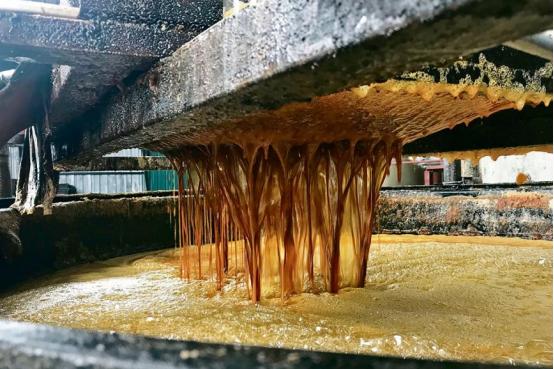
从人人喊打,到万元一吨抢破头:“身价飞升”的地沟油,为何成了香饽饽?
3 6 Ke· 2025-12-01 08:50
Core Viewpoint - The transformation of "gutter oil" from a notorious food safety hazard to a highly sought-after resource for sustainable aviation fuel illustrates a dramatic shift in perception and market dynamics, driven by global demand for eco-friendly energy sources [1][3][30]. Group 1: Historical Context - Ten years ago, gutter oil was infamous for its health risks, including cancer-causing substances and food poisoning, leading to widespread public fear and government crackdowns on its production and sale [1][3][5]. - The 2011 major gutter oil scandal involved a vast criminal network across 14 provinces in China, with over 99.2 million yuan involved, highlighting the severity of the issue [5][13]. Group 2: Current Market Dynamics - In 2023, China exported nearly 2 million tons of gutter oil, accounting for over half of the country's waste cooking oil production, marking a historical high [3][18]. - The demand for gutter oil has surged, particularly in Europe and the United States, with the U.S. importing 718,000 tons in 2023, and projections indicating a continued increase in imports [3][18][20]. Group 3: Price Trends - The price of gutter oil has risen significantly, reaching an average of 6,525 yuan per ton by August 2025, a 24% increase year-on-year, with peak prices exceeding 10,000 yuan per ton [5][18]. Group 4: Transformation into Sustainable Resource - The shift began with the use of gutter oil in sustainable aviation fuel (SAF), which utilizes waste cooking oil to produce a low-carbon alternative for aviation, thus creating a new market for what was once considered waste [17][20]. - The global aviation industry has increasingly adopted SAF, with over 40 airlines using it, and a projected need for millions of tons annually to meet carbon neutrality goals [17][18]. Group 5: Future Implications - The competition for gutter oil has intensified, with countries recognizing its strategic importance in the energy transition, leading to the establishment of numerous biofuel plants in Europe and the U.S. [23][25]. - China is also ramping up its production capabilities for SAF, with several factories set to begin operations, indicating a shift towards domestic utilization of gutter oil for higher-value products [25][27]. Group 6: Geopolitical Considerations - The global demand for gutter oil has led to geopolitical tensions, with Western countries wary of China's potential profits from this resource, resulting in trade barriers and anti-dumping measures [28][30]. - The future of gutter oil as a commodity will depend on balancing domestic needs with export opportunities, as well as navigating international trade dynamics [28][30].
淮北推动产业聚链成群集群成势
Zhong Guo Hua Gong Bao· 2025-12-01 07:28
Core Insights - HuaiBei is positioning itself as a "demonstration city for green transformation" and a "national important new comprehensive energy base" focusing on the new energy materials and high-end fine chemicals industry [1] Industry Development - HuaiBei has identified the new energy materials and high-end fine chemicals industry as a core driver for transformation, leveraging strategic opportunities from the Yangtze River Delta integration and the rise of central regions [2] - The city has attracted over 50 leading enterprises, achieving an annual production capacity of 900,000 tons of methanol, 600,000 tons of ethanol, and over 2.6 million tons of various chemical products [2] Infrastructure and Support - The Linhuan Chemical Park is central to the industrial development, offering comprehensive support including talent policies, integrated facilities, optimized pricing mechanisms, and a high-standard wastewater treatment system [2] - The park has become a competitive chemical park during the 14th Five-Year Plan, with a safety risk level rated as D [2] Innovation and Technology - HuaiBei is focusing on integrating technological and industrial innovation, with a significant investment of 370 million yuan in a technology innovation accelerator that serves as a key link from "laboratory" to "production line" [4] - The park currently hosts 18 provincial innovation platforms, 18 national high-tech enterprises, and has accumulated 613 utility model patents and 200 invention patents [4] Policy Incentives - HuaiBei has introduced a series of targeted incentive measures for the manufacturing sector, including rewards for companies achieving certain revenue milestones and support for newly completed projects exceeding 500 million yuan in fixed assets [5] Future Development Plans - The industrial development blueprint for HuaiBei includes a focus on the methanol industry chain, with plans to expand into five key sub-sectors: new energy materials, functional additives, electronic chemicals, pharmaceutical intermediates, and new chemical materials [6] - The goal is to achieve a revenue of over 50 billion yuan by 2030, with significant market potential in silicon-carbon anodes for new energy batteries estimated at nearly 30 billion yuan [6] Strategic Recommendations - HuaiBei should accelerate energy structure optimization and process re-engineering, exploring coupling development paths with green electricity and green hydrogen, as well as the feasibility of coupling with biomass resources and bio-based chemicals [7]

AI的尽头是什么?可能和你想的不一样
Shang Hai Zheng Quan Bao· 2025-11-30 13:57
Core Viewpoint - The rapid development of AI technology poses significant environmental risks, particularly in terms of energy consumption, water usage, carbon emissions, and resource depletion, which could hinder sustainable development in the AI sector [3][4][5]. Group 1: Environmental Risks - AI's environmental risks are primarily categorized into four areas: electricity consumption, water resource consumption, carbon emissions, and mineral consumption and waste [3]. - Electricity consumption is critical, with AI hardware manufacturing being energy-intensive, especially in chip and data storage device production. The energy consumption during the training of large language models is expected to grow exponentially as model parameters increase from billions to trillions [3][4]. - Water resource consumption is significant due to the cooling requirements of data centers. The water usage for global data centers is projected to rise from 239 billion liters in 2024 to 664 billion liters by 2030, with AI data centers' water consumption increasing from 43 billion liters to 3.38 billion liters during the same period [4]. - Carbon emissions from AI training processes are substantial, with the training of models like GPT-3 resulting in emissions equivalent to that of 480 cars driving 5,000 kilometers annually [4][5]. Group 2: Resource Depletion and Waste - The digital economy relies heavily on physical resources, with AI's growth leading to increased demand for various minerals and metals used in hardware and infrastructure [5]. - Electronic waste has surged by 30% from 2010 to 2022, reaching 10.5 million tons, yet only 24% of this waste was formally collected in 2022 [5]. Group 3: Governance and Ethical Concerns - The initial intent of AI technology is to enhance efficiency and improve quality of life; however, the lack of ethical constraints and legal regulations can lead to misuse and data security issues [5][6]. - Data collection for AI training often raises privacy concerns, as seen in cases where companies collect public images without consent for facial recognition systems [6]. Group 4: Solutions and Recommendations - To mitigate ESG risks, a comprehensive approach is necessary, focusing on reducing high energy, water, and emission levels associated with AI [8][9]. - In hardware, promoting energy-efficient technologies like liquid-cooled servers can significantly reduce electricity consumption [9]. - In technology, innovations such as the MoE architecture can drastically lower energy usage during AI training, with some models consuming only 5.6% of the energy required by others [10]. - Transitioning to a circular economy for AI-related industries is essential, emphasizing the recycling and reuse of old AI equipment to minimize electronic waste [10]. - Establishing standardized environmental footprint accounting and reporting for AI companies is crucial for transparency and accountability [10][11].
SemiAnalysis深度解读TPU--谷歌冲击“英伟达帝国”
Hua Er Jie Jian Wen· 2025-11-29 05:07
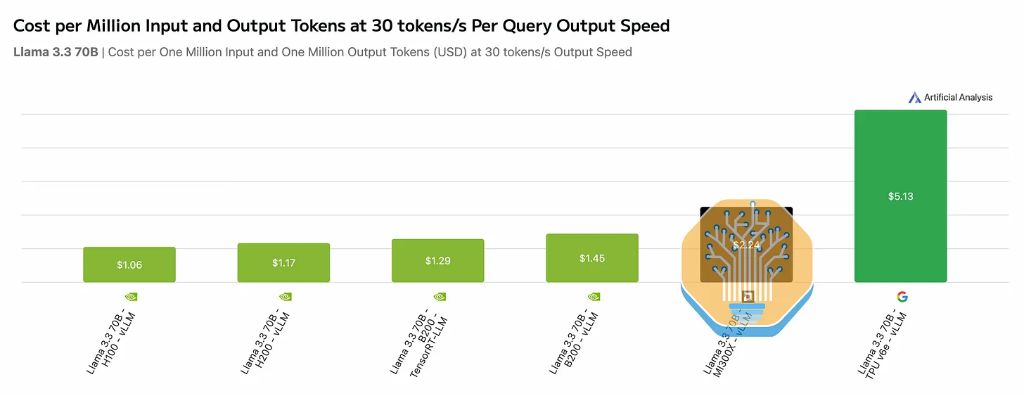
Core Insights - Nvidia maintains a leading position in technology and market share with its Blackwell architecture, but Google's TPU commercialization is challenging Nvidia's pricing power [1][2] - OpenAI's leverage in threatening to purchase TPUs has led to a 30% reduction in total cost of ownership (TCO) for Nvidia's ecosystem [1] - Google's transition from a cloud service provider to a commercial chip supplier is exemplified by Anthropic's significant TPU procurement [1][4] Group 1: Competitive Landscape - Google's TPU v7 shows a 44% lower TCO compared to Nvidia's GB200 servers, indicating a substantial cost advantage [7] - The first phase of Anthropic's TPU deal involves 400,000 TPUv7 units valued at approximately $10 billion, with the remaining 600,000 units leased through Google Cloud [4][43] - Nvidia's financial team has responded to market concerns regarding its "circular economy" strategy, indicating sensitivity to Google's competitive pressure [5][31] Group 2: Technological Advancements - Google's TPU v7 architecture has been designed to optimize system performance, achieving competitive memory bandwidth and capacity compared to Nvidia's offerings [12][62] - The introduction of Google's proprietary interconnect technology (ICI) allows for efficient scaling and reduced latency, enhancing TPU performance [15][17] - The shift in Google's software strategy to support PyTorch on TPU marks a significant change in its approach to external developers, potentially eroding Nvidia's CUDA advantage [19][21][23] Group 3: Market Dynamics - The AI infrastructure market is experiencing a shift, with companies like Fluidstack and TeraWulf emerging as key players in the Neocloud space, leveraging Google's credit backstop for financing [9][47] - The competitive landscape is evolving as more companies, including Meta and xAI, are lining up as potential TPU customers, indicating a growing demand for Google's hardware [4][29] - The performance disparity between TPU and Nvidia's GPUs is becoming more pronounced, with Anthropic's large-scale TPU orders validating the platform's capabilities [49][50]


强链补链构筑成本护城河 红太阳拟携关联方打造吡啶碱全产业链
Zheng Quan Ri Bao Wang· 2025-11-29 04:11
Core Viewpoint - The company Nanjing Hongtaiyang Co., Ltd. has signed a cooperation framework agreement with its affiliate Qujing High-tech Investment Co., Ltd. to develop a full industrial chain centered on pyridine alkaloids in Qujing, Yunnan Province, which is significant for consolidating its competitive advantage in the core intermediate field [1][2]. Group 1: Company Strategy - The cooperation aims to create a circular economy industrial chain project with an annual production capacity of 50,000 tons of new pyridine alkaloids, utilizing the design and production processes provided by Hongtaiyang [2]. - The project will integrate the three major segments of "three medicines" intermediates, pesticide active ingredients, and formulations into a single park and circular economy system, forming a closed loop from raw materials to intermediates to final products [2]. Group 2: Industry Context - The initiative aligns with the chemical industry's push for "extending chains, supplementing chains, and strengthening chains," leveraging Qujing's advantages in energy and resource costs to build a cost moat for Hongtaiyang [1]. - The "light asset model" of "operating first and acquiring later" addresses the pain points of heavy asset expansion in the chemical industry, creating a new cooperation paradigm that isolates risks while binding interests [3].

建工修复签约1.275亿磷石膏资源化利用项目
Zheng Quan Ri Bao Wang· 2025-11-28 10:44
Core Viewpoint - Beijing Construction Engineering Repair Co., Ltd. has successfully signed a contract for a phosphogypsum resource utilization project with Yunnan Hongfu Fertilizer Co., Ltd., amounting to approximately 127.5 million yuan, with a service period of five years [1] Group 1: Project Details - The project is located in Dongchuan District, Kunming City, Yunnan Province, where the company will provide comprehensive utilization services for phosphogypsum generated during the production process of Yunnan Hongfu Fertilizer [1] - Phosphogypsum, a byproduct of the phosphate fertilizer industry, poses environmental risks due to long-term storage, which can lead to soil and water pollution [1] Group 2: Environmental Impact - The implementation of this project will effectively address the environmental hazards associated with phosphogypsum, improve the ecological environment quality in the region, and significantly enhance the utilization rate of phosphogypsum [1] - The project supports the transformation of industrial solid waste from waste to resource, contributing to the development of a circular economy in the region [1] Group 3: Company Strategy and Future Plans - In recent years, the company has focused on the research and development of industrial solid waste resource utilization technologies and has implemented related governance projects in multiple regions, accumulating rich practical experience [1] - The company aims to strictly adhere to high standards, quality, and efficiency in project construction, striving to create a demonstration project for phosphogypsum utilization, providing replicable and promotable solutions for the green transformation of the phosphate chemical industry, and assisting in achieving the national "dual carbon" goals [1]