数字经济

Search documents
果然追上来了,郑州未来如何发力才能保位?
Sou Hu Cai Jing· 2026-02-01 07:10
Core Insights - The article discusses the economic performance and competitive dynamics between Zhengzhou and Fuzhou, highlighting Zhengzhou's GDP of 15,282.6 billion yuan and Fuzhou's GDP of 15,112.32 billion yuan for 2025, with growth rates of 5.7% and 5.6% respectively [1][3]. Group 1: Economic Comparison - Zhengzhou's GDP for 2025 is reported at 15,295.8 billion yuan, slightly ahead of Fuzhou by 183.48 billion yuan, but Fuzhou shows a faster growth rate of 5.6% compared to Zhengzhou's 5.3% [5]. - In the fourth quarter, Fuzhou's GDP reached approximately 5,107.32 billion yuan, significantly outpacing Zhengzhou's 4,106 billion yuan, indicating a strong end-of-year performance for Fuzhou [5][6]. Group 2: Competitive Landscape - Zhengzhou's advantages include being a national central city, a comprehensive transportation hub, and a cluster for advanced manufacturing, while Fuzhou excels in marine economy, digital economy, and private sector activity [6][7]. - Fuzhou's service sector is more robust, with a tertiary industry proportion of 58.96%, compared to Zhengzhou's 52% [6][18]. Group 3: Strategic Directions for Zhengzhou - Zhengzhou aims to enhance its manufacturing sector by focusing on advanced manufacturing and addressing Fuzhou's strengths in marine and new energy industries [7][9]. - The city plans to develop a comprehensive transportation hub integrating air, rail, and logistics to enhance its economic reach and competitiveness [12][13]. Group 4: Service Sector and Innovation - To address its service sector shortfall, Zhengzhou will focus on high-end services and traditional service quality improvements, targeting a financial sector value of over 1,000 billion yuan by 2026 [16][18]. - The city intends to boost its innovation capabilities by increasing R&D intensity and fostering high-tech enterprises, aiming for a R&D investment intensity of 3.2% by 2026 [21][24]. Group 5: Regional Collaboration - Zhengzhou seeks to leverage its urban agglomeration by enhancing collaboration within the Central Plains urban cluster, aiming for a GDP of over 42,000 billion yuan by 2026 [26][28]. - The strategy includes attracting industries from the eastern regions and utilizing its population advantage to counterbalance Fuzhou's coastal economic strengths [25][29]. Group 6: Future Goals - By 2026, Zhengzhou aims to surpass Fuzhou by over 500 billion yuan in GDP, with a growth rate exceeding 6% and an advanced manufacturing value exceeding 7,000 billion yuan [30][31]. - Long-term goals include achieving a GDP of over 20,000 billion yuan by 2030, establishing a competitive edge through a combination of advanced manufacturing, hub economy, and innovative services [31][32].

全文来了!2026年山东省政府工作报告
Bei Jing Ri Bao Ke Hu Duan· 2026-02-01 04:50
Core Viewpoint - The government work report outlines the achievements and future goals of Shandong Province, emphasizing economic growth, industrial upgrades, and improvements in people's livelihoods while addressing challenges and setting targets for the upcoming years [2][20]. Economic Growth - In 2025, Shandong's GDP grew by 5.5%, reaching 10.3 trillion yuan, making it the first northern province to surpass 10 trillion yuan [3] - Agricultural, industrial, and service sectors showed strong performance, with agricultural output exceeding 1.3 trillion yuan, industrial value-added increasing by 7.6%, and service sector growth at 6.1% [3] - Retail sales rose by 5.1%, and exports increased by 4.5%, both outperforming national averages [3] Industrial Optimization and Upgrading - The province implemented 167 major technological innovations, with over 85% led by enterprises, enhancing the innovation ecosystem [4] - High-tech product output saw significant increases, including a 103.1% rise in lithium batteries and a 19.2% increase in integrated circuit wafers [4] - The establishment of 15 high-value patent cultivation centers and 44 key industry patent pools supports industrial advancement [4] Reform and Opening Up - Significant reforms in state-owned enterprises and the introduction of regulations to promote the private economy were highlighted [5][6] - The province's financial services expanded, with 10 new listed companies and successful reforms in 35 village banks [6] - Shandong's foreign trade initiatives led to an 8.4% increase in exports to non-U.S. markets and a 37% rise in "new three samples" exports [6] Major Strategic Implementation - The Yellow River national strategy was emphasized, with significant investments in water quality management and infrastructure projects [7] - The province's rural revitalization efforts included the construction of over 2,070 rural revitalization areas, covering more than 18,000 administrative villages [7] Green and Low-Carbon Transition - Shandong is advancing its carbon peak initiatives, with a focus on energy system optimization and significant investments in renewable energy projects [8] - The average PM2.5 concentration dropped to 32.4 micrograms per cubic meter, achieving national air quality standards [8] Improvement of People's Livelihoods - In 2025, urban employment increased by 124.9 million, with significant investments in education and healthcare [9][10] - The province's social welfare initiatives included the construction of over 1,125 integrated medical and nursing institutions, the highest in the country [10] - Housing projects included the completion of 14.1 million housing units for urban village renovations and 2.5 million units of affordable rental housing [10] Future Goals - The "15th Five-Year Plan" aims for significant enhancements in economic strength, technological capability, and overall competitiveness, with a focus on green and high-quality development [21][22] - Key initiatives include expanding domestic demand, enhancing market vitality, and promoting rural revitalization [22][23]
十万亿大省迈上新征程
Jing Ji Guan Cha Bao· 2026-02-01 04:39
Core Insights - Shandong is positioned as a significant economic growth engine in Northern China, with a projected GDP exceeding 10 trillion yuan by 2025, contributing 7.4% to the national economy [4][5][13] - The province is focusing on high-quality development, aiming to establish a green, low-carbon economy and enhance its global competitiveness [5][23] Industry Developments - The aerospace industry in Shandong is developing rapidly, with the Yantai Dongfang Spaceport successfully launching 137 satellites and establishing a comprehensive aerospace industry chain [3][16] - Shandong is becoming a hub for new energy vehicles, with production expected to exceed 1.1 million units by 2025, accounting for 15.2% of the national lithium battery output [4][11] - The traditional textile industry is innovating through technology, such as extracting fibers from shrimp shells and waterless dyeing processes [19][21] Investment and Projects - Shandong is prioritizing project investments as a key driver for economic growth, with plans for 504 major projects and an investment target of over 160 billion yuan in 2026 [10][12] - The province is set to develop 2,000 provincial-level key industrial projects with a total investment exceeding 980 billion yuan by 2026 [12][13] - Major projects in the nuclear power sector are underway, with the Zhaoyuan nuclear power project expected to have a total investment of approximately 120 billion yuan [17][18] Technological Advancements - The Shandong Proton Center is expanding with a 1.5 billion yuan investment to enhance cancer treatment capabilities, aiming to create a comprehensive radiation therapy ecosystem [8][9] - The province is focusing on artificial intelligence and digital economy initiatives, with plans to establish a digital economy innovation development pilot zone [22][23] Urban Development - The integration of urban areas, particularly the Jinan and Qingdao metropolitan areas, is being emphasized to enhance regional economic collaboration and efficiency [23][24][25] - Shandong aims to improve transportation and connectivity within urban clusters, facilitating economic activities and population movement [23][26]


陕西省第十四届人民代表大会第四次会议关于陕西省人民代表大会常务委员会工作报告的决议
Shan Xi Ri Bao· 2026-02-01 01:13
Core Viewpoint - The meeting of the 14th People's Congress of Shaanxi Province approved the work report presented by Deputy Director Zhuang Changxing, emphasizing the need for adherence to Xi Jinping's thoughts and the implementation of the spirit of the 20th National Congress of the Communist Party of China [1] Group 1 - The meeting recognized the achievements of the Provincial People's Congress Standing Committee over the past year and agreed on the main tasks for the upcoming year [1] - The Provincial People's Congress Standing Committee is required to uphold Xi Jinping's New Era Socialism with Chinese Characteristics and fully implement the spirit of the 20th National Congress and subsequent plenary sessions [1] - The focus will be on deepening the "Three-Year" activities and tackling the "Eight Hard Battles," while promoting county-level economies, private economies, open economies, and digital economies [1]
数字经济“北京经验”向17国学员分享
Xin Lang Cai Jing· 2026-01-31 20:31
Group 1 - The "International Digital Economy Governance and Leading Talent Capacity Building Project" has officially launched at Beijing University of Science and Technology, aimed at sharing Beijing's digital economy practices with representatives from 17 countries to enhance digital transformation capabilities in developing nations [1][2] - The project is co-hosted by the United Nations Institute for Training and Research, the Global Digital Economy Cities Alliance, and local government bodies, lasting for 9 days [1] - Participants will focus on cutting-edge topics such as digital governance, AI ethics, smart transportation, and digital healthcare, with immersive learning experiences through workshops and visits to notable Beijing companies [1] Group 2 - The program includes 8 sessions of country-specific storytelling on digital economy governance and industry needs, fostering deep dialogue among participants to promote cross-border collaboration [2] - Beijing aims to accelerate its development as a global digital economy benchmark city, with plans to issue the "Global Digital Friendly Initiative" by 2025, showcasing a unique "Beijing Solution" and "Beijing Experience" [2] - The project is expected to serve as a catalyst for building an international digital cooperation network, contributing to the sustainable development of the global digital economy [2]
民营经济重镇温州 如何跻身“万亿俱乐部”?
Xin Lang Cai Jing· 2026-01-31 18:30
Core Insights - Wenzhou's GDP is projected to exceed 1 trillion yuan by 2025, reaching 10,213.9 billion yuan, marking its entry into the "trillion-yuan city" category, driven by reform, openness, and innovation [1] Group 1: Private Economy - The private economy is a crucial driving force behind Wenzhou's socio-economic development, with over 90% of enterprises, industrial added value, employment, exports, and tax revenue coming from this sector [2] - Wenzhou has nearly 1.6 million registered private enterprises and individual businesses, showcasing its entrepreneurial spirit and robust market environment [2] - The "Wenzhou model" emphasizes a "small commodities, large market" approach, fostering rapid growth in light manufacturing and specialized markets [2] Group 2: Innovation and Technology - Wenzhou is focusing on innovation as a key business environment, establishing an artificial intelligence bureau and promoting new industries such as digital economy and life sciences [4] - By 2025, the city's industrial added value is expected to grow by 10.3%, with strategic emerging industries and high-tech sectors seeing increases of 14.4% and 11.8%, respectively [4] - The establishment of innovation hubs like the China Intelligent Valley is enhancing the local industrial chain, with 435 AI companies contributing to a more complete ecosystem [4] Group 3: Open Economy - Wenzhou is enhancing its open economy by developing a comprehensive transportation hub and expanding its international trade network, with a projected import-export total exceeding 300 billion yuan by 2025 [6][7] - The city is implementing policies to facilitate trade, including a 240-hour visa-free transit policy for air and sea ports, which is expected to attract more international visitors [6] - Wenzhou's historical significance as a maritime trade hub continues to influence its modern economic strategies, with ongoing efforts to build a near-ocean shipping center and regional international aviation hub [6][7]

《中国文化产业和旅游业年度研究报告(2025)》在京发布
Xin Lang Cai Jing· 2026-01-31 15:24
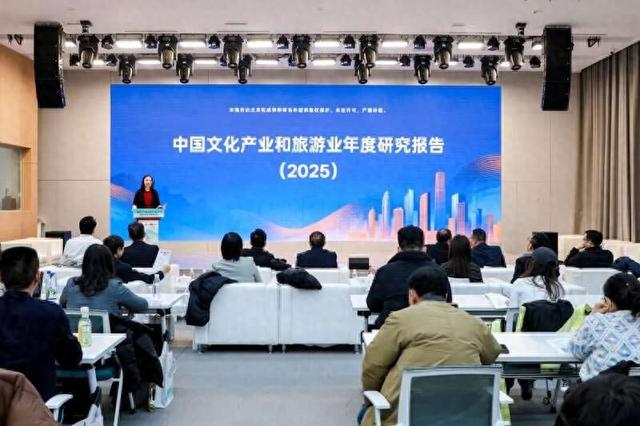
Core Insights - The report titled "China Cultural Industry and Tourism Annual Research Report (2025)" highlights the steady progress and high-quality development of China's cultural and tourism industries, emphasizing the role of new production forces and consumption upgrades in enhancing market vitality and scale efficiency [3][4] Group 1: Industry Development - The cultural and tourism sectors are positioned to enter a new phase of high-quality development during the "14th Five-Year Plan" period, with a focus on the integration of digital economy and intelligent economy [3] - The report identifies ten major trends, including the modernization of cultural narratives, collaboration between industry and enterprise, and the digitalization of industry logic [3] Group 2: Key Characteristics - Five core characteristics are noted in the current cultural and tourism landscape: policy empowerment, technological support, scene implementation, consumer penetration, and quality improvement of business formats [4] - The competition in cultural and tourism consumption will increasingly revolve around "attention economy," highlighting the importance of human factors in the sector [4] Group 3: Future Focus - The industry is encouraged to adopt a long-term perspective on investment and operations within the cultural and tourism sectors, emphasizing the need for deep integration of technology and culture [4]
康盈半导体KOWIN PCIe 5.0 SSD 赋能高端存储场景升级
Jing Ji Guan Cha Wang· 2026-01-31 13:48
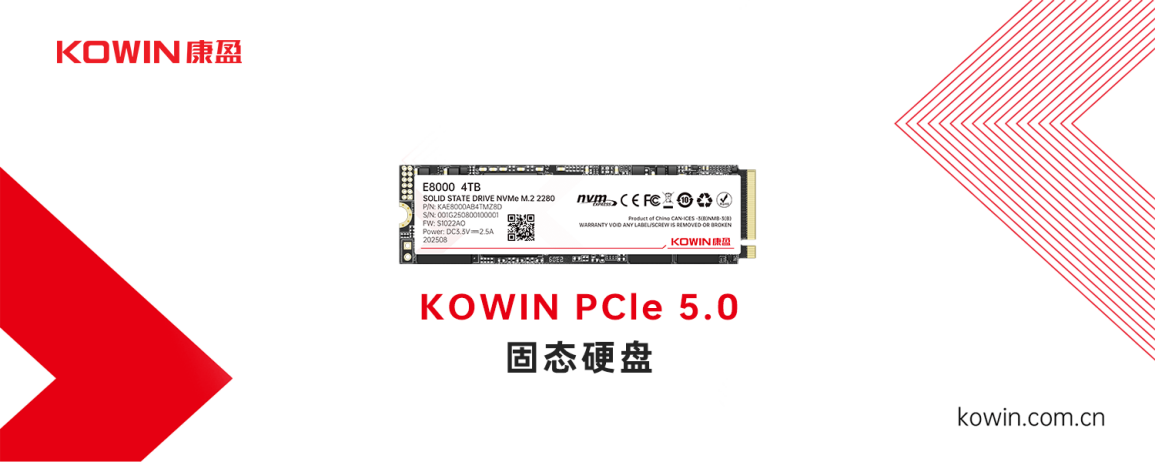
作为康盈半导体的创新产品,KOWIN PCIe5.0SSD以更高存储密度与高速缓存技术为核心亮点,在性能上实现大幅突破,顺序读取速度最高可达 14000MB/s,顺序写入速度最高可达13000MB/s,与常规PCIe4.0相比速度翻倍,是常规PCIe3.0速度的4倍,能够为用户带来超快性能体验。产品兼具高可靠 性和高兼容性,可广泛应用于高端台式机、笔记本、工作站、AI算力平台等多个场景,有效解决高端存储场景中速度不足、兼容性差、环境适应性弱等痛 点。 KOWIN PCIe5.0SSD的成功上线与落地,是康盈半导体技术研发实力的集中体现,也是公司践行半导体存储领域创新发展的重要成果。该产品不仅填补了公 司在高端PCIe5.0存储领域的布局空白,更以优异的性能与广泛的兼容性,为高端存储场景提供了高效、可靠的解决方案,助力AI算力、高端办公等领域的 效率提升。 康盈半导体研发推出KOWIN PCIe5.0SSD。该产品采用主流成熟主控方案,搭载3D TLC NAND,支持PCle Gen5.0x4总线接口,符合NVMe2.0传输协议,核 心性能实现跨越式提升。同时配载4K LDPC纠错算法,支持端到端数据保护,工作 ...
【新华解读】1月PMI有所波动 后续经济回升向好基础仍需巩固
Xin Hua Cai Jing· 2026-01-31 12:25
Group 1: Manufacturing Sector - In January, China's manufacturing Purchasing Managers' Index (PMI) was reported at 49.3%, a decrease of 0.8 percentage points from the previous month [1] - The new orders index for manufacturing was 49.2%, down 1.6 percentage points, indicating a slowdown in market demand [2] - Despite the slowdown, the production index remained above the critical point at 50.6%, indicating continued expansion in manufacturing [2] - High-tech manufacturing PMI was at 52.0%, showing strong performance driven by global AI investment and domestic equipment upgrades [2] Group 2: Service Sector - The service sector's business activity index slightly decreased by 0.2 percentage points to around 49.5%, while the new orders index also saw a minor decline [3] - The financial sector's business activity index rose significantly to over 65%, with new orders remaining above 60%, indicating robust growth in financial activities [4] - The optimism in the service sector is supported by the ongoing development of new economic drivers, particularly in digital economy and AI sectors [5] Group 3: Economic Outlook - Experts suggest that the manufacturing sector's performance will be influenced by export growth, real estate market trends, and the timing and intensity of growth-stimulating policies [3] - There is a call for increased government investment in public goods to stimulate demand and enhance business orders, which is crucial for sustaining economic recovery [3] - The financial sector's activity is expected to continue rising, with optimistic forecasts for service-related industries as the Spring Festival approaches [5]
充足电力助力浙江首个“万卡”算力集群建设
Xin Hua She· 2026-01-31 09:14
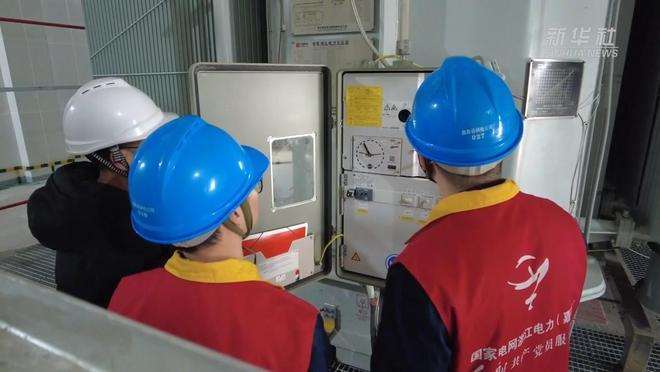
0:00 算力作为数字经济时代的新质生产力,已成为国家战略布局的关键支撑。在浙江嘉兴,浙江省首个"万 卡"算力集群正在加快建设中,像阿里巴巴、中国电信、中国移动三大算力中心等相继落户嘉兴,智算 规模、投运算力、在建算力均居浙江省第一。 算力的尽头是电力。2025年我国全社会用电量规模首次突破10万亿千瓦时,与算力相关的人工智能产 业、互联网等成为推动用电量增长的一个主要来源。2025年嘉兴全市用电量827.85亿千瓦时,同比增长 4.55%。聚焦嘉兴算力产业布局,国网嘉兴供电公司将保障算力供用电提升至服务国家战略的高度,深 入践行"电等发展"理念,主动对接协调有关部门,积极了解产业用电诉求,全力服务配套工程落地,赋 能嘉兴"新基建"引擎加速发展。2025年,以中国电信智算中心、阿里智算中心、润泽智算中心等为代表 的嘉兴算力产业用电量已经超过7.9亿千瓦时,同比上涨287%。通过加快产业集聚、强化算力支撑,为 长三角地区人工智能发展提供支撑。 服务阿里巴巴过程中,仅耗时3个月便完成A幢过渡性用电两条10千伏线路的投产并网,远超平均时 效。项目前期,专班人员为其量身定制过渡阶段10千伏专线供电方案,并压缩流程时限 ...