
企业出海

Search documents
中国企业出海,大而不强?
Hu Xiu· 2025-08-06 01:47
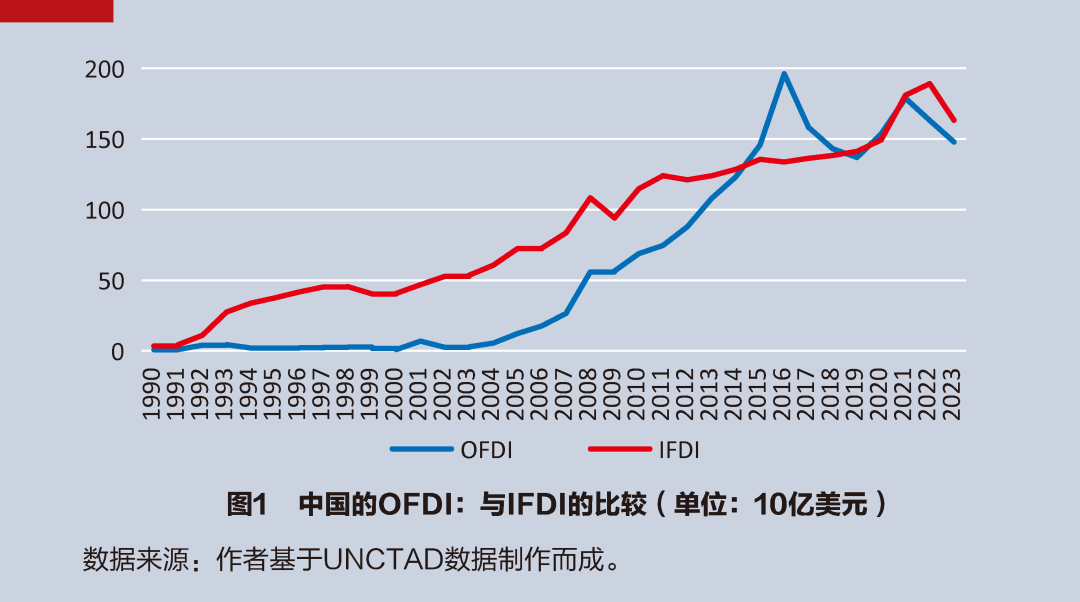
Core Viewpoint - The issue of Chinese companies "going abroad" has gained renewed attention due to the large-scale tariff wars initiated by Trump during his second term, highlighting its significance for both micro-level corporate strategies and macro-level national competitiveness [1] Group 1: Chinese Companies' "Going Abroad" Performance and Characteristics - "Going abroad" refers to domestic companies expanding internationally through various means such as trade exports and foreign direct investment (OFDI), with OFDI including greenfield investments and cross-border mergers and acquisitions [2] - In 2023, China's OFDI flow totaled $147.85 billion, accounting for 9.54% of global OFDI, ranking third after the United States and Japan [2] - Since China's accession to the WTO, OFDI growth has outpaced that of inward foreign direct investment (IFDI), with OFDI surpassing IFDI between 2015 and 2018 [2] - By 2024, China's OFDI stock represented 4.03% of the global total, trailing behind the United States and the Netherlands [2] Group 2: Investment Methods and Trends - From 2008 to 2017, cross-border mergers and acquisitions were nearly equal to greenfield investments in China's OFDI, but since 2018, greenfield investments have become increasingly significant, reaching 12% of global greenfield investments by 2023 [4] - In 2023, the primary sectors for China's OFDI included leasing and business services, wholesale and retail trade, manufacturing, financial services, mining, transportation, and scientific research, collectively accounting for over 90% [6] - The top destinations for China's OFDI in 2023 included Hong Kong, Singapore, and the United States, with a notable 185.08% increase in investments to Mexico, indicating a strategic shift to circumvent tariffs [6][8] Group 3: Micro-Level Analysis of Chinese Multinational Corporations - Among the world's top 100 non-financial multinational corporations by foreign assets in 2023, eight were from China, including major state-owned enterprises, but their transnationality index (TNI) was relatively low, ranging from 4% to 37% [9] - The TNI of Chinese companies is significantly lower than that of U.S. companies, which average around 50%, indicating a lack of diversification in industries represented by Chinese firms [9][10] Group 4: Theoretical Frameworks and Challenges - The "three advantages" theory suggests that successful internationalization requires ownership advantages, internalization advantages, and location advantages, with OFDI being more demanding than other methods [23] - The heterogeneity in productivity among firms indicates that only the most productive firms are likely to engage in OFDI, as they can absorb the associated costs and risks [24] - The significant growth in Chinese companies' "going abroad" over the past two decades has been influenced by various factors, including government support, but there is a need for a transition from government-driven to market-driven internationalization strategies [25]

阿联酋:“免税天堂”的AB面
3 6 Ke· 2025-08-05 10:46
Core Viewpoint - The uncertainty brought by the US tariff policy in 2025 continues to cast a shadow over global trade, presenting unprecedented challenges for Chinese companies venturing abroad. However, these companies demonstrate resilience and adaptability by seeking new opportunities in regions like Southeast Asia, Mexico, and the Middle East, turning external shocks into chances for market expansion [1]. Group 1: Investment Opportunities in the UAE - The UAE market is particularly promising, with bilateral trade between China and the UAE expected to reach $200 billion by 2030. The UAE has established itself as the first Gulf nation to form a strategic partnership with China and officially joined the BRICS group in January 2024 [2]. - In the context of increasing cooperation, a conference was held to discuss investment opportunities in the UAE, focusing on key issues such as compliance risks in legal, financial, and talent aspects for Chinese companies [2]. Group 2: Chinese Automotive Companies in the UAE - Chinese automotive companies are beginning to enter the UAE market, particularly in the new energy vehicle sector, which is a key area of support for the UAE's energy transition. However, only a few companies like Xiaopeng, Arcfox, and Zhiqi have made their mark, with sales in the hundreds compared to traditional fuel vehicles [3]. - The local demand for high-end new energy vehicles is anticipated to grow, with local dealers already seeking partnerships with Chinese electric vehicle brands [3]. Group 3: Compliance Risks and Taxation - The UAE's attractive investment environment includes low corporate tax rates in free trade zones, but companies must be cautious of compliance risks related to transactions with related parties, which could lead to tax liabilities [5][6]. - Companies must adhere to OECD principles in international taxation, particularly regarding transfer pricing, to avoid issues with tax authorities [6]. Group 4: Financial Solutions for Overseas Operations - Companies face challenges in overseas financing and cross-border settlements, particularly in the new energy vehicle sector, where cash flow pressures are significant due to upfront payment requirements from suppliers [10]. - The introduction of direct currency settlement between China and the UAE aims to reduce transaction costs, although the benefits may be limited due to the peg of the dirham to the dollar [12]. Group 5: Localization Strategies - Companies must decide whether to operate as "selling companies" or "global native enterprises," which will influence their tax structures and talent strategies [15]. - In the UAE, the workforce is highly internationalized, allowing companies to hire talent that understands local markets without being constrained by local hiring quotas [16]. - Building a localized ecosystem requires collaboration with local partners and a deep understanding of the market, as seen in the strategies of companies like Zhanmei Automotive [18].
浙商证券首次覆盖伟仕佳杰(856.HK):传统分销转型,云+AI赋能增长
Ge Long Hui· 2025-08-04 01:37
• 消费电子业务:持续落实多元化产品+渠道战略,有望顺应电子消费市场复苏趋势持续修复; 近日,浙商证券发布深度研究报告,首次覆盖伟仕佳杰(856.HK),给予"买入"评级,目标价11.7港元。 公司从传统分销商转型为多元技术方案服务商 公司是亚太地区重要的科技产品渠道开发与技术方案集成服务商,业务主要围绕企业系统服务、消费电 子、云计算与数字化服务三大核心板块展开,覆盖从硬件分销到技术解决方案的全链条服务。其中: • 企业系统服务业务:现金流业务,主要收入贡献项; • 云计算:公司云计算业务主要服务于企业上云需求升级与多云资源管理痛点,由"云分销+多云管理服 务"双引擎驱动增长; • AI:公司前瞻布局 AI 算力管理及大模型服务业务,构建了服务于底层 AI 基础设施到上层 AI 应用的 产品体系,AI 相关业务于 2024 年实现快速增长; • 出海:中国企业出海的大趋势下,公司基于东南亚市场分销龙头优势,深度赋能中企出海,东南亚市 场业务有望实现快速增长。 盈利预测与估值 • 云计算业务:AI 推动云计算业务持续增长,或成第二增长曲线。 "云计算+AI+出海"三轮驱动未来增长 我们认为公司未来的成长性主要 ...

扬帆一年,深圳·前海出海e站通 打造中国企业出海首选地
Nan Fang Du Shi Bao· 2025-08-03 02:01
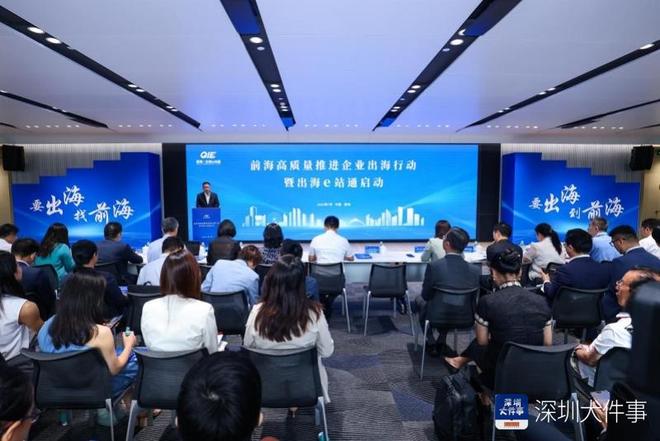
Core Viewpoint - The "Shenzhen Qianhai e-Zhantong" platform serves as a crucial tool for Chinese enterprises to expand globally, providing comprehensive support and resources for their overseas ventures since its launch on July 25, 2024 [1]. Group 1: Service Framework - The platform integrates resources to create a multi-level service network involving national, provincial, and municipal support, enhancing the foundation for enterprises going abroad [3]. - It has established a "1+N" service system, collaborating with various districts to launch specialized service areas, ensuring efficient support for enterprises [6]. Group 2: Cross-Border Ecosystem - The platform aims to build a cross-border service ecosystem by connecting domestic and international markets, focusing on a full-chain service model [8]. - It has organized numerous promotional activities in collaboration with Hong Kong and Macau, facilitating over 46 investment projects with a total investment of $600 million [9]. Group 3: Comprehensive Support - The platform provides all-around support in product, investment, and service sectors, ensuring a worry-free overseas expansion for enterprises [13]. - It has successfully assisted enterprises in securing international orders and expanding their brands in overseas markets, achieving significant sales growth [15][16]. Group 4: Market-Driven Approach - The platform employs a "government guidance, market operation" model, leveraging associations and professional service alliances to enhance market-driven service efficiency [18]. - It has formed a service alliance with over 30 quality service institutions, covering key areas such as finance, law, and cross-border e-commerce [18]. Group 5: Future Outlook - The platform has conducted over 800 service sessions in the past year, solidifying its role as a comprehensive service hub for enterprises aiming to go global [20]. - It aims to continue promoting its service philosophy, positioning itself as a vital support for enterprises in the "Belt and Road" initiative and the Guangdong-Hong Kong-Macao Greater Bay Area [20].
刘小涛吴庆文会见中国进出口银行董事长陈怀宇
Su Zhou Ri Bao· 2025-08-01 23:00
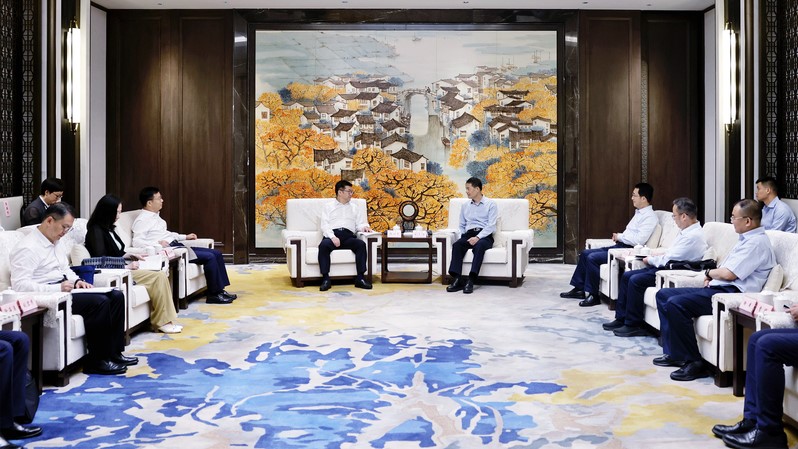
Core Viewpoint - The meeting between Suzhou officials and the chairman of the China Export-Import Bank emphasizes the importance of strategic collaboration to enhance financial support for Suzhou's economic development and international trade initiatives [1][3]. Group 1: Suzhou's Economic Strategy - Suzhou is committed to deepening the implementation of Xi Jinping's important speeches, expanding high-level opening-up, and stabilizing foreign trade and investment [3]. - The city aims to improve the quality and efficiency of its open economy and promote sustainable economic recovery [3]. Group 2: Financial Support and Collaboration - Suzhou officials requested the China Export-Import Bank to prioritize the city in its strategic layout, focusing on new policy financial tools, digital finance, foreign trade transformation, and supporting enterprises in going global [3]. - The China Export-Import Bank expressed gratitude for Suzhou's support and highlighted the city's strong industrial foundation, vast market space, excellent business environment, and good financial ecosystem as key factors for investment [3]. Group 3: Future Development Focus - The China Export-Import Bank aims to integrate deeply into Suzhou's modernization process, leveraging its advantages to expand functional business areas [3]. - The bank will focus on technology innovation, industry cultivation, international cooperation, and financing for small and medium-sized foreign trade enterprises to empower Suzhou's high-quality development of its open economy [3].
借港出海,长沙制造乘势“链”全球
Chang Sha Wan Bao· 2025-08-01 14:22
尤其值得关注的是,今年1月1日起实施的全国首部行业立法《长沙市促进工程机械产业发展条例》,从 多方面为工程机械企业出海贸易保驾护航,如条例中明确的通关便利化、海外服务体系建设等配套措 施,将显著提升企业参与国际竞争的效率。 "湘琼先进制造业共建产业园坐落在海南省东方市临港产业园高排港区腹地,内靠粤港澳大湾区,西邻 北部湾,是海上丝绸之路和西部陆海新通道的重要节点,也是面向东南亚、辐射东盟与'一带一路'共建 国家的重要门户。"产业园招商负责人介绍,园区以工程机械、装备制造为代表的先进制造业为主导产 业,已开工三批、共落户29个项目,总投资达130亿元,已有三一重工、中联重科、湘科集团、威重化 机、星邦智能等一批龙头企业落户。 当前,湘琼先进制造业共建产业园正在加快推进基础设施配套道路建设,谋划推进标准厂房、邻里中心 等项目建设,全面加快构建产业生态。 本次活动由海南省工业和信息化厅、湖南自贸试验区长沙片区管委会、长沙市工业和信息化局主办,湘 琼先进制造业共建产业园现场指挥部、长沙市制造业发展促进中心承办。 长沙晚报掌上长沙8月1日讯(全媒体记者 朱泽寰)1日下午,2025长沙企业全球化战略升级活动在湖南 自贸试 ...


对话柠季汪洁:我要是自己不到海外,得开除100个人
Sou Hu Cai Jing· 2025-08-01 06:59
Core Viewpoint - The global business environment is facing significant challenges, leading to a slowdown in economic growth and a shift in strategies for Chinese companies expanding overseas [4][5]. Group 1: Economic Context - The World Bank's report indicates that global economic growth is expected to be the slowest since 2008, with 70% of economies having their growth forecasts downgraded [4]. - The economic downturn presents challenges for companies looking to expand internationally, as traditional strategies based on scale may no longer be effective [5]. Group 2: Challenges for Chinese Companies - Chinese companies venturing abroad are encountering escalating difficulties, including compliance issues, expansion challenges, profitability concerns, brand recognition, and organizational development [5][6]. - The competition for Chinese companies will shift from market capture and price competition to organizational building and talent acquisition [6]. Group 3: Case Study - Ningji - Ningji, a tea beverage company, has faced significant hurdles in its international expansion, having opened only 15 stores in the U.S. after a year and a half, compared to 3,000 stores domestically in four years [7]. - The company experienced delays in regulatory approvals, such as advertising sign permits, which took nearly four months to secure [11]. - Ningji's strategy has evolved to focus on understanding local markets and building a diverse talent pool, rather than solely targeting Chinese communities abroad [8][9]. Group 4: Organizational Insights - The founder of Ningji emphasizes the importance of hands-on involvement in overseas operations to understand local challenges and adapt strategies accordingly [14][15]. - The company aims to create a management system similar to Danaher, focusing on organizational capability and talent diversity as key components of its global strategy [44][46]. - Ningji's approach to hiring prioritizes individuals who understand both Chinese culture and the U.S. market, reflecting a need for a balanced team [47][48]. Group 5: Market Observations - The U.S. tea market is characterized as a developing market, with significant opportunities for growth despite the perception of it being a developed market [17][32]. - Ningji's strategy includes adapting its product offerings to local tastes and gradually building brand recognition through community engagement [25][27]. - The company is also exploring markets in Southeast Asia and Australia, focusing on local consumer preferences while leveraging its brand [27][30].

企业出海布局、股权架构、审批手续、合规风险、税务考量、目的地选择全解析!
梧桐树下V· 2025-07-31 09:17
Core Viewpoint - By 2025, going overseas has become a "must-answer question" for most domestic companies, as overseas markets are significantly larger than domestic ones. However, the risks and difficulties associated with going overseas are greater than expected, with a success rate of less than 20% [1]. Group 1: Overview of the Guide - The "China Enterprises Going Overseas Guide" consists of 332 pages and 155,000 words, covering nine chapters that comprehensively outline practical points for enterprises going overseas from various perspectives, including overseas layout, regulatory requirements, equity structure, approval processes, transaction documents, compliance risks, tax considerations, and regional country specifics [2]. Group 2: Key Processes and Structures - Chapter 2 emphasizes the importance of constructing a reasonable overseas equity structure as a key step for successful overseas expansion, providing diagrams to illustrate how companies should set up their overseas equity structures [8]. - Chapter 3 details the approval processes for overseas investment, including the need for companies to apply for record-keeping or approval from the National Development and Reform Commission and the Ministry of Commerce, as well as completing foreign exchange registration [12][14]. Group 3: Transaction Structures and Agreements - Chapter 5 focuses on transaction structure arrangements and key agreements involved in overseas investment, such as investment agreements and letters of intent, analyzing critical clauses within these agreements [20][23]. Group 4: Compliance Management - Chapter 7 outlines the current compliance status for enterprises going overseas and essential compliance guidelines, suggesting a six-step approach to build a compliance management framework that integrates compliance systems into business processes [25][26]. Group 5: Popular Destinations and Market Insights - Chapter 9 shares methods for collecting country-specific information and outlines the basic conditions, import and export structures, important international agreements, legal systems, and foreign investment policies of five popular countries, including the UAE, which is highlighted for its strategic location and favorable investment environment [29][30][31].

专访IBM陈科典:中国仍很重要,大湾区或成东南亚企业入华支点
2 1 Shi Ji Jing Ji Bao Dao· 2025-07-31 07:15
Core Insights - IBM Consulting's strategy in China emphasizes proximity to clients, particularly in the Greater Bay Area, to enhance collaboration and efficiency [1][3] - The Greater Bay Area is viewed as a crucial hub for both Chinese companies expanding abroad and foreign companies entering China, supported by its unique geographical advantages and cultural ties with Southeast Asia [2][9] - IBM Consulting's performance in the Greater Bay Area has been strong, compensating for challenges faced in other regions, driven by the vibrancy of private enterprises and foreign company headquarters [5][17] Group 1: Strategic Focus - IBM Consulting prioritizes understanding client needs and fostering a sense of closeness, which is essential for delivering high-quality services [3][4] - The company is committed to establishing local teams in the Greater Bay Area to better serve both local and Hong Kong clients, recognizing the region's unique cultural characteristics [5][6] - The establishment of the AI Intelligence Center in Qianhai is part of IBM's broader strategy to invest in the Greater Bay Area, with a focus on AI as a key growth area [2][6] Group 2: Market Dynamics - The Greater Bay Area is becoming a pivotal point for Chinese enterprises looking to expand internationally and for foreign firms seeking to enter the Chinese market [2][10] - IBM Consulting has observed that many foreign companies remain committed to the Chinese market, adjusting their strategies to optimize operations rather than withdrawing [12][13] - The company aims to assist Chinese firms in their international expansion by addressing challenges related to management, establishing shared services centers, and ensuring cultural localization [8][11] Group 3: Performance and Future Outlook - IBM Consulting's performance in the Greater Bay Area has been notably strong, with expectations for continued growth and investment in the region [5][17] - The company plans to execute its strategies over the next year to year and a half, focusing on building trust and strong relationships with clients [6][18] - Despite global uncertainties, the Chinese market remains a significant focus for IBM Consulting, with plans to maintain a pragmatic and focused approach to business operations [18]

南山打造跨境服务“母港”
Shen Zhen Shang Bao· 2025-07-31 00:23
发生在墨西哥工厂的一幕,正是全球服务中心成立以来,为企业解决数百个跨境难题的缩影。这个被企 业家们称为"联合舰队"的跨境服务平台,自4月29日启动以来,已集结包括邓白氏、中金公司 (601995)、中信保诚、西南政法大学粤港澳大湾区研究院、巴西创新中心等160家专业机构在内的资 源库,形成覆盖法律、财税、知识产权等12大领域的服务体系。 当企业出海从"浅滩"走向"深海",深圳南山这个"企业全球总部基地",正用系统性服务重塑国际营商环 境规则。 深水破障,暗礁预警筑屏障 远洋护航,资源枢纽通四海 全球服务中心成立以来为企业解决数百个跨境难题 深圳商报记者 涂竞玉 "新公司开业不到一周,移民局突然上门核查用工比例。"深圳道通科技高级供应链总监任义丰在位于墨 西哥的工厂里,仍对两个多月前的突击检查心有余悸,"当时我们严格按照10:1的本地用工规则招人, 这张由全球服务中心提供的政策清单,让企业避免了数十人集体遣返的风险。" 如今道通科技的墨西哥工厂正在有条不紊建设中,建成后将进一步拓展公司数字能源业务。仅仅两个月 前,任义丰还坐在南山全球服务中心会议室里,面对墨西哥法律体系如何注册公司等难题一筹莫展。 "外语文件经 ...