
高端化

Search documents
培育壮大先进制造业集群
Jing Ji Ri Bao· 2025-10-06 22:03
Core Viewpoint - The development of advanced manufacturing clusters in China is accelerating during the 14th Five-Year Plan period, with significant growth in equipment manufacturing and high-tech manufacturing sectors, driven by government policies aimed at promoting industrial modernization and innovation [1][2][4]. Group 1: Importance and Current Status of Advanced Manufacturing Clusters - Advanced manufacturing clusters are crucial for enhancing economic quality, ensuring macroeconomic stability, and responding to global industrial competition [3][5]. - The overall strength of advanced manufacturing clusters in China has been continuously improving, with 35 clusters identified in key sectors such as high-end equipment and new-generation information technology [5][10]. - The clusters are becoming innovation hubs, with significant technological breakthroughs and increased patent authorizations, exemplified by the engineering machinery cluster in Changsha [5][11]. Group 2: Policy Support and Development Strategies - The Chinese government has strengthened top-level design and policy support for advanced manufacturing clusters, including the implementation of special actions and guidelines to enhance cluster quality and competitiveness [4][6]. - Various local governments are tailoring their policies to support advanced manufacturing clusters, focusing on land, talent, and financial resources [4][6]. Group 3: Challenges and Future Directions - Challenges such as homogeneous competition, governance issues, and technological bottlenecks remain in the development of advanced manufacturing clusters [6][21]. - Future efforts should focus on leveraging the advantages of a new type of national system, combining market-driven and government-led approaches to foster innovation and global integration [6][22]. Group 4: Global Trends and Competitive Advantages - The global landscape of advanced manufacturing clusters is shifting towards integration, digitalization, and sustainability, with countries emphasizing low-carbon and near-zero carbon industrial clusters [19][20]. - China aims to enhance its advanced manufacturing clusters to world-class standards by improving innovation capabilities, optimizing internal ecosystems, and increasing internationalization [21][22][23].
吉利汽车:拟23亿港元回购!
Zheng Quan Shi Bao· 2025-10-06 13:49
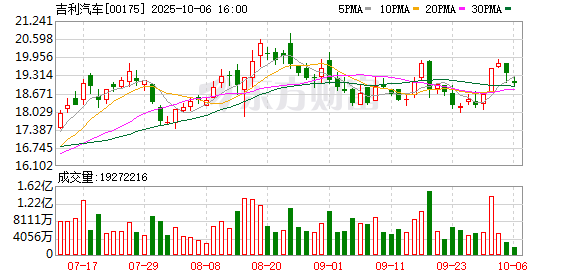
Group 1 - The company announced a share buyback plan of HKD 2.3 billion, which will be executed through an automated mechanism in the open market [2] - The board believes that the buyback plan aligns with the overall best interests of the company and its shareholders, showcasing confidence in the business outlook amid market uncertainties [5] - The plan is subject to certain conditions, including obtaining a waiver from the Hong Kong Stock Exchange regarding compliance with specific listing rules [5] Group 2 - In September, the company achieved a monthly sales volume of 273,125 units, representing a year-on-year increase of 35% and a month-on-month increase of 9%, with overseas exports accounting for 40,665 units [6] - The sales of new energy vehicles reached 165,201 units in September, marking an 81% year-on-year increase and a 12% month-on-month increase, setting a historical record [6] - The company’s total sales for 2025, including all brands, reached 2,170,189 units, reflecting a 46% year-on-year growth [6]


三大质疑,拆穿嘉士伯“以重庆为家”的真相!
商业洞察· 2025-10-05 09:24
Core Viewpoint - Carlsberg's commitment to Chongqing is being questioned as the company shifts its strategic focus to Foshan, undermining its promises made to the local market [5][10][22]. Group 1: Strategic Commitment - Carlsberg's executive vice president stated that Chongqing is the company's home in China, yet the president of Carlsberg China emphasized Foshan as a key base, indicating a conflicting strategy [5][10]. - Carlsberg made five commitments to Chongqing when acquiring Chongqing Brewery, including establishing a management headquarters and an Asian R&D center in the city, which have not been fulfilled [10][11]. - The company has invested significantly in Foshan, including a new brewery with an annual capacity of 500,000 kiloliters, surpassing Chongqing's production capacity [11][13]. Group 2: Brand Management - The once-popular "Mountain City Beer" brand, which had a market share of 95% and a brand value exceeding 6 billion, is now marginalized under Carlsberg's management [16][17]. - After Carlsberg's acquisition, the focus shifted to promoting international brands, leading to a drastic decline in Mountain City Beer’s sales, which fell to less than 100,000 kiloliters, representing less than 3% of the market [18][20]. - Marketing efforts for Mountain City Beer have ceased, with the brand missing major local events and facing restrictions in sales channels [19][21]. Group 3: Future Commitments - Carlsberg's recent promises to leverage AI for the development of Chongqing's agricultural sector are met with skepticism due to the company's history of unfulfilled commitments [22][24]. - The changing market dynamics and rising national brands challenge Carlsberg to respect local brands and their emotional connections with consumers [25][27]. - The company is urged to fulfill its original commitments to Chongqing and revive the Mountain City Beer brand to regain consumer trust [28].


研判2025!中国牙膏包装行业产业链、发展现状、竞争格局及发展趋势分析:行业市场规模不断增长,未来将朝着高端化、智能化、环保化方向发展图]
Chan Ye Xin Xi Wang· 2025-10-05 00:32
Core Insights - The toothpaste packaging industry is experiencing rapid growth due to increasing awareness of oral health, with the market size in China projected to reach 358.50 billion yuan in 2024, a year-on-year increase of 3.6% [1][7]. - By 2025, the market size is expected to grow to approximately 370.83 billion yuan, driven by rising consumer demands for product quality and packaging design [1][7]. Industry Overview - Toothpaste packaging serves multiple functions, including product protection, user experience enhancement, brand communication, and environmental responsibility [3][7]. - The industry encompasses both inner packaging (directly in contact with toothpaste) and outer packaging (providing protection and brand display) [3][4]. Market Dynamics - The industry is influenced by rising disposable income and consumer spending in China, with per capita disposable income reaching 21,840 yuan in the first half of 2025, a nominal increase of 5.3% year-on-year [5][6]. - The demand for high-quality, eco-friendly, and personalized packaging is expected to drive the industry's transformation towards premium and sustainable solutions [6][10][13]. Competitive Landscape - The toothpaste packaging market is characterized by significant concentration, with major international players like Amcor and Tetra Pak dominating the high-end market [8][9]. - Domestic companies such as Zijiang Group and Kingfa Technology are increasingly replacing imports through technological innovation and product differentiation [9]. Industry Trends - The industry is witnessing a shift towards high-end packaging, with companies using premium materials and innovative designs to enhance product value [10]. - Smart packaging is emerging as a trend, incorporating technology like QR codes for improved consumer engagement and product traceability [11][12]. - Sustainability is becoming a key focus, with brands adopting recyclable and biodegradable materials to meet consumer and regulatory demands [13]. - Personalization is on the rise, with packaging tailored to specific consumer demographics, including children and seniors [14].


我国铝产业第一大省:氧化铝年产量2960万吨,超全球五分之一!
Sou Hu Cai Jing· 2025-10-04 12:08
Core Viewpoint - Shandong province is a dominant player in China's aluminum industry, with a projected alumina production of 29.6 million tons in 2024, accounting for over 20% of global output, supported by a well-established industrial chain and strategic resource management [1][6][8]. Group 1: Production and Capacity - In 2024, Shandong's alumina production is expected to reach 29.6 million tons, significantly surpassing Shanxi's 20.33 million tons, solidifying its leading position in China [6]. - Shandong's aluminum material production is projected at 14.69 million tons, with electrolytic aluminum at 9 million tons, representing over 20% of the national total of 67.83 million tons [3][6]. - The province's electrolytic aluminum capacity is being optimized, with a reduction from approximately 12 million tons in 2018 to an expected 4 million tons by 2025, allowing for a focus on high-end production [3][6]. Group 2: Resource Management - Shandong relies heavily on imported bauxite, with Yantai Port expected to import over 50 million tons in 2024, maintaining its status as the world's largest importer [4][14]. - The efficiency of Yantai Port is highlighted by its record of unloading 290,000 tons per ship, ensuring a steady supply of raw materials for local production [4][14]. Group 3: Industry Structure and Key Players - The industry is characterized by three major players: Weiqiao, Xinfeng, and Nanshan, collectively accounting for over 50% of national production [10][12]. - Weiqiao, with a projected revenue of 73.5 billion yuan and a net profit of 10 billion yuan in 2024, has established itself as a global aluminum giant through a full industrial chain approach [10][12]. - Nanshan focuses on high-end products, supplying major aerospace companies and achieving a net profit of 1.7 billion yuan in Q1 2024, reflecting significant growth [10][12]. Group 4: Environmental and Policy Initiatives - Shandong is actively responding to national energy-saving and emission reduction policies, with a target of 25% clean energy usage in electrolytic aluminum production by 2025 [6][15]. - The province is also focusing on optimizing existing production capacity rather than adding new capacity, with a significant portion of production now meeting energy efficiency benchmarks [6][15]. Group 5: Global Influence and Future Outlook - Shandong's aluminum industry is not only significant in domestic production but also plays a crucial role in global supply chains, with alumina exports and bauxite imports facilitating international trade [8][15]. - The province is expected to maintain a tight balance between supply and demand, with a target of 130 million tons of aluminum capacity by 2025, positioning itself as a benchmark in the global aluminum market [17].

《关于推进能源装备高质量发展的指导意见》解读︱创新驱动 应势而行 加快推进煤炭装备高质量发展
国家能源局· 2025-10-04 02:07
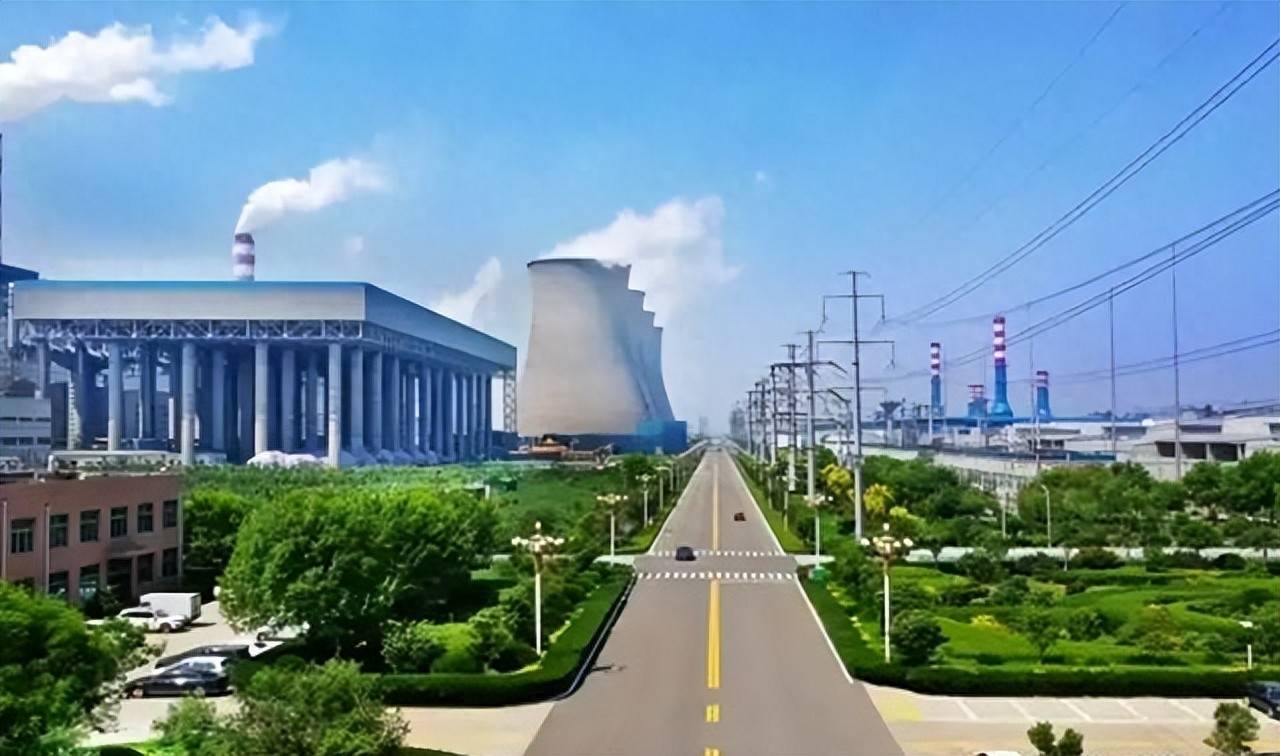
Core Viewpoint - The article emphasizes the strategic importance of high-quality development in coal equipment for ensuring national energy security and promoting industrial transformation, as outlined in the recent "Guiding Opinions" issued by the National Energy Administration and other departments [3][4]. Group 1: Strategic Positioning and Mission - In 2024, China's raw coal production is projected to reach 4.78 billion tons, accounting for 63.9% of total primary energy production, with coal consumption still representing 53.2% of total energy consumption [4]. - The development of coal equipment is crucial for enhancing the resilience of the energy supply chain and addressing energy security risks, especially in the context of extreme weather and geopolitical conflicts [4]. - The "14th Five-Year Plan" period has seen significant advancements in coal equipment, including integrated drilling and anchoring equipment and large-scale mining trucks, positioning China among the leaders in coal mining efficiency and safety [4][5]. Group 2: Development Pathways for High-Quality Coal Equipment - The "Guiding Opinions" focus on energy security and transition, aiming to establish a self-reliant supply chain for key energy equipment, with a clear path towards high-end, intelligent, and green development [6]. - The document outlines a comprehensive approach to tackle key challenges in coal equipment, emphasizing the need for autonomous, integrated, high-end, intelligent, and green development [6][7]. - Specific technological advancements are targeted, including high-hardness rock cutting materials and high-power density explosion-proof transmission systems, to achieve self-sufficiency in core components and algorithms [6][8]. Group 3: Innovation Ecosystem and Support Mechanisms - The "Guiding Opinions" aim to optimize the innovation ecosystem by enhancing corporate innovation incentives and expanding market access for private enterprises [9]. - A national-level coal equipment testing and verification platform will be established to facilitate the transition of technological achievements into engineering applications [9]. - Policies will be implemented to support the procurement of first sets of equipment and encourage innovative financing models for manufacturing enterprises, thereby stimulating market vitality [9][10].

重庆、四川加快建设高端化、智能化、绿色化产业体系 高质量发展不断迈上新台阶
Yang Shi Wang· 2025-10-03 12:10
Group 1 - During the "14th Five-Year Plan" period, Chongqing is accelerating the construction of a high-end, intelligent, and green industrial system, achieving high-quality development [1][3] - Chongqing's production of new energy vehicles is projected to grow from 43,000 units in 2020 to 953,000 units by 2024, with strategic emerging industries accounting for 39.9% of the total industrial output value by 2024, up from 32% in 2020 [3] - The city has established a modern industrial system led by intelligent connected new energy vehicles, with a total industrial economy expected to exceed 3 trillion yuan [3] Group 2 - Sichuan is focusing on building a modern industrial system, enhancing quality and efficiency in six key industries, and has formed three trillion-yuan industrial clusters and five national advanced manufacturing clusters [5][7] - The province's emerging industries are expected to see an increase in added value of over 20% in 2024, supported by targeted strategies for key industrial chains [7] - Sichuan's R&D investment and intensity have increased by 50% and 41% respectively since the beginning of the "14th Five-Year Plan," with the number of new national high-tech enterprises reaching 1,200 [9]
17对17,小米要将苹果“斩于马下”?
3 6 Ke· 2025-10-02 04:09
Core Insights - Xiaomi's new 17 series smartphones have set a record for first-day sales in the domestic market, indicating strong consumer interest and effective marketing strategies [7][11] - The pricing strategy for the Xiaomi 17 series has seen an increase, with the starting price set at 4,499 yuan, reflecting a shift towards a more premium positioning in the market [8][12] - Despite the initial sales success, market reactions have been mixed, with a notable drop in Xiaomi's stock price following the launch, attributed to concerns over lower-than-expected demand for the standard version of the 17 series [11][12] Product Features and Innovations - The Xiaomi 17 series introduces a unique "back screen" feature that supports various functionalities, including personalized wallpapers and important notifications, aiming to enhance user experience [3][5] - The series includes multiple versions (standard, Pro, and Pro Max), marking a first for Xiaomi's digital series to offer three models simultaneously, which may lead to consumer confusion [5][11] - Xiaomi's focus on high-end specifications and features is evident, as the company aims to compete directly with Apple's iPhone 17 series [5][19] Market Positioning and Strategy - Xiaomi's strategy appears to be a direct challenge to Apple, with the naming and marketing of the 17 series closely mirroring that of the iPhone 17, suggesting a deliberate positioning in the high-end market [5][21] - The company has been investing heavily in high-end product development, including chips and electric vehicles, to establish a stronger foothold in premium segments [16][18] - Analysts have noted that while Xiaomi's pricing strategy aims to attract consumers seeking high performance at lower prices, the overall market dynamics are shifting, with Apple also emphasizing value in its offerings [21][23] Sales Performance and Projections - Initial sales data indicates that the Xiaomi 17 series achieved record sales within the first five minutes of launch, surpassing previous records for domestic smartphone sales [7][11] - However, projections for total shipments of the 17 series have been revised down by approximately 20%, primarily due to lower-than-expected demand for the standard model [11][12] - Comparatively, Apple's iPhone 17 series has shown robust sales performance, with first-day sales significantly exceeding those of the previous generation, highlighting the competitive pressure Xiaomi faces [12][21] Consumer Perception and Market Challenges - Consumer feedback has been mixed regarding the practicality of the back screen feature, with some viewing it as unnecessary compared to existing alternatives like smartwatches [3][5] - The competitive landscape is intensifying, as both Xiaomi and Apple are vying for the same consumer base, particularly those who are price-sensitive yet performance-oriented [21][23] - Xiaomi's efforts to transition from a budget-friendly brand to a high-end competitor are ongoing, but the effectiveness of this strategy remains to be fully realized in the market [25]

17对17,小米要将苹果“斩于马下”?
首席商业评论· 2025-10-02 04:01
Core Viewpoint - The article discusses the competitive landscape between Xiaomi's new 17 series and Apple's iPhone 17, highlighting Xiaomi's strategies to redefine its products and target the high-end market while facing challenges in sales and market perception [2][3][10]. Group 1: Product Features and Innovations - Xiaomi's 17 series introduces a unique "back screen" feature that supports various functions, aiming to enhance user interaction and provide quick access to important notifications without flipping the phone [3][5]. - The naming strategy of the Xiaomi 17 series directly targets the iPhone 17, with Xiaomi's CEO emphasizing that the new series represents a significant upgrade over previous models [5][7]. - The 17 series achieved record sales within five minutes of launch, indicating strong initial consumer interest [9]. Group 2: Pricing and Market Positioning - Xiaomi has increased the starting price of its flagship models, maintaining a price range of 3999 to 4499 yuan, which reflects its strategy to move towards a higher-end market [11][19]. - The gross margin for Xiaomi's smartphone business has improved significantly, rising from around 2% to approximately 12% in recent years, indicating successful high-end positioning [11][19]. - Despite record sales, market reactions were lukewarm, with a notable drop in stock price following the launch, attributed to a downward revision of expected total shipments by about 20% [14][16]. Group 3: Competitive Analysis - The article notes that while Xiaomi aims to compete with Apple, the latter has also begun to emphasize value, with the iPhone 17 offering increased storage at the same price point as its predecessor, thus intensifying competition in the high-end market [25][27]. - Xiaomi's market share has fluctuated, benefiting from government subsidies but facing challenges as these effects wane, which could impact its competitive position against Apple and other brands [24][25]. - The article suggests that Xiaomi's strategy of directly comparing its products to Apple's may indicate a recognition of the gap in perceived quality and brand prestige [23][30].

奇瑞汽车(09973.HK):自主车企领头羊之一新能源转型+高端化+出海带动新增长
Ge Long Hui· 2025-10-01 17:24
Core Insights - Chery Automobile has undergone significant transformation since its establishment in 1997, evolving through four distinct phases: rapid rise (2001-2010), strategic missteps (2011-2013), difficult progress (2014-2019), and resurgence (2020-present) [1] - The company has developed a clear brand matrix consisting of five brands: Chery, Jetour, Exeed, iCAR, and Zhijie, with a focus on various market segments including SUVs, sedans, and new energy vehicles [1] - Chery has achieved a strong market position in the 5-20W price segment, ranking second in wholesale sales, with significant growth projected for 2024 [2] Sales Performance - In the 5-20W price segment, the wholesale sales of passenger vehicles reached 9.266 million units in H1 2025, reflecting a year-on-year growth of 16%, with Chery's sales expected to increase from 1.75 million units in 2023 to 2.375 million units in 2024 [2] - The main brand's sales are projected to grow from 879,000 units in 2022 to 1.643 million units in 2024, with a compound annual growth rate (CAGR) of 36.7% [3] - Jetour's sales are expected to rise from 180,000 units in 2022 to 568,000 units in 2024, achieving a remarkable CAGR of 77.7% [3] Export and Market Strategy - By 2024, Chery's export ratio is anticipated to reach 54.4% for its main brand, 30.6% for Jetour, and 36.2% for Exeed, indicating a strong focus on international markets [3] - The overall penetration rate of new energy vehicles in the market has reached 44.9%, with Chery's market share in the self-owned brand segment at 76.0% [2] Financial Projections - The company forecasts revenues of 315 billion, 394.3 billion, and 485.6 billion yuan for 2025, 2026, and 2027 respectively, with net profits projected at 16.22 billion, 21.36 billion, and 27.19 billion yuan [3]