
卫星互联网

Search documents
超级独角兽潮涌IPO
IPO日报· 2026-01-01 08:56
Core Viewpoint - The global IPO market is expected to experience a significant resurgence in 2026, driven by policy incentives and the emergence of super unicorns, particularly in sectors like AI, semiconductors, and satellite internet [1][4][5]. Group 1: Global IPO Market Outlook - Predictions indicate that the global IPO fundraising total in 2026 could surpass the previous peak of $594 billion in 2021, with major exchanges like Hong Kong and the US vying for the top spot [1][4]. - Deloitte forecasts around 160 new listings on the Hong Kong Stock Exchange (HKEX) in 2026, raising at least HKD 300 billion (approximately $38 billion) [4]. - Renaissance Capital anticipates the US IPO market will see 200-230 new listings, with fundraising between $40 billion and $60 billion, marking a potential record year for the US market [5]. Group 2: Super Unicorns and Major IPOs - Notable super unicorns like SpaceX and OpenAI are expected to lead the IPO wave, with SpaceX aiming to raise over $30 billion, potentially setting a record for the largest IPO ever [11][12]. - OpenAI is also a strong contender for the top fundraising spot, with plans to raise at least $60 billion, following a valuation of $500 billion after a $41 billion equity financing in 2025 [12][15]. - Other significant players include ByteDance, Reliance Jio, and various AI and fintech companies, all of which are expected to contribute to a concentrated "head effect" in the IPO market [13][16]. Group 3: Regional Insights - The Indian IPO market is projected to raise up to $25 billion in 2026, reflecting a 14% increase from 2025, with several major listings anticipated [6][7]. - The A-share market in China is expected to see a steady increase in IPOs, with estimates of 130-150 new listings and a total fundraising of approximately CNY 136 billion (around $19.2 billion) [6][21]. - The London Stock Exchange is expected to rebound in 2026, aided by changes in tax regulations and the potential for large-scale listings [7]. Group 4: Industry Trends and Focus Areas - The 2026 IPO landscape will be characterized by a focus on high-quality, profitable companies, particularly in technology sectors such as AI, fintech, and aerospace [18][19]. - The Chinese market is expected to lead in R&D investment in strategic emerging industries, further solidifying its position in global tech innovation [19][26]. - The IPO pipeline is expected to be robust, with a significant number of companies waiting for approval, indicating a healthy market environment for new listings [27][28].


SpaceX 2025年完成167次轨道发射,连续六年刷新纪录
Huan Qiu Wang Zi Xun· 2026-01-01 04:10
来源:环球网 【环球网科技综合报道】1月1日消息,据Space报道,美国太空探索技术公司(SpaceX)2025年全年完成167次轨道发射任务,约占美国当年轨道发射总数的 85%,连续第六年打破自身保持的年度火箭发射纪录。 近年来,SpaceX的年度轨道发射次数呈现持续攀升态势:2020年完成25次,2021年增至31次,2022年突破60次达到61次,2023年进一步提升至96次,2024 年实现134次发射,2025年则以167次再创新高,按此计算,全年平均每两天便完成一次轨道发射,发射频率位居行业前列。 在高强度发射节奏的同时,SpaceX于2025年达成多项行业里程碑:实现公司第500次火箭着陆、第500次复用发射,单枚猎鹰9号一级助推器的重复使用次数 纪录也多次被刷新,当前最高复用次数已达32次。(纯钧) 发射任务中,星链相关任务占比突出。2025年SpaceX共执行123次星链任务,累计将3000多颗卫星送入轨道,目前星链星座在轨运行卫星数量已超过9300 颗,为全球卫星互联网服务的推进奠定了重要基础。 值得关注的是,2025年SpaceX未执行任何"猎鹰重型火箭"发射任务,167次轨道发射全部由 ...
科创板第五套上市标准扩围落地 蓝箭航天IPO申请获受理
Xin Lang Cai Jing· 2026-01-01 03:18
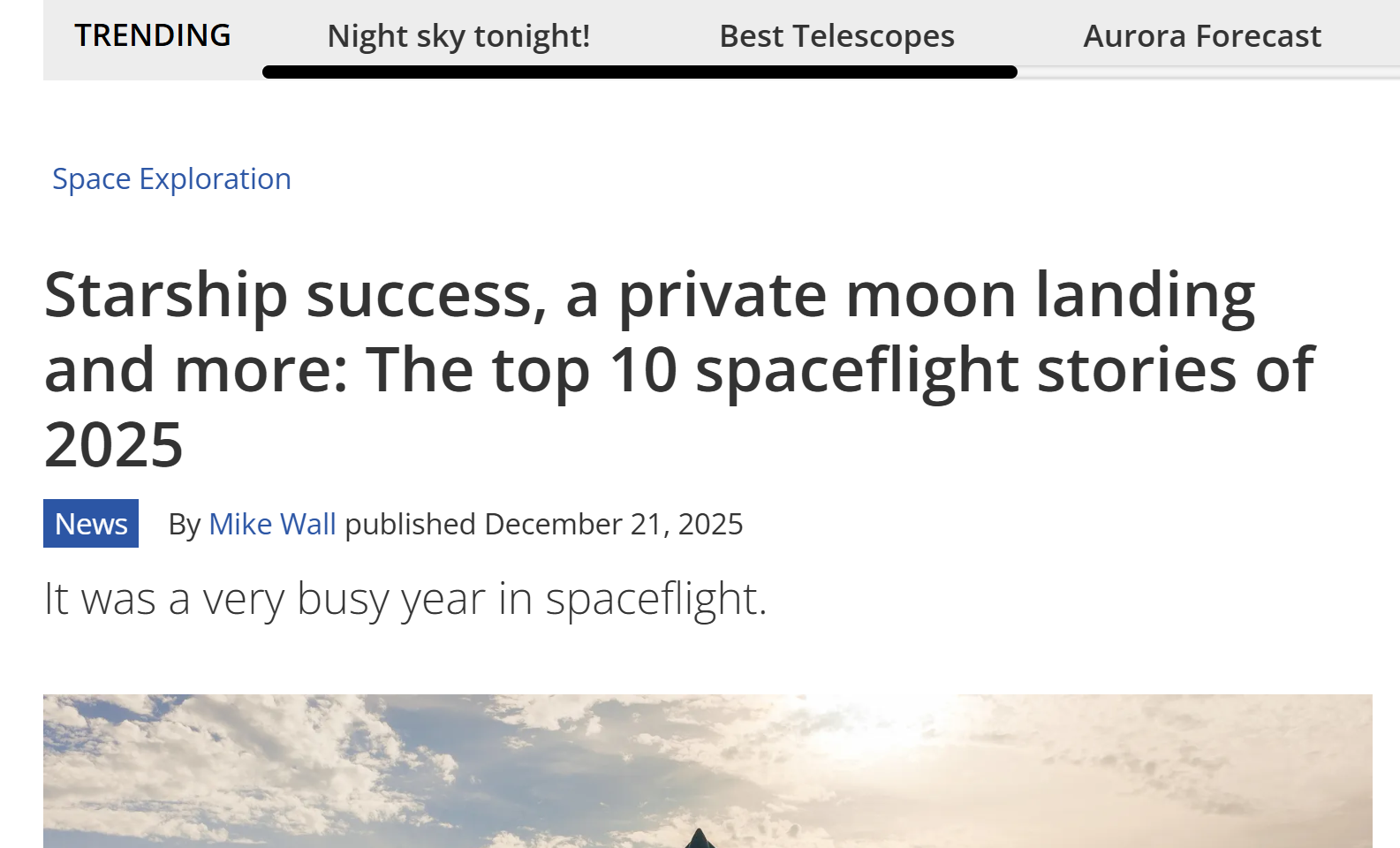
Core Viewpoint - Blue Arrow Aerospace's IPO application has been accepted, marking the expansion of the fifth listing standard of the Sci-Tech Innovation Board to the commercial aerospace sector, positioning the company to potentially become the first "commercial rocket stock" in A-shares [1][5]. Group 1: Company Overview - Blue Arrow Aerospace was established in 2015 and is one of the leading private aerospace companies in China, focusing on the research and operation of medium to large launch vehicles using liquid oxygen and methane propellants [1][6]. - The company primarily offers commercial rocket launch services and technical development services, with its core products being the "Zhuque" series of liquid oxygen and methane launch vehicles [6]. Group 2: Financial Performance - As of June 30 of the previous year, Blue Arrow Aerospace had total assets of 6.353 billion yuan and a debt-to-asset ratio of 40.36% [6]. - The company has been operating at a loss, with a net profit attributable to shareholders of -597 million yuan, despite achieving revenue of 36.43 million yuan in the first half of the previous year [6]. Group 3: Market Potential - The global demand for commercial launch vehicles is significant, with over 60,000 satellites planned for deployment in China, indicating a vast market space for commercial rockets [3][6]. - The company plans to raise 7.5 billion yuan through its IPO, which will be entirely allocated to projects aimed at enhancing the capacity and technology of reusable rockets [1][5]. Group 4: Industry Context - In the past year, several commercial rocket companies have pursued IPOs, with Blue Arrow Aerospace being the fastest in the process, having moved from broker guidance to acceptance in approximately five months [3][7]. - Other companies in the IPO pipeline include Zhongke Aerospace, Tianbing Technology, Xinghe Power, and Interstellar Glory, indicating a growing interest in the commercial aerospace sector [3][7].
流纹岩:2026,中国航天将在“狂飙”与“悬念”中挺进深空
Xin Lang Cai Jing· 2026-01-01 01:20
Core Insights - The global space industry experienced significant activity in 2025, with a total of 327 orbital launches, achieving a success rate of 97% [1] - China conducted 92 orbital launches, with 90 successful missions, highlighting its growing capabilities in space exploration [1] Group 1: Launch Successes and Failures - SpaceX's Falcon 9 rocket maintained its dominance with 165 successful launches out of 165 attempts, showcasing its reliability and efficiency [3] - The Starship-Superheavy program faced multiple setbacks, including several failed test flights due to engine issues and design challenges, leading to delays in its development [5][7] - Blue Origin's New Glenn rocket achieved a successful recovery of its first stage during its second flight, marking a significant milestone in reusable rocket technology [9] Group 2: International Developments - Russia's space program faced operational challenges, including the failure of the Soyuz MS-28 mission due to technical issues, raising concerns about its manned spaceflight capabilities [11] - India's GSLV rocket encountered issues with its NVS-02 satellite, which was left in an unusable orbit due to a failure in ground operations [13] - Japan's H3 F8 rocket experienced a catastrophic failure during its launch, resulting in the loss of the QZS-5 satellite, highlighting ongoing reliability issues in its space program [14] Group 3: China's Space Achievements - China's space program made significant strides, with the successful first flights of the Zhuque-3 and Long March 12甲 rockets, although both faced challenges in achieving recovery [16][21] - The Chinese manned space program is advancing towards lunar missions, with infrastructure developments nearing completion and ongoing tests for lunar landing systems [21] - The Tianwen-2 mission was launched, marking China's first attempt at asteroid sampling and comet exploration, indicating its ambitions in deep space exploration [27] Group 4: Future Prospects - The upcoming year, 2026, is expected to be another significant year for the space industry, with multiple planned launches and advancements in rocket technology [29] - The completion of the Zhuque-3 rocket's full capabilities and the launch of the Chang'e 7 lunar mission are among the anticipated highlights for the next year [29]
太火了!这类主题ETF一个月涨超30%
Sou Hu Cai Jing· 2025-12-31 16:43
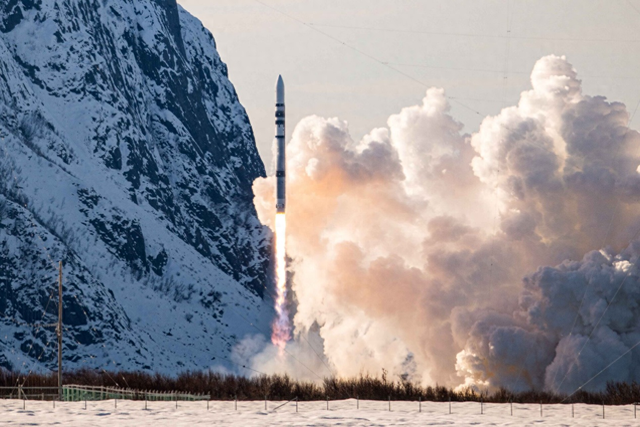
Core Viewpoint - The aerospace sector is experiencing significant growth, with satellite-themed ETFs leading the market, showing a strong performance with multiple ETFs rising over 7% in a single day and over 30% in the past month [1][4][3]. Group 1: ETF Performance - Several satellite-themed ETFs have shown remarkable gains, with the top performers including Wang Satellite ETF, which rose by 7.72%, and other ETFs also experiencing increases of over 7% [2]. - The commercial aerospace sector has seen a substantial increase, with the Wind Commercial Aerospace Index and related indices rising over 20% in the past month, indicating strong investor interest [4][3]. Group 2: Market Drivers - The surge in satellite-themed ETFs is attributed to a clear commercialization path and strong order expectations, making them the primary focus for investment in commercial aerospace [3][5]. - Factors contributing to the current market enthusiasm include favorable policies, technological breakthroughs in reusable rockets, and a significant increase in satellite orders, which have exceeded market expectations [7][8]. Group 3: Future Outlook - Analysts predict that the satellite internet market will accelerate in 2026, continuing the upward trend in satellite launches and maintaining a structural market rally in the commercial aerospace sector [9][8]. - Investment strategies suggest that satellite-themed ETFs remain the primary focus due to their clear commercialization and visible orders, while other aerospace ETFs may serve as supplementary investments [9].
信息科技产业2026年年度策略:拥抱“AI+”与商业航天两大投资主线
HUAXI Securities· 2025-12-31 15:24
Group 1 - The report emphasizes the core investment themes of "AI+" and commercial aerospace, indicating a significant shift in market dynamics and opportunities for growth in these sectors [1][4]. - The A-share market has experienced a technology bull market, with the Sci-Tech Innovation Board leading the gains, particularly in "hard technology" assets [11][12]. - Revenue and gross profit for the Sci-Tech Innovation Board have shown signs of recovery, with a year-on-year revenue increase of 8.13% in the first three quarters of 2025 [15][21]. Group 2 - The report highlights the ongoing AI revolution, with a focus on the evolution of large language models (LLMs) from scale to efficiency and reasoning capabilities, marking the onset of an application era [41][43]. - Gemini 3 Pro, a new large language model from Google, has demonstrated significant breakthroughs in multi-modal interaction and industry benchmark tests, showcasing its advanced capabilities [47][49]. - The domestic large model landscape is rapidly evolving, with Chinese models achieving competitive performance against international counterparts, emphasizing high performance and low cost as foundational for AI applications [49][51]. Group 3 - The report notes that AI has permeated various aspects of daily life, with significant user engagement in AI-native applications, indicating a shift in consumer behavior [55][57]. - AI agents are becoming crucial tools for enterprise process restructuring, with a notable increase in the adoption rate among companies, particularly in technology and finance sectors [65][67]. - The investment landscape in China's equity market has shown growth, with a 19.8% increase in investment cases and a 9.0% rise in investment amounts in 2025 compared to the previous year, particularly in the AI sector [40][41].
11连阳!沪指收涨0.09%,两市成交额2.05万亿元
Bei Jing Shang Bao· 2025-12-31 13:46
Core Viewpoint - The A-share market experienced a mixed performance on December 31, with the Shanghai Composite Index slightly rising while the Shenzhen Component and ChiNext Index declined. Market Performance - The Shanghai Composite Index closed up by 0.09% at 3968.84 points, while the Shenzhen Component and ChiNext Index fell by 0.58% and 1.23%, closing at 13525.02 points and 3203.17 points respectively [1] - A total of 2474 stocks in the A-share market rose, with 63 stocks hitting the daily limit up, while 2776 stocks fell, including 12 stocks hitting the daily limit down [1] Sector Performance - Sectors such as satellite internet, Kuaishou concept, and Kimi concept saw significant gains, while sectors like blade batteries, SPD concept, and noise control experienced notable declines [1] New Listings - The new stock from the Beijing Stock Exchange, Hengdongguang, saw a remarkable debut, with its stock price surging by 878.2% to close at 309 yuan per share [1] Trading Volume - The trading volume in the Shanghai market reached approximately 829.51 billion yuan, while the Shenzhen market recorded about 1215.72 billion yuan, leading to a total trading volume of around 2.05 trillion yuan across both markets [1]
数据复盘丨卫星互联网、商业航天等概念走强 86股获主力资金净流入超1亿元
Zheng Quan Shi Bao Wang· 2025-12-31 10:07
Market Overview - The Shanghai Composite Index closed at 3968.84 points, up 0.09%, with a trading volume of 829.5 billion yuan. The Shenzhen Component Index closed at 13525.02 points, down 0.58%, with a trading volume of 1215.723 billion yuan. The ChiNext Index closed at 3203.17 points, down 1.23%, with a trading volume of 549.126 billion yuan. The STAR Market 50 Index closed at 1344.20 points, down 1.15%, with a trading volume of 49.3 billion yuan. The total trading volume of both markets was 2045.223 billion yuan, a decrease of 97.363 billion yuan from the previous trading day [1]. Sector Performance - Among industry sectors, defense and military, media, real estate, education, non-ferrous metals, and computer sectors showed the highest gains. Conversely, sectors such as telecommunications, electronics, agriculture, power equipment, precious metals, food and beverage, coal, and biomedicine experienced the largest declines [3]. - The satellite internet and commercial aerospace concepts saw strong performance, with companies like Daye Co. and Fenglong Co. achieving six consecutive trading limit ups [2][6]. Capital Flow - The net outflow of main funds in the Shanghai and Shenzhen markets was 27.079 billion yuan, with the ChiNext experiencing a net outflow of 11.946 billion yuan and the CSI 300 seeing a net outflow of 14.337 billion yuan. Eight sectors recorded net inflows, with the media sector leading at 4.05 billion yuan [7]. - A total of 2069 stocks saw net inflows, with 86 stocks receiving over 1 billion yuan in net inflows. BlueFocus Communication led with a net inflow of 2.764 billion yuan, followed by Lioo Co. and Xinwei Communication [11][12]. Individual Stock Performance - The stock with the highest net outflow was Tianfu Communication, with a net outflow of 1.561 billion yuan. Other notable outflows included Sunshine Power and Saiwei Electronics [14][15]. - Institutional investors showed a net buying of 14 stocks, with Yuyin Co. leading at approximately 167 million yuan in net purchases. The most sold stock by institutions was Aerospace Development, with a net outflow of about 318 million yuan [18][19].


商业航天IPO盛宴开启
21世纪经济报道· 2025-12-31 09:37
Core Viewpoint - 2025 marks a pivotal year in China's commercial aerospace development, transitioning from a pioneering phase to a stage of scaled growth, with significant increases in launches and company registrations [1][2]. Group 1: Industry Growth and Market Dynamics - Since 2025, China has completed 87 space launches, with 23 conducted by private commercial rocket companies, successfully placing 324 spacecraft into orbit [1]. - The number of commercial aerospace-related companies in China has surged to 93,000, with 24,800 registered since 2025, reflecting a 57.5% increase compared to the same period in 2024 [1]. - A new wave of competitive private aerospace companies has emerged, including Blue Arrow Aerospace, Tianbing Technology, and others, as they prepare to enter the capital market [2]. Group 2: Reusable Rocket Development - The commercial aerospace industry faces supply chain challenges, particularly in upstream infrastructure, with a pressing need for breakthroughs in private rocket capabilities to address capacity shortages [4]. - Blue Arrow Aerospace achieved significant technical milestones with the Zhuque-3 rocket, including the first domestic reusable liquid oxygen-methane rocket flight, despite some recovery test failures [5]. - Tianbing Technology's Tianlong-3 rocket has reached cost competitiveness with SpaceX's Falcon 9, with plans for mass production and further cost reductions as reusable technology matures [5][6]. Group 3: Satellite Internet Initiatives - China is advancing two major satellite internet projects, GW constellation and Qianfan constellation, aiming to deploy thousands of low-orbit satellites to compete with SpaceX's Starlink [9][10]. - The GW constellation has accelerated its deployment pace, reducing the launch interval from months to days, indicating a significant improvement in efficiency [9]. - Despite progress, both constellations have yet to deploy 1% of their planned satellites, highlighting the urgent need for enhanced rocket launch capabilities [10]. Group 4: IPO Trends and Policy Support - Over 10 commercial aerospace companies have initiated IPO processes, with several targeting the A-share market, reflecting a surge in interest and investment in the sector [15][16]. - The establishment of the Commercial Aerospace Administration aims to streamline regulatory processes and enhance the development of the satellite industry [16][17]. - Recent policy changes have lowered entry barriers for satellite development, allowing companies to innovate without weight restrictions, thus stimulating the private sector [17]. Group 5: Technological Innovations in Satellite Manufacturing - Companies like Galaxy Aerospace are adopting advanced manufacturing techniques to enhance satellite production efficiency, significantly reducing costs and production times [12]. - The integration of computing and AI capabilities into satellites is expected to revolutionize data processing and transmission, improving operational efficiency [13].
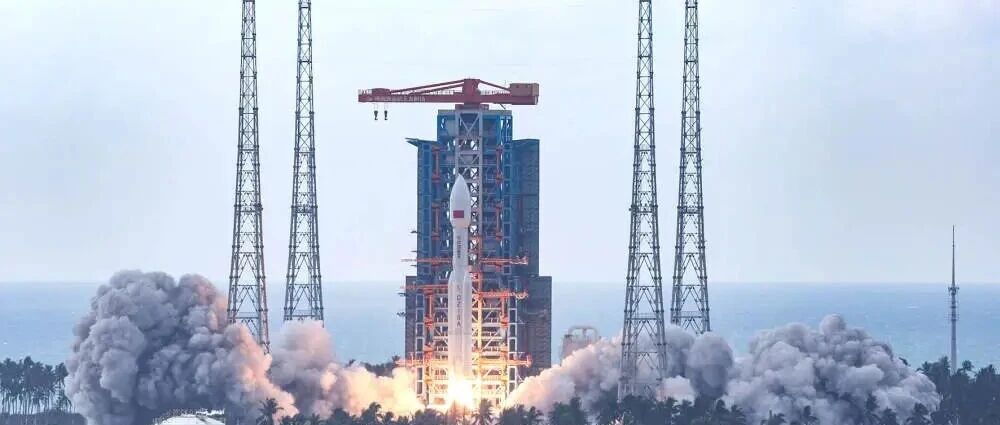
实践二十九号卫星成功发射,卫星ETF(563230)盘中涨幅达3.42%
Mei Ri Jing Ji Xin Wen· 2025-12-31 08:54
Group 1 - The commercial aerospace sector continues to gain momentum as the year-end approaches, with satellite internet, commercial aerospace, Beidou navigation, and military-civilian integration concepts showing significant gains, including a 3.41% increase in the satellite ETF (563230) [1] - The successful launch of the Practice-29 satellite A and B using the Long March 7 carrier rocket from the Wenchang Space Launch Site marks a significant achievement, focusing on new technology verification for space target detection [1] - The State-owned Assets Supervision and Administration Commission (SASAC) announced plans to intensify the development of emerging and future industries, particularly in aerospace and low-altitude economy sectors, as part of its revitalization and launch initiatives [1] Group 2 - The satellite ETF (563230) closely tracks the satellite industry index, which encompasses various sectors including integrated circuit design, communication systems and terminal equipment, defense equipment, aerospace, general software development, and electronic components and automation machinery, indicating a high investment efficiency and purity in the satellite industry chain [1]

