
数字经济

Search documents
植根历史文化纵深 顺应数字科技潮流
Xin Lang Cai Jing· 2026-01-30 18:44
Core Viewpoint - The 20th Central Committee of the Communist Party of China emphasizes the importance of cultural innovation and development in the 15th Five-Year Plan, aiming to enhance the cultural strength of the nation and promote the sustainable development of cultural tourism [1] Group 1: Cultural Tourism Development - Beijing, with over 3,000 years of history, is leveraging its rich cultural heritage to embrace digital transformation, integrating cultural resources systematically under the national cultural center framework [2] - In 2023, Beijing's total tourist volume exceeded 300 million, with shopping accounting for 30.5% of tourist spending, indicating significant potential in the cultural and creative product market [3] Group 2: Challenges in Cultural Products - The cultural tourism market faces challenges such as product homogeneity and insufficient innovation, which do not meet the growing demand for personalized experiences among tourists [4] - There is a lack of awareness among tourists regarding cultural products, leading to weak purchasing intentions, and popular attractions face ticket shortages, limiting opportunities for product sales [4] Group 3: Digital Resource Utilization - To enhance the cultural product system, it is essential to strengthen digital resource supply and improve public cultural digital services, which can deepen the cultural connotation of products and promote cultural transmission [5][6] - The integration of digital narrative design into cultural product development is crucial for addressing visitor flow pressure and enhancing the effectiveness of digital cultural products [7] Group 4: Innovative Models and Technology - The application of blockchain technology in digital copyright transactions for cultural products offers a new model for protecting and innovating cultural resources [9] - Successful cases of model expansion, such as the "Digital Poetry Road Cultural Experience Hall," demonstrate the potential for replicating innovative tourism experiences across different regions [10]
中国人民政治协商会议第十六届成都市委员会提案委员会关于市政协十六届四次会议提案审查情况的报告
Xin Lang Cai Jing· 2026-01-30 17:41
Group 1 - The report highlights the active participation of the Chengdu Municipal Committee of the Chinese People's Political Consultative Conference in contributing to the modernization of Chengdu, aligning with national and local strategic goals [1] - A total of 831 proposals were received, with 492 officially registered, including 53 merged proposals, indicating a strong engagement from committee members [1] - The proposals cover various areas, including enhancing urban development, promoting technological innovation, and improving public welfare, reflecting a comprehensive approach to city governance [1][2][3][4] Group 2 - The proposals related to enhancing urban development focus on building strategic industrial chains and improving talent mobility, with 36 proposals registered in this category [2] - A significant emphasis is placed on technological and industrial innovation, with 127 proposals aimed at fostering collaboration between state-owned and private enterprises and enhancing the digital economy [2] - The report also addresses the need for deep reforms and high-level openness, with 31 proposals aimed at improving resource allocation and promoting international medical tourism [3] - Cultural innovation is highlighted with 62 proposals aimed at enhancing the city's cultural influence and developing creative industries [3] - The focus on improving public welfare is evident with 125 proposals aimed at enhancing education, employment support, and healthcare services [4] - Environmental sustainability is addressed with 22 proposals aimed at promoting green transformation and improving urban ecological systems [4] - Governance improvements are proposed through 48 initiatives aimed at enhancing urban management and community engagement [4]
迈向4万亿,深圳经济靠什么换档提速
Di Yi Cai Jing Zi Xun· 2026-01-30 16:08
2026.01.30 本文字数:2466,阅读时长大约4分钟 作者 |第一财经 何涛 1月30日,深圳市统计局发布年度"成绩单":2025年深圳地区生产总值38731.80亿元,按不变价格计 算,同比(下同)增长5.5%,高于全国0.5个百分点。名义增量约1930亿元,大约相当于新增一个韶关 市的经济总量。按过去三年增长趋势,2026年突破4万亿元应无悬念。 1—11月,规模以上服务业企业营业收入增长7.2%,其中,信息传输、软件和信息技术服务业,租赁和 商务服务业,交通运输、仓储和邮政业营业收入分别增长10.5%、6.4%、5.1%。 站在4万亿门槛前的深圳,经济增长正呈现明显的结构性变化。分产业来看,2025年深圳第一产业增加 值28.04亿元,下降4.5%;第二产业增加值14482.54亿元,增长4.1%;第三产业增加值24221.22亿元,增 长6.3%。第三产业增速超过第二产业,成为深圳经济增长的最大牵引力。 从全年走势看,深圳经济画出了一条总体向上的曲线。一季度GDP增长5.2%,上半年增长5.1%,前三 季度增速提升至5.5%,最终全年锁定在5.5%的水平。在此过程中,工业增长作出显著贡献。规模 ...

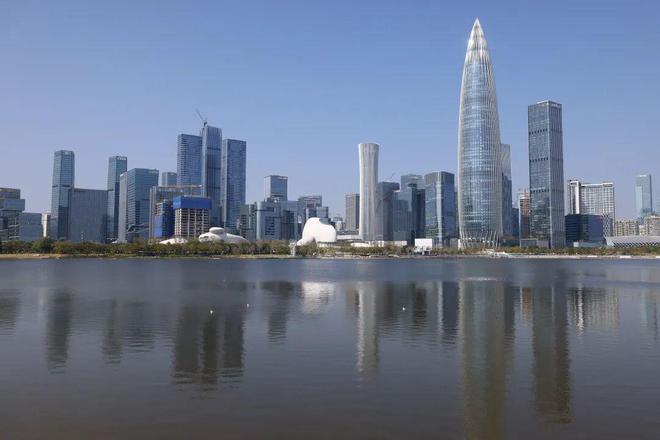
迈向4万亿,深圳经济靠什么换档提速|湾区观察
Di Yi Cai Jing Zi Xun· 2026-01-30 14:20
1月30日,深圳市统计局发布年度"成绩单":2025年深圳地区生产总值38731.80亿元,按不变价格计 算,同比(下同)增长5.5%,高于全国0.5个百分点。名义增量约1930亿元,大约相当于新增一个韶关 市的经济总量。按过去三年增长趋势,2026年突破4万亿元应无悬念。 服务业同样展现出结构优化的特点,高附加值服务业增长迅猛。其中,金融业,信息传输、软件和信息 技术服务业,租赁和商务服务业分别增长12.1%、10.3%、5.9%,三者均显著高于服务业整体增速。 站在4万亿门槛前的深圳,经济增长正呈现明显的结构性变化。分产业来看,2025年深圳第一产业增加 值28.04亿元,下降4.5%;第二产业增加值14482.54亿元,增长4.1%;第三产业增加值24221.22亿元,增 长6.3%。第三产业增速超过第二产业,成为深圳经济增长的最大牵引力。 从全年走势看,深圳经济画出了一条总体向上的曲线。一季度GDP增长5.2%,上半年增长5.1%,前三 季度增速提升至5.5%,最终全年锁定在5.5%的水平。在此过程中,工业增长作出显著贡献。规模以上 工业增加值全年增长5.4%,较前三季度的5.0%继续加快,其中12月 ...
江西省政协委员建议加速人工智能与实体经济融合
Zhong Guo Xin Wen Wang· 2026-01-30 10:57
Group 1 - The core viewpoint emphasizes the need for Jiangxi to open up demonstration public application scenarios in intelligent manufacturing and low-altitude economy to accelerate the integration of artificial intelligence with the real economy [1][3] - Jiangxi Telecom, as a central enterprise in Jiangxi, is committed to driving industrial upgrades through digital innovation and supporting the development of new productive forces in Jiangxi [1][3] Group 2 - Jiangxi Telecom has been actively transforming traditional data centers into artificial intelligence data centers, creating a new pattern of computing power supply that is leading in scale and environmentally friendly across Jiangxi [3] - In 2024, Jiangxi Telecom plans to establish the first large-scale intelligent computing hub in Jiangxi, the Poyang Lake Intelligent Computing Center, and deploy the "Xiangran" computing scheduling platform, which is one of the top ten super projects of central enterprises in 2022 [3] - In 2026, Jiangxi Telecom will establish an artificial intelligence research institute focusing on computing power, models, and application scenarios, supporting the development of a distinctive "AI+" industrial ecosystem in Jiangxi [3] - During the 14th Five-Year Plan period, Jiangxi Telecom will increase investment and cooperation in computing power infrastructure, industrial digitalization, "AI+", and low-altitude economy to promote high-quality economic and social development in Jiangxi [3]

游族网络(002174.SZ)发布业绩预告:全球游戏业务稳健发展,AI算力布局加速
智通财经网· 2026-01-30 10:51
Core Viewpoint - The company, Youzu Interactive (002174.SZ), forecasts a revenue of 1.38 to 1.46 billion yuan for the year 2025, indicating a stable operational performance supported by improved cost structure and significant growth in net cash flow from operating activities compared to the previous year [1] Group 1: Financial Performance - The expected revenue for 2025 is projected to be between 1.38 billion and 1.46 billion yuan [1] - The net cash flow from operating activities is expected to show significant growth compared to the previous year [1] Group 2: Revenue Growth and Market Expansion - Revenue from overseas markets is anticipated to increase year-on-year, with an estimated contribution of over 65% to total revenue [1] - The growth is primarily attributed to the long-term refined operations of SLG products such as "War and Eternity" and "Game of Thrones: Winter is Coming" [1] Group 3: Technological Advancements - The company is advancing internal efficiency innovations through the "YOOZOO.AI" intelligent aggregation platform, enhancing the intelligence transformation of global operations [1] - Youzu Interactive is actively expanding its layout in the AI interactive cultural industry, focusing on AI computing power and intelligent applications to create new growth momentum [1] Group 4: Strategic Investments and Collaborations - The company has strategically invested in leading domestic GPU companies, including Birran Technology and Xiwang, and has formed strategic partnerships with Xiwang and Century Internet [1] - These collaborations aim to promote digital economy computing power synergy and green computing projects [1]

解释城市|纽约市城市服务型制造对上海发展制造业有哪些参考
Xin Lang Cai Jing· 2026-01-30 10:23
Core Insights - The article discusses the economic structure and industrial layout of New York City, highlighting the distribution of major industry sectors and their impact on the regional economy [2][7]. - It emphasizes the concentration of economic activity in a few key sectors while many others contribute relatively less, illustrating a dual characteristic of concentration and dispersion in New York's economy [7][8]. Economic Structure - In 2023, New York City's total economic output was $1,285.74 billion, with a clear distinction between "core pillar industries" (over 10% contribution), "mid-tier supporting industries" (3%-10%), and "specialty supplementary industries" (below 3%) [7][8]. - The "core pillar industries" include finance and insurance, real estate, information, and professional and technical services, collectively contributing $785.84 billion, or 61.1% of the city's GDP [8]. Key Industries - The finance and insurance sector alone accounts for approximately 25% of New York City's GDP, underscoring its status as a global financial center [8]. - Real estate and rental services are significant contributors, primarily driven by transactions, property management, and related services concentrated in Manhattan [8]. - The information sector has seen rapid growth, increasing from 10% to 12.4% of GDP over the past 20 years, while professional and technical services contribute around 10% [8]. Supporting Industries - "Mid-tier supporting industries" encompass public administration, wholesale and retail trade, healthcare, and accommodation and food services, collectively making up 23.3% of the economy [9][10]. - These industries are essential for maintaining the city's operational stability and resilience against economic fluctuations, as they are less affected by short-term economic changes [10]. Specialty Industries - "Specialty supplementary industries" include agriculture, mining, utilities, construction, manufacturing, transportation, management services, education, and arts and entertainment [11]. - Although these industries have a lower economic contribution, they play a vital role in supporting core industries and enhancing the city's cultural vibrancy [11]. Manufacturing Sector - Manufacturing's share of New York City's GDP has drastically declined to only 0.8% in 2023, reflecting a broader trend of urban centers moving away from manufacturing towards service-oriented economies [14][19]. - The historical context shows that manufacturing was once a significant part of New York's economy, particularly post-World War II, but has since diminished due to the rise of the service sector [15][18]. Current Manufacturing Landscape - The remaining manufacturing in New York is characterized by "urban service-oriented manufacturing," focusing on light industries such as food and apparel, which cater directly to local consumer needs [22][23]. - The manufacturing sector is primarily composed of food manufacturing (26.9%), apparel manufacturing (15.0%), and printing (13.4%), indicating a strong alignment with urban consumption patterns [25][22].

皖港共拓数字经济新机遇助企出海
Zhong Guo Xin Wen Wang· 2026-01-30 09:29
Core Viewpoint - The article emphasizes the role of Hong Kong as a "super connector" and "super value creator" for Anhui enterprises, encouraging them to use Hong Kong as a launch point for overseas expansion [1]. Group 1: Economic Cooperation - The "Hong Kong - Helping Anhui Digital Enterprises Set Sail" sharing session was held in Hefei to deepen economic and trade cooperation between Anhui and Hong Kong, aiming to explore new opportunities in digital economy development [1]. - Anhui's strategic emerging industries, such as artificial intelligence, new displays, and new energy vehicles, have been thriving, leading to the emergence of excellent digital technology companies actively expanding overseas [1]. Group 2: Policy and Infrastructure - The Director of the Anhui Provincial Hong Kong and Macao Affairs Office expressed the hope for deeper policy coordination and regulatory alignment between Anhui and Hong Kong, promoting interconnected digital infrastructure and building a digital economy industrial ecosystem [1]. - The President of the Hong Kong Special Administrative Region Government's Investment Promotion Agency highlighted that Chinese enterprises' foreign direct investment has shifted towards high-tech sectors, with Hong Kong's advantages in integrating key elements like "capital," "talent," and "law" in a globally connected environment [1]. Group 3: Support for Digital Enterprises - Hong Kong is positioned to provide a one-stop support system for mainland digital technology enterprises, covering aspects from financing and listing to intellectual property layout and global operations [1].
沙特官员:中国是沙特在人工智能领域重要合作伙伴
Xin Hua Wang· 2026-01-30 07:16
Core Insights - Saudi Arabia views China as a crucial partner in advancing artificial intelligence and digital economy initiatives, leveraging China's strong technological capabilities in the field [1] Group 1: Collaboration with Chinese Companies - The Saudi Data and Artificial Intelligence Authority is advancing partnerships with Chinese companies such as Huawei and Alibaba Cloud, focusing on high-performance computing and big data platforms [1] - Discussions are also taking place regarding data governance and AI ethics, which will enhance Saudi Arabia's digital infrastructure and promote the localization of advanced technologies [1] Group 2: Digital Silk Road Initiative - The "Digital Silk Road" is seen as an international framework to support further connectivity between Saudi Arabia and China, presenting significant opportunities for collaboration in data centers, cloud computing, and AI applications [1] - This initiative aims to connect Saudi Arabia's digital infrastructure with regional and international digital systems, reinforcing its position as a regional hub for data and artificial intelligence [1]
城记 | 长三角交出“十四五”亮丽答卷:5年超7万亿元增长显“引擎”担当
Xin Hua Cai Jing· 2026-01-30 07:16
Core Viewpoint - The Yangtze River Delta region (Shanghai, Jiangsu, Zhejiang, Anhui) has demonstrated strong economic resilience and growth potential, achieving significant GDP increases and maintaining its strategic position as a key driver of China's economic development [1][2]. Economic Performance - In 2025, the Yangtze River Delta achieved a GDP of 34.66 trillion yuan, an increase of 7.06 trillion yuan from 2021, with its share of national GDP rising from 24.1% to 24.7% [2]. - Jiangsu's GDP reached 14.24 trillion yuan in 2025, growing by 5.3%, marking it as the second province to surpass 14 trillion yuan after Guangdong [2]. - Zhejiang's GDP was 9.45 trillion yuan, with a growth rate of 5.5%, positioning it as the fourth largest economy in China [3]. - Shanghai's GDP was 5.67 trillion yuan, growing by 5.4%, maintaining its status as the leading city in the country [3]. - Anhui's GDP reached 5.30 trillion yuan, with a growth rate of 5.5%, showcasing its rapid economic development [3]. Foreign Trade and Consumption - The Yangtze River Delta has excelled in foreign trade, with Jiangsu, Zhejiang, and Shanghai ranking second, third, and fourth in national import and export totals, respectively [4]. - In 2025, Jiangsu's foreign trade reached 5.95 trillion yuan, while Zhejiang and Shanghai reported 5.55 trillion yuan and 4.51 trillion yuan, respectively [4]. - The region's foreign trade resilience is highlighted by a significant increase in exports of high-tech products, including electric vehicles and industrial robots [4][6]. - Shanghai's retail sales of consumer goods surpassed 1.6 trillion yuan in 2025, growing by 4.6%, reflecting a strong consumer market [7]. - Jiangsu's retail sales reached 4.6 trillion yuan, with a growth of 3.3%, making it the largest in the country [7]. Structural Optimization and New Drivers - The Yangtze River Delta is transitioning towards innovation-driven growth, with Shanghai's leading industries showing significant production value increases [8]. - In 2025, Shanghai's manufacturing output grew by 9.6%, with the integrated circuit and artificial intelligence sectors seeing substantial growth [8][10]. - Jiangsu's high-tech industry accounted for 52.1% of its industrial output, with significant increases in the production of optical devices and lithium batteries [10]. - Anhui's high-tech manufacturing output grew by 30.4%, indicating a strong industrial growth trajectory [11]. - The digital economy is also accelerating, with Jiangsu's core digital manufacturing output increasing by 10.2% [10].