
智能网联汽车

Search documents
安徽冲刺中国造车第一省
Xin Lang Cai Jing· 2025-09-27 09:41
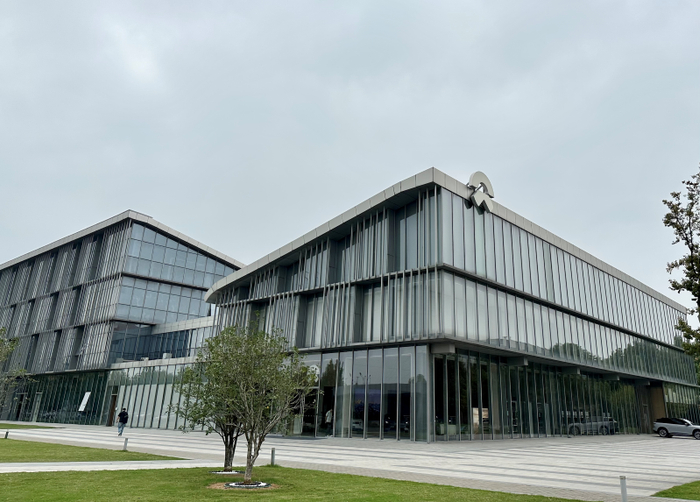
Group 1: NIO's Manufacturing and Performance - NIO's F1 factory in Hefei is fully operational, preparing for a delivery peak in Q4, with over 700 robots and an automation rate of 97.5% [1] - NIO's vehicle production increased by 35.2% year-on-year in the first seven months of this year, with an industrial output value growth of 12.54% [1] - The 800,000th vehicle rolled off the production line at the F1 factory on July 24, marking a significant milestone for NIO in Anhui [1] Group 2: Chery Automobile's IPO and Export Performance - Chery Automobile, listed on the Hong Kong Stock Exchange, is the largest IPO of a car company in Hong Kong this year [3] - From January to August, Chery exported 798,000 vehicles, a year-on-year increase of 10.8%, maintaining its position as the top exporter of Chinese automobiles [3] - In August alone, Chery's exports reached 129,500 vehicles, setting a new monthly record [3] Group 3: Anhui's Automotive Industry Growth - Anhui's automotive production reached 1.4995 million units in the first half of 2025, surpassing Guangdong to become the top province in China [4] - The province's new energy vehicle production was 730,900 units, also ranking first nationally [4] - The growth is attributed to Anhui's strategic investment in the automotive industry and a statistical reform that reflects the true regional dynamics of the automotive sector [4] Group 4: Comprehensive Automotive Ecosystem in Anhui - Anhui hosts seven major automotive manufacturers and over 1,100 parts suppliers, creating a complete ecosystem for electric vehicle production [6] - The province's dual-core strategy, focusing on Hefei and Wuhu, supports integrated development across multiple cities [6] - Hefei is recognized as a major automotive manufacturing hub, housing several key brands and attracting significant investment in the electric vehicle sector [6][8] Group 5: Future Goals and Legislative Support - Hefei aims to establish 2-3 automotive enterprises with an annual production capacity of 500,000 vehicles by 2027, targeting over 200,000 new energy vehicles [9] - Wuhu contributed 46.2% of Anhui's automotive output last year, with a goal to enhance its automotive city core [11][12] - Recent policies and regulations in Anhui are designed to support the growth of the new energy vehicle industry and enhance its competitiveness [12][13]


呈现四大特色亮点,2025世界智能网联汽车大会定档10月
Zhong Guo Qing Nian Bao· 2025-09-26 20:22
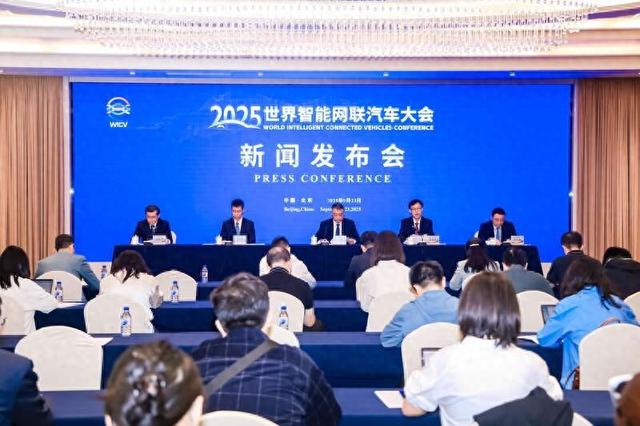
Core Viewpoint - The 2025 World Intelligent Connected Vehicle Conference aims to enhance collaboration and innovation in the automotive industry, focusing on the integration of advanced technologies such as AI, communication, and data utilization [2][3]. Group 1: Conference Overview - The conference will be held from October 16-18, 2025, at the Beijing Yichuang International Exhibition Center, co-hosted by the Ministry of Industry and Information Technology, the Ministry of Transport, and the Beijing Municipal Government [2]. - The theme of the conference is "Gathering Wisdom and Energy, Unlimited Connectivity," emphasizing its role as a bridge and link for global resources in the automotive sector [2]. Group 2: Key Features - The conference will focus on cutting-edge technologies in the automotive industry, including AI, communication, data utilization, and chips, featuring top global experts sharing insights on the latest breakthroughs and industry trends [2][3]. - It will promote international cooperation through various activities, including an international cooperation meeting and a delegation of ambassadors visiting the automotive industry, with nearly half of the speakers expected to be international guests [2][3]. - Multiple reports will be released during the conference, showcasing achievements in "vehicle-road-cloud integration," network technology, trusted data space, and "AI + automotive," highlighting developments during the 14th Five-Year Plan [3]. - The conference will enhance practical applications by expanding the range of autonomous vehicle shuttle services and providing AI translation devices for seamless communication among attendees [3]. Group 3: Industry Significance - Intelligent connected vehicles are seen as a key carrier for the integration of automotive and advanced technologies, becoming a strategic direction for global automotive transformation and upgrading [3]. - The Ministry of Industry and Information Technology is committed to advancing the development of the intelligent connected vehicle industry through technology breakthroughs, standard formulation, and application promotion [3]. - The World Intelligent Connected Vehicle Conference, established in 2018, is recognized as China's first national-level professional conference in this field, serving as a significant platform for technological innovation and international exchange in the global automotive industry [3].
汽车ETF(516110)盘中涨1.7%,政策与科技双轮驱动行业景气
Mei Ri Jing Ji Xin Wen· 2025-09-26 04:54
Core Viewpoint - The automotive industry is experiencing steady growth supported by ongoing government policies and technological advancements, with significant developments in electric vehicles and smart driving technologies [1] Industry Developments - The automotive ETF (516110) rose by 1.7% on September 26, indicating positive market sentiment [1] - The Ministry of Science and Technology is promoting the application of humanoid robots in automotive manufacturing [1] - The Ministry of Industry and Information Technology is seeking public opinions on safety standards for intelligent connected vehicles, establishing comprehensive safety technical requirements [1] - The Ministry of Commerce reported that the number of "old-for-new" vehicle replacement applications has reached 8.3 million this year, boosting automotive consumption and industry upgrades [1] Company Initiatives - Huawei and GAC Group launched a high-end smart new energy brand "Qijing," focusing on smart driving and intelligent cockpit capabilities [1] - Leap Motor announced the restart of its localized production plan in Europe, while Xpeng Motors has initiated its first localized production project in Europe, with the first batch of models rolling off the production line [1] - Panasonic plans to develop a new type of high-capacity battery within two years, which is expected to significantly extend the range of electric vehicles [1] Index Information - The automotive ETF (516110) tracks the 800 Automotive Index (H30015), which includes listed companies involved in passenger and commercial vehicle manufacturing and parts supply [1] - The 800 Automotive Index reflects the overall performance of the automotive industry in China, covering major representative companies and showcasing industry trends and market dynamics [1]
海外华媒探访武汉经开区 见证“中国车谷”硬实力
Zhong Guo Xin Wen Wang· 2025-09-25 13:57
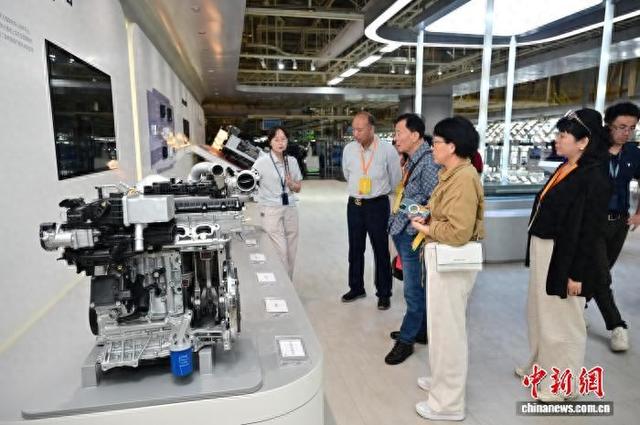
Core Insights - The article highlights the rapid development of Lantu Automobile, a high-end smart electric vehicle brand under Dongfeng Motor, which has established a comprehensive product matrix covering SUVs, MPVs, and sedans since its inception in July 2020 [3][5] - Wuhan Economic and Technological Development Zone, known as "China's Auto Valley," is a key area for the automotive industry in central and western China, housing 10 complete vehicle manufacturers and over 1,400 parts suppliers, with an annual production and sales volume of nearly 1 million vehicles [5][7] Company Overview - Lantu Automobile has successfully expanded its market presence in core European markets, positioning itself as a significant player in the technological innovation and overseas market expansion of the new energy vehicle sector in Wuhan Economic and Technological Development Zone [3][5] - The performance of the Warrior 917 extended-range version was positively received during a media experience event, showcasing the vehicle's stability under extreme conditions, reflecting the strength of Chinese automotive manufacturers [3][5] Industry Development - Wuhan Economic and Technological Development Zone has focused on the new energy and intelligent connected vehicle industry chain, attracting high-end projects and forming a complete industrial system from key components to complete vehicles [5][7] - In the first half of 2025, the zone launched 10 new vehicle models, with a 58% year-on-year increase in new energy vehicle production [5][7] - The zone is implementing three major initiatives: accelerating the production of one million new energy vehicles, optimizing the structure of automotive zero-to-complete ratios, and tackling key core technology challenges [7] - The establishment of specialized parks, such as the Wuhan Intelligent Automotive Software Park and Hydrogen Energy Technology Industrial Park, aims to address issues like chip shortages and material bottlenecks in the automotive industry [7]

江苏公安:出台十六条举措助力提振消费
Xin Jing Bao· 2025-09-25 13:23
Group 1 - Jiangsu Public Security Bureau announced 16 measures to support economic development and boost consumption, including streamlined processes for identity and vehicle registration services [1] - The implementation of online vehicle registration services through the "Traffic Management 12123" app allows users to complete the entire process from vehicle selection to registration [1] - The establishment of vehicle registration service stations in key areas to facilitate new vehicle registrations and transfers, along with online processing for vehicle mortgage releases [1][2] Group 2 - The opening of 4,000 temporary night parking areas to enhance nighttime consumer activity while ensuring road safety [2] - The introduction of a "green channel" for urgent outbound travel document processing for business personnel, enhancing service efficiency [2] - Focus on regulating new technologies and business models, including AI and e-commerce platforms, while conducting regular cybersecurity assessments [2] Group 3 - The promotion of a "one-stop" service model for public security affairs to minimize the number of visits required for various administrative tasks [3] - The trial of a unified photo database for public security documents to streamline the application process across different services [3] - Exploration of cross-regional service options to facilitate traffic violation disputes and other administrative processes for cross-province travel [3]
不得夸大自动驾驶技术安全性,广州发布智能网联汽车路测新规
Nan Fang Du Shi Bao· 2025-09-25 13:23
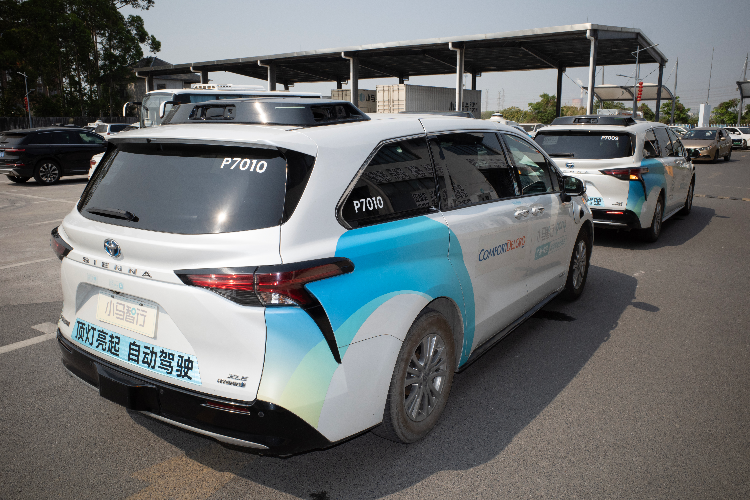
南都讯 记者蒋臻 9月25日,《广州市智能网联汽车与无人驾驶装备道路测试及示范活动管理办法》(下称 《办法》)在广州市交通运输局官网公布。《办法》规定,测试、示范活动主体在宣传与推介的过程中不 得夸大自动驾驶汽车技术安全性和成熟度,应当向测试、示范活动的参与者准确描述自动驾驶汽车的使用 要求与限制条件。 广州已开放智能网联汽车测试道路约2600公里 道路测试与示范活动车辆应当接入广州市智能网联汽车安全监测平台实时上传车辆运行状态、驾驶模式、 车内外监控视频、运营服务等相关数据。测试、示范活动主体在宣传与推介的过程中不得夸大自动驾驶汽 车技术安全性和成熟度,应当向测试、示范活动的参与者准确描述自动驾驶汽车的使用要求与限制条件。 存在重大安全隐患且未整改将被撤销测试通知书 广州市交通运输局同时发布了《办法》的政策解读。据介绍,随着新一轮科技革命和产业变革深入推进, 智能网联汽车已上升至国家发展战略方向。汽车产业也是广州市重要支柱产业之一,广州市智能网联汽车 产业又具有一定的先发优势,汇集了广汽埃安、小鹏等智能网联汽车整车制造企业,以及小马智行、文远 知行等自动驾驶科技头部企业,还有如祺出行、滴滴出行、哈啰出行等众 ...
【快讯】每日快讯(2025年9月25日)
乘联分会· 2025-09-25 08:45
Domestic News - The Ministry of Commerce and eight other departments have initiated trials for the access and road use of intelligent connected vehicles, aiming to expand digital product consumption and encourage innovation in AI terminal products [2] - A draft for mandatory national standards on automotive door handles has been released, focusing on enhancing safety features to meet new technological and safety demands [3] - Hubei Province is developing intelligent connected vehicle demonstration zones in Xiangyang and Shiyan, promoting advancements in autonomous driving and smart cockpit technologies [4] - Zhengzhou City will distribute 560 million yuan in subsidies for new car purchases, with specific incentives for electric vehicles priced between 50,000 and 150,000 yuan [5] - Chery Automobile has officially listed on the Hong Kong Stock Exchange, raising 9.14 billion HKD, marking the largest IPO for a car company in the Hong Kong market this year [6] - Mercedes-Benz and Momenta are collaborating to develop a new generation of intelligent driving assistance systems, set to debut in the upcoming electric CLA model [6] - Zhiji Auto has successfully entered the Norwegian and Egyptian markets, with plans to deliver new models in the fourth quarter [7] - BYD is accelerating its European expansion with a factory in Hungary expected to start production by the end of the year, aiming for localized production of electric vehicles to avoid EU tariffs [8] Foreign News - The U.S. has officially announced the implementation of a trade agreement with the EU, imposing a 15% tariff on imported EU automobiles and automotive products [10] - The European Automobile Manufacturers Association reported a mixed global automotive market, with a 5% increase in global vehicle registrations, while the EU market saw a decline of 1.9% [11] - Waymo is launching a business version of its autonomous ride-hailing service, allowing organizations to provide transportation for employees and guests [12] - The UK automotive production fell by 18.2% year-on-year in August, marking the worst performance since 1956 [13] Commercial Vehicles - Jianghuai Automobile has successfully tested the first 800V ultra-high voltage light truck, featuring a large battery capacity that supports a range of 550 kilometers [14] - Zhongtong Bus has delivered a batch of customized electric buses to Denmark, marking a significant achievement in its European market strategy [15] - Xiamen Golden Dragon has been recognized in the "Asia's 500 Most Valuable Brands" list, highlighting its competitive strength in the bus industry [16] - The first batch of BYD electric buses has rolled off the production line in Kazakhstan, with plans for local production to expand in the coming years [17]


第一创业晨会纪要-20250925
First Capital Securities· 2025-09-25 07:17
Group 1: Industry Overview - The G7 and EU are considering setting a price floor for rare earth production and imposing taxes on certain exports from China to stimulate investment, which could help maintain high rare earth prices over the next two years [3] - China's rare earth smelting and separation capacity accounts for over 90% of global supply, indicating a significant reliance on Chinese production [3] - China's President Xi Jinping announced plans to increase domestic wind and solar power capacity to six times the 2020 level by 2035, with an average annual growth rate of around 8% expected over the next decade [3] Group 2: Company Performance - Anhui Wanwei's Q3 2025 earnings forecast indicates a net profit attributable to shareholders of between 340 million to 420 million yuan, representing a year-on-year growth of 69.8% to 109.8% [4] - The increase in profit is attributed to a more than 40% rise in PVA export volume and a 30% increase in acetic acid methyl ester exports, alongside a significant drop in raw material prices [4] - The company has successfully broken foreign monopolies in high-end materials, leading to a substantial improvement in profitability [4] Group 3: Advanced Manufacturing Sector - In the first seven months of 2025, approximately 7.76 million new cars with combined driving assistance features were sold, achieving a penetration rate of 62.6% [7] - The construction of 17 national-level testing demonstration zones and the promotion of 20 integrated vehicle-road-cloud pilot cities indicate significant infrastructure development [7] - The introduction of mandatory national standards for L2 driving assistance systems marks a transition towards a focus on system engineering and safety capabilities in the industry [7] Group 4: Consumer Sector - Bubu Gao reported a revenue of 2.129 billion yuan for the first half of 2025, a year-on-year increase of 24.45%, with a net profit turnaround from a loss of 84.32 million yuan to a profit of 11.67 million yuan [9] - The company's strategic adjustments and model innovations, including employee salary increases and operational optimizations, have significantly improved performance [9][10] - The closure of 74 loss-making stores and the focus on 59 core stores in Hunan have strengthened the company's competitive advantage [9]
ETF开盘:智能网联汽车ETF涨10.02% 通信ETF广发跌3.0%
Shang Hai Zheng Quan Bao· 2025-09-25 01:50
Core Viewpoint - The performance of various ETFs on September 25 shows significant fluctuations, with the smart connected vehicle ETF leading the gains, while several others, particularly in the semiconductor and consumer sectors, experienced declines [1]. Group 1: ETF Performance - The smart connected vehicle ETF (159872) increased by 10.02% [1] - The oil and gas resources ETF (159309) rose by 8.86% [1] - The oil and gas resources ETF (563150) saw a gain of 4.96% [1] - The communication ETF from GF (159507) decreased by 3.0% [1] - The semiconductor equipment ETF (561980) fell by 2.53% [1] - The consumer ETF for Shanghai-Hong Kong-Shenzhen (517550) dropped by 2.03% [1]
工信部公开征求汽车门把手标准意见,东风日产天籁与鸿蒙座舱官宣合作 | 汽车早参
Mei Ri Jing Ji Xin Wen· 2025-09-24 22:30
Group 1 - The Ministry of Industry and Information Technology is soliciting public opinions on the mandatory national standard for automotive door handles, indicating a move towards improved automotive safety standards in China [1] - Dongfeng Nissan's collaboration with HarmonyOS for the Tianlai model marks the first fuel vehicle globally to feature this smart cockpit, showcasing the company's commitment to digital transformation and enhancing consumer experience [2] - Eight departments, including the Ministry of Commerce, have issued guidelines to promote the development of smart connected vehicles, emphasizing the importance of pilot programs for vehicle access and road use, which is expected to stimulate market demand [3] Group 2 - Li Auto's legal department has addressed false information regarding the upcoming Li i6 model, highlighting the company's focus on brand reputation and the potential impact of legal measures on investor confidence [4]
