
绿色低碳

Search documents
广东外贸“十四五”成绩单:规模居全国首位,出口“含新量”攀升
2 1 Shi Ji Jing Ji Bao Dao· 2025-11-28 08:25
Core Insights - Guangdong's foreign trade has achieved significant growth during the "14th Five-Year Plan" period, surpassing 8 trillion and 9 trillion yuan in total trade value, marking historical highs [1] - The province's contribution to national foreign trade growth has increased from 17.8% in 2021 to 38.4% in 2024, solidifying its role as a key player in China's foreign trade [1] Trade Market Expansion - Guangdong has diversified its trade markets, with ASEAN becoming its largest trading partner, reaching an import-export scale of 1.45 trillion yuan in 2024, a growth of 33.5% [2] - Exports to emerging markets such as Latin America, the Middle East, India, Russia, and Central Asia have seen substantial increases, with growth rates of 76.8%, 55.1%, 70.8%, 103.6%, and 208.9% respectively [2] - Trade with countries involved in the Belt and Road Initiative reached 3.48 trillion yuan, growing by 36.4% and accounting for 38.3% of Guangdong's total trade [2] Trade Structure Optimization - General trade has become increasingly significant, with a 46.1% growth in general trade imports and exports, contributing to a 6.3 percentage point increase in overall trade growth [2] - The number of private enterprises engaged in import-export activities rose from 77,000 to 123,000, a 60.7% increase, with their trade value growing by 48.2% [2] Export Dynamics - The export of electric vehicles and lithium batteries has surged, with growth rates of 31 times and 1.3 times respectively, reflecting a shift towards advanced manufacturing and green low-carbon industries [3] - The export scale of integrated circuits, computers, and ships has increased by 77.5%, 70.3%, and 1.7 times compared to the end of the "13th Five-Year Plan," enhancing Guangdong's share in national exports of these products [3] - Self-branded products now account for 21.1% of total exports, up 2.6 percentage points from 2020, indicating a strong global presence of "Guangdong manufacturing" [3] Import Trends - The demand for imports has shifted towards new and high-quality products, with significant growth in the import of integrated circuits, semiconductor manufacturing equipment, and computers, showing increases of 27.1%, 190.3%, and 132.2% respectively [3] - There has been a notable rise in imports of agricultural products and pharmaceuticals, with growth rates of 26.7% and 27.4% respectively, reflecting the increasing domestic consumption needs [3]
山东荣成锚定“零碳城市”县域示范
Xin Jing Bao· 2025-11-28 06:31
Core Viewpoint - Rongcheng City in Shandong Province is transforming into a "zero-carbon city," integrating ecological, industrial, and social aspects to achieve sustainable development and serve as a model for green transformation in county-level cities [1][2][3]. Group 1: Zero-Carbon City Development - Rongcheng has incorporated "zero-carbon" into its urban development strategy, focusing on creating a green, low-carbon circular economy [1][2]. - The city has a clean energy installed capacity of 4.09 million kilowatts, accounting for 96.1% of its total energy capacity, positioning it as a "near-zero carbon city" [3][4]. - The local government has organized 22 departments to develop a comprehensive plan for zero-carbon city construction, ensuring effective implementation from design to execution [3][4]. Group 2: Clean Energy Initiatives - The expansion of the Huaneng Shidao Bay Nuclear Power Plant is a key project, with plans for four million-kilowatt nuclear units, significantly contributing to clean energy supply [5][6]. - Rongcheng is also developing a "multi-energy complementary" system, integrating nuclear, wind, solar, and storage energy to enhance energy efficiency [6][7]. - The city has initiated a rooftop distributed photovoltaic project and a smart charging station project to address charging infrastructure shortages and promote zero-carbon transportation [6][7]. Group 3: Industrial Transformation - Rongcheng is shifting from traditional manufacturing to green manufacturing, with a focus on large-scale, lightweight, and intelligent wind turbine blade production [7][8]. - The establishment of a virtual power plant aims to optimize energy use and reduce costs for local enterprises, enhancing regional competitiveness [8][9]. - The city has nurtured numerous digital economy factories and green manufacturing enterprises, reflecting a strong commitment to industrial green transformation [9][10]. Group 4: Marine and Ecological Initiatives - Rongcheng has developed a multi-nutritional layer aquaculture model, significantly increasing production and carbon fixation capabilities [10][11]. - The city has restored 1,250 acres of seagrass beds, enhancing its carbon sequestration potential and supporting local biodiversity [11][12]. - Efforts to modernize fishing vessels and promote energy-efficient fishing practices are part of the broader strategy to reduce carbon emissions in the marine industry [12][13]. Group 5: Community Engagement and Lifestyle Changes - The launch of the "Nuclear Heating Project" has improved heating efficiency and reduced emissions, contributing to a cleaner urban environment [13][14]. - The adoption of new energy buses and green building standards reflects a community-wide commitment to sustainable living [14][15]. - Rongcheng promotes eco-friendly tourism, encouraging visitors to engage in sustainable practices while enjoying local attractions [15][16].
2025世界场馆论坛在杭启幕 全球会展场馆首次系统性“同场对话”
人民网-国际频道 原创稿· 2025-11-28 06:10
Core Insights - The 2025 World Venue Forum, hosted by the China Exhibition Hall Association, took place from November 26 to 28 in Hangzhou, marking China's first global venue-themed international forum [1] - Over 300 representatives from domestic and international exhibition centers, event organizers, service companies, and industry organizations attended to discuss the redefinition and value enhancement of exhibition venues in the new era [1] Group 1: Industry Transformation - The global exhibition industry is undergoing profound changes, with venues transitioning from a focus on investment and physical space supply to prioritizing operational efficiency, service quality, and industry-driven capabilities for high-quality development [1][2] - Venue operators and industry representatives from countries such as Germany, Belgium, Thailand, Indonesia, and Brazil shared their experiences in venue upgrades, business model innovation, ESG implementation, and international market expansion [2] Group 2: Common Challenges - Common challenges faced by venues globally include shifting from "scale expansion" to a dual focus on "operations and services" amid overall supply abundance [2] - There is a need to reshape management and business models through digitalization, green low-carbon initiatives, and ESG principles, transitioning from a singular "building space" to a comprehensive platform that connects industrial chains, innovation chains, and urban renewal [2] Group 3: China's Position in the Global Market - China's exhibition industry ranks among the world's leaders, with a significant number of venues and total area, providing a solid foundation for industry development and participation in global discussions [3] - Major venues in China, such as the Shanghai New International Expo Center and Hangzhou International Expo Center, shared insights on new roles and responsibilities, ESG practices, and collaborative industry chain operations [3] Group 4: International Cooperation - The forum highlighted international cooperation, with the China Exhibition Hall Association signing three strategic cooperation memorandums with associations from Thailand, Indonesia, and Brazil [3] - These agreements aim to establish long-term collaboration mechanisms in areas such as industry information sharing, project exchanges, talent training, and practices in digitalization and green development [3] - The signing of these memorandums signifies the establishment of stable industry cooperation "pivots" in the ASEAN and Latin American regions, facilitating institutional connections between Chinese venues and international partners [3]
六部门促消费新方案出炉,为何重点押注汽车消费?
Zhong Guo Qi Che Bao Wang· 2025-11-28 03:19
Core Insights - The recent policy document titled "Implementation Plan for Enhancing the Adaptability of Supply and Demand for Consumer Goods" emphasizes the importance of automotive consumption as a key driver for economic growth, with a target to establish three trillion-level consumption sectors by 2027, particularly focusing on smart connected new energy vehicles [3][7] Group 1: Automotive Consumption as Economic Driver - Automotive consumption has surpassed real estate to become the primary pillar of social consumption, with an annual market scale of 30 million vehicles [3][4] - The automotive manufacturing industry has a strong pull on the supply chain, connecting numerous upstream and downstream industries, thus promoting collaborative development [3][5] - The automotive sales network is extensive, facilitating the circulation of goods and financial turnover across urban and rural areas [3][4] Group 2: Expansion of Automotive Aftermarket - The plan highlights the expansion of the automotive aftermarket, including areas such as vehicle modification, RV camping, and automotive events, indicating a shift in perception of automobiles from mere transportation to integral components of lifestyle [4][5] - This transformation creates new consumer experiences and opens broader development opportunities for the automotive industry, making it a critical node in the entire production, circulation, and service chain [4][5] Group 3: Addressing Structural Issues in Consumption - The automotive sector is positioned to address structural issues in the consumer market, such as insufficient high-end supply and lack of innovative scenarios, which have constrained market vitality [5][6] - Diverse consumer needs span from first-time buyers to enthusiasts seeking personalized modifications, driving demand across the automotive industry [5][6] Group 4: Policy Initiatives and Market Adaptation - The plan proposes a "combination punch" to shift automotive supply from standardized production to scenario-based adaptation, focusing on innovative applications in key sectors like smart connected new energy vehicles [6][10] - Incentives for green and low-carbon consumption are included to encourage the purchase of new energy vehicles, aligning with consumer demand for environmentally friendly travel [6][10] Group 5: New Consumption Scenarios - The plan recognizes the rising trend of outdoor economy and aims to expand new consumption scenarios for automotive use, such as RV camping, which is gaining popularity [9] - Innovations in automotive finance are also highlighted, providing consumers with more flexible purchasing options, thereby increasing accessibility to vehicles [8][9] Group 6: Infrastructure Support for New Energy Vehicles - Support measures for the infrastructure of new energy vehicles, such as integrated solar storage and charging facilities, are proposed to reduce reliance on traditional power grids and lower carbon emissions [10] - The exploration of vehicle-to-grid (V2G) interactions is emphasized, allowing for energy storage and supply back to the grid, creating a win-win situation for both consumers and the energy sector [10]


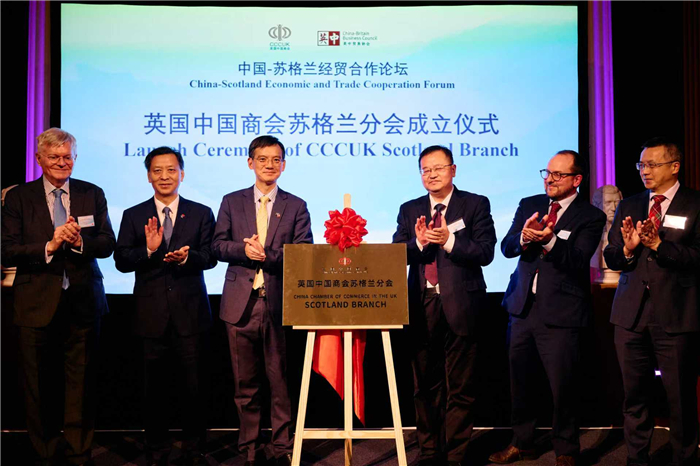
中国—苏格兰经贸合作论坛在爱丁堡举行
人民网-国际频道 原创稿· 2025-11-28 03:10
Group 1 - The China-Scotland Economic and Trade Cooperation Forum was held in Edinburgh, highlighting the rapid development of Chinese enterprises in Scotland's new energy, manufacturing, and technology innovation sectors [1][2] - The establishment of the Scotland branch of the British Chinese Chamber of Commerce aims to enhance regional cooperation and leverage new opportunities in innovation technology, life sciences, engineering, and renewable energy [1][4] - Scotland's leading position in offshore wind and marine energy complements China's strengths in large-scale manufacturing and technology commercialization, suggesting potential for accelerated green development and global market expansion [1][2] Group 2 - The Chinese Embassy in the UK emphasized the resilience and growth potential of Sino-British economic cooperation, particularly in clean energy, manufacturing, financial services, education, and technology innovation [2][4] - Recent data indicates that Scotland's exports to China and Hong Kong have seen the highest growth in the UK, reflecting the vitality of bilateral cooperation [4] - The Scottish Chinese Chamber of Commerce will focus on serving Chinese enterprises in Scotland and promoting collaboration in key industries such as energy, technology, and supply chains [6]
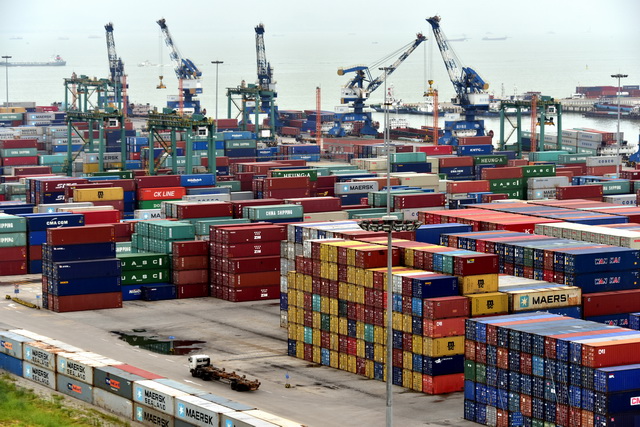
从规模增长向质量跃升转型,我国港航业瞄准智能航运
Di Yi Cai Jing· 2025-11-28 02:33
Core Viewpoint - The development of new productivity in China's port and shipping industry has laid a solid foundation for high-quality water transport development, transitioning from scale growth to quality improvement, with a focus on technological innovation and green, low-carbon initiatives [1][2]. Group 1: Industry Transformation - China's port and shipping industry is undergoing a transformation from "scale growth" to "quality improvement," emphasizing technological leadership and focusing on smart shipping and green low-carbon initiatives [1]. - The industry aims to achieve a systematic transformation by upgrading all elements including "ship, port, cargo, and people," and moving from factor-driven to innovation-driven growth [1][5]. Group 2: Infrastructure and Capacity - During the 14th Five-Year Plan period, China added 379 berths of 10,000 tons or more, bringing the total to 2,971, with over 70% of important coastal port areas having rail access [2]. - In 2024, China's port cargo throughput is projected to reach 17.6 billion tons, a year-on-year increase of 3.7%, while container throughput is expected to reach 33 million TEUs, up 7% [2]. Group 3: Automation and Efficiency - Major domestic ports have achieved automation in key operational processes such as loading and unloading, with examples like the Yangshan Phase IV automated terminal demonstrating a 50% increase in efficiency through innovative technologies [3]. - The introduction of automated systems, such as dual-container automated cranes, has significantly improved operational efficiency in container handling [3]. Group 4: Technological Innovation - The industry is increasingly focusing on independent innovation, achieving breakthroughs in key technologies, such as the development of proprietary terminal operation systems by ports like Shanghai and Shandong [5]. - The Shanghai Port's automated terminal utilizes a fully domestically developed intelligent operation control system, showcasing advancements in self-sufficiency in technology [5]. Group 5: Future Directions - The industry is encouraged to strengthen technological innovation, overcome key technological bottlenecks, and enhance green and low-carbon transformation to improve overall efficiency across the supply chain [5]. - The China Maritime Association aims to continue fostering technological leadership and collaboration in smart shipping and green initiatives, promoting the transition of innovative results from research to practical applications [5].
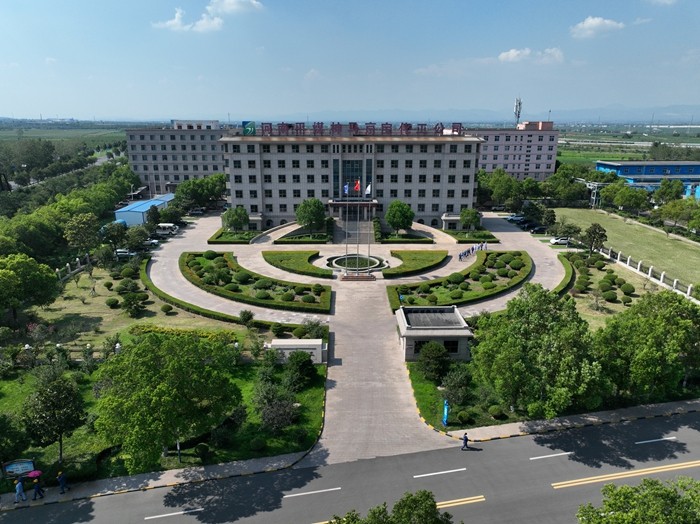
京宝化工的绿色蝶变—— 深耕超低排放 加速绿色转型
Zhong Guo Hua Gong Bao· 2025-11-28 02:29
Core Viewpoint - The company, Jingbao Chemical, is undergoing a significant transformation towards green and high-quality development, focusing on environmental protection and low-carbon initiatives in response to stringent environmental challenges [4][17][21]. Group 1: Environmental Initiatives - Jingbao Chemical has invested over 600 million yuan in environmental governance and upgrades since 2023, enhancing various pollution control facilities to ensure stable compliance with emission standards [8][19]. - The company has implemented a series of projects aimed at achieving ultra-low emissions, with a total investment of 164.4 million yuan for 39 projects, all of which have been completed and are operational [9][21]. - The company has established a backup desulfurization and denitrification system, becoming the first independent coking enterprise in the industry to do so, addressing emissions during maintenance periods [13][19]. Group 2: Infrastructure and Production Capacity - Jingbao Chemical's production capabilities include a 6-meter stamp charging coke oven, 160 tons/hour dry quenching waste heat power generation, and the production of various chemical products, including 1.3 million tons of metallurgical coke annually [5][8]. - The company has a comprehensive set of environmental facilities, including a 100 tons/hour wastewater treatment system and a 30,000 m³/h coke oven waste gas desulfurization and denitrification system, ensuring effective pollution control [8][9]. Group 3: Management and Compliance - The company has strengthened its environmental management by establishing rigorous protocols and collaborating with reputable third-party testing organizations to ensure data integrity and compliance with environmental standards [19][20]. - A series of management regulations have been revised and implemented, including the establishment of a comprehensive environmental protection responsibility system, aiming for zero environmental pollution incidents and 100% operational efficiency of environmental facilities [20][21]. Group 4: Future Goals - Jingbao Chemical aims to be a benchmark in the coking industry for ultra-low emissions by 2025, aligning with national goals for environmental upgrades in the sector [21]. - The company is committed to achieving its environmental targets through continuous investment in technology and infrastructure, fostering a culture of environmental responsibility among its employees [20][21].
山东高速股份有限公司 2025年第三季度业绩说明会纪要
Zheng Quan Ri Bao· 2025-11-27 23:21
Summary of Key Points Core Viewpoint - The company held a performance briefing on November 27, 2025, to address investor concerns regarding its financial performance and operational strategies for the upcoming periods [1]. Group 1: Financial Impact and Revenue - The revenue from the Weilai Expressway is expected to decrease by 345 million yuan in 2025 due to the cessation of tolls after its expiration on October 18, 2024 [3]. - The JiTai Expressway project is progressing normally, and the impact of construction on revenue has been adequately considered in profit forecasts [3]. - The JiHe Expressway saw a year-on-year revenue increase of 178.59% due to the restoration of two-way traffic, while the revenue from the JiTai Expressway segment decreased by 7.94% due to the expiration of tolls on the JiTai-JiQing connection line [3]. Group 2: Technological Development and Innovation - The company is focusing on "smart highways" and "green low-carbon" technologies, with a commitment to increasing research and development efforts despite a current R&D expense ratio of only 1.76% [4]. - The company is exploring new profit growth points through digital transformation and innovative services, which have already shown significant results in cost reduction and efficiency improvement [4]. Group 3: Capital Structure and Shareholder Returns - The company has experienced high capital expenditures and rising debt levels due to extensive infrastructure projects since 2016, but plans to gradually reduce its debt ratio as these projects are completed and operational [4]. - Future strategies may include asset securitization or the introduction of strategic investors to optimize the capital structure and balance large-scale infrastructure investments with shareholder returns [4]. Group 4: Profitability and Margin Management - The gross profit margin increased by 4.8 percentage points to 31.09% in Q3 2025, primarily due to a reduction in low-margin PPP construction revenue [5]. - The company aims to maintain profitability by focusing on its core business and enhancing the proportion of high-margin assets in its portfolio [5].

山东高速股份有限公司2025年第三季度业绩说明会纪要
Shang Hai Zheng Quan Bao· 2025-11-27 19:20
Core Viewpoint - The company held a Q3 2025 earnings briefing to address investor concerns regarding its financial performance and future projects, highlighting both challenges and strategic responses in its operations [1][3]. Group 1: Financial Impact and Revenue - The revenue from the Weilai Expressway is expected to decrease by 345 million yuan in 2025 due to the cessation of tolls after its completion in October 2024 [3]. - The Jihe Expressway saw a significant revenue increase of 178.59% year-on-year due to the restoration of two-way traffic, while the Jingtai Expressway experienced a revenue decline of 7.94% primarily due to the expiration of tolls on a connecting line [3]. Group 2: Project Progress and Challenges - The Jingtai Expressway project is progressing normally, with 97.5% of the roadbed completed, although building and electromechanical works lag behind at 57% and 50% respectively, which will not affect the planned opening [3]. - The company is exploring measures such as "highway + cultural tourism" and customized services to enhance overall road network utilization [3]. Group 3: Innovation and R&D - The company is focusing on "smart highways" and "green low-carbon" technologies, although its R&D expense ratio is currently at 1.76% [4]. - Innovations in infrastructure digital transformation and all-weather traffic are already contributing to cost reduction and efficiency improvements [4]. Group 4: Capital Structure and Shareholder Returns - The company has experienced high capital expenditures and rising debt levels due to extensive infrastructure projects since 2016, but plans to gradually reduce its debt ratio as projects are completed and operational [4]. - Future strategies may include asset securitization or attracting strategic investors to optimize the capital structure [4]. Group 5: Profitability and Margin Management - The gross profit margin increased by 4.8 percentage points to 31.09% year-on-year, mainly due to a reduction in low-margin PPP construction revenue [5]. - The company aims to maintain profitability by focusing on core operations and exploring new profit growth points within the industry [5].
签约总额超330亿元!2025第八届中国国际光伏与储能产业大会“成绩单”亮眼
Bei Jing Shang Bao· 2025-11-27 15:40
Core Insights - The 2025 8th China International Photovoltaic and Energy Storage Industry Conference was held in Chengdu, focusing on the theme "Solar Storage Co-prosperity, Integration Empowerment, Intelligent Innovation for the Future" [1] - The conference attracted over 5,000 participating and exhibiting companies, with total project signing amounts exceeding 33 billion RMB [1][7] - The event featured high-profile guests, including government leaders and industry experts, marking a record attendance and participation [3][4] Group 1: Event Overview - The conference is recognized as one of the top three international events in the photovoltaic and energy storage industry globally, alongside the Shanghai SNEC and the Munich Solar PV Exhibition [2] - The event spanned four days, hosting a total of 45 meetings, including main conferences and parallel sessions, with over 50,000 attendees [1][8] - The conference emphasized high standards and global perspectives, showcasing the industry's vitality and future prospects [1][6] Group 2: Participation and Impact - More than 2,500 core guests attended, including significant government officials and leaders from major companies such as Tongwei Group and Huawei Digital Energy [3] - The event was supported by nearly 100 authoritative organizations, enhancing its credibility and reach [4] - Over 100 international buyers participated, promoting global cooperation in the energy sector [5] Group 3: Project and Economic Outcomes - The conference facilitated project signings totaling over 33 billion RMB, covering the entire energy chain, including photovoltaic, energy storage, hydrogen, and equipment manufacturing [7] - The event's focus on high-quality projects and broad coverage reflects its commitment to fostering industry growth [7] Group 4: Industry Development and Initiatives - The conference released the "Chengdu Declaration" and a sustainable supply chain initiative to address industry competition and promote collaboration [9] - It also launched the "2025 China and Global New Energy Development White Paper" and the first global photovoltaic battery quality white paper [9] Group 5: Media and Public Engagement - The event garnered attention from over 200 media outlets, with online coverage exceeding 200 million views [11] - A new media alliance for the global solar storage industry was established to enhance storytelling about China's solar storage developments [11] Group 6: Volunteer and Support Services - Over 400 volunteers provided comprehensive services during the conference, ensuring smooth operations [12]