绿色消费

Search documents
国家统计局:前8个月全国乘用车新能源市场零售量同比增长超20%
Zhong Guo Xin Wen Wang· 2025-09-15 08:08
Group 1: Overall Economic Performance - The retail sales of social consumer goods increased by 4.6% year-on-year from January to August, with service retail sales growing by 5.1%, indicating a continuous expansion of market sales [1][3] - In August, the retail sales of goods increased by 3.6% year-on-year, supported by policies encouraging consumers to upgrade their purchases and the sales of related products [1][2] Group 2: Consumer Trends - The demand for goods consumption continued to grow, with significant increases in retail sales of home appliances, cultural and office supplies, and furniture, all exceeding 10% year-on-year in August [1][2] - Service consumption showed stable growth, with a year-on-year increase of 5.1% from January to August, driven by tourism and recreational activities during the summer [2][3] Group 3: New Consumption Patterns - Online retail sales increased by 9.6% year-on-year from January to August, outpacing the overall retail sales growth, with physical goods online retail sales growing by 6.4% [2] - The retail volume of new energy vehicles in the passenger car market grew by over 20% year-on-year in the first eight months [2]
赛得利&Deeyeo德佑:2025中国湿巾·柔巾行业趋势洞察
Sou Hu Cai Jing· 2025-09-14 11:00
Industry Overview - The report highlights that China is the largest producer of wet wipes and soft wipes globally, with a market size of approximately 35 billion yuan and a consumption of about 1.05 million tons of non-woven fabric in 2024, where wet wipes account for over 80% of the market [1][12][42]. - The market for soft wipes is growing significantly, with annual growth rates exceeding 25% for specific categories like toilet wet wipes and kitchen wet wipes [1][42]. Product Performance - The functionality of wet wipes has evolved from basic cleaning to multi-functional applications, including antibacterial, moisturizing, and low-allergen properties, driven by consumer demand for safety and effectiveness [1][35][36]. - The use of natural plant extracts and preservative-free formulas is becoming widespread, enhancing comfort and safety in product offerings [1][35][40]. Fiber Raw Materials - The primary raw materials for wet wipes are diversified, with polyester (49%) and regenerated cellulose fibers (39%) being the main components, while cotton and wood pulp are increasingly used in high-end products [1][50][51]. - The choice of raw materials is influenced by cost, supply, and performance compatibility, with a growing emphasis on environmentally friendly options [1][51]. Application Scenarios - The report identifies various application scenarios for wet wipes, including daily cleaning, cooling wipes, and pet wipes, with industrial wiping applications showing significant growth potential [1][42][43]. - The household cleaning segment, particularly kitchen wipes, is experiencing rapid growth, with annual increases exceeding 20% [1][42]. Technological Innovation - Innovations in materials include breakthroughs in melt-blown wood pulp composite non-woven fabrics and dual-component ultra-fine non-woven fabrics, enhancing product design and functionality [1][35][36]. - The report emphasizes the importance of safety standards for fiber raw materials and the regulation of wet wipe soaking liquid components [1][40]. Green Consumption Upgrade - There is a trend towards green consumption, with 35 companies achieving biodegradable certification for 60 products, and advancements in dispersible wet wipe technology [1][42]. - The overall market is expected to exceed 30 billion yuan, reflecting a shift towards high-quality, green, and scenario-based products [1][42].


4年250亿,青岛赚翻了
投中网· 2025-09-14 07:04
Core Insights - The article highlights the successful case of Zhu Hai High-tech Zone attracting a second-hand e-commerce company, which has become a significant taxpayer in the region, similar to the case of Zhu Hai, Qingdao has also seen the successful establishment of the second-hand e-commerce platform, Zhuan Zhuan, which has generated over 25 billion RMB in revenue since its establishment in 2021 [3][4][10]. Group 1: Company Overview - Zhuan Zhuan, a second-hand trading platform, was incubated by 58 Group in 2015 and has received significant investments from Tencent, with a current valuation of 21 billion RMB [4][6]. - The platform operates under a unique model characterized by full-category offerings, standardization, and a C2B2C approach, which has attracted various investors, including state-owned funds [6][8]. - Zhuan Zhuan's revenue growth has been remarkable, achieving 25 billion RMB in just four years, positioning it as a new business card for Qingdao's investment attraction [10][12]. Group 2: Market Context and Policy Support - The second-hand e-commerce market in China has been activated by favorable policies promoting circular economy and green consumption, with the market size surpassing 400 billion RMB and user base reaching 223 million [7][9]. - In 2021, the Chinese government included "Internet + second-hand" in its national planning, further supporting the growth of the second-hand market [7][9]. - The establishment of Zhuan Zhuan in Qingdao aligns with the city's strategy to attract leading enterprises that can drive industrial chains and create jobs [8][18]. Group 3: Strategic Importance for Qingdao - Qingdao's decision to attract Zhuan Zhuan reflects a strategic choice to invest in a high-potential sector that complements its existing industrial strengths, particularly in high-end manufacturing and marine economy [3][23]. - The city has seen a rising trend in enterprise migration, with Zhuan Zhuan being part of a broader strategy to enhance its industrial ecosystem [19][20]. - The partnership with Zhuan Zhuan has not only brought a project but has also initiated the formation of a circular economy industrial chain in Qingdao, enhancing local employment and tax revenue [9][10].

增值税发票数据显示,贵州新型消费呈现"四大亮点"
Zhong Guo Chan Ye Jing Ji Xin Xi Wang· 2025-09-11 23:17
Digital Consumption Expansion - In the first seven months of this year, the retail of computer and electronic products in Guizhou province increased by 22.6%, while home audio-visual equipment and communication devices saw a growth of 36.4% [3] - The growth of digital consumption is supported by a significant increase in basic software development by 116.3%, and information technology services and internet-related services growing by 47.8% and 8.2% respectively [2] Green Consumption Trends - Public electric bus services and public bicycle services in Guizhou experienced remarkable growth of 293.9% and 25.2% respectively in the first seven months of this year, while sales of electric vehicle charging increased by 84.8% [4] - The number of new energy vehicles registered in Xinyi city increased by 59.28% year-on-year, with 6,997 new energy passenger vehicles reported for vehicle purchase tax [4] Health Consumption Growth - The sales revenue of sports competitions, sports venues, and fitness and leisure services in Guizhou grew by 48.4%, 18.2%, and 7.3% respectively in the first seven months of this year, with sports goods retail increasing by 90.8% [5] - The "Liupanshui Marathon" attracted 74,000 participants, marking a 16.8% increase, and generated over 20 million yuan in consumption during the event [5] Self-Care Consumption Dynamics - The services of bars and cafes in Guizhou grew by 40% and 19.3% respectively, while camping sites and homestay services increased by 21.8% and 12.5% [7] - The coffee shop "SeekSeeking" in Guiyang has seen daily sales reach up to 500 cups, reflecting a significant increase in customer traffic [7] Overall Consumption Landscape - The integration of digital and cultural tourism, along with the rise of health and green consumption, is creating a vibrant consumption landscape in Guizhou [7]

从规模扩张转向质量提升 品质才是电商竞争的护城河
Bei Jing Shang Bao· 2025-09-10 18:10
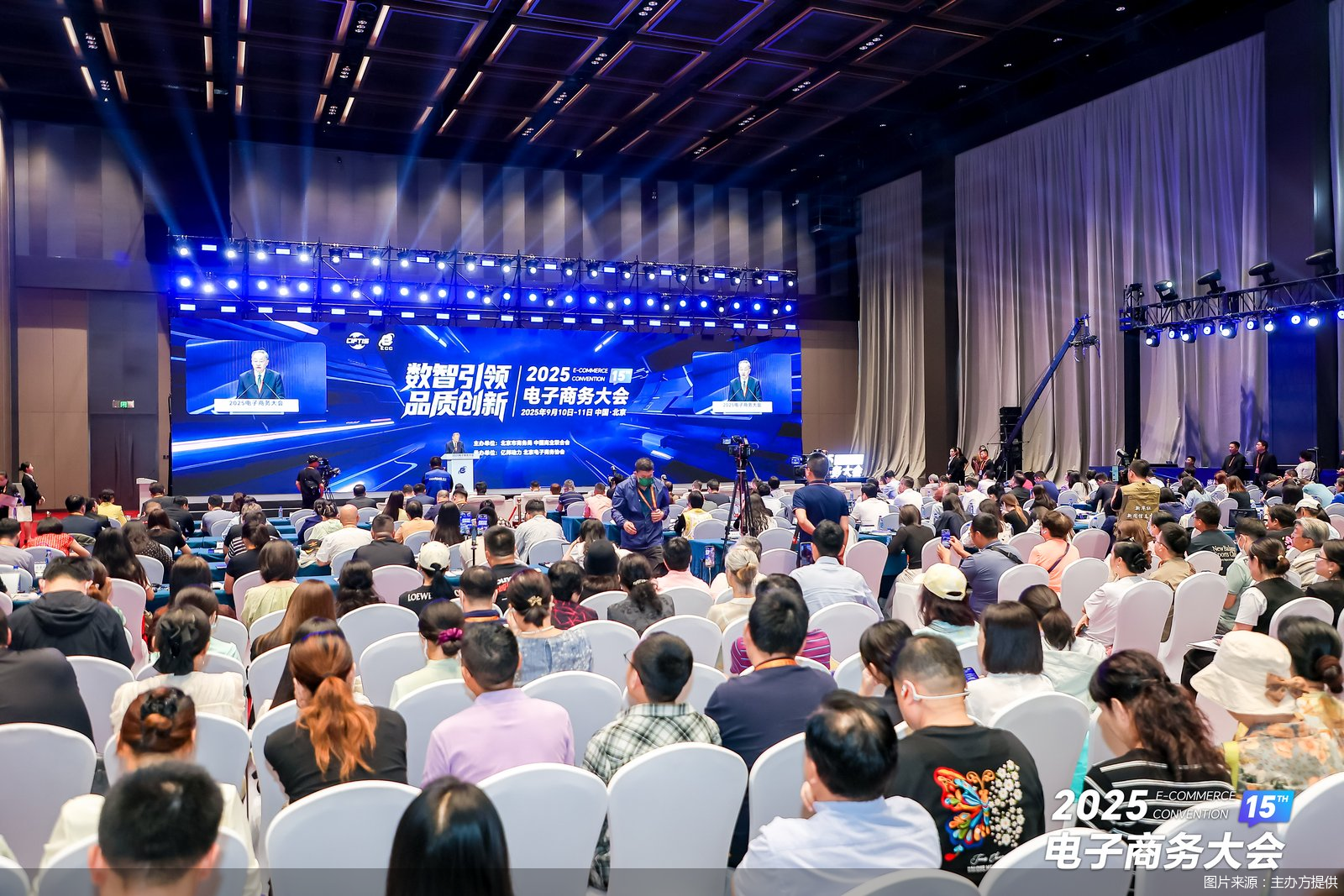
Group 1: Industry Trends - The 2025 E-commerce Conference in Beijing emphasizes "Digital Intelligence Leading, Quality Innovation" as the theme, highlighting the transition of global e-commerce into a new development phase driven by AI and big data [1] - Quality e-commerce is becoming a consensus in the industry, focusing on emotional connections with consumers and enhancing shopping experiences through cultural and emotional value [1][4] - The rise of service e-commerce is noted, with companies like Meituan and JD Home Services expanding from product-based to service-oriented models, creating a new blue ocean for e-commerce [2] Group 2: Technological Integration - AI technology is penetrating key operational areas of e-commerce, such as product selection, marketing, and customer service, leading to cost reduction and efficiency improvements [1][2] - Emerging technologies like AIGC are lowering operational barriers for merchants and stimulating innovation potential, positioning AI as a foundational infrastructure for the next generation of e-commerce ecosystems [1] Group 3: Market Performance - In Beijing, online retail sales reached 578.66 billion yuan in 2024, a growth of 136.33 billion yuan from 2020, accounting for over 40% of the city's total retail sales [3] - From January to July 2025, Beijing's online retail sales were 303.51 billion yuan, representing 39.55% of total retail sales, surpassing the national average by 14.64 percentage points [3] Group 4: Sustainability and Circular Economy - E-commerce platforms are accelerating the practice of circular economy and green consumption, with companies like Zhuanzhuan promoting efficient circulation of idle resources through standardized second-hand trading and quality inspection systems [2][7] - The focus on quality innovation is seen as a stabilizing force for the e-commerce industry, driving the wave of quality enhancement and brand value reconstruction [5]
2025电子商务大会:从规模扩张转向质量提升 品质是护城河
Bei Jing Shang Bao· 2025-09-10 17:37
Group 1 - The 2025 E-commerce Conference in Beijing emphasizes the transition to a new development stage driven by artificial intelligence and big data, with digital transformation and quality upgrades as key growth engines for the industry [1] - "Quality e-commerce" is becoming a consensus in the industry, focusing on emotional connections with consumers and enhancing shopping experiences through cultural and emotional value [1] - Companies like 52TOYS are expanding new consumption boundaries by integrating IP content with product design, significantly enhancing brand loyalty through cultural added value [1] Group 2 - Service e-commerce is emerging as a new growth driver, with companies like Meituan and JD Home Services digitally integrating lifestyle service resources, transforming from "product e-commerce" to "service e-commerce" [2] - Cross-border e-commerce demonstrates resilience in uncertain global economic conditions, remaining a core pathway for Chinese companies to expand internationally despite challenges [2] - The focus of e-commerce competition is shifting from scale expansion to quality enhancement and model innovation, with an emphasis on quality, AI empowerment, service consumption integration, and green low-carbon transformation [2]


从规模扩张转向质量提升,品质才是电商竞争的护城河
Bei Jing Shang Bao· 2025-09-10 14:40
Group 1: E-commerce Trends and Innovations - The 2025 E-commerce Conference in Beijing emphasizes "Digital Intelligence Leading, Quality Innovation" as the theme, highlighting the role of AI and big data in driving the new development phase of global e-commerce [1] - Quality e-commerce is becoming a consensus in the industry, focusing on emotional connections with consumers and enhancing shopping experiences through cultural and emotional value [1][11] - AI technology is penetrating key operational areas of e-commerce, such as product selection, marketing, and customer service, leading to cost reduction and efficiency improvements [1] Group 2: Service E-commerce and Market Dynamics - Service e-commerce is emerging as a new growth driver, with companies like Meituan and JD Home Services integrating digital resources to expand from product e-commerce to service e-commerce [2] - Cross-border e-commerce shows resilience despite global economic uncertainties, remaining a core pathway for Chinese enterprises to expand internationally [2] - The competition in e-commerce is shifting from scale expansion to quality enhancement and model innovation, with a focus on quality, AI empowerment, and green transformation [2] Group 3: Regional E-commerce Growth - E-commerce is a significant engine for consumption growth in Beijing, with online retail sales reaching 578.66 billion yuan in 2024, a 136.33 billion yuan increase from 2020 [3] - New e-commerce models such as live streaming, instant retail, and immersive consumption experiences are actively emerging in Beijing [3] - The city is prioritizing e-commerce development, optimizing the environment for high-tech, multi-platform, and quality-focused market characteristics [3] Group 4: Quality Innovation and Industry Standards - Quality innovation is identified as a cornerstone for the e-commerce industry's development, with AI and big data driving transformative changes [4] - The China Commercial Federation aims to establish industry standards and enhance the quality of transactions to support high-quality development in e-commerce [5] Group 5: International Cooperation and Digital Transformation - International cooperation is crucial for small and medium enterprises (SMEs) to benefit from e-commerce, with over 80% of companies successfully reducing costs through digital technology [6] - China serves as a model for international cooperation in e-commerce through initiatives like the "Silk Road E-commerce" [6] Group 6: Consumer-Centric Approaches - Live streaming e-commerce is viewed as a traditional retail industry enhanced by new technologies, focusing on consumer needs for quality products and reliable service [7] - AI is driving the expansion and quality enhancement of digital service consumption, with online service consumption growing by 13.3% year-on-year [8] Group 7: Circular Economy and Sustainability - E-commerce platforms are playing a vital role in promoting the circular economy, with companies like Zhuanzhuan facilitating the efficient circulation of idle resources [9][10] - The establishment of standardized trading processes and quality inspection systems by Zhuanzhuan supports the development of green consumption [10] Group 8: Emotional Engagement in Consumer Products - The integration of emotional content into product design is enhancing consumer loyalty and expanding new consumption boundaries in the潮玩 economy [11]
2025服贸会| 从规模扩张转向质量提升,品质才是电商竞争的护城河
Bei Jing Shang Bao· 2025-09-10 14:37
Core Viewpoint - The 2025 E-commerce Conference emphasizes the transformation driven by artificial intelligence and big data, highlighting the importance of quality e-commerce and the emotional connection with consumers as key drivers for industry growth [1][4]. Group 1: Industry Trends - The e-commerce sector is entering a new phase characterized by digital transformation and quality upgrades, with AI and big data as core drivers [1][4]. - Quality e-commerce is becoming a consensus in the industry, focusing on emotional connections and cultural values to enhance consumer experience [1][3]. - The rise of service e-commerce is noted, with companies like Meituan and JD Home Services expanding from product-based to service-oriented models [3][4]. Group 2: Market Performance - In Beijing, online retail sales reached 578.66 billion yuan in 2024, a 136.33 billion yuan increase from 2020, accounting for over 40% of the city's total retail sales [5]. - From January to July 2025, Beijing's online retail sales were 303.51 billion yuan, representing 39.55% of total retail sales, surpassing the national average by 14.64 percentage points [5]. Group 3: Technological Integration - AI technology is permeating key operational areas such as product selection, marketing, and customer service, leading to cost reduction and efficiency improvements [3][9]. - The integration of AI in digital services is accelerating, with online service consumption growing by 13.3% year-on-year from January to May 2025 [9]. Group 4: Sustainability and Circular Economy - E-commerce platforms are increasingly focusing on circular economy practices, with companies like Zhuanzhuan promoting second-hand trading and resource recycling [10]. - The establishment of standardized trading and quality inspection systems is enhancing the reliability of second-hand transactions, supporting green consumption [10]. Group 5: Future Outlook - Future competition in e-commerce is expected to shift from scale expansion to quality enhancement and model innovation, with a focus on AI empowerment and green transformation [4][6]. - The emphasis on quality innovation is seen as a stabilizing force for the e-commerce sector, driving the industry towards higher standards [6].
车展观察|从“要面子”到“要体验”,“Z时代”购车理性当先
Qi Lu Wan Bao· 2025-09-05 09:58
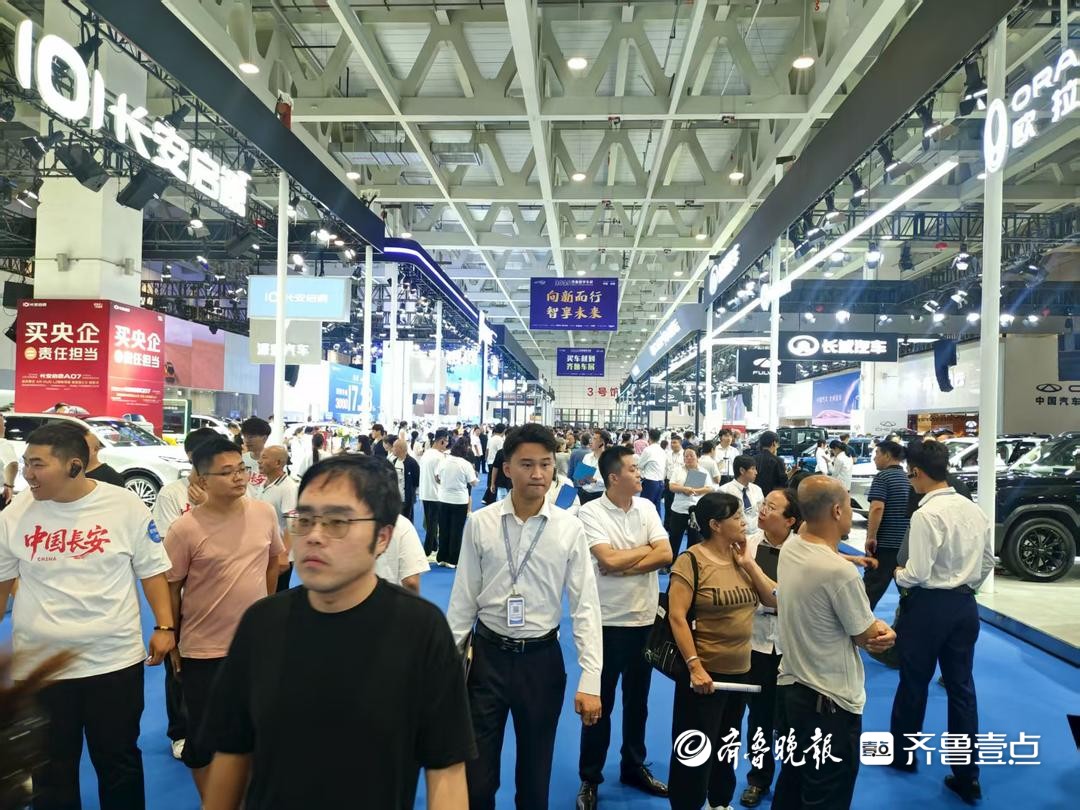
Core Insights - The automotive consumption market in China is undergoing a transformation, with the "Z generation" becoming a significant force in car purchases, shifting the focus from traditional brands to autonomous brands due to their technological advancements and cost-effectiveness [1][9][12] - The average age of first-time car buyers has decreased to 30.5 years, with some "post-00s" purchasing their first car as early as 22 years old, indicating a trend of younger consumers entering the market [2][4] - Young consumers prioritize smart features, design, and overall experience over traditional metrics like brand history and engine specifications, reflecting a shift towards rational consumption [5][6][8] Group 1: Young Consumers' Preferences - The presence of young consumers at the 2025 Qilu Autumn Auto Show highlights a growing trend of youth engagement in the automotive market, with many making informed decisions based on online research prior to attending [4][5] - Approximately 25% of "post-90s" and "post-00s" buyers set their budget above 200,000 yuan, indicating a willingness to invest in autonomous and new energy vehicles rather than traditional luxury brands [4][12] - Young consumers express a desire for vehicles that serve as "smart travel partners" rather than mere transportation tools, emphasizing the importance of technology and personalization in their purchasing decisions [6][8] Group 2: Rise of Autonomous Brands - Autonomous brands have shifted from competing on price to leading in technology, with significant investments in R&D, particularly in the fields of new energy and smart technology [9][11][12] - Brands like BYD and Geely are experiencing increased consumer interest due to their performance and technological innovations, with a notable rise in market share, accounting for over 68% of total sales in the first half of the year [11][14] - The perception of autonomous brands has improved significantly, with consumers recognizing their advancements in quality, design, and overall value, leading to a growing trust in these brands [13][14] Group 3: Market Dynamics - The automotive market is witnessing a shift from a "function-oriented" approach to an "experience-oriented" one, where consumers consider technology, service, and emotional connection in their purchasing decisions [14] - The increasing focus on environmental responsibility among young consumers is driving the demand for new energy vehicles, supported by government incentives and a growing awareness of sustainable living [8][12] - The overall transformation in consumer behavior and preferences is reshaping the competitive landscape of the automotive industry in China, with autonomous brands poised to capture a larger share of the market [9][14]


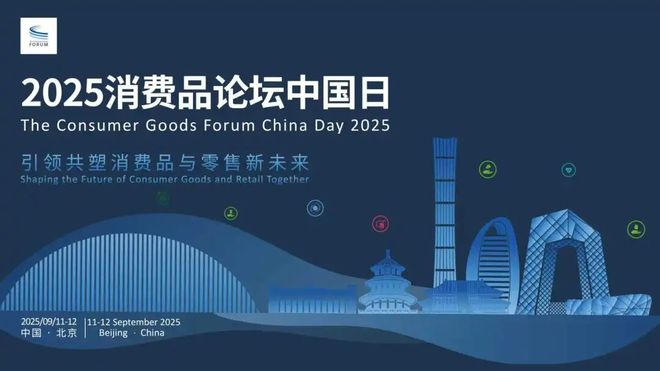
引领共塑消费品与零售新未来 | 2025 消费品论坛中国日开幕在即
Di Yi Cai Jing Zi Xun· 2025-09-04 12:25
Group 1 - The event "2025 Consumer Goods Forum China Day" will take place on September 11-12, 2025, at the Four Seasons Hotel in Beijing [2] - The agenda includes discussions on the future of Chinese consumers, innovation in the consumer industry, and the impact of AI on retail and consumer goods [6][12] - Key speakers include partners from McKinsey, KPMG, BCG, and leaders from major companies like Ant Group and Bright Dairy [7][8][9] Group 2 - The forum will feature a roundtable on food safety digitalization and the challenges and opportunities in the food safety sector [19][25] - There will be discussions on sustainable practices in the consumer goods industry, including plastic waste management and green packaging [26][28] - The event aims to promote collaboration among industry leaders to enhance food safety and sustainability in the consumer goods sector [27][30] Group 3 - The Consumer Goods Forum (CGF) is a global organization founded in 1953, uniting retail and manufacturing leaders to drive sustainable growth [39] - CGF has over 400 members from more than 70 countries, with a combined sales revenue exceeding €4.6 trillion [39] - The mission of CGF is to create better business practices that benefit both humanity and the planet [39]