
产教融合

Search documents
华大九天生态伙伴及用户大会成功举办:未来五年战略公布,十余项创新产品方案展现行业领导力
半导体芯闻· 2025-11-05 10:30
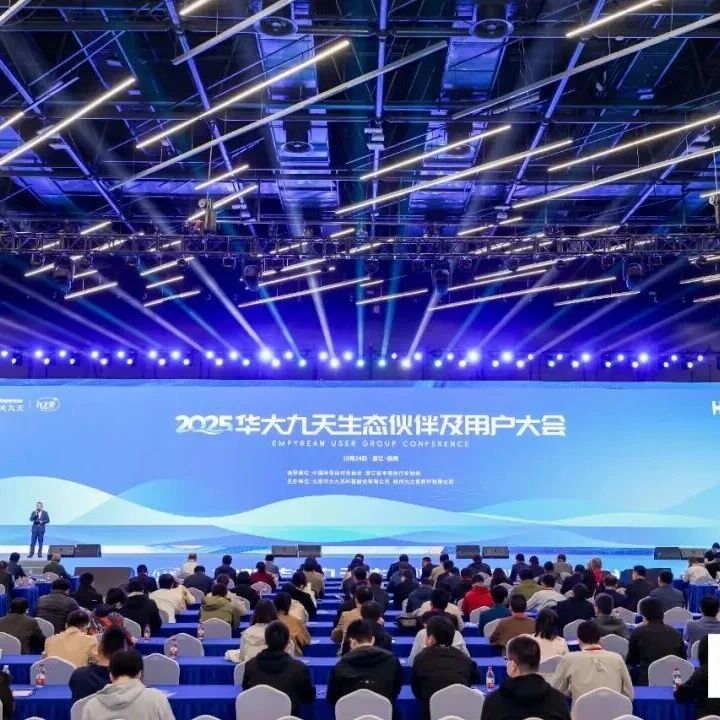
Core Viewpoint - The article highlights the successful hosting of the Huada Jiutian Ecological Partners and Users Conference, focusing on the theme of "Technology, Culture, Coexistence, and Common Prosperity" to promote high-quality development in China's integrated circuit industry [4][26]. Group 1: Conference Overview - The conference attracted over 700 integrated circuit design engineers, experts, scholars, and university researchers, with more than 3,000 cumulative online viewers for the live forum [7][26]. - A results exhibition area featured 13 industry partners showcasing their latest research and development achievements, facilitating extensive interaction with attendees [8]. Group 2: Product Innovations - Huada Jiutian introduced an integrated platform guided by "platformization, processization, and intelligence," showcasing new product developments across six major fields [10]. - The digital design segment improved digital product lines, enhancing functionalities from simulation to analysis optimization [12]. - The next-generation circuit tool ALPS VX saw a performance increase of 3 times, with process intelligence upgrades improving layout design efficiency by 3-5 times [13]. - A new intelligent design solution for flat panel display design reduced layout design cycles to one week, utilizing an AI error recognition engine with over 95% filtering rate [14]. - The 3DIC physical verification product enables unified verification across chip systems, reducing design cycles from months to weeks [15]. - The design-manufacturing collaboration (DTCO) was elaborated, extending traditional design capabilities to cover the entire EDA tool process [16]. - An intelligent customer service model named "Tianwen" was launched, providing 24/7 support for circuit simulation and timing optimization [17]. Group 3: Education and Talent Development - To address the shortage of high-end talent in the integrated circuit industry, Huada Jiutian collaborated with Zhejiang Chuangxin and top universities to launch the "Jiutian Yixin" industry-education integration curriculum [18]. - This curriculum is based on PDK standard cell libraries and production lines, enabling students to complete full-process training from RTL to GDS and obtain testable chips [18]. Group 4: Community Engagement and Achievements - The first PyAether ecological collection event yielded significant results, with over 1,800 posts and more than 350,000 views, alongside training for over 1,600 individuals [24]. - The "Xinjuzhijian" brand activity was initiated to conduct seminars and training across multiple locations, engaging thousands of participants [24]. - The HUG paper collection activity received enthusiastic responses, culminating in the selection of nine outstanding papers for awards [24].


合肥经开区全链条招才引智,推动人才生态提质增效
Zhong Guo Fa Zhan Wang· 2025-11-05 09:38
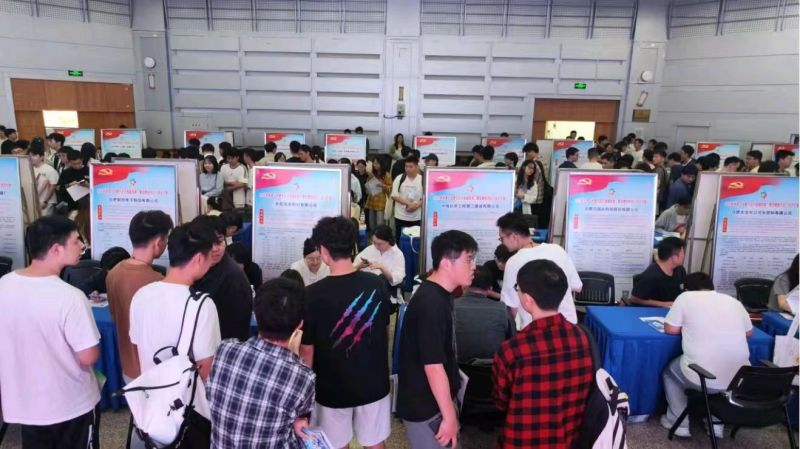
Group 1 - The core idea of the news is that Hefei Economic Development Zone is actively enhancing its talent acquisition strategies through various initiatives, including campus recruitment and international talent engagement [1][3][5][7][9] - The Hefei Economic Development Zone has organized 532 enterprises to connect with 27 universities across 10 cities, resulting in nearly 5,000 employment intentions, marking a successful start to the new academic year [1] - The zone has implemented a "3+6" industry system to create a multi-level talent recruitment framework, focusing on skilled, young, and overseas talents [1][9] Group 2 - The autumn campus recruitment event has strengthened the connection between local enterprises and universities, with tailored recruitment plans based on specific needs and academic strengths [1][5] - A total of 15 "Recruit and Train" events have been conducted this year, establishing stable partnerships between 11 key enterprises and 19 vocational schools, resulting in 1,348 skilled talents entering local companies [5] - The first Global Talent Cloud Recruitment Fair attracted nearly 1,000 participants, with 78% holding master's degrees or higher, focusing on high-level talent in cutting-edge fields such as AI and biomedicine [3] Group 3 - The Hefei Economic Development Zone has set up a "Talent Service Zone" during recruitment events to provide one-stop services for graduates, enhancing the overall talent experience [7] - The zone has organized seven brand activities this year to enrich talent services, fostering a comprehensive support system that enhances the sense of belonging for talents [7] - Future plans include further expanding talent acquisition channels and optimizing the talent service ecosystem to attract more domestic and international talents [9]
坚持把教育作为国之大计、党之大计
Ren Min Ri Bao· 2025-11-04 22:12
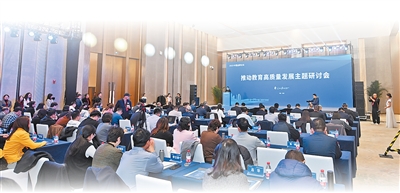
Group 1 - Education is fundamental for building a modern socialist country, with technology as the key and talent as the core resource [2][4][5] - The integration of education, technology, and talent is essential for enhancing the international competitiveness of Chinese brands [2][3] - The development of a high-quality education system is crucial for sustainable economic and social development [4][5] Group 2 - The "Education Brand" awareness should be established to create a high-quality education system that meets regional economic needs [4][5] - Collaboration between leading enterprises and high-level universities is encouraged to build research platforms and practical bases [5][6] - The Xiong'an New Area is positioned as a new high ground for education development, attracting quality educational resources [6][7] Group 3 - The focus on innovative education models and deepening cooperation between schools and enterprises is emphasized [6][8] - The establishment of a global education center city is seen as a pathway to enhance China's educational international influence [13][14] - The integration of sports into education is highlighted as a vital aspect of holistic education development [15][16]
山西将培育建设28个职业学校特色产业学院
Zhong Guo Xin Wen Wang· 2025-11-04 11:08
Core Points - Shanxi Province is establishing 28 vocational school characteristic industry colleges to enhance talent cultivation and meet industry demands [1][2] - The initiative is part of a broader strategy to improve educational quality and deepen the integration of industry and education [1] - The construction period for these industry colleges will not exceed two years, with a bi-monthly reporting mechanism in place [2] Group 1: Industry College Development - The selected colleges include the North Central Stainless Steel (Special Steel) Industry College among others [1] - The development process involves school applications, qualification reviews, expert evaluations, and public announcements [1] - The focus is on cultivating high-skilled talent and enhancing social service capabilities [1] Group 2: Collaboration and Innovation - There is an emphasis on innovative talent training models and deepening school-enterprise cooperation [1] - Industry colleges are required to develop a curriculum that meets industry needs and create practical training bases [1] - Partner enterprises are encouraged to invest in resources and participate in the reform of talent cultivation models and curriculum development [1]
湖北机场集团航务公司与兰州资源环境职业技术大学就业实训基地正式揭牌
Zhong Guo Min Hang Wang· 2025-11-04 10:34
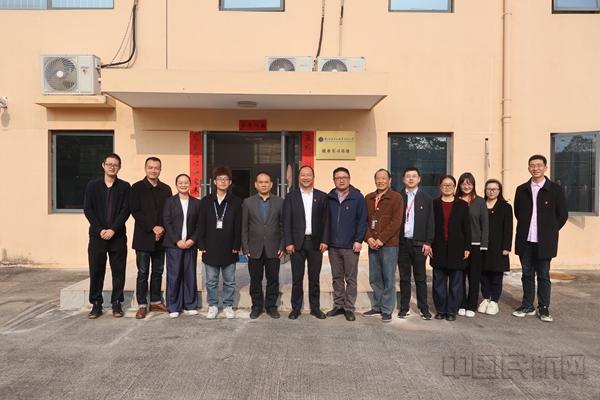
Core Points - The establishment of the "Employment Training Base" between Hubei Airport Group's Aviation Service Company and Lanzhou Resource Environment Vocational Technical University marks a significant step in their collaboration for talent cultivation [1][4] - This initiative aligns with national policies aimed at deepening the integration of industry and education, facilitating a smoother transition for students from theoretical learning to practical application [4] Group 1 - The training base aims to provide students with a stable internship platform, allowing them to engage with cutting-edge industry technologies and develop professional skills in real operational environments [4] - The collaboration emphasizes the social responsibility of the aviation service company in talent development [4] Group 2 - A dual exchange mechanism will be established, where technical experts from the aviation service company will participate in course design and serve as industry mentors, while university faculty will engage in technical research and project development within the company [4] - This approach of combining "bringing in" and "going out" is expected to enhance the synergy between industry, academia, and research, ultimately supplying the industry with more high-quality and well-matched technical talent [4]
学大教育发布2025年三季报:致力稳健经营,构建教育行业长期竞争优势
Huan Qiu Wang· 2025-11-04 03:33
Core Insights - The core viewpoint of the article highlights the robust financial performance and strategic growth of Xueda Education, showcasing its resilience in a competitive education market [1][3][4]. Financial Performance - For the first three quarters of 2025, Xueda Education reported a revenue of 2.613 billion yuan, representing a year-on-year growth of 16.3% [1] - The net profit attributable to shareholders reached 231 million yuan, up 31.52% year-on-year, while the net profit excluding non-recurring items was 209 million yuan, reflecting a 29.75% increase [1] - Operating cash flow net amount was 762 million yuan, showing a 10.35% improvement compared to the previous year [1] Business Strategy and Growth - Xueda Education has established a talent cultivation system based on personalized education, focusing on four core business segments: personalized education, vocational education, cultural reading, and medical-education integration [2] - The company has over 300 personalized learning centers, an increase of more than 60 centers compared to the first half of 2024, and nearly 7,500 students enrolled in full-time schools, up by 2,500 from the end of the previous year [3] - The number of teachers exceeded 5,200, with a growth rate of over 30% compared to the end of the previous year [3] Market Environment and Challenges - The education market in 2025 continues to exhibit characteristics of resilient demand and intensified supply-side recovery, with increased competition among leading institutions [3][4] - Xueda Education is addressing challenges such as rising customer acquisition costs and slowing offline expansion through refined management and systematic teaching research [4] Strategic Expansion - The company is expanding its second growth curve by focusing on high school repeaters and arts and sports admission groups, leveraging its core advantages in personalized education [5] - Xueda Education is actively promoting vocational education development, collaborating with vocational colleges to offer courses in emerging industries such as low-altitude economy and artificial intelligence [6] Cultural and Social Responsibility - The company has launched cultural reading initiatives through its "Juxiang Bookstore," participating in national reading activities and creating reading spaces across multiple cities [6] - The medical-education integration business, under the sub-brand Qianyi Health, provides developmental assessments and intervention services for children and adolescents [6] Future Outlook - The recent release of the "Implementation Plan for High-Quality Development of Ordinary High Schools" by the Shanghai Education Commission is expected to inject new momentum into the education industry, creating growth opportunities in personalized education and vocational training [7] - Xueda Education is positioned as a key player in the personalized education sector, benefiting from policy incentives and market dynamics [7] Technological Innovation - The year 2025 is seen as a pivotal point for the integration of AI in education, with Xueda Education embedding AI technology into its teaching and management systems [8] - The company's AI strategy emphasizes the combination of algorithms and humanistic approaches, aiming to enhance the value of teachers and scale personalized education [8]

四川首个!小米基地落地郫都区大数据中心
Sou Hu Cai Jing· 2025-11-03 12:06
Core Insights - Xiaomi has established its first provincial-level technology service and training base in Sichuan, specifically in the Pidu District's big data center, aimed at enhancing talent cultivation in the digital industry in the region [1][3] Group 1: Project Details - The base will focus on training and certification in AIoT, industrial interconnectivity, and robotics, targeting the southwestern region of China [1] - The project will be developed in two phases: Phase 1 is set to commence operations in March 2026, while Phase 2 is planned to start in September 2027, expanding into smart manufacturing and intelligent networking [3] Group 2: Strategic Rationale - The decision to locate in Pidu is influenced by the area's robust electronic information industry ecosystem and abundant talent resources from local universities, alongside a favorable business environment [3] - The local government and partners have demonstrated a proactive service approach, which has instilled confidence in Xiaomi regarding the project's execution [3] Group 3: Upcoming Events - To promote the base and facilitate industry talent connections, the 2026 Xiaomi Education Integration Conference is scheduled to take place in April next year at the Chengdu Sci-Fi Museum, expecting over 600 representatives from universities and Xiaomi's ecosystem companies, with more than a thousand attendees anticipated [3]


深化产教融合 广东证券期货业协会精准引才夯实行业人才基石
Qi Huo Ri Bao Wang· 2025-11-03 08:18
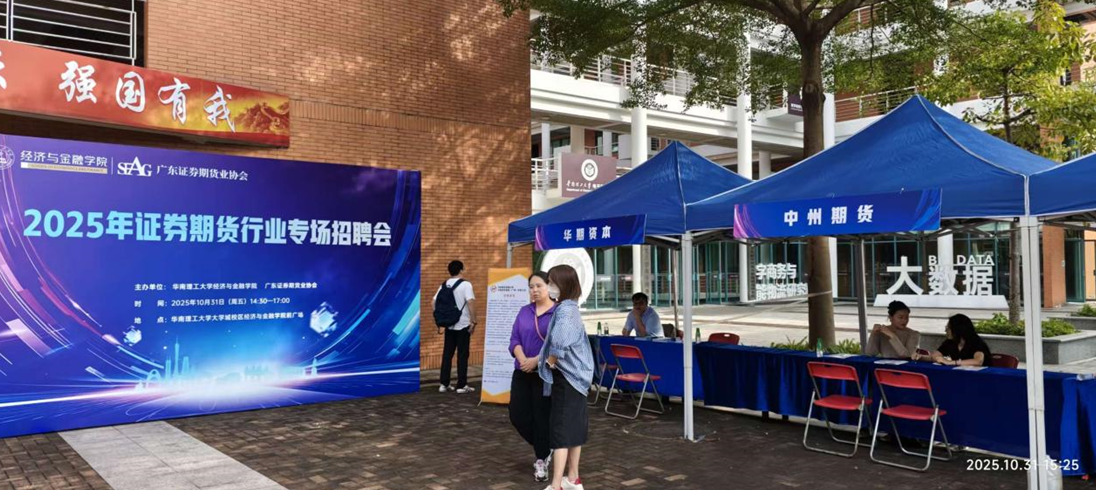
Core Insights - The securities and futures industry is experiencing rapid growth and attracting many aspiring professionals, with a focus on promoting high-quality employment for university graduates [1] Group 1: Event Overview - On October 31, the Guangdong Securities and Futures Industry Association, in collaboration with the South China University of Technology's School of Economics and Finance, held a specialized job fair for the securities and futures industry [1] - The event featured participation from 30 securities and futures institutions, including Wanlian Securities, Guangdong Securities, and others, offering nearly 400 full-time positions and 200 internship opportunities [1] Group 2: Student Engagement - Graduates actively engaged with recruiters, inquiring about company culture, job requirements, career prospects, and salary information [3] - The job fair provided a dual approach of resume submission and immediate communication, enhancing students' confidence in their career development [3] Group 3: Future Initiatives - The Guangdong Securities and Futures Industry Association plans to continue integrating resources and expanding channels to support graduates' employment through various recruitment events and job guidance seminars [4] - The association aims to deepen the integration of industry and education, creating a talent cultivation ecosystem to support the economic development of the Guangdong-Hong Kong-Macao Greater Bay Area [4]
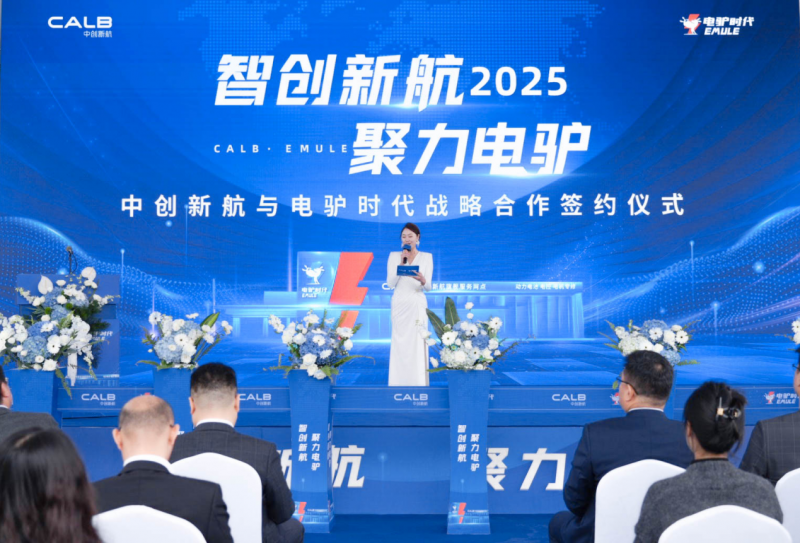
先锋合作!中创新航携电驴时代全国首家旗舰网点落户成都,开辟新能源后市场新赛道
Sou Hu Wang· 2025-11-02 06:49
Core Viewpoint - The strategic partnership between Zhongchuang Innovation and Dili Shidai marks a significant step towards enhancing the quality and standardization of the after-market services for the three electric systems in China's new energy vehicle industry, addressing key pain points such as inconsistent standards, long repair cycles, and high costs [1][3][5]. Group 1: Strategic Collaboration - The signing ceremony for the strategic cooperation between Zhongchuang Innovation and Dili Shidai took place in Chengdu, establishing the first flagship service outlet for three electric systems in the country [3][10]. - This collaboration aims to fill the gap in the industry regarding "technology implementation + service standardization," setting a new benchmark for collaborative development in the new energy after-market [3][18]. Group 2: Solutions to Industry Pain Points - The partnership has outlined efficient collaborative solutions to address core issues in the after-market for three electric systems, including the establishment of quantifiable indicators and standardized processes for battery testing and fault diagnosis [5][11]. - By leveraging Zhongchuang Innovation's supply chain advantages, the collaboration aims to optimize service efficiency and quality, significantly reducing repair cycles and costs [6][11]. Group 3: Network Expansion - Dili Shidai plans to use the Chengdu flagship outlet as a model to gradually expand its network across the country, aiming for a "1-hour response, 24-hour resolution" service circle [13][15]. - The establishment of a direct supply system for spare parts is intended to minimize service costs and response times for users [13][15]. Group 4: Talent Development - The partnership emphasizes the importance of talent development in the new energy after-market, focusing on integrating technical research and market practice to build a professional talent team for three electric system maintenance [16][18]. - Zhongchuang Innovation and Dili Shidai will collaborate on training programs that combine theoretical knowledge with practical experience to address the shortage of skilled professionals in the industry [16][18]. Group 5: Future Outlook - The strategic cooperation signifies the beginning of a nationwide layout phase, with Dili Shidai already initiating the construction of repair bases in major cities such as Shenzhen, Chongqing, and Beijing [17][18]. - This collaboration aims to create a comprehensive service network for three electric systems, addressing common challenges such as high technical barriers, inconsistent standards, and talent shortages in the new energy after-market [18][20].
中国微循环学会苏州融合发展中心揭牌
Su Zhou Ri Bao· 2025-11-02 00:23
Core Points - The establishment of the Suzhou Integration Development Center by the Chinese Microcirculation Society aims to enhance the management of chronic diseases and promote innovation in the biomedicine industry in Suzhou [1][2] - The center will focus on technology transfer, professional talent training, and the development of technical standards in the field of chronic disease screening and prevention [1] - The collaboration between the Chinese Microcirculation Society, Suzhou Science and Technology Association, and Southeast University Suzhou Research Institute is aligned with the strategic needs of high-quality development in the biomedicine sector and the "Healthy Suzhou" initiative [1] Group 1 - The center's establishment is expected to gather top expert resources and cutting-edge technological achievements to facilitate breakthroughs in microcirculation-related disease prevention and control, high-end medical device research and development, and optimization of chronic disease management systems [1] - The center aims to significantly enhance the demonstration and leading effect of "Science and Technology Innovation China" in Suzhou [1] - Since its founding in 1993, the Chinese Microcirculation Society has been deeply involved in academic research, clinical transformation, and industry-education integration in the microcirculation field [2] Group 2 - The society has established strong academic foundations and rich expert resources in areas such as cardiovascular and cerebrovascular diseases, diabetic complications, tumor microenvironments, and tissue engineering [2] - In the current year, the society has organized over 60 experts to engage with 39 local biomedicine companies and 24 research institutions and hospitals in Suzhou, resulting in 15 cooperation intentions [2] - The society has also provided professional technical guidance to 10 local enterprises [2]