
具身智能

Search documents
电力设备行业深度报告:“十五五”规划纲要解读-政策领航,“十五五”打造未来具身中国
Zhong Guo Yin He Zheng Quan· 2026-03-14 12:24
Investment Rating - The report maintains a positive investment rating for the industry Core Insights - The "14th Five-Year Plan" emphasizes the development of emerging industries, including embodied intelligence, which is positioned as a key area for future economic growth [8][9] - Embodied intelligence is defined as intelligent agents with physical bodies that can perceive, decide, and interact with the real world, marking a shift from traditional IoT applications [11][12] - The report highlights the significant market demand for embodied intelligence driven by labor shortages, rising labor costs, and the need for automation in various sectors [36][38][41] Summary by Sections 1. Embodied Intelligence in the Planning Outline - The "14th Five-Year Plan" aims to cultivate a comprehensive system for future industries, focusing on areas like quantum technology, bio-manufacturing, and embodied intelligence [8] - The plan includes initiatives for training and evolving through virtual and real-world integration, emphasizing the development of humanoid robots and key technologies [8] 2. Policy, Market, and Supply Chain Support for Embodied Intelligence - **Policy Support**: The Chinese government has created a favorable environment for the development of embodied intelligence through clear goals and effective execution of policies [24] - **Market Demand**: The slowing growth of the labor force and rising labor costs are increasing the demand for robots, which can help mitigate labor shortages [36][38] - **Supply Chain**: China's robust industrial system and supply chain capabilities support the development of embodied intelligence hardware, ensuring the availability of key components [51][54] 3. Competitive Landscape in the Domestic Market - Companies like Yushu Robotics and Zhiyuan are leading in the humanoid robot sector, showcasing advanced control capabilities and a strong technological foundation [23][58] - The report identifies several key players focusing on different aspects of embodied intelligence, including application scenarios and integration of AI technologies [23] 4. Investment Recommendations - The report suggests that investing in companies involved in embodied intelligence could yield significant returns due to the expected growth in market demand and technological advancements [17][20]
“十五五”规划纲要解读:消费和地产“十五五”规划纲要解读
Yin He Zheng Quan· 2026-03-14 12:19
Group 1: Policy Support and Market Environment - The "14th Five-Year Plan" laid the groundwork for the development of embodied intelligence, emphasizing the integration of core technology breakthroughs, demonstration applications, and industry clusters[24] - By 2025, China's new energy vehicle sales are projected to reach 16.63 million units, with an electrification rate of 48%, maintaining a global leadership position for ten consecutive years[24] - The average annual salary for urban non-private units in China is expected to be 124,000 yuan in 2024, reflecting a year-on-year increase of 2.8%, which drives demand for automation solutions[38] Group 2: Technological Development and Industry Trends - Embodied intelligence is viewed as the next wave of AI, with significant applications in manufacturing, logistics, healthcare, and transportation, potentially transforming traditional production methods[17] - The global market for industrial robots is expected to see a production increase of 43.6% year-on-year, while service robots are projected to grow by 80.4% in the first seven months of 2025[41] - China ranks third globally in robot density, with 470 units per 10,000 people, indicating a strong industrial foundation for the development of embodied intelligence[51] Group 3: Supply Chain and Competitive Advantage - China possesses 40% of the global rare earth resource reserves, crucial for high-performance motors used in robotics, providing a competitive edge in the supply chain[54] - The domestic supply chain for components is comprehensive, with high localization rates, enabling rapid prototyping and cost-effective production for embodied intelligence products[54] - The "15th Five-Year Plan" aims to address technological gaps, particularly in AI algorithms and high-end chips, which are critical for advancing embodied intelligence capabilities[64]
机器人行业周报:Helix02助力机器人向全身端到端迈进, Optimus V3将于26年夏季启动小批生产-20260314
GUOTAI HAITONG SECURITIES· 2026-03-14 11:36
Investment Rating - The report assigns an "Overweight" rating for the robotics industry [35] Core Insights - The report highlights significant advancements in the robotics sector, including the launch of Optimus V3 and the capabilities of Helix 02, which enhance robotic functionalities [2][4] - Domestic companies like Estun and Yushutech are making strides, with Estun initiating a Hong Kong IPO and Yushutech projected to lead global humanoid robot shipments by 2025 [4][18] - The report emphasizes the importance of focusing on both complete robot manufacturers and core component suppliers, indicating a robust investment landscape [31][35] Industry News and Company Developments - Estun Automation has started the process for a Hong Kong IPO to accelerate its international expansion, aiming to enhance its global sales network [15] - Yushutech is expected to dominate the humanoid robot market in 2025, with a projected shipment of 5,500 units, capturing 32.4% market share [19] - The report notes the successful development of a liquid metal universal gripper by a team from Suzhou University, achieving record-breaking performance in precision control [21][22] - JD.com showcased over 60 new robotic products at AWE 2026, launching an industry acceleration plan in collaboration with top robotics brands [22] Investment Recommendations - The report recommends focusing on complete robot manufacturers and core component suppliers, including: 1. Complete Robots: Recommended companies include UBTECH and Hangcha Group, with related companies like Woan Robotics and Jizhijia [35] 2. Actuators and Motors: Recommended companies include Zhaowei Electromechanical and Mingzhi Electric, with related companies like Weichuang Electric and Buke Co. [35] 3. Gear Reducers: Related companies include Harmonic Drive and Keda Li [35] 4. Lead Screws: Recommended company is Hengli Hydraulic, with related companies like Zhejiang Rongtai and Best [35] 5. Sensors: Recommended companies include Amperelong and Hanwei Technology [35] 6. Encoders: Related companies include Fengcai Technology and Yapu Co. [35] 7. Joints: Recommended company is Changying Precision [35] 8. Structural Components: Recommended company is Ningbo Huaxiang [35] 9. Equipment: Recommended companies include Jinsang Machine Tool China and Bozhong Precision [35]



2026AWE机器人成主角,家庭服务机器人或加速落地
Huafu Securities· 2026-03-14 08:33
Investment Rating - The industry rating is "Outperform the Market," indicating that the overall return of the industry is expected to exceed the market benchmark index by more than 5% over the next 6 months [15]. Core Insights - The 2026 AWE showcased the largest number of robots in history, with companies like Haier, Hisense, and Ecovacs presenting various household service robots, including companion, housekeeping, cleaning, and cooking robots. It is anticipated that AI-integrated embodied intelligent robots will enter households within three years, while humanoid robots will take longer due to technological and pricing challenges [3][4]. - Robotics technology is empowering the upgrade of home appliances, with companies like Panasonic applying it to washing machines. The establishment of a dedicated committee for household service robots by the China Household Electrical Appliances Association aims to break industry barriers and promote the technology's market adoption [4]. - The development of sufficiently intelligent humanoid robots is seen as a significant technological advancement that could alleviate repetitive physical labor in society. The market for humanoid robots in China is projected to reach nearly 38 billion yuan by 2030, with a compound annual growth rate exceeding 61% from 2024 to 2030, and sales expected to grow from approximately 4,000 units to 271,200 units [5].
报名攻略|参加第二届具身智能机器人发展大会!请看这一篇!
机器人圈· 2026-03-14 08:09
会议报名|第二届具身智能机器人发展大会报名通道已开启! 谷老师 18355423366(微信同号) 第二届具身智能机器人发展大会 将于 3月19日 在 天津国家会展中心(二期)一层多功能厅 举行,会议以"场景驱 动,量产突围:解锁具身智能发展新动能"为主题。 本次会议邀请到50余位院士、行业专家、头部企业家共同参与,会议展览同步进行,深入探讨具身智能、大模型 和人形机器人的技术研发、场景应用以及产业链协同等方面的问题。 01 参会须知 · 参会采取实名认证入场 ,请务必提前报名,凭二维码在签到处签到并领取参会证,凭参会证参会; · 凭参会证可进天津工博会展馆观展; · 如需咨询具身智能机器人发展大会的其他信息,请与大会秘书组联系; 会务联系人: 张老师 13305713232(微信同号) 唐老师 18328300067(微信同号) 02 报名流程 1.扫描下方二维码免费报名 扫码报名参会 2. 选择" 立刻报名 " 3.选择" 下一步 " 4. 准确如实填写 参会者信息后,选择" 立即报名 " 09:54 ! { ' ''' (36) 活动报名 wx.jinhuiyi.com.cn 第二届具身智能机器人发展大 ...


2026年AWE家电展会调研解读:AI科技,慧享未来
GUOTAI HAITONG SECURITIES· 2026-03-14 07:39
Investment Rating - The report assigns an "Accumulate" rating for the home appliance manufacturing industry [4]. Core Insights - The integration of AI with traditional home appliances is advancing, moving from "responding to commands" to "proactive service" [2][4]. - Companies leading in AI integration are expected to reshape their valuation systems [2]. - The report highlights the practical breakthroughs of embodied intelligent robots, which are now capable of executing complex household tasks [4]. - There is a trend towards cross-domain integration, expanding from a "home ecosystem" to a "people-vehicle-home-outdoor" interconnected system [4]. - Interaction methods are evolving from centralized devices to more convenient, unobtrusive, and biometric recognition wearable devices [4]. Summary by Sections Trends in AI and Home Appliances - AI and traditional home appliances are merging, enhancing their capabilities to actively perceive, decide, and execute tasks [4]. - Embodied intelligent robots are transitioning from mere demonstrations to practical applications, addressing complex household tasks like cleaning and cooking [4]. Cross-Domain Integration - The home appliance ecosystem is expanding to include smart travel and outdoor devices, creating a comprehensive management system for home cleaning, cooking, and short-distance travel [4]. Interaction Evolution - The interaction interface is shifting from centralized devices to lightweight, unobtrusive wearable technology, enhancing user experience through AI capabilities embedded in everyday items [4]. Investment Recommendations - The report recommends investing in companies that are actively integrating AI into their products, such as Midea Group, Haier Smart Home, Boss Electric, Hisense Visual, and TCL Electronics [4]. - It also highlights opportunities in AI glasses and embodied intelligence sectors, recommending companies like Ecovacs, Roborock, Ninebot, and Anfu Technology [4]. Valuation Table - The report includes a valuation table for key companies, indicating their earnings per share (EPS) and price-to-earnings (P/E) ratios, all rated as "Accumulate" [5].





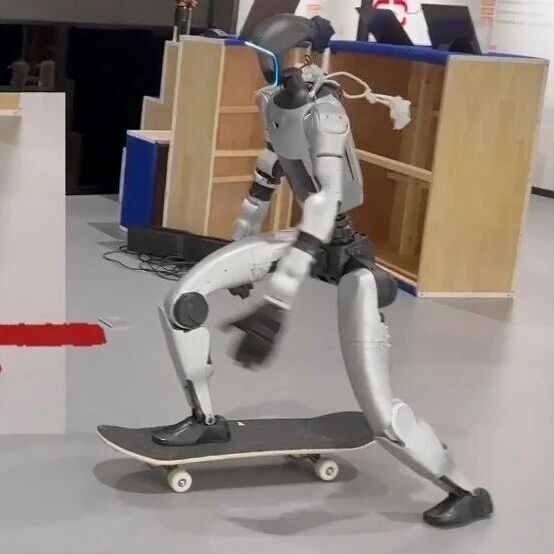
中国团队新突破!HUSKY框架让人形机器人成了“滑板高手”!
机器人大讲堂· 2026-03-14 05:48
Core Viewpoint - The article discusses the development of the HUSKY physical perception full-body control framework, which enables humanoid robots to effectively control skateboards, demonstrating advanced dynamic control capabilities in various environments [1][3]. Group 1: Technical Challenges - Controlling a humanoid robot on a skateboard involves complex dynamic control, as the skateboard is an underactuated wheeled platform subject to nonlinear dynamics [3][5]. - Traditional trajectory planning methods are inadequate due to the complex motion characteristics of skateboards, making real-time control challenging [5][8]. Group 2: HUSKY Framework Development - The HUSKY framework begins by analyzing the physical properties of the skateboard, establishing a foundational physical model that informs all subsequent control strategies [7][11]. - The framework incorporates adversarial motion prior (AMP) technology, allowing the robot to learn from human skateboarding data, significantly improving its performance [9][10]. Group 3: Control Strategies - The framework employs a physical-guided steering strategy, where the robot uses body tilt to control the skateboard's direction, enhancing precision and reducing effort [11][13]. - A trajectory-guided transition mechanism is designed to facilitate smooth transitions between pushing and steering phases, addressing a common stability issue in robotic skateboarding [16][19]. Group 4: Real-World Application - The HUSKY framework successfully bridges the gap between simulation and real-world application by accurately identifying skateboard physical parameters and employing domain randomization during training [20][22]. - In real-world tests, the robot demonstrated stable operation at a control frequency of 50Hz, effectively adapting to various surfaces and maintaining balance under external disturbances [23][24]. Group 5: Future Implications - The HUSKY framework not only enhances humanoid robot capabilities in skateboarding but also provides a reusable approach for solving complex control problems in dynamic environments [24]. - Future developments may include integrating visual state estimation for closed-loop control and adapting to more complex terrains, further improving the robot's adaptability [24][25].
K-Scale Labs前COO徐睿反思!烧光融资后才看清人形机器人六大致命陷阱!
机器人大讲堂· 2026-03-14 05:48
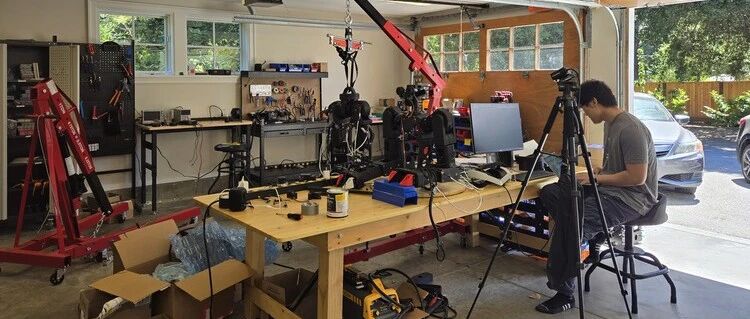
Core Insights - K-Scale Labs, a humanoid robot startup based in San Francisco, faced a failed Series A funding round, leading to team dissolution and the decision to open-source all intellectual property [1][26]. Group 1: Industry Challenges - The humanoid robot industry is plagued by a widespread misconception that powerful AI models can compensate for hardware deficiencies, leading to dangerous compromises in safety and design [4][5]. - A significant issue is the belief that hardware will eventually become standardized like consumer electronics, which overlooks the unique complexities and customization required in humanoid robot development [14][15]. Group 2: Funding and Business Strategy - Many startups in the robotics sector use appealing analogies, such as comparing humanoid robots to Tesla or iPhones, to attract venture capital, but these comparisons often fail to address the fundamental technical challenges [8][10]. - K-Scale Labs initially believed in a development path similar to that of the Segway, but the complexities of humanoid robot execution mechanisms proved to be vastly different [10][11]. Group 3: Supply Chain and Manufacturing - Establishing a robust supply chain for hardware is far more complex than merely finding a translator to communicate with manufacturers, requiring deep relationships and understanding of manufacturing processes [11][13]. - The lack of a standardized parts list in the humanoid robot industry means that companies must engage in extensive custom hardware development, which is often underestimated [14][15]. Group 4: R&D and Decision-Making - Poor research and development decisions can be more detrimental than bad luck, as seen in K-Scale Labs' misjudgment regarding the feasibility of bipedal walking technology [16][18]. - The pressure to meet unrealistic deadlines led to shortcuts in the development process, ultimately resulting in product failures and a loss of trust with manufacturing partners [18][20]. Group 5: Lessons Learned - The experience of K-Scale Labs highlights the importance of respecting hardware development challenges and the need for a solid foundation in engineering principles, rather than relying solely on AI advancements [21][22]. - The company’s journey serves as a cautionary tale for young engineers in the robotics field to trust their instincts regarding hardware limitations and to prioritize thorough engineering practices over rapid deployment [21][22].
星宸科技:内生、外延齐发力,业绩释放前景可期-20260314
Huajin Securities· 2026-03-14 04:25
Investment Rating - The investment rating for the company is "Buy" (maintained) [4] Core Insights - The company reported a total operating revenue of 2.972 billion yuan for 2025, representing a year-on-year growth of 26.28%, and a net profit attributable to shareholders of 308 million yuan, up 20.33% year-on-year [2][7] - The company is a global leader in visual AI SoC design and supply, with its main revenue segments being intelligent security, smart IoT, and intelligent automotive, contributing 65%, 22%, and 11% to revenue respectively [2] - The company has made strategic investments in three projects focusing on core areas such as 3D perception and low-light imaging, which are expected to enhance its market position [2] - The company achieved a historical high in quarterly revenue of approximately 806 million yuan in Q4 2025, with a year-on-year growth of about 49.01% and a net profit of approximately 106 million yuan, marking a year-on-year increase of about 76.91% [2] Financial Performance Summary - For the fiscal year 2025, the company achieved a total revenue of 2.972 billion yuan, with a profit margin of approximately 34.16% [2][8] - The projected revenue for 2026 is adjusted to 3.998 billion yuan, with a net profit forecast of 614 million yuan, reflecting a significant increase from previous estimates [7] - The company is expected to maintain a gross margin of around 36.4% in 2026, with a net profit margin of 15.3% [8]
理想汽车2025年营收破千亿,连续三年盈利,李想:2026年实现超20%增长
Hua Xia Shi Bao· 2026-03-14 02:17
Core Viewpoint - Li Auto aims to achieve over 20% growth in 2026, following a successful 2025 where it maintained industry-leading revenue and profitability, marking three consecutive years of over 100 billion yuan in revenue [1][2][3] Financial Performance - In 2025, Li Auto's total revenue reached 112.3 billion yuan, with Q4 revenue at 28.8 billion yuan, reflecting a quarter-on-quarter growth of 5.2% [1][3] - The company delivered 406,343 vehicles in 2025, with Q4 deliveries at 109,000 units, showing a quarter-on-quarter increase of 17.1% [1][3] - Li Auto reported a net profit of 1.1 billion yuan for 2025, making it the only new force car company in China to achieve over 100 billion yuan in revenue and profitability for three consecutive years [3][4] Cash Reserves and R&D Investment - By the end of 2025, Li Auto's cash reserves stood at 101.2 billion yuan, the highest among Chinese electric vehicle companies, providing a solid foundation for long-term investments in technology and innovation [3][4] - The total R&D investment for 2025 reached 11.3 billion yuan, with an average monthly expenditure of nearly 1 billion yuan, and Q4 R&D spending at 3 billion yuan [3][4] Technological Advancements - Li Auto's R&D focus in 2025 included a 50% allocation towards AI-related investments, with significant progress in self-developed chips, foundational models, and full-line control chassis technologies [3][4][5] - The self-developed chip, Mahe 100, is set to begin mass production in Q2 2026, designed for AI inference calculations with lower power consumption [5][6] - The company completed the development of the world's first "complete" fully controlled chassis, marking a significant evolution in chassis technology [6] Market Position and Future Outlook - Li Auto has established over 4,000 self-built supercharging stations and 539 direct sales stores by the end of 2025, creating a robust infrastructure for future product launches and market growth [4][5] - The launch of the Li MEGA and two new pure electric SUVs, the Li i8 and Li i6, has positioned the company for a new growth phase driven by both range-extended and pure electric vehicles [4][5] - Analysts suggest that with strong financials, a solid infrastructure, and upcoming product releases, Li Auto is well-positioned to strengthen its position in the high-end electric vehicle market [7]
