可持续发展

Search documents
线上线下多维联动,宜家中国以创新实践引领可持续生活
Cai Jing Wang· 2025-12-29 12:18
Core Insights - Sustainability is no longer just a keyword in corporate strategy but a tangible expectation from consumers, with IKEA China actively investing in and innovating sustainable practices to integrate sustainability into everyday life [1][2] Group 1: Brand Positioning and Commitment - IKEA China launched a new brand positioning "Home Gives More to Life," embedding environmental concepts deeply into product development, store operations, and customer interactions, transforming ecological responsibility into perceivable green value for consumers [2] - The company was recognized as "Annual Sustainable Development Green Enterprise" in the 2025 New Consumption and New Economy Awards, reflecting its clear strategy in promoting sustainability in China [2] Group 2: Consumer Engagement and Experience - IKEA believes that sustainable development requires collective participation from society, launching a multi-dimensional experience that translates environmental concepts into actionable consumer choices [3] - The "Listening to the Earth" digital interactive experience encourages consumers to engage with sustainability stories behind products, promoting choices that reduce waste and enhance health [3] Group 3: Collaboration with Environmental Organizations - IKEA has deepened strategic partnerships with global environmental organizations, such as the World Wildlife Fund (WWF), to expand responsible forest management in China, with 97% of the wood used by IKEA sourced from FSC-certified forests or recycled materials by the end of the 2024 fiscal year [4] - The company organized knowledge-sharing activities in collaboration with FSC to educate the public on forest protection and sustainable practices [4] Group 4: Commitment to Circular Economy - IKEA announced a partnership with the Ministry of Ecology and Environment to support endangered species protection, donating €1 for each specified plush toy sold to fund conservation efforts [5] - The company aims to become a circular business, investing in recycling and sustainable materials, such as using at least 60% recycled polypropylene in certain products [6][7] Group 5: Sustainable Operations and Services - IKEA China will launch a "Buy Back and Resale Service" covering approximately 1,700 products and a digital circular marketplace by March 2025, enhancing convenience in sustainable services [7] - The company has implemented zero-emission delivery solutions in 17 cities, achieving 100% electric vehicle delivery for the last mile by May 2025 [7]
福恩股份深交所IPO提交注册 已成为国内服装用再生面料的龙头企业
智通财经网· 2025-12-29 11:09
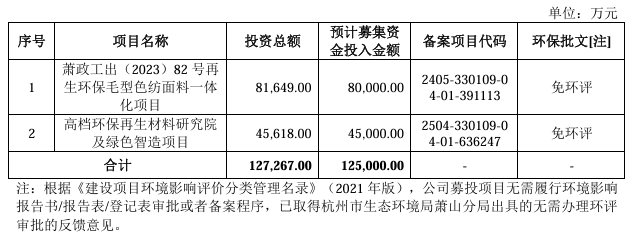
Core Viewpoint - Fuen Co., Ltd. has applied for IPO review status change to "submitted for registration" on the Shenzhen Stock Exchange, aiming to raise 1.25 billion yuan for sustainable development projects in the eco-friendly fabric sector [1]. Group 1: Company Overview - Fuen Co., Ltd. was established in January 1997 and focuses on sustainable development as a global supplier of eco-friendly fabrics, integrating design, research, spinning, weaving, dyeing, finishing, and sales [1]. - The company is a leading domestic producer of recycled fabrics, primarily using a self-production model supplemented by outsourcing [1]. - Fuen Co. operates under an "order-based production" model to meet diverse customer needs effectively, with production bases in Hangzhou, Nantong, and Vietnam [1]. Group 2: Client Relationships - Fuen Co. serves major domestic and international clothing brands, including H&M, Uniqlo, GU, ZARA, and others, holding significant positions in their supply chains [2]. - The company is recognized as the largest supplier of recycled blended fabrics for H&M and Uniqlo, receiving accolades such as the Gold Supplier Award from H&M [2]. Group 3: Fundraising and Financial Performance - The IPO proceeds will be allocated to projects including the development of recycled eco-friendly fabrics and a high-end recycled materials research institute, with total investments planned at approximately 1.27 billion yuan [3]. - Fuen Co. has shown stable financial performance, with revenues of 1.764 billion yuan in 2022, projected to be 1.517 billion yuan in 2023, and 1.813 billion yuan in 2024 [3]. - The net profit for the same years is reported as 277 million yuan, 229 million yuan, and 275 million yuan respectively, indicating a consistent profitability trend [3]. Group 4: Financial Metrics - As of December 31, 2022, total assets were approximately 1.334 billion yuan, with equity attributable to shareholders at around 547 million yuan [4]. - The company's asset-liability ratio has improved from 61.04% in 2022 to 42.26% in 2025, reflecting better financial health [4]. - The basic earnings per share were reported at 1.31 yuan for 2023, with a projected increase to 0.60 yuan for the first half of 2025 [4].

爱科科技:公司始终将可持续发展与长期投资价值置于首位
Zheng Quan Ri Bao Wang· 2025-12-29 10:40
Core Viewpoint - The company emphasizes sustainable development and long-term investment value, focusing on enhancing intrinsic value to drive long-term growth [1] Industry Trends - The non-metal intelligent cutting industry is integrating deeply with AI, IoT, and big data, evolving from general-purpose equipment to integrated solutions and collaborative production lines [1] - This industry is penetrating into sectors such as renewable energy, aerospace, and low-altitude economy, showing a long-term positive growth trend [1] Market Value Management - The company has systematically studied the CSRC's guidelines on market value management and aims to enhance operational quality as a foundation for growth [1] - It plans to explore suitable tools and methods for market value management while ensuring compliance with laws and regulations [1] - The company is committed to improving governance structures, strengthening information disclosure, and implementing stable dividend policies to protect shareholder rights [1] Future Outlook - The company will adhere to its core business, continuously enhance its core competitiveness and profitability, and aim for sustainable high-quality growth to reward investors [1]

2025年443家银行注销,村镇银行占比超六成!专家:行业整体抗风险能力将显著提升
Jin Rong Jie· 2025-12-29 10:20
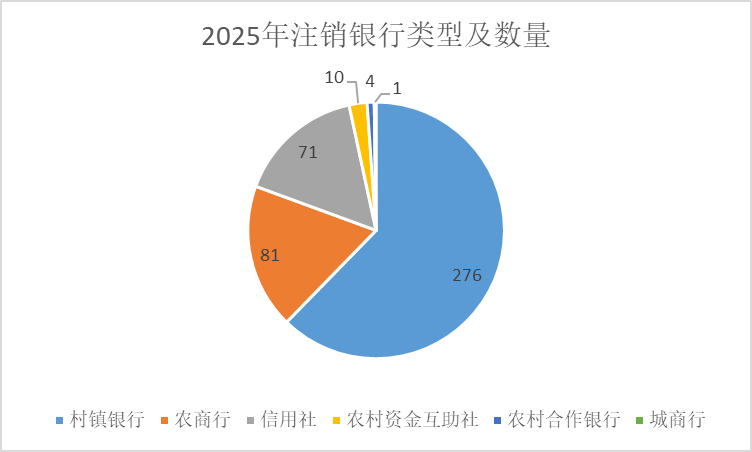
Core Insights - The Chinese banking sector is undergoing a significant exit and consolidation process, with 443 banking institutions deregistered by December 29, 2025, primarily involving rural banks, rural commercial banks, and credit cooperatives [1][2]. Group 1: Exit Characteristics - The exit process is characterized by three structural features: - Village banks are the main contributors, with 276 banks exiting, accounting for 62.3% of total exits [2]. - Rural commercial banks and credit cooperatives follow, with 81 and 71 exits respectively, together making up about 34.3% of the total [2]. - Other institutions, including rural mutual aid societies and city commercial banks, also contributed to the exit landscape [2]. Group 2: Regional Distribution - The exit of banking institutions shows a highly concentrated regional distribution: - Inner Mongolia leads with 140 exits, representing 31.6% of the national total [4]. - Shandong follows with 34 exits, while Sichuan, Hubei, and Henan each have 27 exits, indicating a regional focus in this adjustment [4]. - All 29 provincial-level administrative regions have seen banking institutions exit, highlighting the widespread nature of this industry adjustment [4]. Group 3: Timing of Exits - The exit process is not evenly distributed throughout the year, with a noticeable acceleration in the second half: - May marked the peak month with 130 exits, aligning with reform initiatives in Inner Mongolia [5]. - November and December also saw significant exits, with 64 and 54 respectively, while April recorded the lowest with only 3 exits [5][6]. - Overall, the number of exits in the second half of the year surpassed that of the first half, closely linked to regulatory guidance and regional reform progress [5]. Group 4: Underlying Logic of Consolidation - The concentration of exits is seen as a necessary outcome of the Chinese banking sector's development, focusing on risk management and sustainable growth: - The primary goal of mergers and acquisitions is to address risk management and ensure sustainable development, particularly for small and medium-sized banks facing profitability pressures [7]. - Issues such as fragmented ownership and inadequate corporate governance in rural financial institutions have led to increased risk, necessitating consolidation to improve operational quality [7]. - The consolidation process aims not only to reduce the number of institutions but also to enhance the quality of banking services, fostering a transition towards high-quality development in the sector [7][8]. Group 5: Future Outlook - The future trajectory for village banks indicates a trend towards "reducing quantity while increasing speed": - Currently, there are approximately 1,500 village banks, with expectations that this number will decrease to around 1,000 in the next three to five years, focusing on establishing a robust and specialized banking sector [8]. - The ongoing consolidation reflects the improvement of market exit mechanisms, enhancing the overall resilience and operational efficiency of the banking industry [8].
从“水疗数据中心”到“太空服务器”:能源危机正在重构云计算产业
Hua Er Jie Jian Wen· 2025-12-29 10:18
Core Insights - The explosive growth of AI workloads is challenging traditional digital infrastructure, necessitating a rethinking of data center designs to address energy and physical limits [1] - The industry is approaching a "critical point" where existing data center architectures will no longer suffice, prompting tech giants and infrastructure developers to seek "plug-and-play" solutions to alleviate grid pressure and meet sustainability goals [1][2] Ground Infrastructure Reconstruction - Traditional data centers are failing to effectively support AI workloads and meet sustainability requirements, with only 46% of IT decision-makers believing their current designs can achieve sustainability goals [3] - Lenovo, in collaboration with architectural firm Mamou-Mani and engineering company AKT II, proposed radical design concepts such as "data villages" and "data center spas" to utilize excess heat for community benefits [3][4] - Existing practices of heat reuse have been implemented, such as Equinix using waste heat for the Paris Olympics swimming pool and Microsoft deploying underwater data centers for cooling [4] Space-Based Initiatives - The competition to deploy servers in orbit is intensifying, with projects like Google's "Suncatcher," Alibaba's "Three-Body Computing Constellation," and Nvidia-supported Starcloud exploring the potential of space environments [5] - Starcloud has already sent a chip into space, achieving performance 100 times greater than previous on-orbit GPU capabilities, highlighting the appeal of vacuum cooling and continuous solar energy in space data centers [5] Challenges and Barriers - The commercial viability of near-Earth data center deployment remains uncertain due to high launch costs, radiation protection requirements, and maintenance difficulties [6] - Regulatory barriers and cost considerations are significant challenges for both ground innovations and space initiatives, with the U.S. having a more favorable regulatory environment compared to Europe [7] - The need for regulatory adjustments to keep pace with technological innovations is critical, as simply renovating old facilities may not be effective [7]

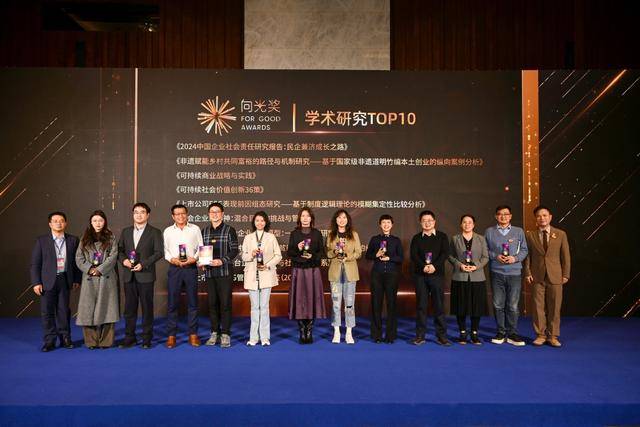
探求构建中国可持续发展的学术表达,我院再获“向光奖年度学术研究TOP10”
Sou Hu Cai Jing· 2025-12-29 10:12
在对胖东来的实地调研中,研究团队注意到,其商业模式与成熟零售企业类似,但真正的核心竞争力在 于"信任与人本"的价值文化:企业给予员工稳定且有竞争力的收入以及充足的休假时间,将"以人为 本"嵌入组织运行;产品与服务风险事件发生时,主动担责、快速赔付并严肃追责,重建消费者信任; 提出"取消高额彩礼、倡导朴素婚俗"等公共倡议参与社会议题讨论,组织影响力已超越经营层面,延展 至社会价值塑造。这一案例表明,价值文化可以转化为可衡量的经济回报与组织生命力。如何识别并放 大这类中国经验在全球可持续发展语境中的声量,是研究院持续关注和深入研究的重要方向。 2025向光行动者大会以"问道新经济·重塑新增长"为主题,围绕可持续商业的新趋势、新逻辑与新实践 展开讨论。从大会传递的核心观点与讨论焦点可以看到,企业社会责任与可持续发展议题正进一步回应 制度与实践层面的问题:在经济增长承压、技术快速演进的背景下,如何重新理解企业的责任边界,如 何通过制度创新、技术赋能与生态共创,让社会价值不再停留于"附加项",成为支撑企业长期竞争力与 新增长模式的重要组成。 作为中国商业向善领域具有重要影响力的年度奖项,向光奖自2017年首届发起以来, ...
全球布局与创新能力获认可 海尔智家获金骏马最具全球影响力企业奖
Zheng Quan Ri Bao· 2025-12-29 08:39
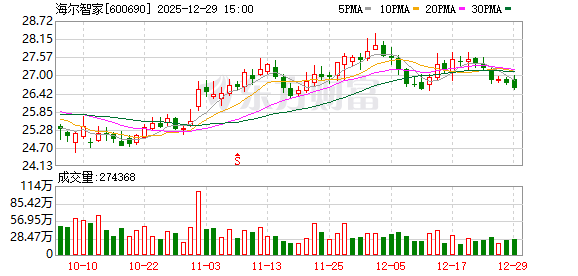
Core Viewpoint - Haier Smart Home was awarded the "2025 Most Globally Influential Enterprise Award" at the "2025 Securities Market Annual Conference" for its contributions to the stable operation and high-quality development of the capital market [2] Group 1: Company Achievements - Haier Smart Home has established a "three-in-one" operational system covering localized research, manufacturing, and marketing, with operations in over 100 countries and regions, 24 industrial parks, 5 R&D centers, and 66 trading companies [2] - The company has maintained its position as the world's largest home appliance brand in retail volume for 16 consecutive years, with its refrigerator and washing machine brands ranking first globally for 17 and 16 years respectively [2] - In 2024, Haier Smart Home's revenue in the Indian market surpassed $1 billion for the first time, marking a year-on-year growth of over 30% [3] Group 2: Technological Innovation - Haier Smart Home holds 23,334 patents in the smart home sector, ranking first in the industry, and has invested over 10 billion yuan in R&D in 2024, focusing on cutting-edge areas such as home service robots and low-power chips [4] - The company has received national recognition for several core technologies, including full-space preservation technology and bottom-placed constant temperature refrigeration technology, which have significantly improved user experience and energy efficiency [4] Group 3: Brand Development - Haier Smart Home has developed a global brand matrix covering various market segments, including Haier, Casarte, Leader, GE Appliances, Candy, Fisher&Paykel, and AQUA, with Casarte maintaining industry leadership for nine consecutive years [4] - In 2024, Casarte's retail revenue grew by 12% year-on-year, while Leader brand's retail revenue increased by 26%, indicating a continuous optimization of brand structure [4] Group 4: Digital Transformation and Sustainability - The company has implemented a digital transformation strategy centered around the "Three Wings Bird" platform, providing over 600 million smart living services monthly to 540,000 families in China [5] - Haier Smart Home emphasizes green and low-carbon practices, with over 90% of its products achieving first-level energy efficiency, contributing to global energy conservation and sustainable development [5] Group 5: Future Outlook - The company aims to embrace AI technology and deepen its focus on the smart living sector, aspiring to become a world-class smart living ecosystem enterprise with exceptional efficiency and experience [5]

加强合作,推动构建韧性地球
Ren Min Ri Bao· 2025-12-29 07:54
Group 1 - The seventh United Nations Environment Assembly concluded in Nairobi, Kenya, focusing on sustainable solutions for building a resilient planet, with nearly 6,000 representatives discussing global environmental governance and sustainable actions [1] - A ministerial declaration was adopted, along with the "2026-2029 Midterm Strategy," addressing key areas such as climate action, biodiversity conservation, land and desertification management, and pollution and waste management [1] - The latest "Global Environment Outlook" report highlighted that land degradation affects over 3 billion people globally, with annual losses of productive land equivalent to the size of Colombia or Ethiopia [1][2] Group 2 - The report projected a 3.4% reduction in global per capita food supply by 2050, with air pollution and plastic waste causing trillions of dollars in economic losses annually [1][2] - Discussions on the "Kunming-Montreal Global Biodiversity Framework" revealed that developing countries face a funding gap of billions of dollars annually to achieve the "30x30" target of protecting 30% of land and marine areas by 2030 [2] - The assembly called for concrete actions to address existing funding gaps and increase overall investment in global ocean protection [2] Group 3 - Kenya's Minister of Environment, Climate Change, and Forestry emphasized the country's commitment to the 2030 Sustainable Development Agenda and the promotion of circular economy solutions [3] - Brazil's Secretary of State for Environment and Climate Change highlighted the importance of cooperation among Global South countries to address pollution and ecological degradation [3] - A side event organized by China's Ministry of Ecology and Environment presented a report on ecological modernization, sharing China's approach to climate change [4] Group 4 - The assembly underscored the urgency of addressing climate change, biodiversity loss, and environmental pollution, with collaborative action being the only viable choice for humanity [4] - China's Vice Minister of Ecology and Environment noted significant achievements in air quality improvement and energy transition, reflecting the country's commitment to climate action [4] - The assembly's vice-chair emphasized the need for long-term sustainable solutions to ensure genuine green transformation [4]
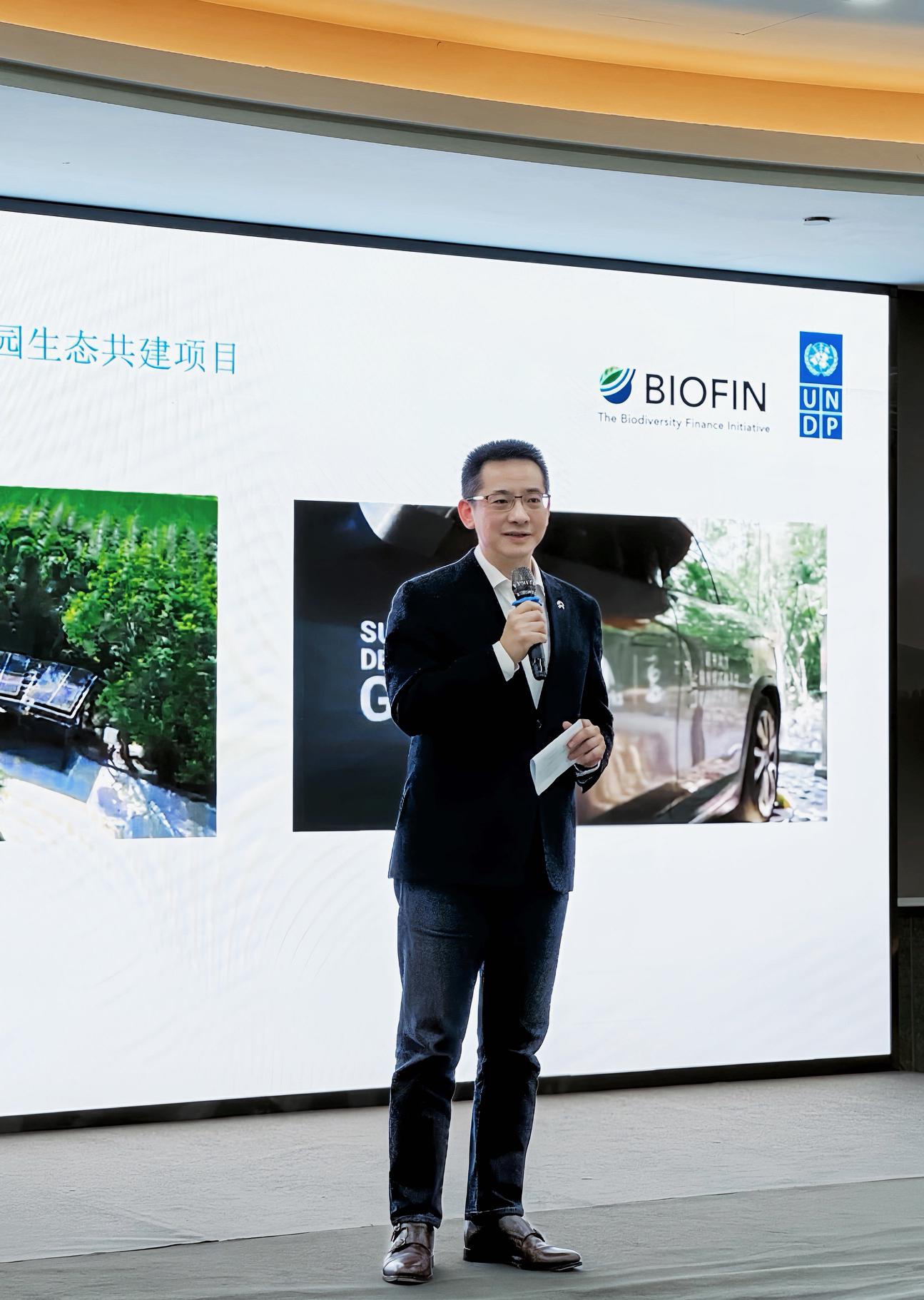
蔚来出席联合国开发计划署年度研讨会 秦力洪发表主旨报告
Zhong Guo Zhi Liang Xin Wen Wang· 2025-12-29 07:51
12月20日-21日,联合国开发计划署生物多样性金融倡议(UNDP BIOFIN)在北京举办年度研讨会,蔚来作为车企参加,联合创始人、总裁秦力洪在会上发 表主旨报告并参加圆桌讨论。 蔚来一直致力于与合作伙伴共同探索系列环保材料合集-- Clean+材料,包括可再生、可循环、用户健康保护等更低碳的环境友好材料。例如ET5车型所应用 的Clean+环保织物面料,原材料100%采用PET材料,减少环境污染;在ET5车型应用的Clean+聚合材料融合了天然矿物和植物纤维,与常规材料相比,生产 过程碳排放减少30%以上。 三、蔚来先进制造工厂可持续探索成果 蔚来从2017年就开始在工厂探索以地源热泵的方式保持车间恒温,同时充分利用光伏与绿电。目前蔚来先进制造合肥一工厂和蔚来先进制造新桥二工厂可再 生能源利用率占总耗电量50%以上。蔚来先进制造新桥二工厂在设计阶段就采用海绵城市理念,运用多种技术保障措施,充分开发雨水资源系统,实现可持 续水循环利用,还能防止雨季内涝。 四、供应链管理减碳实践 秦力洪介绍,蔚来以"Blue Sky Coming"为使命,从不认为气候与生物多样性是"后来附加的责任"。蔚来一直在探索实践从自身 ...

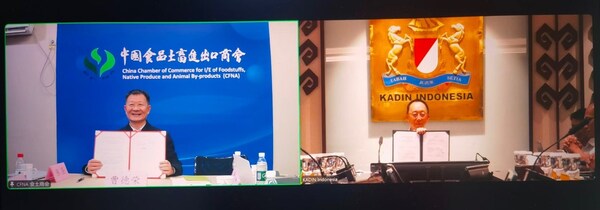
中国—印尼可持续棕榈油新里程碑 ----《中国印尼可持续棕榈油行业联合行动计划谅解备忘录暨双边对话机制》正式签署
Xiao Fei Ri Bao Wang· 2025-12-29 06:28
Core Insights - The signing of the "China-Indonesia Sustainable Palm Oil Industry Joint Action Plan Memorandum of Understanding and Bilateral Dialogue Mechanism" marks the establishment of the first industry cooperation platform focused on sustainable palm oil development between China and Indonesia [1][4]. Group 1: Industry Cooperation - The memorandum aims to enhance ecological protection and green trade cooperation between the two countries, aligning with the strategic consensus established in the 2023 joint statement on deepening comprehensive strategic cooperation [2]. - The cooperation platform will facilitate practical collaboration in five areas: certification standards, supply chain traceability and transparency, best practice exchange, policy and industry dialogue, and stakeholder collaboration [2]. Group 2: Economic and Environmental Goals - The initiative is seen as a key industry for deepening regional cooperation and achieving mutual benefits, emphasizing the importance of food security, reasonable profits, affordable prices, and sustainable development [2]. - The collaboration is expected to support the integration of Indonesia's Sustainable Palm Oil Certification (ISPO) with China's sustainable development policy standards [2]. Group 3: Stakeholder Involvement - The Indonesian Palm Oil Association (GAPKI) will support the implementation of the mechanism, while WWF teams from both countries will provide technical support and share international experiences [3]. - The dialogue mechanism is considered a milestone, building on previous efforts by partners like WWF and the China Sustainable Palm Oil Initiative (CSPOA) to connect sustainable practices between market and production ends [3].