
技术创新

Search documents
马栏山视频文创产业园 推动文化与科技融合,激荡文化产业新浪潮
Ren Min Ri Bao· 2025-12-25 22:18
Core Insights - The Hunan Province Malanshan Video Cultural and Creative Industry Park has expanded to 208 enterprises, with 174 high-tech companies, and has achieved a cumulative revenue of 277.1 billion yuan and tax revenue of 14.815 billion yuan from 2020 to 2024, earning the title of a national cultural industry demonstration park [1] Group 1: Content Innovation - Malanshan emphasizes content-first strategies, transforming the expression of Chinese stories through high-quality productions that resonate with audiences, such as the documentary "Guarding Liberation West" and the show "Sisters Who Make Waves" [2] - The park is focused on promoting Chinese stories globally, with the Mango TV international app covering 195 countries and regions, and significant international viewership for shows like "Singer 2024" [2] Group 2: Technological Innovation - Malanshan positions technological innovation as a key driver, creating a leading "cloud-network-computing" integrated public service platform with over 155PB of storage and 243P of dispatchable computing power [3] - The park is addressing industry challenges by launching the "Malanshan Micro-Short Drama Intelligent Service Platform" by October 2025, which integrates AI capabilities to streamline production processes for over 2,500 works [3] - The Malanshan audio-visual laboratory is focused on deep technological innovation, with over 150 patent applications and the development of a micro set-top box supporting 4K format and dual Vivid standard decoding [3] Group 3: Ecological Development - The park fosters a vibrant ecosystem that supports both large enterprises and small teams, exemplified by the "Maji Plan" incubation center, which provides comprehensive support including a 100 million yuan special fund [5] - Over 4,800 new enterprises have been registered in the park, with more than 100 leading companies like Huawei and NetEase joining, creating a thriving "rainforest ecosystem" [5] - The park has attracted 64,000 industry talents and established a network of copyright service centers to support innovation and development [5]
华润置地携手鑫盛基立城市高品质新范例
Huan Qiu Wang· 2025-12-25 10:17
Core Viewpoint - The Quanzhou Yuefu project, developed by China Resources Land and constructed by Xinsengji Construction Group, exemplifies innovative safety management and high-quality construction standards in the region's building industry, particularly for fourth-generation ecological residences [1][6]. Group 1: Project Overview - The Quanzhou Yuefu project features five fourth-generation ecological residences, designed with unique elements such as "every household has a garden, and every floor has a courtyard," presenting significant construction challenges [1]. - The project has established itself as a safety model site for China Resources Land, implementing a dual approach of "four managements and technology empowerment" to embed safety concepts throughout the construction cycle [1]. Group 2: Safety Management - The project identified 28 core risk points across six categories, including high formwork instability and cantilever structure deformation, and established a dynamic risk list for graded prevention [1][6]. - A specialized task force was formed to address construction challenges, ensuring proactive risk management and safety measures [1]. Group 3: Technological Innovation - The project team utilized BIM technology to create a detailed support system model, allowing for precise calculations of load-bearing conditions at critical points [3]. - The use of a plug-in type steel pipe scaffold significantly enhanced the stability and safety of the support system during high formwork construction [3]. Group 4: Management Practices - The project implemented a "Construction Order" system and adhered to a grid management framework, establishing a three-tier management network among construction units, supervisors, and general contractors [3]. - Standardized construction practices were enforced through a "sample-driven" approach, ensuring that on-site construction adhered to established standards [3]. Group 5: Health and Safety Initiatives - A safety experience center and safety culture corridor were established on-site, along with daily safety equipment training sessions for workers [4]. - The project has developed a comprehensive occupational health and safety system, including health records for workers and a full chain of prevention, monitoring, and intervention [4]. Group 6: Achievements and Future Plans - The project has achieved zero accidents in construction safety and has been recognized as a learning model for similar projects in the region [6]. - Xinsengji Construction Group plans to continue collaborating with China Resources Land to further integrate intelligent construction and meticulous management, aiming to set a benchmark for urban living in Quanzhou [6].


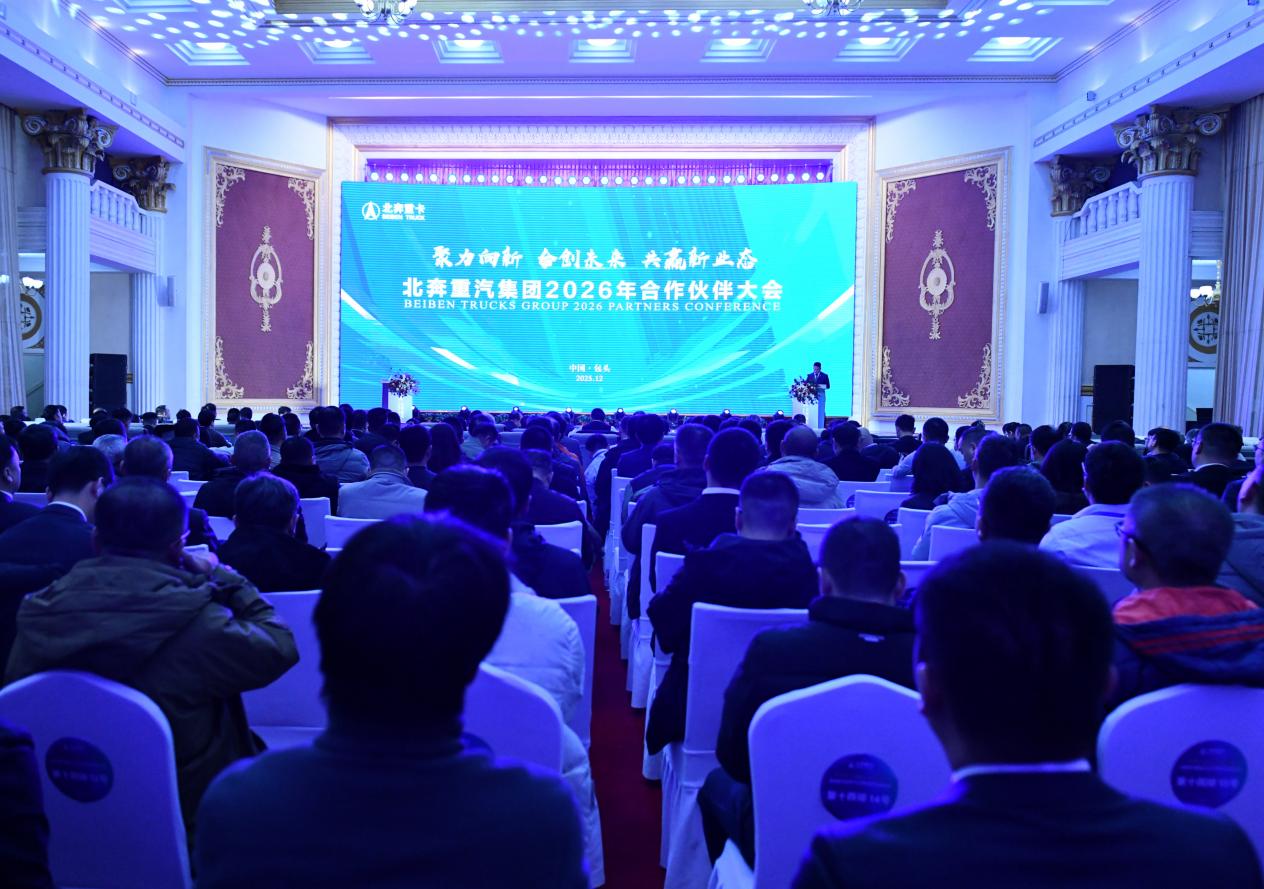
脚踏实地、聚力向新 北奔重汽集团召开2026合作伙伴大会
Zhong Guo Qi Che Bao Wang· 2025-12-25 10:10
Core Insights - The annual partner conference held by Beiben Truck in Baotou, Inner Mongolia, focused on reviewing achievements in 2025 and outlining strategic plans for 2026, emphasizing themes of collaboration and innovation in new business models [1] Group 1: 2025 Achievements - 2025 is identified as a critical year for the heavy truck industry in China, marking a significant phase for Beiben Truck's high-quality development amidst market competition and energy structure changes [3] - Beiben Truck has achieved steady market sales growth, particularly excelling in the new energy sector, becoming a key player in the new energy heavy truck market after launching the "Super Charging Alliance 2.0" products [3] - The company has introduced innovative products and technology, receiving recognition for its scene-based solutions, including the award-winning "Annual Intelligent Innovation Model" for its supercharging heavy truck equipped with Huawei's megawatt-level supercharging system [3] Group 2: Industry Collaboration - The conference highlighted strong recognition from supply chain representatives, who acknowledged Beiben Truck's commitment to the dual carbon goals and its role as a leader in the green revolution [4] - Dealers emphasized the long-term partnership with Beiben Truck since 2010, noting the continuous empowerment in product quality, service support, and scene development, particularly with the new energy vehicles launched in 2025 [4] Group 3: 2026 Strategic Goals - Beiben Truck's General Manager Liu Xiaodong outlined the development goals for 2026, focusing on upgrading the "V5 series" and creating a scene-based product matrix, with plans to launch 16 main sales models [5] - The company aims to achieve a weight reduction of over 300 kg through lightweight structures and new materials, enhancing vehicle range and economic efficiency, targeting logistics, mining, and port transportation scenarios [5] - Plans for channel development include establishing a network of "hundred dealers" to strengthen end-user support and expanding local operations in overseas markets [5] Group 4: Future Directions - The Chairman of Beiben Truck, Mou Yuehui, emphasized the importance of creating a healthy and fair cooperation environment across the entire industry chain through strategic adjustments and internal reforms [7] - The company aims to lead the transformation of the heavy truck industry towards new energy, intelligence, and automation, enhancing the overall competitiveness of the supply chain and supporting dealer systems in market services [7]
光伏产业如何通过技术与整合走出低价困局
Zhong Guo Neng Yuan Wang· 2025-12-25 09:34
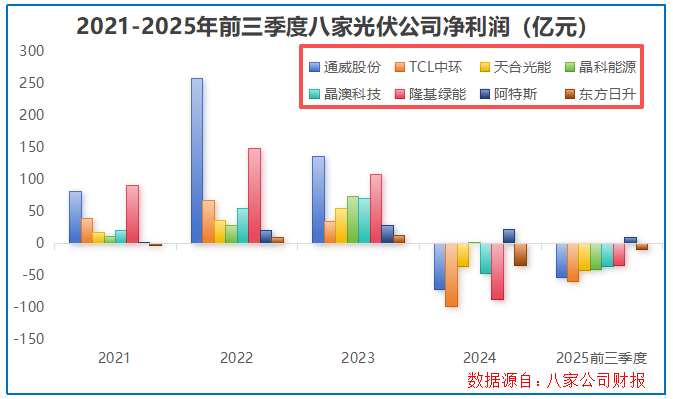
Core Insights - The photovoltaic industry is facing a severe oversupply and price decline due to excessive capacity expansion without corresponding demand growth [2][4] - Major companies in the industry have reported significant losses, with a total loss of 26.068 billion yuan in the first three quarters of 2025 [2] - The industry must shift from a focus on scale expansion to technological innovation to break free from the current predicament [4][32] Industry Overview - From 2021 to 2024, the photovoltaic industry has been in a race to expand production capacity, driven by carbon neutrality goals [1] - However, demand has not kept pace, leading to a decline in production across key segments, including polysilicon and silicon wafers, with polysilicon production down 29.6% year-on-year [2] - Prices for polysilicon have plummeted from over 300,000 yuan per ton in 2022 to 34,700 yuan per ton in mid-2025, a nearly 90% drop [2] Technological Innovation - The industry is at a crossroads where reliance on scale expansion is no longer viable, and technological innovation is essential for survival [4][32] - The transition from P-type to N-type solar cells represents a critical technological evolution, with N-type TOPCon technology becoming increasingly competitive [5][6] - Setting rigid efficiency standards for solar products is crucial to encourage innovation and eliminate low-quality competition [7][10] Policy and Regulation - The government is encouraged to implement policies that support high-efficiency solar components and set efficiency benchmarks for market entry [7][21] - The "three red lines" financial metrics, similar to those used in the real estate sector, could be applied to the photovoltaic industry to manage financial risks and prevent over-leverage [22][23] - Establishing a clear regulatory framework is deemed necessary to guide the industry towards sustainable development [20][32] Market Dynamics - The current market is characterized by a lack of unified efficiency data, leading to confusion and inconsistency in performance claims among companies [9] - The industry must focus on high-quality, high-efficiency products to move away from price-based competition and towards value-based competition [8][32] - Collaboration across the supply chain is essential to balance profitability and ensure sustainable operations for all stakeholders [14][17] Future Outlook - The photovoltaic industry is expected to evolve towards a model centered on technological innovation and quality improvement, moving away from the previous focus on scale and low prices [32] - Companies that prioritize innovation, manage risks effectively, and engage in ecosystem development are likely to emerge as leaders in the future [32]






中国正能量|手绘长图:指尖聚光,让奋进力量直抵人心
Huan Qiu Wang· 2025-12-25 09:21
Group 1 - The event "2025 China Positive Energy Network Boutique Exhibition" has been officially launched, focusing on the theme "You Strive, China Advances," aiming to collect and showcase impactful positive energy content [1] - The initiative encourages participation from diverse creators, transforming the network space into a vibrant platform for collective voices, as seen during the 15th National Games and the 13th World Games [2][4] - The positive energy content reflects the spirit of the times, showcasing significant achievements in technology and innovation, such as the DEEPSEEK AI model and advancements in quantum computing [6][9] Group 2 - The narrative of China's progress is illustrated through various real-life stories, including efficient logistics by delivery personnel and the global sales of agricultural products through cross-border e-commerce [8] - Technological innovations, such as the CR450 high-speed train achieving a record speed of 453 km/h, serve as emotional connections between content and audiences, enhancing engagement [10][11]

以技术韧性筑底 以开放创新赋能:梅赛德斯-奔驰与中国经济共赴“活力2026”
Mei Ri Jing Ji Xin Wen· 2025-12-25 09:05
Core Viewpoint - The article emphasizes the importance of resilience and innovation in China's economy by 2026, particularly highlighting the automotive industry as a key pillar undergoing transformation and value redefinition [1] Group 1: Mercedes-Benz's Strategic Focus - Mercedes-Benz is committed to long-term strategies, focusing on technological innovation, deep local collaboration, and sustainable practices to build future competitiveness [1][2] - The company aims to enhance its product offerings and services to meet the evolving demands of Chinese consumers, aligning with a more vibrant and sustainable economic ecosystem [2] Group 2: Technological Innovation and Green Transformation - The core of the industry transformation is driven by technological innovation and green transition, with Mercedes-Benz integrating electric technology and circular economy principles [4] - A new Robotaxi based on the S-Class will be launched in Abu Dhabi in 2026, showcasing advanced safety and comfort features, representing a collaboration between Mercedes-Benz and local partners [4][6] - The new all-electric CLA model features an 800-volt platform, achieving a range of 866 kilometers and an energy consumption of 10.9 kWh per 100 kilometers [4] Group 3: Sustainability Initiatives - Mercedes-Benz's commitment to sustainability is evident in its "2039 Vision," aligning with China's dual carbon goals, and achieving carbon neutrality in its Beijing plant [6][7] - The company has implemented a circular economy approach, recovering approximately 391 tons of scrapped batteries and increasing the use of recycled materials in new vehicles [7] - The Beijing plant has installed a 88.8 MW solar power system, meeting about 80% of its energy needs and reducing emissions by nearly 120,000 tons annually [6][7] Group 4: Local Collaboration and Investment - Mercedes-Benz has invested over 100 billion RMB in China over the past decade, with plans for an additional 14 billion RMB investment in 2024 [9][10] - The company collaborates with local tech firms like Momenta to develop tailored solutions for the Chinese market, exemplifying its strategy of "local innovation + global collaboration" [8][10] Group 5: Corporate Social Responsibility - Mercedes-Benz has invested over 360 million RMB in various social initiatives, including environmental protection and education, demonstrating its commitment to corporate social responsibility [11] - The company has supported over 260,000 children through its "Safe Childhood" project and has partnered with Tsinghua University to cultivate carbon-neutral talent [11] Group 6: Long-term Vision and Market Positioning - Mercedes-Benz's long-term approach is reflected in its product philosophy, focusing on customer needs rather than market trends, ensuring a balance between efficiency and luxury [12] - The integration of "Mercedes standards" with "Chinese speed" positions the company to resonate with the evolving economic landscape, driving towards a resilient and innovative future [12]

石化起运公司九江芳烃项目千吨级塔器吊装圆满完成
Zhong Guo Hua Gong Bao· 2025-12-25 01:45
Core Insights - The successful installation of the large equipment for the Sinopec Qiyun Company's Jiujiang Aromatics Project marks a significant milestone in the project's construction [1][2] - The project team utilized an innovative "river-sea combined transport + overall reverse transport + overall hoisting" model to enhance operational efficiency and safety [1] - The project emphasizes a management philosophy focused on safety, quality, and progress, ensuring seamless coordination across various stages of the project [1] Summary by Sections - **Project Milestone** - The completion of the first large equipment hoisting task is a crucial milestone for the Jiujiang Aromatics Project [2] - This achievement lays a solid foundation for subsequent construction phases [2] - **Technical Innovation** - The project team is committed to deepening technological innovation and lean management practices [2] - The aim is to achieve new heights in future construction efforts, creating high-quality projects that withstand the test of time [2] - **Operational Efficiency** - The use of a 4000-ton crawler crane and a 1000-ton tailing crane allowed for precise lifting and positioning of the nearly 100-meter tall separation tower [1] - The collaboration between the main hoisting and tailing systems overcame spatial limitations, achieving millimeter-level precision [1]
AI出海 民企彰显全球化竞争力
Bei Jing Qing Nian Bao· 2025-12-24 18:26
Core Viewpoint - Kunlun Wanwei has evolved from a domestic gaming company to a global leader in artificial intelligence, with significant overseas revenue and a strong user base, positioning itself as a benchmark for Chinese tech companies going global [1][4]. Group 1: Company Growth and Strategy - The company was founded with a global vision, starting from online game development and expanding into international markets early on [1][2]. - Kunlun Wanwei's flexible market strategy allows it to focus on rapidly growing markets without fixed revenue targets, adapting to industry changes effectively [2]. - The company has made strategic investments, such as acquiring Opera and launching successful products like StarMaker, which has over 310 million registered users [2][4]. Group 2: AI Development and Revenue - In 2025, Kunlun Wanwei achieved a total revenue of 5.8 billion yuan, a 52% year-on-year increase, with overseas revenue accounting for 93% [4]. - The company has established a comprehensive presence in the AI sector, with products like DramaWave generating significant revenue and Linky achieving over 20 million downloads [4][5]. - The AI music platform Mureka and the Opera browser also contribute to the company's strong market performance, with Opera being the fourth largest browser globally [4]. Group 3: Market Expansion and Compliance - Kunlun Wanwei emphasizes "technological innovation" and "proactive compliance" as key factors for success in international markets [5]. - The company invests heavily in technology and localizes its products to fit diverse cultural contexts in regions like India and Africa [5]. - A rigorous compliance approach ensures that the company secures necessary licenses before launching operations in new markets [5]. Group 4: Government Support - The rapid growth of Kunlun Wanwei is supported by various levels of government in Beijing, providing policy, talent, and funding advantages [6]. - The local government offers tailored services to address the company's needs and assists in obtaining operational licenses for AI products [6]. - Chinese embassies abroad also play a crucial role in facilitating business operations and ensuring the stability of overseas teams [6].

将湘超IP热度化为业绩动能 企业需四维创新
Zheng Quan Ri Bao· 2025-12-24 16:25
Core Insights - The 2025 Hunan Province Football League (湘超) has demonstrated strong regional sports IP appeal since its launch in September, driving a surge in cultural and tourism consumption, with core products from related companies continuing to sell well [1][2] Group 1: Concept Innovation - Companies need to move away from traditional marketing methods focused on "exposure at the venue" and instead explore the unique value of regional IP, integrating "sports + local culture + consumption" to create a differentiated competitive advantage [1] Group 2: Product Innovation - Simple "event-customized packaging" is insufficient; companies should infuse products with authentic Hunan characteristics, such as using local embroidery and dyeing techniques, and develop exclusive product categories that reflect Hunan's spicy flavor [1][2] Group 3: Marketing Innovation - Marketing efforts should aim to evoke deep emotional resonance, leveraging the regional emotional cohesion of 湘超. This can include performances that incorporate local cultural elements and campaigns that collect fan stories to create engaging marketing content [2] Group 4: Technological Innovation - Companies can utilize artificial intelligence for precise marketing and improved efficiency, analyzing fan consumption habits to offer targeted promotions and adjusting marketing strategies based on real-time factors like weather and game progress [2] Group 5: Long-term Value Creation - The popularity of 湘超 presents opportunities for companies to transform short-term excitement into long-term brand value by rooting their concepts in local culture, highlighting Hunan characteristics in products, conveying regional emotions in marketing, and leveraging smart technology [2]
禾元生物:公司重视技术创新与可持续发展
Zheng Quan Ri Bao Zhi Sheng· 2025-12-24 13:45
Core Viewpoint - The company emphasizes the importance of technological innovation and sustainable development in its operations [1] Group 1: Technological Innovation - The company plans to utilize AI technology to enhance innovation in drug development across various stages [1] Group 2: Sustainable Practices - The company's rice endosperm cell bioreactor is characterized as a plant-based manufacturing process, highlighting its environmentally friendly attributes [1]