
原盐

Search documents
瑞达期货烧碱产业日报-20260401
Rui Da Qi Huo· 2026-04-01 09:08
1. Report Industry Investment Rating - Not provided in the content 2. Core View of the Report - The average national caustic soda capacity utilization rate increased by 0.7% to 84.6% week - on - week; the downstream alumina开工率 increased by 0.10% to 82.58%, the viscose staple fiber开工率 increased by 0.39% to 89.36%, and the printing and dyeing开工率 remained stable at 52.57%. The national liquid caustic soda factory inventory increased by 4.93% to 52.54 tons, with production enterprises in North China actively accumulating inventory due to bullish expectations. The prices of caustic soda and liquid chlorine in Shandong increased, and the chlor - alkali profit increased to 323 yuan/ton. The increase in 50 - alkali exports boosted the spot market atmosphere, but due to the strong liquid chlorine price and the repair of chlor - alkali profit, there were few planned maintenance devices in April, and the improvement of domestic supply - demand was limited. The daily range of SH2605 is expected to be around 2200 - 2350 [2] 3. Summary According to Relevant Catalogs 3.1 Futures Market - The main closing price of caustic soda was 2250 yuan/ton, a decrease of 90 yuan; the futures holding volume was 201,115 hands, an increase of 11,137 hands; the net holding volume of the top 20 futures was 3,254 hands, an increase of 1,960 hands; the futures trading volume was 427,939 hands, an increase of 106,468 hands. The closing price of the January contract was 2,427 yuan/ton, a decrease of 97 yuan; the closing price of the May contract was 2,250 yuan/ton, a decrease of 90 yuan [2] 3.2 Spot Market - The price of 32% ion - membrane caustic soda in Shandong was 737 yuan/ton, unchanged; in Jiangsu, it was 890 yuan/ton, unchanged. The converted - to - 100% price of 32% caustic soda in Shandong was 2,303 yuan/ton, unchanged. The basis of caustic soda was - 37 yuan/ton, an increase of 10 yuan [2] 3.3 Upstream Situation - The mainstream price of raw salt in Shandong was 222.5 yuan/ton, unchanged; in the Northwest, it was 215 yuan/ton, a decrease of 5 yuan. The price of steam coal was 644 yuan/ton, unchanged [2] 3.4 Industry Situation - The mainstream price of liquid chlorine in Shandong was 200 yuan/ton, a decrease of 100 yuan; in Jiangsu, it was 275 yuan/ton, a decrease of 25 yuan [2] 3.5 Downstream Situation - The spot price of viscose staple fiber was 13,180 yuan/ton, unchanged; the spot price of alumina was 2,770 yuan/ton, unchanged [2] 3.6 Industry News - From March 20th to March 26th, the average capacity utilization rate of Chinese caustic soda sample enterprises with a capacity of 100,000 tons and above was 84.6%, a week - on - week increase of 0.7%. From March 21st to 27th, the alumina开工率 increased by 0.10% to 82.58%; from March 20th to 26th, the viscose staple fiber开工率 increased by 0.39% to 89.36%, and the printing and dyeing开工率 remained stable at 52.57%. As of March 26th, the factory inventory of fixed liquid caustic soda sample enterprises with a capacity of 200,000 tons and above was 525,400 tons (wet tons), a week - on - week increase of 4.93% and a year - on - year increase of 14.28%. The SH2605 contract fell 4.13% to close at 2,250 yuan/ton. Market expectations are that the geopolitical situation in the Middle East will ease. The average weekly profit of chlor - alkali in Shandong from March 20th to March 26th was 323 yuan/ton [2]
鲁北化工(600727) - 鲁北化工2025年度主要经营数据公告
2026-03-30 11:44
股票代码:600727 股票简称:鲁北化工 公告编号:2026-012 1 主要产品 2025 年度 产量(吨) 2025 年度 销量(吨) 2025 年度 销售收入(元) 钛白粉 258,047.98 260,709.80 3,129,634,273.96 甲烷氯化物 434,059.55 392,232.86 695,188,617.37 原盐 598,641.45 550,408.67 108,629,016.85 溴素 3,245.02 3,117.08 73,812,792.94 化肥 129,427.89 134,674.85 398,997,970.03 硫酸亚铁 663,058.34 660,919.36 186,019,266.92 一、主要产品的产量、销量及收入实现情况 | 溴素 | 23,680.11 | 18,357.50 | 28.99 | | --- | --- | --- | --- | | 化肥 | 2,962.68 | 2,787.93 | 6.27 | | 硫酸亚铁 | 281.46 | 69.20 | 306.76 | 山东鲁北化工股份有限公司 2025年度主要经营数据公 ...

基础化工行业研究:国际柴油、燃料油等涨幅居前,建议关注进口替代、纯内需、高股息等方向
Huaxin Securities· 2026-03-11 00:24
Investment Rating - The report maintains a "Buy" rating for several companies in the chemical industry, including Sinopec, China National Offshore Oil Corporation, and others [11]. Core Viewpoints - The report highlights significant price increases in international diesel and fuel oil, with international diesel rising by 66.38% and fuel oil by 38.73% [16][19]. - It suggests focusing on sectors such as helium, biodiesel, and agricultural chemicals due to the geopolitical tensions affecting oil prices and supply chains [7][20]. - The report anticipates a substantial upward adjustment in the central value of international oil prices for 2026, driven by ongoing geopolitical uncertainties [7][21]. Summary by Sections Industry Investment Recommendations - The report recommends attention to import substitution, pure domestic demand, and high-dividend stocks within the chemical sector [5][12]. Market Performance - The basic chemical sector has shown a performance increase of 47.8% over the past 12 months, significantly outperforming the Shanghai Composite Index [2]. Price Movements - Notable price increases this week include international diesel (66.38%), fuel oil (38.73%), and international gasoline (35.73%) [16][19]. - Conversely, industrial-grade lithium carbonate and battery-grade lithium carbonate saw declines of -11.63% and -11.49%, respectively [6][16]. Geopolitical Impact - The report discusses the impact of the closure of the Strait of Hormuz on oil prices, with Brent crude oil reaching $92.69 per barrel, reflecting a 27.88% increase [7][21]. - It emphasizes the need to monitor the geopolitical situation closely, as it is a significant driver of market volatility [22][27]. Focused Sectors - Helium is highlighted as a critical sector due to its supply constraints, with Qatar being a key supplier [8][19]. - Biodiesel is expected to gain traction in Europe, driven by rising SAF prices and energy security concerns [9][20]. - The agricultural chemicals sector is projected to benefit from rising food prices, with increased demand for fertilizers and pesticides anticipated [20][21].



国际柴油、燃料油等涨幅居前,建议关注进口替代、纯内需、高股息等方向
Huaxin Securities· 2026-03-10 13:42
Investment Rating - The report maintains a "Buy" rating for several companies in the chemical industry, including Sinopec, China National Offshore Oil Corporation, and others [11]. Core Views - The report highlights significant price increases in international diesel and fuel oil, with recommendations to focus on sectors such as import substitution, pure domestic demand, and high dividend stocks [1][7]. - The report notes that the geopolitical situation in the Middle East has led to a rapid increase in international oil prices, with Brent crude reaching $92.69 per barrel, up 27.88% from the previous week [7][21]. - The report suggests that the chemical industry should look for products deeply affected by the Middle East conflict that are unlikely to recover in the short term [19]. Summary by Sections Chemical Industry Investment Suggestions - The report indicates that international diesel prices increased by 66.38%, fuel oil by 38.73%, and international gasoline by 35.73% [16][19]. - Conversely, industrial-grade lithium carbonate and battery-grade lithium carbonate saw declines of -11.63% and -11.49%, respectively [6][16]. Market Performance - The report provides a comparative performance analysis of the basic chemical sector, which has outperformed the Shanghai Composite Index over various time frames [2][3]. Key Focus Areas - Helium: The report identifies helium as a critical product due to its supply constraints, particularly from Qatar, and suggests related companies such as Guanggang Gas and Jiufeng Energy [8][19]. - Biodiesel: The report anticipates increased demand for biodiesel in Europe due to rising SAF prices and energy security concerns [9][20]. - Agricultural Chemicals: The report predicts a significant cycle for agricultural chemicals due to rising food prices linked to oil price increases, benefiting companies in phosphate and potash fertilizers [20]. Price Trends - The report notes that the PTA market has seen a price increase, with the average price in East China rising to 5396.43 CNY per ton, reflecting a 4.59% increase [34][36]. - The report also highlights a significant rise in polyester filament prices, driven by geopolitical tensions and rising costs [36][37].
瑞达期货烧碱产业日报-20260225
Rui Da Qi Huo· 2026-02-25 09:55
1. Report Industry Investment Rating - No information provided 2. Core Viewpoints - The main contract of caustic soda has changed to the 05 contract SH2605, which showed a volatile and slightly stronger trend, closing at 2,167 yuan/ton. Some chlor-alkali enterprises reduced their production loads during the Spring Festival due to low profits, leading to a decrease in caustic soda capacity utilization compared to before the festival. The downstream alumina开工率 maintained a slight downward trend due to maintenance in some enterprises. After the Spring Festival, chlor-alkali enterprises increased the price of liquid chlorine, and the prices of liquid chlorine in Shandong and Jiangsu rebounded, weakening the cost support for caustic soda. Some enterprises in Shandong raised their caustic soda quotes, and the market price increased compared to before the festival. Currently, there are still few plans for chlor-alkali plant maintenance. In the medium to long term, the continuous rebound of caustic soda spot prices requires future production cuts by enterprises. SH2605 is expected to show a volatile trend in the short term, with a daily range estimated to be around 2,130 - 2,230 yuan/ton [2] 3. Summary by Relevant Catalogs 3.1 Futures Market - The closing price of the main contract of caustic soda was 2,167 yuan/ton, a increase of 197 yuan; the position of the main contract was 140,547 lots, an increase of 88,864 lots; the net position of the top 20 futures was -20,345 lots, a decrease of 3,312 lots; the trading volume of the main contract was 242,102 lots, an increase of 85,242 lots. The closing prices of the January and May contracts were 2,378 yuan/ton and 2,167 yuan/ton, with an increase of 6 yuan and 14 yuan respectively [2] 3.2 Spot Market - The price of 32% ion-exchange membrane caustic soda in Shandong and Jiangsu regions was 629 yuan/ton and 720 yuan/ton respectively, with an increase of 11 yuan and no change. The converted price of 32% caustic soda in Shandong region was 1,966 yuan/ton, an increase of 35 yuan. The basis was -201 yuan/ton, a decrease of 162 yuan [2] 3.3 Upstream Situation - The mainstream prices of raw salt in Shandong and Northwest regions were 237.5 yuan/ton and 220 yuan/ton respectively, with no change. The price of steam coal was 645 yuan/ton, an increase of 1 yuan [2] 3.4 Industry Situation - The mainstream prices of liquid chlorine in Shandong and Jiangsu regions were -100 yuan/ton and 75.5 yuan/ton respectively, with no change and an increase of 125.5 yuan. On February 25th, the ex-factory price of liquid chlorine of Shandong Xinfa was -50 yuan/ton, the same as the previous day. On February 25th, the theoretical production profit of Shandong chlor-alkali was -217 yuan/ton [2] 3.5 Downstream Situation - The spot prices of viscose staple fiber and alumina were 12,800 yuan/ton and 2,555 yuan/ton respectively, with no change. From February 14th to 20th, the capacity utilization rate of domestic caustic soda was 85.6%, a decrease of 2% compared to the previous week; the alumina开工率 was 83.18%, a decrease of 0.28% compared to the previous week [2]
瑞达期货烧碱产业日报-20260211
Rui Da Qi Huo· 2026-02-11 12:19
1. Report Industry Investment Rating - Not provided in the content 2. Core View of the Report - Due to active replenishment by non-aluminum downstream last week, liquid caustic soda plant inventories were seasonally reduced, but inventory pressure remains high. Shandong chlor-alkali profits decreased month-on-month and entered a state of theoretical loss. Currently, there are still few maintenance plans for chlor-alkali plants, and there is no signal of production reduction in the industry, so the high operating rate is expected to continue in the short term. In February, some alumina enterprises will undergo maintenance due to factors such as environmental protection and flexible production, and the consumption of the alumina industry is expected to decline marginally. As the Spring Festival approaches, some non-aluminum downstream enterprises will gradually take holidays and stop work, leading to a seasonal decline in non-aluminum demand for caustic soda. Today, the price of liquid chlorine in Shandong turned negative, deepening the theoretical loss of Shandong chlor-alkali, and strengthening the cost support for caustic soda. With the game between weak supply and demand and cost support, caustic soda is expected to fluctuate in the short term. The daily range of SH2603 is expected to be around 1900 - 2000, and the daily range of SH2605 is expected to be around 2120 - 2200 [3] 3. Summary by Relevant Catalog Futures Market - The closing price of the main caustic soda contract was 1954 yuan/ton, a decrease of 9 yuan; the trading volume was 260,268 lots, a decrease of 187,719 lots; the open interest was 112,328 lots, a decrease of 20,346 lots; the net position of the top 20 futures contracts was -17,061 lots, a decrease of 9 lots. The closing price of the January caustic soda contract was 2385 yuan/ton, a decrease of 19 yuan; the closing price of the May contract was 2152 yuan/ton, a decrease of 11 yuan [3] Spot Market - The price of 32% ion-exchange membrane caustic soda in Shandong was 590 yuan/ton, an increase of 2 yuan, and the converted 100% caustic soda price was 1844 yuan/ton, an increase of 6 yuan. The price in Jiangsu was 720 yuan/ton, unchanged. The basis of caustic soda was -110 yuan/ton, an increase of 15 yuan [3] Upstream Situation - The mainstream price of raw salt in Shandong was 237.5 yuan/ton, unchanged; in the Northwest, it was 220 yuan/ton, unchanged. The price of steam coal was 643 yuan/ton, unchanged [3] Industry Situation - The mainstream price of liquid chlorine in Shandong was -50 yuan/ton, a decrease of 100 yuan; in Jiangsu, it was 100 yuan/ton, a decrease of 100 yuan [3] Downstream Situation - The spot price of viscose staple fiber was 12,800 yuan/ton, unchanged; the spot price of alumina was 2555 yuan/ton, unchanged [3] Industry News - From January 30 to February 5, the average capacity utilization rate of Chinese caustic soda sample enterprises with a capacity of 100,000 tons and above was 87.8%, a month-on-month increase of 0.1%. From January 31 to February 6, the alumina operating rate decreased by 0.71% month-on-month to 84.06%. From January 30 to February 5, the viscose staple fiber operating rate remained stable at 88.43% month-on-month, and the printing and dyeing operating rate decreased by 22.74% month-on-month to 27.91%. As of February 5, SH2603 fluctuated strongly and closed at 1954 yuan/ton. Last week, the operating loads of plants in Central and South China increased, while those in North, East, and Southwest China decreased slightly, and the average operating rate of caustic soda in the whole country changed little. Affected by the maintenance of some domestic alumina plants, the alumina operating rate decreased slightly. The inventory of fixed liquid caustic soda sample enterprises with a capacity of 200,000 tons and above in the whole country was 471,400 wet tons, a month-on-month decrease of 9.41% and a year-on-year increase of 2.97%. From January 30 to February 5, the profit of Shandong chlor-alkali was -3 yuan/ton, a month-on-month decrease of 121 yuan/ton [3]
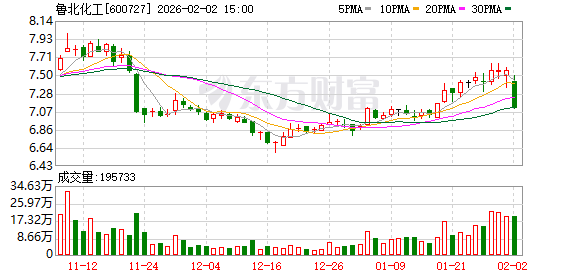
鲁北化工:公司主要产品包括钛白粉等
Zheng Quan Ri Bao· 2026-02-02 12:38
Group 1 - The company, Lubai Chemical, primarily produces titanium dioxide, methylene chloride, fertilizers, cement, raw salt, bromine, and aluminum chloride, and does not offer high-purity strontium titanate powder products [2]

煤化工策略月报-20260202
Guang Da Qi Huo· 2026-02-02 11:26
1. Report Industry Investment Rating No relevant content provided. 2. Core Viewpoints of the Report Urea - In January, urea supply increased steadily, demand was strong due to pre - holiday stocking, and prices rose. In February, supply is expected to further increase, and demand will first decline and then recover after the Spring Festival. From March to May, urea prices are usually demand - driven, with strong support, but price increases may trigger price - stabilizing mechanisms [5][6][8]. Soda Ash - In January, soda ash supply increased, demand was weakly stable, and enterprise inventory slightly accumulated. In February, supply will continue to increase, and demand will shrink. The supply - demand situation will be looser, and inventory pressure will increase. However, external factors may have a positive impact on futures prices [11][12][13]. Glass - In January, glass supply decreased slightly, and demand was supported. In February, supply is expected to decline slightly, but demand will decline seasonally more than supply, and inventory pressure will remain high. In the long - term, the supply - demand contradiction is still not effectively resolved, but external factors may lead to short - term fluctuations [15]. 3. Summaries According to the Table of Contents 3.1 Futures Market and Raw Material Situation in the Industry Chain 3.1.1 Futures Prices - Urea: In January, the futures price of urea fluctuated strongly at a high level. As of January 30, the main 05 contract was reported at 1,790 yuan/ton, with a monthly increase of 2.7% [5]. - Soda Ash: In January, the futures price of soda ash fluctuated within a range. As of January 30, the main 05 contract was reported at 1,204 yuan/ton, with a monthly decrease of 0.41% [11]. - Glass: In January, the futures price of glass fluctuated widely. As of January 30, the main 05 contract was reported at 1,056 yuan/ton, with a monthly decrease of 2.94% [15]. 3.1.2 Futures - related Varieties - Various futures - related varieties such as glass - soda ash, urea - methanol, etc. are presented in the form of price difference trend charts [23]. 3.1.3 Raw Material Prices - Coal: The prices of different types of coal showed different changes in January [26]. - LNG: The ex - factory prices of LNG in various regions increased in January [30]. - Raw Salt: The prices of raw salt in some regions decreased slightly in January [33]. - Synthetic Ammonia: The price of synthetic ammonia in Shandong decreased by 4.45% in January [34]. 3.2 Urea: Demand Varies Before and After the Spring Festival, and There are Many Factors Restricting the Price Increase 3.2.1 Spot Price - In January, the spot price of urea increased. As of January 29, the prices in Shandong and Henan were 1,780 yuan/ton and 1,770 yuan/ton respectively, up 70 yuan/ton and 80 yuan/ton from the end of December [38]. 3.2.2 Basis - The basis of urea in different regions showed different changes in January [41]. 3.2.3 Industry Operating Rate - The overall operating rate of the urea industry increased in January. The weekly capacity utilization rate of urea in January 30 was 88.28%, up 7.98% month - on - month [46]. 3.2.4 Weekly and Daily Output - The daily output of urea increased in January. As of January 28, the daily output was 21.11 tons, up 8.75% month - on - month [53]. 3.2.5 Enterprise Inventory and Port Inventory - In January, the enterprise inventory of urea decreased by 7.29% month - on - month, and the port inventory decreased by 16.28% month - on - month [55]. 3.2.6 Profit and Cost - The production costs of different urea production processes changed in January, and the production profits also changed accordingly [59]. 3.2.7 Apparent Consumption and Production - Sales Ratio - The weekly apparent consumption of urea in January increased by 2.28% month - on - month, and the production - sales ratio decreased by 4.64% month - on - month [62]. 3.2.8 Downstream Demand - The operating rate and output of downstream industries such as melamine, compound fertilizer, etc. showed different changes in January [65][72]. 3.2.9 Monthly Import and Export Quantities - In December 2025, the import volume of urea decreased by 82.11% month - on - month, and the export volume decreased by 53.75% month - on - month [84]. 3.2.10 International Market - India's latest tender only purchased 970,000 tons of urea, far less than the planned 1.5 million tons, increasing the expectation of another tender. International urea prices rose significantly in January [7]. 3.2.11 Related Products - The prices of related products such as phosphate fertilizer, potash fertilizer, and small nitrogen fertilizers showed different changes in January [89][92]. 3.2.12 Urea Option Volatility - The historical volatility and volatility cone of urea options are presented in the report [95]. 3.3 Soda Ash: Fundamental Pressure Remains, and External Factors May Provide Support 3.3.1 Spot Price - In January, the domestic soda ash market price was weak. The prices of light and heavy soda ash in some regions decreased [102]. 3.3.2 Basis - The basis of soda ash in the Shahe area increased in January [107]. 3.3.3 Industry Operating Rate - The overall operating rate of the soda ash industry decreased slightly in January. The industry - wide operating rate on January 30 was 84.19%, down 2.23% month - on - month [112]. 3.3.4 Production - The weekly production of soda ash increased in January. The weekly production on January 30 was 783,100 tons, up 12.34% month - on - month [122]. 3.3.5 Enterprise Inventory - In January, the enterprise inventory of soda ash increased by 2.37% month - on - month [126]. 3.3.6 Monthly Import and Export Quantities - In December 2025, the import volume of soda ash increased by 1278.00% month - on - month, and the export volume increased by 22.92% month - on - month [132]. 3.3.7 Cost - The production costs of ammonia - soda and combined - soda processes decreased slightly in January [134]. 3.3.8 Profit - The production profits of ammonia - soda and combined - soda processes increased slightly in January [138]. 3.3.9 Apparent Consumption and Production - Sales Ratio - The weekly apparent consumption of soda ash increased by 4.51% month - on - month, and the production - sales ratio decreased by 7.27% month - on - month [142]. 3.3.10 Heavy Soda Ash Demand - The daily melting volume of float glass and photovoltaic glass decreased in January [144]. 3.3.11 Light Soda Ash Downstream - The operating rates of downstream industries such as the printing and dyeing industry decreased in January [149]. 3.3.12 Soda Ash Option Volatility - The historical volatility and volatility cone of soda ash options are presented in the report [154]. 3.4 Glass: Supply and Demand of Glass Decline in February, and the Market Game Continues 3.4.1 Spot Price - In January, the domestic glass spot price increased slightly. As of January 30, the average market price of float glass was 1,107 yuan/ton, up 34 yuan/ton from the end of December [15]. 3.4.2 Operating Rate and Production - The operating rate and weekly production of float glass decreased in January. The operating rate on January 30 was 71.86%, down 1.17% month - on - month [162]. 3.4.3 Daily Melting Volume - The daily melting volume of float glass decreased in January. As of January 30, it was 151,000 tons, down 0.11% month - on - month [166]. 3.4.4 Enterprise Inventory - In January, the enterprise inventory of glass decreased by 7.57% month - on - month [169]. 3.4.5 Cost and Profit - The production costs of different glass production processes changed slightly in January, and the production profits also changed accordingly [174]. 3.4.6 Apparent Consumption - The weekly apparent consumption of float glass decreased by 8.61% in January [178]. 3.4.7 Deep - processing - The operating rate of Low - E glass decreased by 2.90% in January, and the monthly output of deep - processed glass products showed different changes [180][183]. 3.4.8 Terminal Demand - Real estate - related data such as the cumulative year - on - year growth rate of commercial housing sales area showed different trends. The production and sales of the automobile industry and the production of household appliances also showed different changes [187][190][192]. 3.4.9 Monthly Import and Export Quantities - In December 2025, the export volume of float glass increased by 2.59% month - on - month, and the import volume decreased by 5.95% month - on - month [195]. 3.4.10 Glass Option Volatility - The historical volatility and volatility cone of glass options are presented in the report [198].
莺歌海盐场今年首批原盐提前三个月产出
Hai Nan Ri Bao· 2026-01-31 02:20
Core Insights - The Yinggehai Salt Field, a major sea salt production base in southern China, achieved an early production milestone for 2026 by producing its first batch of 923 tons of raw salt, three months ahead of the previous year's schedule [2][3]. Group 1: Production Strategy - The early production success is attributed to proactive planning and execution, with the Yinggehai Salt Field starting preparations for 2026 production tasks as early as the end of 2024 [3]. - The facility implemented a three-tier responsibility system to enhance accountability in key production stages, including tide collection, brine preparation, and crystallization [3]. - The salt field optimized its evaporation process and management practices, significantly reducing the concentration cycle of seawater in evaporation and crystallization pools by nearly 60 days compared to previous years [3]. Group 2: Business Performance - During the 14th Five-Year Plan period, the Yinggehai Salt Field produced a total of 145,000 tons of raw salt and sold 108,600 tons of pickled and table salt [4]. - The salt field has developed a diverse product matrix, including sun-dried pickled salt, small packaged salt, and refined salt, and has established brands such as "Yinggehai Daily Salt Record" and "Little Salt Good Leisure" [4]. - The "Yinggehai Old Salt Sun-Drying Technique" has been recognized as a provincial-level intangible cultural heritage, and the salt field's products have been included in the first batch of self-produced goods for the free trade port [4].
山东鲁北化工股份有限公司2025年度业绩预减公告
Shang Hai Zheng Quan Bao· 2026-01-30 21:49
Group 1 - The company expects a significant decrease in its 2025 annual net profit, projecting approximately 42.11 million yuan, which represents a decline of about 83.87% compared to the previous year [2][4] - The total profit for 2025 is estimated to be around 149.72 million yuan, down from 423.47 million yuan in the previous year [4][5] - The net profit after deducting non-recurring gains and losses is projected to be approximately 40.34 million yuan, reflecting a decrease of about 84.97% year-on-year [4][5] Group 2 - The primary reason for the profit reduction is the significant narrowing of profitability in titanium dioxide products due to weak market demand, particularly influenced by the downturn in the domestic real estate sector and slowing infrastructure investment [7] - The chemical commodity market is currently in a destocking phase, leading to a shift in supply and demand dynamics, with both sales and prices of certain products, such as chlorinated methane, declining [9] - The company has attempted to optimize processes to reduce unit costs, but this has not been sufficient to offset the negative impact of falling product prices [7]