未来产业

Search documents
苏州又一百亿基金落地
3 6 Ke· 2025-12-03 00:57
苏州重大产业发展基金投资会以直投为主,投资方向关注苏州终端链主企业及在关键环节掌 握稀缺资源、核心技术的重点企业项目。 苏州继500亿社保基金落地后,又一百亿基金有了动作。 具体来看,"链主"是苏州重大产业发展基金的"关键词"。据苏州国投集团董事长翟俊生此前表示,苏州 重大产业发展基金投资会以直投为主,单一项目投资额不低于5亿元,投资方向关注苏州终端链主企业 及在关键环节掌握稀缺资源、核心技术的重点企业项目。 同时,服务国家、省级战略布局,积极引导央企在苏产业布局;前瞻布局人工智能等具备颠覆性技术潜 力的重大产业项目,深化与大院大所合作,推动前沿技术成果转化与产业化突破。 去年开始,苏州着重开展了"链主"企业培育工作,2024年累计推动272家企业进入"链主"企业培育库, 新增3个国家先进制造业集群、5个省级中小企业特色产业集群。 苏州本地区属国资告诉《科创板日报》记者,本地国资母基金已经形成了和链主企业共同发起子基金的 常态化模式, 通过标杆引领带动产业链上下游企业发展壮大。 智通财经创投通-执中数据显示,12月1日,苏州市重大产业发展私募投资基金合伙企业(有限合伙)成 立,出资额40亿元,由苏州产业投资私 ...
浙江“十五五”规划建议:聚焦人形机器人、脑机接口等领域,布局建设一批未来产业先导区
Zheng Quan Shi Bao Wang· 2025-12-03 00:13
Core Viewpoint - The Zhejiang Provincial Committee emphasizes the integration of advanced manufacturing clusters to promote the upgrading of traditional industries, the growth of emerging industries, and the scientific layout of future industries [1] Group 1: Traditional Industry Upgrading - The initiative aims to implement "tenglong huan niao" (transformation) and "phoenix nirvana" actions to deepen the construction of national traditional manufacturing upgrade demonstration zones [1] - There will be a strong push for technological transformation, equipment updates, and ecological upgrades in traditional industries to enhance quality and technical capabilities [1] - Key industries such as green petrochemicals, textiles and apparel, electrical machinery, and home appliances will be prioritized for quality upgrades to strengthen their competitive positions [1] Group 2: Emerging Industry Development - The plan focuses on building new pillar industries, accelerating the development of clusters in artificial intelligence, new materials, new energy, aerospace, low-altitude economy, and biomedicine [1] - A future industry investment growth mechanism will be established to explore various technological routes, typical application scenarios, feasible business models, and market regulation rules [1] - Key areas for future industry development include humanoid robots, brain-machine interfaces, brain-like intelligence, quantum information, and biomanufacturing [1] Group 3: Service Industry Enhancement - The implementation of high-quality development projects in the service sector will be prioritized, aiming to improve the integration of modern services with advanced manufacturing and modern agriculture [1] - The initiative will promote the specialization and high-end extension of productive services and enhance the quality and diversity of life services [1]

这6大未来产业,加快跑进现实(这些新提法,写入“十五五”规划建议④)
Ren Min Ri Bao Hai Wai Ban· 2025-12-02 22:46
Core Viewpoint - The article emphasizes the strategic importance of future industries in China's economy, highlighting the rapid development and application of technologies such as hydrogen energy, quantum technology, and embodied intelligence, which are expected to drive economic growth and innovation [4][5][7]. Group 1: Future Industries Overview - Future industries are a crucial part of China's "three new" economy, contributing over 18% to GDP last year [4]. - The "14th Five-Year Plan" identifies six key future industries, including quantum technology and biological manufacturing, which are at a critical stage of moving from laboratory to commercialization [5][6][10]. Group 2: Technological Advancements - China has achieved significant progress in hydrogen energy, with production capacity exceeding 50 million tons per year and over 600 renewable energy hydrogen production projects planned [8]. - In nuclear fusion, the EAST facility has set world records for plasma operation times, achieving 1 billion degrees Celsius for 1066 seconds [9][10]. - The development of the BEST facility aims for commercial nuclear fusion power generation by 2030, with a goal to light the first lamp by then [10]. Group 3: Market Potential and Applications - The market for brain-computer interfaces is expected to exceed 5.5 billion yuan, while the embodied intelligence market could surpass 400 billion yuan by 2030 [14]. - The application of embodied intelligence in various sectors, such as manufacturing and service industries, is being explored, with robots like NAVIAI demonstrating capabilities in tasks ranging from sewing to household chores [13][14]. Group 4: Policy and Support - The Chinese government is promoting the integration of technology and industry through policies aimed at fostering new application scenarios and supporting innovation [12][14]. - The focus on creating a supportive ecosystem for future industries includes investment in R&D and the establishment of platforms for biological manufacturing and brain-computer interfaces [14].

指数跟风调整“扶不起”!行情缩量震荡,还有哪些投资机会?
Sou Hu Cai Jing· 2025-12-02 07:37
Group 1 - QFII institutions such as Morgan Stanley, Abu Dhabi Investment Authority, and others have continued to increase their holdings in A-shares during Q3, with at least 121 stocks seeing increased positions, particularly in sectors like electrical equipment, machinery, hardware, and chemicals [1] - The "14th Five-Year Plan" emphasizes strengthening the construction of a network power and promoting future industries, including the sixth generation of mobile communications, indicating a positive outlook for the technology sector [1] - The communication equipment industry's dynamic PE is at the historical 97.3 percentile, indicating high valuations that challenge performance delivery [1] Group 2 - The "14th Five-Year Plan" identifies green transformation as a core goal, aiming to consolidate and expand the advantages of the wind and solar industries [3] - Since June 2025, national policies have been introduced to promote healthy and sustainable development in the photovoltaic industry, transitioning from chaotic low-price competition [3] - China's photovoltaic installed capacity is expected to grow significantly, with a projected 45% increase in new installations in 2024 compared to the previous year, marking a nearly 20-fold increase since 2015 [3] Group 3 - The Federal Reserve's meeting minutes reveal a split among voters regarding the recent interest rate cut, with concerns that further cuts may exacerbate inflation risks [5] - The U.S. Treasury yields have risen due to stagflation risks, influenced by expectations of a new Fed chair aligned with presidential directives [5] - China's GW satellite constellation launch frequency has significantly increased, indicating a rapid development phase in the commercial space industry [5] Group 4 - The short-term market trend appears weak, with limited new capital entering the market and a lack of significant profit-making opportunities [7] - The Shanghai Composite Index is experiencing a range-bound movement between 3800 and 4000 points, with concerns about individual stock performance despite the index stability [11] - The ChiNext Index has shown a decrease in trading volume over two weeks, suggesting a cautious withdrawal of institutional funds [11]
【关注“十五五”规划】前瞻布局未来产业 中国具备禀赋优势
Zheng Quan Shi Bao· 2025-12-01 18:12
Core Viewpoint - The Chinese government has outlined a strategic initiative to proactively layout future industries, focusing on six key areas: quantum technology, biomanufacturing, hydrogen energy and nuclear fusion, brain-computer interfaces, embodied intelligence, and sixth-generation mobile communication. This initiative aims to enhance the country's industrial structure and drive economic growth [1]. Group 1: Future Industry Layout - The strategic layout of future industries is expected to clarify the direction of China's industrial structure and serve as a new pillar for economic growth [1]. - The six core areas identified for future industry development are characterized by their strategic, leading, and disruptive features [1]. Group 2: Advantages of Development - China possesses three unique advantages for developing future industries: a new type of national system for resource concentration, a complete industrial system for technology commercialization, and a vast market for rapid application and iteration of new technologies [1]. - The country is also expected to leverage its technological innovation advantages to support these developments [1]. Group 3: Technological Advancements - In embodied intelligence, China is achieving breakthroughs in both "smart brains" and "strong bodies," with increasing levels of model generalization [2]. - The country has developed leading brain-computer interface technologies, including ultra-flexible, minimally invasive electrodes and dynamic electrodes that can navigate within animal brains [2]. - In biomanufacturing, China leads globally in CAR-T cell therapy and original drug production [2]. - Quantum technology advancements include the "Zuchongzhi No. 3" supercomputer, which is significantly faster than the world's fastest supercomputer, and the "Wukong" quantum computer, which has completed over 710,000 calculations globally [2]. Group 4: Innovation Rankings - According to the Global Innovation Index 2025, China has entered the top ten for the first time, achieving its highest ranking at fourth place [3]. - The Global Key and Emerging Technologies Index 2025 indicates that while the U.S. remains the leading technology power, China ranks second in key technology fields such as semiconductors and artificial intelligence [3]. - China has 24 of the world's top 100 innovation clusters, maintaining its position as the global leader for three consecutive years [3]. Group 5: Policy Initiatives - The National Development and Reform Commission and the Ministry of Industry and Information Technology have issued implementation opinions to promote innovation in future industries, including specific policies for brain-computer interfaces and biomanufacturing [4]. - The State Council has introduced measures to accelerate the cultivation of application scenarios across various fields, establishing a comprehensive ecosystem for future industries [4]. Group 6: Industry Growth - Approximately 350 companies related to brain-computer interfaces have emerged in China, creating a complete industrial chain from core components to end applications [5]. - China has established the largest solar panel and flat screen film production bases globally, along with 23 biomanufacturing bases [5]. - With over 300 billion yuan allocated to quantum technology and substantial local funding, major provinces are developing numerous quantum technology application scenarios [5]. - The country has built 4.55 million 5G base stations, indicating a strong push towards future industries characterized by national strategic guidance and large-scale market applications [5].
河南焦作:黑色煤城变身绿色产业新市
Ke Ji Ri Bao· 2025-12-01 05:50
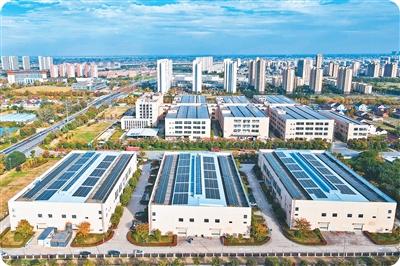
Core Viewpoint - Jiaozuo City is transforming from a resource-dependent economy to a modern industrial system with a focus on high-quality development, showcasing significant progress in traditional and emerging industries [1][2][4]. Group 1: Traditional Industry Transformation - Jiaozuo's transformation began with the deep renovation and upgrading of traditional industries, exemplified by Longbai Group, which has become a global leader in the titanium industry through innovation [2][3]. - Other companies like Zhongyuan Neipei Group and Wind God Tire have also successfully transitioned, with Zhongyuan Neipei evolving into a hydrogen fuel cell engine system provider and Wind God Tire achieving world records in giant engineering tires [3]. Group 2: Emerging Industry Growth - Strategic emerging industries are becoming a new engine for economic growth in Jiaozuo, with significant increases in high-tech and strategic emerging industry value added, growing by 43.8% and 15.2% respectively in the first half of the year [4][5]. - The new materials industry is a key focus, with companies like Duofu Duo leading in lithium hexafluorophosphate and electronic-grade hydrogen fluoride, contributing to a new materials industry scale exceeding 100 billion [4][5]. Group 3: Future Industry Layout - Jiaozuo is proactively laying out future industries, such as the aerospace big data industry base project, which aims to create a 6 billion yuan industry ecosystem over the next decade [6][7]. - The city is also enhancing its digital economy, with over 2,000 related enterprises and nearly 500 million yuan in cumulative tax revenue from the digital industry [6][7]. Group 4: Policy and Strategic Support - Jiaozuo is implementing a dual strategy of policy support and park construction to drive future industry development, with plans to optimize industrial layout and strengthen technological innovation [7]. - The city aims to cultivate key industrial chains and enhance competitiveness in traditional, strategic emerging, and future industries, contributing to the modernization of the regional economy [7].
国资委主任张玉卓在人民日报刊文:充分激发各类经营主体活力
Sou Hu Cai Jing· 2025-11-30 23:27
Group 1 - The article emphasizes the deepening of state-owned enterprise (SOE) reforms and the optimization of the layout and structural adjustments of state-owned economies [1] - It highlights the need to enhance the core functions and competitiveness of state-owned enterprises [1] - The article calls for SOEs to become sources of original technology and modern industrial chain leaders, focusing on applied basic research and accelerating breakthroughs in key core technologies [1] Group 2 - There is a push for state-owned enterprises to be demand proposers, innovation organizers, technology suppliers, and market applicators of original technologies [1] - The use of industrial development funds and other tools is encouraged to guide state capital in traditional industry transformation, strategic emerging industry cluster development, and future industry cultivation [1] - The article stresses the importance of enhancing the support and guarantee capabilities of state-owned enterprises in critical sectors such as national defense, energy resources, food supply, strategic material reserves, and backbone networks to better safeguard national strategic security [1]
深化粤港澳合作建设一流湾区
Jing Ji Ri Bao· 2025-11-30 22:50
习近平总书记近日在广东考察时指出,要着力深化粤港澳合作,加强科技创新合作和基础设施互联互 通,推进规则机制"软联通",有效提升市场一体化水平,建设宜居宜业宜游优质生活圈。 建设粤港澳大湾区,对粤港澳三地来说既是重大责任,也是难得的发展机遇。粤港澳要锚定建设富有活 力和国际竞争力的一流湾区和世界级城市群的目标,在基础设施"硬联通"、规则机制"软联通"、人员交 流"心联通"三个维度下功夫,努力实现重点突破、全面推进。 "心联通"是衡量大湾区融合发展的关键指标。当前,超过20万港澳居民常年在广东工作生活,超8000名 港澳专业人才在粤执业。截至今年9月,港澳居民在粤参保达35.3万人次。广东已构建起以粤港澳大湾 区(广东)创新创业孵化基地为龙头、以珠三角12个重点基地为骨干、以各地特色基地为基础的多层次 孵化平台载体布局,为港澳青年创新创业提供广阔平台。港澳专业服务业国际化水平高,粤港澳三地要 持续深化职业资格认定和职称认定,为更多专业人才到大湾区内地城市执业敞开大门。港澳要探索本地 养老、医疗福利的跨境适用政策,为在粤养老就医的港澳居民提供便利。同时,弘扬以粤剧、龙舟、武 术、醒狮等为代表的岭南文化,塑造湾区人文 ...
中共陕西省委召开党外人士座谈会
Shan Xi Ri Bao· 2025-11-30 22:43
省委常委王晓、李明远、王海鹏,省直有关部门负责同志等参加会议。 在认真听取大家发言后,赵一德指出,"十五五"时期是陕西在中国式现代化建设中追赶超越、争做 示范的关键五年,系统谋划全省经济社会发展意义重大。我们要深入学习贯彻党的二十届四中全会精 神,牢牢把握国内外形势和陕西发展阶段特征,以国家战略需求为导向加快提升创新体系整体效能,以 实体经济为根基着力构建现代化产业体系,以扩大内需为战略基点主动融入和服务构建新发展格局,以 经济体制改革为牵引积极融入全国统一大市场建设,努力在服务国家高水平科技自立自强、打造内陆改 革开放高地、促进城乡区域协调发展、推进文化强省建设、推动发展方式绿色低碳转型、提升全域本质 安全水平等方面取得更大突破,以历史主动精神打开陕西高质量发展现代化建设新天地。 赵一德表示,希望各民主党派、工商联和无党派人士充分发挥人才荟萃、智力密集、联系广泛的优 势,坚守合作初心,主动服务大局,为全省经济社会发展贡献更多智慧和力量。中共陕西省委将一如既 往支持党外人士依法依章程履行职责,共同开创我省多党合作事业新局面,奋力谱写中国式现代化建设 的陕西新篇章。 近日,省委书记赵一德主持召开党外人士座谈会, ...
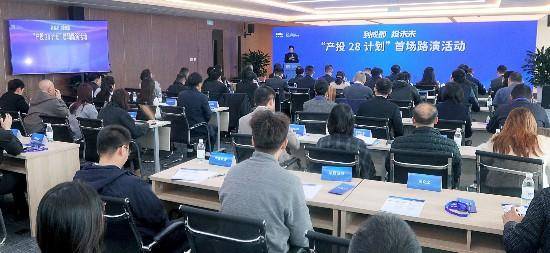
40个科创项目竞逐投资“直通卡”,“产投28计划”首场路演举行
Sou Hu Cai Jing· 2025-11-30 08:22
Core Insights - The "Chengdu Industrial Investment 28 Plan" aims to create a monthly mechanism for capital and industry integration, becoming a new symbol of innovation in Chengdu [1][14] - The first roadshow event took place in Chengdu, gathering 40 tech companies from various cities to connect with leading venture capital institutions and brokers [3][8] Group 1: Event Overview - The roadshow featured companies categorized into four core sectors: electronic information, new energy materials, health industry, and equipment manufacturing [3] - Over 100 business plans have been submitted to the "Chengdu Industrial Investment 28 Plan" since its launch [3] Group 2: Investment Strategy - The investment strategy includes a dual fund approach with a focus on a modern industrial system covering 9+9+10 sectors, including humanoid robots and integrated circuits [5] - A "green channel + priority support" mechanism is established for high-quality projects, particularly those with national awards or core talent teams [5] Group 3: Evaluation Mechanism - Projects are evaluated based on five dimensions: investment scope compliance, sector investment value, technological competitiveness, market competitiveness, and financial competitiveness [6] - Projects are categorized into three classes: A-class projects receive immediate investment intent, B-class projects get one-on-one follow-up, and C-class projects are placed in a reserve pool [6] Group 4: Project Highlights - Local companies showcased strong capabilities in electronic information, smart manufacturing, and biomedicine, with some becoming hidden champions in their niches [11] - External companies presented projects at critical technology breakthrough stages, including AI-driven financial solutions and perovskite battery technologies for space applications [13] Group 5: Future Industry Focus - The roadshow emphasized "future industries," with many projects targeting cutting-edge hard technologies, often backed by research institutions [13] - The "Chengdu Industrial Investment 28 Plan" is designed to cultivate globally competitive future industry benchmarks and create a vertical investment service platform [14]