低碳经济

Search documents
碳中和ETF基金: 鹏华中证内地低碳经济主题交易型开放式指数证券投资基金2025年中期报告
Zheng Quan Zhi Xing· 2025-08-27 13:44
Core Viewpoint - The report provides an overview of the performance and management of the Penghua CSI Mainland Low Carbon Economy Theme ETF for the first half of 2025, highlighting its investment strategy, financial performance, and market conditions affecting its operations [1][2][3]. Fund Overview - Fund Name: Penghua CSI Mainland Low Carbon Economy Theme ETF - Fund Manager: Penghua Fund Management Co., Ltd. - Fund Custodian: Huatai Securities Co., Ltd. - Total Fund Shares at Period End: 433,467,316.00 shares - Fund Contract Effective Date: April 6, 2021 - Investment Objective: To closely track the benchmark index with minimal tracking deviation [1][2]. Financial Performance - Average Fund Share Profit for the Period: -0.0299 - Average Net Value Profit Rate for the Period: -5.20% - Fund Share Net Value Growth Rate for the Period: -5.00% - Net Asset Value at Period End: 251,122,940.60 RMB - Fund Share Net Value at Period End: 0.5793 RMB - Cumulative Net Value Growth Rate: -13.11% [3][4]. Performance Comparison - Performance over the past month: 3.58% - Performance over the past three months: 0.59% - Performance over the past six months: -5.00% - Performance over the past year: 7.72% - Performance over the past three years: -44.19% - Cumulative performance since fund inception: -13.11% [4][5]. Management Report - The fund manager, Penghua Fund Management Co., Ltd., has been in operation since December 22, 1998, managing a total asset scale of 1,251.3 billion RMB across 359 public funds [5][6]. - The fund manager emphasizes compliance with regulations and aims to maximize benefits for fund shareholders while managing risks effectively [8][9]. Market Conditions - The report notes that the fund's performance was affected by various market factors, including global uncertainties and domestic economic resilience [10][11]. - The fund's benchmark index, the CSI Mainland Low Carbon Economy Theme Index, underperformed compared to major indices during the reporting period [9][10]. Investment Strategy - The fund employs a passive index investment strategy, primarily investing in the top 50 companies in the low-carbon economy sector listed on the Shanghai and Shenzhen stock exchanges [9][10]. - Adjustments to the investment portfolio are made based on changes in the benchmark index and market conditions to minimize tracking error [2][3].


中国低碳指数报6191.56点,前十大权重包含长江电力等
Jin Rong Jie· 2025-08-26 08:43
Core Viewpoint - The China Low Carbon Index has shown significant growth, reflecting the performance of 40 representative companies in the low carbon economy sector, with a notable increase in its value over various time frames [1][2]. Group 1: Index Performance - The China Low Carbon Index closed at 6191.56 points, with a 4.90% increase over the past month, a 12.64% increase over the past three months, and a 9.68% increase year-to-date [1]. - The index is based on a starting point of 1000.0 points as of December 31, 2006 [1]. Group 2: Index Composition - The top ten weighted companies in the China Low Carbon Index include: - Sungrow Power Supply (7.05%) - Contemporary Amperex Technology (5.22%) - LONGi Green Energy (5.09%) - TBEA Co., Ltd. (4.87%) - China National Nuclear Power (4.32%) - Everbright Environment (4.24%) - Yangtze Power (4.15%) - Three Gorges Energy (4.09%) - Eve Energy (4.03%) - BYD Company (3.91%) [1]. - The index's market distribution shows that the Shanghai Stock Exchange accounts for 42.18%, the Shenzhen Stock Exchange for 36.73%, and the Hong Kong Stock Exchange for 20.51% [1]. Group 3: Industry Breakdown - The industry composition of the index includes: - Power Equipment (58.17%) - Utilities (27.13%) - Environmental Protection (8.05%) - Passenger Vehicles and Parts (3.91%) - Machinery Manufacturing (2.16%) [2]. - The index samples are adjusted biannually, with adjustments occurring on the next trading day after the second Friday of June and December [2].
乳山创新“数字+绿色+金融”服务模式,完成首批牡蛎碳汇交易
Qi Lu Wan Bao Wang· 2025-08-25 04:39
Group 1 - The unique geographical location and ecological environment of Rushan City contribute to the exceptional quality of Rushan oysters, with the local government promoting high-quality development of the oyster industry through various initiatives [1] - In 2023, Rushan City was selected as the first domestic demonstration zone for the "Sustainable Development Finance to Assist Rural Micro and Small Enterprises" project by the United Nations Development Programme, focusing on the oyster industry and exploring innovative service models combining "digital, green, and finance" [2] - The establishment of a carbon trading mechanism for oysters marks a transition from theoretical research to practical ecological benefits, with the first carbon trading transaction occurring on August 12, 2025, involving five companies [2] Group 2 - The development of the "blue carbon economy" has significant ecological, financial, and social implications, promoting environmentally friendly oyster farming practices and enhancing the ecological value of oyster cultivation [3] - The carbon trading mechanism is expected to innovate financial products related to oyster carbon credits, strengthening financial empowerment in the industry [3] - The Rushan oyster carbon trading initiative is anticipated to enhance brand recognition, expand market reach, and create more job opportunities, contributing to the harmonious development of the social economy and ecological environment [3]
浙江沪杭甬2025年中期营收86.85亿元,增长3.80%,高速公路业务占比59%,证券业务企稳回升
Jin Rong Jie· 2025-08-25 04:23
Core Viewpoint - Zhejiang Huhangyu achieved a total revenue of 8.685 billion yuan in the first half of 2025, representing a year-on-year growth of 3.80%, with a profit attributable to equity holders of 2.787 billion yuan, up 4.01% year-on-year [1] Group 1: Highway Business Performance - The highway business generated revenue of 10.662 billion yuan in 2024, an increase of 2.28% from 10.424 billion yuan in 2023, accounting for 59.0% of total revenue [3] - The growth in highway toll revenue is attributed to the steady recovery of the Chinese economy and the increasing economic vitality in Zhejiang Province [3] - The company plans to leverage the "Zhijiang Traffic Control" investment platform to promote quality highway project investments and mergers, while also exploring the construction of a new energy vehicle battery swap station network [3] Group 2: Securities Business Performance - The securities business reported revenue of 6.183 billion yuan in 2024, a decline of 2.97% from 6.372 billion yuan in 2023, making up 34.2% of total revenue [4] - The performance of the securities business was impacted by market volatility in the first three quarters, but showed signs of recovery in the fourth quarter [4] - The company anticipates that domestic capital markets will continue to deepen reforms under policy guidance, creating opportunities in emerging industries such as new energy and green finance [4] Group 3: Financial Indicators - Basic earnings per share for the first half of 2025 were 0.47 yuan, with a net asset per share of 7.70 yuan and an annualized return on equity of 12.06% [6] - The company's debt-to-asset ratio decreased from 70.92% in 2023 to 66.07% in 2024, but rose to 67.87% in the first half of 2025 [6] - Cash and cash equivalents increased from 70.079 billion yuan in 2024 to 85.044 billion yuan in the first half of 2025, indicating strong liquidity [6]

当全球最大造船国遇上全球第一船级社:航运业绿色转型如何提速?
Di Yi Cai Jing· 2025-08-21 08:18
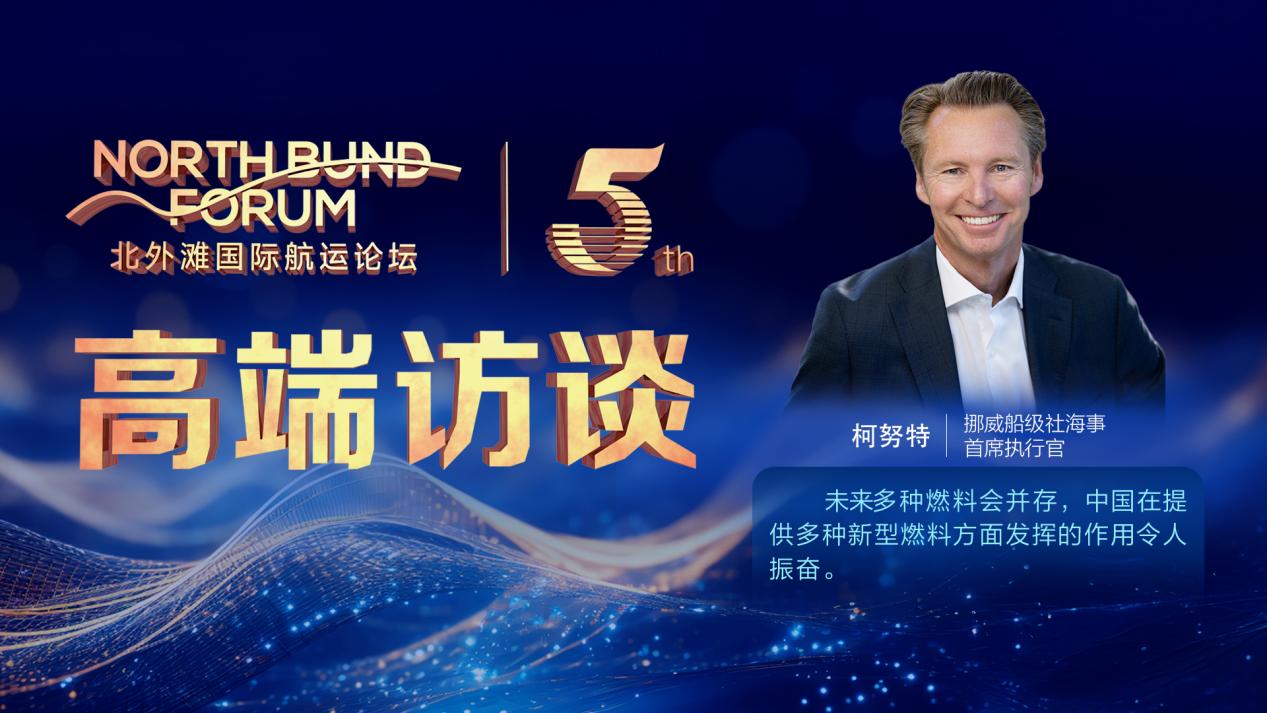
Core Viewpoint - The Chinese shipbuilding industry remains the largest globally despite facing challenges from strict carbon emission regulations and market fluctuations, with a strong focus on green shipping and technological innovation [1][4]. Group 1: Regulatory Changes and Industry Response - The International Maritime Organization's (IMO) revised Annex VI of the International Convention for the Prevention of Pollution from Ships has introduced stringent carbon emission regulations effective from August 1, 2023 [1][3]. - The Norwegian classification society DNV is assisting clients in adapting to these new regulations by providing compliance strategies, alternative fuel options, and energy-saving technology recommendations [3][4]. Group 2: Market Dynamics and Trade Relations - China is Norway's largest trading partner in Asia, with bilateral trade expected to reach $10.18 billion in 2024, marking a 31.7% year-on-year increase [3]. - DNV's market share in China accounts for approximately 28% of its global business, with significant growth in regional operations and revenue over the past five years [4]. Group 3: Decarbonization Challenges and Strategies - The transition to decarbonization in shipping is gradual, with about 92% of the global fleet still using traditional fuels [5][6]. - DNV emphasizes the importance of energy efficiency measures and collaboration among stakeholders to accelerate the transition to greener shipping practices [8][9]. Group 4: Technological Innovation and Future Outlook - DNV has established several research centers in China to promote digitalization and innovation in the maritime sector, reflecting a commitment to the Chinese market [9][11]. - The Chinese shipbuilding industry has evolved into a leader in high-end ship construction, with significant advancements in various vessel types, including LNG carriers [12].
优机股份(833943):2025H1归母净利润yoy+37%,产能释放叠加并表比扬精密共驱航空业务扩张
Hua Yuan Zheng Quan· 2025-08-21 05:15
Investment Rating - The investment rating for the company is "Accumulate" (maintained) [5] Core Views - The mechanical components processing industry is expected to benefit from global industrial iteration and domestic demand expansion, with mechanical component exports likely to continue growing [6] - The company reported a year-on-year increase of 37% in net profit attributable to shareholders for the first half of 2025, driven by capacity release and the consolidation of Byang Precision's aviation business expansion [5][7] - The company is positioned as a significant supplier in the global equipment manufacturing sector, with a comprehensive and competitive industrial system in mechanical components processing [6] Financial Performance - For the first half of 2025, the company achieved revenue of 443 million yuan (up 19% year-on-year) and a net profit of 34.3 million yuan (up 37% year-on-year) [7] - The revenue for Q2 2025 was 261 million yuan (up 17% year-on-year and up 43% quarter-on-quarter), with a net profit of 18.79 million yuan (up 8% year-on-year and up 21% quarter-on-quarter) [7] - The company’s revenue from oil and gas fluid control equipment and components increased by 19% year-on-year, while revenue from the aviation sector surged by 48% year-on-year [7] Profit Forecast and Valuation - The forecasted net profits for the company from 2025 to 2027 are 95 million yuan, 111 million yuan, and 128 million yuan, respectively, corresponding to price-to-earnings ratios of 34.9, 29.9, and 25.7 times [5][8] - The company is expected to maintain a robust growth trajectory, with projected revenue growth rates of 13.20% in 2025, 13.71% in 2026, and 13.81% in 2027 [8]
研判2025!中国氧化钴行业生产流程、产量及价格分析:产量激增与政策赋能共驱需求,地缘博弈与回收体系重构价格[图]
Chan Ye Xin Xi Wang· 2025-08-14 01:26
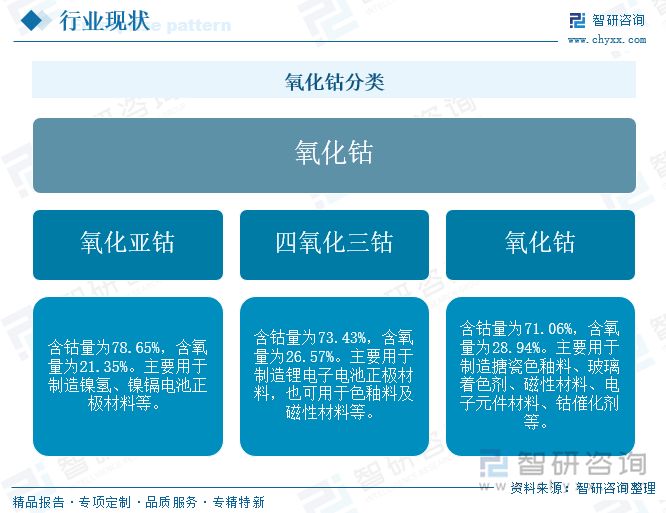
Industry Overview - China is the largest producer and consumer of cobalt oxide globally, with a production of 9,500 tons in the first half of 2025, representing a year-on-year growth of 40.69% [1][10] - The global demand for cobalt oxide is driven by the expected sales of over 18 million electric vehicles in 2025, with significant demand for high-purity cobalt oxide in the power battery sector, particularly for lithium cobalt oxide cathode materials [1][10] - The energy storage market is accelerating due to carbon neutrality goals, further increasing the demand for cobalt oxide [1][10] - Emerging consumer electronics, such as foldable smartphones and AR/VR devices, have increased the cobalt content per device by 40% compared to traditional models, creating additional demand [1][10] - Government policies, including the State Council's action plan for large-scale equipment updates and local support for new energy materials, provide long-term benefits for cobalt oxide applications in power batteries [1][10] Industry Chain - The upstream of the cobalt oxide industry chain includes cobalt mines, recycled materials, ammonium carbonate solution, and sulfuric acid, along with various production equipment [6] - The midstream involves the production and manufacturing of cobalt oxide, while the downstream applications include battery materials, pigments, ceramics, magnetic materials, catalysts, and consumer electronics [6] Market Dynamics - The global cobalt reserves are estimated at 11 million tons, with the Democratic Republic of Congo (DRC) holding 6 million tons, accounting for 55% of the total [8] - In 2024, global cobalt production is projected to reach approximately 291,300 tons, a year-on-year increase of 22.39%, with the DRC contributing 75.86% of the total production [8] - The DRC's export ban on cobalt has been extended, potentially leading to a supply shortage and increased cobalt prices, although Chinese companies are expected to maintain normal operations in the short term [8][12] Key Companies - Huayou Cobalt is a leading player in the industry, achieving a 40% self-sufficiency rate in raw materials through its control of six cobalt mines in the DRC [14] - Jinchuan Group holds a significant position in the cobalt oxide market due to its rich mineral resources and stable production capacity [14] - Greeenme has established a closed-loop business model for resource recovery, achieving over 99% cobalt recovery rates [14] Price Trends - Cobalt oxide prices in China have remained low due to declining cobalt prices and increasing production, but a rebound in cobalt prices following the DRC's export ban has led to a doubling of cobalt oxide prices [12] - As of June 2025, the price of cobalt oxide in China was 190,000 yuan per ton, reflecting a year-on-year increase of 51.39% [12] Industry Development Trends 1. Resource security and global layout are crucial for building a diversified supply system, with Chinese companies enhancing supply stability through overseas investments [19] 2. Technological breakthroughs are necessary to capture high-end markets, with innovations in cobalt oxide production processes and product purity requirements [20] 3. The industry is moving towards a low-carbon economy, emphasizing environmentally friendly production processes and recycling systems, particularly in response to stricter regulations [21]




消金行业迎考 新市民服务等成发展新赛道
Xin Hua Wang· 2025-08-12 06:27
Core Viewpoint - The consumer finance industry has shown signs of recovery in 2021, with leading companies significantly increasing their revenue, profit, and total assets compared to 2020, while the gap between top-tier and mid-to-low-tier companies continues to widen [1][2]. Industry Performance - Among the 17 licensed consumer finance companies that disclosed their performance, 13 reported a net profit increase in 2021, with several companies achieving over 200% year-on-year profit growth [2]. - Leading companies such as Zhaolian Consumer Finance, Industrial Bank Consumer Finance, and Mashang Consumer Finance reported total assets of 149.698 billion, 61.79 billion, and 61.091 billion respectively, with profits of 3.063 billion, 2.23 billion, and 1.382 billion respectively [2]. - Hubei Consumer Finance experienced the fastest profit growth at 471%, while Sunshine Consumer Finance turned profitable with a net profit of 108 million after less than two years of operation [2]. Future Outlook - The overall upward trend in consumer finance is expected to continue, but the pandemic has altered consumer income and spending expectations, potentially slowing the growth rate of consumer finance demand [1][6]. - New growth opportunities are anticipated in areas such as services for new citizens, rural revitalization, and low-carbon economy initiatives [1][6]. Compliance and Risk Management - The consumer finance industry faces significant operational compliance risks, with regulatory scrutiny increasing in 2021, impacting the direction of the lending industry [4]. - Companies are focusing on compliance development, with efforts to strengthen internal controls and risk management systems [5]. Strategic Directions - Future success for licensed consumer finance institutions will depend on three main factors: technology advancements, scene expansion, and business model innovation [7]. - The industry is expected to see a shift towards integrating online and offline operations to enhance competitiveness [7].
中国低碳指数报5709.54点,前十大权重包含比亚迪股份等
Jin Rong Jie· 2025-08-11 11:06
Core Points - The China Low Carbon Index is currently at 5709.54 points, reflecting a low opening and fluctuations in the Shanghai Composite Index [1] - The index has increased by 2.89% over the past month, 7.53% over the past three months, and 1.14% year-to-date [2] Index Composition - The China Low Carbon Index consists of 40 representative companies in the low-carbon economy sector, selected from domestic and international listings [2] - The top ten weighted companies in the index are: - Sungrow Power Supply (5.83%) - LONGi Green Energy (5.17%) - CATL (5.07%) - TBEA (4.83%) - China National Nuclear Power (4.56%) - China Everbright Environment (4.52%) - Yangtze Power (4.38%) - Three Gorges Energy (4.34%) - BYD Company (4.01%) - Conch Venture (3.90%) [2] Market Distribution - The market distribution of the China Low Carbon Index shows that the Shanghai Stock Exchange accounts for 43.40%, the Shenzhen Stock Exchange for 34.47%, the Hong Kong Stock Exchange for 21.52%, the Singapore Stock Exchange for 0.33%, and the Nasdaq Global Select Market for 0.28% [2] Industry Breakdown - The industry composition of the index is as follows: - Power Equipment: 55.99% - Utilities: 28.90% - Environmental Protection: 8.42% - Passenger Vehicles and Parts: 4.01% - Machinery Manufacturing: 2.06% [2] Index Adjustment - The index samples are adjusted biannually, with adjustments occurring on the next trading day after the second Friday of June and December [3] - Weight factors are generally fixed until the next scheduled adjustment, with special circumstances allowing for temporary adjustments [3]

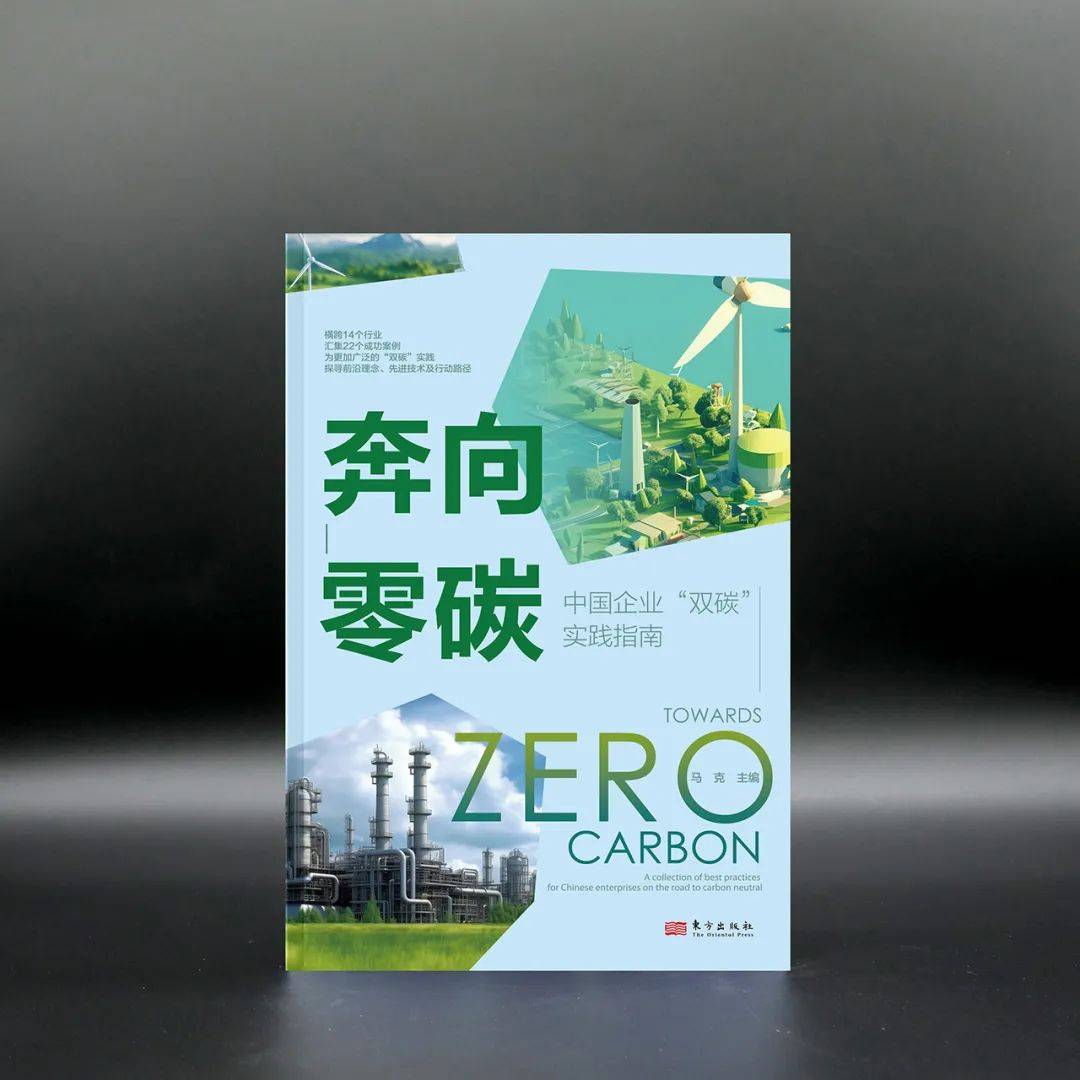
零碳先锋企业的共性: 动力、方法和愿景 | 《财经》书摘
Sou Hu Cai Jing· 2025-08-10 09:59
Core Insights - The low-carbon economy has become a national policy in China, with enterprises being the main force in implementing this policy [2][6] - The book "Towards Zero Carbon: Action Guide for Chinese Enterprises on 'Dual Carbon'" presents 22 case studies from various industries, highlighting common paths and innovative technologies for carbon reduction [2][4] Group 1: Common Paths for Carbon Reduction - Enterprises share common carbon reduction paths, including transitioning to renewable energy sources, improving energy efficiency, utilizing carbon trading, and understanding their carbon emissions data [2][3] - The role of leading enterprises in supply chain carbon reduction is crucial, emphasizing the importance of carbon data assessment as the first step [2][4] Group 2: Technological Innovations - Digital technology plays a significant role in carbon reduction, with companies promoting their experiences and technologies across supply chains and industries [3][4] - Various innovative technologies are highlighted, such as Lenovo's low-temperature soldering process, low-carbon concrete from China State Construction Engineering, and hydrogen metallurgy in the steel industry [4] Group 3: Market Dynamics and Public Engagement - Companies that have engaged with international markets tend to be the earliest adopters of carbon reduction practices, often aligning with global standards [5] - Public participation in carbon reduction is essential, with companies like Alibaba and Tencent leveraging their influence to educate consumers and promote carbon accountability [5][6] Group 4: Economic Context - The global shift towards a low-carbon economy is seen as a critical turning point, with low-carbon growth being a necessary driver for sustainable development in China [7][8]