
低轨卫星

Search documents
填补国内空白!两大特种高分子材料突破
DT新材料· 2026-01-04 16:04
Core Viewpoint - The article highlights the increasing demand and significance of specialty high polymer materials, particularly PEEK and PEI, driven by industrial upgrades and the unique properties of these materials, marking a shift from traditional general-purpose plastics to advanced engineering plastics in various high-tech applications [2][5]. Group 1: Market Trends and Developments - Specialty engineering plastics are gaining traction due to the rise of emerging industries such as robotics, drones, and AI servers, which are no longer deterred by the higher costs associated with these materials [2][5]. - The article notes that the production capacity of general-purpose plastics like polypropylene and polyethylene has historically dominated the market, but the focus is now shifting towards high-performance engineering plastics [2][5]. Group 2: Key Material Innovations - LCP (Liquid Crystal Polymer) films have recently achieved large-scale production by the company Prilite, breaking the long-standing foreign monopoly in high-end applications, particularly in communication technology [4][5]. - PEI (Polyetherimide) has also seen advancements, with Wanrun Co. announcing the commercial production of PEI materials, which are being utilized in various applications including aerospace and medical devices [6][7]. Group 3: Government Initiatives and Industry Support - The Ministry of Industry and Information Technology has identified LCP films and PEI as key innovative products for the 2025 fine chemical industry, indicating their strategic importance in the national agenda [3][4]. - The article emphasizes the government's focus on developing 50 critical new materials and equipment, showcasing a commitment to advancing the chemical industry [3][4]. Group 4: Future Industry Applications - LCP films are positioned to impact future technologies such as 6G communications, brain-machine interfaces, and AI server PCBs, indicating their relevance in cutting-edge applications [4][5]. - PEI materials are being integrated into various sectors, including fiber optic connectors and high-temperature applications, highlighting their versatility and growing market presence [6][7]. Group 5: Upcoming Events and Exhibitions - The article mentions an upcoming exhibition focused on lightweight, high-strength, and sustainable materials, scheduled for June 10-12, 2026, at the Shanghai New International Expo Center, which will showcase advancements in new materials technology [10][15].


多型新火箭将首飞并挑战回收,商业航天快速发展
Xuan Gu Bao· 2026-01-04 14:54
亚信安全:公司投资入股上海垣信卫星,并中标上海垣信卫星安全咨询服务订单。 *免责声明:文章内容仅供参考,不构成投资建议 *风险提示:股市有风险,入市需谨慎 上证报表示,随国内重要低轨卫星互联网组网加速,可回收火箭迎来密集首发,产业多环节有望迎来积 极变化,可关注卫星制造、火箭发射、地面终端、卫星运营等多环节投资标的。 上海瀚讯:公司积极参与千帆星座建设,探索5G融合技术与空天一体化网络应用;拥有相控阵天线研 制、卫星载荷研制等核心技术能力。 据央视新闻1月3日报道,2025年,多型商业火箭密集发射,商业航天的蓬勃发展,为中国航天事业注入 了强劲动能。在"十五五"开局之年,中国航天的新蓝图正在展开。载人登月项目将展开多项试验,嫦娥 七号将奔赴月球南极寻找水冰存在的证据,多型新火箭将首飞并挑战回收。中国航天正朝着建设航天强 国的目标开启新的征程。 研究机构认为,作为商业航天重要的应用场景之一,卫星互联网依托低轨卫星(LEO)低时延、低成本优 势,通过规模化组网实现全球覆盖,已成为各国竞争焦点。频轨资源"先登先占"规则下,截至2024年底 低轨卫星申报量超7万颗,Ku/Ka频段趋饱和,倒逼企业加速组网发射。 ...
依顿电子:公司有很少PCB产品应用于工业机器人领域,暂未涉及低轨卫星、AI服务器领域
Mei Ri Jing Ji Xin Wen· 2025-12-31 10:24
Group 1 - The company has minimal PCB products applied in the industrial robotics sector and has not yet ventured into low Earth orbit satellite or AI server fields [2] - The company previously mentioned shipments of low Earth orbit satellite communication PCBs, but the current shipment volume is unspecified [2] - There are no reported breakthroughs in AI server research and development expected by 2025 [2]

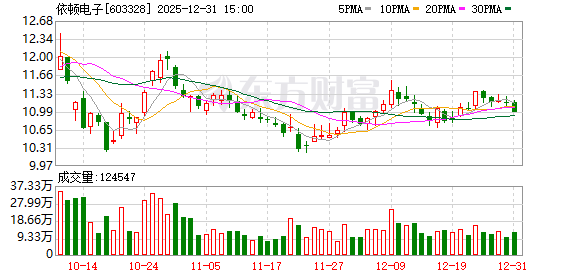
依顿电子(603328.SH):暂未涉及低轨卫星、AI服务器领域
Ge Long Hui· 2025-12-31 10:12
Group 1 - The company, Yidun Electronics (603328.SH), has limited PCB products applied in the industrial robot sector [1] - The company has not yet ventured into low Earth orbit satellites and AI server markets [1]
光伏设备行业跟踪报告:太空光伏有望驱动行业长期需求,设备公司率先受益
GUOTAI HAITONG SECURITIES· 2025-12-31 09:36
Investment Rating - The report assigns an "Accumulate" rating for the photovoltaic equipment industry [1]. Core Insights - The low Earth orbit (LEO) satellites and space computing are expected to drive long-term demand in the photovoltaic industry, with equipment companies likely to benefit first [2]. - The report highlights that as LEO satellites enter a phase of intensive launches and the commercialization of space computing becomes evident, there will be a significant increase in demand for new photovoltaic technologies [4]. Summary by Sections Investment Recommendations - The report suggests that core equipment manufacturers are expected to benefit from the increasing demand driven by LEO satellites and space computing. Recommended stocks include Maiwei Co., Ltd., Jiejia Weichuang, Jing Shan Light Machine, and Laplace, with Di'er Laser identified as a beneficiary [4]. Market Dynamics - Elon Musk's plan to deploy 100GW of solar AI satellites annually is a key driver for space photovoltaic demand. The ability to harness solar energy in space offers longer generation times and higher stability and availability of energy [4]. - The report notes that the International Telecommunication Union (ITU) has regulations that allow for a maximum of about 60,000 satellites in LEO, with Starlink having applied for 42,000. This rapid expansion of satellite constellations is expected to increase demand for solar wings, battery cells, deployable array structures, and power management systems [4]. Technological Developments - The current main technology for space photovoltaics is gallium arsenide, with multi-junction gallium arsenide cells achieving a production efficiency of 30%. However, the complexity and cost constraints limit its scalability for LEO constellations [4]. - In the short to medium term, silicon-based P-type HJT technology is expected to penetrate low Earth orbit missions due to its lightweight potential and ongoing advancements in radiation resistance [4]. - Long-term prospects for perovskite tandem cells are promising due to their high efficiency and flexible film advantages, provided that breakthroughs in packaging lifespan and large-area consistency are achieved [4]. Industry Collaboration - The commercialization of the space photovoltaic industry is accelerating, with companies actively exploring opportunities in the space economy. For instance, Junda Co. and Shangyi Optoelectronics have signed a strategic cooperation agreement to integrate resources and collaborate on the application of perovskite battery technology in space energy [4].
“太空妖股”AST SpaceMobile 成功发射迄今为止最大的卫星,挑战Space X星链
Hua Er Jie Jian Wen· 2025-12-25 00:13
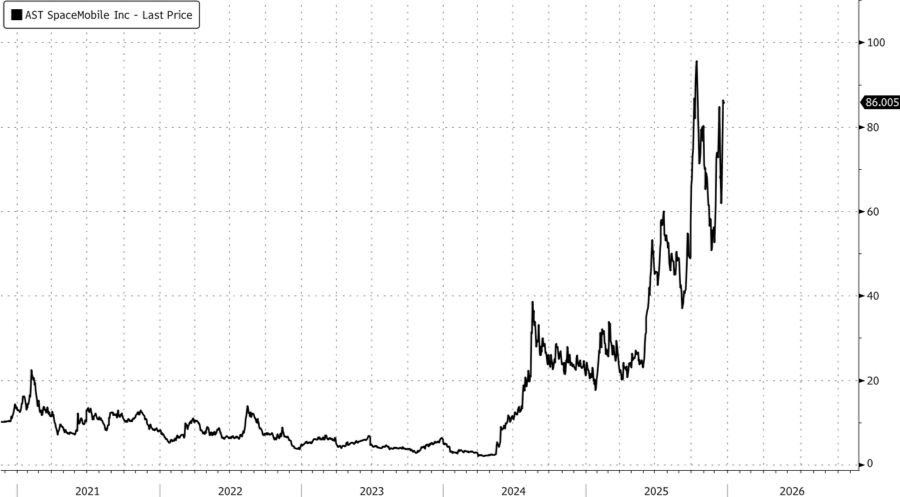
Core Insights - AST SpaceMobile successfully launched its largest satellite, BlueBird 6, marking the beginning of direct competition with SpaceX's Starlink in the satellite communication sector [1][9] - The launch is significant for the low Earth orbit (LEO) satellite communication industry, with AST SpaceMobile planning to deploy 45 to 60 satellites by 2026, directly challenging SpaceX's existing fleet of over 9,400 satellites [3][7] Company Developments - The BlueBird 6 satellite, launched from India, is designed to provide direct satellite services to standard smartphones, covering an area of 2,400 square feet, which is three times larger than previous satellites [4] - AST SpaceMobile's stock price reached a peak of $92.95 post-launch, although it closed down 8.9% at $78.05, reflecting a year-to-date increase of 270% [1][5] - The company has established partnerships with major telecom operators such as AT&T, Verizon, and Vodafone to integrate satellite coverage with existing cellular networks [3][7] Market Context - The low Earth orbit satellite industry is expected to accelerate in 2026, which is seen as a pivotal year for commercial deployment and service initiation [6][9] - SpaceX's Starlink continues to lead the market with over 21,000 new customers daily and a total of 9 million users globally, while preparing for an IPO [7][8] - The competitive landscape is heating up, with industry analysts noting a shift in focus from LEO satellites to lunar and Martian exploration in the future [8]
这两类ETF赚翻了!今年最高涨125%,你的投资抓住了吗?
Sou Hu Cai Jing· 2025-12-24 13:34
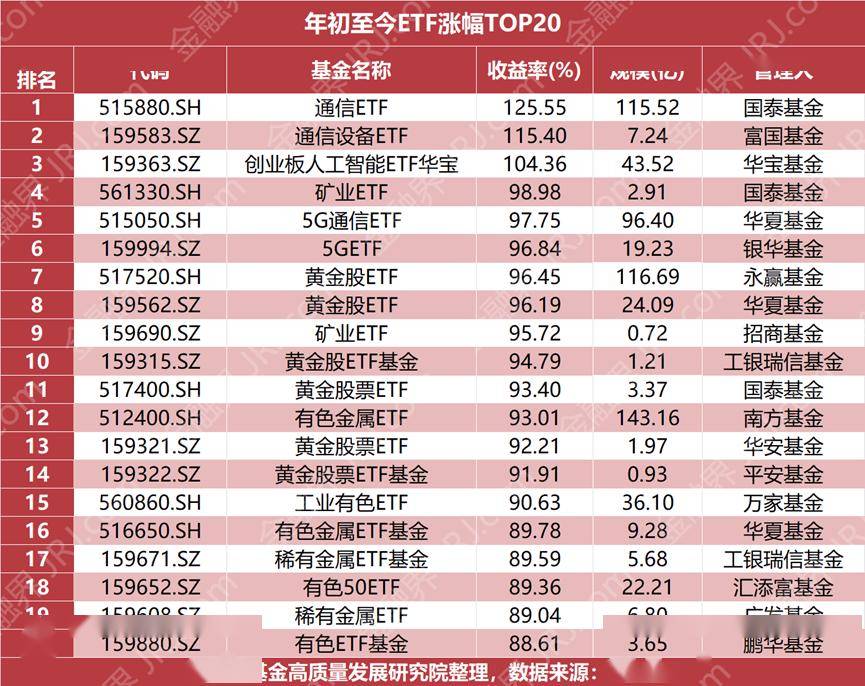
Group 1 - The core viewpoint of the articles highlights a significant shift in investment strategies, with a growing preference for ETFs over actively managed funds due to their competitive performance and simplicity [1][3] - As of December 23, the total scale of ETFs in the market has surpassed 5.85 trillion yuan, marking an increase of 2.11 trillion yuan since the beginning of the year, representing a growth rate of over 56% [1] - The average return of ETFs has approached 25% this year, while actively managed equity funds have yielded an average return of about 30%, indicating a narrowing performance gap [1] Group 2 - The top-performing ETFs this year include the Communication ETF with a return of 125.55%, followed by the Communication Equipment ETF at 115.40%, and an AI-focused ETF exceeding 100% [2] - The strong performance of these leading ETFs is primarily driven by two key themes: AI-related sectors such as communication devices and 5G, and the precious and non-ferrous metals sector including gold, silver, copper, and aluminum [3] - Future investment opportunities in the communication sector are expected to be bolstered by AI computing demand, benefiting segments like optical modules and fiber optics, while the non-ferrous metals sector is supported by safe-haven demand for gold and supply constraints in copper and aluminum [3]
低轨卫星+太空算力双轮驱动,太空光伏远期市场可观,科创新能源ETF(588830)备受关注
Xin Lang Cai Jing· 2025-12-23 01:48
Group 1 - Strategic cooperation agreement signed between Junda Co. and Shangyi Optoelectronics to explore the application of perovskite battery technology in space energy [1] - The low Earth orbit satellite and space computing power are expected to drive a significant market for space photovoltaics, with an estimated launch of around 15,000 satellites by 2030, potentially generating a total power output of 150 MW [1] - The market space for space photovoltaics is projected to be substantial, with Musk proposing the deployment of 100 GW of AI computing power in space annually [1] Group 2 - Gallium arsenide is currently the mainstream technology for space photovoltaics, offering advantages in efficiency and radiation resistance, but is expensive for large-scale applications [1] - Crystalline silicon technology is cost-effective for large-scale deployment, with enhancements in radiation resistance and power density expected from HJT technology [1] - Perovskite technology may be a long-term option, with potential conversion efficiencies exceeding 30% and superior power density compared to crystalline silicon and gallium arsenide [1] Group 3 - The Sci-Tech Innovation Board New Energy ETF closely tracks the Shanghai Stock Exchange Sci-Tech Innovation Board New Energy Index, which includes 50 major companies in the photovoltaic, wind power, and new energy vehicle sectors [2] - As of November 28, 2025, the top ten weighted stocks in the index include companies like Canadian Solar, Trina Solar, and JinkoSolar, collectively accounting for 47.84% of the index [2]





技术看市:市场放量突破短期趋势,风险已大幅释放,但难言震荡就此结束
Jin Rong Jie· 2025-12-22 13:23
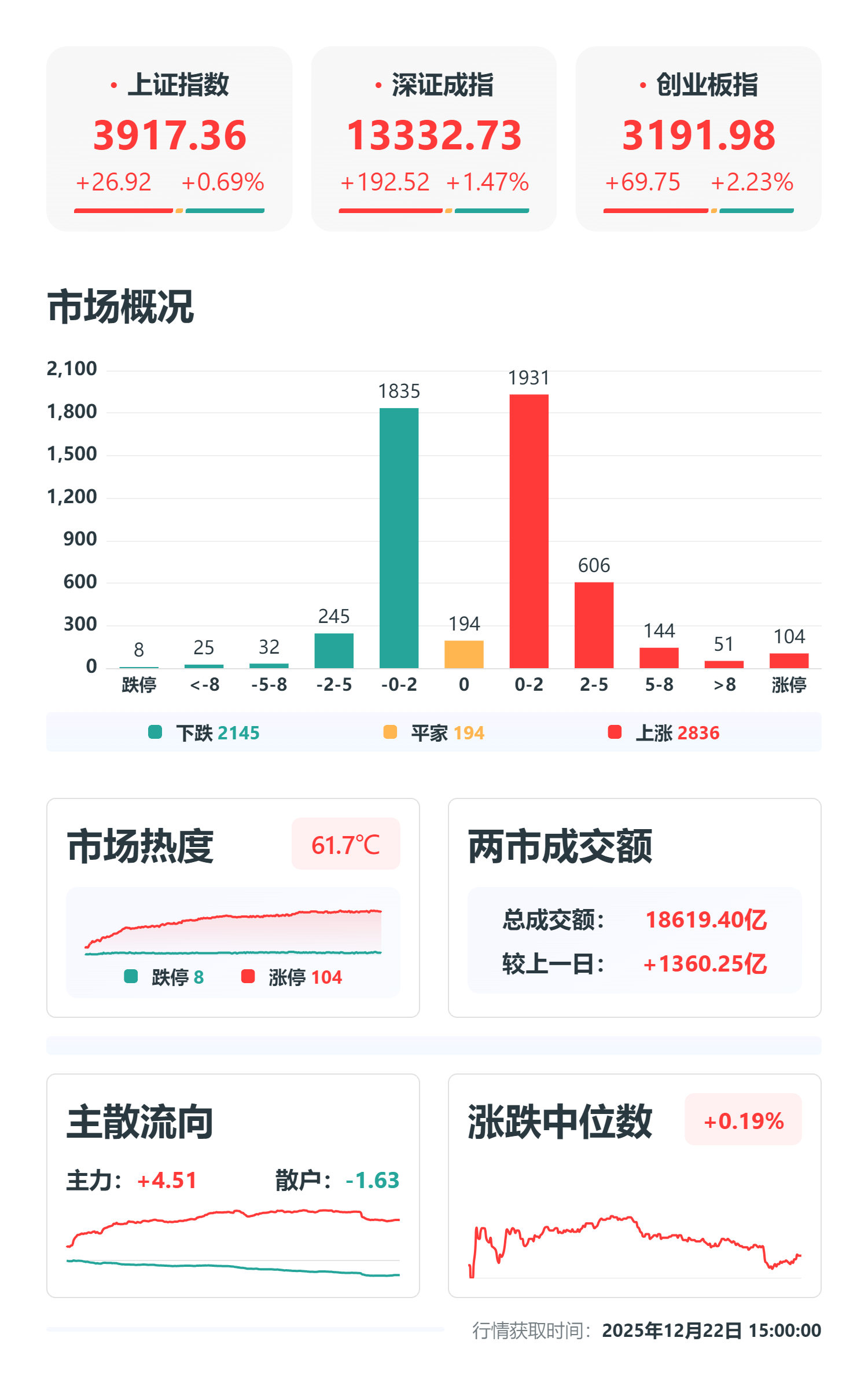
Group 1 - The A-share market continued its recent rebound, with the Shanghai Composite Index rising for four consecutive days, closing at 3917.36 points, up 0.69% [1] - The Shenzhen Component Index increased by 1.47%, the ChiNext Index rose by 2.23%, the CSI 300 gained 0.95%, and the STAR 50 climbed by 2.04% [1] - A total of 2836 stocks rose, 2133 fell, and 206 remained unchanged, with a total trading volume of 1.86 trillion yuan, an increase of approximately 136.24 billion yuan compared to the previous trading day [1] Group 2 - The net inflow of main funds into the market was 8.77 billion yuan, with the communication equipment sector receiving the highest net inflow, followed by electronic components, consumer electronics, motors, and semiconductors [7] - Conversely, the commercial retail sector experienced the largest net outflow, along with aerospace, internet services, optical optoelectronics, and automotive parts [7] - Various themes such as Hainan Free Trade, silver, SOFC concepts, tungsten, F5G concepts, precious metals, low-orbit satellites, and optical communication saw significant gains, while themes like SPD concept, Ant Group, pharmaceutical commerce, film and entertainment, Pop Mart, rental and sale rights, and AI healthcare faced declines [7] Group 3 - Market expert Xu Xiaoming indicated that the market's continued rebound suggests a formed bottom structure, with four days of substantial gains and a clear trend of more stocks rising than falling [7] - Xu emphasized the importance of adhering to market trends to avoid significant errors, noting that navigating through market fluctuations can be challenging but necessary for long-term success [7] - He pointed out that while the market has shown signs of a bottom structure, it is still uncertain if the fluctuations have ended, advising caution and a gradual approach moving forward [7]
2026年通信行业投资策略报告:聚焦AI算力供不应求和新技术演进,低轨卫星进入景气周期-20251217
Western Securities· 2025-12-17 03:48
Group 1 - The communication sector experienced a significant increase in valuation, with the communication index rising by 73.0% in 2025, ranking second among 31 primary industries in the Shenwan classification [1][15][24] - The growth in the communication industry is primarily driven by AI computing power, leading to accelerated technological iterations and scale growth across the entire AI computing power supply chain [1][15] - The report emphasizes the focus on the supply-demand imbalance in AI computing power and the evolution of new technologies, particularly the entry of low-orbit satellites into a prosperous cycle [1][2] Group 2 - AI computing power is entering a new stage, with structural changes expected in 2026, including a shift in demand from training to inference computing power [2][26] - The capital expenditure (Capex) investment structure is stabilizing among leading cloud providers, with second-tier cloud providers beginning to join the market [2][35] - The architecture of computing power networks is evolving, with scale-up and scale-across strategies contributing to increased network demand [2][42] Group 3 - The optical interconnection sector is facing supply-demand imbalances, particularly in optical modules, optical chips, and Faraday rotators, with a focus on technological trends such as 1.6T, silicon photonics, OCS, and CPO [3][51][54] - The liquid cooling market is at a historic turning point, with significant demand in North America, Southeast Asia, and China, particularly driven by the North American computing power market [3][11] - The IDC industry is expected to maintain an expansion trend driven by AI development, with an increase in AIDC penetration rates anticipated for 2026 [4][11] Group 4 - The report highlights the importance of breakthroughs in rocket capacity as a key variable for the commercial aerospace industry in China, with low-orbit satellite internet expected to enter an accelerated prosperity phase [1][11][24] - The commercial aerospace industry is a key focus area supported by national policies, with significant growth potential anticipated as satellite and computing power converge for space data processing [11][24][25] - The report suggests monitoring the success rates of various rocket models and their capacity planning as the industry matures [11][24]