
创新生态

Search documents
缺席全国前20名榜单,浙江急了?
3 6 Ke· 2025-12-19 02:23
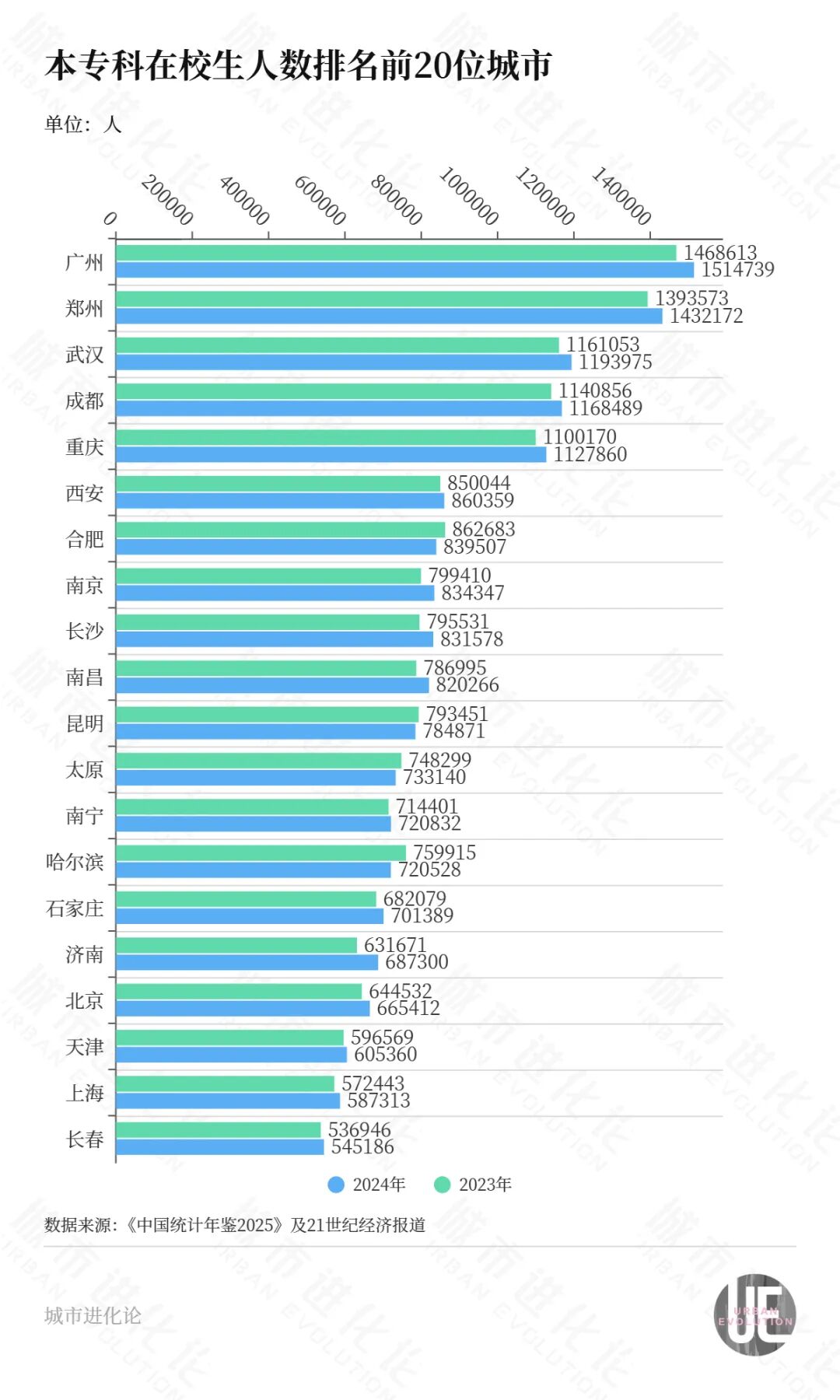
Group 1 - The core point of the article highlights the increasing number of college students in major cities, with Zhengzhou ranking second in China with over 1.43 million students, following Guangzhou [1] - The total number of college students in the top 20 cities rose from 17.04 million in 2023 to 17.37 million in 2024, marking a growth of 1.97%, which accounts for 44.65% of all college students in the country [4] - The competition for talent among cities is not just a policy issue but also a matter of innovation ecosystems and future competitiveness, with a stark contrast in entrepreneurial rates between graduates from world-renowned universities and those in China [4] Group 2 - Despite having prestigious institutions like Zhejiang University, Hangzhou still lacks quality educational resources compared to cities like Nanjing and Wuhan, prompting the establishment of new universities such as Qiantang University [5] - The Zhejiang government aims to enhance its educational and technological capabilities through initiatives like the "Double First-Class 196 Project," which seeks to establish at least one high-level university in each city [6] - The "14th Five-Year Plan" for Zhejiang emphasizes the need for a coordinated mechanism to strengthen education, technology, and talent, supporting the development of world-class universities and high-level applied universities [6]

解码杭州城市能级跃升的内涵逻辑——专访浙江大学求是特聘教授、城市发展与管理系主任石敏俊
Hang Zhou Ri Bao· 2025-12-18 02:07
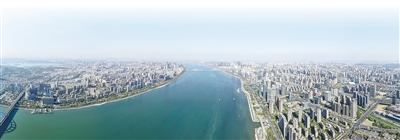
Core Insights - The recent urban work conference by the Central Committee of the Communist Party of China marks a new direction for urban development in the new era, emphasizing high-quality urban growth and the transition from rapid urbanization to stable development [1][2] Group 1: Changes in Urban Development - The role of cities has shifted from being mere economic growth engines to important carriers of modernization and spaces for people's happiness, reflecting a dual focus on multi-dimensional value [2] - Urban development is transitioning from a focus on growth to a people-centered approach, emphasizing both production and living quality, and moving away from traditional industrial and real estate-driven models [2] Group 2: Hangzhou's Development Practices - Hangzhou serves as a model for the evolution from "growth logic" to "life logic," integrating the concepts of people-centeredness and quality enhancement across various urban development sectors [3][4] - The city has prioritized ecological development, viewing ecology as a core competitive advantage rather than a constraint, exemplified by initiatives like the West Lake's free access and the comprehensive protection of Xixi Wetland [3] Group 3: Innovation and Livelihood - Hangzhou has developed an innovation ecosystem that supports natural growth for talent and small businesses, characterized by a rich, self-sustaining environment that fosters continuous internal growth [4] - The city has made significant strides in public service equality and quality, enhancing citizen satisfaction through initiatives like the "most run once" administrative reform and smart urban management [4][5] Group 4: Future Recommendations for Hangzhou - To become a model of a "modernized people's city," Hangzhou should focus on balanced regional development and enhance the quality of living spaces, ensuring that all citizens can share in high-quality life experiences [5] - The city should create high-energy environments that cater to diverse cultural needs and support various demographics, including youth and the elderly, to solidify its status as a world-class modern metropolis [5]

创新港城 澎湃向“新”
Su Zhou Ri Bao· 2025-12-17 00:26
Core Insights - Zhangjiagang is emerging as an innovative city, focusing on high-quality development through continuous innovation and collaboration among local industries [1][2] - The city is recognized as a national innovative county, emphasizing practical actions and quality improvements to create a strong growth engine [1] Industry Development - The automotive sector in Zhangjiagang is thriving, with a new car rolling off the production line every 84 seconds, supporting 45 local auto parts companies [1] - The aerospace industry is also significant, with Tianbing Technology's facility capable of producing 30 rockets and 500 rocket engines annually, showcasing advancements in China's space capabilities [1][7] - The steel industry is innovating with Shagang Group's ultra-thin steel strip project, achieving a thickness of only 0.7 mm and establishing a research institute to support ongoing innovation [3] Emerging Industries - Zhangjiagang is fostering a vibrant "industrial forest," with over 40 hydrogen-related companies contributing to a billion-level industry cluster in the hydrogen energy sector [5] - The semiconductor industry is represented by Suzhou Matrix Optoelectronics, which has established a complete production line for compound semiconductor Hall sensors, enhancing the local supply chain [4] Innovation Ecosystem - The city has implemented a unique "enterprise innovation points system" to quantify and support R&D investments, talent acquisition, and collaborative projects, benefiting nearly 8,000 enterprises with over 900 million yuan in support [9][12] - Zhangjiagang has created a comprehensive service system to support businesses, including talent subsidies and project guidance, which has attracted companies like Zhuoshij Aviation and Xuanyu Medical [16][17] Future Outlook - The city aims to complete 5,000 technology investment projects during the 14th Five-Year Plan, further promoting the development of emerging industries and modern industrial innovation clusters [18]
ThinkPad首次公开招募创新生态伙伴|在深圳,与硬核创新正面交锋
3 6 Ke· 2025-12-15 11:19
Core Insights - Lenovo is hosting the ThinkPad special event on December 22 in Shenzhen, providing a unique opportunity to engage with ThinkPad product leaders and explore AI application frontiers [1][3]. Group 1: Event Overview - The event is part of Lenovo's "New Business Innovation Ecosystem Roadshow Season," focusing on AI edge chips, new interaction and perception technologies, and smart voice and acoustic solutions [3]. - This marks the first public recruitment of innovation ecosystem partners for ThinkPad, aiming to open a trillion-level commercial ecosystem for top technologies and products [5]. Group 2: Market Position and Performance - ThinkPad has established itself as a benchmark in the high-end business PC sector, trusted by over 100 million users globally, and has a strong supply chain backing from Lenovo [4]. - According to IDC, Lenovo achieved a global PC market share of 25.5% in Q3 2025, maintaining its position as the market leader, with AI PC shipments accounting for over 30% of total PC shipments [4]. Group 3: Innovation and Collaboration - The event will feature projects with cutting-edge technology and clear industry pathways, providing a platform for direct dialogue with Lenovo executives and ThinkPad business leaders [5]. - Participants will have access to resources covering the entire production chain, including opportunities for significant investments and project collaborations [5]. Group 4: Featured Technologies - Various innovative companies will showcase their technologies, such as Chengdu Qiying Tailun's AI voice chips, Fabfun's fabric keyboard, and Guangzhou Weiyi's AI headphones, highlighting advancements in AI and human-computer interaction [8][9][10]. - Shenzhen Ruimeng Semiconductor is focusing on active cooling micro-systems for AI chips, while Shenzhen Lingkong Zhidu is developing gesture interaction technologies [11][13].


广州市政府副秘书长谢伟:南沙“雨林”式创新生态赋能硬科技落地
2 1 Shi Ji Jing Ji Bao Dao· 2025-12-13 03:15
Group 1 - The "Hong Kong University of Science and Technology - Yuexiu Group" International Entrepreneurship Competition 2025 finals took place at Hong Kong University of Science and Technology (Guangzhou), marking the 10th anniversary of the Guangzhou competition [1] - The competition has attracted nearly 3,000 quality projects over the years, with notable past winners like Guangzhou Kaijia Optical Technology Co., Ltd. and Guangzhou Zhike Automation Technology Co., Ltd. establishing themselves in Nansha [1] - Nansha has implemented an innovation-driven development strategy, enhancing the entire innovation chain from basic research to technology commercialization, contributing to a vibrant scientific atmosphere [1] Group 2 - Nansha is enhancing the level of technology cooperation in the Guangdong-Hong Kong-Macao Greater Bay Area, with the Greater Bay Area Science Forum being held for four consecutive years [2] - The Nansha Technology Achievement Transformation Alliance has initiated 19 joint technology projects, and over 1,300 projects from Hong Kong, Macao, and Taiwan have been incubated [2] - Nansha's R&D investment reached 5.48%, with over 1,300 high-tech enterprises and a growth rate of 21.5% over the past three years, indicating a robust innovation ecosystem [2]
浦东引领区建设五周年:以先锋之勇开新路 以创新之势谋未来
Shang Hai Zheng Quan Bao· 2025-12-09 18:53
Economic Growth - In 2024, the GDP of Pudong New Area is projected to be 1.34 times that of 2020, with industrial output value at 1.27 times and total import-export volume at 1.25 times [1] - By 2025, Pudong is expected to maintain steady growth, with a GDP increase of 6% year-on-year in the first three quarters and a per capita GDP reaching $43,000, surpassing Italy [1] Investment and Foreign Capital - Pudong has completed 121 tasks outlined in the central government's opinions on supporting high-level reform and opening up, housing 25% of Shanghai's foreign enterprises and 50% of multinational company headquarters [2] - During the 14th Five-Year Plan, over 9,400 new foreign-funded enterprises were established in Pudong, with actual foreign investment reaching $45.3 billion, exceeding the previous five-year period [4] Innovation and Technology - Pudong has seen significant advancements in key industries, with the scale of integrated circuits, biomedicine, and artificial intelligence reaching 832.3 billion yuan, averaging an annual growth of 11.7% over three years [8] - The region has achieved breakthroughs in core technologies, including advanced processes and AI chips, with notable innovations such as the first domestically developed PD-1 drug and a four-arm laparoscopic surgical robot [8][10] Talent and Human Resources - Pudong is implementing a talent strategy to attract and retain high-level domestic and international talent, with initiatives like low-rent housing and entrepreneurial spaces for young innovators [11][12] - The "low-rent youth apartments" initiative has already attracted over 11,000 applicants, with an average age of 25 and 84% holding graduate degrees [12] Urban Development and Quality of Life - Pudong is focusing on improving living conditions by accelerating the renovation of urban villages and old neighborhoods, aiming to create more affordable rental housing [13] - The development of a comprehensive waterway system is underway to enhance urban connectivity and livability, promoting a vibrant community for residents and visitors [12][13]
央媒报道!雄安新区:一座高水平现代化城市正拔地而起
Xin Lang Cai Jing· 2025-12-09 08:19
Core Viewpoint - Xiong'an New Area is rapidly transforming from a planning blueprint into a modern high-level city, showcasing significant achievements in industrial clustering, ecological construction, and the relocation of non-capital functions from Beijing [4][16]. Group 1: Relocation and Infrastructure Development - Xiong'an New Area is designated as a key area for the relocation of non-capital functions from Beijing, with visible progress in the establishment of core functions [6][21]. - As of now, over 400 central enterprise branches and more than 4,000 Beijing-origin enterprises have successfully settled in Xiong'an [6][21]. - The first batch of central enterprise relocation projects is accelerating, with major companies like China Huaneng and China Sinochem officially moving their headquarters to Xiong'an [6][21]. Group 2: Service Mechanisms and Support Policies - Xiong'an has introduced the "1+N" action plan for enterprise migration, facilitating a smooth and efficient relocation process [7][22]. - The local government has implemented comprehensive support policies for relocated personnel, covering housing, social security, education, and talent incentives [8][23]. - The establishment of "zero-distance" service stations directly at enterprises aims to address the needs of relocated employees [8][23]. Group 3: Innovation and Industrial Growth - Innovation is a core driver of development in Xiong'an, with a collaborative ecosystem emerging among enterprises in the region [9][26]. - The Xiong'an Artificial Intelligence Industrial Park is fostering a unique industrial collaboration environment, enhancing innovation capabilities [9][26]. - The successful launch of the first "Xiong'an-made" satellite marks a significant milestone in the development of the aerospace information industry in Xiong'an [12][27]. Group 4: Ecological Development - Xiong'an has adopted a "green first, then build" philosophy, resulting in the planting of 483,000 acres of trees and the establishment of a vibrant ecological landscape [13][28]. - The water quality of Baiyangdian has improved significantly, now classified as a good lake, with biodiversity efforts leading to an increase in bird species [13][29]. - The urban park system is being developed to ensure accessibility to green spaces, enhancing the quality of life for residents [14][30].
专家共话因地制宜发展新质生产力
Xin Hua She· 2025-12-08 14:31
Core Viewpoint - The forum emphasizes the importance of developing new productive forces tailored to local conditions as a significant strategic issue for economic and social development in the long term [1] Group 1: Forum Overview - The "2025 National Affairs Forum" was held on December 8 in Beijing, organized by the State Council's Research Office [1] - The theme of the forum is "Developing New Productive Forces According to Local Conditions" [1] - The forum aims to gather wisdom and consolidate efforts from various sectors to formulate actionable policy recommendations [1] Group 2: Participants and Structure - Over 300 participants attended, including officials from relevant government departments, provincial and municipal leaders, experts, scholars, and representatives from the business community [1] - The forum included three specialized sessions focusing on "Creating an Innovative Ecosystem," "Cultivating and Expanding Emerging and Future Industries," and "Artificial Intelligence+" [1] Group 3: Strategic Importance - The development of new productive forces is seen as a crucial measure to implement the spirit of the Fourth Plenary Session of the 20th Central Committee of the Communist Party [1] - The forum is positioned as a platform to support the implementation of the Central Government's decision-making and deployment [1]
描画“三地”战略新蓝图 乘势而上谱写高质量发展丹徒新篇章
Xin Hua Ri Bao· 2025-12-03 00:42
Core Viewpoint - The article highlights the significant progress and strategic initiatives of Zhenjiang Dantu District in achieving high-quality development, focusing on industrial strength, innovation, urban-rural integration, and improved living standards during the "14th Five-Year Plan" period and beyond. Group 1: Economic Development - Dantu District's GDP has historically surpassed 50 billion yuan, with per capita GDP reaching the threshold of middle-developed countries, indicating a strategic leap in regional economic development [2] - The district has established a "5+2" key industry framework, increasing the number of billion-level industrial clusters to three, showcasing enhanced resilience in development [2] - The number of high-tech enterprises and technology-based SMEs has increased by 52% and 128% respectively since 2020, reflecting a robust innovation ecosystem [2] Group 2: Investment and Innovation - Dantu has implemented a collaborative investment mechanism that breaks down barriers and enhances synergy in attracting investments, leading to efficient project-resource matching [2][3] - The district focuses on dual-track development strategies of "attracting new projects" and "activating existing resources," significantly boosting innovation resource aggregation [3] - Dantu is committed to strengthening its industrial base by establishing innovation hubs and fostering strategic emerging industries [3][4] Group 3: Urban-Rural Integration - The urbanization rate of the permanent population has increased from 71.85% to 73.28%, indicating ongoing improvements in urban-rural development [7] - Dantu has successfully built multiple provincial-level characteristic rural areas and improved transportation infrastructure, facilitating urban-rural integration [7] - The district emphasizes ecological sustainability, with a continuous improvement in air quality and water quality, alongside a reduction in energy consumption per unit of GDP by 14.5% over four years [7] Group 4: Social Development and Living Standards - The per capita disposable income of residents has risen to 52,400 yuan, with the urban-rural income ratio narrowing to 1.93:1, reflecting enhanced living standards [9] - Dantu has expanded public service resources, including new schools and healthcare facilities, achieving national recognition for educational and cultural service quality [9][10] - Future plans include improving employment stability, educational equity, and healthcare services, ensuring comprehensive social welfare [10] Group 5: Governance and Risk Management - Dantu has made significant strides in modernizing governance, with a focus on legal and professional standards in social management [11] - The district aims to enhance its governance capabilities through innovative service models and comprehensive safety regulation systems [11] - Proactive measures are being taken to mitigate financial and real estate risks, ensuring a stable environment for high-quality development [12]
广东省人大常委会执法检查组建议进一步推动完善科技创新体制机制,推动全省科技创新事业迈上新台阶
Zhong Guo Fa Zhan Wang· 2025-12-01 09:05
Core Viewpoint - The Guangdong Provincial People's Congress is conducting inspections to ensure the implementation of the "Guangdong Provincial Science and Technology Innovation Regulations," emphasizing the importance of technological innovation in modernizing the industrial system and enhancing self-reliance in technology [1] Group 1: Policy Implementation - The provincial government and relevant departments are urged to accelerate the formulation of the 14th Five-Year Plan for technological innovation, focusing on institutional innovation to address specific challenges [2] - A comprehensive policy system for industrial technological innovation is to be established, including investment, management, service, evaluation, and incentive policies tailored to the needs of different regions and industries [2] - Continued efforts in publicizing and interpreting the regulations are necessary to engage enterprises and research personnel, fostering a consensus on the implementation of the regulations [2] Group 2: Enhancing Original Innovation Capability - The regulations call for a systematic approach to strengthen strategic technological capabilities, including optimizing the layout of laboratories and promoting the establishment of national laboratories in Guangdong [3] - The integration of resources for key technology research is essential, with a focus on collaboration among enterprises, universities, and research institutions to create a robust innovation ecosystem [3] - Encouraging leading enterprises to form innovation consortia with upstream and downstream partners will facilitate significant technological breakthroughs and the development of strategic products [3] Group 3: Innovation Ecosystem Optimization - There is a need to enhance the training and recruitment of technology innovation talent, focusing on various specialized fields to build a strong talent pool for technological advancement [4] - The establishment of an evaluation system for talent based on innovation capability and contributions is crucial to attract and retain high-level talent [4] - Promoting cooperation in technological innovation within the Guangdong-Hong Kong-Macao Greater Bay Area will facilitate the smooth flow of talent, data, and resources, enhancing collaborative innovation efforts [4]