
南向资金流入

Search documents
北水动向|北水成交净买入17.44亿 北水追捧大金融板块 全天加仓中国平安(02318)超5亿港元
智通财经网· 2025-07-11 09:59
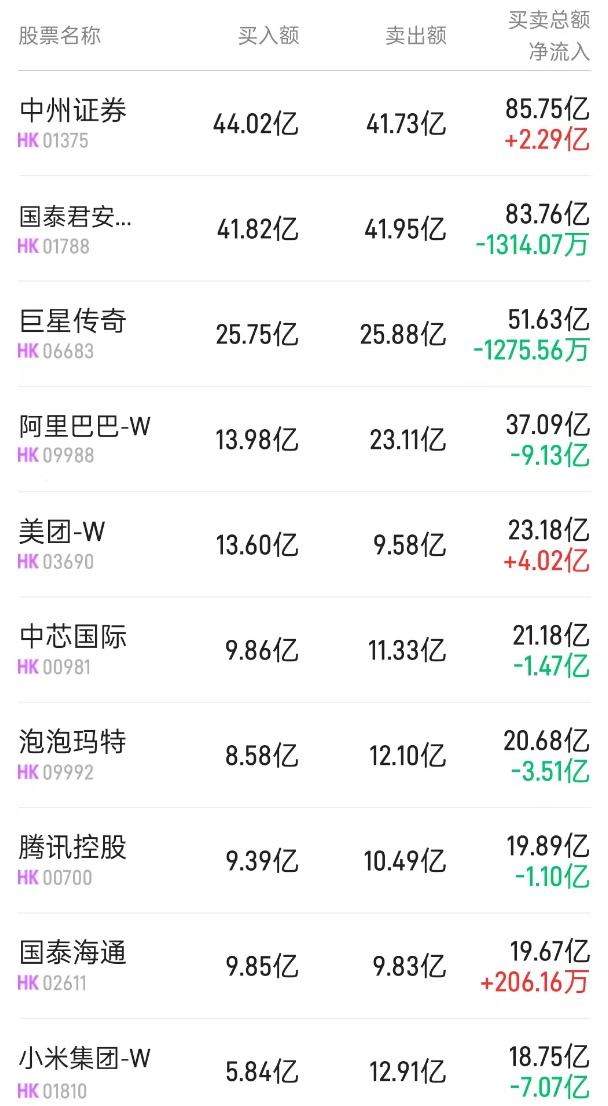
Group 1: Market Overview - On July 11, the Hong Kong stock market saw a net inflow of 1.744 billion HKD from northbound trading, with the Shanghai-Hong Kong Stock Connect recording a net outflow of 2.197 billion HKD and the Shenzhen-Hong Kong Stock Connect showing a net inflow of 3.941 billion HKD [1] - The most bought stocks by northbound investors included Meituan-W (03690), Ping An of China (02318), and Hong Kong Exchanges and Clearing (00388) [1] - The most sold stocks included Xiaomi Group-W (01810), Alibaba-W (09988), and Tencent (00700) [1] Group 2: Stock Performance - Meituan-W (03690) received a net inflow of 715 million HKD, while Alibaba-W (09988) faced a net outflow of 183 million HKD [4] - Ping An of China (02318) saw a net inflow of 523 million HKD, benefiting from the Ministry of Finance's enhanced long-term assessments for state-owned commercial insurance companies [5] - Hong Kong Exchanges and Clearing (00388) experienced a net inflow of 255 million HKD, supported by continued inflows from southbound funds and increased IPO activity [5] Group 3: Sector Insights - The brokerage sector saw net inflows, with Zhongzhou Securities (01375) and Guotai Junan (02611) receiving net inflows of 183 million HKD and 2.06 million HKD, respectively [6] - The IPO market remains robust, with June seeing 150 IPO applications, accounting for 85% of the total for the first half of the year [6] - Xiaomi Group-W (01810) faced a significant net outflow of 738 million HKD, despite reporting over 300,000 cumulative deliveries of its electric vehicles [6]





上半年香港IPO市场募资额全球登顶
Jin Rong Shi Bao· 2025-07-10 03:11
Group 1 - The Hong Kong IPO market has seen significant activity in June, with 15 new listings raising a net amount of HKD 26.559 billion, and over 200 companies queued for IPOs [1] - In the first half of the year, the Hong Kong IPO market raised over HKD 107 billion, ranking first globally, with a 22% increase compared to the total amount raised in the previous year [2] - Major IPOs, such as CATL's listing, which raised approximately HKD 35.5 billion, have driven the market's resurgence [2] Group 2 - The influx of mainland companies seeking secondary listings in Hong Kong has contributed to the market's growth, driven by the need for international expansion and capital [3] - Hong Kong's capital market has implemented various measures to facilitate listings, including simplified processes for A-share companies [4] - The Hang Seng Index has risen by 20% in the first half of the year, indicating strong market performance, with significant inflows of southbound capital totaling over HKD 730 billion [5] Group 3 - The market outlook for the second half of the year remains positive, with around 200 IPO applications received, reflecting increased interest from both local and international companies [6] - Anticipated policy adjustments, such as changes to H-share public holding requirements and flexible pricing mechanisms, could further enhance the attractiveness of the Hong Kong market for new listings [6]
多只产品份额创新高 6月以来逾200亿元涌入港股主题ETF
Shang Hai Zheng Quan Bao· 2025-07-04 19:00
Group 1 - The Hong Kong stock market is becoming a new focus for capital, with over 20 billion yuan flowing into Hong Kong-themed ETFs since June, leading to record high shares for several ETFs [2][3] - Major public funds are optimistic about the long-term investment value of the Hong Kong market and plan to increase their allocations [2][4] - As of July 3, 2023, the net subscription amount for Hong Kong-themed ETFs reached 209.68 billion yuan, with significant inflows into sectors like innovative pharmaceuticals, technology, and dividends [3][4] Group 2 - Southbound capital has become a crucial support for the Hong Kong stock market, with a net inflow of over 690 billion yuan this year, nearly double that of the same period last year [5][6] - The performance of the Hong Kong stock market in the first half of the year was driven by the revaluation of Chinese technology assets, substantial southbound capital inflows, and the market being in a valuation trough [6][7] - Future investment opportunities in the Hong Kong market are expected to focus on policy support, technological iterations, and capital allocation preferences, particularly in technology, innovative pharmaceuticals, and high-dividend assets [7]
上半年南向资金净流入超7300亿港元 持续坚定加仓港股 成交占比超40%
Zheng Quan Shi Bao· 2025-07-02 18:10
Core Insights - Southbound capital has significantly increased its presence in the Hong Kong stock market, with net inflows exceeding 730 billion HKD this year, marking a historical high for multiple indicators [1][2]. Group 1: Market Performance - The Hong Kong market has shown strong performance in the first half of the year, with the Hang Seng Index rising by 20% and the Hang Seng Tech Index increasing by 18.68%, ranking among the top global indices [2]. - In the first half of the year, southbound capital recorded a net inflow of 731.19 billion HKD, the highest for the same period historically, second only to the full-year figure of 807.87 billion HKD in 2024 [2]. - Southbound capital has shown a "buy the dip" strategy, with 30 trading days seeing net inflows exceeding 10 billion HKD, even on days when the Hang Seng Index declined [3]. Group 2: Trading Activity - The trading volume of southbound capital has increased significantly, with its share of the total trading volume in the Hong Kong market rising from 2.98% in 2015 to over 43.12% in the first five months of this year [4]. - In April, southbound capital recorded a net inflow of 166.67 billion HKD, the second-highest monthly inflow in history [2]. Group 3: Policy Support - The increase in southbound capital allocation to Hong Kong stocks is supported by policy measures, including the expansion of eligible stocks for the Stock Connect programs and the extension of tax incentives until 2027 [4]. Group 4: Sector Performance - The banking sector has seen significant increases in holdings by southbound capital, with major banks like China Construction Bank and HSBC among the top beneficiaries [6]. - The Hang Seng Index for mainland Chinese banks rose by 25.94% in the first half of the year, outperforming other key indices [6]. Group 5: Valuation Opportunities - "A+H" bank stocks are attracting southbound capital due to their lower valuations and higher dividend yields in the Hong Kong market compared to their A-share counterparts [7]. - Among 15 "A+H" bank stocks, 13 have A-share premium rates exceeding 10%, indicating a strong preference for H-shares due to their relative value [7].




港股银行板块:南向资金流入近7300亿,溢价率降
Sou Hu Cai Jing· 2025-06-30 14:16
Core Insights - In the first half of the year, southbound capital inflow into Hong Kong stocks reached nearly 730 billion HKD, significantly improving liquidity and narrowing the gap with A-shares [1] - The banking sector in Hong Kong has become a key focus for southbound capital, contributing to a substantial decline in the AH premium [1] - High dividend assets, particularly bank stocks, are seen as attractive investments due to their lower valuations and higher yields compared to government bonds [1] Group 1: Capital Inflow and Market Dynamics - Southbound capital has net bought nearly 730 billion HKD in Hong Kong stocks this year, marking the highest inflow for the same period historically [1] - The liquidity of Hong Kong stocks has improved, with trading volumes and turnover rates catching up to those of A-shares [1] - The Hang Seng Index's rolling 20-day turnover rate has matched that of the CSI 300, indicating a significant improvement in market activity [1] Group 2: Valuation and Investment Trends - The AH premium index for Hong Kong and mainland stocks hit a new low on June 12, with a subsequent slight rebound but remaining low as of June 27 [1] - The banking sector has been a major driver of the decline in AH premium, with significant inflows into bank stocks [1] - The dividend yield of H-shares in the banking sector is higher, and valuations are lower, making them attractive to institutional investors [1] Group 3: Institutional Interest and Future Outlook - Insurance funds have been significant buyers of Hong Kong bank stocks, with multiple stake increases throughout the year [1] - High dividend bank stocks are favored by private equity firms, with a notable increase in financial ETF shares linked to Hong Kong stocks [1] - The difference between bank dividend yields and government bond yields exceeds 3.5%, reinforcing the attractiveness of these investments [1]
南向资金持续流入,港股通科技ETF(513860)小幅回调
Jin Rong Jie· 2025-06-30 02:58
Core Viewpoint - The article highlights a significant increase in net inflows into Hong Kong stocks, indicating strong investor interest and potential growth in the market [1] Group 1: Market Trends - During the week of June 23-27, there was a net inflow of 26 billion RMB into Hong Kong stocks, with an average daily inflow of 5.2 billion RMB, up from 3 billion RMB the previous week [1] - Year-to-date, the cumulative net inflow has reached 679.4 billion RMB, nearing the total expected for the entire year of 744 billion RMB [1] - The Hang Seng Technology Index saw a slight increase at the market open, with popular ETF stocks like AVIC and SMIC rising over 4% [1] Group 2: Monetary Policy and Economic Outlook - The People's Bank of China held a monetary policy committee meeting, emphasizing the need for a moderately accommodative monetary policy and support for technological innovation and consumption [1] - China Galaxy predicts that Hong Kong stocks may experience a volatile upward trend in the second half of 2025, despite challenges such as insufficient effective demand and low inflation [1] - Dongfang Securities suggests that the current market presents a good opportunity for increased investment, anticipating that the market will soon recognize the lower probability and intensity of short-term risk events [1] Group 3: Investment Opportunities - The Hong Kong Stock Connect Technology ETF (513860) closely tracks the CSI Hong Kong Stock Connect Technology RMB Index, with the top ten weighted stocks accounting for 69.78% of the index [1] - The top ten stocks include major companies like Xiaomi, Tencent, Alibaba, and BYD, indicating a strong focus on technology and innovation [1] - Investors can access the Hong Kong Stock Connect Technology ETF through various channels, facilitating investment in quality technology assets [1]
南向资金流入规模创历史新高,恒指年内累计上涨超20% 资金配置呈现明显偏好特征
Mei Ri Jing Ji Xin Wen· 2025-06-11 06:47
Group 1 - The Hong Kong stock market has shown strong growth momentum in 2023, with the Hang Seng Index rising 20.45% year-to-date as of June 10, indicating a potential technical bull market [1] - The continuous inflow of southbound funds has played a crucial role in this upward trend, with a net inflow of 6320.32 billion yuan so far this year, approaching last year's total of 7440.31 billion yuan [1] - In the first quarter of 2023, southbound funds recorded a net purchase of 4113.25 billion yuan, marking the highest quarterly net buying since the launch of the mutual market access mechanism [1] Group 2 - Analysts suggest that in a declining interest rate environment, undervalued high-dividend bank H-shares are a favorable option for medium to long-term investment [2] - For individual investors seeking stable cash flow, it is recommended to consider index investment tools such as the Hong Kong Stock Connect Financial ETF and the Hong Kong Central State-Owned Enterprises Dividend ETF, which focus on low valuation and high dividend yields [2] - As of June 10, the bank H-share component in the Hong Kong Stock Connect Financial ETF exceeds 65%, while the tracked index of the Hong Kong Central State-Owned Enterprises Dividend ETF has a dividend yield of 7.84% over the past 12 months [2]
南向资金今年净流入6250亿元创新高 港股恒指涨超20%迈入牛市
Jin Rong Jie· 2025-06-11 05:25
今年以来,香港股票市场展现出强劲的增长势头。恒生指数年内累计上涨20.45%,在全球重要指数中 表现突出。恒生科技指数年内涨幅达到20.68%,正式迈入技术性牛市区间。港股市场的活跃度显著提 升,成交量持续放大。这一轮上涨行情背后,南向资金的持续流入发挥了关键性作用。 南向资金自去年开始持续净流入,流入金额不断扩大。2024年第一季度以来已连续6个季度净流入在 1000亿元以上。南向资金在港股市场的参与度日益提升。今年以来有南向资金参与的101个交易日中, 有98个交易日南向资金成交总额占港股市场成交总额比例超过50%。4月22日成交额占比更是达到70% 以上的高位。 资金配置呈现明显偏好特征 从具体个股配置情况来看,截至6月9日,有116只港股通标的股年内获加仓超1亿股。这一数量约占全部 港股通标的14%。中国银行、建设银行、工商银行、农业银行4只国有银行H股获加仓数量位居前列, 均超过20亿股。阿里巴巴-W、美团-W、快手-W等互联网龙头股同样受到青睐。中芯国际、商汤-W、 地平线机器人-W等大型科技股获加仓数量均在1亿股以上。 本文源自:金融界 南向资金流入规模创历史新高 截至6月9日,今年以来南向资金 ...


南向资金年内净流入港股市场超六千亿元
Zheng Quan Shi Bao· 2025-06-10 19:13
Group 1 - The Hong Kong market has shown strong performance in 2023, with the Hang Seng Index up 20.45% and the Hang Seng Tech Index up 20.68%, entering a technical bull market [1] - The Hong Kong stock market is undergoing multi-layered reforms to optimize listing mechanisms and improve efficiency, leading to a recovery in the IPO market and increased liquidity [1] - The Hong Kong government has announced measures to enhance the stock market, focusing on trading mechanism optimization and listing system reforms to inject new development momentum [1] Group 2 - The recent rally in the Hong Kong stock market is significantly supported by the continuous inflow of southbound funds, which have reached a net inflow of 6250.77 billion yuan as of June 9, 2023 [2] - In the first quarter of 2023, southbound funds recorded a net buying amount of 4113.25 billion yuan, the highest quarterly net buying since the opening of the mutual market [2] - Southbound funds have consistently net inflowed over 1000 billion yuan for six consecutive quarters, indicating increasing participation in the Hong Kong market [2] Group 3 - Among the stocks, 127 have seen an increase in market value of over 1 billion HKD, with Alibaba-W, Tencent Holdings, and China Mobile being notable mentions [3] - Alibaba-W has experienced the largest increase in market value, reaching 889.02 billion HKD, with a year-to-date increase of 44.17% [3] - China Merchants Bank has seen the highest growth in shareholding quantity, with a net buying of 4.7 million shares this year, marking a 94.45% increase from the end of last year [3] Group 4 - 27 stocks have a southbound fund holding ratio exceeding 50%, with 24 of them being "A+H" shares, including China Telecom and Tigermed, which have the highest ratios at 74.49% and 70.25% respectively [4] - The sectors with a high proportion of southbound fund holdings are primarily concentrated in industrial, financial, public utilities, and healthcare industries [4]
港股南向资金持续流入,机构称南向资金全年累计流入可能超万亿港元
Mei Ri Jing Ji Xin Wen· 2025-06-10 05:23
Group 1 - The Hong Kong stock market indices experienced a decline, with the Hang Seng Technology Index showing significant volatility, dropping nearly 1% at one point [1] - The Southbound capital has seen a substantial net inflow into Hong Kong stocks, amounting to HKD 666.59 billion year-to-date, which is 82.5% of the projected total net inflow for 2024 [1] - The current macroeconomic environment in China, while needing repair, presents structural highlights that favor the Hong Kong stock market, particularly in sectors like new consumption, AI technology, and innovative pharmaceuticals [1] Group 2 - The Hong Kong Consumption ETF (513230) focuses on e-commerce and new consumption sectors, which are relatively scarce compared to A-shares [2] - The Hang Seng Technology Index ETF (513180) includes core AI assets and encompasses technology leaders that are less represented in A-shares [3]