
可重复使用火箭

Search documents
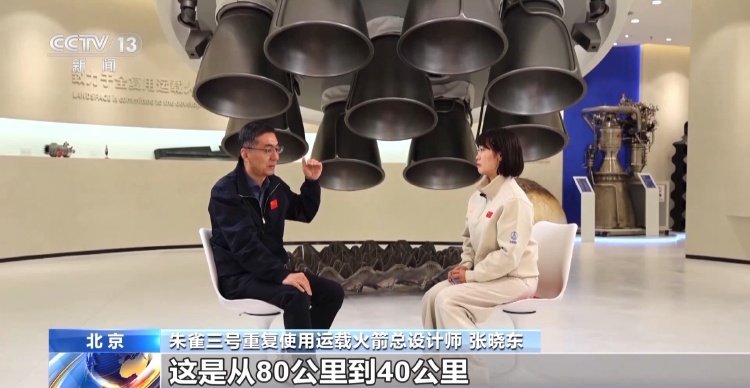
专访朱雀三号总师 回收验证关键技术细节首次对外披露
Yang Shi Xin Wen Ke Hu Duan· 2025-12-13 06:05
Core Viewpoint - The successful maiden flight of the Zhuque-3 reusable launch vehicle marks a significant milestone in China's aerospace industry, despite the failure of the first stage rocket recovery. The flight validated key technologies for rocket reuse and laid a solid foundation for future improvements and iterations [1][12][28]. Group 1: Flight Details - The Zhuque-3 was launched on December 3, achieving a successful flight for approximately 133 seconds before the first stage separated and attempted a vertical recovery [3][12]. - The first stage rocket faced challenges during the "supersonic re-entry aerodynamic gliding phase" and was guided with high precision towards the landing site, but failed to achieve a soft landing due to an abnormal combustion during the final engine ignition [5][6][8]. Group 2: Technical Innovations - Zhuque-3 features several domestic "firsts," including the integration of a nine-engine parallel liquid oxygen-methane propulsion system and the use of stainless steel for the rocket body, which enhances its reusability [12][18]. - The choice of stainless steel is attributed to its durability and suitability for mass production, while the use of liquid oxygen and methane as fuel provides advantages in terms of combustion efficiency and ease of ignition, making it ideal for reusable rockets [21][23][25]. Group 3: Industry Context - The development of reusable rockets is a global trend, driven by the need for lower launch costs and increased frequency of launches, particularly for low Earth orbit satellite constellations [26][28]. - The Chinese government has initiated projects to develop liquid oxygen-methane reusable launch vehicles, involving commercial aerospace companies like Blue Arrow Aerospace to foster innovation and technological advancement in this field [28][30].

跟马斯克飙火箭的中国男人,赢了!
Sou Hu Cai Jing· 2025-12-07 02:55
全球能实现火箭回收的公司屈指可数,SpaceX和贝索斯的蓝色起源公司是其中的佼佼者。而朱雀三号距离火箭回收的成功,实际上只差一步。正因如此, 马斯克对朱雀三号的关注也由来已久,甚至曾表示,朱雀三号可能在未来五年内超过猎鹰9号。马斯克曾在社交媒体上评论了朱雀三号等国产可复用火箭, 认为这些火箭在猎鹰9号的基础上加入了星舰的一些技术特性,可能会超越猎鹰9号。这一评论再次将中国商业航天的技术推向了全球的聚光灯下。 蓝箭航 天,作为中国商业航天的重要力量,正在成为SpaceX和蓝色起源的最大竞争对手。这一切要从蓝箭航天的创始人张昌武说起。张昌武虽不是航天科班出 身,毕业于清华大学经济管理学院,曾在金融行业工作,但他并未因此放弃自己的航天梦想。2014年,全球低轨卫星发射需求激增,而运载工具严重不足, 恰逢国家出台鼓励民间资本进入航天领域的政策,张昌武果断决定跨界造火箭,放弃了金融事业,投身航天。 倒计时,5、4、3、2、1,点火!朱雀三号火箭成功首飞,成功入轨,标志着中国商业航天的重要技术突破。这次发射是中国商业航天首次同时完成了入轨 +回收的任务,也是国内首次实现全新总体布局的重复使用液氧甲烷运载火箭入轨飞行。此外 ...
除了蓝箭,中国商业航天还有哪些玩家?
财联社· 2025-12-06 12:09
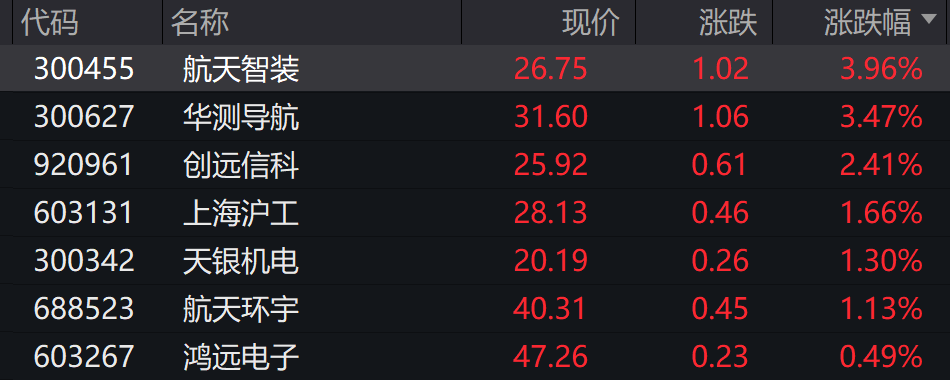
Core Viewpoint - The article discusses the rapid development of China's commercial aerospace industry, highlighting the significance of reusable rockets and the emergence of various companies in the sector, particularly focusing on the recent launch of the Zhuque-3 rocket by Landspace, which marks a pivotal step towards reusable rocket technology in China [4][10]. Group 1: Rocket Launch Companies - Landspace is recognized for its Zhuque-3 rocket, which is a large liquid oxygen-methane launch vehicle aimed at large satellite constellation missions. It represents China's first attempt at orbital launch and recovery verification for reusable rockets, despite the initial recovery attempt being unsuccessful [4][5]. - Tianbing Technology is developing the Tianlong-3 liquid rocket, which aims to achieve a near-Earth orbit capacity exceeding 20 tons, positioning it as a competitor to SpaceX's Falcon 9 [5]. - Xingji Glory is the first private company in China to successfully launch a rocket into orbit, utilizing both solid and liquid reusable rocket technologies [6]. - Xingshe Power focuses on solid rocket launches and is developing the Zhishenxing-1 reusable liquid rocket, targeting the small satellite market with low-cost and rapid response capabilities [6]. Group 2: Satellite Manufacturing Companies - Galaxy Space is a key player in the construction of low Earth orbit broadband communication satellite constellations, with advantages in reducing the cost per satellite [8]. - Changguang Satellite is known for its Jilin-1 satellite constellation, which is the largest commercial optical remote sensing satellite constellation globally, providing high-resolution Earth observation data [8]. - Tianyi Research Institute specializes in synthetic aperture radar (SAR) satellites, offering all-weather imaging capabilities and reducing data acquisition costs through innovative business models [8]. Group 3: Ground Service Providers - Geshihangtian is a core participant in the "Thousand Sails Constellation" low Earth orbit communication satellite project, responsible for satellite manufacturing and operational support [9]. - Aerospace Yuxing provides comprehensive lifecycle services for satellites, including monitoring and collision warning, having successfully serviced over 500 satellites and rocket combinations [9]. - Xi'an Huanyu Satellite is the first state-owned commercial control enterprise in China, having served over 300 satellites and developed an AI-based satellite health monitoring system [10]. Group 4: Industry Outlook - The Chinese commercial aerospace industry is expected to benefit from the launch of several new reusable rocket models starting in late 2025, which could accelerate the deployment of low Earth orbit satellite constellations [10]. - The establishment of a dedicated regulatory body for commercial aerospace by the National Space Administration signifies a commitment to high-quality and safe development in the sector [10]. - The industry is anticipated to become a significant focus of China's 14th Five-Year Plan, with ongoing regulatory improvements expected to drive high-quality growth across the entire aerospace value chain [10].

国产可重复使用运载火箭成功发射入轨
Zheng Quan Ri Bao Wang· 2025-12-04 03:56
Core Viewpoint - The successful launch of the Zhuque-3 rocket marks a significant step in China's commercial space industry, despite the failure of the recovery test, providing valuable data for future improvements [1][2]. Group 1: Zhuque-3 Rocket Overview - Zhuque-3 is a new generation of low-cost, high-capacity, and reusable liquid oxygen-methane launch vehicle developed by Blue Arrow Aerospace [1]. - The rocket features a two-stage design with a diameter of 4.5 meters and a total length of 66.1 meters, powered by Blue Arrow's self-developed Tianque series engines [1]. - The first stage is equipped with a control system for vertical landing recovery, although the recovery attempt failed due to an abnormal combustion incident [1]. Group 2: Industry Implications - The test flight provided critical engineering data that will support the optimization of future rocket designs and enhance overall reliability [2]. - The launch is seen as a confidence booster for China's commercial space sector, indicating that the mission execution met expectations despite the recovery setback [2]. - The upcoming launches of two additional reusable rockets in December highlight the increasing frequency of such missions in China's commercial space landscape [3]. Group 3: Future Prospects - The industry anticipates a shift towards regular operational flights of reusable rockets, with ongoing improvements based on data collected from test flights [2][3]. - The successful collection of key data during the Zhuque-3 mission fills a gap in China's capabilities regarding large rocket vertical recovery [3]. - Continuous iteration and technical enhancements are expected to bring China closer to achieving reliable reusable launch vehicle operations [3].
华尔街见闻早餐FM-Radio | 2025年12月4日
Hua Er Jie Jian Wen· 2025-12-03 23:24
Market Overview - The unexpected decline in the US ADP data has led investors to believe that the Federal Reserve will cut interest rates next week, with the "bad news is good news" narrative resurfacing [3][4] - US stocks saw broad gains, with nearly 350 companies in the S&P 500 rising, while small-cap stocks outperformed with a nearly 2% increase [3] - The 10-year US Treasury yield fell by 2.7 basis points, and the dollar dropped nearly 0.5%, reaching a one-month low [3] - Ethereum surged approximately 5.7% and Bitcoin rose by 2.08% [3] Key Developments - The US November ADP report showed an unexpected drop in employment by 32,000, marking the largest decline since March 2023, with small businesses experiencing significant layoffs [4][15] - The ISM services sector expanded at its fastest pace in nine months, with the price index hitting a seven-month low and the employment index reaching a six-month high [4][15] - Microsoft reportedly lowered its AI software sales targets, leading to a nearly 3% drop in its stock price, although the company later denied the claims [5][15] - Meta has hired Apple's design executive Alan Dye, indicating a potential talent shift in the tech industry [16] Industry Insights - Salesforce expects a revenue increase of over 10% this quarter, raising its full-year guidance, driven by strong AI application performance [16] - Anthropic is preparing for an IPO as early as 2026, with internal reports indicating a 50% productivity increase due to AI integration [17] - The Trump administration is reportedly considering a directive to support the robotics industry, which has led to significant stock price increases for companies like iRobot [18] - The successful launch of China's Zhuque-3 rocket marks a milestone in the commercial space sector, despite a failure in the first-stage recovery [18][23] Commodity Market - Copper prices reached a historical high, with LME orders surging to the highest level since 2013, driven by increased demand in Asia [20][36] - Glencore plans to increase its copper production to 1.6 million tons annually over the next decade [20] - The EU is pushing for a "70% European manufacturing" standard for critical goods, which could increase annual costs for businesses by over €10 billion [20] Domestic Developments - China's November RatingDog services PMI slightly decreased to 52.1, with new export orders showing significant improvement [21] - The Chinese government is focusing on promoting new urbanization as a key driver for domestic demand and industrial upgrades [14]

让“铁疙瘩”从数万米高空精准“踩刹车”,中国商业航天“降本复用”只差“最后一公里”!朱雀之后,同行排队接力
Mei Ri Jing Ji Xin Wen· 2025-12-03 15:51
Core Viewpoint - The launch of Zhuque-3 rocket marks a significant milestone in China's commercial space industry, showcasing advancements in reusable rocket technology despite the failure of the recovery attempt [2][6]. Group 1: Launch and Technical Achievements - Zhuque-3 successfully entered the designated orbit with its second stage, representing China's first attempt at a simultaneous "orbital + recovery" mission in commercial space [2]. - The rocket is the world's first to utilize a "liquid oxygen-methane propellant + stainless steel body" combination and successfully achieve orbit, indicating a major breakthrough in rocket technology [3]. - The rocket's diameter of 4.5 meters allows for more engines to be installed, increasing launch thrust and improving flight stability [5]. Group 2: Challenges and Learning Outcomes - The failure of the recovery attempt highlights the complexities and challenges of rocket recovery technology, often referred to as the "final mile" in space missions [12]. - Despite the recovery failure, the mission provided valuable data on high-altitude wind fields and thrust adjustments, which will inform future improvements [6][12]. - The difficulties faced during recovery, such as engine thrust regulation and environmental stability, underscore the high technical barriers in achieving successful rocket landings [13]. Group 3: Market Implications and Future Prospects - The goal of Zhuque-3 is to reduce the cost of launching payloads to below 20,000 yuan per kilogram, enhancing China's competitive edge in the global space market [17]. - The commercial space industry is evolving towards a model where reusable rockets are becoming a standard capability, significantly impacting cost structures and operational efficiency [15][20]. - The establishment of a dedicated regulatory body for commercial space by the National Space Administration is expected to streamline operations and enhance industry stability [19][20].
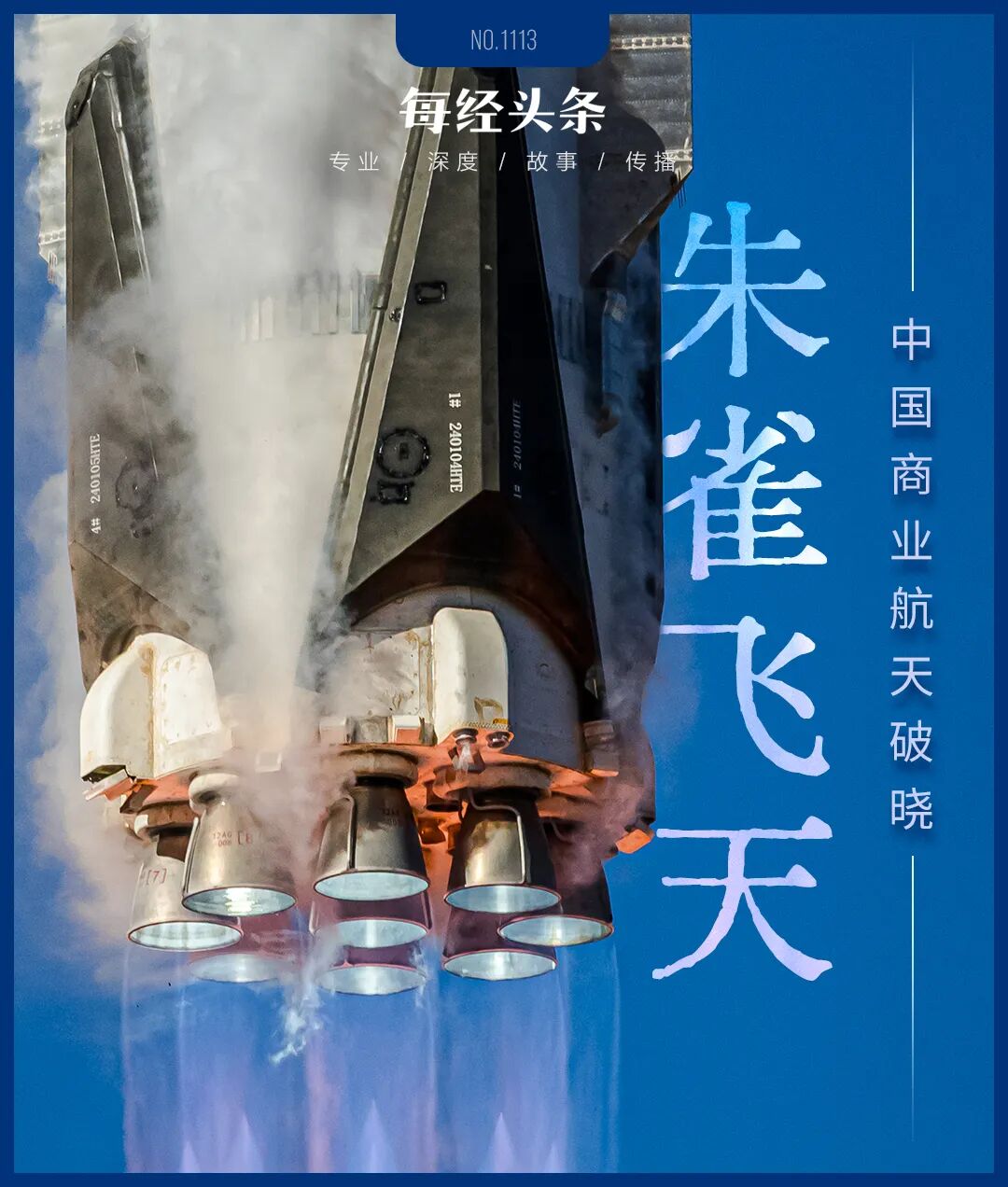
朱雀三号重复使用火箭入轨成功,一子级回收遗憾失败
Yang Zi Wan Bao Wang· 2025-12-03 11:35
Core Viewpoint - The successful launch of the Zhuque-3 rocket by Blue Arrow Aerospace marks significant technological advancements in reusable rocket technology, despite a failure in the recovery test of the first stage [1][2]. Group 1: Launch Details - The Zhuque-3 rocket was launched from the Dongfeng Commercial Aerospace Innovation Test Area and completed its flight mission as planned, with the second stage entering the designated orbit [1]. - Key flight actions, including liftoff, stage separation, and engine ignition, were executed as scheduled, demonstrating stable and reliable performance [2]. Group 2: Technological Breakthroughs - The mission achieved several technological breakthroughs, including the first domestic flight of a new reusable liquid oxygen-methane rocket design, and the integration of a nine-engine parallel liquid oxygen-methane propulsion system [2]. - Innovations included the use of high-strength stainless steel and advanced laser welding techniques for fuel tank manufacturing, as well as high-precision return navigation and control technology for reusable rockets [2]. Group 3: Future Prospects - Despite the failure of the recovery test, multiple reusable rockets are set to be tested in China, indicating imminent breakthroughs in the country's reusable rocket capabilities [2].
中国商业航天新里程:朱雀三号首飞成功入轨,一级回收失利
Hua Er Jie Jian Wen· 2025-12-03 07:45
Core Viewpoint - The successful launch of the Zhuque-3 rocket marks a significant advancement in China's commercial space sector, particularly in the development of large liquid oxygen-methane rockets, despite the failure of the first stage recovery due to abnormal combustion [1][6]. Group 1: Launch and Technical Details - Zhuque-3 rocket was launched on December 3, successfully placing its second stage into the designated orbit, demonstrating important capabilities in large liquid oxygen-methane rocket development [1]. - The rocket has a total length of 66.1 meters, a body diameter of 4.5 meters, and a launch mass of approximately 570 tons, with a thrust exceeding 750 tons [2][5]. - The rocket's first stage is designed for vertical return and reuse, equipped with a reaction control system, grid fins, and landing legs [2][5]. Group 2: Market Reaction and Investment Opportunities - Despite the recovery failure, the capital market remains optimistic about the commercial space sector, with significant stock price increases in related companies such as Shanghai Hanxun and Zhaobiao Co., which hit the daily limit [1][2]. - The establishment of the Commercial Space Administration by the National Space Administration and the release of the "Action Plan for Promoting High-Quality and Safe Development of Commercial Space (2025-2027)" are seen as catalysts for the sector [2][8]. Group 3: Future Prospects and Competitors - Zhuque-3 is positioned as a leading project in China's reusable rocket development, with potential to surpass SpaceX's Falcon 9 within five years, as noted by Elon Musk [5][6]. - Other domestic reusable rockets under development include the "Long March 12A" and "Hyperbola-3," indicating a competitive landscape in China's commercial space industry [8].

Dumb Money Has Fled Rocket Lab Stock. Is It Finally Safe to Buy?
The Motley Fool· 2025-11-23 12:07
Core Viewpoint - Rocket Lab's stock has experienced a significant decline of 38% following the announcement of a delay in the launch of its Neutron rocket, which is now expected in early 2026 instead of 2025 [3][8] Company Performance - Rocket Lab's stock price peaked at nearly $74 on October 15, reflecting a 176% increase since the beginning of the year, but has since fallen to below $43 [2][3] - The company has successfully launched Electron rockets 75 times with a 93% success rate and aims to conduct at least 20 launches this year [5] - Despite not being profitable yet, Rocket Lab has increased its annual revenue 15 times over the past five years and achieved a gross profit margin of 32% [6] Financial Outlook - Analysts predict that once Neutron begins launching, Rocket Lab will achieve profitability on a GAAP basis and generate positive free cash flow by 2027 [7] - The current market capitalization of Rocket Lab is approximately $22 billion, with a price-to-sales ratio of 40 based on trailing sales of $555 million [9][10] Market Sentiment - The stock was previously considered a momentum stock, but the recent decline has led to skepticism among analysts regarding further investment [4][10] - The delay in the Neutron launch has raised concerns about the company's growth trajectory and profitability timeline, leading to a cautious stance from analysts [8][10]


国产可重复使用火箭“智神星一号”完成海上试车
Ren Min Ri Bao· 2025-11-11 22:40
Core Insights - The successful sea test of the "Zhishen Star One" reusable liquid rocket by Xinghe Power marks a significant milestone in its development, completing all major ground tests [1] - The rocket has a takeoff mass of approximately 283 tons and a maximum payload capacity of 7 tons for low Earth orbit, targeting the large satellite launch market [1] - The rocket is designed for at least 25 reuse cycles, with its first flight mission planned at the Dongfeng Commercial Space Innovation Test Zone in Gansu [2] Technical Innovations - The engine features a simple and efficient pin-injector technology, allowing thrust adjustment between 50 tons and 20 tons, which is crucial for vertical precision landing [1] - The rocket employs a seven-engine parallel configuration with "single-engine failure" fault tolerance, enabling continued stable flight even if one engine fails [1] Future Plans - The construction of the launch site for the "Zhishen Star One" is nearing completion, which will enable autonomous testing, fueling, and launch capabilities [2] - Recovery tests for the rocket are scheduled to take place in 2026 alongside its launch missions [2]