太空数据中心

Search documents
马斯克合并SpaceX和xAI在太空建设数据中心计划引发质疑
Sou Hu Cai Jing· 2026-02-05 15:10
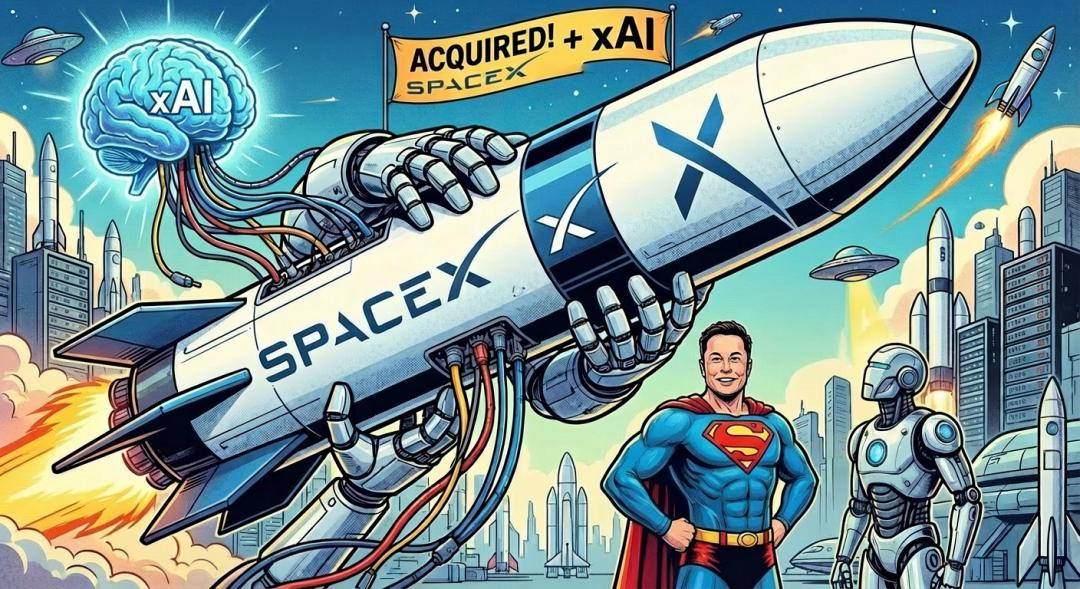
Core Viewpoint - Elon Musk announced the merger of SpaceX and xAI, valued at $1.25 trillion, claiming that AI development requires entering the space sector to build data centers in orbit [2]. Group 1: Merger Details - The merger aims to address the environmental burden of large ground-based data centers, which require significant power and cooling systems [2]. - Musk believes that space-based AI is the only long-term solution for expansion, as it can utilize solar energy without occupying terrestrial space [2]. - Other companies, including Google and entities in China and Europe, are also exploring space data centers, indicating a trend among major tech firms [2]. Group 2: Financial Performance - SpaceX is profitable, generating approximately $8 billion in profit from an estimated $16 billion in revenue last year, primarily driven by its Starlink service [3]. - In contrast, xAI is not profitable and reportedly burns through about $1 billion monthly due to heavy investments in data centers and talent acquisition [3]. - SpaceX has launched over 9,500 satellites and has around 9 million broadband users, while also being a major government contractor with over $20 billion in contracts since 2008 [3]. Group 3: Investor Concerns - Investors are uncertain about the implications of merging a profitable company with a loss-making one, recalling Musk's previous merger of SolarCity with Tesla, which faced legal challenges [4]. - Tesla shareholders have filed lawsuits against Musk, alleging that the creation of xAI violates his fiduciary duties to Tesla, raising concerns about the potential diversion of resources [4][5]. - The merger complicates the situation for Tesla, as it has invested $2 billion in xAI to enhance its AI capabilities, while xAI's chatbot Grok faces scrutiny for generating inappropriate content [5]. Group 4: Technical Challenges - The feasibility of space data centers is questioned due to significant technical challenges, including the high power consumption of GPUs and the need for extensive solar arrays [6]. - Communication costs between space and Earth could also pose substantial financial burdens, complicating the operational viability of such data centers [6].


国防军工行业空天系列:SpaceX宣布收购xAI,擘画太空数据中心愿景
GF SECURITIES· 2026-02-05 04:48
Investment Rating - The report provides a "Buy" rating for the defense and aerospace industry, indicating an expected performance that will exceed the market by more than 10% over the next 12 months [8]. Core Insights - SpaceX announced the acquisition of AI startup xAI to integrate rocket, satellite internet, AI technology, and social media platforms, aiming to create a comprehensive technology chain from Earth to space. This move is driven by the increasing demand for advanced AI systems, which is approaching the limits of traditional ground data centers [4]. - SpaceX plans to deploy up to 1 million satellites to establish an orbital data center system, which will support large-scale AI reasoning and data center applications. The satellites will be positioned in orbits ranging from 500 to 2000 kilometers, utilizing solar energy to reduce reliance on traditional batteries [4]. - The report emphasizes the importance of focusing on leading companies in the supply chain, such as Ruichuang Micro-Nano, Minshida, Guobo Electronics, and others, as potential investment opportunities [4]. Summary by Sections Industry Overview - The report highlights the significant advancements in commercial aerospace, particularly through SpaceX's integration of AI and satellite technology, marking a new phase in global satellite internet [4]. Company Valuation and Financial Analysis - Key companies in the industry are evaluated with their respective stock prices, expected earnings per share (EPS), price-to-earnings (PE) ratios, and return on equity (ROE) metrics. For instance, Ruichuang Micro-Nano has a target price of 141.24 CNY per share for 2025E, with an EPS of 2.40 CNY and a PE ratio of 47.05 [5]. - Other companies such as Minshida and Guobo Electronics also show promising valuations, with target prices of 54.34 CNY and 75.93 CNY respectively, indicating strong growth potential [5]. Investment Recommendations - The report suggests a focus on key players in the rocket, satellite, and terminal sectors, recommending investments in companies like Ruichuang Micro-Nano, Minshida, and Guobo Electronics, among others, due to their strong market positions and growth prospects [4].
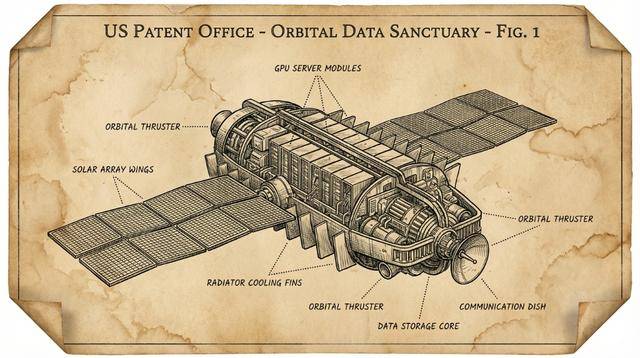
太空数据中心,如何散热?
3 6 Ke· 2026-02-05 04:47
Core Viewpoint - Elon Musk's plan to integrate SpaceX, Tesla, and xAI to deploy one million satellites for a "orbital data center system" aims to provide computational power for future artificial intelligence [1][3]. Group 1: Feasibility and Challenges - The concept of space computing is not new, with similar projects proposed in the US, Europe, and China, but Musk's plan is significantly larger in scale [3]. - Space data centers can utilize solar energy, greatly reducing energy costs, but face numerous engineering and commercialization challenges, including rocket launch capabilities, satellite lifespan (approximately 5 years), radiation issues, on-orbit maintenance, communication bandwidth, and business model concerns [3][19]. - A critical challenge is heat dissipation, as a large-scale data center will generate substantial heat, requiring advanced thermal management solutions [3][5]. Group 2: Thermal Management Techniques - Heat collection at the chip level involves using high-performance thermal interface materials and microchannel liquid cooling to efficiently transfer heat away from chips [6][10]. - Internal heat transfer can utilize heat pipes for passive heat transfer, while active thermal control systems like mechanical pump fluid loops (MPFL) are necessary for managing large thermal loads [11][13]. - Heat radiation is the final method for heat dissipation, relying on radiators that emit heat as infrared electromagnetic waves, with efficiency dependent on the radiator's area and surface properties [14][16]. Group 3: Innovative Cooling Solutions - New thermal management technologies proposed for space data centers include phase change materials for thermal buffering, spectrally selective radiators to enhance radiation efficiency, and evaporative cooling methods for extreme conditions [20][21][22]. - AI-driven systems can optimize thermal management by predicting heat loads and dynamically adjusting cooling mechanisms [23]. - The potential scale of Musk's space data center could provide 100 gigawatts (GW) of AI computing power, equivalent to the capacity of approximately 4.5 Three Gorges Dam power stations, presenting significant engineering challenges for heat dissipation [19]. Group 4: Industry Implications - As space computing becomes a trending topic, thermal control technologies for space data centers are expected to gain more attention, leading to accelerated innovation and development in this field [30].
全球产业竞速 太空光伏叩响商业化大门
Zhong Guo Jing Ji Wang· 2026-02-04 23:38
Core Viewpoint - The space photovoltaic sector is gaining significant attention due to the increasing demand for space resources and advancements in technology, with the Wande Space Photovoltaic Concept Index rising by 34.07% since 2026 [1] Group 1: Market Dynamics - The space photovoltaic market is driven by the rigid demand from downstream applications, with major space-faring nations applying for frequency resources for tens of thousands of low-Earth orbit satellites, indicating long-term potential demand [3] - The expected launch of over 70,000 satellites in the next five years, along with advancements in solar wing technology, is anticipated to propel the space photovoltaic market into a phase of substantial growth [3] - The market for space photovoltaics is projected to reach a scale of hundreds of billions in the near term, with potential to escalate to trillions if space computing enters an optimistic deployment phase post-2030 [4] Group 2: Technological Developments - Space photovoltaics, which include solar components on satellites and the wireless transmission of solar energy back to Earth, have been in development for over half a century, with most spacecraft now equipped with photovoltaic cells [2] - Current technological pathways include gallium arsenide batteries, which have high performance but are costly, and perovskite batteries, which are lightweight but require further validation for mass production and stability in space [7][8] - The p-type heterojunction battery is seen as the optimal solution for commercial transition due to its advantages in radiation resistance and lightweight design [8] Group 3: Industry Competition - Global companies are rapidly entering the space photovoltaic market, with China's industry structure comprising national research institutions, leading photovoltaic firms, and specialized material equipment manufacturers [5] - Major companies like Trina Solar are accelerating the commercialization of perovskite technology, while Longi Green Energy collaborates with space research institutions to validate advanced energy technologies in space [6] - The competitive landscape is characterized by differentiated strategies based on resource endowments, with the U.S. leveraging reusable rockets for cost advantages and Europe maintaining a stronghold in traditional high-end markets [6] Group 4: Challenges and Future Outlook - Despite the enthusiasm in capital markets, the industry remains cautious, recognizing that the true industrial pull for space photovoltaics will require significant time and development [7] - Key challenges include high production costs, the need for batch manufacturing capabilities, and the establishment of a standardized supply chain and quality control systems [8] - The current phase of space photovoltaics is critical for transitioning from engineering productization to large-scale industrialization, necessitating collaborative efforts across technology, engineering, manufacturing, and system integration [8]
马斯克炒热的太空数据中心,亚马逊泼了冷水
Sou Hu Cai Jing· 2026-02-04 21:39
Core Viewpoint - The concept of space data centers, popularized by Elon Musk, faces significant challenges in practical implementation, as highlighted by Amazon AWS CEO Matt Garman, who emphasizes the difficulties and high costs associated with launching and maintaining such facilities in space [2][3]. Group 1: Industry Perspectives - The competition for AI data centers has intensified, with many companies exploring the feasibility of space-based solutions, driven by the limitations of terrestrial data centers [3]. - Elon Musk's vision for space data centers includes the use of advanced AI chips and the integration of SpaceX and xAI, with predictions that providing AI computing power in space could become the most cost-effective method within two to three years [3]. - Other tech leaders, such as OpenAI's Sam Altman and Google's initiatives, are also investigating space-based computing, with various projects aimed at launching satellites equipped with AI technology [3]. Group 2: Technical Challenges - The theoretical advantages of space for cooling and energy generation are countered by extreme temperature fluctuations and environmental challenges that complicate the establishment of data centers in orbit [4]. - High-performance AI chips require special radiation protection to function in space, and modifications can lead to performance degradation, presenting additional hurdles for the deployment of space data centers [4]. - Current technological limitations regarding high-bandwidth connections, autonomous maintenance, and debris avoidance in space remain in the early stages of development, further complicating the realization of space data centers [4]. Group 3: Vision and Ambition - Despite the numerous challenges, Musk's proposal for space data centers reflects a visionary approach and a willingness to push the boundaries of current technological capabilities [5].
马斯克出手,引爆A股
Xin Lang Cai Jing· 2026-02-04 09:45
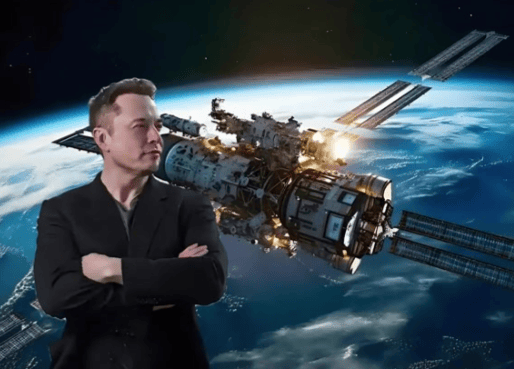
Core Viewpoint - SpaceX's acquisition of xAI aims to address the energy bottleneck in AI computing by relocating data centers to space, utilizing solar power for continuous energy supply, with the combined entity valued at $1.25 trillion [1][2]. Company Overview - The acquisition is a strategic move to integrate AI, rocket technology, space internet, and communication platforms, positioning SpaceX as a leader in innovative vertical integration [2]. - xAI, despite its high valuation of $230 billion, faces significant cash burn, estimated at $1 billion per month, leading to a total cash consumption of approximately $7.8 billion in the first nine months of 2025 [4][9]. Financial Implications - SpaceX's stable business model, primarily driven by Starlink, has allowed it to generate revenues of approximately $15 to $16 billion in 2025, with profits around $8 billion, providing a financial cushion for xAI [6][9]. - The merger serves as a financial lifeline for xAI, allowing SpaceX to cover its losses and stabilize its operations [9]. Market Reaction - The announcement has revitalized the Chinese photovoltaic sector, with significant interest from investors in solar energy solutions for space applications, leading to a surge in related stocks [1][11]. - The market is shifting focus from traditional satellite manufacturing to the broader potential of space as a source of energy and computing power, driven by Musk's ambitious plans [11]. Technological Developments - The need for advanced solar technology in space is highlighted, with a shift towards P-type HJT and perovskite tandem cells, which are more efficient and suitable for extreme conditions [13][14]. - Companies in the photovoltaic equipment sector, such as Maiwei and Jiejia Weichuang, are expected to benefit from increased demand for solar technology in space applications [14][16]. Strategic Opportunities - The development of reusable rocket technology and satellite constellations is crucial for supporting the deployment of large-scale data centers and solar arrays in space [16][18]. - The demand for efficient thermal management systems and high-precision optical components for laser communication will create new opportunities for companies in these sectors [20][21]. Industry Evolution - The shift towards space-based computing and energy facilities signifies a transformation in the commercial space industry, moving beyond mere transportation services to encompass energy and computing solutions [21].

Model S/X停产,但马斯克又开启两场豪赌
3 6 Ke· 2026-02-04 09:36
商业世界里没有永恒的英雄,只有适时的战略。实际上,Model S、Model X 已经到了不得不弃的地步。 "我有点难过,但现在是时候让Model S/X项目光荣退役了,因为我们正真正迈向一个以自动驾驶为基础的未来。" 马斯克宣布了一个伤感的消息:特斯拉标杆车型Model S/X将在第二季度末停产。 回顾2012年问世的Model S,曾被誉为"汽车界iPhone";2015年亮相的Model X凭借鹰翼门惊艳世界——这两款车曾是特斯拉撕裂传统汽车行业铁幕的最锋 利双刃。它们不仅开创了智能电动车先河,更以颠覆性技术定义了高端电动车标准。 图源:网络 那么,为何选择在电动化进程加速的当下,停产这两款曾经定义行业标杆的车型?马斯克在下一盘怎样的棋。 为什么曾经的旗舰车型要停产? 回顾2012年问世的Model S,它凭借3.9秒百公里加速、17英寸中控触摸屏和整车OTA升级,向世界证明了电动汽车不仅环保,更能做到"更性能、更智 能、更酷"。 图源:网络 Model S打破了市场对电动汽车"弱、慢、丑"的刻板印象,为特斯拉赢得了第一批高净值用户。 三年后,Model X以更激进的姿态登场,凭借鹰翼门设计和生物武器防 ...
马斯克出手,引爆A股
格隆汇APP· 2026-02-04 09:35
Core Viewpoint - Elon Musk announced the boldest asset merger in Silicon Valley history, with SpaceX fully acquiring xAI, aiming to address the energy bottleneck of AI computing power by relocating data centers to space powered by solar energy [3][4][8]. Group 1: Acquisition Details - The merger will elevate the valuation of the combined entity to an astonishing $1.25 trillion [5][8]. - The acquisition is seen as a financial rescue for xAI, which has a high cash burn rate of $1 billion per month, necessitating SpaceX's profits to cover its losses [12][25]. Group 2: Financial Implications - SpaceX is projected to achieve revenues of approximately $15 billion to $16 billion in 2025, with an estimated profit of around $8 billion [19][18]. - The integration of xAI into SpaceX is not just a business merger but a financial lifeline, similar to Musk's previous acquisition of SolarCity [26]. Group 3: Market Reactions - The news of the merger has revitalized the Chinese photovoltaic sector, with significant stock price increases as investors anticipate new opportunities in space energy and computing [6][34]. - The market is shifting focus from satellite manufacturing to the broader implications of space as a hub for energy and computing power [35][36]. Group 4: Technological Innovations - Musk's ambitious plan includes launching 1 million tons of satellites annually, each with 100 kW of computing power, which could lead to a significant increase in AI computing capacity [39]. - The shift towards space-based solar energy is expected to open new markets for high-efficiency solar cells, moving away from traditional ground-based production [40][42]. Group 5: Industry Opportunities - Companies involved in photovoltaic equipment manufacturing are likely to benefit first from the increased demand for space-based solar energy solutions [43]. - The need for low-cost, high-frequency launch systems will stimulate interest in reusable rocket technology and satellite internet constellation development [45]. Group 6: Future Outlook - The concept of "orbital data centers" signifies a transformative shift in the aerospace industry, evolving from mere transportation services to advanced computing and energy solutions [51]. - China's comprehensive photovoltaic supply chain and maturing commercial aerospace sector position it as a key player in this new wave of interstellar infrastructure development [52].
光伏ETF领涨,机构:太空光伏远期空间巨大丨ETF基金日报
2 1 Shi Ji Jing Ji Bao Dao· 2026-02-04 02:58
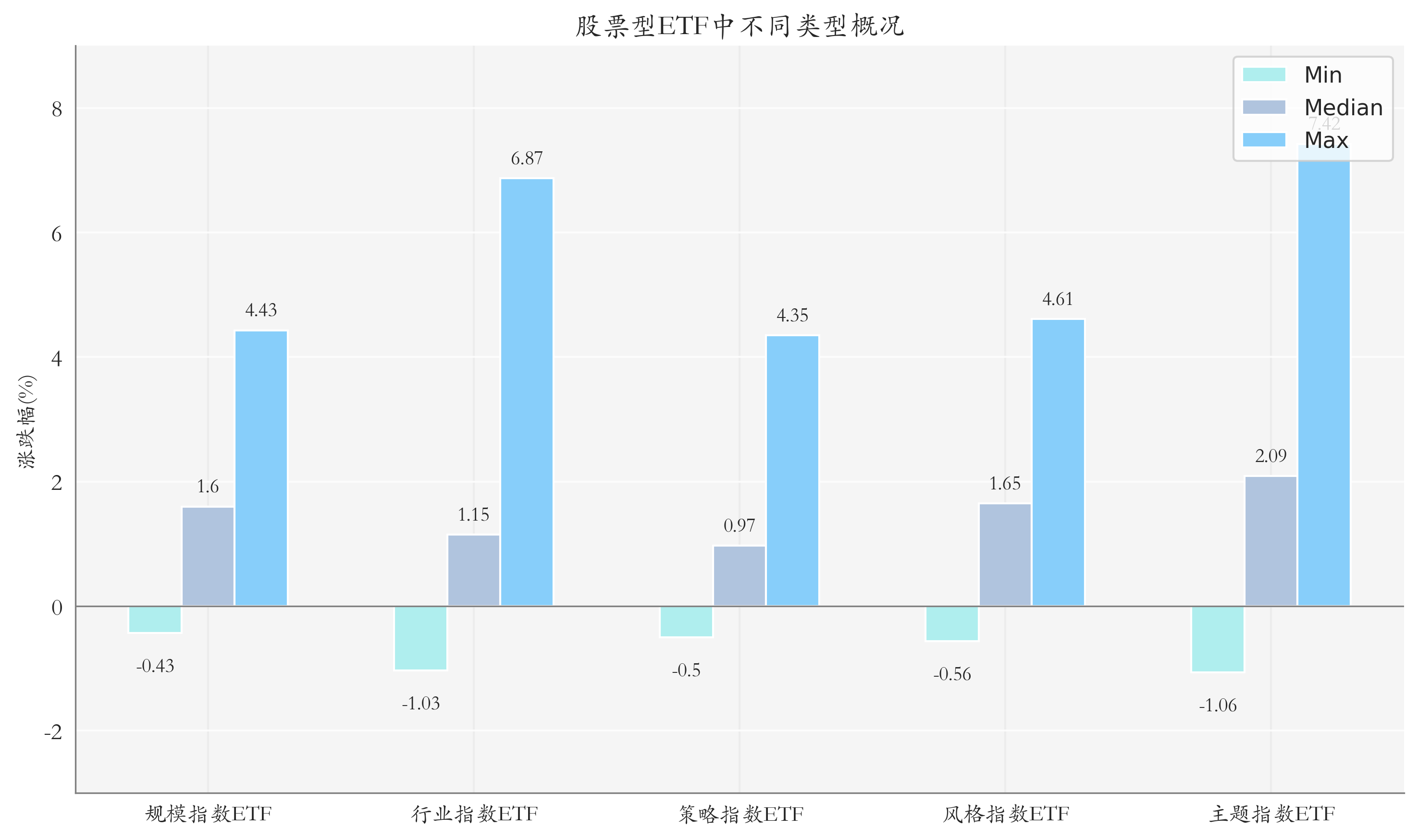
Market Overview - The Shanghai Composite Index rose by 1.29% to close at 4067.74 points, with a daily high of 4069.42 points [1] - The Shenzhen Component Index increased by 2.19% to close at 14127.11 points, reaching a high of 14129.6 points [1] - The ChiNext Index saw a rise of 1.86%, closing at 3324.89 points, with a peak of 3324.89 points [1] ETF Market Performance - The median return for stock ETFs was 1.7%, with the highest return from the Penghua SSE Sci-Tech Innovation Board 200 ETF at 4.43% [2] - The highest performing industry index ETF was the Huatai-PB CSI Subdivision Nonferrous Metals Industry Theme ETF, with a return of 6.87% [2] - The highest return among thematic index ETFs was from the China Tai CSI Photovoltaic Industry ETF at 7.42% [2] ETF Performance Rankings - The top three ETFs by return were: - Guotai CSI Photovoltaic Industry ETF (7.42%) - Huatai-PB CSI Subdivision Nonferrous Metals Industry Theme ETF (6.87%) - Fortune SSE Sci-Tech Innovation Board New Energy ETF (6.84%) [6] - The ETFs with the largest declines included: - Yinhua CSI All-Share Securities Company ETF (-1.06%) - Huabao CSI Bank ETF (-1.03%) - Huatai-PB CSI Bank ETF (-0.88%) [6] ETF Fund Flows - The top three ETFs by fund inflow were: - Southern CSI 500 ETF (inflow of 3.566 billion) - Guotai CSI All-Share Securities Company ETF (inflow of 1.117 billion) - Southern CSI A500 ETF (inflow of 973 million) [9] - The ETFs with the largest outflows included: - Southern CSI Subdivision Nonferrous Metals ETF (outflow of 2.958 billion) - Huatai-PB CSI A500 ETF (outflow of 806 million) - Yongying CSI Hong Kong and Shanghai Gold Industry Stock ETF (outflow of 714 million) [11] ETF Margin Trading Overview - The top three ETFs by margin buying were: - Guotai CSI All-Share Securities Company ETF (510 million) - Huaxia SSE Sci-Tech Innovation Board 50 Component ETF (502 million) - Southern CSI 500 ETF (446 million) [12] - The ETFs with the highest margin selling included: - Huatai-PB CSI 300 ETF (45.35 million) - Southern CSI 1000 ETF (16.63 million) - Southern CSI 500 ETF (11.50 million) [14] Institutional Insights - Guotai Junan Securities is optimistic about the photovoltaic sector, anticipating a resurgence in 2026 driven by significant capacity planning and performance forecasts [14] - CCB International highlights the potential of space photovoltaic technology, suggesting that the rapid growth of commercial space and AI computing demands could drive future demand for space data centers [15]
太空算力定义光伏设备未来 - 推荐:迈为股份&晶盛机电
2026-02-04 02:27
谈沂鑫 东吴证券机械分析师: 各位领导晚上好,我是东吴机械的谭艺馨。今天和各位领导更新一下太空光伏深度,然后 再深度梳理一下各环节的一个推荐标的。最近整个太空光伏板块,它的催化还是非常多的 马斯克在这个达沃斯论坛上,明确了 SpaceX 和特斯拉会在 3 年内分别建设 100 吉瓦的 太空,还有地面的这个光伏产能。然后最近特斯拉和 SpaceX 的团队,也在国内的各大设 设备商进行了技术交流。然后订单,近期是有望加速落地的。然后在今,就在今天,马斯 克这边也是公布了 SpaceX 他会将收购这个 XAI 的这个 AI 公司。 形成它这个太空和 AI 算力的一个联动。所以我们认为,在 6 月 SpaceX 上市前,其实市 场的这个催化会一直不断。然后我们也是持续看好太空光伏设备这个板块的标的这样一个 可持续性。下面我们就汇报下报告,然后最后在报告的后面,我们再跟各位领导深深度的 梳理一下。每一个环节的这个标的。对于光伏设备来说,其实你真正要放量,还是要看太 空算力。因为你平时的这些通信或者传感的卫星,你的用量对于光伏的用量是没有那么大 的。所以我们这个报告也是围绕着太空算率去展开。 太空数据中心其实也很好理解, ...