数字主权

Search documents
微软CEO:将欧洲视为人工智能战略的关键地区
Ge Long Hui A P P· 2025-12-01 22:30
Core Viewpoint - Microsoft views Europe as a key region for its artificial intelligence strategy as the continent seeks to enhance digital independence [1] Group 1: Investment and Strategy - Microsoft is investing in technology in Europe to support its AI initiatives [1] - The company emphasizes the need for Europe to adopt AI and retrain its workforce to compete globally in technology [1] Group 2: Digital Sovereignty - Satya Nadella highlighted that digital sovereignty is a critical consideration for any country [1] - Countries, including those in the EU and specifically Germany, are focused on ensuring supply continuity and resilience [1]

欧洲想配合美国一起对付中国,美国却不买账,直言不会给你们减税
Sou Hu Cai Jing· 2025-11-29 16:33
Core Points - The article discusses the geopolitical dynamics between the EU and the US, highlighting the EU's willingness to compromise on tariffs in exchange for cooperation against China, which the US has firmly rejected [1][5][9] - The US has imposed high tariffs on over 400 steel and aluminum products, significantly impacting traditional industrial powers in the EU, particularly Germany, France, and Italy [3][5] - The US is leveraging the EU's economic vulnerabilities to reinforce its own digital dominance and strategic interests, demanding concessions from the EU in areas like digital regulations and market oversight [7][9][14] Summary by Sections EU-US Relations - The EU is seeking to alleviate the pressure from US tariffs by proposing cooperation to counter China's economic challenges, but the US has made it clear that tariff negotiations are off the table [5][9] - The US insists that any reduction in tariffs would require the EU to relax regulations on American tech companies, indicating a transactional approach to the relationship [5][7] Economic Impact - The US's imposition of a 50% tariff on steel and aluminum products has created significant challenges for the EU, prompting a search for solutions to mitigate the economic fallout [3][5] - The EU's dependency on the US for energy supplies, particularly LNG, has increased due to the ongoing geopolitical tensions, limiting its ability to confront the US directly [9][14] Strategic Implications - The article suggests that the EU's attempts to balance its position between the US and China may lead to a loss of strategic autonomy and internal unity [13][14] - The US's approach reflects a self-interested strategy that prioritizes its own economic and strategic gains over a balanced partnership with the EU [9][14] - The ongoing competition between the US and China presents an opportunity for China to strengthen ties with emerging markets, potentially reducing reliance on Western markets [14]

主权失控:AI代理的跨境工具调用冲破传统监管边界
3 6 Ke· 2025-11-26 11:34
Group 1 - The emergence of "Agentic Tool Sovereignty" (ATS) challenges the legal control of AI systems by states and providers, as AI agents operate autonomously and can invoke third-party tools across jurisdictions [1][3][12] - AI agents are defined as goal-oriented assistants that facilitate autonomous actions with minimal human input, complicating regulatory compliance under static models like the EU AI Act [1][2][3] - The disconnect between the static compliance model of the EU AI Act and the dynamic tool usage of AI agents creates a responsibility vacuum for both providers and deployers [2][8][10] Group 2 - The legal framework of the EU AI Act assumes a static relationship and predetermined data flows, which is incompatible with the autonomous, cross-jurisdictional tool invocation by AI agents [3][11][12] - The concept of "substantial modification" in the EU AI Act is ambiguous when it comes to runtime tool invocation, leading to challenges in liability and compliance [5][6][9] - The responsibility for data processing is fragmented across the AI value chain, complicating accountability when AI agents autonomously select tools [8][9][10] Group 3 - The EU AI Act's post-market monitoring requirements face structural challenges, particularly in tracking interactions with external tools that may not be disclosed or auditable [6][7][8] - The traditional data sovereignty focus on territorial control is inadequate for AI agents that make autonomous cross-border decisions, necessitating a rethinking of sovereignty concepts [12][13] - The lack of specific guidelines for AI agents and their autonomous tool usage under the EU AI Act creates significant regulatory ambiguity for providers [13][14]
印度半导体:计划十年内追上中国
半导体行业观察· 2025-11-24 01:34
Core Insights - India's ambition is to compete with global semiconductor leaders like the US and China within the next decade, supported by a $10 billion incentive plan aimed at enhancing manufacturing, assembly, and design capabilities [1][2][3] - The Indian government has approved 10 strategic projects in the semiconductor sector, with a goal to position India among the top five semiconductor nations by 2032 [3][5] - The semiconductor market in India is projected to reach $100 billion to $110 billion by 2030, indicating strong growth potential [5] Group 1 - The Indian government is rapidly advancing its semiconductor plans, with significant progress noted in the last three years, leading to a complete semiconductor ecosystem [1][2] - Three semiconductor factories in India are expected to begin commercial production by early next year, marking a significant milestone in the country's semiconductor journey [2][5] - The Indian semiconductor strategy emphasizes enhancing domestic capabilities without undermining other countries' strengths, aligning with the global shift towards digital sovereignty [2][4] Group 2 - The Indian government has committed approximately ₹629 billion (around $7.17 billion) to its semiconductor initiative, which is 97% of the total ₹650 billion (approximately $7.41 billion) allocated for semiconductor production incentives [3] - The approved budget includes ₹100 billion (about $1.14 billion) for chip production and ₹10 billion (approximately $114 million) for modernizing semiconductor laboratories [3] - Increased foreign investment is expected to boost local semiconductor manufacturing and R&D capabilities, leading to accelerated growth and technological advancements in the sector [4]

培养大批专业人才,加强国家技术主权,俄全方位拥抱人工智能与信息技术
Huan Qiu Wang Zi Xun· 2025-11-23 23:15
Group 1 - The largest IT forum in Russia, "Digital Solutions," was held in Moscow, focusing on AI development and information system protection measures [1] - AI is widely applied in various sectors, including phone fraud detection, banking optimization in remote areas, and logistics efficiency [1] - The Russian government is committed to supporting the IT industry, which contributes 6% to GDP with total revenue around 13 trillion rubles [2] Group 2 - The Russian government provides significant funding for AI research projects, amounting to 350 million rubles, with 13 research centers already receiving support [3] - There is a growing demand for cloud infrastructure, with Russian companies adopting domestic cloud solutions for data analysis and project management [3] - The government aims to increase the proportion of domestic software in key industries and is establishing national capability centers for developing enterprise solutions [2][3] Group 3 - The IT industry in Russia has added approximately 100,000 new professionals this year, bringing the total workforce to over 1.1 million [4] - Successful cases of government-enterprise cooperation were highlighted, emphasizing the importance of a "white list" for ensuring communication services in restricted environments [5] - The telecommunications sector faces challenges with increasing network load and limited revenue growth, despite having one of the lowest communication fees globally [5] Group 4 - Russian companies must promote technology research and develop competitive business models to compete in the global digital economy, which they currently occupy only about 2% of [6] - The government has made significant progress in supporting education, including digital classrooms and projects for primary and secondary education [6] - The main task is to develop software that meets the needs of the real economy, enhancing efficiency and promoting technological development [6]

马克龙放话欧洲不能沦为“附庸”
Huan Qiu Shi Bao· 2025-11-20 04:08
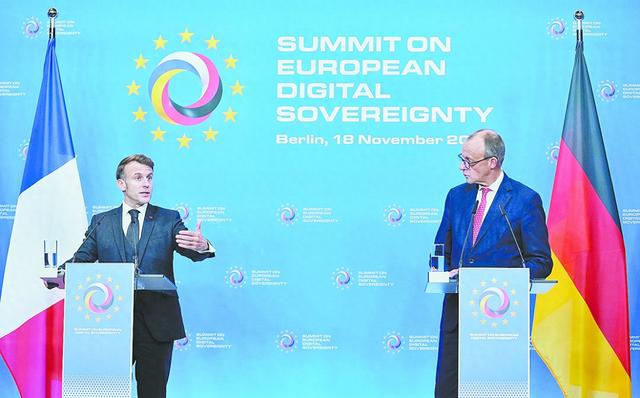
Core Points - The European Digital Sovereignty Summit was held in Berlin, where French President Macron and German Chancellor Merz emphasized the need for Europe to achieve independence in key digital technologies like artificial intelligence [3][4] - Macron proposed a "Europe First" policy to avoid European dependency on major US and Chinese tech companies, which dominate the market [4][5] - European media criticized the lack of action despite ongoing complaints about US tech monopolies, with American companies holding approximately 70% of the European cloud computing market [5][6] Group 1 - Macron highlighted the unacceptable reliance on the "Seven Giants" of US tech, which include Google, Amazon, Apple, Meta, Microsoft, Nvidia, and Tesla [4] - Both leaders called for a unified European voice to achieve digital sovereignty, acknowledging that the cost of digital dependence is higher than the cost of achieving sovereignty [4][5] - The summit focused on creating a simplified regulatory framework for AI and establishing a sovereign European cloud computing center [3][4] Group 2 - A report indicated that only 11.2% of the recommendations from a comprehensive study aimed at enhancing Europe's competitiveness in AI and digital economy have been implemented [6] - European companies are losing approximately €260 billion annually due to reliance on US tech giants, with 80% of their software and cloud service spending directed towards them [7] - The urgency for Europe to achieve technological independence has increased, especially in light of deteriorating transatlantic relations and the geopolitical implications of technology [7]
美国巨头垄断引发担忧,马克龙放话欧洲不能沦为“附庸”
Huan Qiu Shi Bao· 2025-11-19 22:51
Core Viewpoint - The "European Digital Sovereignty Summit" held in Berlin emphasized the need for Europe to achieve independence in key digital technologies like artificial intelligence, as leaders from France and Germany called for a "Europe First" policy to avoid becoming subservient to the US or China [1][2][4]. Group 1: European Leaders' Calls for Action - French President Macron and German Chancellor Merz urged for stronger autonomy in technology sectors, particularly in AI, to prevent the dominance of US and Chinese tech giants [4][5]. - Macron criticized the reliance on the "Seven Giants" of the tech industry, which include Google, Amazon, Apple, Meta, Microsoft, Nvidia, and Tesla, stating that it is unacceptable to depend on them for economic and democratic functions [2][5]. Group 2: Current Market Dynamics - A report indicated that US companies hold approximately 70% of the European cloud computing market, with European efforts to establish a "European Cloud" failing to make significant progress [5][6]. - The financial loss due to reliance on US tech giants is estimated to exceed €260 billion annually, highlighting the economic impact of this dependency [7]. Group 3: Political and Strategic Implications - The summit discussions included the need for a simplified and innovation-friendly regulatory framework for AI and the establishment of a sovereign European cloud computing center [4][6]. - Experts noted that the core issue of achieving digital sovereignty lies not in technical capabilities but in the political will to act decisively [7].




104:4的“互惠”贸易:美国如何用一纸协定收割马来西亚数字主权
Guan Cha Zhe Wang· 2025-11-18 12:49
Core Points - The signing of the "U.S.-Malaysia Reciprocal Trade Agreement" has sparked significant backlash in Malaysia, with accusations of sovereignty betrayal and calls for parliamentary rejection [1][3][4] - The agreement is characterized as extremely unequal, with Malaysia bearing 104 binding obligations compared to only 4 for the U.S., highlighting a 26:1 disparity [3][7] - The agreement is seen as a systematic erosion of Malaysia's digital sovereignty, locking the country into dependency on the U.S. for economic and technological development [4][15] Summary by Sections Inequality of Commitments - Malaysia is required to fulfill 104 specific obligations, while the U.S. only commits to 4, with only one being a hard commitment (tariffs) [7][10] - The language used in commitments further emphasizes inequality, with 98% of Malaysia's commitments being mandatory ("shall") compared to 75% of U.S. commitments being non-binding [8][9] Loss of Digital Sovereignty - The agreement dismantles Malaysia's previous digital sovereignty framework, which aimed to control data and digital infrastructure [15][17] - Specific clauses prohibit Malaysia from imposing a digital services tax and require the removal of local data storage mandates, effectively allowing data to flow freely to the U.S. [18][19] Geopolitical Implications - The agreement serves U.S. strategic interests by ensuring Malaysia's compliance with U.S. sanctions and export controls, effectively making Malaysia an enforcer of U.S. foreign policy [29][30] - The inclusion of "poison pill" clauses allows the U.S. to terminate the agreement if Malaysia engages with countries deemed harmful to U.S. interests, pressuring Malaysia to align with U.S. geopolitical goals [28][36] Broader Regional Strategy - The agreement with Malaysia is part of a broader U.S. strategy to establish similar agreements with other Southeast Asian nations, aiming to create a regional framework that excludes China [32][37] - The systematic approach taken by the U.S. in these agreements reveals a template for exerting influence over Southeast Asian countries, emphasizing the need for them to choose sides in the U.S.-China rivalry [36][38]
德国总理吹嘘:6G不用中国的,美国的也不要
Guan Cha Zhe Wang· 2025-11-14 02:23
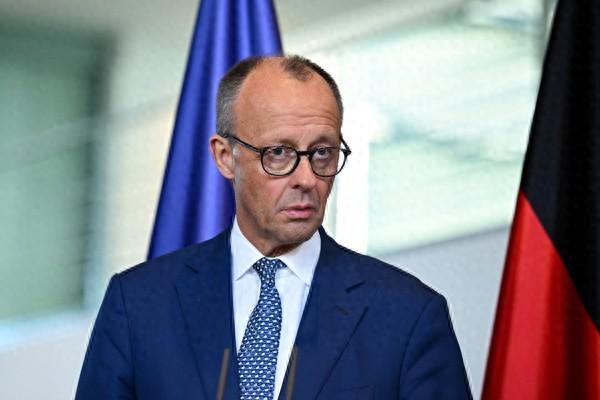
Core Viewpoint - Germany is pushing for "digital sovereignty" by excluding Chinese suppliers like Huawei from its 6G network development while seeking to reduce dependence on both the US and China in technology [1][5]. Group 1: Germany's Policy on Chinese Suppliers - German Chancellor Merz announced a complete exclusion of Chinese suppliers from the country's 6G network, emphasizing a shift towards domestically produced components [1]. - The German government plans to phase out Chinese technology from its 5G network by 2026 and remove all Chinese equipment by the end of 2029 [1]. - Despite these plans, nearly 60% of Germany's telecom equipment still comes from China, with Huawei being a preferred partner due to its cost-effectiveness [1]. Group 2: EU Pressure and Legal Framework - The European Commission is considering making its recommendations on stopping the use of "high-risk suppliers" in mobile networks legally binding, which could lead to lawsuits and financial penalties for non-compliance [2]. Group 3: Financial Implications and Domestic Concerns - Germany is contemplating using public funds to compensate telecom operators for replacing Huawei equipment, with costs exceeding €2 billion (approximately ¥165 billion) [4]. - The establishment of a €500 billion infrastructure fund, referred to as a "fiscal rocket launcher," raises concerns about the efficiency of public fund usage amid additional spending [5]. Group 4: International Relations and Trade - While Germany aims to reduce reliance on China, it acknowledges that China is its second-largest trading partner, making complete decoupling impractical [6]. - The German Vice Chancellor is scheduled to visit China for high-level financial dialogues, indicating ongoing economic engagement despite the push for technological independence [6].
默茨吹嘘:6G不用中国的,美国的也不要
Guan Cha Zhe Wang· 2025-11-14 02:21
Core Viewpoint - Germany is pushing for "digital sovereignty" by excluding Chinese suppliers like Huawei from its 6G network development while seeking to reduce dependence on both the US and China in technology [1][4]. Group 1: Germany's Policy on 6G and Chinese Suppliers - German Chancellor Merz announced the complete exclusion of Chinese suppliers from the country's 6G network, emphasizing a shift towards domestically produced components [1]. - The German government plans to phase out Chinese technology from its 5G network by 2026 and remove all Chinese equipment by the end of 2029 [1]. - Despite these plans, approximately 60% of Germany's telecom equipment still comes from China, with Huawei being a preferred partner due to its cost-effectiveness [1]. Group 2: EU Pressure and Legal Proposals - The European Commission is considering making its 2020 recommendations to stop using "high-risk suppliers" in mobile networks legally binding, which could lead to lawsuits and financial penalties for non-compliance [2]. - The proposal aims to enforce compliance among member states regarding security guidelines set by the Commission [2]. Group 3: Financial Implications and Domestic Concerns - Germany is contemplating using public funds to compensate telecom operators for replacing Huawei equipment, with costs exceeding €2 billion (approximately ¥165 billion) for the transition [4]. - The establishment of a €500 billion infrastructure fund, referred to as a "fiscal rocket launcher," raises concerns about the efficiency of public fund usage amid additional spending [5]. Group 4: International Relations and Trade - While Germany aims to reduce reliance on China, Chancellor Merz acknowledged that complete decoupling is not feasible, as China remains Germany's second-largest trading partner [5]. - German Vice Chancellor and Finance Minister Lars Klingbeil is scheduled to visit China for high-level financial dialogues, indicating ongoing engagement despite the push for digital sovereignty [5]. Group 5: China's Response - China has firmly opposed the security allegations made by the EU against Chinese telecom companies, arguing that there is no evidence to support claims of security risks and highlighting the positive contributions of these companies to the European telecom sector [6].