
汽车以旧换新补贴

Search documents
多地已开启2026年国补推进工作 将严控骗补套补、黄牛代抢
Di Yi Cai Jing· 2025-12-24 01:22
为了保障以旧换新市场有序运行,此次遴选工作列出了多项任务要求。比如,入选企业需要进行系统开 发及技术支持,即按照活动要求,完成汽车置换更新申报审核平台和汽车报废更新控额平台的系统开 发、技术对接、数据收集、信息安全保障等相关工作。 临近年底,2026年消费品以旧换新工作迎来新进展,多个地市已陆续公开遴选2026年汽车以旧换新补贴 平台服务企业,推动汽车以旧换新补贴有序开展。 根据深圳市商务局近日发布的通知,汽车以旧换新补贴项目包括汽车置换更新和报废更新,在实施过程 中,服务企业需按照活动方案要求,完成数项工作,主要围绕申请资格、申请资金、风险防范等。 根据汽车以旧换新补贴的申请流程,消费者需要自行登录汽车以旧换新补贴服务平台,在平台中申请以 旧换新的补贴资格。此前,云闪付、微信、支付宝、抖音等平台均有汽车以旧换新补贴的申请入口。 在过去的2024年,汽车以旧换新领域出现了骗补或补贴资金审核不严等情况。比如,北京市2024年度省 财政预算执行情况的审计报告显示,50辆新能源公交车更新资料中的发票开具日期和机动车登记证书取 得日期超政策实施期限近1个月,但仍然获得了400万元的补贴资金。 再如,山东2024年度审 ...
多地已开启2026年国补推进工作,将严控骗补套补、黄牛代抢
Di Yi Cai Jing· 2025-12-24 01:08
多个地市已陆续公开遴选2026年汽车以旧换新补贴平台服务企业。 同时,入选企业还需要提供咨询投诉处理服务,安排专门团队受理企业及申请人咨询、投诉等,及时回 应社会关切,确保补贴申请工作平稳有序。 在过去的2024年,汽车以旧换新领域出现了骗补或补贴资金审核不严等情况。比如,北京市2024年度省 财政预算执行情况的审计报告显示,50辆新能源公交车更新资料中的发票开具日期和机动车登记证书取 得日期超政策实施期限近1个月,但仍然获得了400万元的补贴资金。 临近年底,2026年消费品以旧换新工作迎来新进展,多个地市已陆续公开遴选2026年汽车以旧换新补贴 平台服务企业,推动汽车以旧换新补贴有序开展。 再如,山东2024年度审计工作报告显示,抽查发现,因主管部门审核把关不严,向报废不符合补贴政策 要求货车、中型载客汽车、新能源车的67名消费者,违规发放汽车置换更新等补贴68.62万元。 根据深圳市商务局近日发布的通知,汽车以旧换新补贴项目包括汽车置换更新和报废更新,在实施过程 中,服务企业需按照活动方案要求,完成数项工作,主要围绕申请资格、申请资金、风险防范等。 根据汽车以旧换新补贴的申请流程,消费者需要自行登录汽车 ...
车市年终“翘尾”失败,2026年市场承压
3 6 Ke· 2025-12-15 03:41
Core Viewpoint - The automotive market in 2026 is expected to face significant pressure due to the lack of specific national subsidies and the introduction of a 50% purchase tax on new energy vehicles, leading to a cooling market environment [1][3][7]. Group 1: Market Conditions - The automotive market is experiencing a downturn, with November retail sales of passenger vehicles at 2.225 million units, a year-on-year decline of 8.1% and a month-on-month decline of 1.1% [3][4]. - The decline in sales is attributed to the exhaustion of local subsidies and the cancellation of high-interest financing options, which has led to a lack of consumer confidence [1][3][7]. - The expectation of a year-end sales surge has not materialized, with dealers reporting a significant drop in customer traffic compared to previous years [1][4][5]. Group 2: Subsidy Policies - The central government's vehicle replacement subsidy is set to continue until December 31, 2025, but many local subsidies have already been depleted, impacting consumer purchasing behavior [1][5]. - The introduction of a 50% purchase tax on new energy vehicles starting January 1, 2026, is expected to further strain the market, with industry experts predicting a challenging year ahead [1][3][7]. - Some regions are still offering local subsidies to stimulate sales, with reports of increased customer traffic in areas where such incentives are available [6][10]. Group 3: Company Responses - In response to the market conditions, various automakers are implementing their own discount policies, including covering the additional purchase tax for customers who order vehicles before the end of 2025 [2][9]. - Companies like Dongfeng Honda and Lynk & Co are optimistic about maintaining stable sales in the fuel vehicle segment and expect growth in hybrid and plug-in hybrid models [8][9]. - Automakers are developing strategies to adapt to changing policies, including monitoring local subsidy dynamics and adjusting product offerings to meet consumer demand [9][10]. Group 4: Future Outlook - Despite the challenges, there are potential growth points for the automotive market, including government support for rural consumption and the continued growth of export markets [10]. - The automotive industry is encouraged to diversify into after-sales services and other business areas to mitigate the impact of declining new vehicle sales [10].
车市年终“翘尾”失败 2026年市场承压
经济观察报· 2025-12-14 04:51
Core Viewpoint - The automotive market in 2026 is expected to face significant pressure due to the cancellation of subsidies and the introduction of a 50% purchase tax on new energy vehicles [1][4][12]. Group 1: Market Conditions - The automotive market is experiencing a downturn, with retail sales in November dropping to 2.225 million units, a year-on-year decrease of 8.1% [6]. - The cancellation of local subsidies has led to a significant decline in consumer activity, with many dealerships reporting a lack of customers compared to previous years [2][7]. - The expectation of a year-end sales surge has not materialized, as dealers report disappointing sales figures [6][12]. Group 2: Subsidy Policies - The central government's vehicle replacement subsidy is set to continue until December 31, 2025, but many local subsidies have already been exhausted [2][8]. - The introduction of a 50% purchase tax on new energy vehicles starting in 2026 is anticipated to further strain the market [4][12]. - Despite the challenges, some regions are still implementing local subsidies to stimulate sales, with examples of cash incentives being offered in various cities [9][14]. Group 3: Company Responses - In response to the market conditions, many automakers are introducing their own incentives, such as covering the additional purchase tax for customers who order vehicles before the end of 2025 [3][12]. - Companies like Dongfeng Honda and Lynk & Co are optimistic about maintaining stable sales through strategic product offerings and adapting to policy changes [12][13]. - Automakers are focusing on enhancing their product value and aligning their strategies with local market demands to navigate the upcoming challenges [13][14].


车市年终翘尾失败 2026年市场承压
Jing Ji Guan Cha Wang· 2025-12-14 03:10
Group 1 - The automotive market is experiencing a significant slowdown as various regions exhaust their vehicle trade-in subsidies, leading to a lack of consumer activity in dealerships [2][4] - The cancellation of national and local subsidies, along with the introduction of a 50% purchase tax on new energy vehicles starting next year, has negatively impacted market expectations for year-end sales [2][4] - In November, retail sales of passenger vehicles dropped to 2.225 million units, a year-on-year decrease of 8.1%, with fuel vehicles seeing a 22% decline [4][5] Group 2 - Car manufacturers are implementing their own discount policies to stimulate sales, including covering the increased purchase tax for vehicles ordered before the subsidy deadline [3][8] - The China Automobile Dealers Association reported that the overall survival status of dealers is expected to worsen in the coming year, indicating a lack of confidence in the market [4][8] - The 2025 vehicle trade-in subsidy is projected to exceed 180 billion yuan, with a significant portion allocated to automotive subsidies, suggesting potential growth in the market despite current challenges [8][11] Group 3 - Some automakers remain optimistic about the 2026 market, anticipating stable demand for fuel vehicles and growth in hybrid and plug-in models [9][10] - Companies are developing strategies to adapt to policy changes, including monitoring local subsidy dynamics and adjusting product offerings to meet consumer needs [10][11] - There is potential for new growth points in the market, particularly through rural consumption initiatives and the expansion of services related to used cars and aftermarket activities [11]
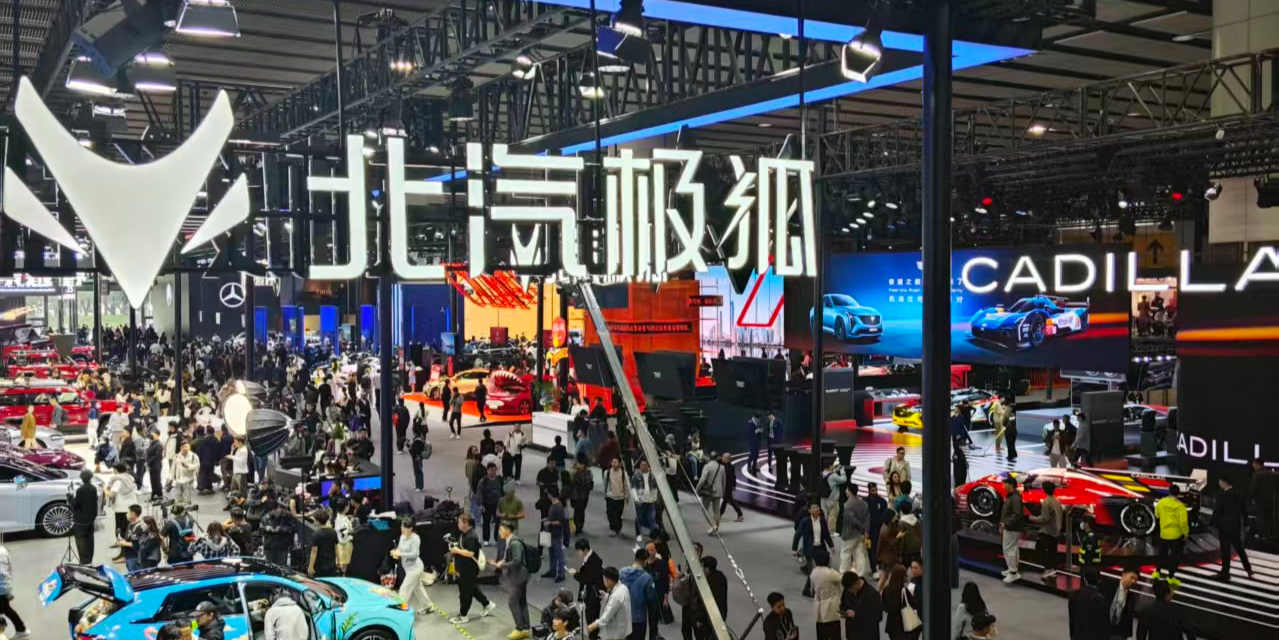
消失的车市翘尾
Jing Ji Guan Cha Wang· 2025-12-12 14:22
Core Viewpoint - The automotive market is experiencing a significant downturn due to the exhaustion of various subsidy programs, leading to a lack of consumer enthusiasm and lower sales performance as the year ends [1][3][7]. Group 1: Market Conditions - The automotive market has cooled significantly, with many dealerships reporting low customer traffic and sales, contrasting sharply with previous years' year-end buying frenzies [1][3]. - In November, the national retail sales of passenger vehicles reached 2.225 million units, a year-on-year decline of 8.1% and a month-on-month decline of 1.1% [3][4]. - The decline in sales is attributed to the cancellation of national and local subsidies, as well as the anticipated introduction of a 50% purchase tax on new energy vehicles starting next year [1][3][7]. Group 2: Subsidy Policies - The central government has allocated automotive replacement subsidies until December 31, 2025, but many local governments have exhausted their funds early, leading to a pause in subsidies [1][5]. - The total subsidy budget for 2025 is set to double to 300 billion yuan, with a significant portion allocated for automotive subsidies, expected to exceed 180 billion yuan [5][7]. - Local governments are implementing their own subsidy programs to stimulate market activity, with some regions offering cash incentives for vehicle purchases [6][9]. Group 3: Industry Responses - In response to the market downturn, many automakers are introducing their own incentives, such as covering the increased purchase tax for customers who order vehicles before the end of 2025 but receive them later [2][8]. - Some companies, like Dongfeng Honda and Lynk & Co, remain optimistic about maintaining stable sales in the fuel vehicle segment and anticipate growth in hybrid and plug-in hybrid models [8][9]. - Automakers are developing strategies to adapt to changing policies and consumer demands, focusing on enhancing product offerings and ensuring compliance with local subsidy regulations [9].
崔东树:11月乘用车厂商生产、出口、批发均创当月历史新高 出口创出历年各月的历史新高
智通财经网· 2025-12-09 06:08
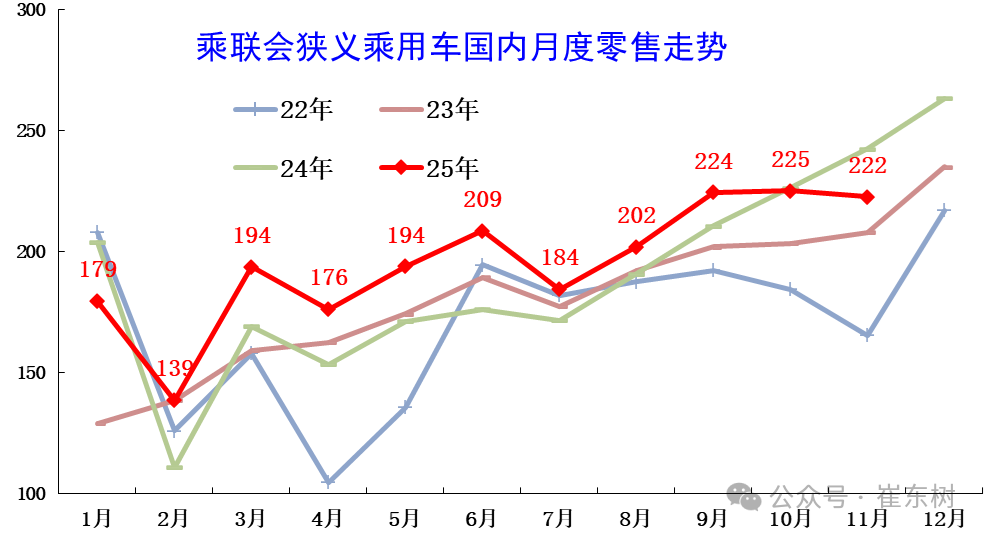
11月全国乘用车市场零售222万辆,同比下降8%,环比下降1%。今年以来累计零售2148万辆,同比增长6%。今年国内车市零售累计增速从1-2月增长 1.2%,3-6月增长15%,7-9月增速徘徊在6%左右,10-11月回落到偏低状态,呈现4季度高基数的减速特征,基本符合年初判断的"前低中高后平"的走势。 由于今年的前期增长较快,政策补贴本身目标是稳定总体增长幅度,因此年末稳增速的现象是合理的走势。去年11月的超高基数,今年11月的小幅负增长 是熨平了去年的高增长,相对2022年11月增速仍有5%,因此总体走势仍是相对正常的。今年调节增速的重要政策是以旧换新补贴,截至10月22日2025年 汽车以旧换新补贴申请量突破千万辆,前11个月申请量已达1120万辆。随着各地补贴的大面积暂停,11月的日均补贴规模降到3万辆,增速调节效果明 显。 1. 近年狭义乘用车零售走势 智通财经APP获悉,崔东树发布2025年11月份全国乘用车市场运行特征分析。2025年11月乘用车市场的特征:11月乘用车厂商生产、出口、批发均创当月 历史新高,出口创出历年各月的历史新高;国有大集团自主品牌发力强增长,东风、上汽、一汽、北汽、奇瑞、 ...
11月汽车零售销量三年来同比首降
Di Yi Cai Jing· 2025-12-08 13:46
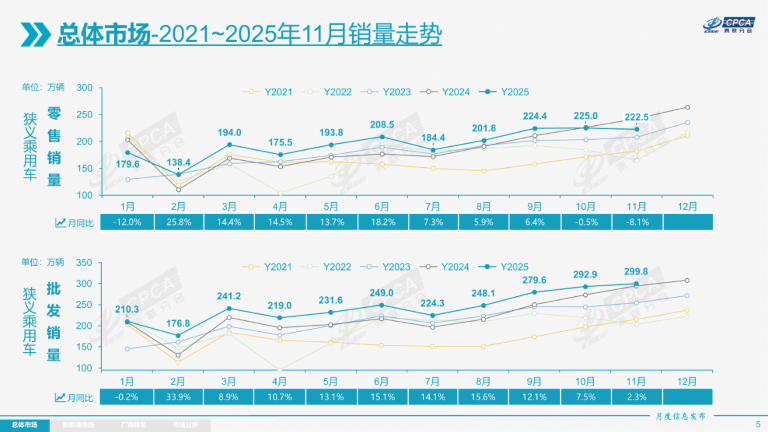
Group 1 - The retail sales of passenger cars in China for November reached 2.225 million units, marking a year-on-year decline of 8.1% and a month-on-month decrease of 1.1%, indicating that the year-end "tail market" is unlikely to materialize [1] - This is the first instance of year-on-year negative growth in retail sales for the automotive market in 2023, with the decline widening from a 0.5% drop in October [1] Group 2 - The important policy for adjusting the growth rate of car sales this year has been the trade-in subsidy, with over 11.2 million applications for the subsidy by October 22, 2023 [3] - The average daily subsidy scale dropped to 30,000 units in November due to the widespread suspension of subsidies across various regions [3] - The penetration rate of new energy vehicles in domestic retail reached 59.3% in November, an increase of 7 percentage points year-on-year, with the pure electric market being the only growth highlight, showing a year-on-year increase of 9.2% [3] Group 3 - Despite the decline in retail sales, production and wholesale volumes in the automotive market maintained growth, leading to an increase in dealer inventory by 60,000 units in November [4] - The automotive industry is facing a low profit margin, with the sales profit margin for the upstream non-ferrous industry at 30.3% compared to just 4.4% for the automotive industry, indicating a hollowing out of profits for vehicle manufacturers [4] - Increased inventory levels of new energy vehicles in October and November led to a misperception of high demand in the upstream lithium carbonate industry, resulting in price increases [4]
【月度分析】2025年11月份全国乘用车市场分析
乘联分会· 2025-12-08 08:05
Core Viewpoint - The article provides a comprehensive analysis of the automotive market in November 2025, highlighting trends in retail, production, wholesale, and exports, particularly focusing on the performance of new energy vehicles (NEVs) and the impact of government policies on market dynamics [14][15][17]. Retail Analysis - In November, the national passenger car market retail reached 2.225 million units, a year-on-year decrease of 8.1% and a month-on-month decrease of 1.1%. Cumulative retail for the year reached 21.483 million units, up 6.1% year-on-year [14]. - The retail penetration rate of NEVs in the domestic market was 59.3%, an increase of 7 percentage points year-on-year. Among the NEVs, the penetration rate for domestic brands was 79.6% [24] [15]. Production and Wholesale Analysis - Passenger car production in November was 3.106 million units, a year-on-year increase of 3.0% and a month-on-month increase of 5.3%. Cumulative production for the year reached 26.842 million units, up 12.3% year-on-year [17]. - Wholesale figures for November reached 2.998 million units, marking a historical high for the month, with a year-on-year increase of 2.3% and a month-on-month increase of 2.4% [18]. Export Performance - In November, the export of passenger cars was 818,000 units, a month-on-month decrease of 1% but a year-on-year increase of 40%. Cumulative exports for the year reached 5.151 million units, up 17.2% year-on-year [17]. - NEVs accounted for 47.3% of total exports in November, with a significant year-on-year increase of 26.3 percentage points. The export of NEVs reached 284,000 units, a year-on-year increase of 243.3% [25]. Market Dynamics - The article notes that the market is experiencing a shift with the introduction of new models and the impact of government policies such as the "old-for-new" subsidy program, which has seen over 11.2 million applications by October 2025 [14][15]. - The performance of domestic brands in the NEV sector is strong, with significant growth in exports and market share, particularly among major state-owned enterprises [15][16]. Future Outlook - The article anticipates strong retail performance for December 2025, driven by consumer urgency due to the expiration of tax exemptions for NEVs. The overall market is expected to benefit from increased consumer interest and government support [30][31].



四川省汽车置换补贴摇号中签名额是否会增加?官方回应:拟在明天成倍增加
Si Chuan Ri Bao· 2025-11-27 11:53
Group 1 - The Sichuan Provincial Department of Commerce plans to significantly increase the number of winning lottery spots for the automobile replacement subsidy program in the upcoming rounds, aiming to enhance consumer participation and benefit from the policy [1] - The Chengdu Second Ring Expressway has been reported to have multiple sunken areas, prompting the Sichuan Provincial Transportation Department to initiate a special maintenance project, expected to be completed by the end of December this year [2] - The Luzhou Yudai River Park Phase II is currently under development, with plans to include public toilets and other facilities in the design, aiming for completion of the design by 2025 and construction by the end of 2026 [3]