
消费贷贴息政策

Search documents
实测消费贷“国补”:部分利率或低于3%,如何申请?
3 6 Ke· 2025-09-01 09:21
Core Viewpoint - The launch of consumer loan interest subsidies aims to stimulate consumer demand and reduce borrowing costs for individuals and businesses, with various banks participating in the program [15][16]. Application Process - Consumers can apply for personal consumer loan interest subsidies through the same steps as previous consumer loan applications, with the addition of signing a supplementary agreement for the subsidy [2][4]. - The application involves selecting a loan amount, repayment term, and confirming eligibility for the subsidy [4][6]. Eligible Loan Products - The subsidy applies to personal consumer loans for expenditures under 50,000 yuan, as well as for specific categories such as home appliances, education, and healthcare, with a maximum subsidy of 1% per annum [9][10]. - Various banks have listed eligible loan products, including personal credit loans and auto loans, with interest rates starting from 3% [11][10]. Financial Impact - The subsidy is expected to lower effective interest rates for consumers, with examples showing significant reductions in monthly payments due to the subsidy [7][12]. - Banks anticipate that the policy will enhance loan demand and increase interest income, particularly for those with a high proportion of consumer loans [15][16]. Non-Eligible Situations - Loans not used for actual consumption or those that do not meet specific criteria will not qualify for the subsidy, including credit card transactions and loans settled on the same day as disbursement [13][14]. - Banks have outlined various conditions under which subsidies will not be granted, emphasizing the importance of proper documentation and usage of funds [13][14].

消费贷贴息政策9月1日正式落地实施 教你领消费贷“国补”
Yang Shi Wang· 2025-08-31 17:10
Core Viewpoint - The new consumer loan interest subsidy policy will officially take effect from September 1, as announced by the Ministry of Finance, the Ministry of Commerce, and other departments, providing financial support to consumers [1] Group 1 - The consumer loan interest subsidy policy aims to stimulate consumer spending by offering financial incentives [1] - The implementation of this policy is expected to benefit individual consumers who take out loans for consumption purposes [1] - The policy is part of a broader strategy to boost economic activity and support consumer confidence in the market [1]
消费贷“国补”,要来了!
Yang Shi Xin Wen· 2025-08-31 09:41
Core Viewpoint - The new personal consumption loan subsidy policy will be implemented from September 1, 2025, to August 31, 2026, allowing consumers to enjoy a 1% annual subsidy on eligible loans used for consumption purposes [1][9]. Summary by Sections Policy Implementation - The subsidy applies to personal consumption loans issued by designated financial institutions, excluding credit card transactions, and is aimed at promoting consumer spending [1][9]. - Consumers can benefit from the subsidy if they use the loan for various expenditures, including daily expenses, large purchases like cars and home renovations, and services such as travel and retirement [1]. Eligibility Criteria - To qualify for the subsidy, consumers must obtain loans from specified banks and financial institutions, including 18 major banks and 5 other lending institutions [4][6]. - Consumers must also sign a supplementary agreement allowing banks to access their transaction information to verify the use of the loan for eligible consumption [5][6]. Application Process - Banks will automatically identify eligible transactions and apply for the subsidy on behalf of the consumers [6]. - If a consumer's transaction cannot be automatically recognized, they can submit receipts or invoices to the bank for manual verification and subsidy application [9]. Financial Impact - The subsidy is expected to lower the cost of consumer loans, thereby stimulating consumer spending and economic activity [9]. - Consumers are advised to manage their debt responsibly and avoid using loan funds for non-consumption purposes, such as investments [9].

手把手教你领到消费贷“国补”
Yang Shi Xin Wen Ke Hu Duan· 2025-08-31 05:16
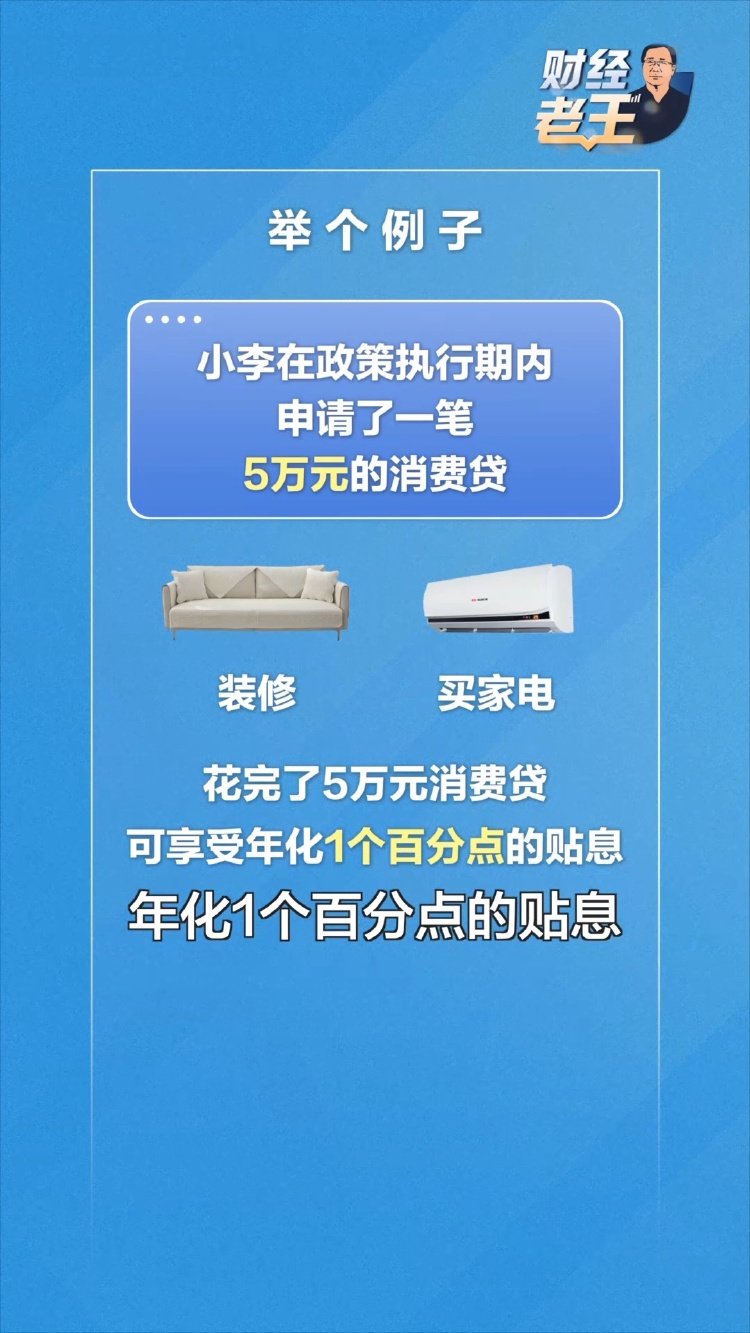
Core Viewpoint - The Chinese government is introducing a subsidy for consumer loans, effective from September 1, which will provide a 1% annual interest subsidy for eligible borrowers who use the loans for genuine consumption [4][18]. Summary by Sections Consumer Loan Subsidy Details - The subsidy applies to various types of consumer spending, including daily expenses, large purchases like cars and home renovations, as well as services such as travel and retirement [4]. - For example, if a borrower takes a consumer loan of 50,000 yuan at an interest rate of 3%, they would typically pay 1,500 yuan in interest over a year. With the subsidy, they would only pay 1,000 yuan, saving 500 yuan [7]. Eligibility Criteria - To qualify for the subsidy, borrowers must obtain consumer loans from designated banks, including major institutions like Agricultural Bank of China, Industrial and Commercial Bank of China, and others [10]. - Borrowers must also sign a supplementary agreement allowing banks to access their transaction information to verify the use of the loan [10]. Consumption and Subsidy Process - Cash withdrawals from loans for consumption do not qualify for the subsidy, as banks cannot track the usage of funds [11]. - Payments made through personal merchant codes or credit cards also do not qualify; however, direct debit card transactions and payments via platforms like WeChat and Alipay are generally recognized [15]. - If a borrower makes a purchase that is not automatically recognized by the bank, they can submit receipts to claim the subsidy [15]. Impact on Consumer Behavior - The consumer loan subsidy is expected to lower the cost of consumer credit and stimulate spending, thereby enhancing consumption potential in the economy [18]. - Borrowers are advised to manage their debt responsibly and avoid using consumer loans for investment purposes [18].
消费贷贴息能“带飞”消费吗?
和讯· 2025-08-30 08:57
Core Viewpoint - The introduction of the "national subsidy" for consumer loans aims to stimulate consumption by directly reducing interest expenses through a subsidy mechanism, thereby encouraging consumers to spend more [2][3]. Group 1: Subsidy Policy Overview - The consumer loan subsidy policy, effective from September 1, offers a 1% annual interest subsidy for personal loans, covering various key consumption areas such as home appliances, education, and healthcare [3][4]. - The policy allows for targeted support, breaking from previous practices by only subsidizing the portion of loans used for consumption, with strict regulations against misuse [4][5]. Group 2: Impact on Consumers and Businesses - The dual subsidy approach benefits both individual consumers and service industry businesses, with the personal loan subsidy particularly aiding middle-income families and expanding access in lower-tier markets [6][7]. - For businesses in the service sector, the subsidy is designed to alleviate short-term cash flow pressures, with a maximum subsidy of 10,000 yuan for loans up to 1 million yuan [5][6]. Group 3: Financial Implications - The total credit involved in the subsidy policy is estimated at 15 trillion yuan, representing about 6% of all loans, with potential annual interest savings for borrowers of approximately 60 billion yuan [8][9]. - The policy is expected to stimulate new loan issuance significantly, with projections indicating that every 1 yuan of subsidy could leverage 100 yuan in new loans, enhancing the overall economic activity [9][10].
消费贷贴息已全行部署,有信心稳息差!邮储银行中期业绩会直击
Zhong Guo Zheng Quan Bao· 2025-08-29 15:54
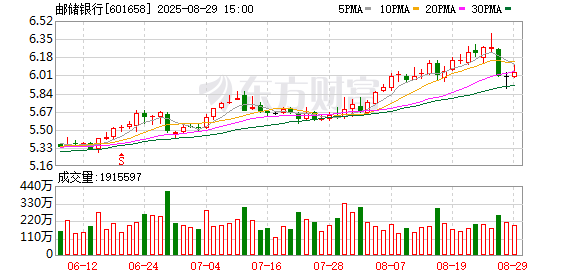
Core Viewpoint - Postal Savings Bank of China (PSBC) demonstrated resilience in its mid-year performance, achieving positive year-on-year growth in both operating income and net profit, while maintaining a leading net interest margin in the industry [2][4]. Financial Performance - For the first half of the year, PSBC reported operating income of 179.446 billion yuan and net profit attributable to shareholders of 49.228 billion yuan, reflecting year-on-year growth of 1.50% and 0.85% respectively [4]. - The total loan amount exceeded 9.5 trillion yuan, with a year-on-year growth of 14.83% [2]. - The net interest margin stood at 1.70%, maintaining a leading position in the industry [4]. Loan Growth - In the first half of the year, PSBC's housing loans increased by 21.316 billion yuan, marking the only positive growth among major banks and ranking first in scale [2][8]. - The bank's total loan increase was 623 billion yuan, with retail loans growing by nearly 90 billion yuan, a year-on-year increase of 1.86%, surpassing the industry average by 0.45 percentage points [5]. Consumer Loan Policy - PSBC has fully deployed the consumer loan interest subsidy policy across the bank, having developed detailed operational processes and specialized system functions [9][10]. - The bank's personal consumer loan balance reached 3.03 trillion yuan, with a net increase of 36.981 billion yuan compared to the end of the previous year [9]. Strategic Initiatives - PSBC is actively applying for approval to establish a Financial Asset Investment Company (AIC) with a proposed investment of 10 billion yuan, which is a key part of its comprehensive strategy [6]. - The bank aims to enhance its corporate finance capabilities, focusing on differentiation and building a multi-layered research system to improve its market strategies [5].

还剩3天!你也许能少付一笔利息钱
Sou Hu Cai Jing· 2025-08-28 11:43
Core Viewpoint - The implementation of the personal consumption loan interest subsidy policy is imminent, with banks preparing to offer related products and services to consumers [3][4]. Group 1: Policy Implementation - The personal consumption loan interest subsidy policy is set to be officially implemented on September 1, with several banks already preparing their products [3]. - Banks like Postal Savings Bank and Shanghai Pudong Development Bank have clarified that the subsidy will be directly deducted from the loan interest at the time of payment [4][7]. - The Industrial and Commercial Bank of China (ICBC) has not yet specified the details of the subsidy but is promoting its consumption loan products [4][6]. Group 2: Loan Details and Limits - The subsidy applies to personal consumption loans issued by banks, excluding credit cards, with a maximum subsidy limit of 3,000 yuan per borrower [6][11]. - For loans under 50,000 yuan, the maximum subsidy is capped at 1,000 yuan [7][11]. - ICBC's personal credit consumption loan product "Rong e Borrow" offers a maximum limit of 1 million yuan with interest rates starting as low as 3% [6]. Group 3: Compliance and Monitoring - Banks emphasize the importance of compliance regarding the use of loan funds, prohibiting any diversion to stock or real estate markets [9]. - Financial institutions are encouraged to enhance monitoring of loan purposes and fund flows to prevent misuse of the subsidy [10]. - Regulatory recommendations include the establishment of a credit monitoring system to improve oversight of loan usage and to deter fraudulent activities [10][11].



消费贷贴息落地倒计时!银行细则相继公布“直接扣减”即将上线
Bei Ke Cai Jing· 2025-08-28 05:17
Core Viewpoint - The implementation of the consumer loan interest subsidy policy is approaching, with several banks already preparing related products and guidelines to ensure compliance and prevent misuse of funds [4][21]. Group 1: Bank Actions and Policies - Postal Savings Bank and Shanghai Pudong Development Bank have clarified that the subsidy will be directly deducted from the loan interest at the time of collection [2][10]. - Industrial and Commercial Bank of China (ICBC) has begun promoting its consumer loan products with the slogan emphasizing the benefits of the national subsidy, although specific details on the subsidy implementation are still pending [6][8]. - The subsidy policy allows for a maximum of 3,000 yuan in interest subsidies per borrower, with specific limits based on the loan amount [11][23]. Group 2: Loan Usage and Compliance - The subsidy is intended for personal consumption loans used in designated areas such as home appliances, education, and healthcare, with strict controls to prevent funds from being diverted to prohibited sectors like real estate and stock markets [3][15][16]. - Banks are implementing measures to ensure that loan funds are used appropriately, including monitoring transaction information and prohibiting fraudulent activities [17][20]. Group 3: Financial Implications - The annual subsidy rate is set at 1%, with the maximum subsidy not exceeding 50% of the loan contract interest rate, which is expected to lower effective interest rates for consumers [21][22]. - The financial burden of the subsidy is shared between central and local governments, with the central government covering 90% and local governments 10%, which may encourage local government participation [23].
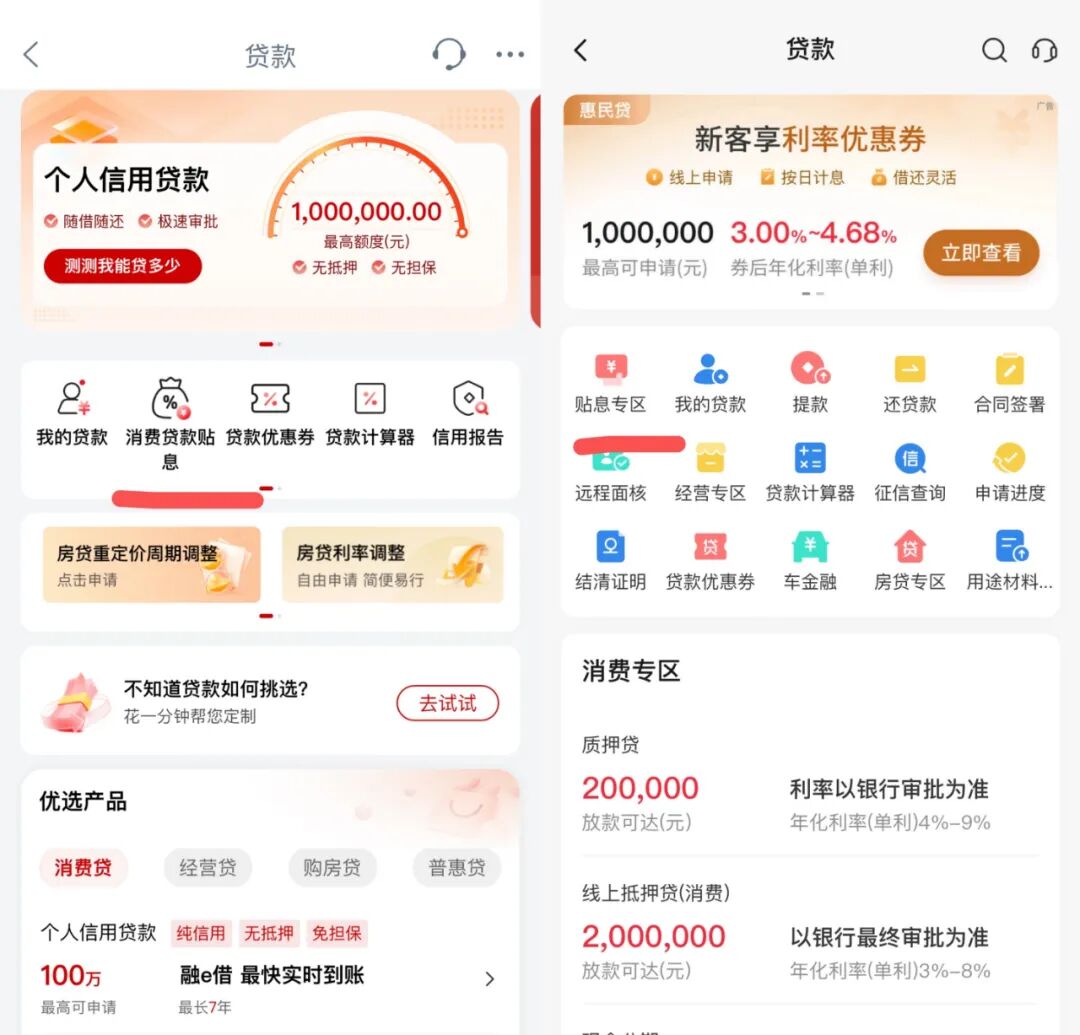
贴息前消费贷市场调查: 系统进行最后测试 9月起“自动减息”
Zhong Guo Zheng Quan Bao· 2025-08-27 20:21
Core Insights - The implementation of consumer loan interest subsidy policies is expected to stimulate credit activity expansion and provide dual support for retail lending business, benefiting both consumer loan demand and bank interest margins [1][8][9] Group 1: Consumer Loan Interest Subsidy Policy - The consumer loan interest subsidy policy will allow borrowers to apply online, simplifying the process and potentially reducing the effective interest rate to the 2% range after subsidies [1][3] - Banks are preparing to launch the subsidy program, with some already offering high credit limit products, including those with limits reaching millions [2][4] - The minimum interest rate for consumer loans remains at 3%, but with the subsidy, borrowers can expect a significant reduction in their actual interest burden [3][4] Group 2: Bank Strategies and Consumer Engagement - Banks are actively promoting consumer loans and preparing for the subsidy rollout, with some offering increased loan limits to valued customers [2][3] - The subsidy will be automatically applied based on consumer spending data, requiring borrowers to authorize banks to access their transaction records [5][6] - Banks emphasize that the subsidy does not apply to credit card or installment products, and they will not charge any fees for processing these loans [7][6] Group 3: Economic Implications - The fiscal subsidy is expected to lower financing costs and protect bank interest margins, while also enhancing the stability of consumer loan growth [8][9] - Analysts suggest that the subsidy could support a significant increase in consumer and service industry loan disbursements, with estimates indicating that every 100 billion yuan in subsidies could facilitate 1 trillion yuan in loans [8] - There is a need for compliance monitoring to ensure that the funds are used appropriately for consumption rather than investment, to mitigate credit risk [9]


贴息前消费贷市场调查:系统进行最后测试 9月起“自动减息”
Zhong Guo Zheng Quan Bao· 2025-08-27 20:17
Core Insights - The implementation of consumer loan interest subsidy policies is expected to stimulate credit activity expansion and provide dual support for retail lending business, benefiting both consumer loan demand and bank interest margins [1][6][5] Group 1: Consumer Loan Interest Subsidy Policy - The consumer loan interest subsidy policy is in the final testing phase, allowing borrowers to apply online and automatically receive interest deductions based on their consumption data [1][3] - The minimum interest rate for consumer loans remains at 3%, but after subsidies, the effective rate for borrowers could drop to the 2% range [2][3] - Banks are preparing to launch the subsidy program, with some already increasing loan limits for quality customers [2][3] Group 2: Loan Products and Features - Some banks offer consumer loans with credit limits reaching millions, with specific products allowing for a combination of consumption and business purposes [3][4] - The subsidy policy will not apply to credit card transactions or installment products, and banks will not charge any fees for processing these loans [5][6] - The subsidy will be automatically applied to identifiable consumer expenditures, while unrecognized expenses may require manual verification [4][5] Group 3: Market Impact and Future Outlook - The subsidy is expected to lower financing costs and protect bank interest margins, potentially stabilizing loan pricing in the retail sector [6][5] - Analysts suggest that the subsidy could support a significant increase in consumer and service industry loan issuance, with estimates indicating that every 100 billion yuan in subsidies could facilitate 1 trillion yuan in loans [6] - There is a need for banks to ensure compliance in the use of subsidized loans to prevent misuse in non-consumption areas [6]