红利策略

Search documents
A股策略专题20260127:2026 年红利策略三问
SINOLINK SECURITIES· 2026-01-27 07:17
一问红利:2026 年是否会有超额? 2025 年红利策略大幅跑输市场,最核心的原因在于市场找到了新的能够突破宏观趋势的成长性:以 AI 产业投资为代 表,以及景气度也开始逐步扩散到与 AI 强相关的"泛 AI"领域。所以市场的定价驱动力从 2022 年至 2024 年上半年 的股息率 d 逐步开始重新转向增长率 g。展望 2026 年,红利策略是否会有相较于全 A 的超额收益,核心判断还是在于 市场是否依旧以基本面的边际变化作为核心驱动力?基于我们年度策略《世界的中国》对于 2026 年的基本面展望, 在 AI 投资宏观风险较低、降息周期下全球制造业景气度向上的背景下,2026 年中国的企业盈利修复可能是股票市场 的核心驱动力,会有更多的行业景气度出现改善。在这种宏观背景下,我们认为投资者可能还是会更加关注基本面的 边际变化(增长率)而非股息率。所以 2026 年红利策略似乎很难获取超额收益。但这并不意味着红利策略不重要, 因为它依旧是很多投资者构建投资组合的压舱石和降低组合波动的重要工具:一方面,A 股权益资产内部红利资产的 估值水平最低,波动率也相对较低;另一方面,与主要城市二手住宅租金回报、10 年期 ...
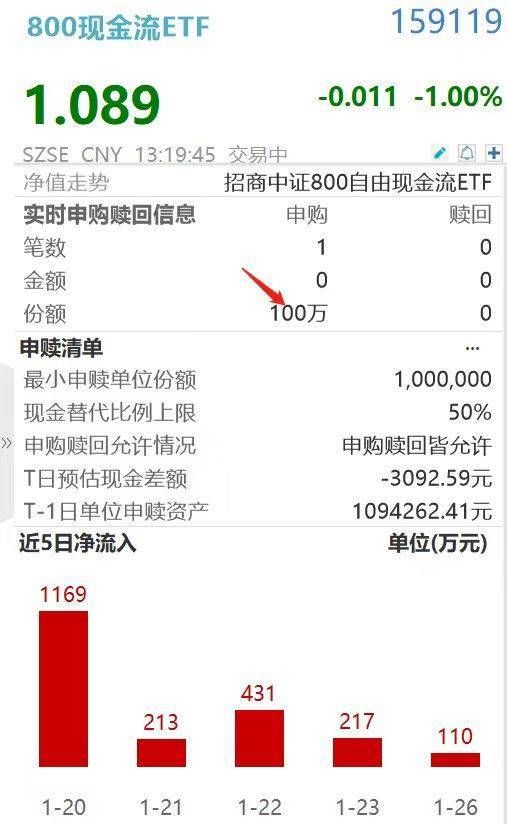
主力连续8日增仓!低费率800现金流ETF(159119)持续获青睐!白银有色逆市高涨
Sou Hu Cai Jing· 2026-01-27 05:36
Group 1 - The core viewpoint of the article highlights the adjustment in the dividend sector, with a clear intention of capital allocation despite market fluctuations [1] - The 800 Cash Flow ETF (159119) is noted as the only low-fee product in the market, with a fee rate of 0.2% per year, focusing on companies with strong cash-generating capabilities [5] - The leading industries represented in the ETF include automotive, petrochemicals, and home appliances, indicating a strategic selection of "cash cows" among the top 800 companies [5] Group 2 - The article emphasizes a shift in investment philosophy from short-term trading expectations to a return to fundamental value, reflecting a market re-evaluation of companies that can consistently generate stable free cash flow [5] - The current macroeconomic environment is seen as favoring high-quality companies that can create sustainable free cash flow, which are becoming increasingly valuable [5] - This trend represents an evolution in dividend investment strategies, moving from high dividend yields to a focus on high-quality earnings [5]


不藏了!520亿产品线集体“亮身份”!
券商中国· 2026-01-26 13:10
Core Viewpoint - Huatai-PB Fund announced the adjustment of its dividend-themed ETF product line, which has a total scale exceeding 52 billion yuan and a market share of over 25%, to include the manager's name "Huatai-PB" in the product titles, effective January 28, 2026 [1][3]. Group 1: Product Naming and Market Position - The adjustment marks the first collective identification of the dividend ETF product line in the ETF market following the renaming of the Huatai-PB CSI 300 ETF [2]. - The new names for the five dividend-themed ETFs include Huatai-PB Dividend ETF (510880), Huatai-PB Low Volatility Dividend ETF (512890), Huatai-PB Hong Kong Stock Connect Dividend ETF (513530), Huatai-PB Central State-Owned Enterprise Dividend ETF (561580), and Huatai-PB Hong Kong Stock Connect Low Volatility Dividend ETF (520890) [3][4]. - With this change, Huatai-PB has standardized the naming of 26 ETF products, all adopting "ETF Huatai-PB" as a unified suffix, indicating a significant step in brand and standardization development [4]. Group 2: Historical Context and Product Development - Huatai-PB has been a pioneer in dividend index investment in China, launching its first dividend ETF in 2006 and has since built a comprehensive product matrix covering both A-share and Hong Kong markets [5]. - The company has expanded its dividend strategy offerings over the years, introducing various products such as the Low Volatility Dividend ETF in 2018 and the Hong Kong Stock Connect Dividend ETF in 2022, with the latest addition being the Central State-Owned Enterprise Dividend ETF in 2023 [5]. Group 3: Market Trends and Brand Recognition - The ETF market is transitioning from supply expansion to quality and brand competition, making the recent renaming of the dividend ETF product line a reflection of this evolution [7]. - Clear and stable brand identification is becoming crucial for reducing cognitive costs for investors, as the number of ETFs increases and strategies become more nuanced [7]. - The brand adjustment is not merely a naming change but aligns with the management's ongoing efforts to enhance investor engagement and understanding of investment strategies [8].

金融破段子 | 红利的“人设”与本质
中泰证券资管· 2026-01-26 11:32
Core Viewpoint - The article discusses the shift in perception of dividend assets from a stable investment to a less appealing option in the context of a rising market driven by technology and AI, leading to feelings of dissatisfaction among investors holding these assets [2][4]. Group 1: Investment Motivation - Investors initially turned to dividend assets for their relative stability and income generation during market volatility, particularly around 2022 [4]. - The perception of dividend assets as a safe haven was reinforced by their performance during turbulent market conditions, contrasting with the fluctuations of other sectors [4]. Group 2: Performance Comparison - A comparison of the performance of the CSI Dividend All-Return Index against major indices over the past decade reveals periods of underperformance, including years where it declined significantly, such as a drop of over 15% in 2017 [5][6]. - The annual performance data shows that the CSI Dividend All-Return Index had a total return of 96.47% over ten years, while other indices like the CSI 300 All-Return Index and the ChiNext Index had returns of 56.49% and 26.92%, respectively [5]. Group 3: Investment Strategy - The essence of dividend investing lies in acquiring high-dividend stocks at reasonable prices and reinvesting dividends to enhance long-term returns, rather than expecting consistent outperformance [6][7]. - Understanding and accepting the underlying logic of dividend investment is crucial for investors to remain committed during market fluctuations, rather than being swayed by short-term comparisons [7].

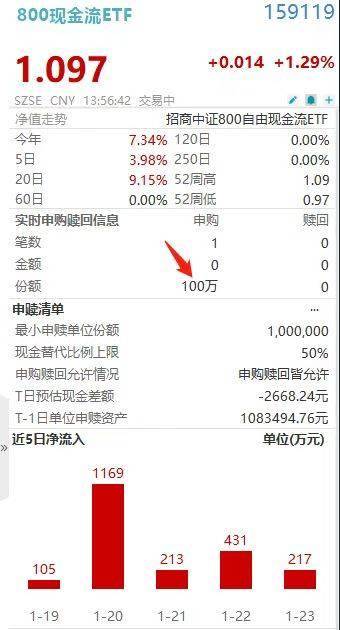
唯一低费率800现金流ETF(159119)盘中冲击年内第8次历史新高!白银有色封板!
Sou Hu Cai Jing· 2026-01-26 06:37
Core Insights - The 800 Cash Flow ETF (159119) has shown strong performance, rising 1.20% and reaching a new high for the year, indicating robust market interest and inflows [1][2] - This ETF focuses on companies with strong cash generation capabilities, primarily in sectors like automotive, oil and petrochemicals, and home appliances, representing a shift towards high-quality dividend investments [1][2] Group 1: ETF Performance - The 800 Cash Flow ETF (159119) is the only low-fee ETF in the market with a rate of 0.2% per year, highlighting its unique position [1][2] - The ETF has experienced a net inflow for seven consecutive days, reflecting sustained investor interest [1] Group 2: Investment Strategy - The ETF selects "cash cows" from the top 800 companies, emphasizing strong cash flow generation as a criterion for investment [1][2] - The investment philosophy is evolving from short-term trading expectations to a focus on fundamental value, indicating a deeper market shift towards quality and sustainability in earnings [1][2]
292亿资金涌入现金流赛道,现金流ETF嘉实(159221)一键布局优质“现金牛”组合
Xin Lang Cai Jing· 2026-01-26 03:09
Group 1 - The core viewpoint of the articles highlights the performance of the National Index of Free Cash Flow, which has seen a rise of 0.65% as of January 26, 2026, with significant gains in constituent stocks such as silver and various industrial companies [1] - The current market has 101 ETFs tracking free cash flow-related indices, with a total scale of 29.291 billion yuan as of January 21 [1] - Western Securities notes that during the Kondratiev wave downturn, geopolitical uncertainties have increased, leading to a natural preference for gold or stable cash flow "safe assets," which has re-evaluated the dividend strategy in the A-share market [1] - The free cash flow strategy has shown advantages over the dividend strategy, particularly in bull markets, as it has not underperformed the market in bear markets [1] - As of December 31, 2025, the top ten weighted stocks in the National Index of Free Cash Flow include major companies like China National Offshore Oil Corporation and SAIC Motor Corporation, accounting for 51.95% of the index [1] Group 2 - The cash flow ETF managed by Harvest (159221) closely tracks the National Index of Free Cash Flow, aiming to create a combination of profitability quality and dividend potential [2] - Investors can also access the cash flow ETF through the Harvest's off-market connection (024574) to seize investment opportunities [3]
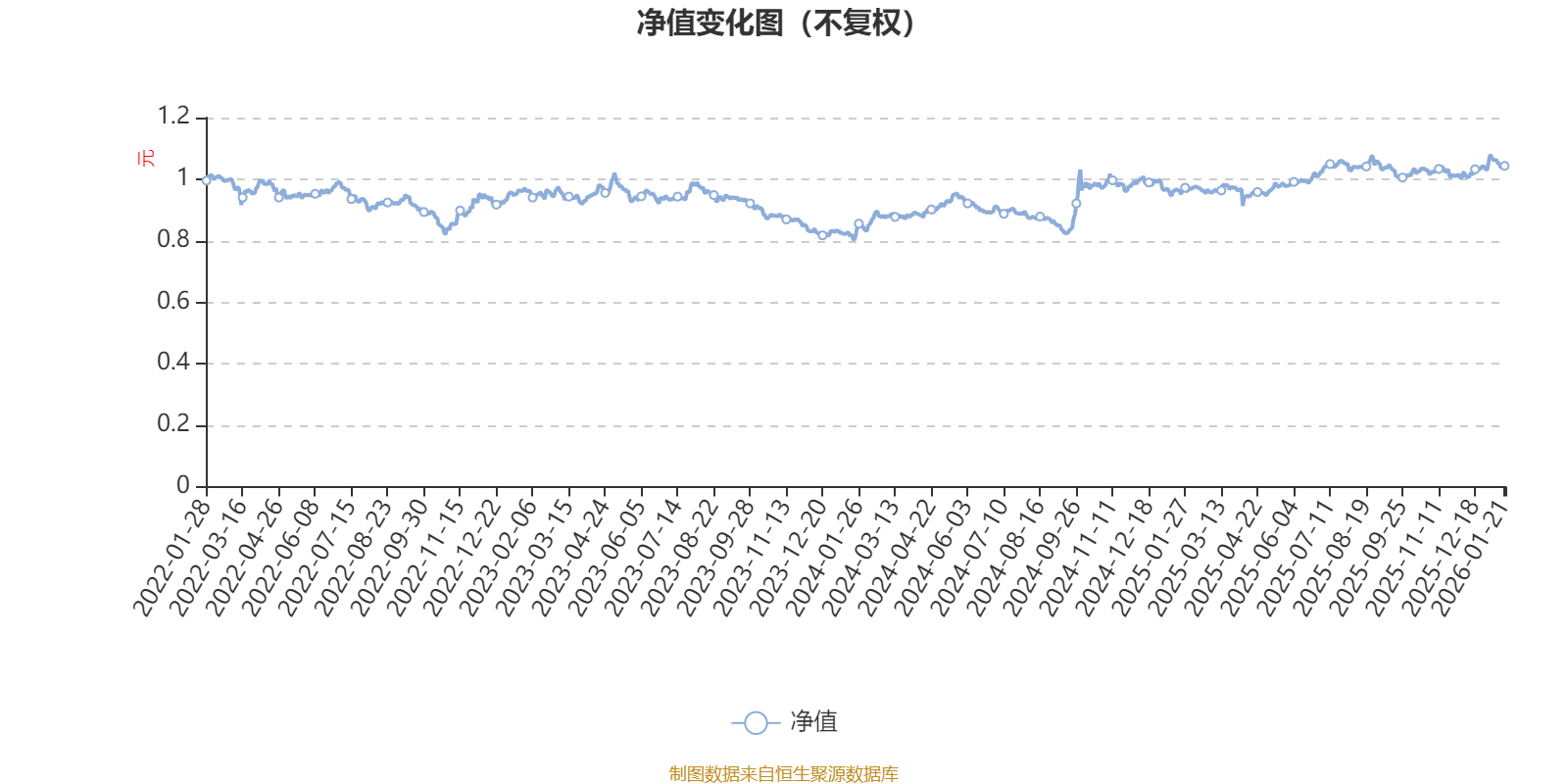
华宝红利精选混合A:2025年第四季度利润424.72万元 净值增长率3.64%
Sou Hu Cai Jing· 2026-01-25 10:59
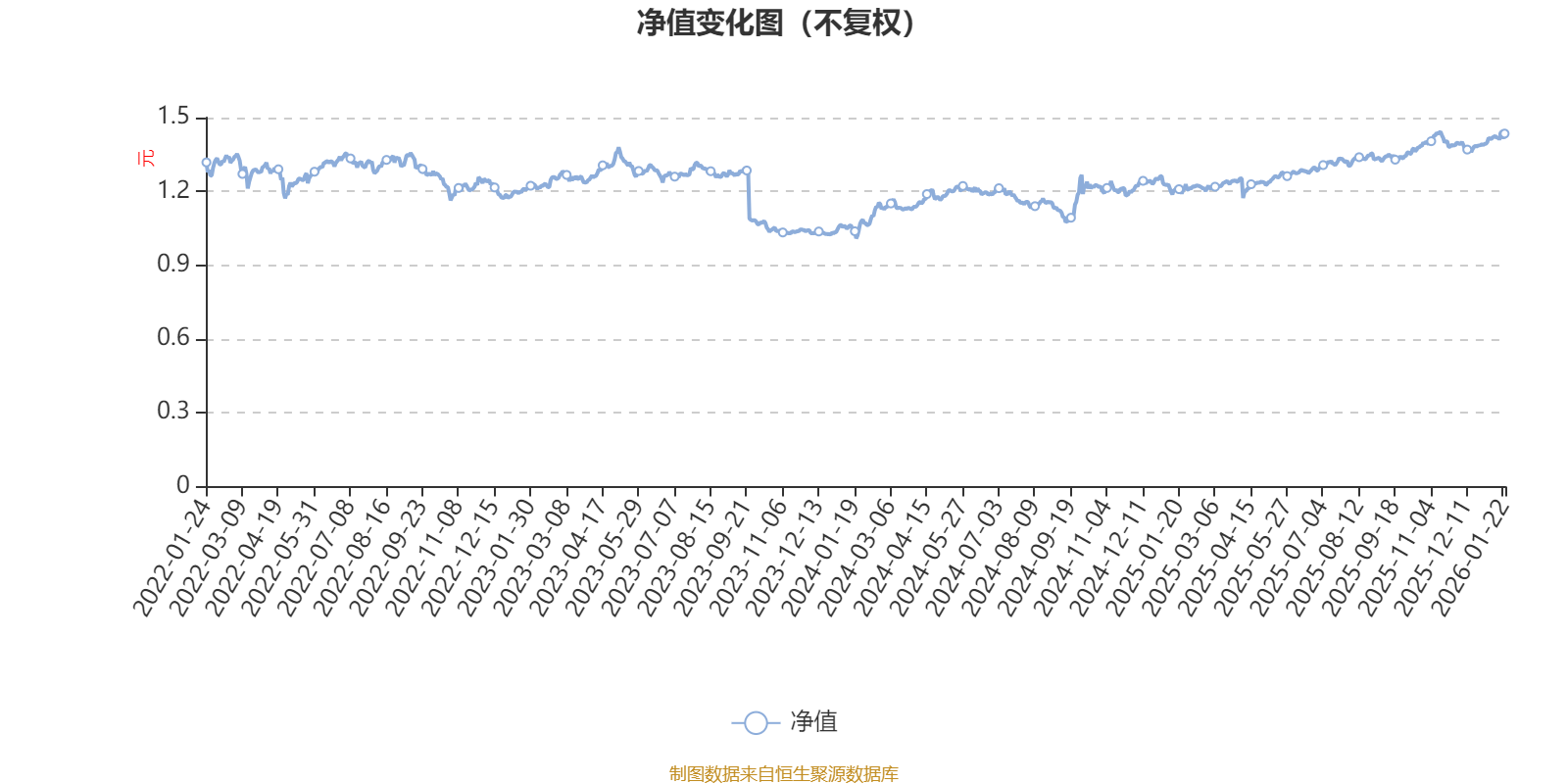
该基金属于偏股混合型基金。截至1月22日,单位净值为1.435元。基金经理是唐雪倩,目前管理6只基金。其中,截至1月22日,华宝新价值混合近一年复权 单位净值增长率最高,达22.06%;华宝安享混合A最低,为4.23%。 基金管理人在四季报中表示,华宝红利精选基金定位为价值策略产品,对于估值匹配度和盈利确定性的要求相对较为明确。基金定位于在全市场具备较高股 息率和分红可持续性,且经营质地优质、现金流表现良好的公司中优选股票组合,维持风格的连贯和清晰。报告期内基金保持了相对风格指数的超额收益, 整体波动延续正常水平。 客观而言,从中长期的角度,红利类的资产为市场特别是偏长期资产配置的投资者提供了长周期的配置选择,基金将在长期中继续恪守投资边际,做好相应 的股票选择和策略管理。 截至1月22日,华宝红利精选混合A近三个月复权单位净值增长率为4.04%,位于同类可比基金498/621;近半年复权单位净值增长率为7.50%,位于同类可比 基金545/621;近一年复权单位净值增长率为20.40%,位于同类可比基金522/613;近三年复权单位净值增长率为38.30%,位于同类可比基金117/535。 AI基金华宝红利 ...
红利策略,在A股有效吗:《红利指数基金投资指南》告诉你 | 螺丝钉带你读书
银行螺丝钉· 2026-01-24 13:53
Core Viewpoint - The article introduces the new book "Dividend Index Fund Investment Guide," highlighting the growing interest in dividend index funds due to the declining interest rates in the RMB environment [2][9][10]. Group 1: Book Introduction - The book is the first in the "Pocket Book" series by the company in collaboration with CITIC Publishing [3][4]. - The pocket book format is designed to be compact, allowing readers to finish it in about an hour, making reading easy and pressure-free [5]. - Upon its release, the book quickly topped the investment category on JD.com [6][7]. Group 2: Market Context - In recent years, RMB interest rates have been continuously declining, with deposit rates below 1% and long-term pure bond yields around 1.8%-2% [10][11]. - The rental yield from real estate is also low, while the dividend yield from dividend index funds is around 4%-5%, providing a decent cash flow [11][12]. Group 3: Investment Strategies - Investment strategies such as value, dividend, and growth have developed over the past decades, with notable figures like Benjamin Graham, the founder of value investing, influencing many investors [14][15][20]. - Warren Buffett, a disciple of Graham, emphasizes low valuation investments, often buying excellent companies at low price-to-earnings ratios [22][23]. Group 4: Effectiveness of Dividend Strategies - The effectiveness of dividend strategies in the A-share market is evidenced by the performance of the CSI Dividend Index, which has shown significant growth since its inception in 2004 [32][36]. - By the end of 2025, the CSI Dividend Index is projected to reach 5,503 points, with total returns including dividends reaching 11,522 points, reflecting an annualized return of around 12% [36][37]. Group 5: Challenges in Dividend Investing - Dividend strategies are not consistently effective every year, with performance varying significantly across different periods [40][41]. - The A-share market exhibits style rotation, often switching between growth and value styles, which can impact the performance of dividend indices [43][44]. - Many investors lack the patience to hold through market fluctuations, which can hinder their success in dividend investing [46][50].
中泰红利优选一年持有混合发起:2025年第四季度利润1689.01万元 净值增长率1.74%
Sou Hu Cai Jing· 2026-01-24 09:50
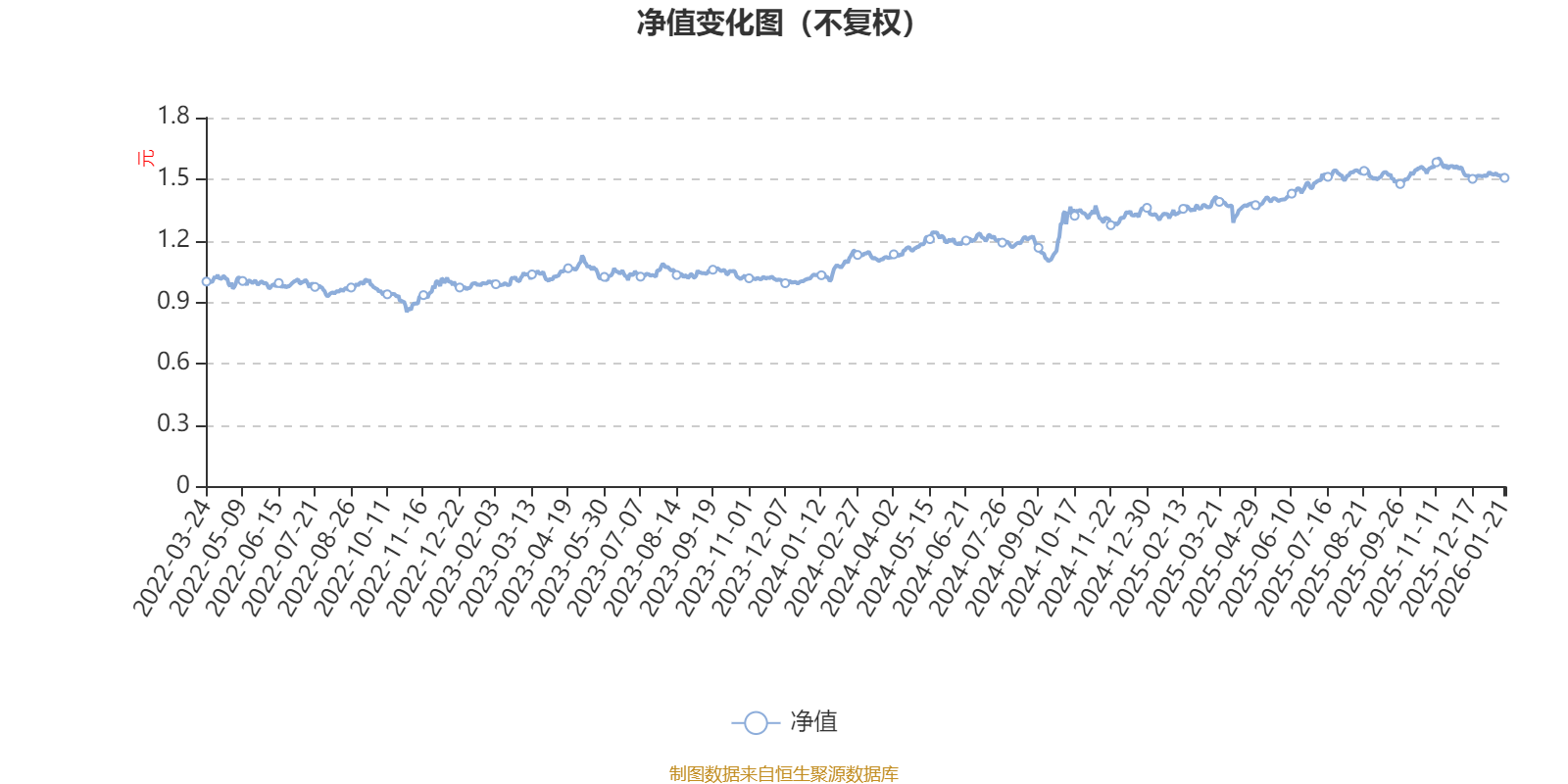
通过所选区间该基金净值增长率分位图,可以观察该基金与同类基金业绩比较情况。图为坐标原点到区间内某时点的净值增长率在同类基金中的分位数。 AI基金中泰红利优选一年持有混合发起(014771)披露2025年四季报,第四季度基金利润1689.01万元,加权平均基金份额本期利润0.0249元。报告期内, 基金净值增长率为1.74%,截至四季度末,基金规模为10.37亿元。 该基金属于偏股混合型基金。截至1月21日,单位净值为1.506元。基金经理是姜诚和王桃,目前共同管理的2只基金近一年均为正收益。其中,截至1月21 日,中泰红利优选一年持有混合发起近一年复权单位净值增长率最高,达13.49%;中泰红利价值一年持有混合发起最低,为13.19%。 基金管理人在四季报中表示,我们深知投资收益高低与投资决策的难度并没有显著的相关性,我们红利策略追求的是高置信度前提下的高胜率。在认知构建 层面,我们秉持开放勤奋的态度,通过持续学习不断外扩能力圈的边界;但回到投资决策,我们恪守严苛的标准和纪律,保持高度的克制与定力,兜住下 限、并努力提高长期投资回报。感谢大家的信任。 截至1月21日,中泰红利优选一年持有混合发起近三个月复权单 ...
长江红利回报混合型发起式A:2025年第四季度利润162.16万元 净值增长率2%
Sou Hu Cai Jing· 2026-01-24 08:32
AI基金长江红利回报混合型发起式A(013934)披露2025年四季报,第四季度基金利润162.16万元,加权平均基金份额本期利润0.0212元。报告期内,基金 净值增长率为2%,截至四季度末,基金规模为7130.96万元。 该基金属于偏股混合型基金。截至1月21日,单位净值为1.043元。基金经理是徐婕,目前管理的3只基金近一年均为正收益。其中,截至1月21日,长江均衡 成长混合A近一年复权单位净值增长率最高,达29.31%;长江添利混合A最低,为3.34%。 基金管理人在四季报中表示,本基金在四季度坚守红利策略,继续持有现金流充沛、分红稳定且估值处于低位的优质个股,取得了一定超额收益。展望 2026 年,市场有望从"估值修复"转向"业绩驱动",红利资产的高股息率优势依然显著,是资产配置中不可或缺的"压舱石"。下一阶段本基金将继续在保持较 高仓位的同时,深入挖掘红利资产的新机会,以期在复杂的市场环境中实现中长期平稳回报。 截至1月21日,长江红利回报混合型发起式A近三个月复权单位净值增长率为1.81%,位于同类可比基金535/621;近半年复权单位净值增长率为-0.67%,位于 同类可比基金608/621; ...