长江经济带高质量发展

Search documents
湖北:以支点建设为牵引 推动湖北在全国大局中的地位更加稳固
Zhong Guo Fa Zhan Wang· 2025-08-28 07:58
Core Viewpoint - The Hubei provincial government has made significant progress in economic development and regional coordination during the "14th Five-Year Plan" period, with a focus on enhancing its strategic position, regional development, urban-rural integration, and inter-provincial cooperation [1][2][3][4][5][6][7] Group 1: Economic Growth and Strategic Position - Hubei's economic total has surpassed 6 trillion yuan, with an average annual growth rate of 7.1%, making it a key engine for the rise of the central region [2] - The province's economic share in the central region increased from 19.5% at the end of the "13th Five-Year Plan" to an expected 20.9% by 2024 [2] - Hubei has achieved significant environmental protection and ecological governance, with the Yangtze River's water quality maintained at Class II or above [2] Group 2: Regional Development Coordination - Hubei is optimizing its regional development layout, focusing on the collaborative growth of the "Golden Triangle" of Wuhan, Xiangyang, and Yichang [3] - Wuhan's economic total has exceeded 2 trillion yuan, solidifying its position as the leading provincial capital in central China [3] - The Wuhan metropolitan area has a total economic output of over 3.6 trillion yuan, accounting for more than 60% of the province's total [3] Group 3: Urban-Rural Integration - Hubei is promoting new urbanization with a focus on county-level economies, increasing the number of top 100 counties to 8, ranking 4th nationally [4] - The urbanization rate of the permanent population in counties reached 56.7%, an increase of 3.44 percentage points from the end of the "13th Five-Year Plan" [4] - The income disparity between urban and rural residents has decreased, with the ratio of per capita disposable income falling to 2.08 [4] Group 4: Inter-Provincial Cooperation - Hubei is enhancing inter-provincial collaboration, particularly with neighboring provinces, to better integrate into the new development pattern [5][6] - Major projects like the Han-Xiang-Gui Canal and the Hunan-Guangxi high-speed rail are being advanced collaboratively [6] - The establishment of a technology innovation center in the central Yangtze River region is underway, with deepening industrial cooperation among urban agglomerations [6][7]
设计时速350公里,沿江高铁武宜段正式进入试运行阶段
Jing Ji Guan Cha Bao· 2025-08-26 11:12
Core Points - The Wuhan-Yichang section of the Yangtze River High-Speed Railway has officially entered the trial operation phase as of August 26, 2023 [1] - The railway spans 313 kilometers with a design speed of 350 kilometers per hour, featuring 88 new bridges and 25 tunnels, which account for 85% of the total length [1] - Upon completion, the travel time from Wuhan to Yichang will be reduced from 2 hours to approximately 1 hour, significantly enhancing connectivity and supporting the high-quality development of the Yangtze River Economic Belt [1] Infrastructure Details - The railway line starts from Wuhan, passing through Tianmen and Jingmen, and ends in Yichang, with a total of 8 stations, including one existing station and seven newly built stations [1] - Construction began in September 2021, with track laying expected to be completed by January 2025, followed by joint debugging and testing in May 2025 [1] - The testing phase includes comprehensive assessments of tracks, bridges, power supply, communication, signaling, and customer service systems to ensure all facilities meet operational standards [1] Economic Impact - The completion of the railway is expected to facilitate the integration of multiple cities into the high-speed rail network, thereby accelerating the strategic development of Central China [1] - The project is aligned with the broader goal of enhancing the economic capabilities of the Yangtze River Economic Belt [1]
湖北港口群直通日韩网络不断完善
Zhong Guo Xin Wen Wang· 2025-08-25 17:37
Core Insights - The launch of the "Hua Hang Han Ya 1" vessel marks a historic achievement for the shipping industry in Hubei, enabling direct international shipping routes from Jingzhou to ports in South Korea and Japan [1][2] - This new direct shipping line significantly reduces logistics time by 7 days and lowers overall logistics costs by 40%, enhancing the export capabilities of local products [1] - The Salt Card Port area, as a key hub, has a capacity of 10,000-ton vessels and can handle 10 million tons annually, making it a vital node for multi-modal transport in the Yangtze River region [1] Industry Impact - The new shipping route is expected to attract goods from surrounding cities in Hubei and Hunan, facilitating the export of large commodities such as home appliances and automobiles to Japan and South Korea [2] - The development of direct shipping networks from Hubei ports to Japan and South Korea has been ongoing, with multiple routes established in recent years, enhancing trade efficiency [2] - The integration of the "Yangtze Express" and "Han Ya Direct" international multi-modal transport channels is set to further boost the export of automotive parts and other goods from the region [2]
“十四五”湖北经济总量跃上6万亿 提前一年完成经济增长总量指标
Chang Jiang Shang Bao· 2025-08-20 23:51
Core Insights - Hubei Province has achieved significant economic growth during the "14th Five-Year Plan" period, surpassing the 6 trillion yuan mark ahead of schedule, with an average annual growth rate of 7.1% [1][2][3] - The province is focusing on regional coordination and development, enhancing its position as a strategic hub in the Yangtze River Economic Belt and the central region of China [2][7][8] Economic Performance - Hubei's economic total reached 6 trillion yuan, with a notable increase in its share of the central region's economy from 19.5% at the end of the "13th Five-Year Plan" to an expected 20.9% by 2024 [2][3] - The Wuhan metropolitan area has an economic total of 3.6 trillion yuan, accounting for over 60% of the province's economy [3][4] Infrastructure Development - Major infrastructure projects, including high-speed rail and highways, are being accelerated, with the completion of several key routes enhancing connectivity within the province [4][5] - The construction of the Hubei section of the Yangtze River high-speed rail and other significant projects is expected to create a one-hour high-speed rail circle among Wuhan, Xiangyang, and Yichang [4][5] County-Level Economic Growth - The number of top 100 counties in Hubei has increased to 8, with the emergence of four counties expected to achieve a GDP of over 100 billion yuan [5][6] - The urbanization rate of the county's permanent population has reached 56.7%, reflecting a 3.44 percentage point increase from the end of the "13th Five-Year Plan" [5][6] Social Development and Integration - Hubei is making strides in reducing urban-rural disparities, with 86% of counties having established tertiary hospitals and over 80% of primary and secondary schools covered by educational networks [6][7] - The province is actively promoting rural revitalization, with significant agricultural brands and a stable reduction in poverty risks [6][7] Regional Cooperation - Hubei is enhancing inter-provincial collaboration, particularly with neighboring provinces, to strengthen regional economic integration and cooperation [7][8] - The province is leveraging its strategic location and infrastructure to deepen economic ties with major regions such as Beijing-Tianjin-Hebei and the Yangtze River Delta [7][8]
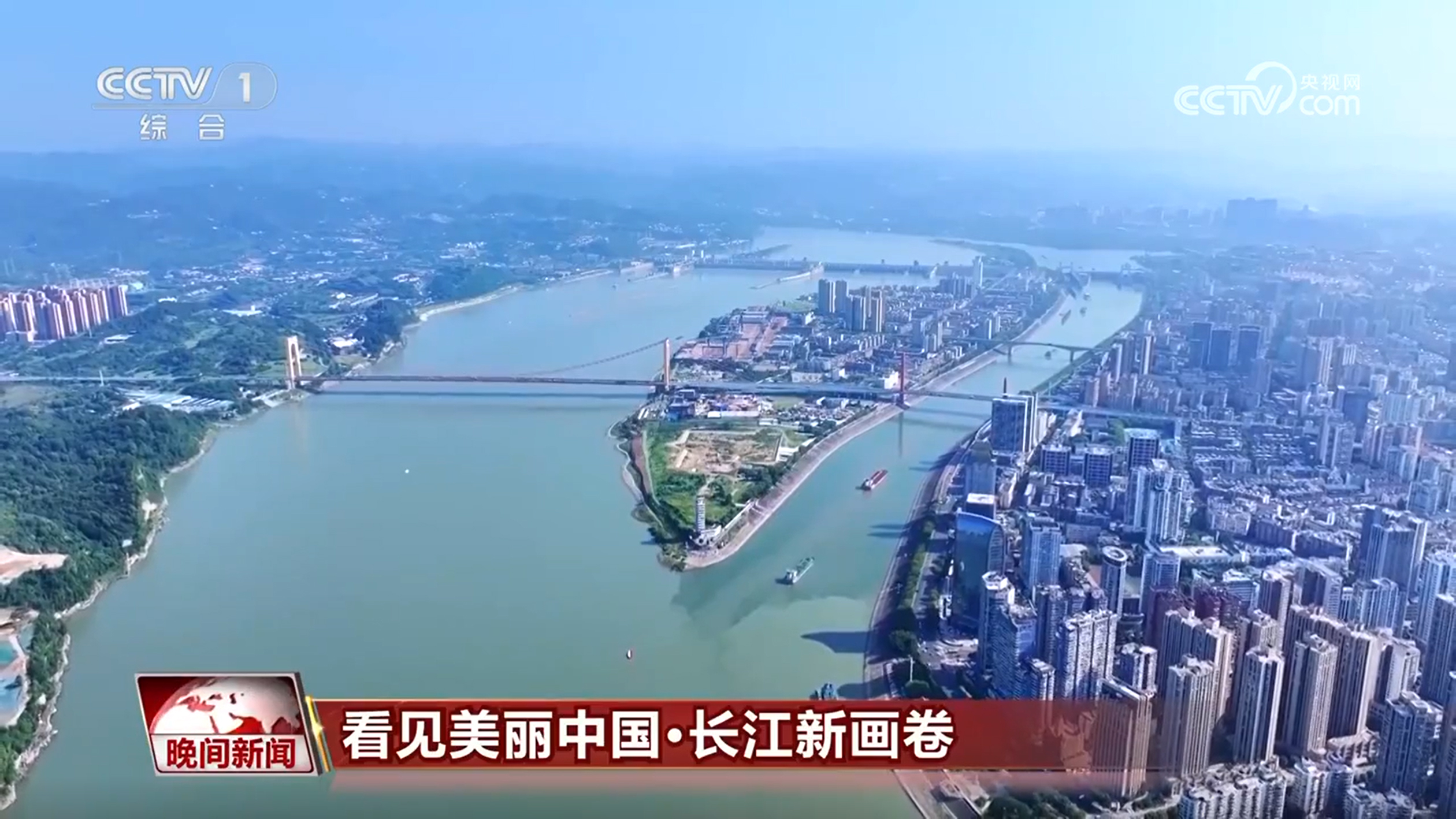
【看见美丽中国】“共抓大保护,不搞大开发” 长江新画卷正徐徐展开
Yang Shi Wang· 2025-08-13 15:48
Core Viewpoint - The article highlights the significant ecological restoration and transformation of the Yangtze River over the past seven years, emphasizing the shift from industrial pollution to a healthier ecosystem and improved water quality [1][10]. Group 1: Ecological Restoration - The Yangtze River, known as the mother river of the Chinese nation, has undergone substantial ecological restoration since the implementation of the "Yangtze River Protection" initiative in 2016, which prioritized ecological preservation over industrial development [1][6]. - The transformation of the riverbanks from industrial zones, such as chemical factories, to green corridors and parks has created recreational spaces for local residents [4][6]. - The water quality of the Yangtze has improved significantly, with the proportion of sections rated as Class I-III water quality increasing from 82.3% in 2016 to 98.6% by 2024 [10]. Group 2: Biodiversity Recovery - The population of the Yangtze River dolphin has increased to 1,249, marking a growth of over 200 individuals in five years, indicating a positive response to conservation efforts [13]. - The diversity of native fish species has also risen, with 344 species recorded from 2021 to 2024, an increase of 36 species compared to the period before the fishing ban [13]. - Rare species, including two nationally protected species, are returning to the river, showcasing the success of ecological restoration efforts [13]. Group 3: Community and Economic Impact - The transition of fishermen to land-based livelihoods has been facilitated by government support, including subsidies and job training, allowing former fishermen to adapt to new roles such as "fish guardians" [18][19]. - The introduction of green technologies in shipping, such as electric and hydrogen-powered vessels, reflects a broader commitment to sustainable practices along the Yangtze River [19]. - The harmonious coexistence of ecology and human activity is emphasized, with the article suggesting that the ongoing high-quality development of the Yangtze Economic Belt will lead to a more sustainable future for the river [20].

强化责任落实 凝聚强大合力 安徽省政协开展长江生态保护专题协商
Zhong Guo Huan Jing Bao· 2025-08-05 03:29
Core Viewpoint - The meeting emphasized the importance of ecological protection and restoration along the Yangtze River, highlighting the need for collaborative governance and sustainable development in the region [1]. Group 1: Ecological Protection and Governance - The meeting received 71 reports and materials focusing on improving the ecological protection system and wetland conservation along the Yangtze River [1]. - The provincial leaders stressed the need to prioritize the restoration of the Yangtze River's ecological environment and to uphold the political responsibility of protecting the river [1]. - A call was made for a coordinated approach to reduce carbon emissions, pollution, and to enhance green development, thereby injecting vitality into the high-quality development of the Yangtze Economic Belt [1]. Group 2: Cultural Heritage and Community Involvement - There is a strong emphasis on protecting the historical and cultural heritage of the Yangtze River, with a focus on benefiting the people and creating a positive cycle of protection and benefit [1]. - The leaders advocated for a people-centered approach to water management, ensuring that the local communities are actively involved in the protection of the Yangtze River [1]. Group 3: Implementation and Accountability - The meeting highlighted the need for a robust mechanism for ecological compensation and joint governance to strengthen the ecological protection framework along the Yangtze River [1]. - The provincial government is committed to implementing systematic, comprehensive, and collaborative governance strategies to ensure effective ecological protection and restoration efforts [1].
南京北站出站层首段顶板浇筑完成
Nan Jing Ri Bao· 2025-07-28 02:36
Group 1 - The completion of the first concrete pouring for the out-station layer at Nanjing North Station marks a significant milestone in the construction of this key hub for the Shanghai-Chongqing-Chengdu high-speed railway [1] - Nanjing North Station has a total construction area of approximately 692,100 square meters, consisting of 6 levels, including 4 above ground and 2 underground [1][2] - The out-station layer's first segment covers an area of about 2,692 square meters, with a concrete pouring volume of 1,400 cubic meters, utilizing a "jumping warehouse method" for construction [1] Group 2 - The project has implemented innovative large-volume intelligent cooling and monitoring equipment to address quality control challenges during high-temperature concrete pouring, embedding 36 smart temperature sensors for real-time monitoring [2] - Health protection measures for construction personnel include a "work at both ends, rest in the middle" approach to avoid high temperatures and stagger work schedules, ensuring the safety of frontline workers [2] - Nanjing North Station will feature 16 platforms and 30 tracks, integrating high-speed, intercity, and conventional rail services, enhancing connectivity with major rail lines and supporting comprehensive operations with other stations [2] Group 3 - The construction of Nanjing North Station will enhance the railway hub layout in Nanjing, accelerate the construction of the Shanghai-Nanjing-Hefei segment of the high-speed railway, and support the development of the Yangtze River Economic Belt [3] - This project is crucial for improving the radiation capacity of the Nanjing metropolitan area and supporting the development of the national-level Jiangbei New Area [3]
保护好、传承好、弘扬好长江文化
Ren Min Ri Bao· 2025-07-21 22:12
Core Viewpoint - The development of the Yangtze River Economic Belt is crucial for advancing China's modernization and cultural heritage, emphasizing the need for cultural protection, inheritance, and promotion to support high-quality economic growth [1][2]. Group 1: Cultural Significance - The Yangtze River is a vital cultural and historical symbol for the Chinese nation, representing a shared memory and spiritual home for the Chinese people [2]. - The integration of culture and economy is increasingly important, with cultural heritage providing a strong foundation for economic development [2]. Group 2: Protection of Cultural Heritage - Systematic protection of cultural relics and heritage along the Yangtze River is essential, as these artifacts are witnesses to history and must be preserved and utilized effectively [3]. - The establishment of a comprehensive protection mechanism for cultural heritage is prioritized in the construction of the Yangtze National Cultural Park [3]. Group 3: Integration with Modern Life - There is a need to connect traditional Yangtze culture with modern life to meet the growing demands of the people for a better quality of life [4]. - Initiatives to integrate cultural elements into public services and local celebrations can enhance public recognition and appreciation of Yangtze culture [4]. Group 4: Technology and Cultural Fusion - The integration of culture and technology is essential for the digital empowerment and transformation of cultural construction [5]. - Utilizing digital technologies can enhance the impact and dissemination of Yangtze culture, addressing contemporary challenges in cultural development [5].
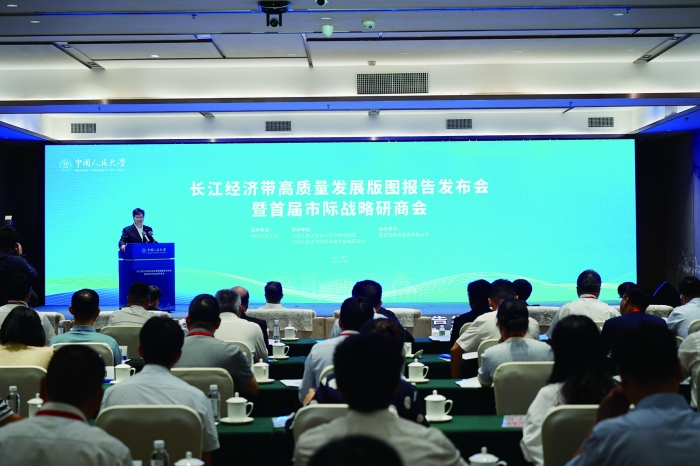
报告显示:长江经济带高质量发展取得新成效
Ren Min Wang· 2025-06-11 06:05
Core Viewpoint - The Yangtze River Economic Belt is crucial for China's modernization and development, emphasizing ecological priority and regional collaboration for high-quality growth [1] Group 1: Report Overview - The report aims to establish a professional think tank system to support cities along the Yangtze River in their high-quality development [1][2] - The report outlines innovative practices and achievements in economic development, ecological environment, and land use optimization across provinces and cities in the Yangtze River Economic Belt [2] Group 2: Development Trends - The report provides a dynamic overview of the Yangtze River Economic Belt across six dimensions: industrial development, technological innovation, financial support, land use, talent friendliness, and ecological safety [3] - Evaluation indices for industrial development, technological innovation, financial support, and harmonious coexistence have shown annual growth rates of 4.1%, 5.5%, 3.7%, and 0.1% respectively [3] Group 3: Policy Recommendations - To promote industrial development, the focus should be on strategic emerging industries and upgrading traditional industries to enhance manufacturing [4] - For technological innovation, a collaborative approach is recommended to enhance momentum and balance, while optimizing the ecosystem through integrated systems [4] - Financial support should leverage central cities' effects, develop diverse financial centers, and improve fiscal management for better fund allocation [4] - Land use should be based on carrying capacity, promoting efficient coordination and ecological protection while optimizing infrastructure [4] - Talent support should involve mapping supply and demand, enhancing employer autonomy, and fostering local talent development [4][5] - Ecological safety requires regional cooperation, risk prevention, and innovative mechanisms for realizing ecological product value [5]
长江经济带高质量发展版图报告发布:人才友好指数整体表现突出 建议加强跨区域协调机制建设
Shang Hai Zheng Quan Bao· 2025-06-03 18:30
Core Insights - The report titled "Yangtze River Economic Belt High-Quality Development Map Report" evaluates the performance of 110 cities along the Yangtze River in six dimensions: industrial development, technological innovation, financial support, land space, talent friendliness, and ecological safety [2][3] Dimension Summaries - **Industrial Development**: The Yangtze River Economic Belt has maintained stable industrial growth, with Shanghai and Chongqing leading. Downstream cities focus on emerging industries, midstream cities on the intelligent transformation of traditional industries, and upstream cities on resource-driven upgrades. The environment for industrial development has improved significantly [3][4] - **Technological Innovation**: The technological innovation index has shown consistent growth over five years, indicating strong resilience and development momentum. However, regional disparities are widening, with downstream areas leading in innovation [3][4] - **Financial Support**: Downstream cities, particularly Shanghai, exhibit a clear advantage in financial support, with a strengthening head effect [4] - **Talent Friendliness**: This index is the highest among the six dimensions, reflecting a general emphasis on talent policies across various cities. Chengdu ranks highest in talent friendliness, particularly in its attractiveness to talent [4] - **Ecological Safety**: There are significant regional differences in ecological safety, with upstream and downstream areas scoring higher than midstream regions [5][6] Recommendations for Development - **Technological Innovation**: Enhance regional collaborative innovation and strengthen cooperation between government and innovation entities. Optimize the ecosystem across innovation, industry, and talent chains [5] - **Financial Support**: Leverage the siphoning effect of central cities to build diversified regional financial centers and deepen fiscal management reforms to improve fund allocation efficiency [5] - **Land Space**: Establish a dynamic regulatory system based on carrying capacity and promote industrial gradient transfer and regional collaborative development [5] - **Talent Support**: Create a dynamic supply-demand map for talent and enhance local talent cultivation paths to boost urban development [5] - **Ecological Safety**: Strengthen regional joint prevention and control, enhance risk prevention capabilities, and innovate mechanisms for realizing the value of ecological products [6]