金融强国

Search documents
中信银行: 中信银行股份有限公司2024年年度股东大会、2025年第二次A股类别股东会及2025年第二次H股类别股东会会议资料
Zheng Quan Zhi Xing· 2025-05-15 11:14
Core Viewpoint - The meeting agenda for CITIC Bank's annual shareholder meeting includes the review of the 2024 annual report, profit distribution plan, fixed asset investment budget for 2025, and various reports from the board and supervisory committee, indicating a focus on financial performance and strategic planning for future growth [1][2][3]. Profit Distribution Plan - The proposed profit distribution plan for 2024 includes a 10% allocation of net profit to statutory surplus reserves amounting to RMB 6.637 billion, and a general risk reserve of RMB 6.065 billion, with no allocation to discretionary reserves [3][4]. - The total cash dividend proposed is RMB 9.582 billion, distributing RMB 1.722 per share to A and H shareholders, which represents 30.50% of the net profit attributable to ordinary shareholders [3][4]. Fixed Asset Investment Budget - The fixed asset investment budget for 2025 is set at RMB 2.446 billion, with RMB 0.250 billion allocated for general fixed assets and RMB 2.196 billion for special fixed assets [6]. Board and Supervisory Reports - The board's 2024 work report highlights a 3.76% increase in operating income and a decrease in non-performing loan ratio to 1.16%, indicating improved financial health [12][14]. - The supervisory committee's report emphasizes the importance of supporting national strategies and enhancing financial services to the real economy, with a focus on risk management and compliance [21][23]. Auditor Appointment - The board recommends the reappointment of KPMG Huazhen as the domestic auditor and KPMG as the international auditor for 2025, with audit fees remaining at RMB 7.19 million [10][11]. Strategic Development - The bank's strategic plan for 2024-2026 aims to enhance its position as a leading financial institution, focusing on wealth management, comprehensive financing, and digital banking [14][20].

扎实落地“科技金融”大文章 国泰海通积极参与科创债发行
Zheng Quan Ri Bao· 2025-05-15 07:12
Group 1 - The core viewpoint of the article highlights the issuance of technology innovation bonds by Guotai Junan Securities, marking a significant step in supporting the development of strategic emerging industries in China [2][3] - Guotai Junan successfully issued its technology innovation corporate bonds on May 9, becoming one of the first securities companies to do so, with the funds primarily directed towards supporting sectors like integrated circuits, artificial intelligence, biomedicine, and new energy [2] - The first batch of technology innovation bonds, led by Guotai Junan as the chief underwriter, includes Hebei Steel Group's issuance of 1.5 billion yuan bonds with a maturity of 3+N years and a coupon rate of 2.55% [2] Group 2 - The bond issuance reflects the active role of financial institutions in supporting the real economy, with Guotai Junan leveraging its professional advantages to facilitate financing for enterprises and empower high-quality development in the technology innovation sector [3] - Guotai Junan aims to contribute to national strategic implementation and the construction of a strong nation by providing a comprehensive service system for technology enterprises at various development stages [3] - The company plans to continue its commitment to the "financial patriotism" philosophy, striving to build a first-class investment bank with international competitiveness and market influence, while enhancing the synergy between investment banking, investment, and research [3]



支持国有大型金融机构做优做强
Jing Ji Ri Bao· 2025-05-14 22:08
Core Viewpoint - The strong financial institutions are crucial for building a financial powerhouse and ensuring high-quality economic development, as emphasized by the recent policy directives from the Party's 20th Central Committee and the Central Financial Work Conference [1][2]. Group 1: Role of State-Owned Financial Institutions - State-owned large financial institutions are the backbone of China's financial system, holding nearly 90% of the total assets in the financial sector, with the six major state-owned banks accounting for about 45% of the banking sector's total assets [2]. - These institutions have contributed over 50% to the national credit increment since the beginning of 2024, demonstrating their pivotal role in credit provision [2]. - They are actively investing in technology and talent to drive digital transformation, enhancing the overall service capability of the financial sector [2]. Group 2: Support for the Real Economy - State-owned financial institutions are essential in supporting the real economy, ensuring that funds are directed towards key areas and weak links in economic development [2]. - As of January 2025, Agricultural Bank's loans to private enterprises reached 6.73 trillion yuan, serving 7.46 million private enterprise clients [2]. - China Life Insurance has provided multi-layered insurance protection for private enterprises and expanded diversified funding channels, with approximately 5 trillion yuan of insurance funds directly supporting real economy investments by the end of 2024 [2]. Group 3: Financial Stability and Risk Management - State-owned financial institutions play a critical role in maintaining financial stability and mitigating major financial risks, particularly concerning local government hidden debt and real estate market risks [3]. - They lead the financial debt conversion process and enhance fiscal debt mechanisms through bond underwriting and liquidity support [3]. - The institutions are implementing differentiated credit policies to support both rigid and improvement demands in the real estate sector [3]. Group 4: Challenges and Competition - The banking sector faces increasing competition, with a pressing need to explore effective credit demand, as loan interest rates decline and market competition intensifies [4]. - State-owned banks are experiencing homogenized competition, which exacerbates market pressures and highlights their reliance on traditional financial supply models [4]. - There is a need for improvement in financial innovation, product diversification, and risk pricing capabilities to enhance resource allocation efficiency [4]. Group 5: Internationalization and Global Competitiveness - In the context of ongoing high-level financial openness, state-owned financial institutions must enhance their global competitiveness by planning overseas market strategies and deepening local operations [8]. - Strengthening international cooperation and participating in global financial governance are essential for increasing their influence in international markets [8]. - A robust cross-border compliance and risk management framework is necessary to mitigate external shocks and ensure financial security [8]. Group 6: Policy Coordination and Support Mechanisms - The collaboration between fiscal and financial policies is crucial for optimizing macroeconomic governance and enhancing financial support for the real economy [8][9]. - The issuance of special government bonds to support capital replenishment for state-owned commercial banks is a significant step towards strengthening their capital base [8]. - Establishing a long-term mechanism for fiscal and financial coordination will enhance policy synergy and information sharing among departments [8][9]. Group 7: Incentive and Constraint Mechanisms - Improving incentive mechanisms can guide financial institutions to focus on core businesses and enhance support for key areas like technological innovation and green development [9]. - A robust constraint mechanism is necessary to prevent short-term profit-seeking behaviors and ensure efficient allocation of financial resources [9]. - Strengthening the collaboration among fiscal, financial, and industrial policies will create a conducive environment for state-owned financial institutions to thrive [9].
汇聚投教星火,筑梦强国未来——资本市场投教“星火计划”年度总结大会,邀您共启新程!
证券时报· 2025-05-09 11:03
Core Viewpoint - The article emphasizes the importance of investor education as a foundational element for building a strong financial nation and protecting the rights of over 200 million stockholders and more than 700 million mutual fund investors [1]. Group 1: "Starfire Plan" Overview - On May 15, 2024, the "Starfire Plan" for investor education was launched by the Securities Times in collaboration with over 100 financial institutions, supported by regulatory bodies [2]. - The initiative has grown significantly over the past year, forming a cross-industry alliance that includes various financial institutions such as brokerages, funds, and futures companies [2]. - The plan has successfully hosted multiple activities, including the exhibition of outstanding educational products, with 66 institutions submitting 129 works that garnered over 10 million views, enhancing investors' financial literacy and risk awareness [2]. Group 2: Activities and Achievements - The "Starfire Plan" has seen participation from over 400 educational IPs, with 50 being recognized as outstanding, setting benchmarks for the industry [2]. - A competition for financial educators attracted over 1,000 instructors from more than 100 financial institutions, contributing to high-quality educational content [2]. - The annual summary conference for the "Starfire Plan" is set to take place on May 14, coinciding with the "5·15 National Investor Protection Awareness Day," highlighting the achievements of the past year [3]. Group 3: Future Events - The upcoming event in Shenzhen on May 14, 2025, will showcase the progress of the "Starfire Plan," featuring a summary of achievements and a display of the most popular educational IPs [4]. - A competition among top instructors will focus on current market topics, demonstrating the expertise of the financial educators involved [4].

中国特色金融发展之路走得通、行得稳(深入学习贯彻习近平新时代中国特色社会主义思想·学习《习近平经济文选》第一卷专家谈)
Ren Min Wang· 2025-05-05 22:11
刘锡良 王之扬 金融是国民经济的血脉,是国家核心竞争力的重要组成部分。中国特色金融发展之路是我们党把马克思 主义金融理论同当代中国具体实际相结合、同中华优秀传统文化相结合,不断深化对金融工作本质规律 和发展道路认识而取得的重要成果。在《习近平经济文选》第一卷中,《走好中国特色金融发展之路》 对此作出深刻论述,指出"党的十八大以来,我们积极探索新时代金融发展规律,不断加深对中国特色 社会主义金融本质的认识,不断推进金融实践创新、理论创新、制度创新,积累了宝贵经验,逐步走出 一条中国特色金融发展之路";以"八个坚持"对中国特色金融发展之路作出精辟概括:坚持党中央对金 融工作的集中统一领导,坚持以人民为中心的价值取向,坚持把金融服务实体经济作为根本宗旨,坚持 把防控风险作为金融工作的永恒主题,坚持在市场化法治化轨道上推进金融创新发展,坚持深化金融供 给侧结构性改革,坚持统筹金融开放和安全,坚持稳中求进工作总基调。深刻理解和把握中国特色金融 发展之路,是破解新时代金融发展难题、加快建设金融强国的内在要求。 中国特色金融发展之路与西方金融模式具有本质区别 习近平总书记在《走好中国特色金融发展之路》中指出:"中国特色金融 ...
坚决防范化解金融风险(深入学习贯彻习近平新时代中国特色社会主义思想·学习《习近平经济文选》第一卷专家谈)
Ren Min Wang· 2025-05-05 22:11
Core Viewpoint - The importance of preventing and resolving financial risks is emphasized as a fundamental task for maintaining economic stability and promoting high-quality development in China [1][2][3]. Group 1: Importance of Financial Risk Prevention - Financial risks are complex and can disrupt normal economic operations, with systemic risks posing long-term impacts on national economic development [2]. - Effective prevention and resolution of financial risks ensure the overall stability of the financial system and orderly market operations, which helps smooth economic cycles and maintain resilience against external shocks [3]. - The stability of the financial environment supports the rational flow and effective allocation of funds, which is essential for high-quality development [4]. Group 2: Measures for Financial Risk Management - The establishment of a comprehensive financial regulatory system is crucial for the stable operation of the financial system, requiring all financial activities to be regulated to eliminate blind spots [7]. - Strengthening financial law and governance is necessary to provide a solid institutional guarantee for preventing and resolving financial risks, ensuring that financial resources are effectively allocated to high-end manufacturing and emerging industries [8]. - Continuous improvement of risk prevention, early warning, and resolution mechanisms is essential to enhance the quality and effectiveness of financial risk management [6].
证券基金业:为资本市场高质量发展建功立业
Jin Rong Shi Bao· 2025-04-30 13:38
Group 1 - The celebration of the 100th anniversary of the All-China Federation of Trade Unions highlighted the importance of the working class and laborers in driving high-quality development in China [1] - Xi Jinping emphasized the need for workers to embrace innovation and contribute to the new era through hard work and dedication [1] - The securities industry professionals expressed alignment with the spirit of the labor model, advocating for the integration of craftsmanship into capital market services to support the transformation of the real economy [1][2] Group 2 - The public fund industry, with a scale exceeding 32 trillion yuan, is recognized as a significant institutional investor in China's capital market, focusing on high-quality development [1] - Fund industry professionals are committed to enhancing their professional capabilities and responsibilities to better serve investors and maintain market stability [2] - The emphasis on "investor-centric" principles reflects the industry's dedication to optimizing investor returns and contributing to the overall stability of the financial market [2]

世界上最大的幸福莫过于为人民幸福而奋斗
Jin Rong Shi Bao· 2025-04-29 03:26
Core Viewpoint - The recognition of laborers in the financial sector highlights their significant contributions to the economy and society, emphasizing the importance of their roles in achieving national goals and supporting the development of the country [1][2]. Group 1: Recognition of Laborers - A total of 2,426 laborers were honored with the title of National Labor Model and Advanced Worker, including several from the financial sector, reflecting the hard work and dedication of millions of financial employees [1]. - The event marks the 100th anniversary of the All-China Federation of Trade Unions, underscoring the vital role of the working class in the socialist state and the leadership of the Communist Party of China [1]. Group 2: Financial Sector Contributions - Financial workers are actively responding to national strategic needs by optimizing funding allocations and ensuring the safety of industrial chains, thus playing a crucial role in economic circulation [2]. - The financial sector is characterized by its commitment to serving the public, with employees working diligently across various roles to support rural revitalization and the real economy [2]. Group 3: Personal Stories of Labor Models - Labor models like Fu Xiaokang and Li Xin exemplify the deep connections between financial workers and the communities they serve, addressing challenges such as financing for farmers and contributing to local economic improvements [3][4]. - The dedication of labor models like Xie Songchen and Wang Wenjin illustrates the resilience and commitment of financial workers in overcoming obstacles to provide essential services [5]. Group 4: Innovation and Development - Financial professionals are focusing on innovation across various sectors, including technology finance, green finance, and inclusive finance, to drive economic growth and enhance service delivery [6]. - The emphasis on innovation and reform within the financial sector is seen as a means to inject vitality into the construction of a strong financial nation, aligning with the broader goals of national development [6].
金融强国梦 青春创投教——第二届财通证券“共富杯”金融强国主题高校投教作品大赛 浙江大学专场活动成功举办
Quan Jing Wang· 2025-04-18 09:47
Group 1 - The core theme of the event is "Financial Power Dream, Youth Innovation in Investment Education," aiming to promote financial knowledge among youth and encourage their participation in building a strong financial nation [3][4] - The event is organized by Caitong Securities and guided by the Zhejiang Securities Industry Association, focusing on five key areas: technology finance, green finance, inclusive finance, pension finance, and digital finance [4] - The competition encourages students to create innovative educational materials that highlight the importance of the capital market in the construction of a financial power, promoting rational investment concepts and risk awareness [8] Group 2 - The second "Caitong Securities Common Prosperity Cup" financial education competition has been launched, inviting university students to contribute to the high-quality development of the capital market [8] - Participants have the opportunity to win substantial prizes and certificates, with the best works potentially showcased on Caitong Securities' official platform [6] - The event incorporates interactive and engaging formats, such as games and challenges, to enhance students' understanding of financial markets and foster a culture of rational investment [4][6]


特朗普乱舞关税大棒,市场无需过度恐慌 | 新京报社论
Xin Jing Bao· 2025-04-07 15:19
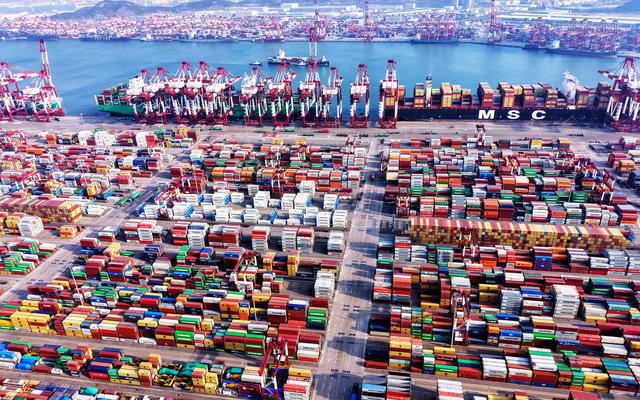
山东港口青岛港外贸集装箱码头(无人机照片)。图/新华社 近些年来,我国把稳定和发展包括股票市场在内的多层次资本市场作为打造"金融强国"的重要内容,出 台了一系列支持政策。2024年国务院公布的资本市场"国九条",提出了进一步推动资本市场高质量发展 的目标和路径。在今年的政府工作报告中,更首次把"稳住楼市股市"写进经济社会发展总体要求。 总之,此次股市下跌只是暂时的市场情绪波动,面对美国关税贸易战的冲击,我国政策储备充分,应对 策略有方,显示出充分的自信和底气。在财政政策方面,除了针锋相对出台对美反制,财政政策也将更 为积极。在货币政策方面,央行明确表示,降准降息等货币政策工具已留有充分调整余地,随时可以出 台。 因此,面对特朗普乱舞的关税大棒,不要慌也无需慌,天塌不下来。坚定信心,中国资本市场仍将长期 看好。 此外,我国持续同拉美、非洲、中亚五国、中东欧等加强经贸合作。贸易市场的不断扩大和深化,成为 推动我国外贸增长的重要力量。而通过维护基于国际贸易组织(WTO)规则和倡导自由公平贸易的大 旗,中国在全球贸易中的影响力得到了显著提升。 更为重要的是,充分发挥国内超大市场规模的优势,帮助外贸企业从出口转为内销, ...