
价格战

Search documents
“不以低于成本价倾销” 车企为何不能打“价格战”| 新京报快评
Xin Jing Bao· 2025-05-31 09:54
Core Viewpoint - The China Automobile Industry Association (CAIA) has issued an initiative to maintain fair competition and promote healthy industry development, urging new energy vehicle (NEV) companies to avoid selling products below cost and to conduct self-examinations in accordance with national laws and regulations [1][2] Group 1: Background and Context - The initiative was prompted by a significant price reduction campaign initiated by a certain car company on May 23, which led to a wave of similar actions from other companies, causing panic over a new "price war" [1] - The CAIA's initiative aims to minimize the negative impacts of the "price war" and has received clear support from the Ministry of Industry and Information Technology (MIIT), which stated that "there are no winners in a price war" [1][2] Group 2: Industry Self-Regulation and Competition - The CAIA's call for self-regulation is a corrective measure against the current "involution" competition in the NEV sector, questioning whether the industry should compete on price or value [1][3] - Historically, price wars in industries like home appliances and smartphones have led to the rise of competitive domestic brands, but the current NEV price war is characterized by "involution" and may involve dumping products below cost [2] Group 3: Long-term Implications - Uncontrolled price wars can harm product quality, after-sales service, and consumer rights, while also diverting companies from sustainable development and technological advancement [2][3] - The NEV industry must shift from a focus on volume to one on value, emphasizing technological innovation, product quality, user experience, and brand culture to secure a competitive advantage [3] Group 4: Future Directions - As the NEV market matures, reliance on policy subsidies and price advantages will no longer suffice for growth; the industry must focus on core technological breakthroughs and global expansion [3] - The transition from price competition to value competition will require sufficient profit margins for R&D and innovation, and both the CAIA and MIIT should support companies committed to this path [3]
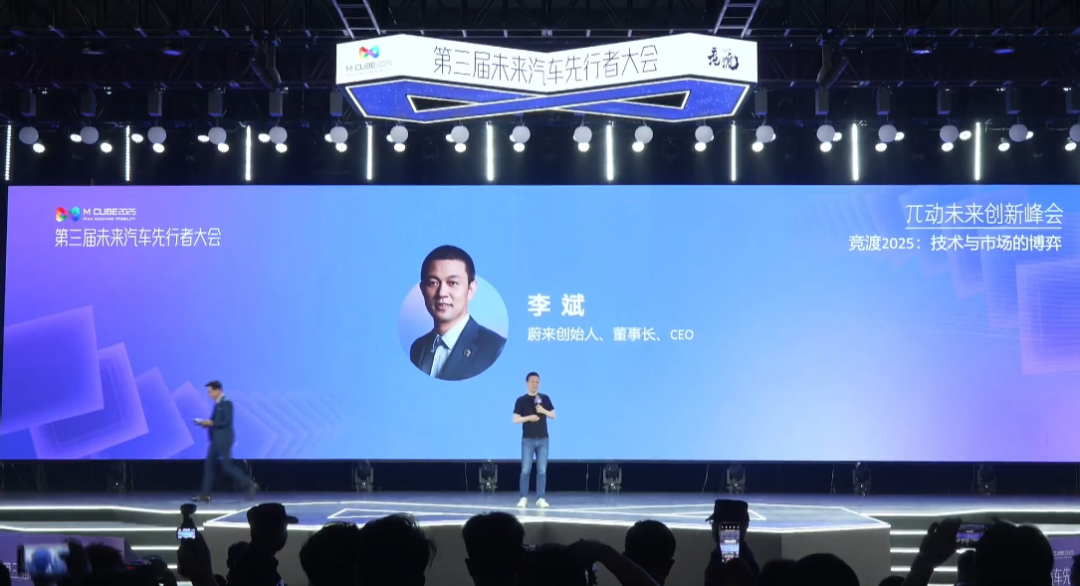
车圈大佬,回应“价格战”!
Zhong Guo Ji Jin Bao· 2025-05-31 08:30
Core Viewpoint - The automotive industry is currently facing a heated debate over "price wars," with industry leaders advocating for competition based on technology, experience, and management rather than pricing strategies [1][2]. Group 1: Industry Responses to Price Wars - NIO's CEO, Li Bin, emphasized the need to focus on "rolling technology" instead of engaging in price wars [1]. - Changan Automobile's VP, Deng Chenghao, stated that future competition will revolve around "rolling technology" and "rolling experience," advocating for a strategy that broadens product offerings [1]. - The China Association of Automobile Manufacturers highlighted that chaotic price wars are detrimental to industry profitability and called for adherence to fair competition principles [1]. Group 2: Internal Transformations and Performance - NIO is undergoing significant internal restructuring, particularly within its second brand, with early signs of improved cost control and efficiency, including a 40% reduction in frontline staff while expecting a 40% increase in delivery volume for May [2][4]. - XPeng Motors' CEO, He Xiaopeng, expressed confidence in exceeding profitability targets by Q4 2025, attributing this to a focus on technology, organization, and global business systems [6][8]. Group 3: Strategic Focus on Technology and Experience - Deep Blue Automotive aims to differentiate itself through superior product, technology, service, and user experience, distancing itself from low-price strategies [8]. - The company has implemented a price protection strategy valid until June 30, 2026, emphasizing the importance of user experience as the "soul" of the automotive industry [8]. - GAC Group's VP, He Xianqing, stated that in a competitive market, price reflects value, and the company is committed to providing value beyond pricing through technological innovations [10][12]. Group 4: Technological Advancements - GAC Group has invested over 55 billion in R&D, developing advanced technologies such as super-fast charging batteries and high-performance chips, which enhance product quality and safety [12][13].





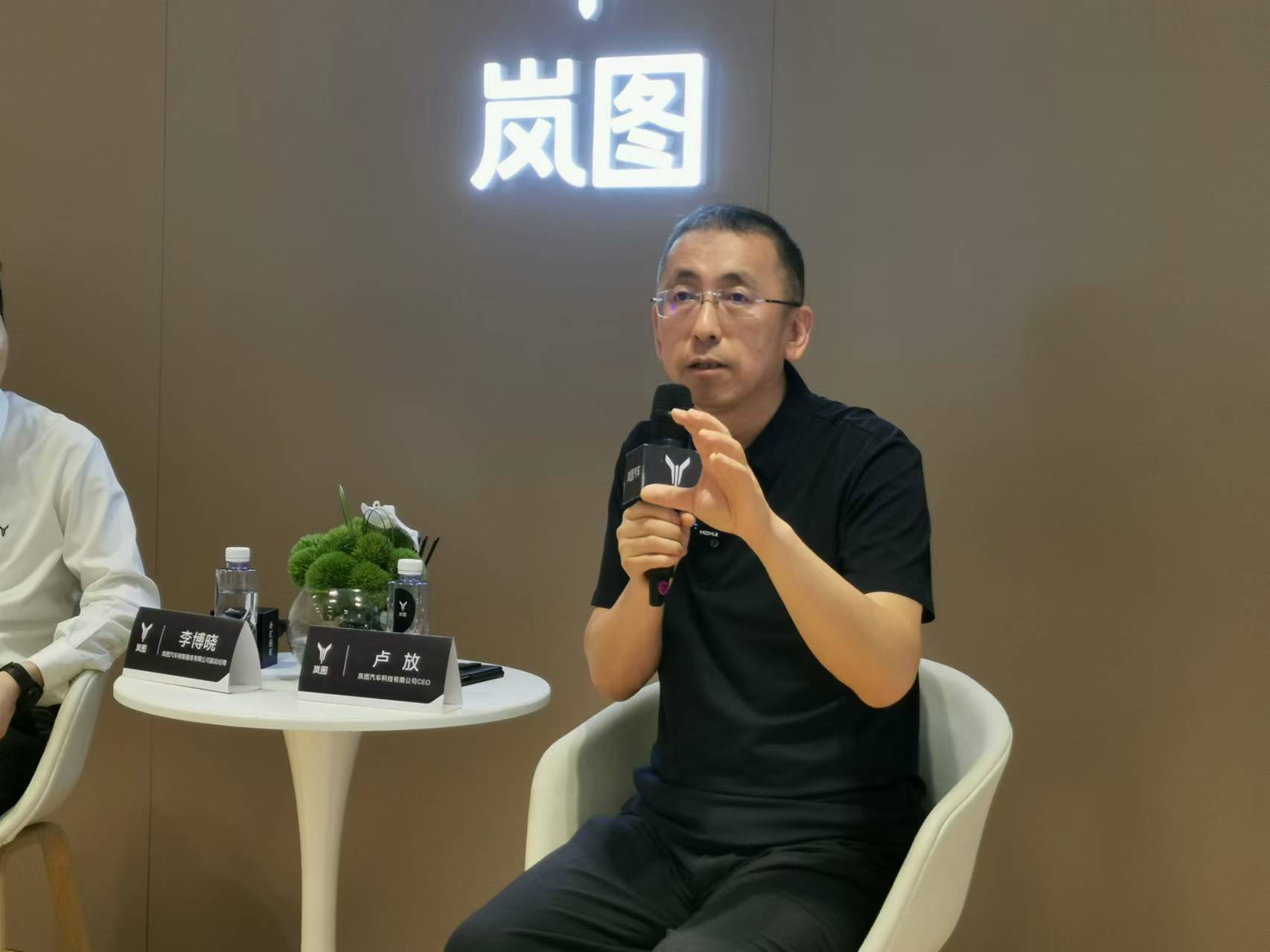
岚图FREE+将于6月启动预售 卢放:坚决反对“价格战”
Mei Ri Jing Ji Xin Wen· 2025-05-31 08:05
Group 1 - The core viewpoint of the articles highlights the launch of the Lantu FREE+, which aims to rank among the top three in its market segment, with pre-sales expected to start in June [1] - Lantu FREE+ features significant technological advancements, including Huawei's HarmonySpace 5 and ADS 4, enhancing comfort and intelligence, with over 5 billion yuan invested to optimize 1,366 product functions, achieving 82 industry-leading features [1] - Lantu's CEO emphasizes the company's stance against price wars, advocating for technological innovation to improve efficiency and reduce manufacturing costs rather than compromising quality [3] Group 2 - The CEO calls for the automotive industry to return to rationality, urging companies to maintain strategic focus and innovate to lower costs, ultimately benefiting consumers [3] - Lantu expresses confidence in responsible companies responding positively to the China Automobile Industry Association's initiative to maintain fair competition and promote healthy industry development, which aims to provide safer and more reliable products to users [4]
工信部、中汽协接连表态反对车企“价格战” 专家:警示非常及时,抢占份额不能出现不正当竞争局面
Mei Ri Jing Ji Xin Wen· 2025-05-31 06:04
Core Viewpoint - The China Automobile Industry Association (CAIA) has issued an initiative to maintain fair competition and promote healthy industry development, opposing the ongoing "price war" that has negatively impacted the automotive sector [1][4][5]. Industry Response - The Ministry of Industry and Information Technology supports CAIA's initiative and plans to strengthen measures against "involution" competition in the automotive industry, which has been detrimental to sustainable development [5][6]. - Experts emphasize that the recent price cuts initiated by certain automakers have led to a new wave of price wars, which could further squeeze profit margins and compromise product quality and after-sales service [4][6]. Market Dynamics - The automotive market has seen a significant rise in new energy vehicle sales, exceeding 40% of total new car sales, indicating a robust growth trend despite the challenges posed by price wars [4]. - The phenomenon of "price war" is characterized by a situation where production costs exceed sales prices, which is unsustainable for both manufacturers and dealers, leading to business closures [6][7]. Call for Fair Competition - CAIA's initiative calls for all companies to adhere to fair competition principles, avoid monopolistic practices, and refrain from selling below cost or engaging in misleading advertising [4][5]. - Industry leaders, including executives from NIO and Lantu, have expressed their commitment to avoiding price wars and focusing on quality and service improvements instead [7].
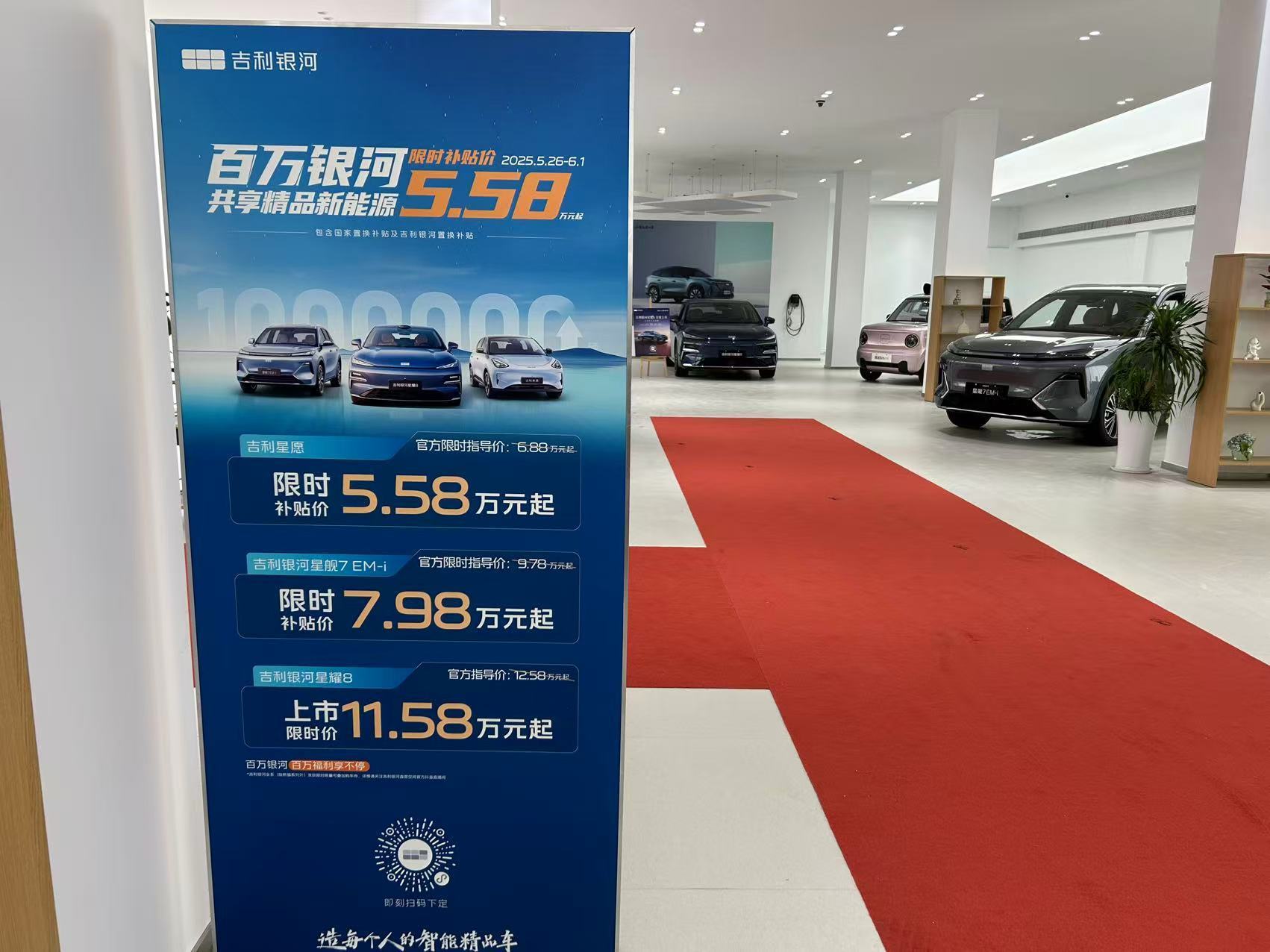
价格战没有未来!中汽协、工信部发声反对“内卷式”竞争
Bei Jing Ri Bao Ke Hu Duan· 2025-05-31 05:43
Core Viewpoint - The recent price cuts by BYD and subsequent follow-ups by other automakers have sparked a new round of "price wars" in the automotive market, prompting the China Association of Automobile Manufacturers (CAAM) to issue an initiative advocating for fair competition and warning against the detrimental effects of "involution" competition on industry health [1][2][3] Group 1: Price War and Industry Response - Multiple automakers, including BYD, Geely, and Leap Motor, have engaged in significant price reductions, with BYD's Sea Lion 07 DM-i model dropping to 102,800 yuan, a decrease of 53,000 yuan from the official price [3] - The CAAM's initiative highlights that the ongoing price wars are leading to a decline in industry profitability and are a major factor in the industry's deteriorating performance [1][2] - The Ministry of Industry and Information Technology (MIIT) supports the CAAM's initiative and plans to enhance regulatory measures to combat "involution" competition, ensuring a fair market environment [2][3] Group 2: Implications of Price Wars - The MIIT emphasizes that the chaotic price wars threaten the sustainable development of the automotive industry and can compromise product quality and after-sales service [2][3] - Industry leaders express concerns that the price wars not only deplete corporate profits but also erode consumer trust in "Made in China" products, with reports of unethical practices such as suppliers being pressured to lower prices and delayed payments [4]




车圈大打价格战,工信部火速发声:将采取措施!
券商中国· 2025-05-31 03:43
5月31日,针对中国汽车工业协会今日发布的《关于维护公平竞争秩序 促进行业健康发展的倡议》,工业 和信息化部有关负责人表示,将加大汽车行业"内卷式"竞争整治力度,坚决维护公平有序的市场环境。 工业和信息化部有关负责人表示,赞同并支持中国汽车工业协会提出的倡议,将加大汽车行业"内卷式"竞争整 治力度,推动产业结构优化调整,加强产品一致性抽查,配合相关部门开展反不正当竞争执法,采取必要的监 管措施,坚决维护公平有序市场环境,切实保障消费者根本利益。 工业和信息化部有关负责人同时指出,企业之间无序"价格战",是"内卷式"竞争的典型表现,不仅影响产品质 量性能和服务水平,而且损害消费者权益,危及行业健康、可持续发展。可以说,"价格战"没有赢家,更没有 未来。工业和信息化部鼓励企业要通过技术创新、管理创新降低生产成本,不断提高产品品质、提升服务质 量,践行社会责任,打造良好品牌形象,推动汽车产业高质量发展。 此前,中国汽车工业协会发布《关于维护公平竞争秩序 促进行业健康发展的倡议》。 倡议表示,近年来,我国新能源汽车产业快速发展,新能源汽车新车销售占比已经超过40%。当前,行业整体 运行呈现稳中向好态势,市场活力持续释 ...
工信部、中汽协反对车企“价格战”:“内卷式”竞争危及行业健康
Bei Ke Cai Jing· 2025-05-31 02:38
近期车企掀起新一轮"价格战"。5月31日,中国汽车工业协会(简称"中汽协")发布"维护公平竞争秩序 促进行业健康发展"倡议书,指出认为新能源汽车正引领汽车产业加速转型升级,维护行业健康发展十 分重要,企业不应采取无序"价格战",应维护公平竞争秩序。 针对中汽协的倡议,工信部随即发声表态,指出车企无序"价格战"是"内卷式"竞争的典型表现,将加大 整治力度,配合相关部门开展反不正当竞争执法。 近年来,汽车行业"内卷式"竞争激烈。2024年底,中央经济工作会议明确提出综合整治"内卷式"竞争, 2025年综合整治"内卷式"竞争又写入了全国两会政府工作报告。专家指出,对汽车行业而言,应从无序 价格竞争向价值竞争转变,迈向高质量发展,促进汽车行业健康、可持续发展。 中汽协呼吁车企遵从公平竞争原则 实际上,此前中汽协就曾多次呼吁汽车市场应尽快回归到正常秩序,产业发展不能仅关注销量增长,更 要关注质量提升。2023年中汽协表示,降价处理库存,适当回收成本是正常经营措施,但不能因此沦为 价格战。价格战不会长久,物有所值是永恒的商业法则,汽车市场应尽快回归正常秩序。2024年中汽协 又表示,目前部分车企急功近利过度压低价格,导致 ...
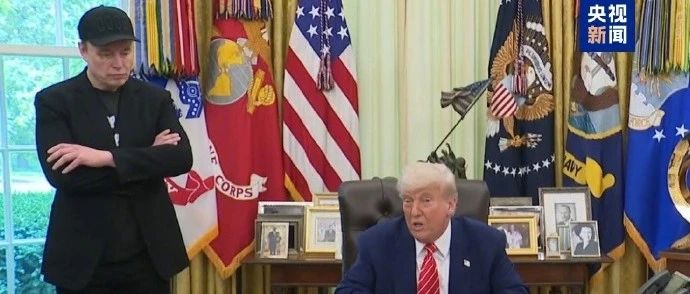
马斯克离职后将成特朗普顾问!反对无序“价格战”!中汽协最新倡议!特朗普:钢铁关税提高至50%!警方通报“男子跳入兵马俑坑”!
新浪财经· 2025-05-31 02:06
Group 1 - The article discusses the establishment of the "Government Efficiency Department" led by Elon Musk, aimed at reducing government spending, with Trump praising its achievements [2] - Trump announced that the department will continue its efforts to cut government expenses and that most of Musk's team will remain in their positions [2] - Musk expressed his commitment to support Trump as an advisor while the department's team is expected to grow stronger over time [2] Group 2 - The China Automobile Industry Association (CAAM) released an initiative opposing disorderly "price wars" in the automotive industry, highlighting the rapid growth of the new energy vehicle sector, which now accounts for over 40% of new car sales [5][6] - The initiative points out that the industry's profitability has declined due to "involution-style" competition, primarily manifested as chaotic price wars, which threaten normal business operations and supply chain security [5][6] - CAAM calls for all companies to adhere to fair competition principles, avoid monopolistic practices, and refrain from selling products below cost, which could harm industry health and consumer rights [8] Group 3 - Trump announced an increase in tariffs on imported steel from 25% to 50% to protect the U.S. steel industry from unfair competition, effective from the following week [10] - The announcement led to significant stock price increases for U.S. steel companies, with Cleveland-Cliffs Inc. rising over 26% in after-hours trading [10] - The new tariff level is expected to support Trump's commitments regarding U.S. steel production and address concerns over foreign control of the industry [10]
增速“刹车”,理想汽车一季度承压
Bei Ke Cai Jing· 2025-05-31 00:20
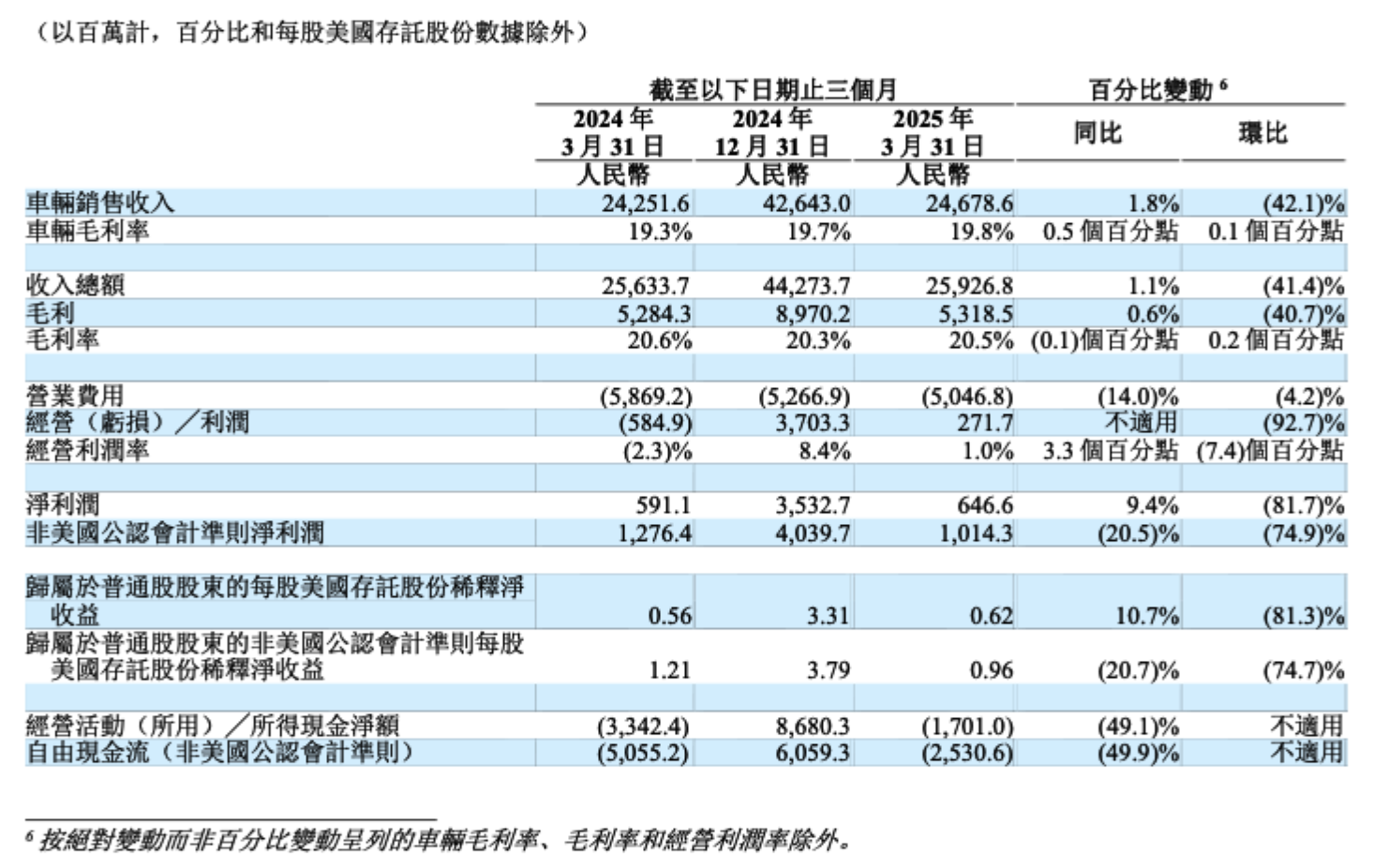
Core Viewpoint - Li Auto's Q1 2025 financial report shows mixed results with revenue growth year-on-year but significant declines quarter-on-quarter, indicating challenges in maintaining profitability amidst competitive pressures and pricing strategies [1][4][3] Financial Performance - Revenue for Q1 2025 was 25.9 billion RMB, a year-on-year increase of 1.1%, but a quarter-on-quarter decline of 41.4% [1][4] - Net profit reached 647 million RMB, up 9.4% year-on-year, but down 81.7% quarter-on-quarter [1][4] - Non-GAAP net profit was 1 billion RMB, a decrease of 20.5% year-on-year [1] Sales and Market Dynamics - Vehicle sales revenue increased year-on-year but decreased quarter-on-quarter, attributed to seasonal factors and product transitions [7][8] - Vehicle sales volume grew by 15.5% year-on-year, but revenue growth was only 1.8%, impacted by price reductions due to competitive pricing strategies [8][9] - The average selling price of vehicles dropped to 266,000 RMB from 304,000 RMB a year ago, reflecting a shift towards lower-priced models [9][10] Future Outlook - The company aims to deliver between 123,000 and 128,000 vehicles in Q2 2025, with projected revenue between 32.5 billion and 33.8 billion RMB, representing a year-on-year growth of 2.5% to 6.7% [11][12] - Li Auto plans to expand its presence in lower-tier cities and aims for overseas markets to account for 30% of total sales in the long term [14] - Upcoming launches of new electric models, including the i8 and i6, are expected to enhance market competitiveness and address the shift towards pure electric vehicles [17]

热搜第一!瑞幸咖啡回应“迈入6块9时代”,网友:实在是喝不动了
Qi Lu Wan Bao· 2025-05-30 14:55
转自:南方日报 今天 话题#瑞幸咖啡降价# 冲上热搜第一! 不少网友发现 点开瑞幸咖啡的小程序 卡券包里多出了一张优惠券 平时9.9元到手的咖啡 变成了6.9元 该券可以购买店内的多款饮品 对此有网友感慨:最近"商战"这么激烈,难道瑞幸要从9.9元时代进入6.9元时代了吗? 咖啡仅需6.9元,瑞幸回应:为双节特惠福利 记者今天点开了瑞幸咖啡的小程序,确实发现页面上不少咖啡的预估到手价格变成了6.9元,包含生椰拿铁、美式、鲜萃轻轻栀 子、西瓜冷萃等多款招牌饮品。 记者又打开了京东、美团团购平台,发现各家团购平台上也有不少等于或低于9.9元的团购价格,美团的特价团部分咖啡价格为 5.9元,京东有券的情况下,咖啡加上配送费到手也是9.9元。 而瑞幸咖啡的主要竞品之一库迪咖啡的价格则更低,在京东平台上多款招牌单品价格在3.9元/杯与4.9元/杯左右。 有网友发现,似乎不是每个人的小程序里都有这个6.9元券,自己不常下单的微信号的瑞幸小程序里就没有这张券。 对此,瑞幸咖啡相关负责人回应:"我们为消费者推出端午节和儿童节的双节特惠福利,随机发放6.9元优惠券,并非降价。" 瑞幸和库迪曾开启9.9元时代,瑞幸CEO称没有提 ...

