
液冷技术

Search documents
中国银河证券:重点关注具备成熟冷板式液冷技术的厂家
Mei Ri Jing Ji Xin Wen· 2025-08-12 00:05
Core Viewpoint - The demand for liquid cooling solutions, particularly cold plate cooling, is increasing due to the growing GPU solutions from overseas manufacturers, indicating a rising market potential in this sector [1] Industry Trends - The innovation in the industry has arrived earlier than expected, driven by the advantages of high integration, low power consumption, and cost-effectiveness [1] Investment Focus - It is recommended to pay close attention to manufacturers with mature cold plate liquid cooling technology, as well as key players involved in immersion cooling and spray cooling solutions [1]

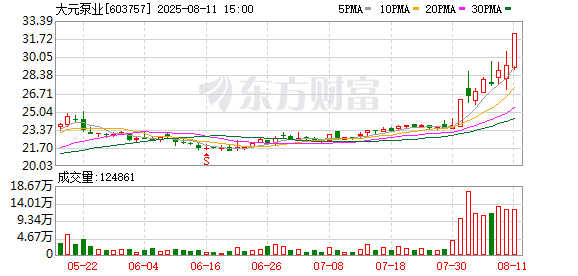
大元泵业总经理王侣钧:以“强劲之心”撬动液冷新蓝海
Zhong Guo Zheng Quan Bao· 2025-08-11 23:12
Core Viewpoint - The liquid cooling technology is poised for explosive growth as AI infrastructure demands increase, with liquid cooling pumps being the "heart" of these systems, directly influencing efficiency and energy consumption [2][3]. Industry Overview - The demand for liquid cooling technology is rising due to the limitations of traditional air cooling in efficiency and energy use, with liquid cooling expected to become a standard in data centers, reducing Power Usage Effectiveness (PUE) to below 1.1 [3]. - The market for liquid cooling is expanding rapidly, driven by the surge in demand for computing power from sectors like electric vehicles and energy storage [3]. Company Insights - The company has a competitive edge in the liquid cooling sector due to 35 years of technological expertise, particularly in high-end shielded pumps that ensure zero leakage of hazardous materials [3][4]. - The company's liquid cooling business is projected to achieve approximately 90 million yuan in revenue for 2024, marking over 80% year-on-year growth, and has successfully entered the supply chains of major clients like ZTE and Inspur [3][4]. - The company has established independent sales and technical teams to respond quickly to customer needs, emphasizing collaboration and iterative development [4]. Strategic Direction - The company aims to transition from a traditional manufacturing entity to a modern industrial brand with global influence, focusing on high-value products rather than engaging in price wars [5]. - The company plans to enhance its research and development efforts, aiming for rapid iteration and optimization of liquid cooling pump solutions while narrowing the gap with international brands [5][6]. - The company is expanding internationally, with plans to establish a factory in Thailand and a subsidiary in Singapore, while also targeting emerging markets in the Middle East and Central Asia [6]. Future Outlook - The company envisions becoming an indispensable player in the liquid cooling market as it becomes a standard in data centers, leveraging its strong technical foundation and strategic planning to capture significant market share globally [6].


【早报】增值税法实施条例向社会公开征求意见;单笔存取超5万或无需再登记
财联社· 2025-08-11 23:09
Industry News - Hangzhou Municipal Justice Bureau is soliciting opinions on the draft regulations to promote the development of embodied intelligent robotics industry, emphasizing collaboration between enterprises, research institutions, and industry application units [4] - Chongqing Energy Bureau and the Central China Regulatory Bureau of the National Energy Administration issued implementation rules for distributed photovoltaic power generation, requiring a minimum self-consumption ratio of 20% for projects in urban areas and 40% for other areas [4] - India Airlines announced the suspension of flights between Delhi and Washington due to operational reasons starting September 1, 2025 [4] Company News - China Rare Earth Group stated that it has never cooperated or negotiated with any institutions regarding the so-called "Rare Earth Renminbi Stablecoin" [7] - Changan Automobile announced that all current directors and executives plan to increase their shareholdings, with each individual committing to invest no less than 300,000 RMB, totaling at least 5.7 million RMB [7] - Tian Shun Co. announced that it did not participate in the New Tibet Railway project [7] - Chengdu Huami announced the successful launch of ultra-low power RISC-V MCU [7] - Luxshare Technology is planning to issue H-shares and list on the Hong Kong Stock Exchange [7] - Beijing University Pharmaceutical announced the termination of its business cooperation with Peking University International Hospital, facing risks of a complete halt in its main business [7] - Changchun High-tech announced that its subsidiary's clinical trial application for Camycin has been approved, with no similar products currently on the market [7] - Shanghai Jian Ke announced that its director Chen Wei is under investigation for serious violations of discipline and law [7] - Fosun Pharma announced the granting of rights to develop, produce, and commercialize the in-development product XH-S004, potentially receiving up to 645 million USD in milestone payments [7] - Wahaha Group responded to reports of cutting off distributors with annual sales below 3 million, stating that the changes in its distributor system are based on market strategy and cooperation willingness, and are part of normal dynamic optimization [7]





大元泵业总经理王侣钧: 以“强劲之心”撬动液冷新蓝海
Zhong Guo Zheng Quan Bao· 2025-08-11 21:18
Core Viewpoint - The liquid cooling technology is poised for explosive growth as AI server power consumption surges, positioning liquid cooling pumps as the "heart" of these systems, crucial for stability and energy efficiency [1][2]. Industry Overview - The demand for liquid cooling technology is increasing due to the limitations of traditional air cooling in efficiency and energy consumption, with liquid cooling expected to become a standard in data centers, reducing PUE (Power Usage Effectiveness) to below 1.1 [2]. - The market for liquid cooling is expanding rapidly, driven by the growth in sectors such as new energy vehicles, energy storage, and computing power [2]. Company Insights - The company, Dayuan Pump Industry, has 35 years of experience in pump products and has developed a unique secondary pressure structure design for its high-end shielded pumps, ensuring zero leakage of hazardous media [2][3]. - In 2024, the company's liquid cooling temperature control business is projected to achieve approximately 90 million yuan in revenue, representing over 80% year-on-year growth, and has successfully entered the supply chains of major clients like ZTE and Inspur [2][3]. - The company has established independent sales and technical teams to respond quickly to customer needs, emphasizing collaboration and iterative development of solutions [3]. Strategic Direction - The company aims to transition from a traditional manufacturing entity to a modern industrial brand with global influence, focusing on high-quality products and avoiding price wars [3][5]. - Plans include increasing investment in technology research and development, optimizing liquid cooling pump solutions, and narrowing the gap with international brands through craftsmanship [5]. - The company has established a subsidiary in Singapore and plans to set up a factory in Thailand, aiming to enhance its service and sales network in Europe and explore emerging markets in the Middle East and Central Asia [5]. Future Aspirations - The company envisions becoming an indispensable player in the global market for liquid cooling technology as it becomes a standard configuration in data centers, leveraging its strong technical foundation and strategic foresight [5].
以“强劲之心”撬动液冷新蓝海
Zhong Guo Zheng Quan Bao· 2025-08-11 21:05
Core Insights - Liquid cooling technology is poised for explosive growth as AI infrastructure demands increase, with liquid cooling pumps being the "heart" of these systems, directly influencing efficiency and energy consumption [1][2] - The market for liquid cooling is expanding rapidly due to the limitations of traditional air cooling, with liquid cooling expected to become a standard in data centers, reducing Power Usage Effectiveness (PUE) to below 1.1 [1][2] - The company has established a strong competitive edge in the liquid cooling sector through 35 years of technological development, focusing on zero-leakage solutions and intelligent energy optimization [1][2] Market Dynamics - The liquid cooling market is characterized by a shift from traditional air cooling to liquid cooling solutions, driven by the increasing power consumption of AI servers and the need for efficient cooling systems [1][2] - The company has successfully penetrated the supply chains of major clients such as ZTE, Inspur, and Invec, with projected revenue for the liquid cooling business reaching approximately 90 million yuan in 2024, marking an over 80% year-on-year growth [1][2] Strategic Initiatives - The company has formed independent sales and technical teams to better address customer needs, emphasizing collaboration and iterative development of solutions [2] - Plans are in place to expand internationally, with a subsidiary established in Singapore and a factory planned in Thailand, aiming to enhance the European sales and service network [3][4] - The company is targeting emerging markets in the Middle East and Central Asia, capitalizing on the industrial pump demand resulting from the transition from oil exports to refined chemical production [3][4] Future Outlook - The company aims to solidify its position in both domestic and global markets, aspiring to be an indispensable player in the liquid cooling sector as it becomes a standard in data centers [3][4] - Continuous investment in technology and product development is prioritized, with a focus on narrowing the gap with international brands through innovation and craftsmanship [2][4]
海外液冷龙头资深专家电话会
2025-08-11 14:06
Summary of Conference Call on Liquid Cooling Solutions Industry Overview - The conference call focused on the liquid cooling solutions industry, particularly advancements related to NVIDIA's GP300 and B300 server trays and their collaboration with various suppliers in the liquid cooling infrastructure sector [1][5][21]. Key Points and Arguments 1. **Increased Liquid Cooling Components**: The number of liquid cooling plates in NVIDIA's GP300 server trays increased significantly from 36 in GB200 to 117 in GP300, reflecting a growing demand for enhanced cooling performance [1][2]. 2. **Power Density Improvements**: The GP300's power density has risen from 1.2 kW to 1.4 kW per card, necessitating independent liquid cooling plates for each GPU and CPU [2][3]. 3. **Collaboration with Suppliers**: NVIDIA is actively introducing new suppliers like Cooler Master and others to diversify its supply chain and enhance product offerings [1][21][22]. 4. **Testing and Validation**: NVIDIA has conducted concentrated testing of liquid cooling products, with participation from domestic companies, although results have not yet been disclosed [1][24]. 5. **Market Demand Trends**: There is an anticipated continuous growth in demand for efficient cooling solutions, particularly from North American ASIC chip manufacturers due to the release of higher power products [5][51]. 6. **Competitive Landscape**: The market is currently dominated by Taiwanese companies, but domestic firms are expected to disrupt the existing structure through cost control and technological innovation [5][31]. 7. **Cost Analysis**: The value of the B300 single machine is approximately $160,000, with CPUs accounting for $90,000 of that total [3][36]. The cooling infrastructure is valued at about $120 per kW [37]. 8. **Future Market Outlook**: The data center construction cycle is projected to plateau by 2028, leading to a slowdown in equipment demand [51]. Additionally, cooling machine prices have risen by 10% in the past six months and are expected to stabilize [52]. Additional Important Insights 1. **Technological Innovations**: The introduction of a new type of quick connector in GP300, which is more compact and customized compared to the standard NV UQD04 used in GB200, indicates a shift towards more advanced technology [4][5]. 2. **Supply Chain Dynamics**: The B300 project has shifted its supply chain dynamics, with Cooler Master becoming a primary supplier for liquid cooling components, indicating a strategic move to enhance production efficiency [21][22]. 3. **Challenges for Domestic Suppliers**: Despite opportunities for domestic companies to enter NVIDIA's supply chain, challenges remain due to established Taiwanese competitors and stringent quality requirements [31][32]. 4. **Emerging Players**: Companies like Yingwei and others are positioning themselves in the liquid cooling market, but their actual market share and impact remain uncertain [39][40]. This summary encapsulates the critical developments and insights from the conference call, highlighting the evolving landscape of the liquid cooling solutions industry and NVIDIA's strategic initiatives within it.
定期更新
小熊跑的快· 2025-08-11 08:26
Core Viewpoint - The article discusses the positive outlook for the semiconductor industry, particularly focusing on NVIDIA and AMD, highlighting strong demand and expected revenue growth in the upcoming quarters [4][5]. Group 1: NVIDIA's Financial Performance - NVIDIA is expected to report a revenue of $45.5 billion for the current quarter, with guidance of $45 billion, and $52.5 billion for the next quarter [4]. - The company anticipates shipping nearly 30,000 units of the GB200 and 10,000 units of the GB300 this year, along with 200,000 units of the B200 single card [4]. - The GB300 is projected to have a significant increase in shipments next year, with expectations raised to 100,000 units [4]. Group 2: Market Dynamics and Product Developments - The server assembly industry is experiencing a resurgence, with all manufacturers showing positive performance [4]. - The GB200 and GB300 cabinets will utilize liquid cooling, which enhances performance by 25% and reduces power consumption by 30% compared to air cooling [4]. - AMD's single-chip performance is comparatively lower, prompting the company to recommend liquid cooling solutions to its clients [4]. Group 3: Competitive Landscape - The TPU (Tensor Processing Unit) is positioned as a leader in ASIC technology, with a significant increase in liquid cooling adoption expected next year, projected to exceed 65% [5]. - The V7 TPU is expected to achieve 4,614 TFlops, a 2.5 times increase over the V6, with memory capacity also increasing by 4.5 times [5]. - The lower cost of the TPU compared to the B200 suggests a potential shift towards more affordable domestic products in the market [5].
AI&半导体电话会:液冷渗透率提升,FAB稳健成长
2025-08-11 01:21
AI&半导体电话会:液冷渗透率提升,FAB 稳健成长 20250810 摘要 海外云厂商如微软、亚马逊和 Meta 持续增加对 AI 的投入,资本开支显 著上调,形成正向循环,微软 AI 云计算业务同比增长 27%,亚马逊全 年资本开支预计达 1,100 亿至 1,200 亿美元,Meta 将 2025 年资本开 支上调至 660 亿到 720 亿美元。 液冷技术市场前景乐观,维谛公司二季度营收同比增长 35%,订单收入 达 85 亿美元。英伟达发布 GV300 GPU,微软明确要求数据中心支持 液冷,中国台湾供应商奇宏等营收显著增长,数据中心冷却系统供不应 求。 数据中心采用液冷技术主要由功耗驱动,传统风冷接近极限,液冷能效 比更高。全球数据中心液冷渗透率预计从 2024 年的 14%提高到 2025 年的 20%以上,国内市场增长空间巨大。 2024 年全球液冷服务器市场中,浪潮信息、超聚变和宁畅占据前三位, 合计市场份额超过 70%。这些公司在液冷技术方面积累了较强的技术和 服务能力,产业生态协同完善。 Q&A 这些公司凭借其强大的研发能力和广泛的市场覆盖,在激烈竞争中保持领先地 位。 液冷技术在数据中 ...


当前AI机柜内,液冷趋势与空间
2025-08-11 01:21
Summary of Conference Call Records Industry Overview - The conference call discusses advancements in liquid cooling technology within the server cabinet industry, particularly focusing on the Blackwell and Rubin series of products [1][2][6]. Key Points and Arguments 1. **Blackwell 300 Improvements**: The Blackwell 300 has undergone significant enhancements over the Blackwell 200, including a full cold plate covering that increases the number of liquid cooling plates and connectors, resulting in a 16% increase in infrastructure value and a 30% overall value increase [1][4]. 2. **Liquid Cooling System Value Distribution**: In the liquid cooling system, quick connectors hold a substantial value due to their high quantity, while the material cost of cold plates is relatively low. Major ODM manufacturers like Foxconn capture most of the core value by sourcing and assembling components [5]. 3. **Rubin Architecture Changes**: The Rubin architecture introduces a substantial technological upgrade, moving away from simple iterations to a new cooling solution, which may significantly alter supplier dynamics and market shares [6][7]. 4. **Strategic Collaboration**: Vertu and NV's strategic partnership focuses on developing next-generation cooling systems for the Rubin series, with initial tests using B100. Future cabinet power densities may reach 200-500 watts, necessitating advanced cooling methods [8]. 5. **Cost Implications of Cooling Solutions**: The coupling silent solution may double the cost per kilowatt compared to the existing Blackwell 200 solution, while the all-in-one plate attachment model could reduce costs to 1.5-1.6 times [9][10]. 6. **Future Trends in Liquid Cooling**: As server power densities increase, the adoption of comprehensive liquid cooling solutions is expected to rise, with competition among components intensifying due to declining material costs [7]. 7. **Market Entry Barriers**: New entrants into the Rubin ecosystem will depend more on supply chain relationships, capacity, and pricing rather than technical capabilities [19]. 8. **Material Compatibility Testing**: Liquid materials entering the NV ecosystem must undergo rigorous compatibility testing to prevent corrosion and ensure system integrity, typically starting 3-6 months before product release [17][18]. Additional Important Content - **Electronic Cooling Fluids**: Electronic cooling fluids are more expensive than traditional water-based coolants, with costs averaging 200-300 RMB per liter compared to less than 20 RMB per kilogram for water-based solutions. Despite better cooling performance, the long-term costs may be higher due to the need for continuous replenishment [16]. - **Domestic Supplier Landscape**: Domestic manufacturers like Invec and Bihai have entered the NV supply chain, indicating a shift towards local sourcing despite the historical reliance on foreign suppliers [14][15]. - **Impact of ASIC Shipments**: The anticipated increase in ASIC shipments in 2026 is expected to stabilize the demand for liquid cooling solutions, with no significant decline expected due to the introduction of Rubin [12]. This summary encapsulates the critical insights from the conference call, highlighting the advancements in liquid cooling technology and the strategic movements within the industry.
中信建投|TMT周观点
2025-08-11 01:21
Summary of Key Points from Conference Call Records Industry Overview - The conference call discusses the rapid development of the tokenization industry in the US stock market, driven by regulatory improvements and increased participation from traditional financial institutions [2][4]. - The virtual asset trading services in Hong Kong are expanding, with over 41 financial institutions upgrading to the 1st license and more than 40 asset management firms upgrading to the 9th license [4][6]. Core Insights and Arguments - **Tokenization Technology Routes**: Three main technology routes for tokenization in the US market are identified: 1. Third-party issuance with exchange access, where crypto exchanges facilitate trading [5]. 2. Licensed brokers building their own chains for self-issuance, suitable for stricter regulatory environments [5]. 3. Contract for difference (CFD) methods allowing users to trade without holding physical stocks [5]. - **Market Potential**: The IT transformation space for virtual asset trading systems in Hong Kong is estimated to be between 30 billion to 180 billion RMB, indicating significant growth potential [6]. - **Beneficiaries of Virtual Assets**: Key beneficiaries of the rapid development of virtual assets include stablecoin issuers, cryptocurrency exchanges, and companies involved in RWA (Real World Asset) services, such as Langxin Group and cross-border payment firms [7]. - **AI Infrastructure Growth**: Companies like NVIDIA are experiencing significant growth in AI infrastructure, with the GB200 series reaching peak production and the GB300 series expected to contribute to revenue growth [9][10]. Additional Important Content - **Liquid Cooling Technology**: The adoption of liquid cooling technology is expected to rise significantly, with projections indicating high penetration rates in both overseas and domestic markets by 2026-2027 [11][12]. - **Impact of US-Vietnam Tariff Agreement**: The US-Vietnam tariff agreement is seen as beneficial for consumer electronics companies like Luxshare Precision, with lower tariffs than expected [13][14]. - **Market Sentiment on Supply Chain Companies**: The market sentiment towards supply chain companies, particularly those linked to Apple, is currently low due to uncertainties in tariffs and shipment expectations [15]. - **Emerging Opportunities in the Gaming Industry**: The gaming industry is experiencing a resurgence, driven by favorable EPS and PE trends, with companies like NetEase and 37 Interactive Entertainment showing strong potential [25][26]. - **Investment Opportunities in Small Cap Companies**: Small cap companies in the Hong Kong market, such as IGG and Youyi Time, are highlighted for their strong cash flow and low valuations, presenting potential investment opportunities [29][30]. - **Future of Liquid Cooling and Power Supply**: The transition from traditional cooling methods to liquid cooling in GPU servers is emphasized, with significant changes expected in power supply requirements as server power consumption increases [34][35][37]. This summary encapsulates the key points discussed in the conference call, providing insights into the evolving landscape of the tokenization industry, virtual asset trading, AI infrastructure, and emerging opportunities across various sectors.
