人工智能(AI)

Search documents
AMRO首席经济学家何东:东盟+3韧性显著,但需对全球金融市场波动保持警惕
第一财经· 2026-01-21 11:50
1月21日,东盟与中日韩宏观经济办公室(AMRO)发布最新一季《东盟与中日韩(ASEAN+3)区 域经济展望》报告。报告估计,2025年东盟+3地区经济增长率将达到4.3%,而2026年增长预计放 缓至4.0%。 与去年10月的预测相比,此次报告将该地区2025年与2026年的增长预期均上调了0.2个百分点。这 一上调主要得益于关税政策的影响较最初预期更为温和、技术出口增长保持韧性、东盟地区的投资持 续强劲以及宽松的宏观经济政策支持。 AMRO首席经济学家何东表示:"东盟与中日韩地区展现出显著的韧性,在应对全球不确定性方面比 预期更为有效。尽管面临持续的关税阻力,但强劲的技术需求以及流向先进电子、电动汽车和数字服 务等新兴领域的外国直接投资(FDI),有助于缓冲经济增长承受的压力。" 不过,报告也强调,尽管风险展望趋于平衡,不确定性仍然处于高位。主要担忧包括美国贸易政策的 不可预测性,以及技术需求可能出现的急剧放缓。 地区经济保持韧性 在区域经济韧性方面,报告分析称,内部需求在2025年下半年继续支撑整体增长。一方面,私人消 费保持稳定,这得益于良好的劳动力市场条件以及低而稳定的通胀环境。报告预计, 2026 ...


对话OECD驻华代表:从合规到增值——负责任行为如何驱动商业成功
Xin Lang Cai Jing· 2026-01-21 09:09
Group 1 - The world is facing a "triple planetary crisis" consisting of climate change, biodiversity loss, and pollution, which requires a comprehensive response [5][45][57] - Current climate finance is primarily sourced from public funds, but the OECD indicates that private capital mobilization is crucial, as private financing accounts for only about one-fifth of total climate investment [16][58][59] - The OECD suggests several pathways to enhance climate financing, including blended finance, leveraging public policy banks, and utilizing multilateral development banks [17][59] Group 2 - Businesses have a responsibility to address the triple crisis, and government expectations are reflected in ESG principles, which currently face challenges such as a lack of unified standards [18][47][60] - The OECD promotes "Responsible Business Conduct" (RBC) as a framework for companies to manage their environmental and social impacts, which has been integrated into various national laws [19][48][62] - The Inclusive Forum on Carbon Mitigation Approaches (IFCMA) is an OECD initiative aimed at facilitating equal participation among countries to share policies and practices for achieving climate goals [22][63] Group 3 - International cooperation is essential for addressing pressing global challenges, particularly the triple planetary crisis, which cannot be solved by any single nation [30][52][31] - Taxation is identified as a critical area for international collaboration, especially in the context of the digital economy and the OECD's BEPS project [31][53] - The aging population and AI are significant trends that will reshape labor and skill needs, presenting both challenges and opportunities for businesses [32][54][34] Group 4 - The importance of knowledge sharing among governments, local authorities, and industry associations is emphasized to help businesses navigate the complexities of aging and AI [39][56] - Companies need supportive policy environments, including education and training initiatives, to adapt to changes brought by aging and AI [37][55] - The OECD is working on improving vocational education systems to better meet the demands of the labor market influenced by these megatrends [38][55]
加拿大总理卡尼重磅演讲:基于规则的秩序已死,中等强国应团结行动,抵制某些大国胁迫
华尔街见闻· 2026-01-21 08:41
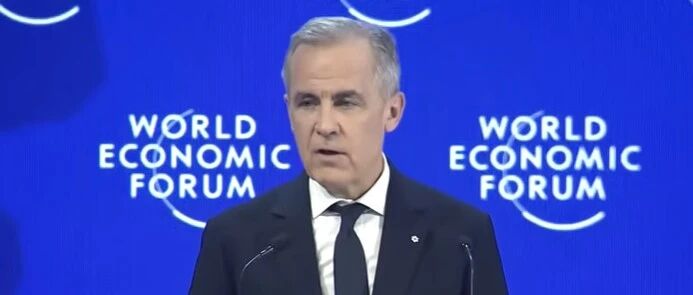
据新华社报道,加拿大总理卡尼(Mark Carney)20日在瑞士达沃斯举办的世界经济论坛年会上说,加拿大强烈反对美国为得到格陵兰岛加征关税。 卡尼表示,近来,一些大国把关税当作施压杠杆,把金融基础设施作为胁迫工具。他指出,包括世界贸易组织、联合国在内,集体解决问题的制度架构正面临 威胁。 媒体报道称,卡尼当日发表了一场措辞强硬的演讲并警示: 中等国家必须觉醒。 他直言不讳地指出,二战后建立的"基于规则的国际秩序正在消亡",世界已进入 大国零和博弈 的时代。卡尼警告称,在这种环境下,"'霸权国家'可以为所欲 为,弱者只能承受苦难"。 卡尼在演讲中呼吁全球中等强国放弃"'顺从'能换取安全"的幻想,转而采取联合行动抵制"霸权国家"的胁迫。 他强调,面对将贸易、金融和供应链武器化的霸权行为,中等国家必须建立新的联盟架构, "因为如果我们不在谈判桌上,我们就会成为别人的盘中餐(if we're not at the table, we're on the menu)。" 这一表态发生的背景十分敏感。近期,美国总统特朗普威胁对盟友加征关税,并再次荒谬地提出"购买格陵兰岛",甚至赤裸裸地发布了一张美国国旗覆盖格陵 兰和加 ...
独家洞察 | 2026年展望:重塑盈利、资本市场、技术与全球政策的多重力量正在汇聚
慧甚FactSet· 2026-01-21 08:27
Group 1: S&P 500 Earnings Outlook - Analysts expect a 15% year-over-year earnings growth for the S&P 500 in 2026, marking the third consecutive year of double-digit growth [4] - The top five contributors to this growth include NVIDIA and Meta, with the "Big Seven" tech companies projected to grow earnings by 22.7% [4] - All 11 sectors of the S&P 500 are expected to achieve year-over-year earnings growth, with five sectors likely to see double-digit increases [4] Group 2: Revenue and Profit Margins - The anticipated revenue growth rate for S&P 500 companies in 2026 is 7.2%, surpassing the 10-year average of 5.3% [5] - Ten out of eleven sectors are expected to see revenue growth, with the energy sector projected to decline [5] - The net profit margin for the S&P 500 is expected to reach 13.9%, the highest since 2008 [5] Group 3: U.S. ETF Market Growth - The U.S. ETF market is expanding, with Vanguard expected to surpass BlackRock as the largest ETF issuer [8] - The number and market share of actively managed ETFs are anticipated to grow, aided by new regulatory structures [8] - A significant portion of new money in ETFs is flowing into cryptocurrency-focused funds, reflecting a growing interest in digital assets [9] Group 4: AI in Financial Services - Generative AI and intelligent agent systems are becoming essential infrastructure for financial services, with a focus on improving efficiency and accuracy [11] - The adoption of AI is expected to face challenges in scalability and effectiveness, necessitating ongoing innovation [11] - Maintaining trust and demonstrating quantifiable returns on AI investments will be critical for organizations [12] Group 5: Private Equity Market Trends - Accessibility to private equity investments is increasing, with potential changes in regulations allowing broader participation [15] - Private equity is increasingly focused on technology-driven assets, particularly those related to AI [15] - The need for transparency and valuation discipline in private equity investments is becoming more pronounced [16] Group 6: Energy Sector Dynamics - Data centers are expected to significantly impact the electricity and utility sectors, with new demand anticipated in 2026 [17] - Public utility companies are likely to experiment with different rate structures to manage costs associated with data center services [18] - The oil and gas industry is expected to experience a divergence in performance due to supply and demand changes [19] Group 7: Global Policy Changes - Geopolitical factors, technological advancements, and legislative developments are shaping global policy directions [23] - The focus on digital asset regulation is shifting from "whether to regulate" to "how to implement regulation" [23] - Sustainable development regulations are evolving, emphasizing the integration of sustainability into business practices [25] Group 8: Wealth Management Trends - The wealth management industry is expected to fully embrace AI and digitalization, moving beyond skepticism [27] - Institutions that effectively integrate third-party technology with proprietary data will drive efficiency and client engagement [27] - The competition between traditional wealth management firms and digital platforms is intensifying, focusing on service quality and trust [29] Group 9: Market Influences - The Federal Reserve's policies, consumer sentiment, and international stock valuations are key factors influencing market dynamics in 2026 [30] - Consumer confidence remains a critical indicator for economic activity, with potential government measures to stimulate spending being closely monitored [31] - International markets may continue to outperform U.S. markets, raising questions about ongoing valuation disparities [31]
AI“信仰之风”吹向印度!软件巨头业绩暴雷后走出独立行情 4.95亿美元海外热钱重返市场
Zhi Tong Cai Jing· 2026-01-21 08:00
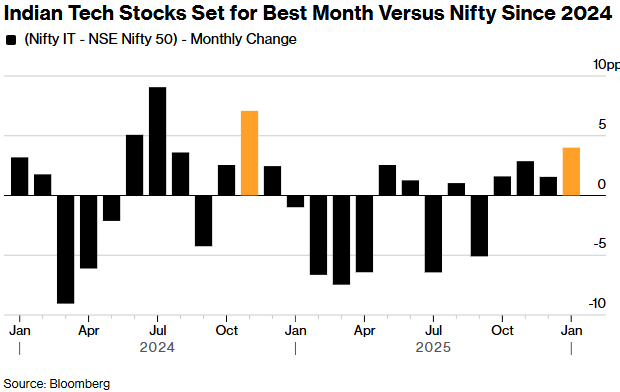
智通财经APP注意到,全球基金经理正再次青睐印度软件出口商的股票,因为这些公司正将其业务向人 工智能(AI)转型。 尽管来自AI相关产品开发的收入规模目前仍然较小,但包括塔塔咨询服务公司(Tata Consultancy Services Ltd.,简称TCS)、印孚瑟斯(Infosys Ltd.)和HCL科技(HCL Technologies Ltd.)在内的公司所展现出的增长 态势,令分析师和投资者倍感振奋。 TCS表示,在截至12月的三个月里,其AI产品收入较前一季度增长了17%,而HCL科技的这一增幅则达 到了20%。 印度国家证券存管有限公司汇编的数据显示,在截至12月31日的半个月内,外资购买了价值450亿卢比 (约4.95亿美元)的IT股票,这是自5月以来的首次。事实证明,这一买入举措具有先见之明,因为印度国 家证券交易所(NSE)的科技股指数正迈向自2024年11月以来相对于基准指数Nifty50的最佳单月表现。 Fident资产管理公司创始人兼首席投资官Aishvarya Dadheech表示:"市场对业务可见性的信心大幅提 升,这让我们感到安心。该行业目前正处于黄金期,我们将其视为一个可交 ...
mRNA肿瘤疫苗数据超预期 云顶新耀(01952)加速国内个性化肿瘤疫苗布局落地
智通财经网· 2026-01-21 07:53
Core Insights - The collaboration between Merck and Moderna on the mRNA cancer vaccine mRNA-4157 has shown promising results, significantly reducing the risk of recurrence or death by 49% in high-risk melanoma patients when combined with the PD-1 inhibitor Keytruda [1][2] - The mRNA-4157 vaccine utilizes a personalized neoantigen therapy mechanism, which designs synthetic mRNA encoding up to 34 neoantigens based on the unique mutations in a patient's tumor DNA [2] - The market potential for mRNA cancer vaccines is substantial, with projections indicating that they could become a new class of cancer immunotherapy, combining accessibility and personalization [4] Company Developments - Moderna plans to increase investment in the oncology sector, with the Phase III clinical trial for mRNA-4157 fully enrolled and expanding its indications beyond melanoma [2] - EVM16, a personalized cancer vaccine developed by the domestic company, has entered human trials, marking a significant milestone in the application of mRNA technology combined with AI for neoantigen selection [3] - The clinical data from EVM16 is expected to be released in the next 6-12 months, with the company aiming to initiate Phase Ib studies thereafter [3] Industry Trends - The success of mRNA-4157 highlights the unmet needs in cancer treatment, with the industry recognizing the potential of mRNA cancer vaccines to address these gaps [4] - The competitive landscape for personalized cancer vaccines is evolving, with domestic companies like EVM16 accelerating their development efforts in response to the advancements made by global players [4]

万孚生物加速构建AI医疗生态
Zhong Guo Zheng Quan Bao· 2026-01-21 06:37
Core Viewpoint - The company is strategically enhancing its investment in the AI medical field through mergers and acquisitions, as well as a combination of B2B and B2C approaches, aiming to develop a robust AI ecosystem that provides valuable medical tools and products [1] Group 1: AI Medical Strategy - Since 2018, the company has proactively positioned itself in the AI medical sector by implementing a "mergers + hospital + C-end" strategy to build a comprehensive AI medical ecosystem [2] - The company has successfully integrated three companies—Saiweisen Medical Technology, Shengqiang Technology, and Yizhun Intelligent—into its ecosystem, each excelling in imaging, pathology, and laboratory diagnostics [2] - Saiweisen Medical Technology received the first domestic Class III medical device registration for cervical cancer cell digital pathology image-assisted diagnostic software in February 2025, highlighting its leading position in the pathology AI field [2] Group 2: Business Growth and Future Outlook - The company's overseas business is showing strong growth, particularly in the emergency scene and the U.S. market for respiratory triad testing products, which is expected to significantly boost overseas revenue by 2026 [2] - The company is committed to innovation as a core driver and plans to continue increasing investments in the AI medical field, focusing on a multi-modal diagnostic architecture that combines imaging, pathology, and laboratory diagnostics [3] - Despite a strategic adjustment in 2025 that temporarily impacted profit margins, the company anticipates a strong recovery in domestic business growth in 2026, supported by a low base from 2025 and positive expectations for overseas business growth [3]

直击达沃斯|IMF总裁格奥尔基耶娃:AI正在增强全球经济韧性,但各国准备程度高度分化
Xin Lang Cai Jing· 2026-01-21 06:29
专题:世界经济论坛年会_2026冬季达沃斯 新浪财经 康路 发自瑞士达沃斯 2026年1月20日,世界经济论坛期间,国际货币基金组织(IMF)总裁Kristalina Georgieva表示,人工智 能(AI)正成为当今全球经济韧性与增长的重要推动力量,但其影响在不同国家之间呈现出显著不均 衡。 格奥尔基耶娃指出,从全球范围看,增强世界经济韧性与增长动能的两大关键因素日益清晰:一是人工 智能的发展,二是过去数十年中私营部门活力的持续增强。"国家逐步退出部分经济活动空间,让私营 企业充分发挥作用,而AI正与这一趋势形成高度互补,两者协同效果显著。" 为系统评估各国对AI时代的准备情况,IMF构建了"AI准备度指数",将国家大致分为三类:推动AI发生 的国家、旁观AI发生的国家,以及仍在困惑'到底发生了什么'的国家。 在具体评估框架上,格奥尔基耶娃表示,该指数重点考察四个维度:第一,物理基础设施;第二,劳动 力技能与能力结构;第三,AI的扩散与应用程度——"如果AI存在却未能改变经济结构,其意义就十分 有限";第四,监管与伦理体系。 根据最新排名,位居前列的仅是极少数国家。她指出,在当前环境下,美国、丹麦和新加坡 ...
AMRO首席经济学家何东:东盟+3韧性显著,但需对全球金融市场波动保持警惕
Di Yi Cai Jing· 2026-01-21 04:38
Core Insights - The ASEAN+3 region's economic growth forecast for 2025 has been raised to 4.3%, while the 2026 forecast is adjusted down to 4.0%, both up by 0.2 percentage points from previous estimates [1] - The upward revision is attributed to milder-than-expected tariff impacts, resilient technology exports, strong investment in the ASEAN region, and supportive macroeconomic policies [1] - AMRO's Chief Economist highlighted the region's resilience in facing global uncertainties, driven by strong demand for technology and foreign direct investment in emerging sectors [1] Economic Resilience - Internal demand is expected to continue supporting overall growth in the second half of 2025, with stable private consumption due to favorable labor market conditions and low inflation [3] - Investment remains robust, particularly in advanced electronics, electric vehicles, and digital services, driven by strong foreign direct investment commitments [3] - Despite tariff challenges, technology exports are performing well, with semiconductor exports in the ASEAN+3 region expected to grow significantly, reflecting strong demand in AI applications and cloud infrastructure [3] Financial Market Dynamics - Regional stock markets are buoyed by optimism in AI-related sectors, despite concerns over U.S. tariff policies [4] - Currency stability is observed, although some economies face currency depreciation due to expanded fiscal stimulus measures, leading to cautious investor sentiment [5] - Ongoing debates exist regarding potential overvaluation in the stock market, particularly in AI stocks, which could impact future investment and export growth if market corrections occur [5] Risks and Uncertainties - The report identifies aggressive protectionist policies as a high-probability, high-impact short-term risk, with uncertainties surrounding U.S. trade policies and potential tariff expansions [6] - A significant decline in technology demand is noted as a medium-probability but high-impact risk, which could adversely affect regional exports and investment flows [6] - Despite the potential for major impacts from a downturn in technology demand, the likelihood of a severe market correction is currently considered low, with expectations for sustained growth in the sector [6]

美国硬件科技股遭大幅抛售
第一财经· 2026-01-21 03:24
Group 1 - The core viewpoint of the article highlights a significant downturn in the hardware technology sector, with major companies experiencing substantial stock price declines due to reduced corporate spending amid economic uncertainty and rising component costs [3] - Morgan Stanley downgraded the hardware technology industry rating, warning of a "perfect storm" formed by slowing demand, rising input cost inflation, and overvaluation, leading to a more defensive strategy until 2026 [3][6] - The latest survey by Morgan Stanley indicates that hardware technology budget growth for 2026 is expected to be only 1% year-on-year, marking the weakest growth in nearly 15 years, excluding the pandemic period [3] Group 2 - According to the International Workplace Group's 2026 Corporate Executive Outlook Report, 95% of CEOs are optimistic about 2026, but all surveyed CEOs believe cost control is crucial, with an average budget cut of 10% planned by CFOs [4] - Companies are actively leveraging AI and flexible working solutions to enhance operational efficiency and unlock investment potential [4] - A separate Morgan Stanley survey revealed that if component inflation continues, 30% to 60% of customers may reduce their planned purchases of PCs, servers, and storage devices [5] Group 3 - Morgan Stanley stated that higher costs and elastic demand increase the risk of downward adjustments in profit expectations for 2026 [6] - Citigroup analysts noted that hardware companies and distributors face fluctuations in corporate demand, rising memory costs, and a decline in PC shipments for 2026 [6] - IDC's recent market outlook predicts a potential decline of up to 9% in PC shipments for 2026, with a moderate scenario indicating a shrinkage of 5% [6] - The current industry landscape may lead to further market share concentration among leading manufacturers like Dell, HP, Lenovo, and ASUS, which are better positioned to withstand market pressures compared to smaller regional brands and white-box manufacturers [6]