大语言模型

Search documents
汽车早报|恒大汽车继续停牌 日本七大车企利润或将大幅缩水
Xin Lang Cai Jing· 2025-08-08 00:42
Group 1: Automotive Events and Initiatives - The 28th Chengdu International Auto Show will be held from August 29 to September 7, with new car purchase subsidies available in Jinjiang and Chenghua districts, offering up to 4,500 yuan and 6,500 yuan respectively for eligible buyers [1] - Wuhan Economic Development Zone plans to launch 20 new energy vehicles by the end of the year, providing more options for consumers [2] - Audi's first strategic electric model, the E5 Sportback, will begin pre-sales on August 18, featuring advanced technology tailored for Chinese users [2] Group 2: Company Performance and Developments - Li Auto has received a patent for a new crash beam design that reduces vehicle weight and cost while enhancing safety features [3] - Honda's terminal vehicle sales in China for July 2025 were 44,817 units, a year-on-year decrease of 14.75%, with cumulative sales for the first seven months at 359,969 units [3] - Seres reported July 2025 new energy vehicle sales of 44,581 units, a year-on-year increase of 5.7%, while cumulative sales for the year were down 10.87% [3] Group 3: Market and Regulatory Updates - Evergrande Auto announced it failed to meet the Hong Kong Stock Exchange listing requirements and will remain suspended until compliance is achieved by September 30, 2026 [4] - Tesla has established over 70,000 supercharging stations globally, with more than 11,700 in China [5] - Toyota plans to acquire land in Aichi Prefecture, Japan, for a new manufacturing plant expected to be operational in the early 2030s [6] Group 4: Collaborations and Supply Agreements - Hyundai and General Motors announced plans for five jointly developed models, targeting a combined annual sales of over 800,000 units once fully operational [6] - General Motors signed a multi-year supply agreement with Noveon Magnetics for rare earth magnets for various automotive components [6] Group 5: Economic Impact and Profit Forecasts - Japanese automakers, including Toyota and Honda, anticipate a combined operating profit reduction of approximately 2.67 trillion yen (about 130.2 billion yuan) in the 2025 fiscal year due to U.S. tariffs [6]




面对AI业务的困境,苹果选择了吃“回头草”
3 6 Ke· 2025-08-07 11:51
Core Viewpoint - Apple is reportedly reviving its interest in AI chatbots, specifically developing a new internal team called "Answers, Knowledge and Information" (AKI) to create a ChatGPT-like experience, despite previous denials about chatbot development [1][3]. Group 1: AI Development and Team Structure - The AKI team is led by former Siri development head Robbie Walker, who has previously criticized the delays in personalized Siri features [3]. - Apple is now potentially adopting an internal competition model for AI development, with both personalized Siri and AKI being developed simultaneously [3]. - The company is under pressure to catch up in the AI field, as it has been perceived as lagging behind competitors [3]. Group 2: Financial Performance and Market Reaction - Since the beginning of 2025, Apple's stock price has dropped approximately 16%, making it one of the worst performers among the "Magnificent Seven" tech stocks [5]. - Despite the stock decline, Apple's latest financial report showed that core business lines, including iPhone and Mac, exceeded expectations [5][6]. - Analysts believe that Apple's struggles in the AI race have contributed to its stock price decline [6]. Group 3: Talent Retention and Challenges - The departure of key AI researchers, including AFM team leader Pang Ruoming, who left for Meta with a reported $200 million deal, has raised concerns about Apple's AI capabilities [6][8]. - The loss of critical personnel poses significant challenges for Apple's foundational AI models, which are essential for its AI initiatives [8]. - The complexity of developing a personalized Siri, which aims to be a general intelligence agent, has led to delays, while the development of an AI chatbot like "Apple GPT" is seen as less challenging [8][12]. Group 4: Market Position and Future Outlook - The AI chatbot's development is viewed as a necessary response to competitors' advancements in AI, as Apple risks disappointing its loyal customer base if it fails to deliver new innovations [12]. - The AKI team is perceived as a stopgap measure to address the growing demand for AI solutions amid increasing competition in the sector [12].



字节&MAP重塑大模型推理算法优化重点,强化学习重在高效探索助力LLM提升上限
量子位· 2025-08-07 10:13
Core Viewpoint - The article discusses the limitations of traditional reinforcement learning (RL) frameworks in large language models (LLMs), particularly the issue of premature convergence leading to a lack of exploration and diversity in generated outputs [1][2]. Group 1: Introduction to FR3E - The FR3E framework, inspired by the concept of "First Return, Then Explore," aims to address the exploration challenges in RL by balancing exploitation and exploration [2][4]. - This new structured exploration framework is developed by a collaborative team from ByteDance, MAP, and the University of Manchester [2][5]. Group 2: Algorithm Framework - The FR3E algorithm consists of two phases: First Return and Entropy-Eliciting Explore [10][14]. - In the First Return phase, the model performs multiple rollouts for each prompt, exploring potential solutions and collecting trajectories and reward signals [12]. - The Entropy-Eliciting Explore phase utilizes a dynamic advantage modulation mechanism to fine-tune learning signals based on the marginal improvement in value from one state to another [16][18]. Group 3: Data Construction - The team employs a mixed difficulty strategy for data construction, using low-difficulty data for stable training and high-difficulty data to challenge the model's reasoning capabilities [23]. Group 4: Experimental Results - The effectiveness of FR3E was evaluated across several authoritative mathematical reasoning benchmarks, including GSM8K, Math500, and others, using various model sizes [24]. - FR3E outperformed the strong baseline GRPO++ across multiple benchmarks, demonstrating superior generalization and reasoning capabilities [25][28]. - Notably, FR3E exhibited prolonged exploration behavior, with slower entropy decay and longer response lengths, successfully overcoming the "stagnation" issue seen in traditional methods [26][27]. Group 5: Conclusion - FR3E presents an innovative and efficient structured exploration paradigm that directly addresses the core bottleneck of insufficient exploration in LLMs [28]. - The method's principles of "structured feedback + adaptive adjustment" show promising scalability and potential for future RL training in large models [29].

他救了OpenAI、年赚过亿、三家明星CTO,却自曝跟不上AI发展了!硅谷大佬告诫:不是马斯克,就别碰大模型
AI前线· 2025-08-07 10:08
Core Viewpoint - The article discusses the complexities and dynamics within OpenAI, particularly during a crisis involving the board and the return of Sam Altman, highlighting the importance of leadership and decision-making in the tech industry [2][3][4]. Group 1: OpenAI Crisis and Leadership - Bret Taylor, a key figure in OpenAI's board, was initially reluctant to get involved but felt compelled to help after reflecting on the significance of OpenAI's impact on the AI landscape [2][3]. - Taylor emphasized the need for a transparent and fair process to address the crisis, aiming to restore trust among employees and stakeholders [3][4]. - The crisis led to a collective employee response, with a public letter demanding Sam Altman's return, indicating the strong connection between leadership and employee morale [3][4]. Group 2: AI Market Dynamics - The AI market is expected to evolve into three main segments: foundational models, AI tools, and application-based AI, with a particular focus on the potential of AI agents [5][33]. - Foundational models will likely be dominated by a few large companies due to the high capital requirements for training these models, making it a challenging area for startups [34][35]. - The AI tools market presents risks as larger infrastructure providers may introduce competing products, necessitating careful strategic planning for smaller companies [36][37]. Group 3: Application-Based AI and Business Models - The application-based AI market is seen as the most promising, with companies developing AI agents to handle specific business tasks, leading to higher profit margins [37][38]. - The shift towards AI agents represents a significant change in how software is perceived, moving from tools that assist humans to systems that can autonomously complete tasks [41][42]. - The concept of "outcome-based pricing" is gaining traction, where companies charge based on the results delivered by AI agents, aligning business goals with customer satisfaction [44][46].

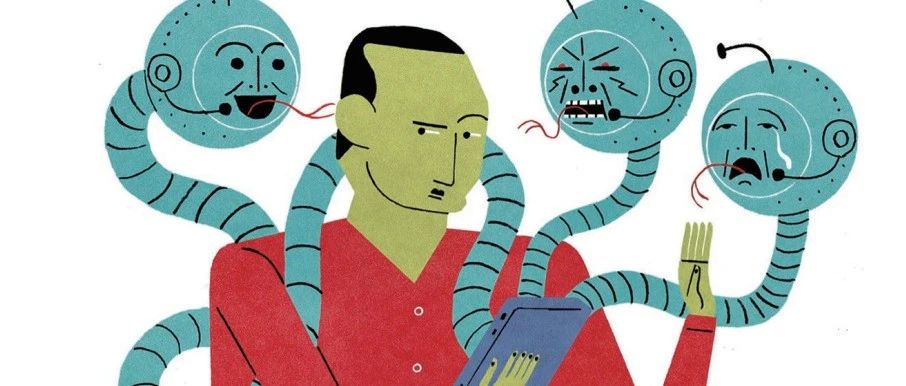
人类在被大语言模型“反向图灵测试”
腾讯研究院· 2025-08-07 09:15
Core Viewpoints - The rapid advancement of large language models (LLMs) like ChatGPT has sparked both fascination and concern regarding their impact on employment and future development [2][3][4] - The debate surrounding whether LLMs truly understand the content they generate raises questions about the nature of intelligence and understanding [4][11][12] Group 1: Development and Impact of LLMs - The evolution of artificial intelligence from logic-based models to brain-like computing has led to significant breakthroughs in various fields, including image and speech recognition [2] - The combination of deep learning and reinforcement learning has enabled AI to excel in areas traditionally dominated by humans, prompting discussions about the implications for the future [2] - The introduction of ChatGPT in November 2022 marked a significant leap in LLM capabilities, captivating users with its ability to generate coherent text [2] Group 2: Understanding and Intelligence - The Turing Test remains a classic method for assessing AI's ability to mimic human responses, but LLMs may be conducting a reverse Turing Test by evaluating the intelligence of their human interlocutors [5][10] - The concept of "mirror hypothesis" suggests that LLMs reflect user desires and intelligence, raising questions about the nature of their understanding and the potential for misinterpretation [5][6] - The ongoing debate about whether LLMs possess true understanding is reminiscent of historical discussions about the essence of life, indicating a need for a new conceptual framework in understanding intelligence [22][23] Group 3: Philosophical Implications - The relationship between language and thought is complex, with two main perspectives: language determines thought versus thought exists independently of language [20][21] - The exploration of LLMs challenges traditional cognitive frameworks, suggesting that human intelligence may share characteristics with LLMs in certain areas while differing fundamentally in others [12][21] - The emergence of LLMs presents an opportunity to redefine core concepts such as intelligence, understanding, and ethics, similar to the paradigm shifts seen in physics and biology [13][14][23]
“人形机器人赛道,中美一梯队,日本已掉队”
Guan Cha Zhe Wang· 2025-08-07 08:33
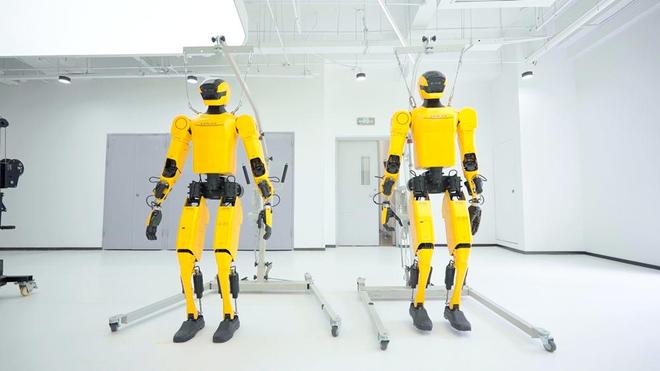
Core Insights - The year 2025 is anticipated to be a breakthrough year for humanoid robots, marking the beginning of mass production and increased capital investment in the sector [1] - The Kepler K2 Bumblebee, a humanoid robot designed for industrial applications, has gained recognition for its capabilities, including a payload capacity of 30 kg and an operational time of 8 hours [1][8] - China is emerging as a leader in the humanoid robotics industry, leveraging its strong supply chain, diverse application scenarios, and rapid iteration speed [1][47] Company Overview - Kepler Robotics has developed the K2 Bumblebee, which features 80% self-developed components and utilizes a planetary roller screw actuator technology, allowing it to mimic human muscle movements [1][12][18] - The K2 Bumblebee is designed to operate in industrial settings, with a focus on replacing human labor in specific tasks [1][22] - The company plans to deliver around 100 units in the current year, with a goal of scaling up to 1,000 units next year and over 10,000 units by 2027 [21] Technology and Innovation - The K2 Bumblebee's strength is attributed to its planetary roller screw actuators, which provide high load capacity and efficiency, enabling it to perform tasks that require significant physical strength [12][13] - The robot's design allows for quick interchangeability of its end effectors, making it adaptable for various industrial tasks [9][12] - Kepler Robotics emphasizes the importance of self-research and domestic alternatives in its components to ensure safety and reliability [18][19] Market Position and Competitive Landscape - The humanoid robotics market is currently dominated by China and the United States, with some European countries following behind, while Japan has fallen behind in this wave of innovation [47][48] - The company believes that the best initial application for humanoid robots is in industrial environments due to their controlled settings and specific task requirements [22][23] - Kepler Robotics positions itself as a complementary solution to existing industrial robots, focusing on flexibility and adaptability in various workstations [26][27] Financial Considerations - The estimated return on investment (ROI) for the K2 Bumblebee is approximately 1.5 to 1.8 years, based on its operational efficiency compared to human labor costs [28][29] - The company anticipates that maintenance and software upgrade costs will be minimal, not significantly impacting the overall ROI [30] Industry Trends - The humanoid robotics sector is experiencing heightened interest and investment, with some viewing it as a potential bubble while others see it as a significant technological wave [42][44] - The rapid advancements in AI and robotics are expected to drive further developments in humanoid robots, with a focus on enhancing their cognitive capabilities [40][41] - The industry is characterized by a mix of startups and established tech giants, with the latter likely to dominate the market in the long term [46]

人形机器人应用与发展前瞻
中国联通研究院· 2025-08-07 07:05
Investment Rating - The report does not explicitly provide an investment rating for the humanoid robotics industry Core Insights - Humanoid robots are becoming a key support for the integration of artificial intelligence and the physical world, breaking the limitations of traditional AI and enabling seamless interaction with human-designed tools and environments [6][10] - The global humanoid robotics market is expected to experience rapid growth, with projected sales reaching 12,400 units and a market size of 6.339 billion yuan by 2025, and over 640 billion yuan by 2030 [18][19] - Major economies are prioritizing the development of embodied intelligence, with the US, EU, and Japan implementing supportive policies and strategies [17][18] Summary by Sections 1. New Trends in Humanoid Robot Development - Humanoid robots are reshaping global technological competition and driving the transition from digital to autonomous economies [10] - The report outlines the evolution of humanoid robots from conceptual stages in the mid-20th century to their current applications in various sectors [11][13][14] 2. Technological Evolution of Humanoid Robots - The report highlights advancements in intelligent perception and decision-making capabilities, with companies like Tesla and Boston Dynamics leading the way [26][27] - Multi-modal model algorithms are enhancing the cognitive capabilities of humanoid robots, enabling them to perform complex tasks [29][30] - The physical structure of humanoid robots, including sensors and actuators, is crucial for their functionality and adaptability [34][35][36] 3. Typical Practices and Explorations in Humanoid Robotics - Humanoid robots are making significant inroads into industrial manufacturing, healthcare, logistics, and home services, demonstrating their versatility and potential [38][40][43][47][51] - The report discusses specific applications in industrial settings, such as precision assembly and inspection, as well as in healthcare for patient assistance and rehabilitation [41][44] 4. Future Development Paths for Humanoid Robots - The report emphasizes the need for standardized hardware and interoperability to facilitate the growth of the humanoid robotics industry [54][55] - It advocates for enhanced sensory capabilities and the integration of AI technologies to improve the performance and application of humanoid robots [57][58] - The report suggests focusing on key application scenarios to drive healthy development in the humanoid robotics sector [61][62]
腾讯申请模型训练方法、装置、电子设备及存储介质专利,提升相关程度预测模型的语义理解能力以及泛化能力
Jin Rong Jie· 2025-08-07 02:54
Group 1 - Tencent Technology (Beijing) Co., Ltd. has applied for a patent titled "Model Training Method, Device, Electronic Equipment, and Storage Medium" with publication number CN120430298A, filed on April 2025 [1] - The patent describes a method that includes obtaining sample text pairs and labeling their relevance categories, constructing a first prompt text for predicting text relevance, and training a large language model based on predicted probabilities [1] - The implementation aims to enhance the semantic understanding and generalization ability of the relevance prediction model [1] Group 2 - Tencent Technology (Beijing) Co., Ltd. was established in 2005 and is primarily engaged in software and information technology services, with a registered capital of 1.6 million USD [2] - The company has made investments in 9 enterprises, participated in 47 bidding projects, and holds 1,426 patent records, along with 159 administrative licenses [2]

产业深度:【AI产业深度】华为盘古大模型与昇腾AI计算平台,共同构建软硬一体的AI技术体系
GUOTAI HAITONG SECURITIES· 2025-08-06 09:19
Investment Rating - The report does not explicitly state an investment rating for the industry. Core Insights - Huawei is exploring a "soft and hard integration" strategy to enhance its AI competitiveness, transitioning from merely catching up with industry SOTA models to customizing model architectures for its self-developed Ascend hardware [12][30]. - The evolution of the Pangu model series reflects a shift from parameter competition to a focus on efficiency and scalability, culminating in the adoption of the Mixture of Experts (MoE) architecture [12][30]. - The report highlights the introduction of innovative architectures like Pangu Pro MoE and Pangu Ultra MoE, which aim to maximize the utilization of Ascend hardware through structural and system-level optimizations [36][62]. Summary by Sections 1. Evolution of Pangu Models - The Pangu model series began with PanGu-α, a 200 billion parameter model, which established a technical route based on Ascend hardware [12][30]. - PanGu-Σ, launched in 2023, marked an early attempt at sparsification, exploring trillion-parameter models with a focus on efficiency [15][18]. - Pangu 3.0 introduced a "5+N+X" architecture aimed at deep industry applications, showcasing its capabilities in various sectors [22][23]. 2. Pangu Pro MoE and Pangu Ultra MoE - Pangu Pro MoE addresses the challenge of expert load imbalance in distributed systems through a new architecture called Mixture of Grouped Experts (MoGE) [36][37]. - The MoGE architecture ensures load balancing by structuring the selection of experts, thus enhancing efficiency in distributed deployments [45][46]. - Pangu Ultra MoE emphasizes system-level optimization strategies to explore the synergy between software and hardware, reflecting a practical application of the soft and hard integration concept [62]. 3. CloudMatrix Infrastructure - CloudMatrix serves as the physical foundation for AI infrastructure, enabling high-performance communication and memory management across distributed systems [5][10]. - The infrastructure supports the Pangu models by providing a unified addressing distributed memory pool, which reduces performance discrepancies in cross-node communication [5][10]. 4. Full-Stack Collaboration - Huawei's AI strategy is centered around full-stack collaboration, integrating open-source strategies to build an ecosystem around Ascend hardware [10][12]. - The architecture, systems, and operators form the three pillars of this full-stack collaboration, aimed at enhancing the overall efficiency and effectiveness of AI solutions [10][12].
闹玩呢,首届大模型对抗赛,DeepSeek、Kimi第一轮被淘汰了
3 6 Ke· 2025-08-06 08:01
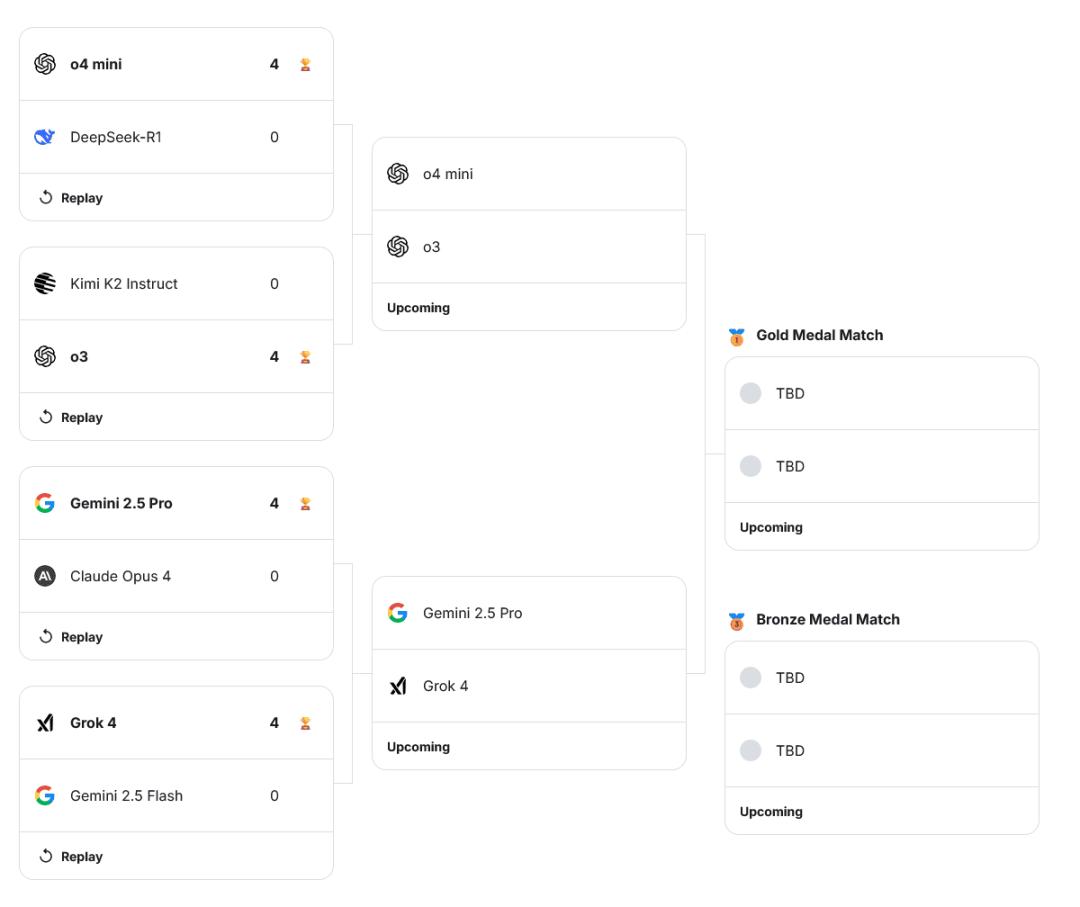
Group 1 - The core focus of the article is the first international chess competition for large models, where Grok 4 is highlighted as a leading contender for the championship [1][24]. - The competition features various AI models, including Gemini 2.5 Pro, o4-mini, Grok 4, and others, all of which advanced to the semifinals with a 4-0 victory in their initial matches [1][9]. - The event is hosted on the Kaggle Game Arena platform, aiming to evaluate the performance of large language models (LLMs) in dynamic and competitive environments [1]. Group 2 - Kimi k2 faced o3 and lost 0-4, with Kimi k2 struggling to find legal moves after the opening phase, indicating potential technical issues [3][6]. - DeepSeek R1 lost to o4-mini with a score of 0-4, showcasing a pattern of initial strong moves followed by significant errors [10][13]. - Gemini 2.5 Pro achieved a 4-0 victory over Claude 4 Opus, but its true strength remains uncertain due to the opponent's mistakes [14][18]. - Grok 4's performance was particularly impressive, winning 4-0 against Gemini 2.5 Flash, demonstrating a strong ability to capture unprotected pieces [21][27]. Group 3 - The article notes that current AI models in chess exhibit three main weaknesses: insufficient global board visualization, limited understanding of piece interactions, and issues with executing legal moves [27]. - Grok 4's success suggests it may have overcome these limitations, raising questions about the consistency of these models' advantages and shortcomings in future matches [27]. - The article also mentions a poll where 37% of participants favored Gemini 2.5 Pro as the likely winner before the competition began [27].