
房地产发展新模式

Search documents
21专访|尹艳林:推进深层次改革,“十五五”目标可定5%左右
2 1 Shi Ji Jing Ji Bao Dao· 2025-07-17 12:17
Group 1 - The core viewpoint of the articles emphasizes the importance of setting economic growth targets for the "15th Five-Year Plan" period, considering the current domestic and international challenges [2][4][7] - During the "14th Five-Year Plan" period, China's average economic growth rate was around 5%, with GDP expected to reach approximately 140 trillion yuan this year [1][5][6] - The need for deepening reforms in key areas is highlighted to address issues such as low consumer demand, real estate market adjustments, and external uncertainties [1][9][23] Group 2 - The proposed economic growth target for the "15th Five-Year Plan" is around 5%, which aligns with the goal of achieving a per capita GDP comparable to that of moderately developed countries by 2035 [8][4] - The articles discuss the necessity of expanding effective demand through measures such as stabilizing the real estate market, increasing residents' income, and optimizing consumption policies [9][10][16] - The importance of reforming the household registration system is noted, as it can enhance consumption willingness among migrant populations and stimulate urban demand [11][12] Group 3 - The articles suggest that the real estate market is showing signs of stabilization, with a decrease in the inventory of unsold properties and a gradual recovery in sales [16][17] - Recommendations for the real estate market include reducing government intervention, easing purchase restrictions, and providing financial support to homebuyers [17][18] - The concept of a new real estate development model is introduced, focusing on a balanced relationship between government and market forces, and promoting a dual housing supply system [18][19] Group 4 - The articles emphasize the need to address "involution" in competition by promoting fair competition and eliminating local protectionism [21][22] - Key reform areas for the "15th Five-Year Plan" include enhancing the efficiency of state-owned enterprises, establishing a unified national market, and improving macroeconomic governance [23][24] - The importance of expanding institutional openness and aligning with international trade rules is highlighted to enhance competitiveness and resilience in global supply chains [24][25]

广东:加快构建房地产发展新模式 加力推动城市发展绿色低碳转型
news flash· 2025-07-17 07:03
Core Viewpoint - Guangdong is accelerating the construction of a new model for real estate development and promoting a green and low-carbon transformation of urban development [1] Group 1: Urban Development Strategy - The meeting emphasized the importance of aligning thoughts and actions with the decisions made by the General Secretary and the Central Committee regarding urban work [1] - It highlighted the need to understand the "five transformations and five greater emphases" principle and to creatively implement the requirements of the Central Urban Work Conference [1] - The focus is on promoting urban connotative development and improving the spatial layout of towns, with a classification approach to urbanization centered around county towns [1] Group 2: Urban Planning and Cultural Development - There is a commitment to optimizing urban spatial structure and better coordinating production, living, and ecological layouts [1] - The initiative aims to enhance urban cultural quality and overall city appearance, reflecting Chinese style, Lingnan characteristics, and Guangdong features [1] - The goal is to create a desirable living environment and promote urban economic prosperity while developing new productive forces tailored to local conditions [1] Group 3: Real Estate and Public Services - The strategy includes accelerating the construction of a new model for real estate development and continuously improving public services [1] - There is a strong emphasis on creating high-quality living spaces and driving the green and low-carbon transformation of urban development [1]

中央城市工作会议点评:“从大规模增量扩张阶段转向存量提质增效为主的阶段”或是关键
CMS· 2025-07-17 05:32
Core Insights - The report indicates that urbanization in China is transitioning from a rapid growth phase to a stable development phase, emphasizing a shift from large-scale incremental expansion to a focus on improving existing stock and efficiency [1][2][8] - The emphasis on "high-quality urban renewal" suggests a move away from large-scale demolitions towards enhancing urban functionality and quality [1][2][9] - The report highlights the importance of integrated planning involving population, industry, urban areas, and transportation to optimize urban spatial structure [1][2][7] Industry Overview - The total number of stocks in the industry is 256, with a total market capitalization of 2,792 billion and a circulating market capitalization of 2,643.8 billion [3] - The absolute performance over 1 month, 6 months, and 12 months is 3.2%, 5.8%, and 35.2% respectively, while the relative performance is -0.9%, -0.1%, and 19.6% [5] Urban Renewal and Development - The report notes a significant change in the approach to urban renewal, focusing on quality improvements rather than extensive demolition [2][7][9] - The mention of "steady progress in the renovation of urban villages and dilapidated housing" indicates a more cautious and structured approach to urban renewal [1][2][9] Real Estate Development Model - The report suggests that there will be a continued push towards establishing a new model for real estate development, consistent with previous governmental statements [1][2][7] - The focus on optimizing the quality of land supply and urban planning is expected to create new opportunities in the real estate sector [1][2][7] Investment Opportunities - The report identifies potential investment opportunities in companies with capabilities in managing existing assets, such as China Resources Land, China Merchants Shekou, and China Overseas Development [8][10] - Companies involved in urban governance and public services, such as China Resources Vientiane Life and Poly Property, are highlighted as potential investment targets [8][10] - The report also suggests looking into sectors related to urban renewal, including inspection and testing, decoration, construction, and building materials for pipeline upgrades [8][10]
时隔十年,中央再开城市工作会议,传递五大信号!
3 6 Ke· 2025-07-17 02:34
Core Insights - The Central Urban Work Conference held on July 15 marks a significant event in urban development, the first in 10 years, setting the direction for urban development in the new era [1] - The conference highlighted a transition in urbanization from rapid growth to stable development, with a focus on improving existing urban areas rather than expanding them [1][2] - Seven key tasks were outlined, with a strong emphasis on real estate, including the development of modern urban clusters, urban renewal, and a new model for real estate development [1][2] Urbanization and Real Estate Demand - Since the 18th National Congress, China's urbanization rate has increased from 53.1% in 2012 to 67% in 2024, with 940 million people living in urban areas [2] - The new urbanization process continues to release housing demand from new citizens, supporting the real estate industry's sustained growth [2] - The transition to stable development will not halt the urbanization of agricultural migrants, indicating ongoing rigid housing demand as a fundamental support for the real estate sector [2] County-Level Urbanization - Among 386 county-level cities, 208 have an urbanization rate below 60%, indicating significant room for growth [3] - In 1,496 county-level districts, 1,356 have an urbanization rate below 60%, showing that over 90% of these areas are still developing [3] - These low urbanization areas house 610 million residents, with an average urbanization rate of 44%, suggesting substantial potential for real estate demand [4] Urban Cluster Development - The conference emphasized the need for coordinated development of urban clusters and metropolitan areas to enhance the real estate market structure [5] - Future real estate demand will align closely with urban clusters and core cities, particularly in regions like the Yangtze River Delta and the Greater Bay Area [5] - By 2025, the top five cities in residential land transaction value are expected to account for 42% of the total in 300 cities, indicating a concentration of demand [5] Urban Space Optimization - The shift from large-scale expansion to improving existing urban areas requires a focus on efficient and sustainable development [6] - The conference called for integrated planning of population, industry, towns, and transportation to optimize urban spatial structure [6] - Special attention is needed for large cities to enhance their influence on smaller cities while promoting the healthy development of small towns [6] Supply-Side Adjustments - The real estate supply side will focus on optimizing structure and improving quality, with strict controls on new development land supply [7] - Efforts will be made to revitalize existing properties and increase the supply of high-quality residential options [7] - The emphasis on urban renewal will enhance the value of core urban areas and meet evolving housing demands [7] Urban Renewal and Housing Improvement - The conference highlighted the importance of high-quality urban renewal and the gradual advancement of village and dilapidated housing renovations [8] - The past decade has seen significant policy support for urban development, leading to improved urban infrastructure and stimulating the real estate sector [9] - The focus on creating innovative, livable, and resilient cities aims to enhance urban quality and meet the growing demand for improved housing [9] Building Safety and Quality - The conference mandated strict limitations on super-tall buildings and emphasized enhancing housing safety standards [10] - The shift from quantity to quality in housing development aims to meet the evolving needs of residents for better living conditions [10] - The introduction of new housing standards aims to improve the health and comfort of residential environments [11] Conclusion - The Central Urban Work Conference sets a new direction for real estate development, emphasizing quality, sustainability, and the importance of urban renewal [12] - The ongoing urbanization process will continue to support housing demand, particularly in core urban areas, while the focus on "good housing" will reshape market dynamics [12]
中央定调城市发展方向 城市更新、房地产发展站上新起点
Shang Hai Zheng Quan Bao· 2025-07-16 23:46
Core Viewpoint - The Central Urban Work Conference held on July 14-15 in Beijing indicates a shift towards high-quality urban development, emphasizing "urban renewal" as a key focus, which will directly impact the real estate market and create new opportunities for companies involved in urban development [1][2]. Group 1: Urban Development Strategy - The conference highlighted a significant transition in urbanization from rapid growth to stable development, with a focus on improving existing urban stock rather than expanding new areas [2][3]. - The seven key tasks outlined in the conference are primarily aimed at enhancing existing urban structures, reflecting a strategic shift towards "intrinsic urban development" [2][3]. - The goal is to build modern, innovative, livable, resilient, beautiful, and smart cities, with urban renewal as a crucial mechanism for achieving high-quality urban development [2][3]. Group 2: Government Role and Policy Implications - The conference is expected to enhance local governments' focus on urban renewal, which will play a significant role in stabilizing investment and expanding domestic demand [3][4]. - There is an anticipated increase in supportive policies from relevant departments, encouraging diverse stakeholders to participate in urban renewal initiatives [3][4]. - The overall aim is to move away from extensive land development towards a model that emphasizes the optimization of existing urban spaces and services [3][4]. Group 3: Real Estate Market Impact - The emphasis on intrinsic development in real estate suggests a shift towards a new development model that prioritizes quality over quantity, with a dual-track system for housing supply [4][5]. - Urban renewal is expected to stimulate demand in the real estate sector, potentially leading to a recovery in new housing markets as quality housing products gain traction [5][6]. - The focus on high-quality urban renewal is likely to enhance the overall living environment, thereby supporting long-term stability in housing prices [5][6].
中央城市工作会议时隔十年再度召开 城中村和危旧房改造稳步推进
Zheng Quan Ri Bao· 2025-07-16 16:30
Group 1: Urban Development and Governance - The recent Central Urban Work Conference emphasizes the transition of urbanization from rapid growth to stable development, focusing on quality improvement rather than mere quantity [1] - The conference highlights the importance of urban governance as a core component of national governance modernization, aligning with China's modernization process [1] - The overall goal for urban work is to build innovative, livable, beautiful, resilient, civilized, and smart modern cities, promoting high-quality urban development and systematic thinking on urban growth [1] Group 2: Real Estate Development - The conference calls for the acceleration of a new model for real estate development, emphasizing a dual reform approach on both supply and demand sides [2] - There is a significant need for the renovation of urban villages and dilapidated housing, with estimates indicating 1.7 million urban village units and 500,000 dilapidated houses requiring renovation across major cities [2][3] - The housing ministry aims to implement 1 million new units of urban village and dilapidated housing renovations through monetary compensation methods [2] Group 3: Housing Policy and Market Impact - The housing voucher system is identified as a crucial tool in the urban village renovation process, with over 20 regions optimizing housing voucher policies this year [4] - The emphasis on steady progress in urban village and dilapidated housing renovations suggests these will be key focus areas for future urban work, potentially stabilizing the real estate market [4] - The ongoing improvements in housing voucher policies are expected to further stimulate housing demand and contribute to the recovery of the real estate market [4]
上海交大陈杰:年中召开城市工作会议不寻常,多个“首次”藏深意
Bei Ke Cai Jing· 2025-07-16 12:45
Core Insights - The central urban work conference was held for the first time in ten years, indicating the urgency of top-level design for urban work in the current domestic and international environment [1][2] - The conference emphasized a new model for real estate development, marking a significant shift in urban development strategies [1][2] Group 1: Background and Context - Urbanization has transitioned from a rapid growth phase to a stable development phase, necessitating a transformation in traditional development models and governance mechanisms [2] - The disappearance of previous growth drivers such as urbanization, demographic dividends, and infrastructure supply gaps requires urgent governance of accumulated issues from the rapid growth period [2] - The international economic landscape has changed significantly compared to ten years ago, increasing the importance of domestic demand [2] Group 2: Key Highlights of the Conference - The conference introduced the concept of a "modernized people-oriented city" and emphasized the importance of the "people's city" philosophy in guiding urban work [3] - High-quality development was established as the central theme of urban work, with "intrinsic development" identified as the main line of focus [3][4] - The shift from "rapid growth" to "stable development" and from "large-scale expansion" to "quality enhancement" was officially recognized [4] Group 3: Urban Development Goals - The conference outlined seven key tasks for urban work, including optimizing modern urban systems and building vibrant, livable, green, resilient, civilized, and smart cities [5] - The urban goal system was upgraded from "three-in-one" (livability, resilience, intelligence) to "six-in-one" by adding innovation, beauty, and civilization [6] - The emphasis on innovation as a primary goal reflects the recognition of cities as major sources of innovation and the need for new economic and social development drivers [6] Group 4: Strategic Implications - The conference serves as a comprehensive summary of ten years of urban development practices in China and provides strategic direction for future urban work [6] - It aims to support the transformation of urban work in the "second half" of urbanization, offering a top-level design and framework for action [6] - The new model for real estate development is expected to provide conceptual guidance, strategic benchmarks, and pathways for addressing urban challenges [6]
【新华解读】城市发展步入存量提质增效期 推动房地产市场从“量”向“质”跨越
Xin Hua Cai Jing· 2025-07-16 05:26
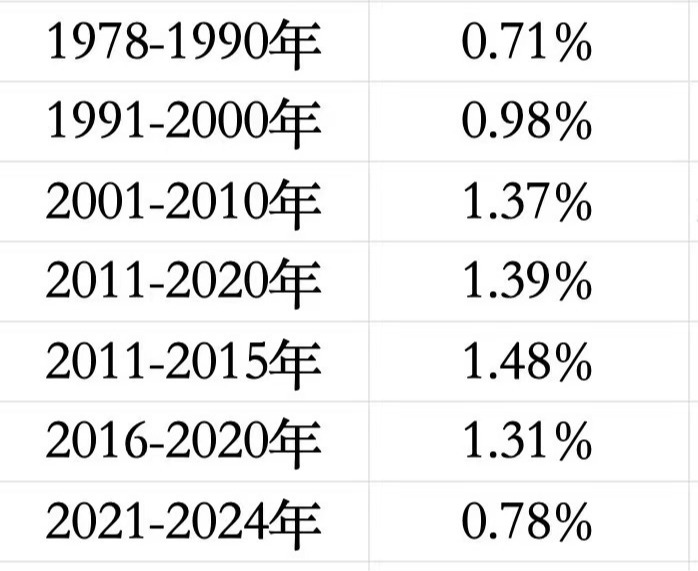
推进城市发展与房地产市场核心政策导向相辅相成 1978-2024年我国城镇化率年均增长率 | 1978-1990年 | 0.71% | | --- | --- | | 1991-2000年 | 0.98% | | 2001-2010年 | 1.37% | | 2011-2020年 | 1.39% | | 2011-2015年 | 1.48% | | 2016-2020年 | 1.31% | | 2021-2024年 | 0.78% | 来源:新华财经、中国政法大学商学院副教授熊柴 此次会议也是2015年以来第二次以中央名义召开的城市工作会议。中指研究院政策研究总监陈文静表 示,经过十年发展,我国城市数量增加至694个,2024年有27个城市GDP超过1万亿元,城镇化率由2015 年的57.3%提升至67%,进程有所放缓;城镇人口也由2015年的7.9亿人增加至9.4亿人,每年城镇新增常 住人口超1600万人,而2021-2024年年均增加1033万人。她说,可以看出,在城市工作取得积极成效的 同时,城市发展也出现了新特征,城镇化进入了稳定发展期。 熊柴说,2015年、2025年的这两次中央城市工作会议召开的背 ...
时隔10年中央城市工作会议再度召开,对房地产影响几何?
Zhong Guo Xin Wen Wang· 2025-07-16 03:56
Core Viewpoint - The Central Urban Work Conference held from July 14 to 15 in Beijing marks a significant shift in China's urban development strategy, transitioning from rapid growth to stable development, with a focus on improving quality and efficiency in urban management and real estate [1]. Group 1: New Development Model - The real estate industry is moving away from the previous "three highs" model (high leverage, high debt, high turnover), with the conference emphasizing the need to accelerate the establishment of a new development model [3]. - The new model includes improving the "market + guarantee" housing supply system, reforming foundational real estate systems, and establishing a mechanism linking "people, housing, land, and finance" [3]. Group 2: City-Specific Development - The conference highlighted the need for differentiated development strategies based on city characteristics, promoting a modern urban system that includes coordinated development among large, medium, and small cities [4]. - This approach aims to reduce the disparity in real estate market activity between core urban areas and peripheral regions [4]. Group 3: Revitalizing Existing Stock - The conference identified urban renewal as a key focus, indicating a shift towards revitalizing existing urban spaces rather than solely relying on new developments [5]. - Real estate developers are expected to leverage their expertise to provide specialized services for urban development, moving from being mere fund providers to active participants in urban renewal [5]. Group 4: Quality Improvement - The emphasis on quality and standards in real estate development is a recurring theme, with a focus on constructing "good houses" characterized by safety, comfort, sustainability, and intelligence [6]. - The industry is expected to shift from scale expansion to quality competition, with leading companies adopting green building standards and enhancing housing quality [7].
6月地产环比改善,销售规模环比改善
Guotou Securities· 2025-07-16 01:56
Investment Rating - The industry investment rating is "Leading the Market - A" and the rating is maintained [9] Core Viewpoints - The real estate sector shows a significant month-on-month improvement in June, but year-on-year comparisons remain weak. The cumulative sales area of commercial housing from January to June is 460 million square meters, down 3.5% year-on-year, while sales revenue is 4.4 trillion yuan, down 5.5% year-on-year [2] - The construction sector is experiencing weak starts but strong completions, with ongoing downward pressure on construction activities. The cumulative construction area is 6.33 billion square meters, down 9.1% year-on-year, while new construction area in June shows a month-on-month increase of 34.3% [3] - Real estate development investment continues to face pressure, with a cumulative investment of 4.7 trillion yuan from January to June, down 11.2% year-on-year. However, June's investment shows a month-on-month increase of 22.7% [4] - The funding sources for the industry are under pressure, with total funds in place at 5 trillion yuan, down 6.2% year-on-year. Domestic loans have turned positive, showing a slight increase of 0.6% year-on-year [5] Summary by Sections Sales Performance - In June, the sales area reached 110 million square meters, a month-on-month increase of 49.4%, but still down 5.5% year-on-year. The sales revenue for June was 1 trillion yuan, up 43.8% month-on-month but down 10.8% year-on-year, with residential sales revenue down 12.6% year-on-year [2] Construction Activity - The cumulative new construction area from January to June is 300 million square meters, down 20.0% year-on-year, but June's new construction area shows a month-on-month increase of 34.3%. The completion area in June is 40 million square meters, up 52.8% month-on-month, with a cumulative completion area of 230 million square meters, down 14.8% year-on-year [3][4] Investment Trends - The real estate development investment for the first half of 2025 is 4.7 trillion yuan, down 11.2% year-on-year, with residential investment at 3.6 trillion yuan, down 10.4%. The month of June saw a 22.7% increase in investment compared to May [4][6] Funding Sources - The total funds in place for the industry are 5 trillion yuan, down 6.2% year-on-year. Domestic loans have increased by 0.6% year-on-year, while other funding sources, including deposits and prepayments, have decreased by 7.8% [5]