价值投资

Search documents
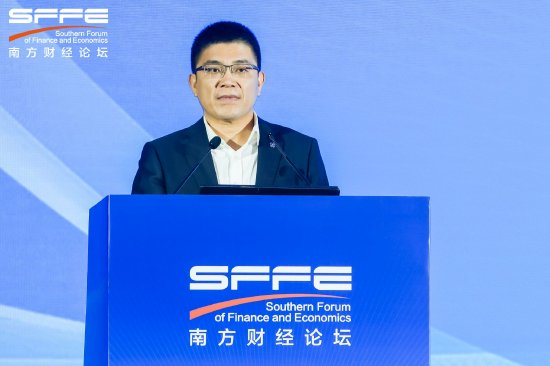
中金所蔡向辉:推动中长期资金入市,有利于推动市场生态向价值投资、长期投资转型
Xin Lang Cai Jing· 2025-12-05 05:05
他提到,当前我国资本市场估值重构,资金流入和市场向好,相互促进的良好局面已经形成,这是各方 努力的宝贵成果,也是深刻反映着全球资本对中国经济的信心和期待。吸引更多中长期资金入市需要适 宜的环境和土壤,其中也离不开金融期货等风险管理工具。"十五五"规划建议提出稳步发展期货和衍生 品,证监会也强调将丰富适配长期投资的产品和风险管理工具,这为推动金融期货市场更好服务长期资 金入市和高质量发展也指明了方向。 专题:南方财经论坛2025年会 由南方财经全媒体集团主办、21世纪数字传媒主要承办的"南方财经论坛2025年会"于12月5-6日在广州 南方财经大厦举办,主题为"共识的力量——创新涌动,中国资产重估"。中国金融期货交易所党委委 员、副总经理蔡向辉出席并演讲。 谈及金融期货服务中长期资金入市,蔡向辉表示,中长期资金入市意义重大,金融期货责无旁贷。大力 推动中长期资金入市,有利于增强资本市场专业力量,推动市场生态向价值投资、长期投资转型。有利 于将社会资金转化为耐心资本,长钱长投,适配科技创新新需要,为实体经济高质量发展和国家重大战 略实施提供稳定支持。当然也有利于中长期资金充分把握长期机会,有效应对低利率时代挑战, ...

EchoStar Stock: Fair For Its Operations, SpaceX For Free (NASDAQ:SATS)
Seeking Alpha· 2025-12-05 05:00
Core Insights - The article discusses the author's transition from a potential career in politics to a focus on value investing, emphasizing the importance of risk management and long-term wealth growth [1] Group 1: Career Transition - The author initially pursued a career in politics but shifted to finance after facing challenges in 2019, recognizing the need for financial stability [1] - The decision to study value investing was driven by the desire to make money work effectively and to safeguard against future setbacks [1] Group 2: Professional Experience - From 2020 to 2022, the author worked in a sales role at a law firm, where they became the top-grossing salesman and managed a team, contributing to sales strategy [1] - The experience gained during this period was instrumental in assessing company prospects based on their sales strategies [1] Group 3: Investment Advisory Role - The author served as an investment advisory representative with Fidelity from 2022 to 2023, focusing on 401K planning [1] - Despite excelling in this role and passing Series exams ahead of schedule, the author felt constrained by Fidelity's reliance on modern portfolio theory, leading to a decision to leave after one year [1] Group 4: Current Endeavors - In November 2023, the author began writing for Seeking Alpha, sharing investment opportunities and insights with readers [1] - The articles serve as a platform for the author to communicate the investment journey and opportunities being pursued [1]


兴全固收增强团队:用主动管理迎接绝对收益时代
点拾投资· 2025-12-05 03:31
Core Viewpoint - The article discusses the significant growth of "fixed income +" products in the current equity bull market, highlighting that the total market size of these funds reached a new high of 2.5 trillion yuan by the end of Q3 2025, with a quarterly increase of over 500 billion yuan [1]. Group 1: Growth of "Fixed Income +" Products - The understanding of "fixed income +" has evolved, with a general definition indicating that assets with less than 30% equity can be classified as such [1]. - The development of "fixed income +" funds has been ongoing for over 20 years, with the first public secondary bond fund launched in September 2002 [1]. - The total size of "fixed income +" funds was only 220.66 billion yuan at the end of 2014, but it has seen significant growth since then, largely driven by the decline in risk-free returns [1]. Group 2: Investment Strategies and Team Analysis - Various teams have adopted different investment strategies for "fixed income +" products, including multi-dimensional analysis frameworks and risk budgeting approaches [2]. - The Xingquan Fixed Income Enhancement Team is notable for its early exploration of fixed income enhancement investments, having launched the first public convertible bond fund in May 2004 [2]. - The team employs a value investment philosophy, focusing on the asymmetry of risk and return across different asset types [3]. Group 3: Performance Metrics and Risk Management - The article emphasizes the importance of performance metrics such as the Calmar ratio, which measures annualized returns against maximum drawdown, to evaluate "fixed income +" products [11][14]. - The Xingquan Fixed Income Enhancement Team has demonstrated strong performance, with several funds ranking in the top 20% of their categories based on returns and risk-adjusted metrics [11][15]. - The team has a structured risk management approach, including a risk warning mechanism that triggers discussions on adjustments when significant drawdowns occur [23]. Group 4: Market Trends and Future Outlook - The demand for "fixed income +" products has diversified, particularly among bank wealth management clients who are more sensitive to absolute returns and drawdowns [21]. - The article notes that as pure bonds enter a declining yield environment, more investors seeking absolute returns are likely to enter the "fixed income +" space [26]. - Xingquan aims to innovate within the "fixed income +" category by offering a variety of products, including index-enhanced and quantitative style-enhanced options, to meet diverse investor needs [26].

止于至善投资何理:构建“理性共识” 追求“合理价格”
Zhong Guo Zheng Quan Bao· 2025-12-05 00:27
Group 1 - The core idea presented is the integration of subjective insights, quantitative tools, and artificial intelligence to create a scientific investment system that seeks "rational consensus" [1] - The definition of "reasonable price" is based on discounted future free cash flows and identifying a "consensus value range" through in-depth research, with investments made when market prices show significant discounts [2] - The company aims to construct a "anti-fragile" investment portfolio using options and other tools to benefit from market volatility rather than suffer from it [2] Group 2 - The AI system, referred to as "AI Cybertron," is deeply integrated into the company's operations, enhancing efficiency and enabling rapid iteration of research and decision-making processes [3] - The investment in a specific AI hardware company exemplifies the successful application of the investment philosophy, with initial investments made during a downturn and increased as understanding of the company's long-term value grew [4] - The investment portfolio is globally diversified, covering A-shares, Hong Kong stocks, and U.S. stocks, with a focus on sectors like AI and innovative pharmaceuticals [5][6] Group 3 - In the AI sector, the company sees no overall bubble but warns of overheating at the individual stock level, particularly emphasizing the importance of storage in the computing segment [5] - The company believes that leading domestic pharmaceutical firms have advantages in developing best-in-class (BIC) drugs, while smaller overseas firms may be more flexible in first-in-class (FIC) drug development [6] - The new core assets identified for 2026 include AI technology innovation companies, new consumer companies providing "emotional value," and resource and energy companies with scarcity in the changing global supply landscape [6]
吴清:共同营造规范、包容、有活力的资本市场生态
Feng Huang Wang· 2025-12-04 23:02
Core Viewpoint - The article emphasizes the need to create a standardized, inclusive, and vibrant capital market ecosystem, highlighting the importance of legal construction and regulatory reforms in the capital market [1] Regulatory Reforms - The article calls for the revision of key laws including the Securities Law and the Securities Investment Fund Law, as well as the formulation and revision of administrative regulations such as the Listing Company Supervision Management Regulations and Securities Company Supervision Management Regulations [1] Investor Protection - There is a push to enhance investor protection mechanisms, including the establishment of representative litigation for investors and strengthening investor education and advocacy for rational, value, and long-term investment [1] Talent and Research Development - The article stresses the importance of building high-end think tanks and talent teams in the capital market, focusing on strategic, foundational, and forward-looking research [1] Public Sentiment and Innovation - It advocates for improving expectation management mechanisms and fostering a societal atmosphere that encourages innovation and accepts failure [1]
构建“理性共识” 追求“合理价格”
Zhong Guo Zheng Quan Bao· 2025-12-04 20:22
Core Insights - The founder and general manager of Zhiyu Zhishan Investment, He Li, emphasizes the integration of subjective insights, quantitative tools, and AI technology to create a scientific investment system that evolves continuously and seeks "rational consensus" [1][2] Group 1: Investment Philosophy - Value investment is defined as a combination of good assets and good prices, with a focus on buying when market prices significantly discount the consensus value range determined by future free cash flow [1] - The company aims to construct a "anti-fragile" investment portfolio using options and other tools to benefit from market volatility rather than suffer from it [1] - Examples include increasing stock positions and buying call options before the "9.24 market" in 2024, and purchasing put options on the Nasdaq index in April 2025 as insurance against high valuations in the tech sector [1] Group 2: AI Integration - The company has developed an AI system called "AI Cybertron," which integrates research, trading, risk control, and backtesting, making AI an essential part of every operational aspect [2] - AI enhances efficiency and fosters the development of better solutions through continuous discussions and iterations with the team [2] - A systematic approach to covering cutting-edge fields and maintaining a stable network of industry experts ensures that every viewpoint and transaction is traceable and analyzable [2] Group 3: Investment Examples - A successful investment in a US AI hardware company exemplifies the integration of investment philosophy and system, with initial investments made in 2022 based on its quality during a cyclical downturn [3] - As understanding of AI deepened, the company increased its valuation assessment and adjusted positions based on "quality-price ratio" [3] Group 4: Asset Outlook - The company is optimistic about the AI sector, believing there is no overall bubble, but warns of potential overheating at the individual stock level [4] - Focus areas include the computing power segment, particularly storage, which is expected to yield excess profits due to ongoing demand [4] - In the innovative drug sector, the company notes a trend where overseas firms lead in first-in-class (FIC) drugs while Chinese firms excel in best-in-class (BIC) drugs, with a caution on high stock price increases reflecting optimistic expectations [4] Group 5: Future Core Assets - The company identifies three categories of "new core assets" for 2026: AI technology innovation companies driving industrial upgrades, new consumer companies providing "emotional value" and high quality-price ratios, and resource and energy companies with scarcity in the changing global supply landscape [4]
DXP Enterprises, Inc. (DXPE): A Bull Case Theory
Yahoo Finance· 2025-12-04 19:01
Core Thesis - DXP Enterprises, Inc. presents a compelling bullish case due to its strong execution across diversified segments, record backlogs, and disciplined capital allocation [2][5] Financial Performance - As of December 2nd, DXP's share was trading at $96.50, with a trailing P/E of 17.64 [1] - Consensus estimates project Q3 revenue of $499 million and EPS of $1.57, with a stronger base case of $502–$512 million in revenue and $1.55–$1.65 in EPS [2] - In Q2, DXP reported an EPS of $1.43, beating estimates, with revenue of $498.7 million [3] Segment Performance - Innovative Pumping Solutions (IPS) grew 27.5% year-over-year with 19.9% margins, while Service Centers rose 10.8% at 14.8% margins [3] - The Water segment has shown resilience, marking its 11th consecutive quarterly increase [4] Strategic Initiatives - Management expresses confidence in sustained project flow, particularly from IPS bookings, which provide visibility for the next 9–12 months [4] - Recent acquisitions, including McBride and Moores Pump, are expected to enhance scale and quality [4] Market Conditions - The macroeconomic backdrop is favorable for DXP's hybrid MRO-plus-project model, with manufacturing below 50 and services above 50 [5] - Key watchpoints include backlog trends, SCS profitability improvements, and ongoing M&A activity [5]

“耐心资本”作答时代课题 险资详解长期投资实践
Zheng Quan Shi Bao· 2025-12-04 17:49
证券时报记者 刘敬元 邓雄鹰 "十五五"即将开篇,在培育壮大新兴产业与未来产业的进程中,37万亿元险资如何更好发挥"耐心资本"作用,仍是 亟待解答的时代课题。 近日,在"第十九届深圳国际金融博览会暨2025中国金融机构年会"分论坛"2025中国保险业资产负债管理年会"上, 四位保险资管高管以"壮大耐心资本,赋能新质生产力"为主题展开了圆桌讨论,分享不同业务条线的实践和思 考。 这四位高管包括新华资产总裁陈一江,太保资产副总经理、董事会秘书赵峰,中意资产总经理助理陈伍斌,中邮 资管首席风险管理执行官张超。 长期投资试点 是"上下结合"的成果 自去年鸿鹄基金入市以来,保险资金长期投资试点改革在资本市场上受到高度关注,今年试点规模进一步扩围到 2220亿元。 张超表示,中邮资管获得第三批试点资格,在投资思路上,基金将发挥"耐心资本"的核心优势,坚持长期投资、 价值投资、责任投资的理念,重点围绕服务国家战略、科技等领域,展开深入研究和投资。 做好支持科技的"耐心资本" 科技创新的金融支持是当前重要命题,保险资金凭借"耐心资本"属性,正积极投身"科技金融"实践,相关领域已积 累诸多经验认识。 陈一江表示,对于险资这类大 ...

ETFs to Keep Your Portfolio on Track in the Long Term
ZACKS· 2025-12-04 17:11
Market Performance - The S&P 500 ended November relatively flat, with year-to-date gains at 17%, reflecting significant volatility throughout the month [1] - U.S.-listed ETFs attracted approximately $148 billion in inflows in November, bringing year-to-date inflows to $1.27 trillion, setting a new annual record [3] Market Outlook - The market outlook for the next year appears optimistic, driven by favorable economic conditions, rising expectations of a December Fed rate cut, and strong AI-driven earnings growth [2] - Several top banks forecast the S&P 500 to reach between 7,500 and 8,000 by the end of next year, suggesting long-term investors should remain invested [3] Investment Strategies - A passive, long-term investment approach is recommended to build a resilient portfolio, cushioning against short-term market pullbacks while positioning for sustainable growth [4] - Dollar-cost averaging (DCA) is highlighted as a strategy that encourages consistent investing over time, helping to lower average costs and minimize market volatility impact [9][10] ETF Recommendations - S&P 500 ETFs such as Vanguard S&P 500 ETF (VOO), SPDR S&P 500 ETF Trust (SPY), and iShares Core S&P 500 ETF (IVV) are suggested for long-term investment due to their stability and diversification benefits [13] - Value ETFs like Vanguard Value ETF (VTV) and iShares Russell 1000 Value ETF (IWD) are recommended for investors seeking undervalued stocks with strong fundamentals [15][16] - Growth ETFs such as Vanguard Growth ETF (VUG) and iShares Russell 1000 Growth ETF (IWF) are also suggested for those looking to capitalize on high growth potential during market uptrends [17]

[12月4日]指数估值数据(价值投资策略在A股有效吗;红利指数估值表更新;免费领「财富达人」奖章)
银行螺丝钉· 2025-12-04 14:05
Core Viewpoint - The article discusses the performance of various investment strategies in the A-share market, particularly focusing on value and dividend strategies, and their effectiveness compared to growth strategies over different time periods [7][15][22]. Group 1: Market Performance - The overall market showed slight fluctuations, with the CSI All Share Index slightly up, closing at 4.3 stars [1]. - Large and mid-cap stocks experienced minor gains, while small-cap stocks declined [2]. - Value style saw a slight decrease, whereas growth styles, including the ChiNext and STAR Market, experienced gains [3][4]. Group 2: Investment Strategies - The article references Siegel's book, "The Future for Investors," which indicates that high dividend and low P/E strategies can outperform the market index [7]. - In the A-share market, value strategies have shown more effectiveness in recent years compared to the U.S. market, with the CSI 300 Value Index and CSI Dividend Index being notable examples [15][22]. - The CSI 300 Value Index has increased from 1,000 points to 9,147 points (approximately 915% increase) from the end of 2004 to the end of 2024, while the CSI 300 Index rose from 1,000 points to 5,643 points [17][19]. Group 3: Fund Performance and Size - Despite the effectiveness of value strategies, the total scale of corresponding funds in the A-share market remains relatively small, with the CSI 300 Value Index fund only amounting to several billion, compared to over 1 trillion for the CSI 300 [24][25]. - The article notes that value strategies are not always effective, as seen during the growth style dominance from 2019 to 2021, which led to significant fund redemptions [26][27]. Group 4: Investor Behavior and Patience - A long-term effective strategy may not always yield results, as market styles rotate over time, with value styles being strong from 2016-2018, growth styles from 2019-2021, and value styles regaining strength from 2022 onwards [28]. - Many investors lack the patience to wait for a strategy to recover after a downturn, often selling during low periods instead of holding for potential future gains [29].