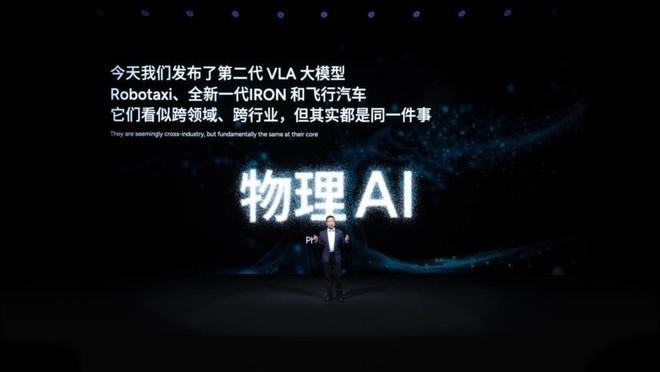
物理AI

Search documents
港股小鹏汽车涨幅扩大至15%
Xin Lang Cai Jing· 2025-11-11 02:43
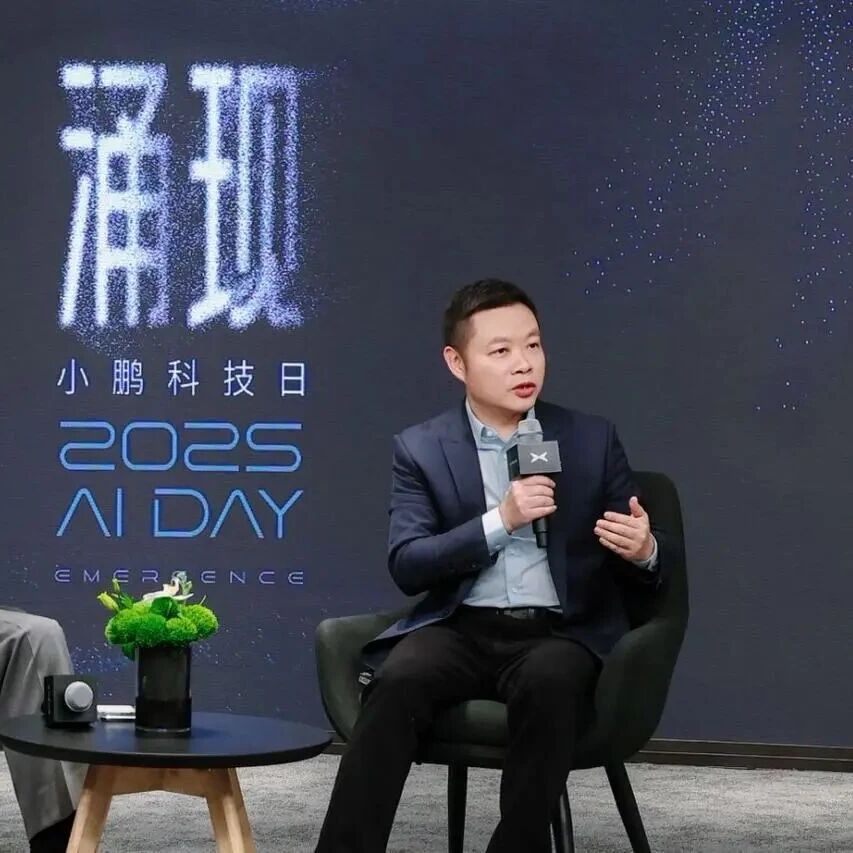
Core Insights - Xpeng Motors' stock price increased by 15%, currently trading at 105.9 HKD [1] - The company announced four significant applications at the 2025 Xpeng Technology Day, focusing on "Physical AI" [1] Group 1: Product Developments - The second-generation VLA large model was introduced [1] - Xpeng Robotaxi was unveiled, indicating advancements in autonomous driving technology [1] - A new generation of the IRON humanoid robot was presented, showcasing the company's commitment to robotics [1] - The debut of a female robot with highly realistic walking capabilities garnered significant attention [1] - The introduction of the Huitian flying car highlights Xpeng's expansion into aerial mobility [1]
港股汽车股延续涨势,小鹏汽车高开高走涨超14%,港股通汽车ETF(159323)大涨超2.5%
Mei Ri Jing Ji Xin Wen· 2025-11-11 02:12
Group 1 - The Hong Kong stock market saw all three major indices rise, with the Hang Seng Tech Index increasing by over 0.5%, driven by stocks like Alibaba, JD Group, and Meituan [1] - Xpeng Motors experienced significant gains, with its stock rising over 14% during the trading session, contributing to the performance of the Hong Kong Stock Connect Auto ETF, which surged over 2.5% [1] Group 2 - Xpeng Motors recently unveiled four key applications at its 2025 Xpeng Technology Day, including the second-generation VLA model, Xpeng Robotaxi, a new generation of IRON humanoid robots, and the Huitian flying car [2] - The second-generation VLA model is the first mass-produced large model focused on the physical world, achieving end-to-end generation from visual signals to action commands, and is expected to enhance the capabilities of cars, robots, and flying vehicles [2] - Xpeng's self-developed Turing AI chip and computing cluster have enabled the deployment of models with billions of parameters, leading to industry-leading intelligent driving capabilities [2] Group 3 - Multiple brokerage firms are optimistic about Xpeng Motors' future, with Guosen Securities highlighting the company's product matrix as a new paradigm for future mobility driven by physical AI [3] - CITIC Securities believes that from now until 2026, Xpeng will transition from being labeled a "new force in the automotive industry" to a "technology company exploring the frontiers of physical AI" as it brings its VLA and robots to mass production [3] - The continuous exploration of unknown technological fields is seen as Xpeng's core competitive advantage [3]
小鹏汽车-W早盘涨逾12% 近期发布物理AI多项成果获多家大行唱好
Xin Lang Cai Jing· 2025-11-11 01:49
Core Viewpoint - XPeng Motors (09868) has seen a significant stock price increase of 11.85%, reaching HKD 102.90, with a trading volume of HKD 2.171 billion, following the announcement of four key applications related to "Physical AI" during the 2025 XPeng Technology Day [1] Group 1: Key Developments - XPeng unveiled its second-generation VLA large model, Robotaxi, a new generation of IRON humanoid robots, and the Huitian flying car, with particular attention on the female robot and its advanced humanoid gait [1] - According to CITIC Securities, XPeng is expected to transition from being a "new force in the automotive industry" to a "technology company exploring the forefront of Physical AI" by 2026 as it begins mass production of its VLA and robots [1] Group 2: Market Sentiment and Institutional Support - Major institutions, including Morgan Stanley and Citigroup, have recently issued positive reports on XPeng Motors, with Citigroup noting that the company is in the early stages of quantifying the profitability of its new business, which could enhance market sentiment and elevate its valuation [1] - Deutsche Bank stated that XPeng is making significant strides towards becoming a global leader in embodied intelligence [1]
小鹏汽车-W高开逾9% 近期发布物理AI多项成果 获多家大行唱好
Zhi Tong Cai Jing· 2025-11-11 01:46
此外,包括摩根士丹利、花旗在内等多家头部机构近期发布报告唱好小鹏汽车。其中,花旗认为,小鹏 汽车虽然目前正处于量化小鹏新业务盈利能力上行的早期阶段,但相信这将为股票带来良好市场情绪, 并有助其估值从过去新能源车的估值水平,逐步提升至与AI、科技及Robotaxi连结的更高溢价水平。德 意志银行在报告中称"小鹏汽车迈向具身智能全球领导者地位一大步"。 小鹏汽车-W(09868)高开逾9%,截至发稿,涨9.57%,报100.8港元,成交额1.2亿港元。 消息面上,近日,小鹏汽车在2025小鹏科技日上,围绕"物理AI"发布四项重要应用,包括小鹏第二代 VLA大模型、小鹏Robotaxi、全新一代IRON人形机器人,以及汇天飞行汽车。其中,女性机器人的亮 相和极致拟人步态一经发布后引发高度关注。中信证券认为,从当前到2026年,随着小鹏VLA、机器 人等量产落地,公司会逐渐从"新势力汽车公司"的定位,转变为"探索物理AI前沿技术的科技公司";而 持续探索未知领域的技术能力,也正是小鹏的核心竞争优势。 ...
港股异动 | 小鹏汽车-W(09868)高开逾9% 近期发布物理AI多项成果 获多家大行唱好
智通财经网· 2025-11-11 01:31
Core Viewpoint - Xiaopeng Motors (09868) has seen a significant stock increase of over 9% following the announcement of four key applications related to "Physical AI" during the 2025 Xiaopeng Technology Day, indicating a shift in the company's positioning from a new energy vehicle manufacturer to a technology company focused on exploring cutting-edge AI technologies [1] Group 1: Key Developments - Xiaopeng Motors launched four important applications: the second-generation VLA large model, Xiaopeng Robotaxi, a new generation of IRON humanoid robots, and the Huitian flying car [1] - The humanoid robot, particularly the female version with its advanced human-like gait, has garnered significant attention [1] Group 2: Market Sentiment and Analyst Opinions - Citic Securities predicts that from now until 2026, as Xiaopeng's VLA and robots enter mass production, the company will transition to being recognized as a technology firm at the forefront of Physical AI [1] - Major institutions like Morgan Stanley and Citigroup have recently issued positive reports on Xiaopeng Motors, with Citigroup noting that the company is in the early stages of quantifying the profitability of its new business, which is expected to enhance market sentiment and elevate its valuation [1] - Deutsche Bank stated that Xiaopeng Motors is making significant strides towards becoming a global leader in embodied intelligence [1]
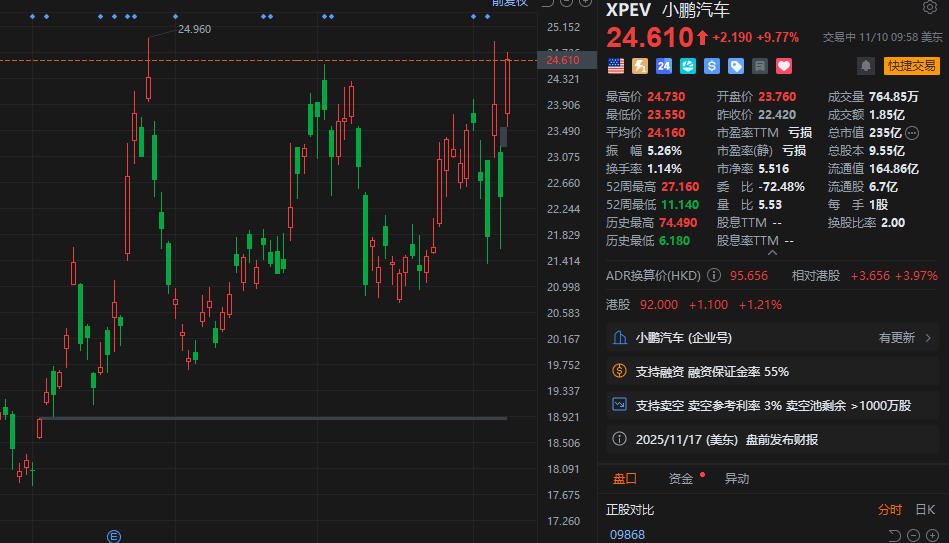
美股异动丨利好叠加,小鹏汽车大涨超10%
Ge Long Hui· 2025-11-10 15:08
Core Viewpoint - XPeng Motors (XPEV.US) shares surged over 10% during intraday trading following the announcement of four significant applications related to physical AI at the 2025 XPeng Technology Day [1] Sales and Revenue Forecast - Bank of America has raised XPeng Motors' sales forecasts for 2025 to 2027 by 0.2%, 0.2%, and 0.3% respectively, and revenue forecasts by the same percentages for the same years [1] - The bank has increased the target price for XPeng Motors' U.S. stock from $26 to $27, maintaining a "Buy" rating due to the anticipated strong model launch plans in the second half of 2025 and into 2026 [1]

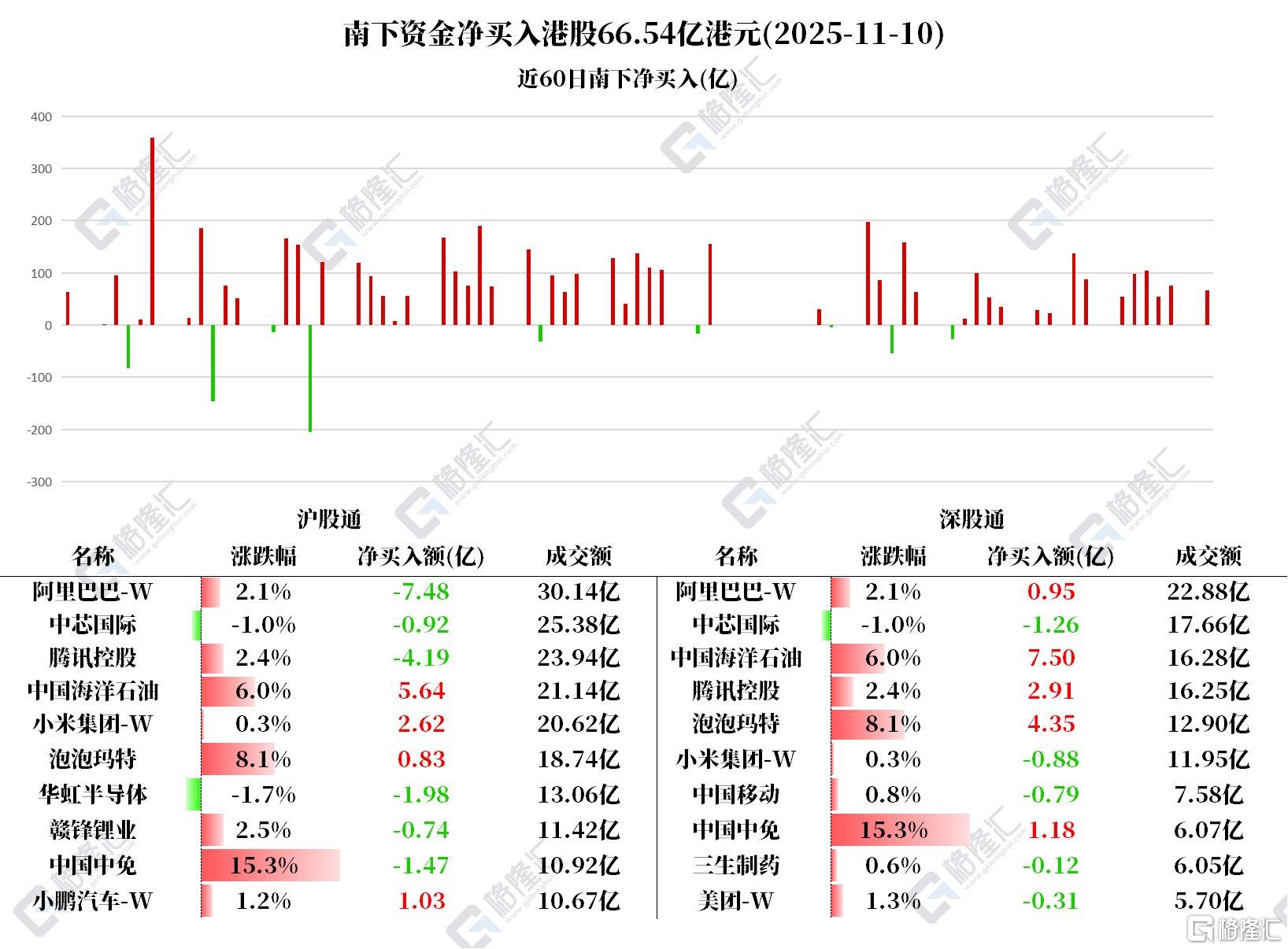
资金动向 | 北水加仓港股近67亿港元,买入中国海洋石油、泡泡玛特
Ge Long Hui· 2025-11-10 12:52
Group 1: Investment Trends - Net purchases included China National Offshore Oil Corporation (CNOOC) at 1.313 billion, Pop Mart at 518 million, Xiaomi Group at 173 million, and Xpeng Motors at 103 million, while net sales included Alibaba at 653 million, SMIC at 217 million, Hua Hong Semiconductor at 197 million, and Tencent Holdings at 127 million [1][3] - Southbound funds have continuously net purchased Xiaomi for 9 days, totaling 5.36835 billion HKD, and Xpeng Motors for 3 days, totaling 1.68038 billion HKD, while net selling Alibaba for 3 days, totaling 1.32284 billion HKD [3] Group 2: Oil Industry Insights - Starting from November 10, domestic retail prices for gasoline and diesel will increase by 125 and 120 yuan per ton, respectively, with an average increase of 0.10 yuan per liter for 92, 95 gasoline, and 0 diesel [5] - Predictions indicate a significant increase in inventory from 2025 to 2026 due to strong supply growth from non-OPEC countries and moderate demand expectations, alongside ongoing supply disruption risks and inconsistent compliance from OPEC+ [5] Group 3: Company Performance and Forecasts - Huachuang Securities maintains a "strong buy" rating for Pop Mart, raising profit forecasts for 2025-2027 to 12.32 billion, 16.93 billion, and 21.09 billion yuan, with a target price of 345.39 HKD, driven by new product launches and strong online growth [6] - Xpeng Motors announced four key applications related to physical AI, with Bank of America adjusting sales forecasts for 2025-2027 upwards by 0.2% each year, reflecting positive sales trends [6] - China Duty Free Group benefits from ongoing domestic demand policies, with CPI rising 0.2% month-on-month and year-on-year, indicating a shift from decline to growth, supported by fiscal measures to stimulate consumption [7]

当AI走出屏幕,小鹏亮出物理AI这张牌
Tai Mei Ti A P P· 2025-11-10 11:14
Core Insights - The article emphasizes the shift of AI from the virtual world to the physical world, marking the emergence of "Physical AI" as the next competitive frontier in technology [3][4][5] - Companies are adopting different strategies to capture the opportunities presented by Physical AI, with some opting for vertical integration while others focus on ecosystem empowerment [5][6][7] Group 1: Trends in AI Development - The consensus in the tech industry is that Physical AI is the next battleground, with leaders like Huang Renxun and Alibaba's CEO highlighting its significance [4][5] - Companies like Tesla and XPeng are pursuing vertical integration, creating a closed-loop system that encompasses chip design, sensors, software, and vehicle manufacturing [5][6] - Other players, such as NVIDIA and Huawei, are acting as ecosystem enablers, focusing on providing the necessary computational power and infrastructure for Physical AI [5][6] Group 2: XPeng's Strategy - XPeng aims to become a "Physical AI world explorer" by integrating multiple transportation scenarios, facing challenges in chip development, algorithm innovation, and commercialization [9][18] - The core of XPeng's technology is the second-generation VLA model, which allows for direct action based on visual signals, enhancing response speed and reducing information loss [9][10] - XPeng has invested heavily in computational power, achieving 2250 TOPS on its self-developed "Turing" AI chip, significantly surpassing industry standards [10][11] Group 3: Product Development and Market Positioning - XPeng plans to launch its Robotaxi in 2026, designed specifically for autonomous driving, which will reduce costs and improve reliability by not relying on expensive lidar and high-definition maps [11][15] - The company is also developing humanoid robots and flying cars, with the "Land Carrier" already receiving 7,000 orders, indicating a move towards scalable commercial applications [13][15] - These products are interconnected, forming a "capability ladder" that enhances XPeng's Physical AI capabilities through real-world applications [15][16] Group 4: Data Acquisition and Ecosystem Challenges - The success of Physical AI hinges on acquiring high-quality data, with XPeng emphasizing the importance of capturing valuable "long-tail and anomaly data" for model training [19][21] - The complexity of the physical world necessitates collaboration across the industry, leading to a paradox where companies must balance openness with maintaining core competencies [21][22] - XPeng's strategy involves a combination of core self-research and open collaboration, ensuring that it retains control over critical technologies while fostering partnerships [22][23]

对话何小鹏:在物理AI时代,数据是新的石油
雷峰网· 2025-11-10 10:05
Core Viewpoint - Xiaopeng Motors is evolving into an AI-centric company, focusing on four key areas: smart cars, robots, Robotaxi, and flying cars, with intelligent driving as the core of its business strategy [3][4]. Group 1: Business Focus and Strategy - Xiaopeng Motors has shifted its positioning to become a "global embodied intelligence enterprise," moving beyond being just a Chinese car manufacturer [8]. - The company aims to leverage its hardware capabilities across various sectors, including robots and flying cars, to create a data-driven ecosystem that enhances its software and hardware synergy [5][6]. - The introduction of Robotaxi services is based on a vision of future transportation that combines shared and private mobility [5][7]. Group 2: Technological Advancements - The second-generation VLA (Visual Language Model) represents a significant breakthrough in physical AI, enabling machines to understand and interact with the physical world more effectively [4][5]. - Xiaopeng's second-generation VLA has eliminated the reliance on high-precision maps, allowing for direct support of pre-production solutions, which helps in cost management [6][7]. - The company is committed to open-sourcing some of its core technologies, with Volkswagen being the first commercial partner to utilize the second-generation VLA [8]. Group 3: Market Potential and Competition - The global market for robots is projected to be $20 trillion, significantly larger than the $10 trillion automotive market, indicating a strong growth potential for Xiaopeng's robotics initiatives [15][16]. - Xiaopeng's valuation is currently lower than Tesla's, but the company is focused on technology and product development to enhance its market position [12][13]. - The company is actively pursuing international market opportunities, with plans for half of its products to be sold outside China within the next decade [27]. Group 4: Operational Insights - Xiaopeng's Robotaxi strategy is designed to ensure profitability by utilizing pre-manufactured vehicles and sharing development costs, which provides a competitive edge in the market [17]. - The company is exploring various operational partnerships, such as with Gaode, to enhance its Robotaxi service offerings [11]. - The production capacity at the Austrian factory is expected to scale from a few thousand units this year to tens of thousands next year, indicating a commitment to local production and operational capabilities [29].
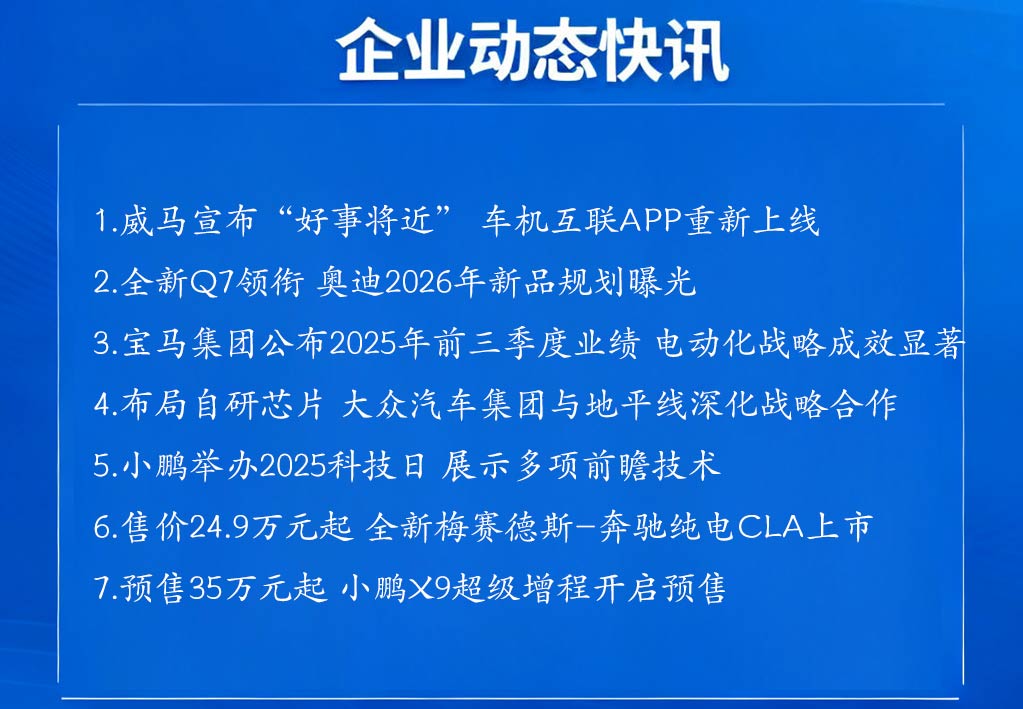
中国汽车市场一周行业信息快报——2025年11月第2期
Zhong Guo Zhi Liang Xin Wen Wang· 2025-11-10 09:48
Group 1 - WM Motor announced the relaunch of its "Xiao Wei Suixing" app, which is a dedicated smart application for car owners, now available on both iOS and Android platforms [5] - The app has restored its main functionalities and currently supports models such as WM EX5 and WM EX6, with plans for further model adaptations [5] Group 2 - Audi revealed its product plan for 2026, introducing three significant new models: the next-generation Audi Q7, the Audi Q9, and a new entry-level electric vehicle [6] - The new Q7 will feature comprehensive upgrades in design and technology, including advanced driving assistance systems and improved fuel efficiency [6] - The Q9 will be Audi's first full-size SUV, offering internal combustion engine options and potentially plug-in hybrid variants [6] Group 3 - BMW Group reported a revenue of €32.314 billion for Q3 2025, with automotive segment revenue at €28.510 billion, reflecting a year-on-year growth of 2.4% [6] - Global sales for BMW Group in Q3 reached 588,300 units, marking an 8.8% increase year-on-year, with total sales for the first three quarters at 1,795,894 units, also up by 2.4% [7] - Electric vehicle sales in Q3 totaled 151,282 units, a year-on-year increase of 8.0%, while pure electric vehicle sales slightly declined by 0.6% [6][7] Group 4 - Volkswagen Group deepened its strategic partnership with Horizon Robotics to develop system-level computing solutions in China, aimed at enhancing advanced driver assistance and autonomous driving systems [8][10] - This collaboration will leverage Volkswagen's global engineering experience and Horizon's local production capabilities to create a new generation of smart connected vehicles [10] Group 5 - XPeng Motors held its seventh Technology Day, showcasing four significant applications under the theme "Emergence" and announcing a major upgrade in the company's positioning [12] - The second-generation VLA model eliminates the traditional "language translation" step, enabling direct generation of action commands from visual signals [12] - XPeng plans to launch three Robotaxi models in 2026, equipped with advanced AI capabilities and high computing power [12] Group 6 - The all-new Mercedes-Benz electric CLA was officially launched with a price range of ¥249,000 to ¥299,900, featuring a closed grille design and advanced interior technology [13][15] - The vehicle is equipped with an 89 kWh battery, achieving a maximum CLTC range of 866 km and an energy conversion rate of up to 93% [15] Group 7 - XPeng X9 Super Range has opened for pre-sale, with a price range of ¥350,000 to ¥370,000, designed as a 7-seat large MPV with advanced range capabilities [17] - The vehicle features a combination of a 1.5T range extender and an electric motor, achieving long-range and low travel costs [17]