
红利资产

Search documents
机构:红利资产仍然是长期配置的底仓选择,国企红利ETF(159515)震荡调整
Sou Hu Cai Jing· 2025-05-27 05:35
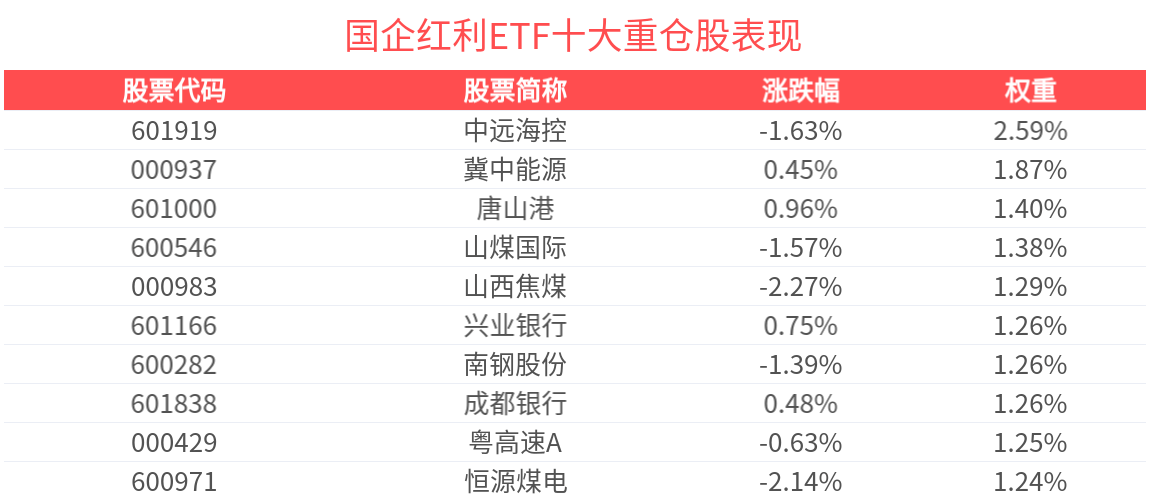
Group 1 - The core index, the CSI State-Owned Enterprises Dividend Index (000824), has decreased by 0.28% as of May 27, 2025 [1] - Among the constituent stocks, Caibai Co., Ltd. (605599) led the gains with an increase of 2.24%, while Haohua Energy (601101) experienced the largest decline at 2.85% [1] - The National Enterprise Dividend ETF (159515) also fell by 0.28%, with the latest price at 1.08 yuan [1] Group 2 - The CSI State-Owned Enterprises Dividend Index tracks 100 listed companies with high cash dividend yields, stable dividends, and certain scale and liquidity [2] - As of April 30, 2025, the top ten weighted stocks in the index accounted for 15.18% of the total index weight, including China COSCO Shipping Holdings (601919) and Jizhong Energy (000937) [2] Group 3 - In the current market environment, without new industry logic or significant market fluctuations, dividend assets may enter a headwind period in June [1] - For long-term investors, this headwind period could present a good entry point, as dividend assets remain a solid long-term allocation choice amid external uncertainties [1]

红利+低波动双因子加持!红利低波ETF长城(159228)正在发行
Xin Lang Ji Jin· 2025-05-27 03:11
Group 1 - The central bank's interest rate cut in May led to a decrease in deposit rates across multiple banks, with the one-year fixed deposit rate of the four major banks dropping below 1% to 0.95%, marking a historical low [1] - The shift towards a "moderately loose" monetary policy in China has resulted in a clear downward trend in interest rates, with the current 10-year government bond yield at approximately 1.70%, which enhances the attractiveness of dividend assets [1][2] - The launch of the Changcheng CSI Dividend Low Volatility 100 ETF on May 26 aims to provide investors with a convenient tool for investing in high-quality dividend assets, utilizing an index investment strategy that closely tracks the CSI Dividend Low Volatility 100 Index [2] Group 2 - The CSI Dividend Low Volatility 100 Index selects 100 high-quality companies from the A-share market based on liquidity, continuous dividends, high dividend yield, and low volatility, effectively combining dividend strategy with low volatility factors [2][3] - The index has demonstrated strong defensive characteristics in bear and volatile markets while also showing upward momentum in bull markets, with a cumulative increase of 2091.08% since its base date, and an annualized return of 17.82% [3] - The index undergoes quarterly adjustments, allowing for a stronger self-iteration capability to quickly respond to market changes and capture favorable dividend trends [3]
四大证券报精华摘要:5月27日
Xin Hua Cai Jing· 2025-05-27 00:07
Group 1: Corporate Governance and Market Dynamics - The Chinese government has issued opinions to enhance the modern enterprise system, focusing on improving corporate governance structures and supporting both state-owned and private enterprises [1] - The opinions emphasize the importance of independent directors and the introduction of institutional investors with over 5% shareholding to enhance corporate governance [1] - A total of over 500 listed companies in the A-share market are set to distribute more than 58.5 billion yuan in cash dividends, indicating a strong trend in shareholder returns [2] Group 2: Automotive Industry Trends - The automotive market is experiencing heightened competition, with a product competitiveness index of 85.5 for April 2025, driven by consumer stimulus policies and promotional activities [3] - Car manufacturers are actively implementing strategies to increase market share, including trade-in subsidies and promotional financing options [3] Group 3: Fund Management and Investment Trends - The issuance of equity funds is on the rise, with 16 new floating management fee funds set to launch, indicating a strong interest from investors [4] - The private equity industry has seen its management scale exceed 20 trillion yuan, attributed to a recovering issuance market and improved performance [5] Group 4: Commodity Prices and Industry Outlook - The tungsten industry is witnessing a price surge, with black tungsten concentrate prices reaching 165,500 yuan per ton, driven by supply-demand dynamics [6] - The paper pulp market is entering a phase of tentative recovery, with domestic pulp production capacity increasing as companies pursue integrated projects [13] Group 5: Currency and Market Impact - The renminbi has reached a six-month high against the US dollar, which is expected to benefit the Chinese stock market as capital flows shift towards non-US assets [7] - Goldman Sachs reports that a 1% appreciation of the renminbi could lead to a 3% increase in Chinese stock prices, highlighting the positive correlation between currency strength and market performance [7] Group 6: Corporate Leadership Changes - Longi Green Energy has announced significant management changes, with founder Li Zhenguo stepping back and his daughter being nominated for the board, indicating a strategic shift in leadership focus [9] - The company aims to leverage dual leadership in strategy and technology to navigate the challenges in the photovoltaic industry [9]


长城基金汪立:日历效应看,当前防守风格或更具性价比
Xin Lang Ji Jin· 2025-05-26 08:27
Group 1: Market Overview - The market experienced fluctuations and a decline in trading volume, with an average daily trading volume of approximately 11,733 billion [1] - Value stocks outperformed growth stocks, and large-cap stocks outperformed small-cap stocks; sectors such as pharmaceuticals, comprehensive, and non-ferrous metals performed well, while computer, machinery, and communication sectors lagged [1] Group 2: Domestic Economic Outlook - Domestic macroeconomic indicators showed a decline in growth rates for industrial output, fixed asset investment, and retail sales compared to March, but overall economic resilience remains [1] - High-frequency data indicates weak fundamental recovery, although there is some expectation for external demand to support exports [1] - Manufacturing operating rates mostly declined, with new home sales showing weakness; however, first-tier cities performed slightly better than last year [1] Group 3: International Economic Risks - There is an increase in international risks, including the expiration of a large amount of U.S. Treasury bonds and rising tariffs in Europe and the U.S., leading to a surge in gold prices and a decline in U.S. stocks [2] - The recent poor auction of 20-year Japanese bonds caused a spike in long-term Japanese bond yields, primarily due to weak demand from domestic investors [2] - The U.S. economic data continues to weaken, raising expectations for interest rate cuts and fiscal stimulus, which may influence global markets [2] Group 4: Market Adjustment Expectations - The market is expected to undergo significant adjustments, particularly in June, with limited support from fundamentals and policies [3] - Historical market patterns suggest that after a strong first quarter, the market may trend downwards in June and July, necessitating caution [3] - The market may begin to recover after mid-July, coinciding with political meetings and potential policy stimuli [3] Group 5: Investment Strategies - In the short term, the market is likely to have downward momentum, and investors should focus on three areas: undervalued stocks in the CSI 300, industries at the bottom of their reporting cycles, and dividend assets with potential for short-term rebounds [5]
高股息资产投资价值有望延续,300红利低波ETF(515300)最新资金净流入超3000万元
Sou Hu Cai Jing· 2025-05-26 05:33
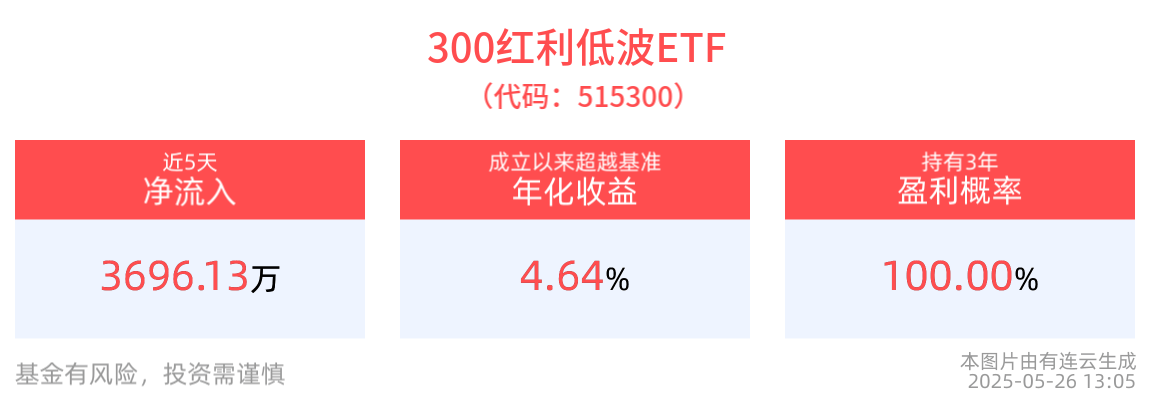
Group 1 - The CSI 300 Dividend Low Volatility Index decreased by 0.52% as of May 26, 2025, with mixed performance among constituent stocks [1] - Minsheng Bank led the gains with an increase of 0.72%, followed by Ninghu Expressway at 0.63% and China Unicom at 0.56%, while Shanghai Bank, Conch Cement, and Huayu Automotive experienced declines [1] - The CSI 300 Dividend Low Volatility ETF (515300) underwent a rebalancing adjustment [1] Group 2 - The CSI 300 Dividend Low Volatility ETF recorded a trading volume of 54.8688 million yuan during the session, with an average daily trading volume of 110 million yuan over the past week [3] - The latest scale of the CSI 300 Dividend Low Volatility ETF reached 5.643 billion yuan, with a net inflow of 30.3007 million yuan recently [3] - Over the past five trading days, there were three days of net inflows totaling 36.9613 million yuan [3] Group 3 - As of April 30, 2025, the top ten weighted stocks in the CSI 300 Dividend Low Volatility Index accounted for 37.43% of the index, including China Shenhua, Gree Electric, and Daqin Railway [3] - Dongfang Wealth Strategy suggests that the relative return probability of dividends remains high, with a potential marginal increase in stable dividend style profitability from Q2 to Q3 [3] - The micro liquidity environment is expected to limit the valuation elasticity of high sensitivity styles, supporting the relative return probability of stable dividend styles in the near future [3] Group 4 - According to estimates from Founder Securities, long-term holding of dividend assets shows a higher success rate compared to broad indices like the CSI 300, aligning with the long-term performance assessment direction of the "Action Plan for Promoting the High-Quality Development of Public Funds" [4] - Institutions indicate that dividend assets are a valuable investment direction for long-term investors, especially in the context of ongoing policy encouragement for long-term capital market entry [4] - Investors without stock accounts can access investment opportunities through the corresponding CSI 300 Dividend Low Volatility ETF linked fund (007606) [4]
大揭秘!投资获胜的三大关键
天天基金网· 2025-05-26 03:25
Group 1 - The core viewpoint is that the pricing power of core assets is gradually shifting southward, driven by the increasing attractiveness of the Hong Kong stock market due to improved asset supply structure, quality, and liquidity [1] - The recent surge in A-share companies going public in Hong Kong is attributed to a combination of outbound strategies, institutional conveniences, and improved liquidity in the Hong Kong market [1] - The historical context indicates that each round of institutional reform in the Hong Kong Stock Exchange has led to bull markets that align with the characteristics of the times [1] Group 2 - The A-share market is expected to remain in a high central tendency oscillation phase in the second quarter, with short-term adjustments anticipated [2] - The upper limit of the oscillation is supported by export resilience, while the lower limit is linked to the relationship between loose monetary policy and capital market stability [2] - Short-term focus remains on sectors like pharmaceuticals (CXO and innovative drugs) and precious metals, while technology is still undergoing a mid-term adjustment phase [2] Group 3 - The market sentiment has shown signs of retreat, with increased trading activity in micro-cap stocks, indicating potential market risks due to crowded trading [3] - The central bank's financial policies aim to support the real economy and may bring fresh capital into the market [3] - The focus is on "new quality domestic demand growth," emphasizing sectors like social services, retail, and pharmaceuticals [3] Group 4 - The recent volatility in overseas financial markets, including rising long-term bond yields, has increased market risk aversion, necessitating a more cautious approach [4] - The micro-cap style has recorded significant relative gains, driven by a market environment characterized by rapid rotation and stock selection for excess returns [4] - The trading volume of the CSI 2000 index has reached a high of 32%, indicating a crowded market that may lead to increased volatility [4] Group 5 - The market is expected to refocus on technology growth, particularly in the AI industry, with attention on upstream and downstream applications [5][6] - Historical patterns suggest that industry rotation typically slows down from mid to late May, indicating a potential consolidation phase for market leadership [5] Group 6 - A-share indices are likely to undergo revaluation as quality indices strengthen, driven by stable cash flows and declining capital expenditures [7] - The trend of a weak dollar and strong renminbi is expected to benefit core assets represented by quality growth indices [7] Group 7 - The recent rise in global risk aversion, primarily due to fluctuating U.S. tariff policies and rising long-term bond yields, may indirectly affect A-share sentiment [8] - The regulatory environment is supportive of the stock market, with expectations of continued inflows from long-term funds [8] Group 8 - The market is currently experiencing a lack of sustained upward momentum, with frequent style switches between large and small caps [9] - Structural opportunities are present, particularly in high-margin assets and sectors benefiting from policy support for consumption [9] Group 9 - The short-term outlook for A-shares is characterized by a consolidation phase, with resilience expected as long as there is no global liquidity crisis [10] - The market's upward potential is contingent on the strength of economic recovery, with "quasi-stabilizing funds" helping to mitigate downside risks [10] Group 10 - The historical performance of dividend assets shows a tendency to underperform in June, suggesting a potential "headwind" period for these assets [12] - Despite this, dividend assets remain a long-term strategic choice for investors amid geopolitical uncertainties and ongoing trade tensions [12]





通过量化策略深耕红利资产
Zhong Guo Zheng Quan Bao· 2025-05-25 21:09
□本报记者 王辉 2024年以来,A股市场的红利资产持续吸引资金关注,红利量化指增策略也成了国内公募、私募行业的 发展重点。日前,星阔投资创始人、投资总监邓剑在接受中国证券报记者专访时表示,量化与红利资产 的结合,是当前市场环境下实现长期复利的优化路径之一。作为国内较早布局红利资产的量化私募机 构,星阔投资将凭借独特的投研体系与深耕红利指增策略的专注力,努力为投资者提供资产稳健增长的 解决方案。 创新团队结构 实现协同效应 星阔投资成立于2020年9月,创始人邓剑是北京大学数学系本硕博连读的"学术派"代表,深耕量化投资 领域十年,也是国内最早一批开创性使用人工智能(AI)进行策略开发的研究者之一。公司成立之初 即聚焦股票量化阿尔法策略,2021年末的管理规模突破100亿元,近年来始终位列国内量化行业的中坚 梯队。 邓剑将星阔投资在投研上的核心竞争力归结为"创新的投研体系"——即通过流程化、协作化的创新团队 结构和机制,将策略研发效率提升至行业领先水平,实现更好的协同效应。星阔投资实行的是PM(投 资经理)制和流水线相结合的模式,PM制独特的晋升模式会更好激发内外部研究员和PM的积极性,而 流水线模式有利于每个 ...
A股分析师前瞻:两个关注点,小微盘的拥挤度与6月的日历效应
Xuan Gu Bao· 2025-05-25 13:44
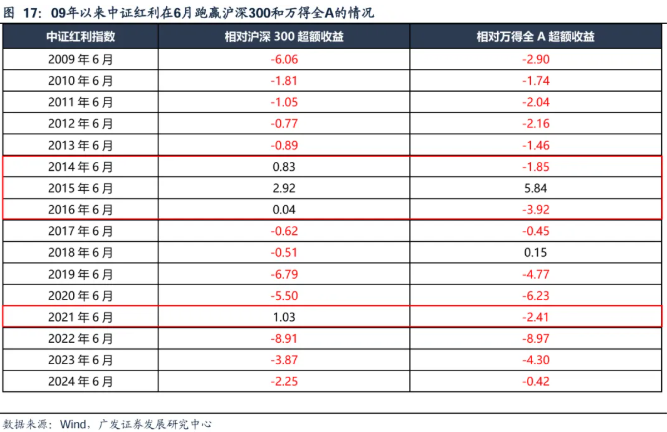
Group 1 - The focus of brokerage strategies this week is on the crowdedness of small-cap stocks and the calendar effect in June [1][6] - Historical data shows that the performance of major dividend assets in June is significantly weaker, with the probability of outperforming the CSI 300 and Wind All A being only 25% and 12.5% respectively, and the probability of an increase at only 37.5%, which is a noticeable decline compared to May [1][2] - The negative calendar effect in June for dividend assets may be related to the concentrated dividend payouts during this period, leading some funds to cash out before and after the dividend dates [1][3] Group 2 - The technology growth sector is expected to become the market's main focus in June, as it has reached a more favorable valuation range after adjustments [3][9] - The crowdedness in various technology sub-sectors has decreased to a relatively low level, with TMT's rolling 40-day return difference recently rebounding from a -10% historical low, although it remains at a historically low level [3][9] - The trading volume of TMT has dropped to around 22%-23%, which is lower than the levels seen during most adjustments in 2023 and 2024 [3][9] Group 3 - The small-cap index has seen increased volatility since reaching a high crowdedness state with a trading volume share of 30% in 2023, indicating potential risks from market sentiment shifts and policy statements [6][9] - Recent data shows that the enthusiasm for small-cap stocks has decreased, with a notable decline in the speed of capital inflow and a drop in new A-share account openings compared to the previous year [6][7] - The market is expected to continue a range-bound consolidation pattern, with small-cap styles potentially facing a phase of adjustment [9][10]
国信证券:政策支持、税制优化与外部环境共振 推动红利资产成为港股市场中长期配置优选方向
智通财经网· 2025-05-24 09:16
Group 1 - The Hong Kong government has implemented several policies to support the stock market, including lowering stamp duty and optimizing trading mechanisms to enhance market liquidity and attractiveness [1] - Dividend assets are gaining attention due to high returns and low volatility, especially in the context of improving international liquidity and anticipated dividend tax reforms [1][2] - The Hong Kong dividend index is expected to attract medium to long-term capital due to its resilience and stability amid global geopolitical conflicts and trade tensions [1] Group 2 - In a declining interest rate environment, there is a shift in asset allocation focus from growth to returns, leading to increased interest in dividend assets [2] - The Hong Kong Stock Connect Dividend Index has become an important tool for investors seeking high cash flow and low volatility investments, particularly as the overall valuation of the Hong Kong stock market is at historical lows [2] - The issuance of mainland dividend strategy ETFs is rising, which raises expectations for the index's structure, performance, and investability [2] Group 3 - The CSI Hong Kong Stock Connect High Dividend Index has shown outstanding performance in terms of long-term cumulative returns, annualized returns, and risk-adjusted return metrics, indicating strong downside protection and long-term return potential [3] - The index has a balanced structure, focusing on stable sectors such as finance, utilities, communication, and industry, while maintaining a low proportion of real estate, thus achieving high risk diversification [3] - The tracking fund's scale has surpassed 3 billion, with increasing average daily trading volume, reflecting its acceptance and liquidity advantages in actual investments [3] Group 4 - The Hang Seng Index's high dividend indices, while historically significant, are overly concentrated in banking, energy, and real estate sectors, leading to weaker drawdown control and long-term returns [4] - Central state-owned enterprise dividend indices, although supported by policy, are primarily focused on finance and industry, lacking growth elasticity in market capitalization and sectors, making them less attractive for long-term capital [4]

提前结募 份额大增 红利主题基金备受青睐
Shang Hai Zheng Quan Bao· 2025-05-23 19:32
Group 1 - The popularity of dividend-themed funds is increasing, with several funds announcing early closure of fundraising and many ETFs reaching historical highs in share volume [1][2] - Fund managers are modifying dividend distribution rules to enhance attractiveness to investors, increasing the frequency of dividend payouts [3][4] - The total scale of dividend funds has significantly increased, surpassing 250 billion yuan, with a notable rise in ETF shares [3][5] Group 2 - Recent data indicates that dividend assets are likely to attract institutional allocation, aligning with regulatory encouragement for long-term investments [5][6] - Research shows that dividend assets have a higher success rate compared to broad market indices when held for longer periods, with over 70% success rate for holding periods exceeding one year [6]