
产业升级

Search documents
甘肃民勤沙地韭黄品牌化“赢销”铺就增收路
Zhong Guo Xin Wen Wang· 2026-01-13 07:03
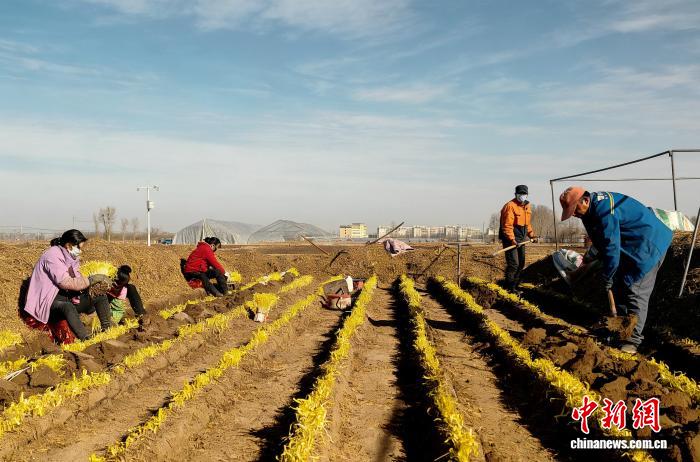
Core Insights - The article highlights the successful branding and marketing of Minqin County's garlic chives, which has become a significant source of income for local farmers through innovative agricultural practices and effective sales strategies [1][2]. Group 1: Agricultural Practices - The garlic chives in Caiji Town are cultivated using a "four seasons production, year-round supply" model, allowing for multiple harvests throughout the year [2]. - The unique "covering yellow" technique is employed to enhance the color and taste of the garlic chives by creating a dark environment during the growth phase [3]. - The introduction of non-polluting pest control and standardized production methods has improved the quality and yield of the garlic chives [5]. Group 2: Economic Impact - The establishment of a professional cooperative for garlic chives has integrated planting, maintenance, purchasing, and sales, creating a regional brand centered around "Guan Gou Garlic Chives" [5]. - The cooperative's innovative profit-sharing model has transformed small-scale farming into larger, more efficient operations, increasing farmers' incomes [5]. - Currently, the planting area for garlic chives in Guan Gou Village exceeds 300 acres, with an average yield of 2,000 kg per acre and earnings exceeding 50,000 yuan per acre [7]. Group 3: Sales and Marketing - The village has expanded its sales channels through e-commerce, establishing service stations and live streaming to connect directly with consumers [7]. - Improvements in cold chain logistics and packaging have ensured that the garlic chives reach the market in optimal condition, enhancing their marketability [7].

合肥举办“汽车+”产业科创路演 助力长三角汽车产业创新发展
Xin Lang Cai Jing· 2026-01-13 06:22
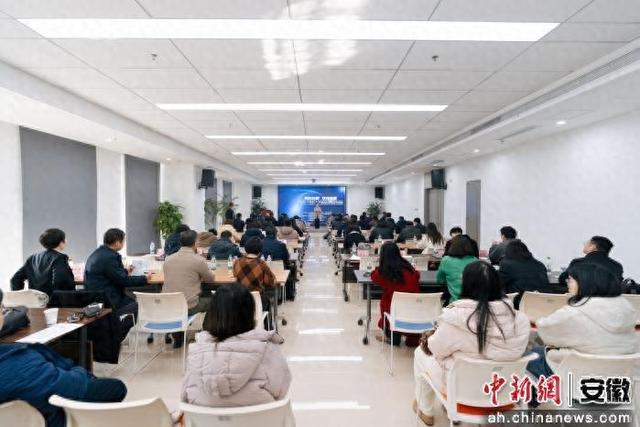
Group 1 - The "Automobile+" industry innovation roadshow was held in Hefei to connect industry and capital, promoting technological innovation and the transformation of achievements in the automotive sector [1][3] - The event was co-hosted by multiple organizations, including the Yangtze River Delta Automotive Innovation Academy and the Hefei Investment Promotion Bureau, with support from various local institutions [3] - A total of 14 innovative enterprises participated, with a combined financing demand exceeding 400 million yuan, covering key areas such as semiconductors, intelligent chassis, solid-state batteries, autonomous driving, and smart logistics [3][4] Group 2 - The founder of the Yangtze River Delta Automotive Innovation Academy emphasized the importance of the roadshow as a connection between entrepreneurial projects and the capital market, aiming to provide substantial support in funding, talent, resources, and development direction [3] - Hefei's automotive industry development is attributed to leading enterprises, collaborative support, and innovation-driven strategies, with a focus on smart connectivity and core components by 2026 [3] - The integration of technology and finance is seen as crucial for industrial upgrading, with the roadshow facilitating the construction of an open and collaborative industrial financial ecosystem [3][4] Group 3 - Over 30 investment institutions engaged in discussions with roadshow representatives regarding technological advantages, market prospects, and profit models, leading to preliminary cooperation intentions [4] - The Yangtze River Delta Automotive Innovation Academy plans to deepen its service model, providing comprehensive support for automotive innovation enterprises through various initiatives [4]
前程无忧:2025年离职率降至14.8%,已连续三年小幅走低
Xin Jing Bao· 2026-01-13 05:39
Group 1 - The overall employee turnover rate in 2025 is projected to decrease to 14.8%, a decline of 0.5 percentage points year-on-year, marking a total reduction of 1.8 percentage points over the past three years since 2023 [1] - The industries with the highest turnover rates in 2025 are hospitality/tourism (16.5%), manufacturing (15.7%), and real estate (15.4%) [1] - The hospitality/tourism sector remains the highest in turnover rates due to a large proportion of entry-level and young employees, high work intensity, and strong job replacement, leading to frequent personnel turnover [1] Group 2 - The manufacturing sector's turnover rate of 15.7% is closely linked to industrial upgrades, with pressures from "dual carbon" goals and digital transformation causing adjustments in frontline worker positions [1] - The real estate industry has seen a notable decrease in turnover from 15.9% to 15.4%, indicating ongoing personnel optimization and transformation amid deep industry adjustments [1] - The transportation/logistics sector experienced the most significant decline in turnover, dropping 1.4 percentage points from 15.4% in 2024, reflecting a more stable employment ecosystem due to the maturation of logistics systems and flexible employment models [2] Group 3 - Turnover rates across cities in 2025 have decreased compared to 2024, with a narrowing gap between first-tier cities (like Beijing, Shanghai, Shenzhen) and new first-tier cities (like Chengdu, Hangzhou) [2] - New first-tier cities have enhanced their talent absorption capabilities by cultivating specialized industrial clusters, such as Chengdu's electronic information industry and Hangzhou's digital economy [2] - The rise of high-speed rail networks and remote work has allowed talent mobility beyond first-tier cities, with new first-tier cities improving their salary competitiveness and attracting young talent due to lower living costs [2]
张占斌深度解读“全面建成高水平社会主义市场经济体制”
Jing Ji Guan Cha Bao· 2026-01-13 05:23
Core Viewpoint - The 20th National Congress of the Communist Party of China has set a strategic goal to fully establish a high-level socialist market economic system by 2035, emphasizing the urgency and significance of this objective [1] Group 1: Characteristics of the High-Level Socialist Market Economic System - The system should feature more effective and efficient resource allocation [1] - It should foster a fairer and more dynamic market environment [1] - Protection of market entities must be ensured, emphasizing equal participation of various ownership economies in market competition [1] - A unified national market must be constructed, requiring fair and unified foundational rules and market supervision [1] Group 2: Challenges in Achieving the Economic System - The complexity and difficulty of achieving this goal stem from unreasonable factors in current production relations, including external uncertainties and risks in key technology areas [3] - The process of optimizing industrial structure is challenging, with difficulties in risk identification and effective investment control [3] - A unified and open competitive market system has not yet been fully established, with persistent barriers and challenges in market access [4] - The relationship between an effective market and an active government needs precise handling, as excessive government intervention can disrupt market dynamics [5] - Continuous reform of state-owned enterprises is crucial, as many face inefficiencies and lack innovation, while private enterprises encounter significant barriers [6] - Income distribution issues complicate the expansion of domestic demand, necessitating reforms to ensure equitable income growth [7] Group 3: Importance of Institutional Opening - A high-level socialist market economic system requires a steady expansion of institutional opening, aligning with global modernization trends [8] - Historical achievements in China's reform and opening up highlight the importance of further advancing institutional opening [8] - The urgency of expanding institutional opening is underscored by the current critical period in China's modernization efforts [9] Group 4: Major Relationships to Manage - The relationship between technological innovation and industrial upgrading must be synergized to promote a modern industrial system [10] - The balance between government and market roles is essential for effective economic governance [11] - Efficiency and fairness must be coordinated to ensure both economic growth and equitable distribution [12] - The focus on economic development must align with high-quality growth objectives [12] - The interplay between domestic and international markets is crucial for sustainable modernization [12] - The relationship between the real economy and the virtual economy should be complementary [12] - Urban-rural and regional disparities must be addressed to achieve balanced development [13] - The relationship between state-owned and private enterprises should be collaborative, recognizing both as integral to the socialist economic framework [13]
“木业之都”踏上转型升级路
Jin Rong Shi Bao· 2026-01-13 04:41
Core Insights - The timber processing industry in Suifenhe, Heilongjiang Province, is experiencing significant growth and transformation, moving from raw material processing to deep manufacturing, supported by financial initiatives [1] - The local financial institutions are actively promoting credit services to support the timber industry, resulting in increased loan balances and credit availability for businesses [3] Group 1: Industry Development - Suifenhe has a nearly 30-year history of large-scale timber processing, recognized as "China's Wood Industry Capital," with a complete industrial chain from procurement to sales [1] - The timber industry loan balance in Suifenhe reached 3.3 billion yuan by the end of November 2025, with a year-on-year growth of 3.5%, accounting for 70% of the city's corporate loans [1] Group 2: Financial Support and Innovation - The People's Bank of China in Mudanjiang has facilitated connections between financial institutions and local businesses, leading to the introduction of specialized financial products like "Manufacturing e-loan" [2] - The financing credit service platform has achieved over 90% participation from timber market entities, with a total credit of 169 million yuan and 130 credit loans amounting to 102 million yuan [3] - New financial products such as "Wood Industry Quick Loan" and "Personal Industry Loan" have been launched to meet the diverse financing needs of timber enterprises, offering flexible and efficient loan processes [4]
【干货分享】中国中高压变频器行业市场运行态势及发展趋势预测报告(智研咨询)
Sou Hu Cai Jing· 2026-01-13 04:13
Core Insights - The core viewpoint of the article emphasizes the significant role of medium and high-voltage variable frequency drives (VFDs) in industrial production, driven by China's "dual carbon" strategy and policy support, leading to a rapid growth in the industry [2][11]. Group 1: Industry Overview - Medium and high-voltage VFDs are crucial for adjusting motor speed and operational status to meet various process requirements, commonly used in fans, water pumps, and compressors [2][6]. - The market size of China's medium and high-voltage VFD industry is projected to grow from 10.8 billion yuan in 2017 to 21.6 billion yuan in 2024, with a compound annual growth rate (CAGR) of 10.41% [2][11]. - The demand for medium and high-voltage VFDs is expected to remain stable due to ongoing industrial upgrades and increasing digitalization needs [2][11]. Group 2: Industry Chain - The upstream of the medium and high-voltage VFD industry includes raw materials and components such as transformers, IGBTs, capacitors, resistors, cabinets, PCB materials, and heat sinks [8]. - The midstream involves the manufacturing of medium and high-voltage VFDs, while the downstream encompasses application fields including power, petrochemicals, building materials, coal, and metallurgy [8]. Group 3: Key Components - Medium and high-voltage VFDs typically consist of several key components: input transformer, rectifier unit, DC intermediate circuit, inverter unit, and control unit [6][7]. - The input transformer converts high voltage from the grid to a suitable level for the rectifier unit, providing electrical isolation and reducing grid harmonics [7][9]. Group 4: Market Dynamics - The rapid growth in China's industrial power generation, from 6,275.82 billion kWh in 2017 to 9,418.1 billion kWh in 2024, reflects a CAGR of 5.97%, driving the demand for medium and high-voltage VFDs [11]. - The total electricity consumption in society is also on the rise, increasing from 6,307.7 billion kWh in 2017 to 9,852.1 billion kWh in 2024, with a CAGR of 6.58% [11]. Group 5: Related Companies - Relevant listed companies in the medium and high-voltage VFD sector include Invt (002334), Huichuan Technology (300124), Hekang New Energy (300048), and others [3].
新华视点丨从科技创新到产业升级 多领域协同推进高质量发展
Xin Hua Wang· 2026-01-13 03:50
Group 1: High-Quality Development Practices - Various regions are showcasing high-quality development practices across multiple sectors, including technology empowerment, green development, infrastructure, and industrial upgrades, reflecting the diverse vitality and solid progress of the new era [1] Group 2: Shanghai Science and Technology Museum - The Shanghai Science and Technology Museum has upgraded its giant screen cinema, premiering the world's first zodiac animal giant screen film "Horse Success" using advanced technologies such as 4K, 3D, and high frame rate [3] - The main cinemas, including giant and dome screens, have completed renovations and are now part of the commercial cinema circuit, with the underground cinema area and outdoor plaza set for regular opening [5] Group 3: Yukun High-Speed Railway - The Huashan Song Tunnel, a key project of the Yukun High-Speed Railway, has safely completed its construction, laying a solid foundation for the entire line's completion and operation [7] - Once operational, the Yukun High-Speed Railway will reduce travel time between Chongqing and Kunming to approximately two and a half hours, significantly contributing to the economic and social high-quality development of the regions along the route [9] Group 4: AI and Modernization in Yunnan - The "AI + Micro Major" model is being utilized in Yunnan's Chuxiong Yi Autonomous Prefecture to modernize the Yi embroidery industry, with students learning intelligent design and optimization of embroidery patterns through AI systems [11] - Chuxiong Normal University’s Yi Embroidery Modern Industry College focuses on four undergraduate majors to support the sustainable talent and academic development necessary for the modern transformation of Yi embroidery culture [13] Group 5: Renewable Energy Project in Beijing - Beijing has launched the country's first project for recovering waste heat from reclaimed water and integrating it with the urban centralized heating network, promoting collaborative innovation in the energy system [15] - This project is expected to provide 320,000 gigajoules of clean heat annually, meeting significant winter heating demands while achieving a carbon reduction of approximately 6,100 tons each year, thus alleviating heating shortages in the central urban area and reducing reliance on fossil fuels [17] Group 6: Winter Agricultural Production in Shandong - Shandong is focusing on winter agricultural production, enhancing field management for winter and spring crops to improve overall agricultural productivity and ensure stable supply of food and key agricultural products [19] - Specific initiatives include promoting film application technology for wheat in Chaocheng District, strengthening management of outdoor vegetables in Binzhou, and developing smart agriculture in Qingdao to ensure stable supply and pricing for residents [19]

昊源化工:绿色智造焕新生
Zhong Guo Hua Gong Bao· 2026-01-13 03:13
Core Insights - Anhui Haoyuan Chemical Group Co., Ltd. has transformed from a traditional coal chemical enterprise to a fine chemical and new materials company, with revenue increasing from 3.397 billion yuan in 2016 to 20.16 billion yuan in 2025, and profit rising from 169 million yuan to 1.36 billion yuan during the same period, significantly outpacing industry averages [1] Group 1 - The company has completed a significant transformation over nine years, moving from traditional coal chemical production to advanced chemical and new material manufacturing [1] - The relocation of the company from an urban area to a new industrial park was driven by increasing environmental pressures and safety concerns, leading to a strategic shift in operations [1] - The "retreat from the city to the park" initiative was supported by government policies, allowing the company to diversify its product offerings and enhance production quality [1][2] Group 2 - The new facility features smart production systems that enhance efficiency and management, integrating multiple intelligent platforms for real-time monitoring of production processes [2] - The company has invested over 18 billion yuan in developing new chemical materials and high-end chemical products, achieving significant milestones such as becoming the largest producer of morpholine in Asia and filling domestic gaps with its self-developed products [2] - Environmental sustainability is a key focus, with projects aimed at zero wastewater discharge and high resource utilization rates, showcasing the company's commitment to green transformation [2] Group 3 - The company aims to build an ecosystem for the new materials industry and is focused on achieving new revenue milestones from its upgraded operations [3]
昊源化工:绿色智造焕新生
Zhong Guo Hua Gong Bao· 2026-01-13 03:12
Core Insights - Anhui Haoyuan Chemical Group Co., Ltd. has transformed from a traditional coal chemical enterprise to a fine chemical and new materials company, with revenue increasing from 3.397 billion yuan in 2016 to 20.16 billion yuan in 2025, and profit rising from 169 million yuan to 1.36 billion yuan, significantly outpacing industry averages [1] Group 1 - The company has completed a significant transformation over nine years, moving from a single fertilizer production focus to a diversified high-end chemical product range [1] - The relocation of the company from an urban area to a new industrial park was driven by increasing environmental pressures and safety concerns, which had previously hindered growth [1] - The "retreat from the city to the park" initiative was supported by government policies, allowing the company to upgrade its production capabilities and focus on quality and efficiency [1][2] Group 2 - The new facility features smart production systems that enhance operational efficiency and management, integrating multiple intelligent platforms for real-time monitoring [2] - The company has invested over 18 billion yuan in developing new chemical materials and high-end chemical products, achieving significant milestones such as becoming the largest producer of morpholine in Asia and filling domestic gaps in products like diethylene glycol amine [2] - Environmental sustainability is a key focus, with projects aimed at zero wastewater discharge and high resource utilization rates, showcasing the company's commitment to green transformation [2] Group 3 - The company aims to build an ecosystem for the new materials industry and is positioned for further revenue growth from its new development stage [3]
中信建投:资产配置建议采用双峰型策略
Zheng Quan Shi Bao Wang· 2026-01-12 23:57
Core Viewpoint - During the "14th Five-Year Plan" period, China's economy is expected to enter a transformation phase dominated by new quality productivity, with a downward shift in growth center and intensified external geopolitical competition [1] Group 1: Investment Focus Areas - Industry investment will concentrate on four main lines: technology self-reliance driven by new quality productivity, green transformation during the carbon peak battle, the silver economy driven by an aging population, and strategic resource allocation under the coordination of development and security [1] - Non-ferrous metals are expected to maintain strong performance, with gold being a core safe-haven asset under the "de-dollarization" pricing logic, while copper and aluminum will benefit from energy transition and supply constraints [1] Group 2: Asset Allocation Strategy - The asset allocation strategy suggests a dual-peak approach: defensive allocation in high-dividend assets (such as hydropower, telecommunications operators, and state-owned banks) to secure stable cash flow returns [1] - Offensive allocation should focus on hard technology growth assets (including semiconductor equipment, industrial software, and humanoid robots) to capture excess returns from domestic substitution and industrial upgrading [1]
