通货膨胀

Search documents
特朗普大方画饼:全民发2000美元“关税红包”
第一财经· 2025-11-11 13:47
Core Viewpoint - The article discusses former President Trump's proposal to distribute $2,000 "dividends" to Americans funded by tariff revenues, amidst declining support and recent electoral losses for the Republican Party [3][5]. Group 1: Proposal Details - Trump's plan aims to provide $2,000 to Americans, excluding high-income individuals, funded by tariff revenues [4]. - The Congressional Budget Office (CBO) estimates that implementing this plan could lead to a fiscal loss exceeding twice the tariff revenue, which is insufficient to support such large-scale payouts [4][8]. - The proposal has been made twice in 2023, indicating Trump's focus on improving his public image [4]. Group 2: Financial Implications - The CRFB estimates that distributing $2,000 to all Americans would result in an annual expenditure of approximately $600 billion, while the federal tariff revenue for the fiscal year was only $195 billion [8]. - If limited to 150 million adults earning less than $100,000 annually, the total payout would still reach around $300 billion, far exceeding the tariff income [8]. - Historical data suggests that large cash distributions could trigger inflation, as seen during the pandemic when stimulus checks contributed to a 40-year high inflation rate [8]. Group 3: Broader Economic Context - The U.S. is currently facing significant fiscal challenges, with a projected federal budget deficit of $1.8 trillion for the 2025 fiscal year [11]. - The CRFB warns that annual implementation of the dividend could increase the deficit by $6 trillion over ten years, which is double the expected revenue from Trump's tariffs [11]. - If the Supreme Court rules against the legality of the tariffs, the remaining revenue may only support dividends every seven years [11]. Group 4: Public Sentiment and Economic Indicators - Recent polls indicate a decline in Trump's support, with a net approval rating of -18%, and significant dissatisfaction regarding his handling of inflation and economic issues [14]. - Consumer confidence has dropped, with the Michigan Consumer Sentiment Index falling to a three-year low, reflecting concerns about the economic impact of the government shutdown [14]. - Economic analysts suggest that the current market conditions are precarious, with potential risks of recession or renewed inflation [15].

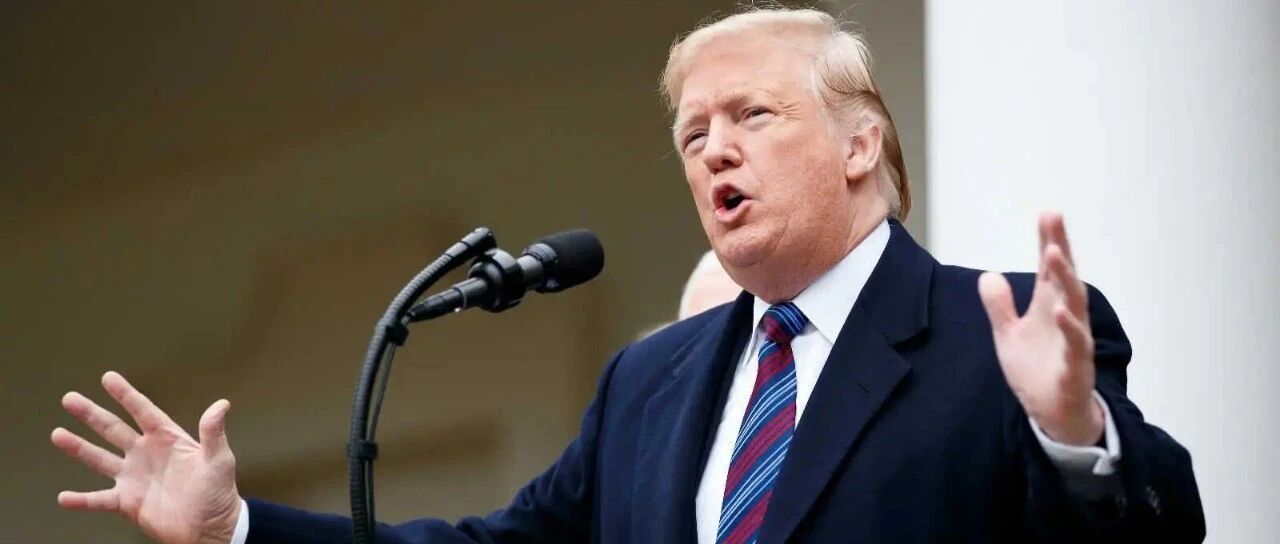
全民发2000美元“关税红包”,特朗普大方画饼但预算说不
Di Yi Cai Jing· 2025-11-11 12:52
若该计划真的实施,所造成的财政损失可能达到关税收入的两倍以上。 在支持率下滑、共和党于地方选举中接连受挫之际,美国总统特朗普再度提出一项引人注目的计划:利用关税收 入向美国人发放2000美元的"分红"。 特朗普说明道,这一计划不覆盖"高收入"美国人。他还特别强调:"反对关税的人都是傻瓜!" 这一承诺迅速引发广泛关注与质疑。11月10日,美国联邦预算责任委员会(CRFB)在一份分析报告中表示,若 该计划真的实施,所造成的财政损失可能达到关税收入的两倍以上。报告强调,关税收入本身远不足以支撑如此 大规模的分红支出,反而可能加剧美国本已严峻的财政压力。 值得注意的是,这已是特朗普今年内第二次提出类似主张。早在7月,他就曾表示政府正考虑利用任内征收的数十 亿美元关税向民众发放小额退款。 在这一政策提议背后,是特朗普对其公众形象的深切关注。英国新宏睿投资管理公司创始人兼董事总经理夏宇宸 在接受第一财经记者采访时表示:"特朗普并不忌惮其他东西,他在意的是自己在美国民众心中的形象。他的权力 根基,很大程度上建立于其所展示的强有力姿态。" 最新民调数据显示,特朗普当前面临的舆论环境并不乐观。根据民调机构YouGov的数据,他 ...
涉及关税,特朗普警告
Zheng Quan Shi Bao· 2025-11-11 10:23
特朗普发出重大警告! 美国总统特朗普当地时间周一警告,如果美国最高法院裁定他在全球范围内实施的全面关税政策无效, 美国将面临经济和国家安全灾难。 特朗普称,如果法院裁定征税违法并须退回已征关税,涉及金额将超过2万亿美元的关税收入与投资。 同日,特朗普还警告称,所有空中交通管制员须立即返岗,任何不返回的人都将受到严厉的"处罚"。 来看详细报道! 涉及关税!特朗普警告 据路透社消息,当地时间周一,美国总统特朗普说,如果美国最高法院裁定其动用紧急权力法对几乎所 有贸易伙伴加征全面关税的行为违宪,美国将面临经济与国家安全危机。 特朗普称,他的政府计划利用关税红利向中低收入的美国人每人发放2000美元,并将剩余收入用于降低 美国债务。 特朗普还在社交媒体发文称,如果法院裁定征税违法并须退回已征关税,涉及金额将超过2万亿美元的 关税收入与投资。"他们给出的数字不对……如果我们在最高法院败诉,将会造成经济灾难,也会造成 国家安全灾难。"特朗普说道。 巴雷特大法官说,法院在处理已缴纳被裁定为非法关税的美国进口商的退款事宜时,"可能会一团糟"。 目前尚不清楚最高法院何时会做出裁决,以及如果特朗普败诉,企业是否有权获得迄今为止已 ...
特朗普,突发警告!
券商中国· 2025-11-11 10:20
Group 1: Tariff Policy and Economic Impact - President Trump warned that if the U.S. Supreme Court rules against his comprehensive tariff policy, the country could face an economic and national security disaster, with potential refunds exceeding $2 trillion in tariffs collected [1][4][5] - Trump's administration plans to use tariff revenues to provide $2,000 to low- and middle-income Americans and to reduce national debt, indicating a shift in the initial view that tariff revenues would only be used for deficit reduction [4][5] - The Supreme Court's deliberation on the legality of tariffs imposed under the International Emergency Economic Powers Act (IEEPA) has raised concerns about the potential chaos in refunding tariffs deemed illegal, with over $100 billion at stake [5][6] Group 2: Trade Relations with India - Trump indicated that the U.S. is "very close" to reaching a trade agreement with India and plans to lower tariffs on Indian goods at some point [8][9] - The imposition of high tariffs on Indian exports has led to a significant decline in India's exports to the U.S., with a 20.3% drop in September, marking the largest monthly decline this year [10] - The recent optimism in U.S.-India trade relations comes after India reportedly reduced its purchases of Russian oil, which was a point of contention in negotiations [9][10] Group 3: Air Traffic Control and Government Operations - Trump mandated that all air traffic controllers must return to work immediately, threatening severe penalties for non-compliance, amid staffing shortages affecting flight operations [12][13] - The FAA reported significant delays and cancellations due to a shortage of air traffic control personnel, impacting approximately 250,000 passengers [14]
Fed's Musalem: We Have Limited Room to Cut Rates
Youtube· 2025-11-10 21:28
Economic Overview - The economy has shown resilience with growth around 1.8% for the year despite uncertainties [2] - The labor market is near full employment but has shown signs of cooling, with demand and supply also cooling [2][5] - Inflation is currently closer to 3% rather than the target of 2% [2] Consumer Behavior - Consumption remains resilient, particularly among higher-income households benefiting from stock market wealth effects, while lower-income households are increasing their debt levels [6][7] - Real consumption growth is estimated to be similar for both high and low-income households, but the latter is relying more on credit card debt [7] Corporate Insights - Companies report that uncertainty has plateaued, allowing them to adapt to a higher level of uncertainty [11] - Many companies are facing higher costs related to tariffs and other non-interest costs, which they are attempting to pass on to consumers [11][21] - There is a concern among companies about the potential need to raise prices or cut jobs due to compressing margins [10] Labor Market Dynamics - Layoff announcements have been noted, but the overall labor market remains stable, with weekly claims indicating no significant deterioration [14][15] - Consumer balance sheets are generally healthy, although there are concerns about subprime loan defaults and credit card defaults stabilizing [8][9] Monetary Policy Considerations - The real federal funds rate has declined by 250 basis points over the past year, with a focus on supporting the labor market and addressing inflation [19][26] - Companies are more concerned about rising non-interest costs than interest costs impacting their pricing strategies [20][21] - The current monetary policy stance is viewed as modestly restrictive to neutral, with a need to balance inflation control and labor market support [26] Financial Stability Concerns - Asset prices are considered elevated relative to historical standards, with notable valuations in both housing and stock markets [29][30] - Financial conditions are described as accommodative, which may contribute to elevated asset valuations [30]

又被马云说中了,持有大量现金的人或难入睡?3大理由很现实
Sou Hu Cai Jing· 2025-11-10 20:48
Core Insights - The article discusses the risks associated with holding large amounts of cash in the current economic environment, particularly due to inflation and opportunity costs [1][2][5] Group 1: Inflation Impact - Inflation acts as an invisible "tax" that erodes wealth, with the CPI rising by 2.6% in 2024 and 2.8% in Q1 2025, meaning that 100,000 yuan last year is only worth about 97,200 yuan this year [2] - Individuals like Wang, who have significant savings in low-interest bank accounts, are experiencing negative real interest rates, as their savings yield (2.2%) is lower than the inflation rate (2.8%) [2][3] Group 2: Opportunity Cost - Keeping funds idle in cash or low-yield savings means missing out on higher-return investment opportunities, with average returns on financial products at 3.5% and some stock funds exceeding 10% [2][3] - A case study of Zhang illustrates that a diversified investment strategy can yield significantly higher returns, with her assets growing from 500,000 yuan to approximately 680,000 yuan over five years [3] Group 3: Security Concerns - Holding cash poses risks such as theft, loss, or damage, with over 125,000 cash-related theft cases reported in 2024, involving over 2.5 billion yuan [4][6] - Personal anecdotes highlight the dangers of keeping cash at home, as natural disasters can lead to significant losses [4] Group 4: Recommendations for Wealth Management - The article suggests a diversified asset allocation strategy, recommending that individuals maintain 3-6 months of living expenses in cash, with the rest allocated to fixed income, equity, and other investments [8][12] - Increasing financial literacy is emphasized, as those with higher financial knowledge see an average asset growth rate 4.2 percentage points higher than those with lower financial literacy [9] - The importance of inflation-hedging tools is discussed, with options like index funds and inflation-protected bonds being recommended [11] - Regularly reviewing and adjusting financial plans is advised to ensure alignment with personal goals and market conditions [12]

Fed's Musalem Sees Labor Market Cooling, Urges Caution on Rates
Youtube· 2025-11-10 15:36
Economic Overview - The economy has shown resilience with growth around 1.8% this year despite uncertainties [2] - The labor market is near full employment but has shown signs of cooling, with demand and supply also cooling [2][5] - Inflation is closer to 3% rather than the 2% target, indicating ongoing price pressures [2][21] Consumer Behavior - Consumption remains resilient, particularly among higher-income households benefiting from stock market wealth effects [6][7] - Lower-income households are increasing their debt levels, particularly credit card debt, to maintain consumption [7][8] - Consumer balance sheets are generally stable, but there are concerns about subprime loan defaults and credit card defaults stabilizing after a previous increase [8][9] Business Sentiment - Companies report that uncertainty has plateaued, allowing them to adapt to a higher level of uncertainty [11] - Some companies are experiencing higher costs related to various factors, including insurance and raw materials, which they are attempting to pass on to consumers [11][20] - There is a concern among companies about the potential need to raise prices or cut employees if interest rates do not decrease [10][20] Labor Market Dynamics - The labor market has cooled in an orderly manner, with recent layoff announcements not necessarily indicating a deterioration phase [13][14] - Weekly claims for unemployment have remained stable, suggesting that the labor market is not in immediate distress [14][15] - There is a need to monitor the balance between labor market conditions and inflationary pressures when considering monetary policy [19][24] Monetary Policy Considerations - The real federal funds rate has declined by 250 basis points over the past year, with a focus on supporting the labor market and managing inflation expectations [18][19] - Companies are more concerned about non-interest costs rather than interest costs impacting their pricing strategies [20] - The current monetary policy stance is viewed as modestly restrictive to neutral, with a focus on bringing inflation back towards the 2% target [25][26] Financial Stability - Financial conditions are described as accommodative, with asset valuations, including house and stock prices, appearing elevated relative to historical standards [28][29] - The Federal Reserve's financial stability report indicates notable asset valuations, which could pose risks if not managed carefully [28][29]
Gold price today, Monday, November 11: Gold crests $4,100, up 56% on the year
Yahoo Finance· 2025-11-10 13:00
Group 1: Gold Price Trends - Gold futures opened at $4,007.20 per ounce, remaining flat from the previous close of $4,009.80, with prices quickly moving over $4,100, marking a 56% increase since the start of the year [1] - The current price of gold futures is up 0.5% from Friday's close of $3,982.20, with a 50.5% increase compared to one year ago [2][7] - Gold prices have shown a steady upward trend, with a 0.8% increase over the past week, 1.3% over the past month, and 49% over the past year [7] Group 2: Market Influences - Ongoing government shutdowns are expected to negatively impact consumer sentiment, while tariff uncertainties and a weakening dollar are contributing to the rise in gold prices [2] - The Federal Reserve's lack of key economic reports is creating uncertainty, yet the CME Fed Watch tool indicates a 65% chance of rate cuts next month, which may further influence gold prices [1] Group 3: Understanding Gold Pricing - The price of gold can be quoted in various forms, primarily as spot prices and gold futures prices, with spot prices reflecting the current market price for physical gold [4] - The spot price is generally lower than retail prices due to additional markups, which include refining and dealer overhead costs [5] - Gold futures are contracts for future transactions of gold at a specified price, providing liquidity and flexibility compared to physical gold [8]
Peter Schiff Slams Trump's $2,000 'Dividend' Checks: '...Defeats The Very Purpose Of The Tariffs' - Apple (NASDAQ:AAPL), Qualcomm (NASDAQ:QCOM)
Benzinga· 2025-11-10 11:18
Core Viewpoint - Economist Peter Schiff warns that President Trump's proposal for a "$2,000-per-person tariff dividend" is economically self-defeating and would undermine the purpose of tariffs [1][2]. Group 1: Economic Implications - Schiff argues that the total cost of the proposed dividends would exceed the revenue generated from tariffs, potentially leading to an increased trade deficit [1]. - He believes that consumers will use the extra income from the dividends to purchase more expensive imports, further exacerbating the trade deficit [2]. Group 2: Market Reactions - The proposal has elicited mixed reactions from financial commentators, with some viewing it as a market-boosting stimulus, while others share Schiff's concerns about its inflationary potential [3]. - Anthony Pompliano noted that stocks and bitcoin tend to rise in response to stimulus measures, while Otavio Costa warned against using monetary payouts to combat inflation [3]. Group 3: Alternative Interpretations - Treasury Secretary Scott Bessent suggested that the "$2,000 dividend" might not be a direct payment but could take various forms, such as tax deductions, indicating that the figure may represent cumulative tax-cut proposals [4].