价格战

Search documents
降价已无法抢到业务量,通达兔快递出清提速?
3 6 Ke· 2025-05-20 11:28
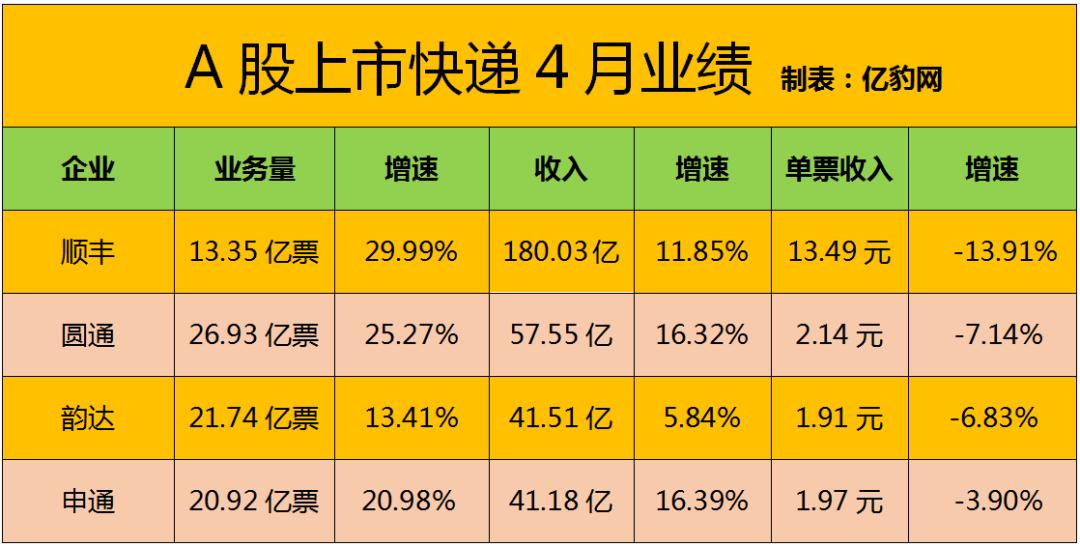
Core Insights - The express delivery industry in A-shares shows that SF Express has led in business volume growth for three out of four months this year, indicating strong growth momentum [1][2] - YTO Express is gradually widening the gap with its competitors, while the average revenue per package for the four major express companies continues to decline [1][5] Group 1: Company Performance - SF Express reported a business volume of 1.335 billion packages in April, with a growth rate of 29.99%, and revenue of 18.003 billion yuan, reflecting an 11.85% increase. However, its average revenue per package fell by 13.91% to 13.49 yuan [2] - YTO Express handled 2.693 billion packages with a growth rate of 25.27%, generating revenue of 5.755 billion yuan, a 16.32% increase, but its average revenue per package decreased by 7.14% to 2.14 yuan [2] - Yunda Express and Shentong Express reported business volumes of 2.174 billion and 2.092 billion packages respectively, with growth rates of 13.41% and 20.98%. Their revenues were 4.151 billion and 4.118 billion yuan, with average revenues per package dropping below 2 yuan [2][5] Group 2: Market Trends - The demand for same-city delivery services has surged, with SF Express reporting a 102% year-on-year increase in same-city delivery orders during the May Day holiday, driven by the rapid adoption of new consumption models [3][5] - The express delivery sector is facing intense price competition, leading to a decline in average revenue per package across the board, which may affect the stability of delivery networks [5] - The market capitalization of express companies remains low, with SF Express valued at 220 billion yuan, indicating a need for industry consolidation and potential recovery in stock prices following the inclusion of ZTO Express in the Hang Seng Index [7]

方洪波首度回应与小米竞争
第一财经· 2025-05-19 12:56
Core Viewpoint - Midea Group's chairman Fang Hongbo acknowledges competition with Xiaomi, emphasizing tactical awareness while maintaining a strategic confidence in their market position. Midea aims to enhance high-value products while also competing on cost to prevent Xiaomi from capturing market share [1][3]. Group 1: Competition Dynamics - Xiaomi's home appliance sales, including air conditioners, refrigerators, and washing machines, saw over 50% year-on-year growth in 2024, with a notable low-price strategy in air conditioning [1][5]. - Midea's subsidiary Hualing has adopted a low-price strategy to counter Xiaomi's market encroachment, indicating a clear competitive response [1][5]. - The air conditioning market is becoming increasingly competitive, with Midea, Gree, and Xiaomi vying for market share, particularly as the domestic appliance market faces growth challenges [5][9]. Group 2: Market Position and Strategy - Midea and Xiaomi previously had a strategic partnership, with Midea learning from Xiaomi's internet approach while Xiaomi benefited from Midea's manufacturing expertise. However, Xiaomi's entry into the home appliance market has shifted the relationship to direct competition [3][4]. - Fang Hongbo highlights the need for Midea to simplify its product offerings to enhance growth, contrasting with Xiaomi's fewer product models [3][6]. - Midea is focusing on high-value products while also preparing to compete on cost, indicating a dual strategy to address market challenges posed by Xiaomi [3][6]. Group 3: Market Trends and Projections - The air conditioning market is currently the largest segment in the domestic appliance sector, with favorable conditions such as government subsidies for replacing old units driving demand [5][9]. - Xiaomi's market share in the online air conditioning segment has risen significantly, moving from the top four to the top three, while Midea's share has slightly decreased [6][8]. - The upcoming "6.18" sales event is expected to intensify competition among leading brands, with price wars likely to impact overall market dynamics [8][9].


美的董事长方洪波首度回应与小米竞争,今年空调业将有一场恶战
Di Yi Cai Jing· 2025-05-19 12:20
Core Viewpoint - The competition in the air conditioning market is intensifying, particularly between Midea and Xiaomi, as both companies adopt aggressive pricing strategies to capture market share [3][7]. Group 1: Company Strategies - Midea's Chairman Fang Hongbo emphasized the importance of responding to Xiaomi's market encroachment by adopting both high-value and cost-competitive strategies [3][5]. - Xiaomi's home appliance sales, including air conditioners, refrigerators, and washing machines, saw a revenue increase of over 50% year-on-year [3]. - Midea's sub-brand Hualing has implemented a low-price strategy to counter Xiaomi's aggressive pricing, indicating a clear intent to compete directly [3][7]. Group 2: Market Dynamics - The air conditioning market is currently the largest segment in China's home appliance sector, with favorable conditions due to rising temperatures and government subsidies for replacing old units [7][10]. - Xiaomi's air conditioning market share has rapidly increased, moving from the top four to the top three in online rankings, with a market share of 13.44%, up 5.43% year-on-year [8]. - In the offline market, Gree, Midea, and Haier lead, while Xiaomi ranks 17th with only 0.21% market share [9]. Group 3: Competitive Landscape - The upcoming "6.18" sales event is expected to see fierce competition among leading brands, primarily Gree, Midea, Haier, and Xiaomi, driven by government subsidies [9][10]. - Gree's sub-brand Jinghong has also introduced competitively priced air conditioners to participate in the escalating market rivalry [9]. - The overall air conditioning market is projected to reach a retail value of 427 billion yuan during the "6.18" event, reflecting a 10.3% year-on-year increase [10].
新车看点丨不可避免的价格战,零跑C10延续“普惠”战略
Guan Cha Zhe Wang· 2025-05-19 10:56
Core Viewpoint - The launch of the 2026 Leapmotor C10 marks a strategic response to the intense price competition in the Chinese automotive market, with a focus on offering high value through a dual powertrain system of pure electric and range-extended versions [1][3]. Product Strategy - The 2026 Leapmotor C10 is available in five models, priced between 122,800 to 142,800 yuan [1]. - The vehicle features significant upgrades, including the Snapdragon 8650 smart driving chip and a high-performance battery system that allows for rapid charging [3][4]. - Leapmotor continues to adopt a "price butcher" strategy, emphasizing cost-effectiveness to enhance configuration, quality, safety, and overall user experience [3]. Market Performance - In the short term, Leapmotor's pricing strategy has proven effective, leading to the highest sales among new energy vehicle manufacturers in March and April [3]. - The company is experiencing a growth trajectory reminiscent of BYD's rapid expansion four years ago [3]. Technical Specifications - The pure electric version of the C10 features an 800V high-voltage silicon carbide platform, capable of charging from 30% to 80% in just 16 minutes, with a CLTC range of 605 km [4]. - The range-extended version combines a 28.4 kWh battery with a 50L fuel tank, achieving a total CLTC range of 1,190 km and a pure electric range of 210 km [4]. Driving and Safety Features - The C10 incorporates advanced driving dynamics with a front MacPherson and rear five-link suspension system, along with a new braking system for improved response [6]. - The vehicle is equipped with unique LMC integrated motion control technology, enhancing safety during tire blowouts and improving overall driving stability [6]. Intelligent Cabin and AI Integration - The new model features the Qualcomm SA8295P flagship chip and Leapmotor OS 4.0 Plus, offering innovative interactive experiences and customizable 3D themes [8]. - The vehicle's advanced driver assistance system utilizes a combination of laser radar and AI models, supported by 28 intelligent sensing hardware units [8]. Interior Features - The C10 includes a high-quality audio system with 12 speakers and a 7.1 surround sound design, along with upgraded interior aesthetics and wireless charging capabilities [10]. Battery Management and Safety - The vehicle employs an AI-based battery management system and an integrated thermal management system, ensuring safety even in the event of thermal runaway [12].
奥迪开始卖13万了
投资界· 2025-05-19 03:46
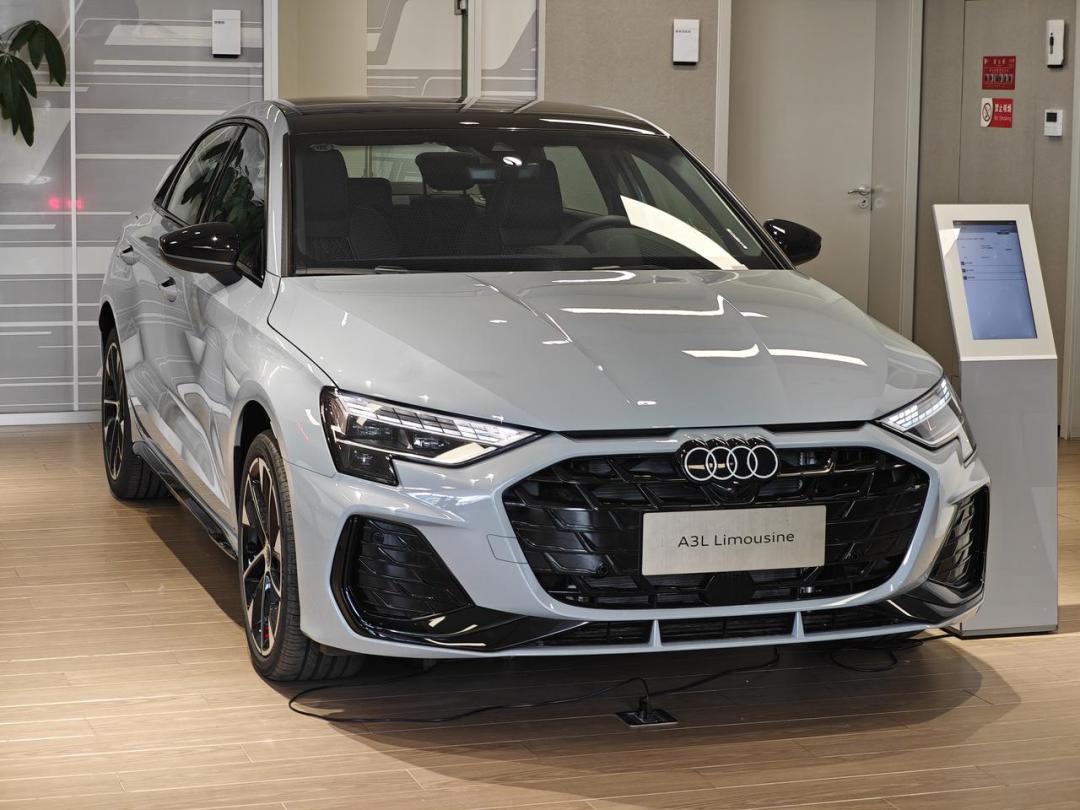
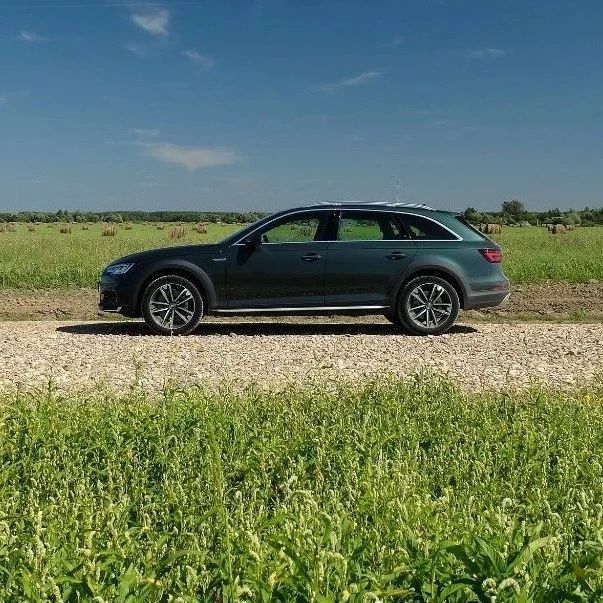
Core Viewpoint - The article discusses the significant price reductions of the Audi A3 in the Chinese market, highlighting the competitive pricing strategies adopted by luxury car brands to maintain market share amid declining sales and increasing competition from electric vehicles [3][4][5][6][10][17]. Group 1: Pricing Strategies - Audi has adopted a "one-price" model for its A3, with prices dropping to around 124,900 RMB for the base model, which has led to consumer surprise and comparisons to lower-end models [5][6][7]. - The price reductions range from 40,000 to 50,000 RMB, with some dealerships offering even lower starting prices [6][7]. - Consumers have expressed skepticism about the "limited-time" pricing, feeling it is a guise for ongoing price cuts rather than a temporary promotion [8][9]. Group 2: Sales Performance - The sales of the Audi A3 peaked in 2019, with annual sales figures showing a decline from 84,800 units in 2018 to 53,200 units in 2024 [13]. - Monthly sales figures for early 2025 indicate a continued downward trend, with average monthly sales around 5,000 units since 2021 [13][14]. - The compact car segment has seen an overall market decline of 11.1% in early 2025, indicating broader challenges in the automotive market [15]. Group 3: Market Competition - The introduction of competitors like the BMW 1 Series and Mercedes-Benz A-Class has intensified competition in the compact luxury segment, forcing Audi to lower prices significantly [10][11]. - The shift towards electric vehicles has further complicated the landscape for traditional luxury brands, as consumers increasingly favor lower-cost electric options [14][17]. - Audi's strategy includes not only price reductions but also the introduction of new models and technologies to regain market presence [18][19][20]. Group 4: Future Outlook - Audi plans to launch new models based on advanced platforms, including electric and hybrid vehicles, to adapt to changing consumer preferences and technological advancements [18][19]. - The company aims to combine its traditional luxury appeal with cutting-edge technology, including partnerships with tech firms like Huawei, to enhance its product offerings [19][20]. - The year 2025 is positioned as a pivotal year for Audi, with expectations for a significant product push and a return to competitive form in the market [20].
价格战”趋缓 车市活力持续释放
Zhong Guo Chan Ye Jing Ji Xin Xi Wang· 2025-05-18 23:55
前4个月我国汽车产销量首次双双突破1000万辆 "价格战"趋缓车市活力持续释放 中国汽车工业协会数据显示,今年4月,国内汽车产销量分别完成261.9万辆和259万辆,环比小幅回 落,同比保持近9%的增长。今年1—4月,我国汽车产销量历史上首次双双突破1000万辆。据统计,1— 4月,我国汽车产销量分别完成1017.5万辆和1006万辆,同比分别增长12.9%和10.8%。其中,新能源汽 车产销量分别完成442.9万辆和430万辆,同比分别增长48.3%和46.2%;新能源汽车新车销量达到汽车新 车总销量的42.7%。 中国汽车流通协会乘用车市场信息联席分会(以下简称乘联分会)相关负责人表示,今年车市"价格战"举 措稍显温和,但是诸如年款增配、调整车主权益等隐形优惠措施依然层出不穷。具体而言,在降价车型 数量方面,4月仅有14款车型降价,相较于去年4月的41款以及2023年4月的19款,降价车型数量大幅减 少,这充分体现出降价潮明显降温的特点。另外,4月传统燃油车的促销幅度为22.2%,较上月增长了 0.1%,且燃油车促销幅度已连续10个月稳定在22%左右。 相比之下,新能源车企更倾向于通过"增配不加价"的策略 ...
奥迪只卖13万多了
盐财经· 2025-05-18 10:05
Core Viewpoint - The article discusses the significant price reductions of the Audi A3 models in China, highlighting the competitive pressures faced by traditional luxury brands in the automotive market, particularly in the context of rising electric vehicle popularity and changing consumer preferences [5][17][19]. Group 1: Price Reductions and Sales Strategies - Audi A3 models have seen substantial price cuts, with the base price for the A3 Sportback dropping to as low as 12.49 million yuan, representing a reduction of 40,000 to 50,000 yuan from previous prices [5][7]. - The pricing strategy includes a "one-price" approach with no hidden fees, aiming to attract consumers who are skeptical about traditional negotiation tactics [5][8]. - Sales personnel indicate that the low inventory of base models may require pre-orders, while mid-range models are more readily available [8][9]. Group 2: Market Context and Competition - The article notes that the compact car segment, including the Audi A3, has experienced a decline in overall market sales, with a reported 11.1% drop in the first quarter of 2025 [17]. - Audi's sales figures for the A3 family have shown a downward trend since 2019, with monthly sales averaging around 5,000 units since 2021 [16][17]. - The entry of competitors like the BMW 1 Series and Mercedes-Benz A-Class has intensified competition in the compact luxury segment, forcing Audi to adjust its pricing strategy [14][19]. Group 3: Future Outlook and Innovations - Audi is preparing for a significant product year in 2025, with plans to launch new electric and fuel models, including the A6L e-tron and Q5L, which are expected to incorporate advanced technology and competitive pricing [19][21]. - The collaboration with Huawei for intelligent driving solutions and the introduction of new platforms aim to enhance Audi's product offerings and market presence [20][21]. - The article emphasizes the need for Audi to balance product quality with competitive pricing to regain market share in the evolving automotive landscape [21].
库克扯下苹果遮羞布,直接玩“阳谋”,国产机左右为难
Sou Hu Cai Jing· 2025-05-18 02:49
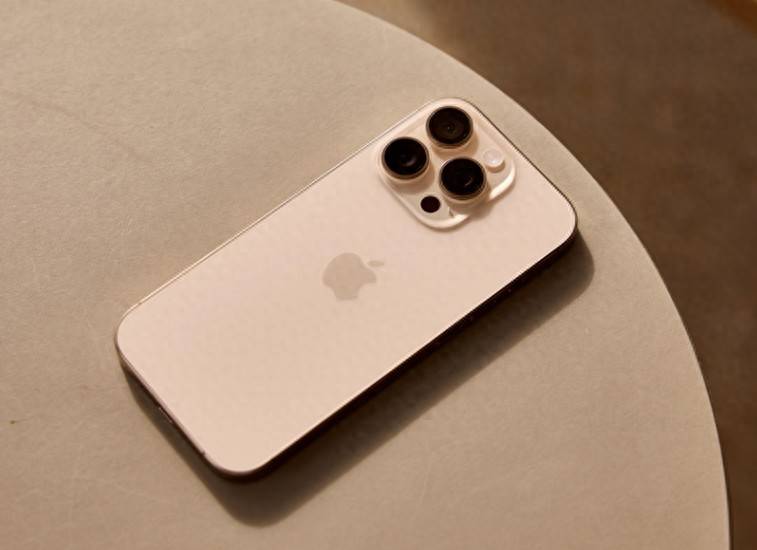
618还没真正开始,整个机圈就已经非常热闹了。 当然,最大的热闹,自然还是苹果打价格战,特别是128G的iPhone16 Pro,直接降价至5999元,然后叠加国补,只要5499元了。 而一些电商平台,还有其它活动,再折扣优惠之后,甚至有些只要5399或更低了。 从去年iPhone16系列发布后,苹果在中国的销量就不行,特别是进入2025年之后,更是一路下滑,一季度,苹果在全球的收入都在涨,只有中国在下滑。 一时之间,iPhone16 Pro成为了当前最畅销的手机,没有之一。 不信大家看看京东的排行榜,截止至目前,累计销量iPhone16 Pro第一,iPhone16 Pro Max第二、iPhone16 第三名,销量最好的前五名,苹果占了前三名。 从这个情况来看,可见低价的苹果,多有威力了,而这其实也就是库克的阳谋,那就是我直接价格战开打,不玩虚的,没有阴谋,一把扯下苹果高高在上的 遮羞布,看国产手机怎么办? 事实上,库克确实是被逼的没办法了, 不得不这么干。 所以接下来,在5000-8000档的国产机,真的是左右为难,降价跟苹果,那自己没赚钱,还影响品牌形象,不降价跟苹果,则没销量,真的是不知道怎么办 才 ...

汽车价格战还要打多久?
芯世相· 2025-05-16 10:31
Core Viewpoint - The article discusses the ongoing price war in the automotive industry, particularly in the context of the rapid growth of new energy vehicles (NEVs) and the resulting market dynamics that lead to increased competition and market fragmentation [2][11][13]. Group 1: Price War Dynamics - In 2024, the number of discounted car models in China reached 227, which is 1.5 times that of 2023 and 2.3 times that of 2022, indicating a fierce price competition in the automotive sector [2]. - The price war is seen as a necessary outcome of industry development, driven by the increasing concentration of the market and the transition from a fragmented to an oligopolistic structure [4][9]. - The memory chip industry has previously experienced severe price wars, particularly during the 2008 financial crisis, leading to a significant reduction in the number of global producers [5][6]. Group 2: Market Structure and Competition - The automotive industry is undergoing a transformation where the entry of new players and the rise of NEVs are disrupting the traditional market structure, leading to a reallocation of market shares [19][20]. - The market share of the top five automotive companies has decreased from 74% to 55% over the past decade, reflecting a rapid fragmentation of the market [25]. - The competition in the NEV sector is particularly intense, with new entrants challenging established players, resulting in a significant shift in market dynamics [11][13]. Group 3: Implications of Price Wars - The ongoing price wars are indicative of a closing door for new entrants, as established players leverage their scale to maintain competitive advantages [29][30]. - The automotive industry is expected to undergo a consolidation phase, where the most competitive firms will survive while others may exit the market [30][31]. - The price war is not only a reflection of competition but also a strategy for leading firms to eliminate weaker competitors and establish a new market order [35][36]. Group 4: Future Outlook - The article suggests that the automotive industry may reach a turning point in 2-3 years, with predictions that over half of the current car manufacturers could be eliminated, leading to a return to normal profit levels [39][40]. - The transition to NEVs is seen as a critical opportunity for China's automotive industry to leapfrog traditional competitors, but it also raises concerns about the sustainability of market practices and employee welfare [42][43].



奥迪A3,只卖13万多了
3 6 Ke· 2025-05-16 09:12
Core Insights - Audi is significantly reducing the prices of its A3 models, with the starting price for the A3 now at approximately 12.49 million yuan, which is a notable decrease from previous prices [2][3][5] - The price cuts are part of a broader strategy among joint venture car manufacturers to enhance the competitiveness of their fuel vehicles, particularly in the luxury segment [1][10] - The A3 model has seen a decline in sales since its peak in 2019, with monthly sales averaging around 5,000 units since 2021, indicating increased competition and market challenges [13][14] Pricing Strategy - Audi's A3 Sportback and A3L Limousine models are now available at "one price" offers, with significant discounts ranging from 40,000 to 50,000 yuan [3][5] - The lowest price for the A3 Sportback has been reported as low as 12.18 million yuan at some dealerships [3] - The pricing strategy includes transparent costs with no hidden fees, and financing options are available with a 5% annual interest rate [6][7] Market Context - The compact car segment has experienced an overall market decline of 11.1% in early 2025, reflecting broader challenges in the automotive industry [13] - Audi's A3 has faced increased competition from both luxury brands like BMW and Mercedes-Benz, as well as from mainstream brands offering larger vehicles at similar price points [10][14] - The shift towards electric vehicles is impacting the sales of traditional fuel vehicles, with consumers increasingly favoring lower-cost electric options [13][14] Product Development - Audi is planning to launch new models based on advanced platforms, including the PPE electric platform and the PPC fuel platform, to enhance product offerings and competitiveness [16][17] - The new A5L and Q5L models are set to debut, featuring significant upgrades in technology and performance, aimed at regaining market share [16][17] - Collaborations with tech companies like Huawei and Momenta are expected to enhance Audi's smart driving capabilities in upcoming models [16][17]