自动驾驶

Search documents
港股汽车ETF国泰(520720)回调超4%,反内卷持续推进,出口预期改善,回调或可布局
Mei Ri Jing Ji Xin Wen· 2026-02-02 06:13
Core Viewpoint - The automotive sector is seeing a bottoming out of pessimistic expectations, with structural improvements in overseas expansion and policies catalyzing advancements in autonomous driving [1] Group 1: Market Outlook - The automotive sector is expected to benefit from the 2026 vehicle replacement policy, which will support domestic demand, particularly benefiting commercial vehicles [1] - The overall sentiment in the complete vehicle sector continues to reflect "weak expectations, weak reality," with ongoing efforts to reduce internal competition and improved export expectations [1] Group 2: Company Insights - Tesla's automotive business is projected to see improved gross margins in Q4 2025, with a strategic shift accelerating from hardware sales to physical AI [1] Group 3: Autonomous Driving - The year 2026 is anticipated to be a pivotal year for the commercialization of autonomous driving [1] Group 4: Commercial Vehicles - In 2026, heavy-duty trucks and buses are expected to benefit from policies supporting domestic demand and ongoing favorable conditions for overseas expansion [1] Group 5: Index Information - The Hong Kong Stock ETF, Cathay (520720), tracks the Hong Kong Stock Connect Automotive Index (931239), which selects listed companies involved in the automotive industry, focusing on complete vehicle manufacturing and electrification [1]
共拓智能化新场景 中韩汽车供应链深化双向奔赴
Zhong Guo Qi Che Bao Wang· 2026-02-02 03:04
Core Insights - Lenovo and SWM have announced a strategic partnership to develop and deploy next-generation L4 autonomous taxis, aiming to globalize the "Korean-style Robotaxi platform" [2][3] - The collaboration signifies a deeper interaction between the Chinese and Korean automotive industries, particularly in the autonomous driving sector, marking a new phase of cooperation [2][3] Industry Collaboration - The interaction between the Chinese and Korean automotive supply chains has evolved from simple component trade to comprehensive collaboration encompassing technology R&D, platform co-construction, and market expansion [3] - SWM has achieved Korea's first fully autonomous taxi commercial operation in September 2024, maintaining a zero-accident safety record [3] - The partnership will integrate SWM's sensor fusion algorithms and ADS systems with Lenovo's onboard computing, hardware design, and low-latency communication technology, creating a high-performance autonomous driving solution [3] Technological Advancements - The core of the collaboration is SWM's AP-700 autonomous driving platform, which is built on Lenovo's L4 autonomous driving domain controller AD1, providing over 2000 TFLOPS of AI computing power [3] - The partnership aims to define smart mobility technology standards and facilitate the global rollout of their collaborative results, starting from regions like Japan, Southeast Asia, and the Middle East [3] Market Dynamics - The cooperation extends to auxiliary driving solutions, with Chinese company Zhixing Technology receiving a mass production order from a Korean automaker for four models, projecting nearly one million units in sales over the lifecycle from 2026 to 2033 [4] - The collaboration also includes efforts in smart logistics, with New Stone Technology signing agreements to introduce autonomous delivery vehicles in Korea, marking a significant step in their global strategy [4] Competitive Landscape - China's automotive supply chain has matured, becoming a core competitive advantage for attracting Korean partnerships, particularly in the autonomous driving sector [5] - A report from Korea's Industrial Research Institute indicates that China has surpassed Korea in competitiveness in robotics, autonomous driving, electric vehicles, and even semiconductors [5] Strategic Synergies - The synergy between Chinese and Korean companies is driven by complementary advantages in technology, market demand, and policy support, fostering a collaborative environment for the automotive industry [6] - The ongoing negotiations for the second phase of the China-Korea Free Trade Agreement (FTA) and various high-level meetings between companies indicate a solid foundation for future cooperation [6] Testing and Implementation - The Korean government has designated Gwangju as a testing city for autonomous driving, planning to deploy over 200 autonomous vehicles in real-world conditions by late 2026 [7] Challenges and Adaptations - Despite the progress, challenges such as regulatory differences, cultural disparities, and potential conflicts over technology patents and data security remain [8] - Chinese companies need to adapt to local regulations and ensure data localization to succeed in the Korean market [9] Future Outlook - The collaboration between Chinese and Korean automotive supply chains is expected to create a new paradigm of efficient and mutually beneficial regional cooperation, potentially reshaping the global automotive industry [10]

手术机器人行业深度报告-AI驱动辅助操作迈向-自动驾驶-国产龙头扬帆全球市场
2026-02-02 02:22
Summary of Surgical Robot Industry Conference Call Industry Overview - The surgical robot industry is characterized by stable cash flow contributions post-installation, with significant potential for consumable flow and data value, particularly in fields like endoscopy and orthopedics, where penetration rates can be greatly improved [1][2] - The global surgical robot market is projected to maintain a compound annual growth rate (CAGR) of approximately 16% from 2024 to 2033, with the Chinese market expected to grow at a remarkable 34% [1][8] Key Insights - **Investment Opportunities**: The surgical robot sector is seen as one of the most attractive business models in the medical device field due to its combination of equipment, consumables, and service models, leading to high customer stickiness and continuous cash flow [2][3] - **Market Penetration**: Current penetration rates for surgical robots are low, especially in endoscopy and orthopedics, indicating substantial growth potential. The market is primarily concentrated in developed regions like the US and Europe, while emerging markets remain underexploited [2][3] - **AI Integration**: The integration of AI technology is anticipated to enhance surgical robots, moving towards an "autonomous driving" model, with companies like Intuitive Surgical and domestic firms such as MicroPort and Tianzhihang actively investing in AI advancements [2][4] Market Dynamics - **Valuation Metrics**: The valuation of surgical robots is often benchmarked against Intuitive Surgical's price-to-sales (P/S) ratio, which has historically ranged from 15 to 20 times. The market capitalization of Intuitive Surgical has surpassed RMB 1 trillion, making it the largest medical device company globally [5][19] - **Future Projections**: By 2027, if leading domestic companies capture 15% of the market share, their robot installations could exceed 6,000 units, indicating significant growth potential compared to Intuitive Surgical's current holdings [5][20] Technological Developments - **Product Features**: Surgical robots are categorized into master-slave operation and navigation systems, with applications across various surgical fields, including urology, gynecology, and orthopedics. These technologies significantly enhance surgical precision and reduce the learning curve for surgeons [7][11] - **Clinical Trial Requirements**: Clinical trials for surgical robots focus on statistical differences in surgical success rates rather than efficacy endpoints, which is a key distinction from pharmaceutical trials [12] Business Models - **Revenue Streams**: The business model for surgical robots includes equipment sales, consumable sales, and service income, with a growing emphasis on consumables as the primary revenue source over time. The rental model has gained traction, reducing hospital procurement costs and accelerating consumable revenue growth [15][16] - **Impact of Rental Models**: The rental model has significantly lowered procurement costs for hospitals, facilitating easier access to surgical robots and boosting consumable sales. For instance, Tianzhihang has seen substantial growth through this model [16] Regulatory and Policy Environment - **Medicare Policies**: Medicare policies play a crucial role in the surgical robot industry, with varying levels of coverage across countries. In the US, most laparoscopic robot surgeries are covered, while in China, only a few procedures are currently included in insurance coverage [18] - **Pricing Guidelines**: Recent pricing guidelines categorize robotic-assisted surgeries into navigation, participation, and precision execution, with laparoscopic robots classified under precision execution, potentially enhancing market penetration [17] Competitive Landscape - **Global Leaders**: Intuitive Surgical remains a leader in the market, with a significant shift in revenue from equipment sales to consumables, accounting for 60% of its total revenue in the US. The company has installed approximately 11,000 units globally [19] - **Domestic Players**: Domestic companies like MicroPort and Jingfeng Medical are rapidly expanding, with MicroPort's overseas market growth exceeding 100% in certain regions. Tianzhihang has also made notable advancements with its Tianji 4R product [20]

决战特斯拉:Waymo融资160亿美元、估值1100亿
3 6 Ke· 2026-02-02 01:21
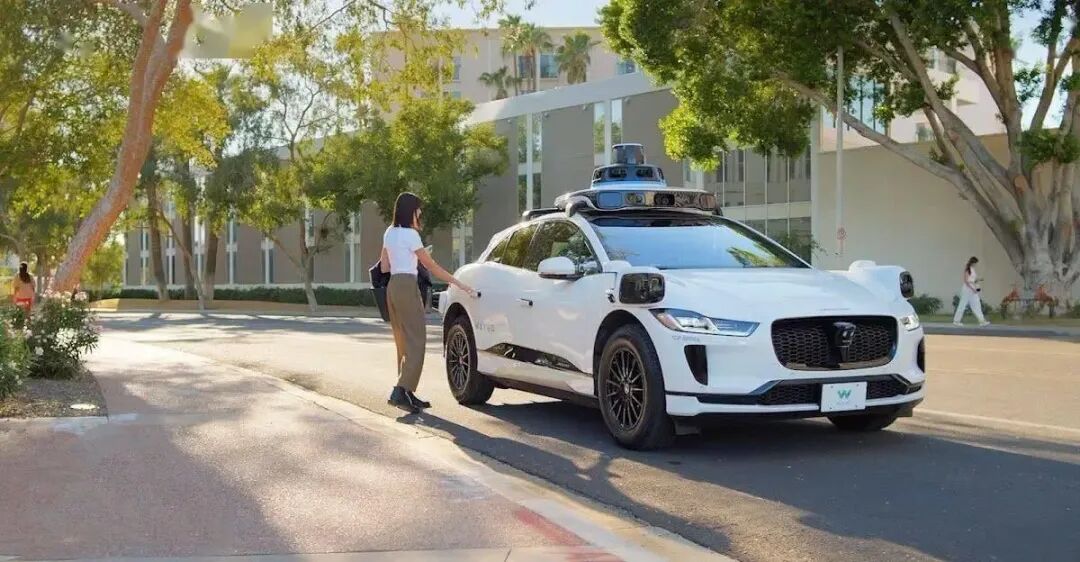
Group 1 - Waymo is planning to raise $16 billion at a valuation close to $110 billion, with Alphabet investing $13 billion and other investors like Sequoia Capital and Digital Sky Technology Group covering the remaining amount [1] - The latest funding round comes 15 months after Waymo's previous round, which valued the company at over $45 billion, marking a 144.4% increase in valuation [1] - Waymo has completed over 20 million autonomous driving rides, indicating significant operational progress [1] Group 2 - In 2024, Waymo faces unprecedented challenges as its only competitor, Cruise, suspended operations following a fatal accident and subsequently exited the Robotaxi market [3] - Despite these challenges, the announcement of Tesla's Robotaxi product, Cybercab, is seen as a potential boost for the industry, although it raises questions about Alphabet's continued support for Waymo [3][4] - The Robotaxi market is becoming increasingly competitive, with Waymo and Tesla emerging as the primary players, while other companies like Nvidia and Amazon are also making advancements [9] Group 3 - By 2025, Waymo's annual revenue is projected to reach $350 million, nearly doubling from 2024, as the company expands its fleet through partnerships, such as with Geely Group [7] - Waymo's hardware costs are higher compared to Tesla's Cybercab, but the high customer pricing in the U.S. Robotaxi market can cover these costs [9] - The completion of the new funding round is expected to enhance Waymo's position in the Chinese Robotaxi market, which has multiple players including Baidu's Apollo and Didi's autonomous driving unit [9][10] Group 4 - Companies like Xiaopeng are following Tesla's model closely, including plans for Robotaxi services, but their market valuation remains significantly lower than Tesla's [10] - Waymo's new funding round may encourage Baidu's Apollo to seek international capital to expand its market presence, especially in light of the current geopolitical climate affecting investment flows [10]

挤爆港交所,自动驾驶企业融资热潮背后
Zhong Guo Qi Che Bao Wang· 2026-02-02 00:56
Group 1 - The core viewpoint of the articles highlights the rapid maturation and increasing competition within the autonomous driving industry, with a significant surge in financing activities as companies prepare for IPOs in Hong Kong [2][4][15] - Companies like Desay SV and others are planning to issue shares and list on the Hong Kong Stock Exchange, reflecting a broader trend where at least 35 domestic autonomous driving firms are expected to raise over 60 billion yuan by 2025 [2][5] - The financing landscape is shifting from broad investments to targeted funding for core enterprises and key scenarios, indicating a more selective approach by investors [5][6][15] Group 2 - The autonomous driving sector is entering a critical phase, transitioning from a growth period to an explosive growth phase, with recent regulatory approvals for L3 autonomous vehicles boosting confidence among industry players [5][6] - Companies are increasingly focusing on L4 autonomous driving technology in closed scenarios, which are gaining traction among investors due to their commercial viability [10][11] - The competitive landscape is intensifying, with a clear divide emerging between leading firms and those struggling to keep up, as funding increasingly flows to top-tier companies [6][12][16] Group 3 - The trend of financing is evolving from being driven by narratives to a focus on value realization, with investors now prioritizing companies that can demonstrate a clear path to profitability and market demand [14][16] - The industry is still in an investment phase, with many companies yet to achieve profitability, making financing a crucial element for growth [15][16] - The successful commercialization of autonomous driving technologies in specific applications, such as mining and logistics, is helping some companies achieve profitability and attract further investment [12][11]

全球大公司要闻 | 英伟达千亿美元投资OpenAI非承诺,元宝红包突袭
Sou Hu Cai Jing· 2026-02-02 00:54
Group 1 - Nvidia's CEO Jensen Huang stated that OpenAI invited Nvidia for an investment of up to $100 billion, but this investment is "not a commitment," and Nvidia will invest in OpenAI gradually [1] - Tencent launched a 10 billion yuan red envelope campaign and announced the public testing of Yuanbao, which quickly rose to the top of the free app rankings in the Apple Store [1] - From January 1, 2026, the value-added tax rate for telecommunications services will increase from 6% to 9%, impacting the revenue and profits of China Mobile, China Unicom, and China Telecom [1] Group 2 - BYD's new energy vehicle sales in January were 210,000 units, a year-on-year decrease of 30.11%, attributed to intensified market competition and consumer hesitation before the Spring Festival [3] - Xiaomi delivered over 39,000 vehicles in January, continuing to capture market share with cost-effective models; NIO delivered 27,182 new cars, a year-on-year increase of 96.1% [3] - Leap Motor delivered 32,059 vehicles in January, a year-on-year increase of 27%, while Li Auto's deliveries fell by over 7% [3] Group 3 - Oracle is facing severe funding difficulties due to challenges in financing for AI data center expansion, considering large-scale layoffs of 20,000 to 30,000 employees to release $8 billion to $10 billion in cash flow [5] - Blue Origin will pause space tourism flights for at least two years to focus resources on accelerating the development of its lunar lander and other lunar technologies [6] - GameStop's CEO Ryan Cohen announced plans to acquire a large publicly traded consumer retail company to support a target of $35 billion in annual revenue by the end of fiscal year 2026 [6] Group 4 - Samsung Electronics expects an operating profit of 20 trillion won in Q4 2026, a year-on-year increase of 208%, with memory business operating profit projected at 35 trillion won in Q1 [7] - Toyota's sales in China have rebounded after four years, with January sales in India reaching 33,880 units, a year-on-year increase of 15.4% [7] - SK Hynix reported a 102.7% year-on-year increase in semiconductor exports from South Korea in January, reaching $20.5 billion [7] Group 5 - BMW Group announced a personnel adjustment in Greater China, with a new president taking over on April 1, 2026, responsible for strategic planning and operations [8] - ASML launched a new lithography machine XT:260 for advanced packaging, achieving production efficiency four times that of previous equipment [8] - LVMH invested 1 billion euros to increase its stake in Italian luxury brand Loro Piana to 94%, raising the brand's valuation to 11 billion euros [8]

汽车早报|多家车企公布1月销量 宝马大中华区换帅
Xin Lang Cai Jing· 2026-02-02 00:40
Group 1: Automotive Industry Overview - In January 2026, the Vehicle Inventory Alert Index for Chinese automotive dealers was reported at 59.4%, a year-on-year decrease of 2.9 percentage points and a month-on-month increase of 1.7 percentage points, indicating inventory levels above the threshold [1] - Various automotive companies reported their January delivery and sales figures, showcasing a mixed performance across the industry [2][3][4][5][6][7][8][9][10][11][12][13][14][15][16][17][18][19] Group 2: Company-Specific Performance - Xiaomi delivered over 39,000 vehicles in January 2026 [2] - Hongmeng Zhixing reported a total delivery of 57,915 vehicles in January, marking a year-on-year increase of 65.6% [3] - Aion (昊铂埃安) achieved sales of 23,591 vehicles in January, reflecting a growth of 63.9% [16] - NIO delivered 27,182 vehicles in January, up 96.1% year-on-year [7] - Li Auto reported deliveries of 27,668 vehicles in January [8] - Leap Motor achieved total deliveries of 32,059 vehicles, a year-on-year increase of 27% [9] - BYD's January sales of new energy vehicles were 210,051, a decline of 30.11% year-on-year [6] - Great Wall Motors sold 90,312 vehicles in January, an increase of 11.59% [11] - GAC Group reported sales of 116,622 vehicles in January, up 18.47% year-on-year [13] - Geely's total sales for January were 270,200 units, showing a growth of approximately 1% [13] - Chery's total sales across five brands in January decreased by 10.7% year-on-year [13] - SAIC-GM delivered approximately 51,005 vehicles in January, with a year-on-year increase of 8.2% [15] - A total of 40,016 vehicles were delivered by AITO in January, representing an 83% increase year-on-year [4] - Seres reported sales of 43,034 new energy vehicles in January, a significant increase of 140.33% [5] - GAC Trumpchi's terminal sales reached 26,937 vehicles in January, up 2.06% [14] - BAIC Blue Valley's subsidiary reported sales of 8,073 vehicles, an increase of 11.83% [19] Group 3: Leadership Changes - BMW Group announced that Christian Ach will succeed Sean Green as the President and CEO of BMW Group Greater China, effective April 1 [20]





汽车行业周报:FSD付费用户渗透率超12% 2025全球人形机器人出货量同比增长5倍
Xin Lang Cai Jing· 2026-02-02 00:34
Group 1: Tesla Developments - Tesla reveals its Robotaxi strategy, focusing on the dual-seat Cybercab for 90% of ride-hailing scenarios, with Model Y and Robovan as supplementary options [1] - Tesla discloses that approximately 1.1 million users are subscribed to its Full Self-Driving (FSD) service, representing about 12% of the company's total vehicle sales [1] - Tesla announces a strategic investment of 100 billion, emphasizing robotics and autonomous driving as core development areas [1] Group 2: Industry Trends and Innovations - Shanghai introduces a vehicle replacement subsidy for new energy vehicles, offering an 8% subsidy on the vehicle price, capped at 15,000 yuan [1] - The National Energy Administration plans to establish 28 million charging facilities by the end of 2027, expected to drive over 200 billion yuan in investments [1] - WeRide launches a universal simulation model, WeRideGENESIS, capable of constructing simulated urban environments in minutes [1] - Yuchai releases the world's first flywheel range extension technology brand, achieving a maximum power generation efficiency of over 4.8 kWh/L [1] - IDC report indicates a significant increase in global humanoid robot shipments by 2025, with Chinese manufacturers leading the market [1] Group 3: Market Performance - The CSI 300 index increased by 0.08% this week, while the automotive sector declined by 4.67%, ranking 16th among A-share industries [2] - The passenger vehicle II index fell by 1.84%, with Jianghuai Automobile and Li Auto-W leading the gains [2] - The commercial vehicle index decreased by 1.21%, with Weichai Power and King Long Automobile showing positive performance [2] - The automotive parts II index dropped by 6.82%, with New Coordinates and Tieliu Co. leading the gains [2] Group 4: Investment Recommendations - In the passenger vehicle sector, demand for domestic high-end luxury vehicles exceeds expectations, with a favorable competitive landscape; recommended stocks include Jianghuai Automobile and Seres, with Geely Automobile as a beneficiary [3] - In the parts sector, the industry is expected to see an upward turning point in profitability amidst a backdrop of reduced competition; recommended stocks include Desay SV, Zhejiang Xiantong, Meili Technology, and others, with Weichai Power and several others as beneficiaries [3]
汽车与汽车零部件行业周报、月报:智驾科技向上,海外新能源加速
Guoyuan Securities· 2026-02-02 00:30
Investment Rating - The report maintains a "Recommended" investment rating for the automotive industry [5] Core Insights - The automotive industry is experiencing a significant transformation towards intelligent driving and AI integration, with major players like Li Auto and NIO announcing strategic shifts towards embodied intelligence and humanoid robotics [1][19] - The overseas new energy vehicle market is rapidly growing, with strong demand for models like the new electric GLC from Mercedes-Benz, which has seen order backlogs extending into the second half of 2026 [2][29] - The report emphasizes the importance of focusing on technological growth opportunities in smart driving and AI, as well as the potential for Chinese supply chains to expand internationally [3] Summary by Sections Weekly Market Review (2026.01.24-01.30) - The automotive sector saw a decline of 5.08% during the week, with most related sub-sectors also experiencing downturns. The Shanghai Composite Index rose slightly by 0.08% [11] - Notable stock performances included declines in passenger vehicle stocks like Seres (-11.8%) and Haima (-6.0%), while commercial vehicle stocks like China National Heavy Duty Truck rose by 7.9% [11][15] Industry News (2026.01.24-01.30) - Li Auto's CEO announced a major shift towards AI, stating that 2026 is the last opportunity to become a leading AI company, with plans to develop humanoid robots [19][20] - The Ministry of Public Security reported that by 2025, the total number of motor vehicles in China will reach 469 million, with 43.97 million being new energy vehicles [21] - NIO's new version of the World Model (NWM) is set to enhance driving capabilities through advanced AI features [22] - BYD launched its Tian Shen Yan 5.0 system, which utilizes reinforcement learning for improved driving performance [24] - Volkswagen announced the production of its new CEA architecture in China, aimed at enhancing vehicle performance and reducing complexity [25][26] Investment Recommendations - The report suggests focusing on the growth opportunities presented by intelligent driving, autonomous driving, and the rapid expansion of the overseas new energy market [3]
行业周报:FSD付费用户渗透率超12%,2025全球人形机器人出货量同比增长5倍
KAIYUAN SECURITIES· 2026-02-02 00:30
Investment Rating - The industry investment rating is "Positive" (maintained) [1] Core Insights - The automotive sector is experiencing a significant shift with the introduction of Tesla's Robotaxi strategy, focusing on a dual-seat Cybercab to address 90% of travel scenarios [5][13] - Tesla has disclosed that approximately 1.1 million Full Self-Driving (FSD) paid users account for about 12% of its total vehicle sales, with a year-on-year growth of 38% [14] - The Shanghai government has introduced a subsidy for replacing old vehicles with new energy vehicles, offering an 8% subsidy on the purchase price, capped at 15,000 yuan [14] - The National Energy Administration plans to establish 28 million charging facilities by the end of 2027, expected to drive over 200 billion yuan in investments [15] - The global humanoid robot shipment is projected to increase by 508% in 2025, with Chinese manufacturers leading the market [20][22] Market Performance - The automotive sector underperformed the market, with the A-share automotive index declining by 4.67%, ranking 29th among primary industries [6][25] - The passenger vehicle index fell by 1.84%, while the commercial vehicle index decreased by 1.21% [6] - The automotive parts index saw a decline of 6.82%, with various segments experiencing different levels of performance [6] Investment Recommendations - For passenger vehicles, there is an unexpected demand in the domestic high-end luxury market, with recommendations for Jianghuai Automobile and Seres, while Geely Automobile is identified as a beneficiary [7] - In the automotive parts sector, profitability is expected to improve, with recommendations for Desay SV, Zhejiang Xiantong, Meili Technology, and others, while Weichai Power and others are seen as beneficiaries [7]