光储充一体化

Search documents
优优绿能20250620
2025-06-23 02:09
Summary of the Conference Call for 优优绿能 Company Overview - 优优绿能 focuses on the new energy vehicle ecosystem, covering both ToB (business-to-business) and ToC (business-to-consumer) segments. ToB includes DC charging equipment and core components, while ToC specializes in portable power products like vehicle-mounted power supplies [2][3] Key Points and Arguments - **Market Share and Growth**: In 2023, the company held approximately 11% to 12% market share in the domestic charging module market. The industry is expected to consolidate, with the top three companies potentially capturing 50% to 60% of the market [4][15] - **Profit Margin Trends**: The overall gross margin is on an upward trend from 2022 to 2024, with higher integration levels leading to higher margins. The 40 kW module has the highest margin, followed by 30 kW, while the 15 kW product has limited impact due to lower sales volume [2][6] - **Cost Control and Product Optimization**: The company aims to maintain and enhance charging module gross margins through market share adjustments, product structure optimization, and cost control measures, including raw material price reductions [9][10] - **Revenue Projections**: For 2025, it is anticipated that the revenue share of the 40 kW charging module will exceed 50% of the total, while the shares of 30 kW and 20 kW modules will decline [10] - **Light Asset Model**: The company operates a light asset model, outsourcing most assembly processes. It has localized manufacturing in Southeast Asia and the U.S. and is expanding into emerging markets like Latin America and Africa [11][12] Additional Important Insights - **Technological Advancements**: Continuous technological iteration is crucial for maintaining competitive advantages in the market [4][15] - **Market Dynamics**: The European market is seeing an increase in electric vehicle sales, which supports the demand for charging modules, although recovery in the market remains to be observed [16] - **Customer Diversification**: The company has diversified its customer base, increasing the number of global industry clients from 500 in 2023 to 1,000 in 2024, reducing reliance on any single customer [15] - **Regulatory Considerations**: The company is prepared to adapt to potential localization manufacturing requirements in Europe, similar to those in the U.S., but currently sees no strong push for such policies in Europe [12][13] - **Future Expansion Plans**: The company is open to exploring new fields such as AI data centers and other high-cost tolerance scenarios for promoting energy storage systems [23] This summary encapsulates the key aspects of the conference call, highlighting the company's strategic focus, market positioning, and future outlook in the new energy vehicle ecosystem.
2025新能源汽车下乡启动 仝宗旗:新一轮政策聚焦“车桩协同下乡”的深化落地
Zhong Guo Jing Ying Bao· 2025-06-13 06:53
Core Viewpoint - The essence of the "New Energy Vehicle (NEV) Going to the Countryside" initiative is to enhance user experience by addressing the core issue of charging accessibility, which is crucial for unlocking the potential of lower-tier markets and benefiting more residents in rural areas [1][5]. Group 1: Event Overview - A joint notification from five departments has been issued to launch the 2025 NEV Going to the Countryside initiative, featuring 124 selected models [1]. - The first event will commence on June 15, 2025, showcasing various models and charging infrastructure, aiming to promote the synergy between NEVs and charging facilities in lower-tier markets [1][2]. Group 2: Policy and Infrastructure Development - The core content of the initiative includes public exhibitions of NEVs and charging stations, providing test drives and showcasing integrated charging solutions [2]. - The initiative marks a shift from primarily promoting vehicles to a collaborative development of vehicles and charging infrastructure, with subsidies now including charging facilities [2][3]. Group 3: Current Challenges and Solutions - Despite the growth in NEV ownership, charging infrastructure remains a significant bottleneck, particularly in rural areas where power supply networks are still developing [6][7]. - The government is focusing on enhancing charging infrastructure through various models, including the "light-storage-charging integration" approach, to address the challenges in rural areas [8][9]. Group 4: Future Recommendations - It is suggested that future policies should focus on targeted support for charging infrastructure, particularly in specific scenarios like logistics centers and tourist sites, to alleviate consumer concerns about charging accessibility [9]. - The need for a market-driven approach to charging infrastructure development is emphasized, with a shift from price competition to service competition to create a sustainable industry ecosystem [8][9].
补短板、强根基:多位专家建言献策2025新能源汽车下乡
Zhong Guo Jing Ying Bao· 2025-06-13 06:48
Core Insights - The rural market in China is emerging as a significant growth area for the automotive industry, particularly for electric vehicles (EVs) [1][3] - The Ministry of Industry and Information Technology, along with other governmental bodies, has launched a 2025 initiative to promote the adoption of new energy vehicles in rural areas, featuring a diverse range of 124 models [1][3][4] Policy and Market Dynamics - The 2025 initiative represents a systematic upgrade in policy, focusing on sustainable development and integrating "green travel" with rural revitalization [3][4] - The number of vehicle models available has increased significantly, from 60 in 2020 to 124 in 2023, catering to various consumer needs in rural areas [4][5] - The initiative aims to stimulate market growth by enhancing consumer awareness and providing a wider range of affordable options [3][5] Infrastructure and Technological Advancements - The initiative emphasizes the importance of charging infrastructure, with plans to develop charging stations in rural areas to support the growing number of EVs [6][10] - The integration of vehicle-to-grid (V2G) technology is expected to enhance the utility of EVs as distributed energy storage units in rural settings [3][6] Consumer Engagement and Market Penetration - The program aims to address consumer pain points by providing direct access to vehicles and services in rural areas, enhancing the overall purchasing experience [7][8] - There is a need for ongoing consumer education and targeted marketing strategies to promote EV adoption in rural communities [11][12] Recommendations for Future Development - To ensure sustainable growth in the rural automotive market, it is essential to establish a permanent sales and service network that goes beyond temporary promotional activities [8][12] - The government should focus on targeted subsidies and support for infrastructure development, ensuring that charging facilities meet the specific needs of rural consumers [10][12]
深城交20250611
2025-06-11 15:49
Summary of Conference Call Records Company and Industry Overview - **Company**: 深城交 (Shenzhen Urban Transport) - **Industry**: Low-altitude economy and energy storage Key Points and Arguments 1. **Expansion in Low-altitude Economy and Energy Storage**: 深城交 is actively expanding its low-altitude economy and energy storage applications, with multiple demonstration projects in Shenzhen and plans to purchase 9 Bell 505 aircraft [2][4][5] 2. **Government Investment Increase**: The Shenzhen municipal government has significantly increased fixed asset investment by 50%, expected to reach 200-300 billion yuan, focusing on the construction of ultra-fast charging infrastructure [2][6][17] 3. **Future Development Focus**: The company will focus on smart connected supply chain management, transportation energy integration, digital governance, and computing, while exploring pilot projects in photovoltaic and charging infrastructure [2][7][8] 4. **Peak Fly Company Initiatives**: Peak Fly plans to establish multiple low-altitude routes from Shenzhen Dapeng and is developing an integrated communication and meteorological monitoring system expected to launch this year [2][9] 5. **Industrial Drone Applications**: Peak Fly's industrial drones are utilized for indoor positioning, facility safety inspections, urban patrols, and traffic accident handling, with plans to promote a unified drone management platform in the Greater Bay Area and Central China [2][10][11] 6. **Policy Support for Low-altitude Economy**: Shenzhen's latest policies support the low-altitude economy and energy storage, aiming to make Shenzhen a digital energy pioneer and promote comprehensive demonstration zones [3][19] 7. **Investment and Acquisition Strategy**: 深城交's strategy focuses on technology companies with core technologies for domestic substitution, currently negotiating in the chip sector to enhance core competitiveness [4][14][21] 8. **Integration of Energy and Transportation**: The company is involved in significant research projects on smart grids, focusing on the interaction between new energy vehicles and urban grids [5][13] 9. **Commercial Model Exploration**: The business model includes planning consultation and subsequent operational revenue, with a focus on integrating energy into transportation hubs and take-off/landing facilities [15][18] 10. **Market Expectations**: There is cautious optimism regarding orders and revenue in the low-altitude sector, contingent on favorable national policies and the rapid rollout of ultra-fast charging projects [20][22] Additional Important Content - **Project Development Timeline**: The Dapeng base for Peak Fly is expected to be operational by August or September this year, with ongoing overseas project consultations in the UAE and Saudi Arabia [2][9] - **Technological Collaboration**: 深城交 is collaborating with major companies like BYD, Huawei, and Meituan to develop systems applicable to both vehicles and aircraft, aiming to build a robust smart manufacturing ecosystem [21]

河北:支持民营企业参与充电基础设施建设运营
news flash· 2025-06-09 08:47
Core Viewpoint - Hebei Province is promoting the participation of private enterprises in the construction and operation of charging infrastructure, aiming to enhance the development of the energy sector and attract diverse social capital [1] Group 1: Policy Initiatives - The Hebei Development and Reform Commission has issued a notice detailing measures to support the development of the private economy in the energy sector [1] - The initiative includes expanding diversified investment and financing models through招商引资 (investment attraction) and policy support [1] Group 2: Technological Advancements - The promotion of new technologies and models such as V2G (Vehicle-to-Grid), orderly charging, and integrated solar storage is encouraged [1] - Private enterprises are specifically encouraged to participate in the construction of charging facilities in rural areas [1] Group 3: Market Environment - The initiative aims to continuously optimize the business environment by improving project filing, grid access, and industry standards [1] - There is a focus on building a unified, open, and competitively ordered charging service market [1]
试点做前哨 充电桩下乡有了解题思路
Zhong Guo Qi Che Bao Wang· 2025-06-09 08:40
Core Viewpoint - The construction and service of charging and swapping infrastructure are critical variables determining the speed and height of the development of the new energy vehicle industry, with a focus on innovation in business models and addressing various challenges in the market [2] Group 1: Industry Development - The charging and swapping industry in China has grown at an average annual rate of 35% over the past decade, leading the global market [2] - The rapid increase in the number of new energy vehicles and the diversification of application scenarios have driven the charging and swapping industry into a "deep water zone" [2] - The government is actively promoting the construction of charging infrastructure in rural areas, with recent funding announcements from various provincial finance departments to support pilot projects [3][4] Group 2: Policy and Government Support - The "Hundred Counties, Thousand Stations, Ten Thousand Piles" pilot project aims to support 75 counties for charging infrastructure development from 2024 to 2026, with a maximum annual reward of 45 million yuan for counties meeting targets [4][5] - Policies have been introduced to ensure county-level charging station coverage and to promote the integration of charging infrastructure with rural revitalization efforts [4][5] Group 3: Market Demand and Challenges - The demand for charging stations in rural areas is increasing due to the rise of new energy vehicles and rural tourism, with 320.87 million new energy vehicles sold in rural areas in 2023, a year-on-year increase of over 123% [6] - Despite the growth, challenges remain in rural charging infrastructure, including unstable voltage, land acquisition difficulties, and high operational costs [7][8] Group 4: Innovative Solutions - Companies are exploring innovative models such as "photovoltaic-storage-charging integration" to address challenges in rural charging infrastructure [9] - Collaboration with local enterprises and government support is crucial for developing rural charging networks, with examples of successful models emerging in regions like Zhejiang and Hainan [10]


小米ABB共同入股, 优优绿能凭什么问鼎快充模块第一股
3 6 Ke· 2025-06-04 03:54
Core Viewpoint - Shenzhen Youyou Green Energy has officially launched its IPO application on the Shenzhen Stock Exchange, marking its entry into the capital market after ten years of focusing on the charging module sector, reflecting the microcosm of the rapid development in the new energy vehicle infrastructure [1] Company Development - Youyou Green Energy was founded by Deng Likuan and Bai Jianguo, who identified the opportunity in the charging pile component supply market after leaving Grebel Power [4] - The company initially focused on high-voltage fast charging technology, launching a 15kW air-cooled DC charging module, which was 2-3 times more powerful than mainstream products at the time [5] - The company continued to innovate, introducing 20kW and 30kW modules, with the latter being the highest power density product in the industry at that time, achieving a 12% advantage over competitors and reducing costs to 60% of similar imported products [5][8] Market Position and Growth - By 2021, Youyou Green Energy's revenue surged from 430 million yuan to 1.376 billion yuan, with net profit increasing from 46 million yuan to 268 million yuan, reflecting a compound annual growth rate of over 80% [14] - The company has established a strong presence in the international market, partnering with ABB and securing orders from major clients like BTC Power and Chaevi, covering over 30 countries and 400 enterprises [14] Competitive Landscape - The charging module market is dominated by five major players, including Youyou Green Energy, which holds over 20% market share, while Infineon leads with over 30% [15] - The industry is experiencing a significant transformation, with a projected market size of 14 billion yuan in 2024, but 75% of companies have been eliminated due to intense price competition [17] Challenges and Future Outlook - The company faces challenges from a reliance on a limited number of clients, with the top five clients accounting for a significant portion of revenue, and potential cash flow pressures if major clients reduce orders [19] - The international market poses additional challenges, with a third of revenue coming from overseas and new localization policies being implemented in Europe and North America [20] - The ongoing price war and the need for continuous product innovation are critical for Youyou Green Energy to maintain its competitive edge and avoid being overtaken by industry trends [21]
重庆:鼓励投资主体探索分布式光伏多元化应用场景建设
news flash· 2025-05-30 08:14
Core Viewpoint - Chongqing is encouraging investment entities to explore diversified application scenarios for distributed photovoltaic (PV) construction through the draft implementation guidelines for distributed PV development and construction management [1] Summary by Relevant Sections - **Policy Framework**: The draft guidelines specify that general commercial and industrial distributed PV projects using self-generated surplus electricity for grid connection should determine different grid connection electricity ratios based on local power load distribution [1] - **Electricity Usage Ratios**: For projects located within the main urban area of Chongqing, the annual self-generated electricity usage ratio should not be less than 20% across 22 districts and counties. In other districts, the ratio should not be less than 40% [1] - **Encouragement of Innovation**: Investment entities are encouraged to explore diversified application scenarios for distributed PV, supporting the development of incremental distribution networks, virtual power plants, smart microgrids, and mechanisms for benefit coordination and sharing between large grids and local networks [1] - **Integrated Development**: The guidelines promote integrated development of source, grid, load, and storage, and encourage research into energy integration, PV + storage, and development models such as PV + 5G base stations [1]
爱克股份(300889) - 深圳爱克莱特科技股份有限公司投资者关系活动记录表
2025-05-21 08:38
Group 1: Business Strategy and Focus - The company will continue to strengthen its competitiveness in the smart lighting sector while accelerating the construction of a supporting industrial system for new energy vehicles through strategic acquisitions and independent innovation [2][3]. - The company aims to enhance profitability by deepening its landscape lighting business and focusing on government demands in key urban areas [4][7]. - The company has initiated a strategic upgrade in the new energy vehicle industry since 2021, focusing on vertical integration and technological innovation [11]. Group 2: Financial Performance and Challenges - The company experienced significant losses in 2024 due to reduced demand in the landscape lighting market and increased price competition, leading to a decline in product average prices [7]. - The net cash flow for 2024 was reported at 90.1587 million yuan, an increase of 257.92% compared to the previous period [12]. - The profit distribution plan for 2024 includes a capital reserve conversion of 4 shares for every 10 shares held, based on a total share capital of 156 million shares [12]. Group 3: Product and Technology Development - The company specializes in outdoor smart lighting and cloud control systems, having accumulated extensive project experience in smart control systems and smart landscape lighting [5]. - The company has developed a comprehensive energy management system that integrates smart photovoltaic generation, energy storage, and electric vehicle charging [10]. - The company’s products include a range of innovative solutions such as smart charging piles and energy storage products, with capabilities ranging from 7kW to 600kW for charging and 215kWh to 7520kWh for energy storage [9][10]. Group 4: Market Position and Client Relationships - The company has established long-term partnerships with several top-tier lighting engineering firms and has been a core supplier for numerous large-scale domestic projects [8]. - The company is recognized as a key supplier for major events, including the Dubai Expo and the Wuhan Military Games, enhancing its market competitiveness [5].
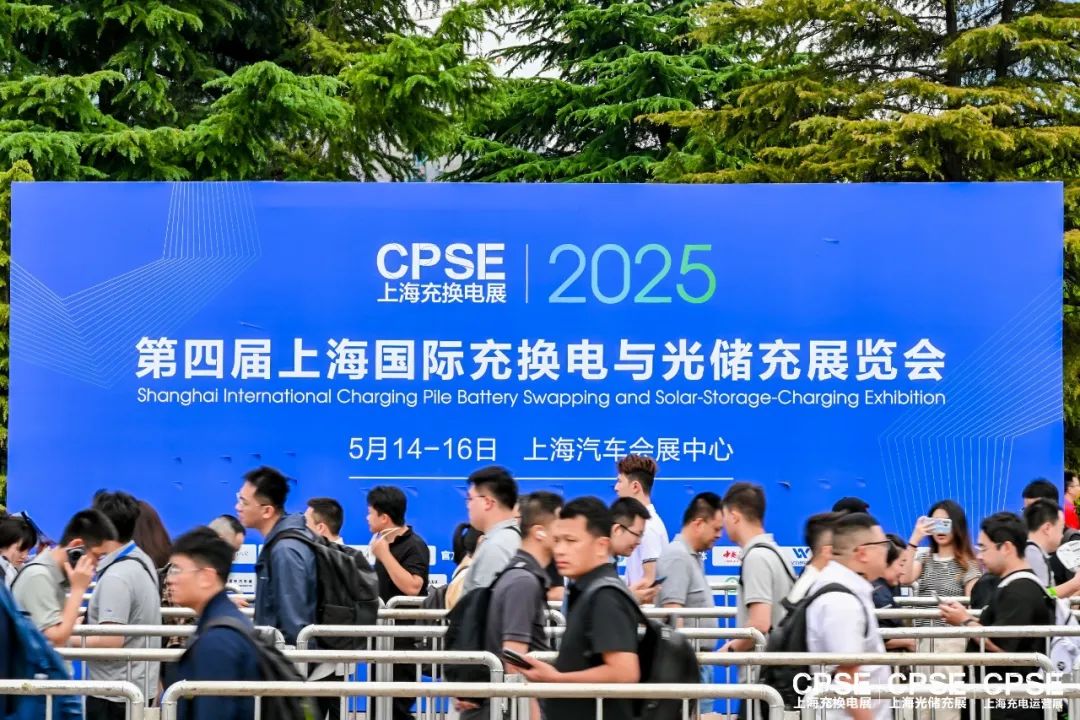
直击2025上海充换电展,解码未来补能“黑科技”
Zhong Guo Qi Che Bao Wang· 2025-05-20 01:31
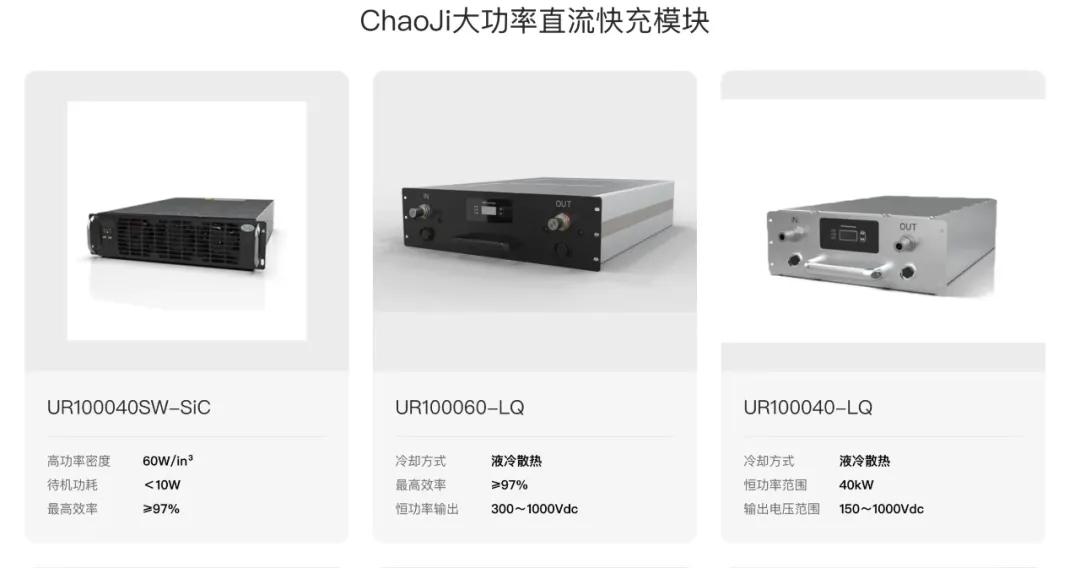
Core Insights - The 2025 Fourth Shanghai International Charging and Battery Swap Exhibition showcased the latest technologies and products in the electric vehicle charging and battery swap industry, emphasizing global high-quality development [1][3] Industry Trends - The charging and battery swap industry is diversifying, with various charging solutions such as low-power slow charging in community settings and fast charging at public stations becoming increasingly prevalent [3][5] - Fast and ultra-fast charging products are highlighted at the exhibition, with companies promoting innovations like "megawatt ultra charging" and "heavy-duty truck ultra-fast charging" [3][5] Technological Advancements - The launch of the Qiming Ultra series by YN Energy features charging modules with 40kW and 60kW power outputs, achieving a peak efficiency of over 98% and compatibility with future vehicle models [5][7] - The industry standard for peak efficiency is generally around 94%-95%, making the 98.2% efficiency of the Qiming Ultra series a significant technological achievement [5][7] Power Management Solutions - Super Fusion introduced the Power Cube product, which allows for modular power sharing and intelligent dynamic distribution, capable of providing outputs of 960kW and 480kW [7][10] - The system can be expanded to meet larger power demands while maintaining efficiency and resource utilization [7][10] Grid Interaction and Smart Charging - The increasing number of electric vehicles poses challenges for grid stability, necessitating the development of smart charging solutions that interact positively with the grid [8][10] - Initiatives like the vehicle-grid interaction demonstration in Shenzhen allow EV owners to sell excess electricity back to the grid, incentivizing participation through financial rewards [10][12] Market Opportunities - The exhibition highlighted the integration of solar energy storage and charging solutions, with private enterprises actively participating in this growing market [10][12] - The National Energy Administration's recent policies support private investment in innovative technologies related to energy storage, virtual power plants, and charging infrastructure [10][12]