出口管制

Search documents
有色金属周报:珍惜彭博调参机会,坚定买入有色牛市-20260111
SINOLINK SECURITIES· 2026-01-11 13:37
Group 1: Copper - The LME copper price increased by 1.94% to $12,702.0 per ton, while Shanghai copper rose by 3.23% to 101,400 yuan per ton [1] - Domestic copper inventory increased by 6.29% week-on-week, marking six consecutive weeks of accumulation, with total inventory up by 168,100 tons year-on-year [1][12] - The operating rate of the yellow copper rod industry decreased by 0.61% to 46.98%, while the enameled wire industry saw a decline of 0.66% in operating rate to 74.87% [1][12] Group 2: Aluminum - The LME aluminum price rose by 2.22% to $3,088.00 per ton, and Shanghai aluminum increased by 6.13% to 24,300 yuan per ton [2][13] - The operating rate of domestic aluminum processing leading enterprises increased by 0.2% to 60.1%, indicating a mixed performance across different aluminum processing sectors [2][13] - The total production capacity of metallurgical-grade alumina reached 110.32 million tons per year, with an operating rate of 80.51% [2][13] Group 3: Gold - COMEX gold price increased by 3.36% to $4,487.9 per ounce, with SPDR gold holdings rising by 2 tons to 1,067.13 tons [3][14] - Geopolitical risks, including U.S. military actions in Venezuela and unrest in Iran, have contributed to a strong and volatile market for gold [3][14] Group 4: Rare Earths - The price of praseodymium and neodymium oxide increased by 2.90%, with November exports of rare earth permanent magnets rising by 12% month-on-month and 28% year-on-year, reaching a historical high for the month [4][36] - The expectation of more relaxed export policies and ongoing supply constraints are likely to support future demand and price increases in the rare earth sector [4][36] Group 5: Lithium - The average price of lithium carbonate increased by 11.5% to 131,800 yuan per ton, while lithium hydroxide rose by 10.9% to 126,900 yuan per ton [4][60] - Total lithium carbonate production reached 22,500 tons, with a slight increase of 0.01 million tons week-on-week [4][60] Group 6: Cobalt - The price of cobalt in the Jiangxi market rose by 1.1% to 460,000 yuan per ton, with cobalt intermediate prices also showing slight increases [5][63] - The overall cobalt market remains strong, with supply tightness expected to continue, supporting price stability [5][63] Group 7: Nickel - LME nickel price increased by 1.8% to $17,100 per ton, while Shanghai nickel rose by 4.3% to 138,000 yuan per ton [5][64] - Nickel market sentiment turned optimistic due to potential tightening of nickel ore quotas in Indonesia, leading to price increases [5][64]



终于来了,“日企购买中国稀土被拒”
Guan Cha Zhe Wang· 2026-01-10 10:22
Group 1 - Chinese state-owned enterprises selling rare earths have notified some Japanese companies that they will not sign new contracts, marking the first confirmation of Japanese companies being denied rare earth purchases [1] - The Chinese Ministry of Commerce announced on January 6 that it will strengthen export controls on dual-use items to Japan, prohibiting all dual-use items for military users and any other end-users that contribute to enhancing Japan's military capabilities [1][2] - The spokesperson for the Ministry of Commerce criticized Japanese Prime Minister Fumio Kishida's remarks regarding Taiwan, stating that they infringe on China's sovereignty and territorial integrity, and accused Kishida of promoting a "re-militarization" agenda that threatens regional and global peace [1] Group 2 - The Chinese government emphasizes its commitment to fulfilling international non-proliferation obligations and asserts that the export ban on dual-use items to Japan is a legitimate measure to prevent re-militarization and nuclear ambitions [2] - The Chinese government reassures that normal civil trade will not be affected by these measures, indicating that there is no need for concern among parties engaged in legitimate civil trade [2]
中国出口管制重创日本稀土半导体产业
Sou Hu Cai Jing· 2026-01-10 03:37
Group 1 - Japan's economy and industries are facing significant impacts due to China's export controls on dual-use items, particularly in critical sectors like rare earths and semiconductors [1] - Japan's reliance on rare earths, especially heavy rare earths like dysprosium and terbium, is nearly 100%, which is crucial for military and electric vehicle applications. The export controls have led to a critical inventory shortage, with only 3-6 weeks of supply remaining. If the situation persists for a year, Japan's GDP could shrink by 0.43%, resulting in an economic loss of 2.6 trillion yen [1] - Major Japanese companies such as Toyota and Mitsubishi Heavy Industries are forced to reduce production due to raw material shortages, with semiconductor production lines facing shutdown risks [1] Group 2 - Japan's military-industrial complex is severely affected, with high-end weapon production halted due to the inclusion of essential materials like heat-resistant alloys and carbon fibers in the export control list. Projects such as the F-15J fighter jet upgrade and hypersonic missile development are delayed [1] - The civilian sectors, including automotive and electronics, are experiencing supply chain disruptions. The automotive industry, particularly electric vehicle production, has seen a production drop of over 20% due to a 90% reliance on Chinese neodymium-iron-boron magnets [1] - The semiconductor industry is facing a wave of contract defaults due to the shortage of high-purity gallium and germanium [1] Group 3 - Japan's countermeasures against China's export controls are weak, revealing strategic deficiencies. Alternatives like deep-sea mining or sourcing from Australia are not viable in the short term due to a fivefold increase in costs and a 15-year lag in refining technology compared to China [3] - Japan's export structure to China is heavily imbalanced, with 17% of its total exports going to China, compared to only 4% of China's exports going to Japan. This places Japan at a significant disadvantage in the economic confrontation [5] Group 4 - Domestic tensions in Japan are escalating, with strong dissatisfaction in the economic sector regarding political statements, leading to calls for a no-confidence motion against the cabinet. The Nikkei index dropped by 556 points in a single day, reflecting public panic [5] - Japan's diplomatic isolation is increasing, with South Korea seizing the opportunity to capture market share in semiconductors. Although the U.S. appears to support Japan, it is simultaneously raising military sales prices and delaying weapon deliveries, highlighting cracks in the alliance [5] Group 5 - China's export control measures are strategically designed, covering 1,030 dual-use items across ten industry categories, with a "catch-all clause" to prevent any support for Japan's military capabilities. A third-party transfer accountability mechanism is in place to block circumvention paths [4] - The measures are not a complete embargo; trade in civilian sectors can still occur under compliance review, while military-related applications are largely rejected. This approach fulfills export control laws and international non-proliferation obligations, signaling that crossing red lines will incur consequences [6] - The export controls directly target Japan's resource scarcity and economic structural issues, causing short-term disruptions in the supply chain while pressuring Japan to adjust its policy towards China. Further losses are anticipated if Japan does not retract its controversial statements regarding Taiwan [6]


工业硅:逢高布空思路,多晶硅:悲观情绪较浓
Guo Tai Jun An Qi Huo· 2026-01-09 01:47
商 品 研 究 2026 年 01 月 09 日 工业硅:逢高布空思路 多晶硅:悲观情绪较浓 张 航 投资咨询从业资格号:Z0018008 zhanghang2@gtht.com 【基本面跟踪】 工业硅、多晶硅基本面数据 | | | 指标名称 Si2605收盘价(元/吨) | T | T-1 -445 | T-5 -380 | T-22 -270 | | --- | --- | --- | --- | --- | --- | --- | | | | Si2605成交量(手) | 8,535 666,115 | 188,729 | 299,914 | 495,446 | | | | Si2605持仓量(手) | | | | | | | | PS2605收盘价(元/吨) | 260,531 53,610 | 15,797 -4,690 | 44,311 -4,280 | 63,588 - | | | 工业硅、多晶硅期货市场 | PS2605成交量(手) | 39,605 | 19,024 | -3,108 | - | | | | PS2605持仓量(手) | 58,049 | -9,751 | -25,286 | ...
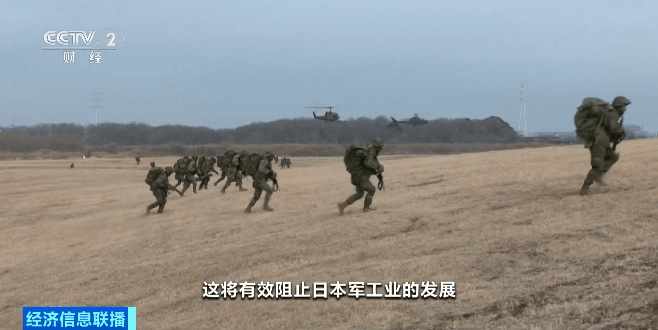
专家解读:中方禁止所有两用物项对日本军事用户用途出口 释放何种信号?
Sou Hu Cai Jing· 2026-01-08 14:56
Group 1 - The core point of the article highlights Japan's recent military expansion efforts led by Prime Minister Sanae Takaichi, which have sparked domestic opposition and international concern [1] - China's Ministry of Commerce announced a ban on the export of all dual-use items to Japanese military users, signaling a significant response to Japan's military buildup [1][3] Group 2 - The export control measures imposed by China are expected to directly impact Japan's military industry, particularly affecting the supply of key materials such as alloys and rare earths necessary for advanced military equipment [3] - The restrictions on rare earths and materials could pose a risk of supply chain disruptions for Japan's advanced manufacturing sector, potentially leading to significant economic losses and recession risks [3] - Socially, the export controls have created a noticeable impact on public sentiment in Japan, with growing concerns about the deterioration of Sino-Japanese relations and its implications for the Japanese economy [3]
商务部:将会同相关部门对Meta收购Manus开展评估调查
Xin Hua Wang· 2026-01-08 11:06
Group 1 - The Ministry of Commerce of China is conducting an evaluation of Meta's acquisition of the AI platform Manus, focusing on compliance with export controls, technology import and export, and foreign investment regulations [1] - The Chinese government supports enterprises in conducting cross-border operations and international technology cooperation in accordance with laws and regulations [1] - Companies engaging in foreign investment, technology export, data outbound, and cross-border mergers and acquisitions must comply with Chinese laws and regulations and follow legal procedures [1]

事关中委经贸,商务部表态
Sou Hu Cai Jing· 2026-01-08 10:21
Group 1 - The Chinese government expresses a firm commitment to deepen economic and trade relations with Venezuela, regardless of changes in the Venezuelan political landscape [1] - China emphasizes that its economic cooperation with Latin American countries is based on principles of equality and mutual benefit, without seeking spheres of influence or targeting any specific party [1] - The Chinese government aims to collaborate with Latin American nations to address international challenges and promote common development through open and inclusive economic cooperation [1] Group 2 - The Chinese government supports enterprises in conducting cross-border investments and international technology cooperation in accordance with Chinese laws and regulations [2] - Companies engaging in foreign investments, technology exports, data outflows, and cross-border mergers must comply with legal procedures and relevant regulations [2] - The Ministry of Commerce will assess the consistency of Meta's acquisition of Manus with laws regarding export controls and foreign investments [2] Group 3 - The Chinese government is implementing stricter export controls on dual-use items to Japan, aiming to prevent militarization and nuclear ambitions [3] - The Chinese government asserts that it will prohibit exports of dual-use items to military users in Japan, emphasizing the legality and justification of these measures [3] - Civilian trade will not be affected by these export controls, and parties involved in normal civilian trade should not have concerns [3]
商务部回应审查Meta收购Manus交易!
Sou Hu Cai Jing· 2026-01-08 08:22
Core Viewpoint - The Chinese government is conducting a compliance investigation regarding Meta's acquisition of the AI platform Manus, emphasizing the need for adherence to Chinese laws and regulations in cross-border investments and technology transfers [2][3]. Group 1: Acquisition Details - Meta announced the completion of its acquisition of Manus for over $2 billion (approximately 14 billion RMB) by the end of 2025, marking it as Meta's third-largest acquisition [2]. - Manus's CEO, Xiao Hong, will become a Vice President at Meta, and the company will continue to operate in Singapore, providing services to millions of businesses and billions of users on Meta's platform [2]. Group 2: Compliance Investigation - The Chinese Ministry of Commerce is assessing whether Manus's relocation to Singapore and subsequent sale to Meta requires an export license under Chinese law, focusing on the transfer of personnel and technology [3][4]. - The investigation is in its early stages, with concerns about whether Manus's core technology was developed in China and if the personnel transfer constitutes unauthorized technology export [3]. Group 3: Operational Changes - In June 2025, Manus moved its headquarters to Singapore, changing its operational entity to Butterfly Effect Pte, and significantly reduced its domestic workforce from 120 to about 40 core technical staff [3]. - This strategy, referred to as "Singapore washing," aims to detach the company from its "Chinese identity" [3].

商务部回应审查Meta收购Manus
中国基金报· 2026-01-08 08:12
Group 1 - The Chinese government supports enterprises in conducting cross-border operations and international technology cooperation in accordance with laws and regulations [1] - The Ministry of Commerce will evaluate the consistency of Meta's acquisition of the AI platform Manus with relevant laws and regulations regarding export control, technology import and export, and foreign investment [1]
商务部回应审查Meta收购Manus:企业从事对外投资等活动须符合中国法律法规
21世纪经济报道· 2026-01-08 07:50
Group 1 - The Ministry of Commerce held a regular press conference on the 8th, where spokesperson He Yadong responded to inquiries regarding the review of Meta's acquisition of the AI platform Manus, emphasizing that the Chinese government supports enterprises in conducting cross-border operations and international technology cooperation in accordance with laws and regulations [1] - Enterprises engaging in foreign investment, technology exports, data outflow, and cross-border mergers and acquisitions must comply with Chinese laws and regulations and fulfill legal procedures [1] - The Ministry of Commerce will collaborate with relevant departments to assess the consistency of this acquisition with laws and regulations related to export control, technology import and export, and foreign investment [1]