多元化投资

Search documents
认识基金----混合基金
Sou Hu Cai Jing· 2025-10-23 04:38
Core Insights - The article defines hybrid funds as investment products that simultaneously invest in various financial instruments such as stocks, bonds, and money markets [2] - The development of hybrid funds has been driven by the increasing demand for diversified investment from investors, leading to a continuous evolution in asset allocation methods and investment strategies [2] Classification - Hybrid funds can be categorized into three types: equity-oriented hybrid funds, debt-oriented hybrid funds, and balanced hybrid funds. Equity-oriented hybrid funds typically allocate 50%-70% to stocks; debt-oriented hybrid funds allocate 50%-70% to bonds; balanced hybrid funds maintain a relatively even distribution, with approximately 40%-60% in both stocks and bonds [2] Characteristics - The asset allocation ratio of hybrid funds is relatively flexible, allowing for dynamic adjustments of asset weights based on market conditions to pursue stable returns, making them suitable for investors with different risk preferences [2] Risk Assessment - The risk level of hybrid funds depends on the allocation ratio of stocks and bonds. Equity-oriented hybrid funds carry relatively higher risks, debt-oriented hybrid funds have lower risks, and balanced hybrid funds present moderate risks [2]


全球投资者涌向“剔除美股”股票基金,寻求多元化投资
Huan Qiu Wang· 2025-10-12 01:07
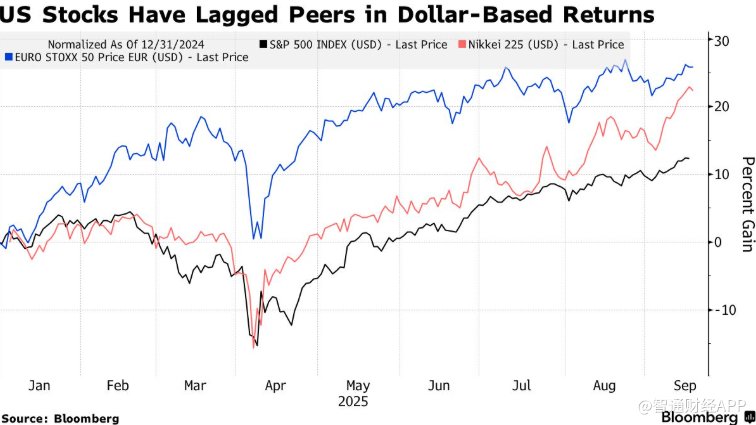
源:金融时报 据报道,过去一个月,流入"剔除美股"全球股票基金与ETF的资金超过1750亿美元,而包含美国股票的 全球基金仅吸引约1000亿美元。尽管自4月低点反弹以来美股保持吸引力,但资金流动模式显示投资者 正在积极寻求投资组合的区域平衡。 摩根士丹利投资管理公司投资组合解决方案部首席投资官Jim Caron称:"这种再平衡确实正在发生,未 来的投资组合将更加全球化与多元化。"他补充道,摩根士丹利在2025年初首次加码欧洲市场,这一决 策与当时美国政府换届带来的避险情绪直接相关。受相关政策措施影响,美股避险情绪在4月达到顶 点,推动欧洲与新兴市场明显跑赢华尔街。 尽管美股随后出现强劲反弹,但全球投资者"边际上"的转变仍在持续。欧洲成为主要受益者,贝莱德数 据显示,截至9月底,流入欧洲股票ETF的资金达到创纪录的710亿美元,远超去年同期的160亿美元。 高盛资产配置研究主管Christian Mueller-Glissmann表示:"多数投资者心中仍然有多元化的意愿,资金 流与市场表现都在体现这一主题。" 来源:环球网 【环球网财经综合报道】据金融时报等外媒报道,法国兴业银行基于EPFR基金追踪数据的分析显 ...

诺贝尔奖金124年没花完,反而增值200倍!怎么做到的?
雪球· 2025-10-10 13:00
以下文章来源于做配置的小雪 ,作者做配置的小雪 做配置的小雪 . 曾经幻想暴富,现实变成暴负,投资只能慢慢变富~ ↑点击上面图片 加雪球核心交流群 今年一共有6个奖项,每个奖项奖金是1100万瑞典克朗,也就是说,今年一年的奖金支出就有6600万。 但是在124年前,诺贝尔只留下了3100万瑞典克朗,如果只靠这笔钱,连今年的奖金都不够支付,更别提过去一个多世纪的巨额奖金了。 但事实是, 诺贝尔留下的这笔资产,不仅没有花完,还比最初的金额增值了200倍,诺奖单项奖金也从最初的15万瑞典克朗,涨到了1100万瑞典 克朗。 一、从3100万到61亿,诺奖靠多资产策略让钱生钱 诺贝尔的遗产由诺贝尔基金会管理,基金会负责拿着钱去做投资,不过,投资之路并不是一成不变,一共经历了三个阶段: 1、保守起步:局限于安全资产 基金成立初期,受诺贝尔的遗嘱限制,只能投资安全资产,比如国债和定期存款。 这种策略虽然保住了本金,但是收益率极低,在前50年里,收益率仅2%~3%,甚至无法跑赢通胀,到了1945年,诺奖单项奖金的实际购买力, 相比1901年已经缩水超过七成,基金会一度入不敷出,难以保证奖金顺利支出。 2、历史性转折:拥抱股票 ...

Mayfield: China's chip crackdown isn't a game changer for this bull market
Youtube· 2025-10-10 11:27
Group 1: Nvidia and Market Impact - Chinese regulators are tightening restrictions on Nvidia's chip imports, which could negatively affect broader markets, especially given Nvidia's significant market weight [1] - Despite the negative news, Nvidia has reported strong quarterly results excluding the Chinese market, indicating that the impact may not be as severe as anticipated [2] - The ongoing AI trade has been a major driver of the current bull market, leading to discussions about diversification in investment strategies [3] Group 2: Consumer Discretionary Sector - The consumer discretionary sector has seen a pullback of over 2% since the last Fed rate cut in September, underperforming the S&P 500 [6] - There is a belief that consumer weakness is overstated, with segments of the consumer market still performing well, as indicated by positive comments from companies like Delta [8] - Wage growth remains solid, and tax cuts expected to take effect by 2026 may further boost consumer spending, suggesting that there is still time to invest in consumer stocks [9] Group 3: Investment Strategy and Diversification - The current market environment suggests a need for diversification across various asset classes, including alternatives, international stocks, and precious metals, rather than overexposure to big tech [4][5] - The consumer discretionary sector is viewed as a good investment opportunity, with potential for growth in areas like luxury retail and autos, especially for companies with strong balance sheets [11] - The upcoming inflation report may provide additional data, but the labor market is currently seen as the primary factor influencing Fed decisions [12][13][14]
开盘:美股周三高开 标普500终结七连涨后重拾涨势
Sou Hu Cai Jing· 2025-10-08 13:33
Group 1 - The core concern is the sustainability of AI-driven trading, highlighted by Oracle's disappointing cloud business profit margins and losses in transactions involving NVIDIA chips, raising fears of a potential AI bubble similar to the late 1990s internet bubble [1] - Market observers are urging investors to adjust their portfolios, acknowledging that while the AI craze may still have upward potential, the overall market indicators appear overbought [2] - Goldman Sachs suggests that concerns over a tech stock bubble are premature, as the strong price increases are supported by robust earnings growth, although valuations are becoming elevated [3] Group 2 - Tesla has launched lower-priced versions of its Model Y and Model 3 on its U.S. website, indicating a strategic move to capture a broader market segment [4] - Alibaba has established an internal AI robotics team, reflecting its commitment to advancing in the AI sector [4] - Gold stocks have seen a broad increase, suggesting positive market sentiment in that sector [4]

老股民十年炒股心得:避开这些致命坑,化身市场赢家!
Sou Hu Cai Jing· 2025-10-03 03:13
Core Insights - The article emphasizes that stock trading is not a game of chance but requires discipline and intelligence to succeed, highlighting that 90% of retail investors struggle with losses due to common pitfalls [1] Group 1: Common Mistakes - A prevalent mistake among retail investors is the emotional trading behavior of blindly chasing rising stocks and panic selling during downturns, leading to an average annual loss of 15%-20% of capital due to emotional decisions [1] - The article suggests implementing strict "stop-loss" and "take-profit" rules, recommending a stop-loss threshold of 5%-10% and partial profit-taking at a 20% gain to transform from a losing investor to a winning one [1] - Investors are advised to focus on 3-5 potential stocks rather than diversifying too broadly, with a holding period of at least 3-6 months to avoid short-term volatility [1] Group 2: Fundamental Analysis - Ignoring fundamental analysis is identified as a significant risk, with many investors relying solely on charts and rumors, which can lead to substantial losses when companies underperform [3] - Investors should assess a company's "moat" by analyzing financial reports, industry outlook, and competitive landscape, asking critical questions about revenue growth rates, profit margins, and management reliability before making investment decisions [3] - The article advocates for value investing, suggesting that investors should buy undervalued blue-chip stocks and hold them long-term, minimizing frequent trading to avoid market noise [3] Group 3: Psychological Factors - Psychological biases such as fear and greed can lead to detrimental trading habits, where investors sell in panic after a 10% drop or hold onto stocks too long after a 20% rise, creating a cycle of buying high and selling low [3] - A recommended strategy to combat these psychological traps includes daily meditation to cultivate a calm mindset, which can help in making more rational trading decisions [3] - Keeping a trading journal to review each transaction can help identify emotional blind spots and improve decision-making over time [3] Group 4: Positioning Strategy - New investors often make the mistake of poor position sizing, either spreading investments too thinly or going all-in, which increases risk [4] - The article recommends maintaining a position size of no more than 70% of total capital and limiting individual stock investments to 20%, with a phased approach to building positions [4] - A diversified portfolio strategy is suggested, with a mix of stocks, ETFs, and bonds in a ratio of 3:4:3 to balance risk and opportunity [4] Group 5: Risk Management - The importance of risk management is underscored, particularly regarding leverage, which can lead to significant losses if not managed properly [6] - Investors are advised to only use disposable income for trading and to avoid borrowing, especially during unpredictable market events [6] - Continuous learning is highlighted as a key to long-term success, with recommendations to read foundational investment literature and learn from reputable sources while avoiding unreliable online advice [6]

宏辉集团(00183.HK)年度营业额约4442.3万港元 同比上升约8.0%
Ge Long Hui· 2025-09-26 15:09
Core Viewpoint - Honghui Group (00183.HK) reported a revenue of approximately HKD 44.423 million for the fiscal year ending June 30, 2025, representing an increase of about 8.0% year-on-year, primarily driven by growth in property development business [1] Financial Performance - The company recorded a pre-tax loss of approximately HKD 79.057 million, a reduction of about 67.3% compared to the previous fiscal year loss of approximately HKD 240 million [1] - The loss per share was reported at 11.74 cents [1] Business Challenges - The annual loss was mainly attributed to fair value losses on investment properties, write-downs on properties held for sale, and impairment losses on property, plant, and equipment [1] - Despite facing challenges, the core property-related business performance was temporarily affected, similar to many peers in the industry [1] Investment Strategy - The diversified investment property portfolio has been a key element of the company's overall investment strategy, allowing for flexible risk and opportunity management across multiple investment channels [1] - To mitigate risks associated with direct property investments, the company has been investing through structured products, such as private equity funds and co-investments in related real estate assets across various countries including Japan, the UK, Germany, China (commercial real estate), Cambodia, and the USA [1]
达利欧“建模”黄金配置:他为什么发出小心吃碎玻璃的警告?
Di Yi Cai Jing· 2025-09-23 14:01
Core Insights - The current sentiment towards the US dollar is negative, with a significant preference for gold as an investment asset among investors [1][3][9] - Ray Dalio emphasizes the importance of diversification in investment strategies rather than relying solely on predictions [3][11] Group 1: Investment Trends - Dalio suggests that gold should constitute about 10% to 15% of an investment portfolio to achieve diversification [4][11] - As of September 23, gold prices have reached historical highs, with COMEX gold surpassing $3,800 per ounce, marking an approximate 8% increase for the month [4][9] - The US federal deficit is projected to increase by $3.4 trillion over the next decade due to tax reforms, raising concerns about the sustainability of US government spending [5][7] Group 2: Economic Concerns - Dalio warns that the US government's excessive spending and rising debt levels have become unsustainable, potentially leading to a significant fiscal crisis [5][8] - The US government may need to issue an additional $12 trillion in bonds to cover a $2 trillion deficit, $1 trillion in interest payments, and $9 trillion in maturing debt [7] - The US federal deficit reached $1.973 trillion as of August, with a monthly deficit of $345 billion in August alone, a 15% increase year-over-year [7][8] Group 3: Market Dynamics - Despite the rise in gold prices, US stock markets, particularly tech stocks, have also seen gains, which is unusual and indicates a complex market sentiment [9][10] - The dollar index has fallen over 10% against other major currencies this year, while gold has become the second-largest reserve asset globally [9][10] - Predictions from Morgan Stanley and UBS suggest that gold prices could reach $3,800 per ounce by the end of the year and potentially $4,000 per ounce if geopolitical or economic conditions worsen [12]
【独家】万亿资管巨头重磅发声
Zhong Guo Ji Jin Bao· 2025-09-18 07:18
Group 1 - DWS, a major German asset management firm, plans to launch an ETF tracking the CSI A500 index in October, becoming the first overseas institution to do so [1][3] - The CEO, Stefan Hoops, believes the current rebound in the Chinese market is sustainable and that international investors will soon realize their underexposure to China [1][3] - DWS aims to serve as a gateway for Chinese institutional investors looking to diversify their overseas investments, which have primarily focused on USD assets [1][6] Group 2 - DWS has been operating in the Asia-Pacific region for 40 years and aims to be among the top five asset management companies in the world's largest economies [2] - The firm has successfully expanded its market share in Europe and emphasizes the importance of scale and innovation in ETF offerings [2][3] - DWS has established a partnership with Harvest Fund Management to provide international investors with direct access to Chinese A-shares, which has been recognized positively [3] Group 3 - Hoops noted that overseas investors have a limited understanding of the A-share market, often relying on local media for information that may not be comprehensive [3][5] - The A-share market's rebound is attributed to the recognition of effective government stimulus measures and the stabilization of the real estate market [3][5] - DWS anticipates that in the next six months, global investors will increase their allocations to the Chinese market, recognizing its attractive valuations [3][5] Group 4 - DWS is committed to educating global investors about the Chinese market and addressing the significant underallocation compared to other markets like Japan [5] - The firm sees potential for Chinese institutional investors, such as insurance companies, to diversify their portfolios by increasing investments in euro-denominated assets [6] Group 5 - Hoops discussed the need for Europe to balance regulatory caution with innovation, particularly in the context of AI applications across various industries [7] - He highlighted that while Europe may lag in consumer-facing AI applications, it excels in industrial applications, which could lead to significant advancements [7] Group 6 - DWS has observed a shift in investor sentiment towards European assets, driven by recent positive developments in Germany, including infrastructure projects and fiscal policy changes [8][9] - The firm believes that the changes in Germany's fiscal policy will reshape its growth trajectory and create attractive investment opportunities for global investors [9][10]
万亿资金涌动!美世咨询警告:特朗普政策促使投资者逃离美国市场
Zhi Tong Cai Jing· 2025-09-18 06:48
Core Insights - The actions of President Donald Trump to reshape global trade and pressure the Federal Reserve to lower interest rates are prompting investors to reduce their investments in the U.S. [1] - Investors are reallocating funds from the U.S. to Europe, Japan, and other regions due to concerns over tariffs, rising deficits, and a weakening dollar [1] - The uncertainty surrounding Trump's trade war has caused panic in global markets, leading to a decline in both U.S. stock and bond prices [1] Group 1: Investment Trends - The chief investment officer of a consulting firm noted that the beginning of Trump's second term has triggered a diversification in investment portfolios, with funds flowing into diverse markets, asset classes, and currencies [1] - Clients are planning to increase investments in European and Japanese stocks, which are perceived as more attractive compared to U.S. stocks [6] - There is a growing interest in private markets, particularly in venture capital related to the artificial intelligence sector, as clients believe AI will be a significant macroeconomic driver in the next five to ten years [6] Group 2: Economic Concerns - Tariffs are seen as a challenging factor for the market, potentially squeezing corporate profit margins and leading to inflation if passed on to consumers [2] - The support for a weaker dollar by the Trump administration is viewed as a critical weakness in the current strategy, as it may exacerbate inflation caused by tariffs [2] - The political pressure on the Federal Reserve, including criticism of its chairman and attempts to influence its decisions, is causing investors to withdraw from U.S. assets [6]